
Quick Take
- Termites are more closely related to a common household pest than scientists once believed, a connection that changes how they're classified entirely. See their classification →
- The way termites acquire their wood-digesting ability is deeply strange, and it involves their own colony members. How termites digest wood →
- Most people underestimate how much damage a single termite colony can do. The real number is almost unbelievable. See colony consumption facts →
- Termites collectively outweigh every human on Earth, and the math behind that claim reveals just how staggering their global population is. Explore termite population numbers →
Often referred to as silent destroyers, termites are responsible for an estimated $5 billion in property damage each year.
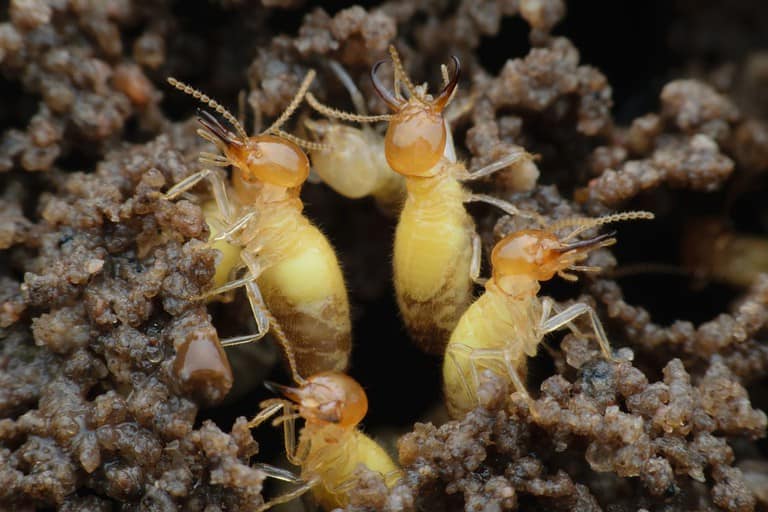
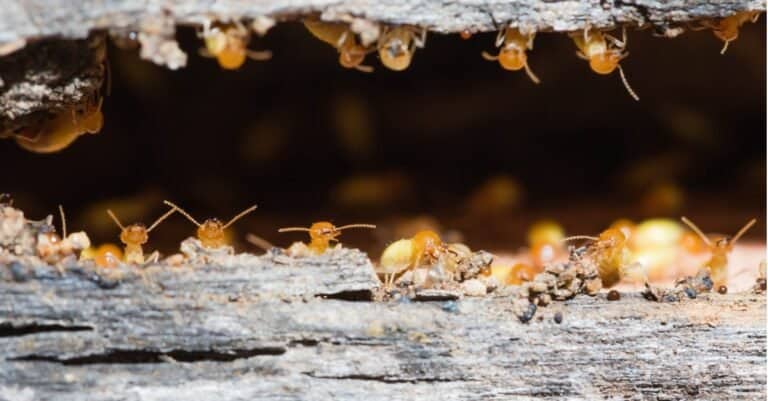
The insects have six legs and large heads compared to the size of their bodies. Termites are typically white or a light yellow color. The insect species live in colonies with a queen, and she lays eggs continuously. A termite’s diet is wood, and they eat a lot of it.

5 Termite Facts
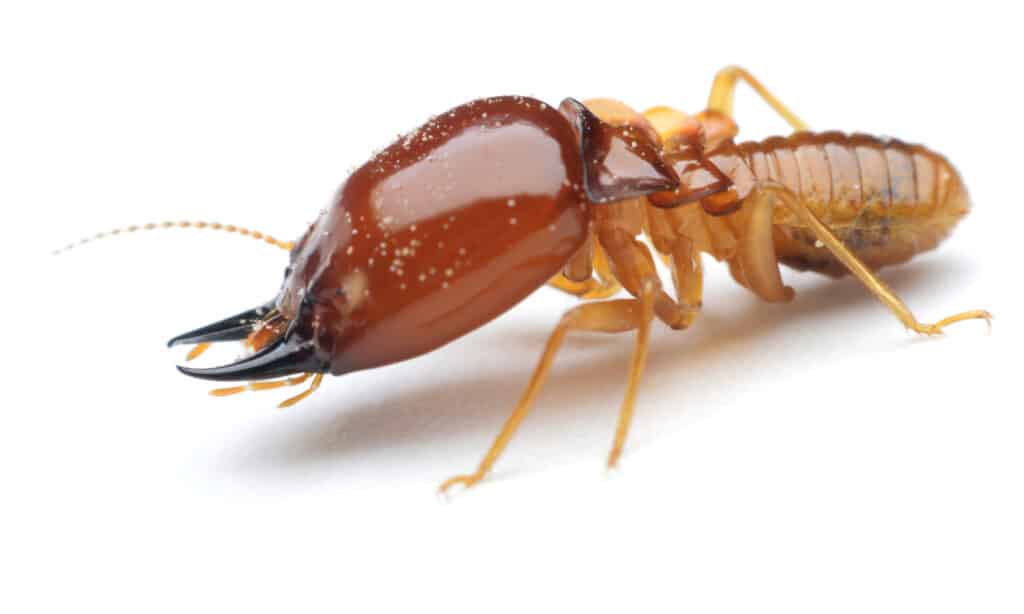
Termites live in colonies, and queens can live up to 50 years.
©chakkrachai nicharat/Shutterstock.com
- There are thousands of termite species.
- Termites live in every part of the world.
- The insects live in colonies.
- Queen termites can live for as long as 50 years.
- Most termites are blind.
Evolution and Origins
Termites have been on planet Earth for millions and millions of years. In fact, evidence of the evolutionary relationship between termites and ancient roaches suggests that termites may have evolved in the Late Jurassic period, meaning that their evolution took place about 150 million years ago.
Many termite species originated from South Asia. Of the approximately 3,000 termite species alive today, 28 are considered invasive worldwide. Although termites are found in many places around the world today, their origins trace back to Asia and even South America.
Different Types of Termites
Here are the different types of termites found around the world:
- Rhinotermitidae
- Kalotermes flavicollis
- Termitidae
- Hodotermitidae
- Termitinae
- Termopsidae
- Kalotermitidae
- Parastylotermes
- Serritermitidae
Classification and Scientific Name
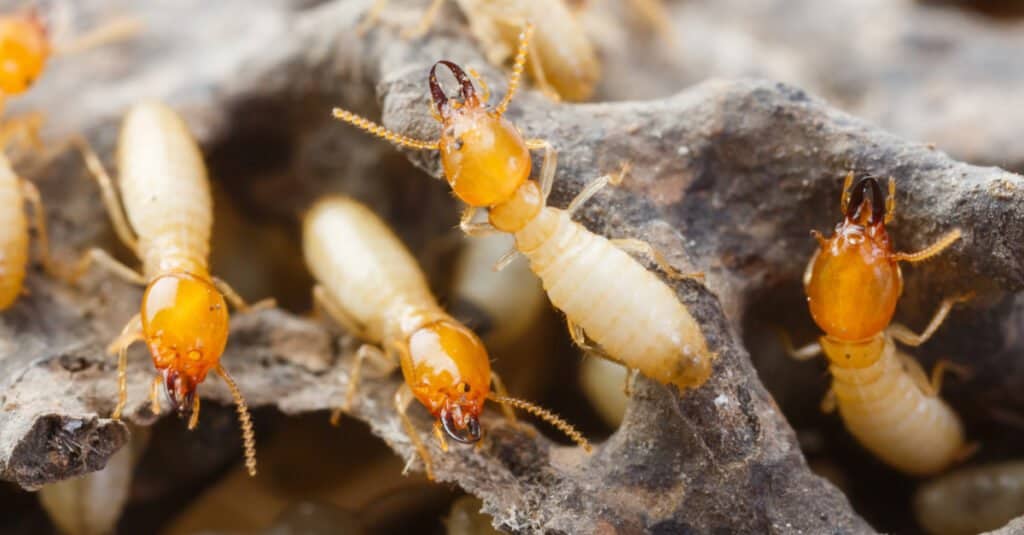
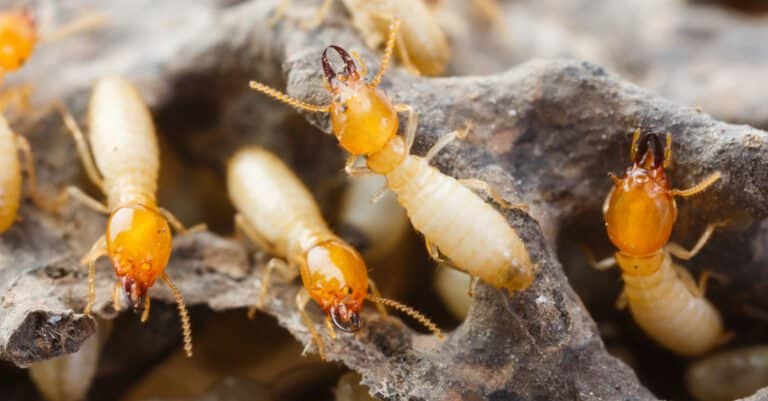
Termites are eusocial insects.
©7th Son Studio/Shutterstock.com
Termites belong to the infraorder Isoptera, and they are eusocial insects. They are in the Termitoidae epifamily inside a cockroach classification called Blattodea.
In the past, termites were categorized within a different order of insects than cockroaches, but additional research has determined that they originated from cockroaches. Termites are classified in the animal kingdom and the arthropod phylum. The bugs are a part of the Insecta class and the Pterygota subclass.
In North America, there are more than 50 termite species, and Europe has 10 termite species. In Africa, there are more than 1,000 different species of termites. They are successful bugs that use various methods to survive.
The name Isoptera comes from two Greek words. The first is Iso, and it means equal. The second word is ptera, and in the Greek language, this means winged. The name “Termite” is from a Latin and Late Latin word, which is Termes. This word refers to a white ant or a woodworm. Before the word “termite” became the common name for the species, the insects were called white ants or wood ants. According to research, the modern term for bugs was first used in the late 1700s.
Appearance and Behavior
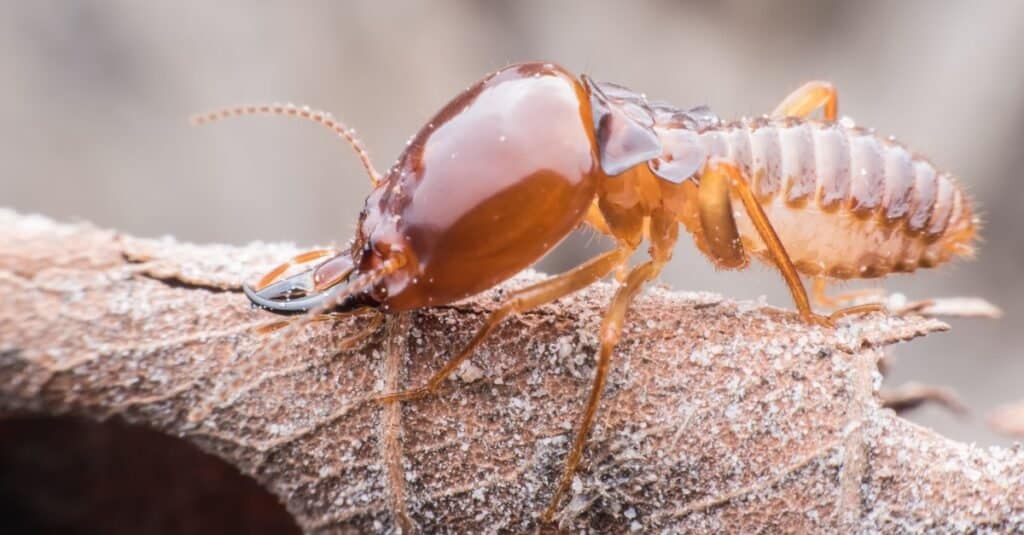
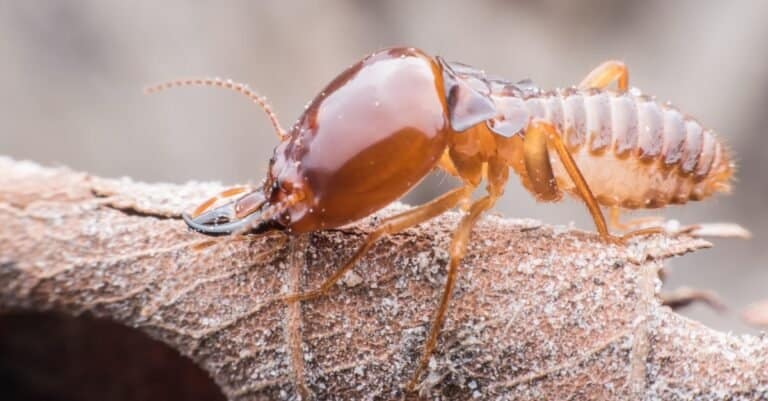
Termites are small insects.
©PK289/Shutterstock.com
Termites are small insects that typically measure from 0.16 inches to 0.59 inches (4 millimeters to 15 millimeters) long. Queen termites are the largest, and they can measure as long as four inches (about 10 centimeters) in length.
During the Miocene era, a giant termite called the Gyatermes styriensis existed, and its wingspan measured around 2.99 inches (76 millimeters). It also had a body length of around 0.98 inches (25 millimeters).
Modern-day termites have soft bodies and long, straight antennae. The insects vary in color from white to pale brown. Worker termites are usually a lighter color than swarming ones. There are size and color variations between the species too.
For instance, western subterranean soldier termites have heads that are a yellow hue, and the termite soldiers of the western drywood species feature reddish-brown heads. Subterranean termites are usually smaller than dampwood and drywood termites.
Termites operate in a caste system, and there are three. Each caste has a different job to do in a colony. Along with this, each caste features distinctive physical characteristics that allow it to do its job. The different castes may have very different appearances from one another even when they are a part of the same species.
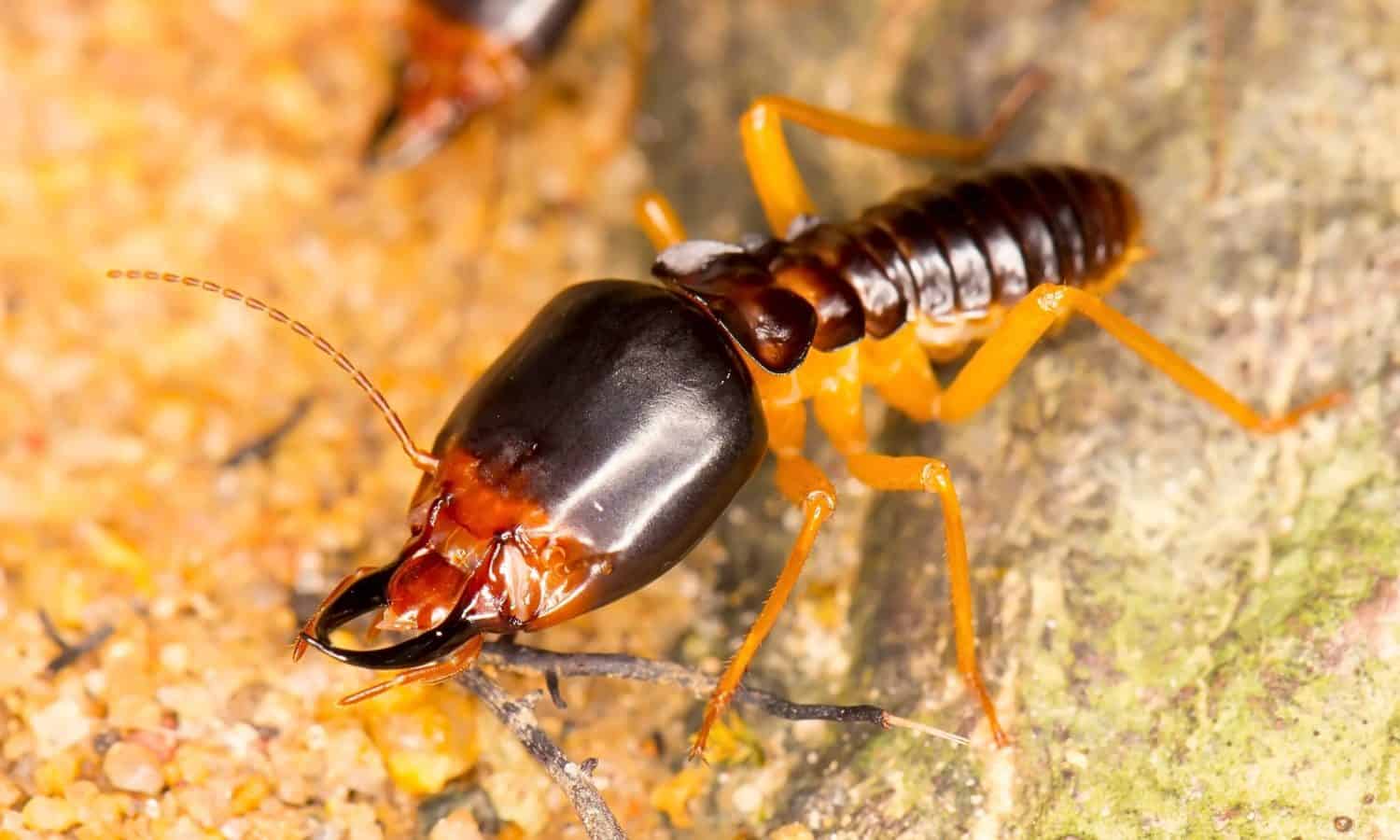
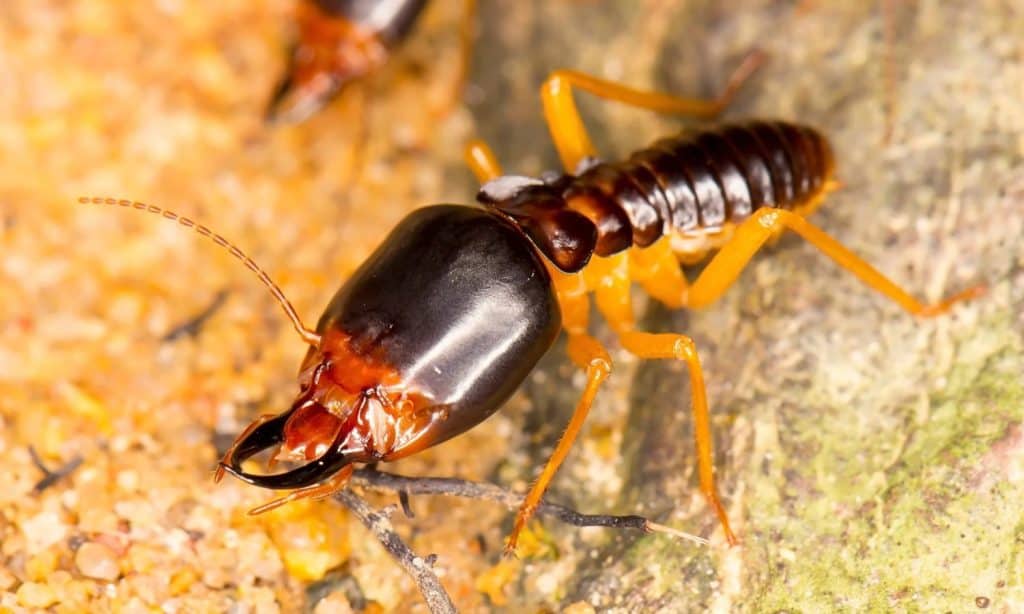
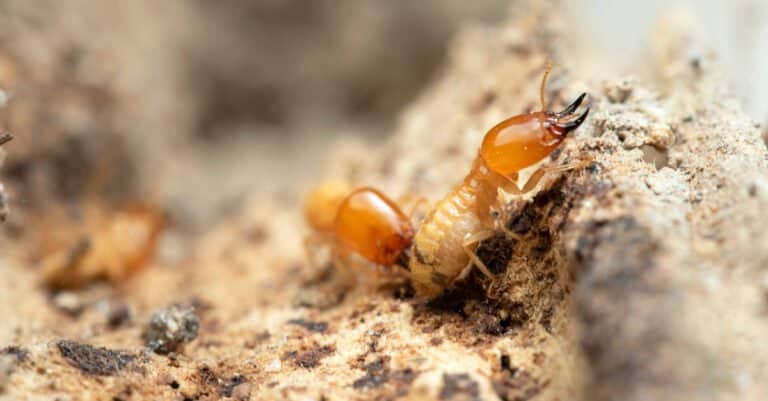
Worker termites are usually a lighter color than soldier termites. They are also the smallest termites. For the most part, worker termites and nymphs feature soft bodies and resemble larvae. Soldier termites generally have a similar body structure to worker termites. However, soldiers have hard heads that display a dark color. They also have large jaws.
These features allow them to keep their colonies safe. Worker and soldier termites are generally blind. When termites reach the reproductive stage, they form wings. They also have hard bodies that protect them as they fly away from their colonies to begin new ones. Flying termites have wings and dark, exoskeleton bodies. Also called alates, or swarmers, flying termites have two equally sized wing sets that are almost twice as big as their bodies.
There are enormous numbers of termites in the world. In fact, if you could somehow gather them into one pile, they would collectively outweigh all the humans on Earth. according to some estimates, there could be 1,000 pounds of termites per human.
Termites are not highly aggressive insects unless their nests are under attack. Soldier termites use their large jaws to poison other insects that may attempt to attack their nests. The number of soldiers that are in a termite colony is based on the colony size. When a colony is just starting, it will have more workers to become established. As it grows, more termites become soldiers for greater defense.
Termites are able to communicate when they are inside their nest. They do it using pheromones and vibrations. This allows them to recognize other colony members and know what part of the caste other termites are from. To make vibrations, termites bang their heads.
Habitat
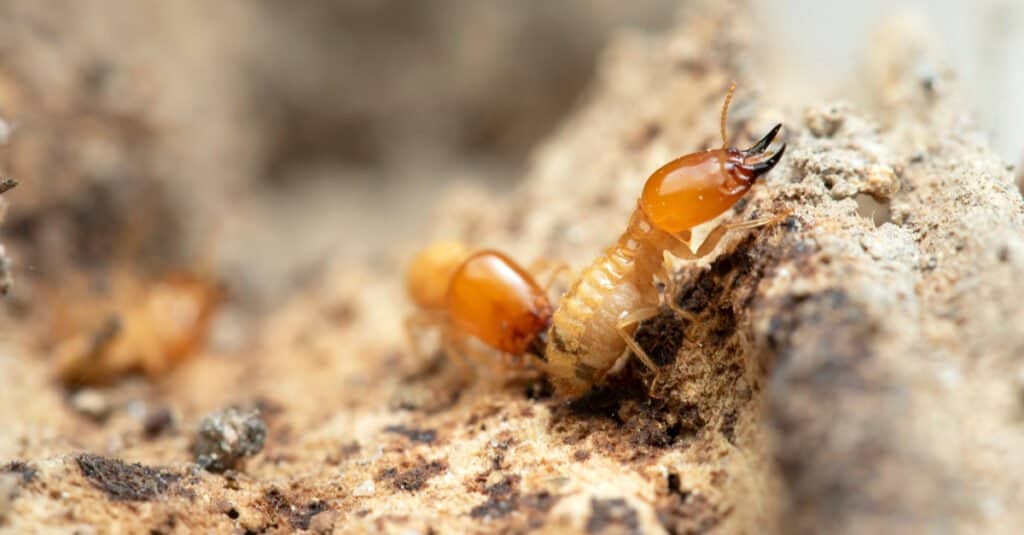
Termites are found throughout the world. This means their habitats include tropical and subtropical areas.
©bamgraphy/Shutterstock.com
Termites are found throughout the world. This means that their habitats include tropical and subtropical regions in addition to climates that are warm. These insects do well in moist lowland areas as well as along coasts. Some of the North American species have become accustomed to living in chillier areas, which means that they are found in the northern part of the country too.
Different termite species have different habitats. Subterranean termites form colonies in the ground, and they build pathways inside them that they use to find wood sources. To get to wood that’s located out of the ground, like the framework of a home, the insects create mud tubes that they travel through. These tubes connect from the soil to the wood source.
Dampwood termites make their colonies in damp wood that may be in the ground or on top of it. The insects search for damp wood that remains that way from ground contact. This may be from a clogged rain gutter or a water leak.
Drywood termite colonies usually form their nests in wood that’s solid. These bugs do not need to be in touch with the soil to survive. Drywood termites usually make their homes in furniture, wood framing sections, attics, and doors.
The large termite mounds sometimes depicted on television or in magazines are built by mound-building termites. This insect species lives in South America, Australia, and Africa. These amazing mounds can be as wide as 98 feet, and they are usually constructed in well-drained areas.
In many cases, termite mounds outlive the colonies that build them. The structure of these homes can be highly complex, with the insects taking proper ventilation into account.
Diet
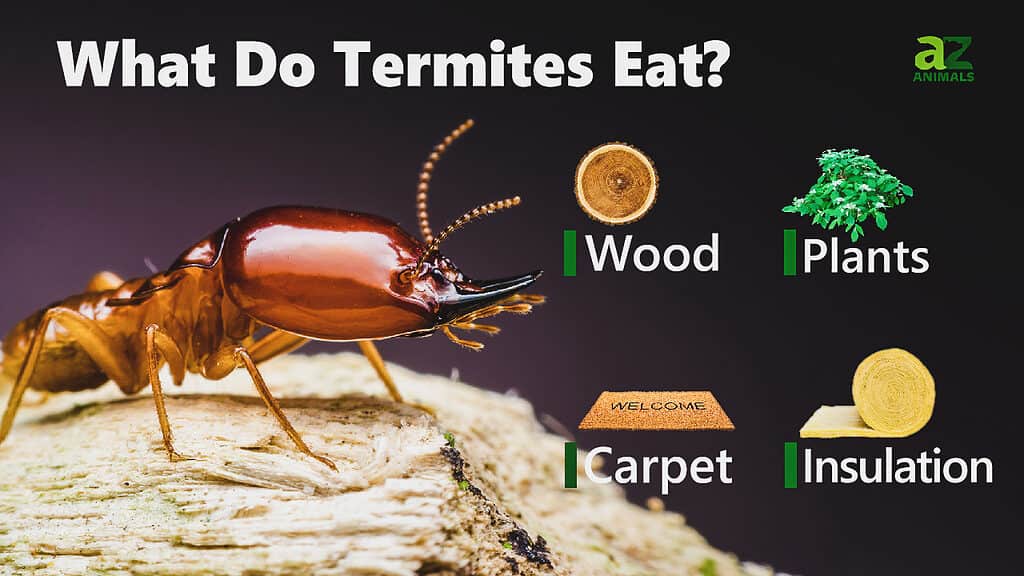
What do termites eat? The insect species eat plants. They also eat fungus that grows on decaying plants.
Termites eat wood because their bodies need cellulose, which is a wood component. The insects have digestive system bacteria, and they break the cellulose down, giving the bugs access to hydrogen. Termites do not acquire their digestive system bacteria naturally. Instead, they obtain it by consuming one another’s feces.
Termites never sleep. The insects work 24 hours a day every day of their life. During this time, they eat, keep their queen happy and safe, and build their nests. Since the bugs never stop, they are capable of eating a large amount of wood.
If they infest a person’s home, they can cause significant damage. In fact, a colony of Formosan termites has been known to eat as much as 1,000 pounds of wood in one year. The insects are able to ingest an amount of wood that would fill a football field in a single year. Along with this, termite workers look for food as far as 250 feet away from their homes.
Predators and Threats
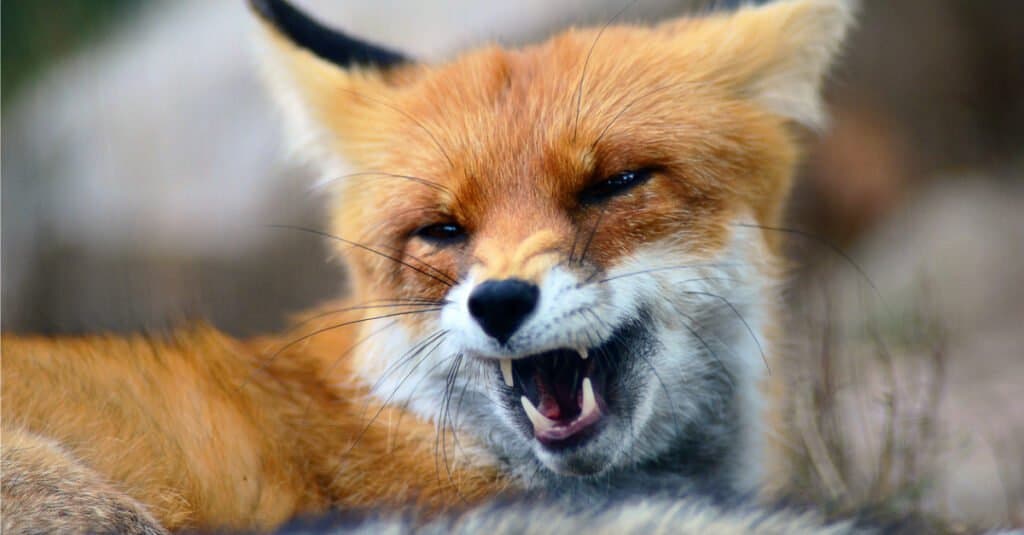
Many creatures prey on termites, including 65 different bird species in addition to bats, bears, and foxes.
©iStock.com/Film Studio Aves
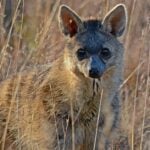
Many creatures prey on termites, including 65 different bird species in addition to bats, bears, and foxes. The aardwolf is a mammal that mainly feeds on insects. To find them, it relies on scent and sound. According to research, a single aardwolf can ingest thousands of termites in just one night.
Sloth bears eat them too, as do chimpanzees. Ants are a big risk to termites. Some ant species hunt termites and may even move into termite mounds.
Termites are good at protecting themselves, but they are vulnerable to parasites such as dipteran flies, pyemotes mites, and nematodes. When attacked by parasites, a termite colony may relocate. People exterminate termites when the insects make a meal of their homes.
Reproduction, Babies, and Lifespan
Undergoing incomplete metamorphosis, termites have three life stages: egg, nymph, and adult.
©7th Son Studio/Shutterstock.com
During the summer months, king and queen termites start swarming in the thousands as they search for a mate. When they find one, they perform a simple courtship dance and begin a separate colony. The male termite participates in the labor of building a nest once the queen is fertilized and ready to lay eggs.
In the first year of laying eggs, a queen termite can produce from one hundred to several thousand eggs each day. The king and queen termites take care of their first termite generation until they’ve made enough babies to help them.
Once the insects hatch into larvae, the juvenile termites can turn into worker termites or soldiers. The caste that juvenile termites become depends on the pheromones released and the temperature at which the eggs are incubated. Worker termites complete the nest’s labor and provide food for the colony. They also take care of baby termites.
Worker and soldier termites may be male or female. Both types are sterile. For around five years, the termite population will grow. After this period, the queen will have young king and queen termites, so they can expand into another new colony. This cycle repeats continuously.
When it comes to the life cycle of the insect species, termites go through incomplete metamorphosis. Scientifically, this is called a hemimetabolous life cycle. A termite’s life cycle consists of an egg, larva, nymph, and older nymph; the mid-life stages are worker or soldier. The last stage is a drone (reproductive adult). A queen termite’s average lifespan is 25 years, but the other types of termites live from just 12 months to 24 months.
Population
According to reports, subterranean termite colonies may include as many as 5 million termites. Worker termites make up an estimated 90% to 95% of a colony, while soldiers are 1% to 3% of a colony. Each colony has very few reproductive adults, with five to 10 kings in total. The kings take turns mating with the queen.
Termite Pictures
View all of our Termite pictures in the gallery.

Yewenyi at the English language Wikipedia / Creative Commons
Sources
- David Burnie, Dorling Kindersley Animal, The Definitive Visual Guide To The World's Wildlife / Accessed November 10, 2008
- Tom Jackson, Lorenz Books The World Encyclopedia Of Animals / Accessed November 10, 2008
- David Burnie, Kingfisher The Kingfisher Animal Encyclopedia / Accessed November 10, 2008
- Richard Mackay, University of California Press The Atlas Of Endangered Species / Accessed November 10, 2008
- David Burnie, Dorling Kindersley Illustrated Encyclopedia Of Animals / Accessed November 10, 2008
- Dorling Kindersley Dorling Kindersley Encyclopedia Of Animals / Accessed November 10, 2008