Can leap more than 1 meter into the air!
Advertisement
Serval Scientific Classification
- Kingdom
- Animalia
- Phylum
- Chordata
- Class
- Mammalia
- Order
- Carnivora
- Family
- Felidae
- Genus
- Leptailurus
- Scientific Name
- Leptailurus serval
Read our Complete Guide to Classification of Animals.
Serval Conservation Status
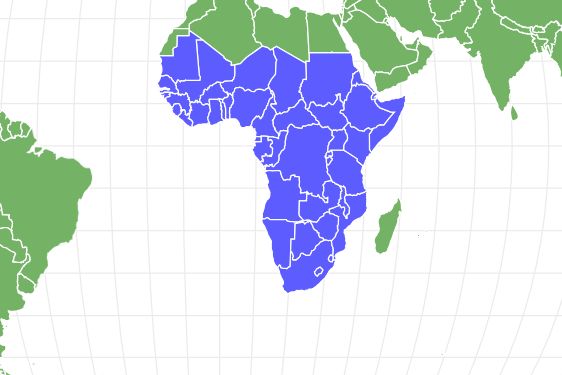
Serval Facts
- Prey
- Rodents, Birds, Frogs
- Name Of Young
- Kitten
- Group Behavior
- Solitary
- Fun Fact
- Can leap more than 1 meter into the air!
- Estimated Population Size
- Stable
- Biggest Threat
- Habitat loss and hunting
- Most Distinctive Feature
- Large and round dish-like ears
- Other Name(s)
- African Serval
- Gestation Period
- 72 days
- Habitat
- Wetlands and grasslands close to water
- Predators
- Human, Leopard, Hyena
- Diet
- Carnivore
- Average Litter Size
- 2
- Lifestyle
- Crepuscular
- Common Name
- Serval
- Number Of Species
- 10
- Location
- Sub-Saharan Africa
- Slogan
- Can leap more than 1 meter into the air!
- Group
- Mammal
Serval Physical Characteristics
- Color
- Brown
- Yellow
- Black
- White
- Orange
- Skin Type
- Fur
- Top Speed
- 40 mph
- Lifespan
- 10 - 20 years
- Weight
- 3.5kg - 19kg (7.7lbs - 41.9lbs)
- Length
- 60cm - 100cm (23.6in - 39.4in)
- Age of Sexual Maturity
- 18 - 24 months
- Age of Weaning
- 5 months


View all of the Serval images!



How to Add Us to Google News


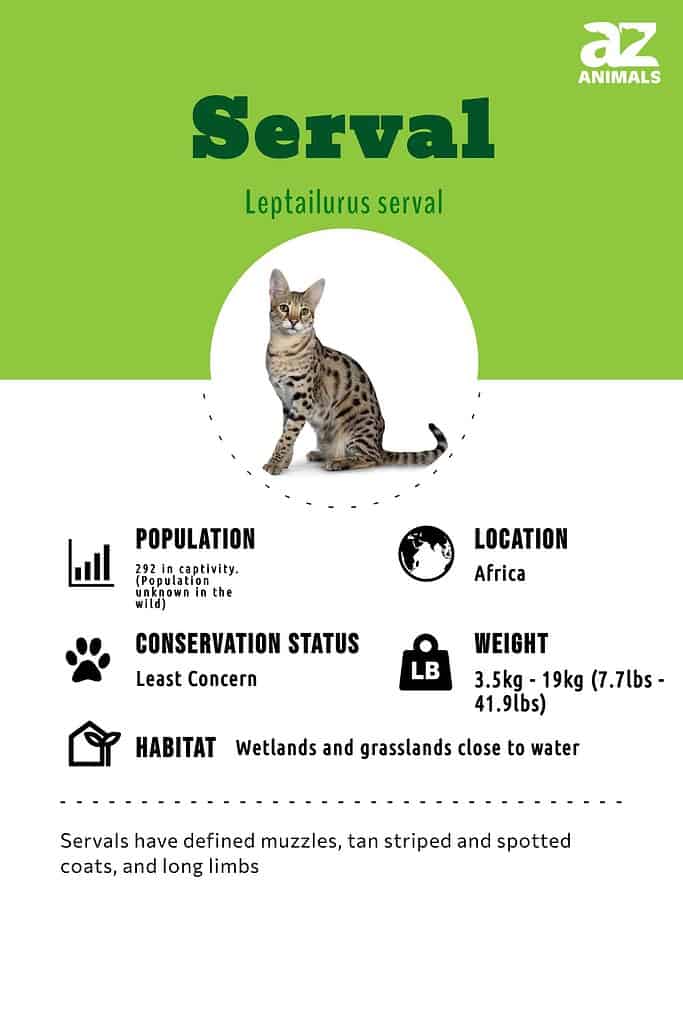
Classification and Evolution
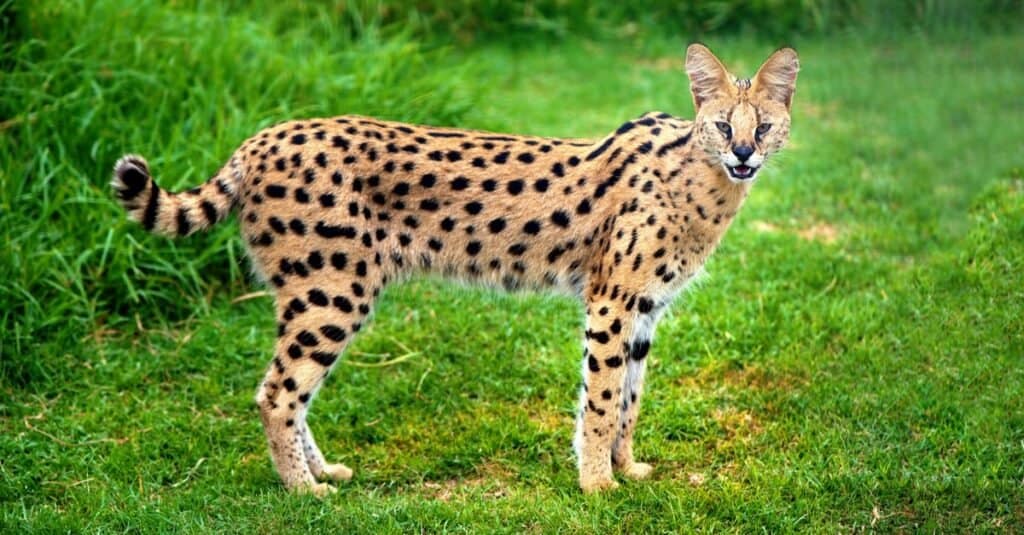
In spite of the spots on their coats which make them look like miniature cheetahs, servals are closely related to African golden cats and caracals
©Howard Klaaste/Shutterstock.com
Servals are pretty unique since they are rather fond of water. As a matter of fact, they make it a point of duty to remain close to it regardless of whether they happen to live in savannahs, forests, or marshes.
Like most felines, they enjoy a rather keen sense of hearing and are actually capable of swiveling their ears in the direction of sound. They also have sharp eyes and excellent vision in low-light conditions.
These speckled, striped miniature predators are considered to be part of the Caracal lineage which first emerged on the evolutionary scene 8.5 million years ago. According to experts, the ancestor of modern day servals made its way to Africa between that period and 5. 6 million years ago. The closest relatives of these wild felines are African golden cats and caracals.
Anatomy and Appearance
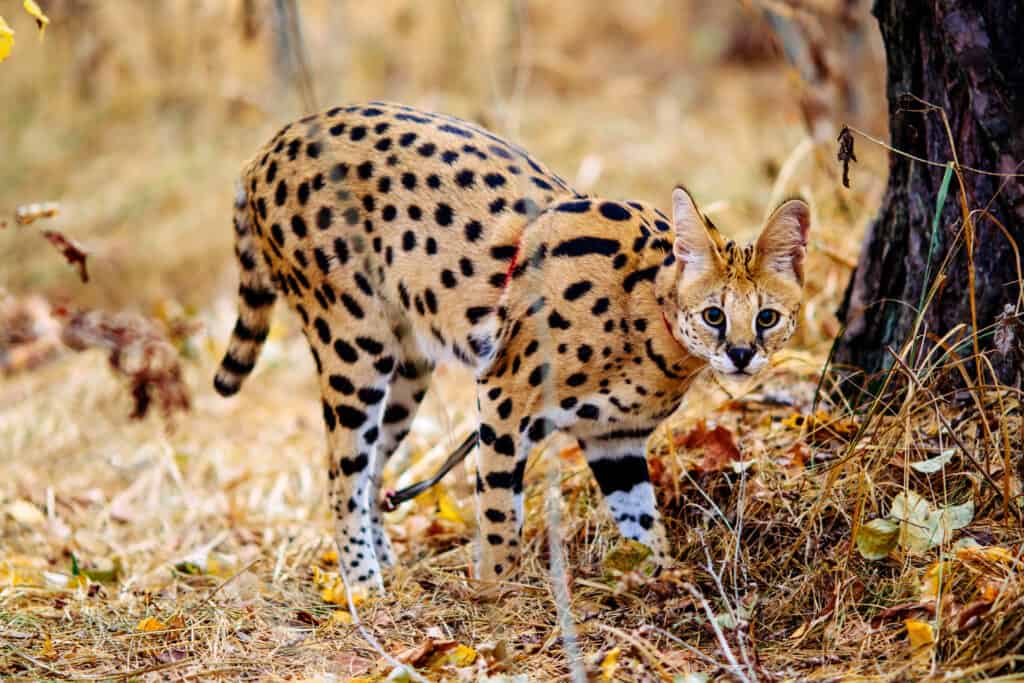
Servals’ long limbs and long neck make it easy for them to see when standing in tall grass
©PRESSLAB/Shutterstock.com
The Serval is an animal with yellowish or orange colored fur that is covered with both dark spots and stripes (the size and placement of which vary wildly between individuals), that helps to camouflage the Serval into the long grass. Markings start on the top of the head, running between the ears and down the neck and forming four distinct stripes which break into spots upon reaching the shoulders. The Serval’s relatively short tail is banded with black rings and ends in a black tip. Servals have quite long necks in comparison to their body size which when coupled with their long legs, enables their head to be up to 75cm off the ground which helps the animal to both see and hear clearly whilst hiding in long grass. Like all other felines (with the exception of the Cheetah) the Serval is able to pull back its claws into protective pouches of skin in their feet which means that they are able to keep their claws sharp to hunt with as they are not being blunted when moving around.
Distribution and Habitat
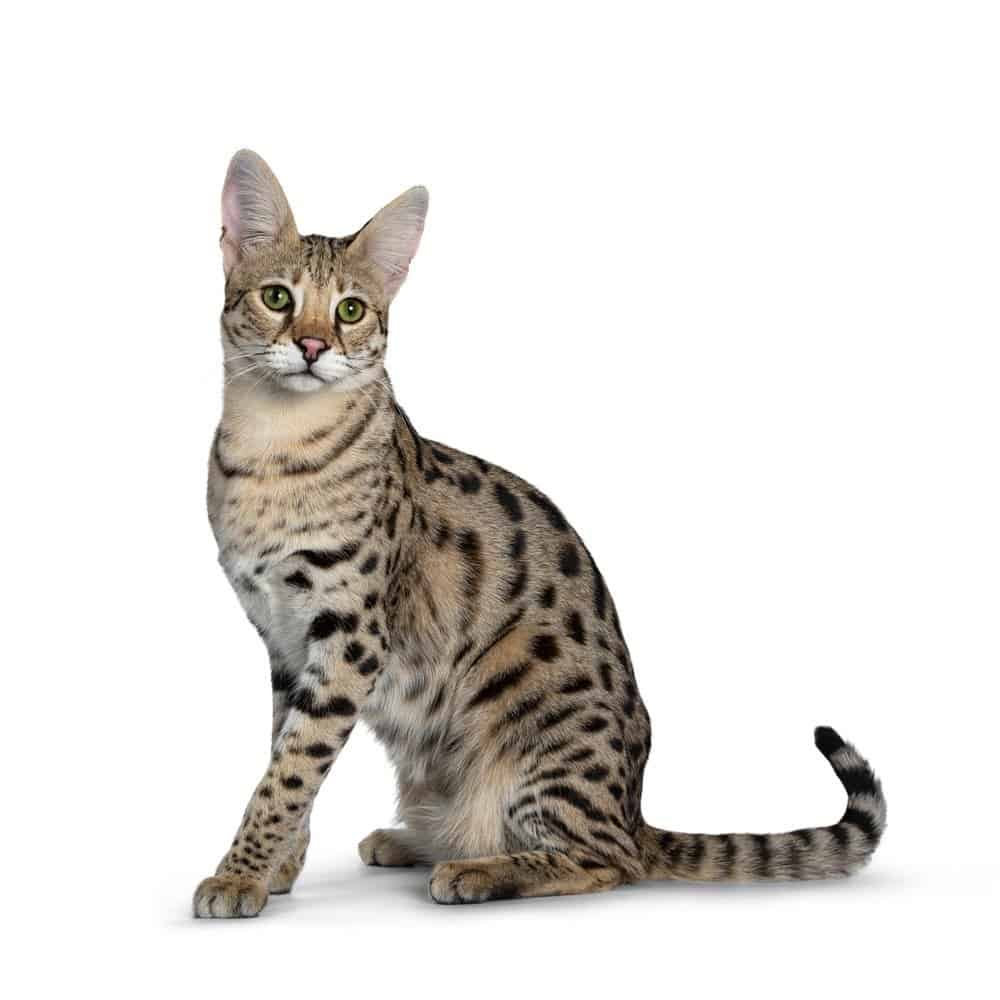
Servals are highly adaptable and are at home in forests, bamboo thickets, marshes, and stream banks
©Nynke van Holten/Shutterstock.com
Historically, the Serval would have once been found throughout Africa but is today mainly confined to areas south of the Sahara. The Serval has a relatively wide range throughout central and southern parts of Africa where it is most commonly found in reed beds and rushes through fringe wetlands and in grasslands that have a good source of water. Although wetlands are preferred, Servals are fairly adaptable animals and can be found in a range of other habitats within their home range too including forests, bamboo thickets, marshes, and along streams providing that there is a good supply of food and plenty of water.
Behavior and Lifestyle
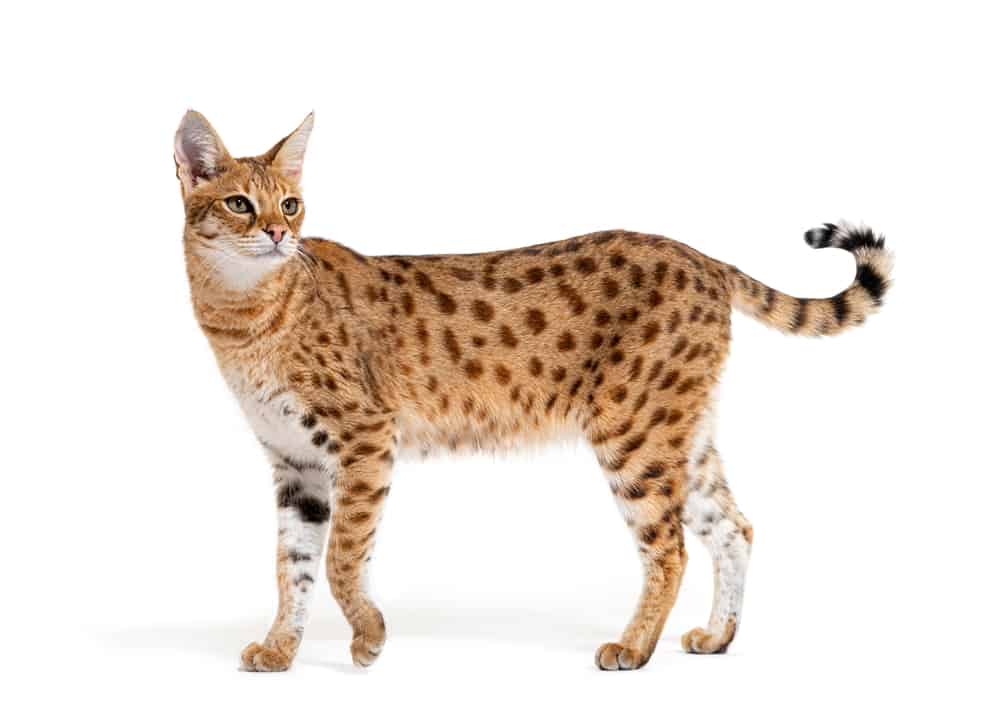
Servals are solitary and rather territorial
©Eric Isselee/Shutterstock.com
The Serval is a solitary animal that leads a crepuscular lifestyle, meaning that it is most active in the early morning and evening. Servals are highly territorial animals that roam throughout a home range of between 12 and 20 square kilometers that is marked with scents such as urine or scratch marks on trees and on the ground. Like numerous other feline species around the world, the range of a male Serval overlaps those of as many females as possible with which he can mate with (females however do not share parts of their territories with other females). Servals are incredibly adaptable animals that are not just good at climbing trees to escape danger but unlike many cats, will happily also wade into the water to catch their prey which they do by powerfully pouncing on their victim and catching it with their front paws.
Serval Reproduction and Life Cycles
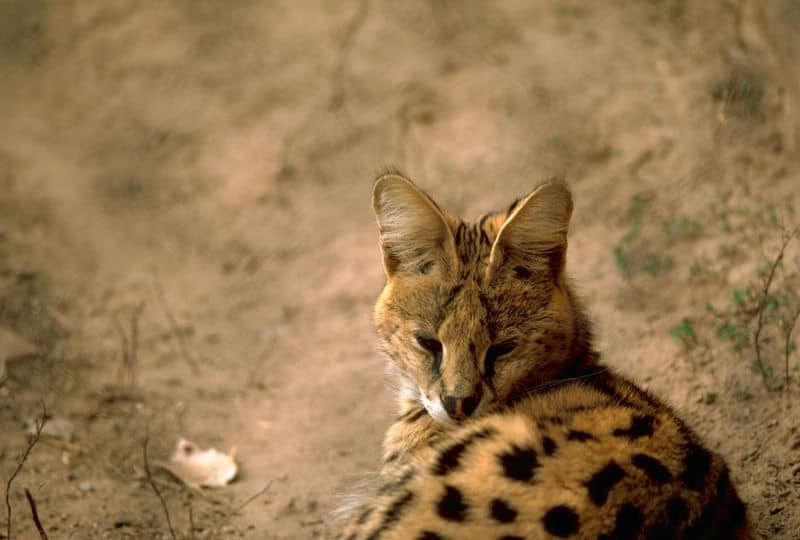
Servals have a lifespan of 10-12 years in the wild although they can live much longer in captivity
©Stolz, Gary M – Public Domain
Although there is no set breeding season for Servals, more mating tends to occur in the spring when a female will seek out and court the male for a few days. After mating, female Servals establish a safe den in dense vegetation where she gives birth to between one and three kittens, that are born after a gestation period that lasts for 73 days. Young Servals are born blind and weigh just 250g but within the first two weeks, their eyes open and they double in size. Female Servals suckle their young until they are weaned at 5 months when they begin to accompany her when hunting for food but don’t tend to leave her for at least a year. Once independent, the kittens must find a territory to call their own which can take young males up to two years. Servals are thought to live for an average of 10-12 years in the wild with oldest recorded individual having reached the age of 23.
Diet and Prey
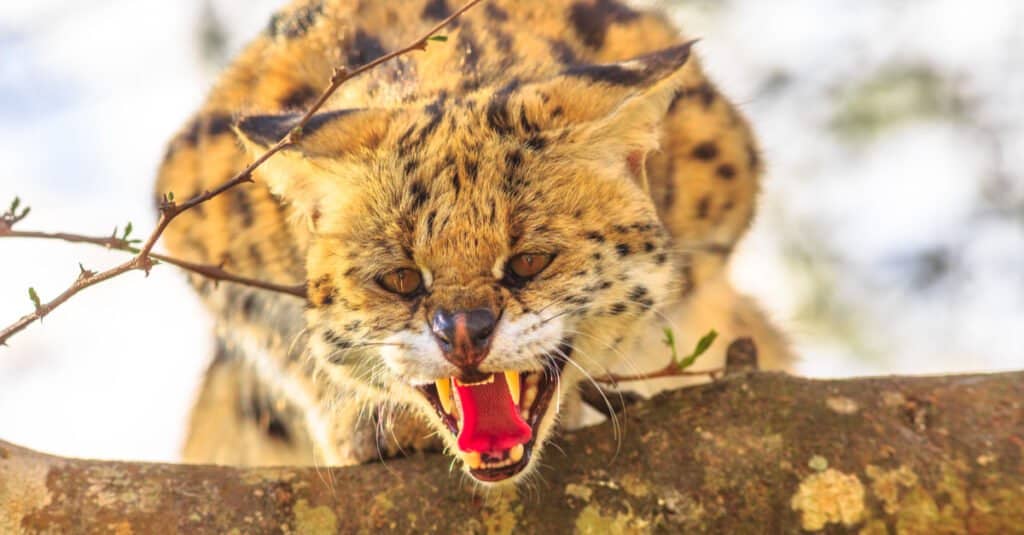
Servals’ diet consists mainly of small rodents, fish, and birds. They have however been known to attack poultry and even dogs
©Benny Marty/Shutterstock.com
The Serval is a carnivorous animal that hunts and eats small animals in order to survive. Servals primarily hunt rats and other small rodents along with fish and frogs in the water, large insects and small birds, which they are able to catch both on the ground and by leaping into the air. Servals detect their prey either by sniffing the air or by waiting and listening silently using their large ears. Once found, they lower their bodies towards the ground and slowly move towards it which is known as stalking. Once the Serval is close enough to its victim it pounces on it, catching the animal with its front paws. The long, back legs of the Serval are incredibly powerful and allow them to leap up to four meters horizontally and more than a meter up into the air. Although they don’t normally attack livestock, in areas that are close to habitation they have been known to take poultry and rarely can also attack dogs.
Predators and Threats
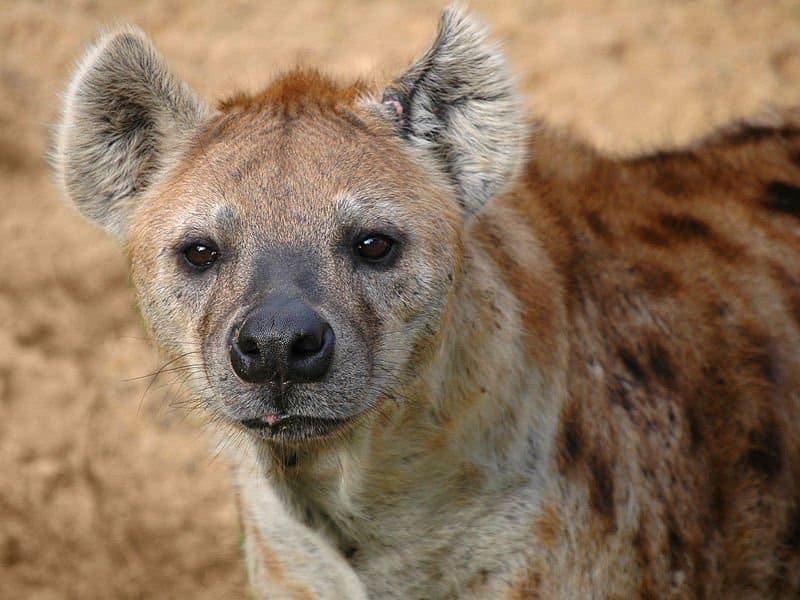
Hyenas constitute one of the greatest threats to servals
Due to the relatively large size and stealthy nature of the Serval, they have no common natural predators within their native environments with Leopards and Hyenas posing the biggest threat to them (not just from attack but also over competing for both food and territories). The biggest threat to Servals throughout Africa is people that are known to kill them for their fur which is highly sought after particularly in West Africa. They are also at risk from being shot by farmers who fear for their livestock and are threatened by habitat loss in a number of areas throughout their natural range.
Interesting Facts and Features
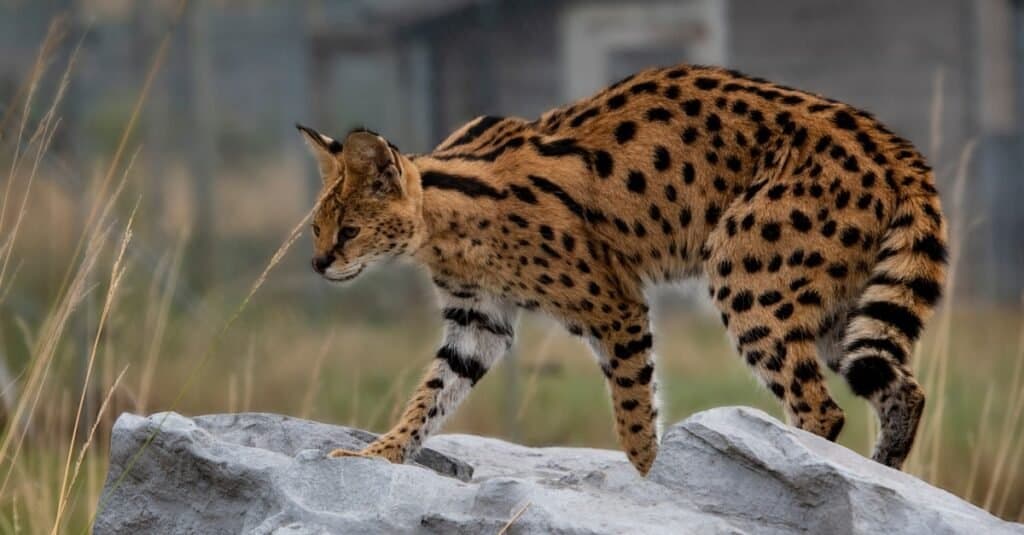
Servals’ fondness for rodents means they play a key role in the ecosystem keeping their populations in check
©Joanne_Charnwood/Shutterstock.com
Although Servals eat a variety of different prey, nearly 94% of their diet is comprised of small rodents such as rats, mice and shrews which means that they play a vital role in their local eco-systems keeping rodent numbers down. The large dish-like ears of the Serval allow them to sense the vibrations of rodents that are even underground and once detected, the Serval will dig its prey out using its sharp claws. The placement and size of the spots and stripes varies from one individual to the next however, those Servals that are found in grassland habitats tend to have larger black spots than those found in more forested areas to ensure they are well-camouflaged into their surroundings. Female Servals are known to change their lifestyles in order to accommodate for the fact that they have young and have to find food more often than normal. However, before they are old enough to join her out hunting, the kittens wait restlessly for her in the den and will often try and follow their mother who must distract them before leaving to hunt.
Relationship with Humans
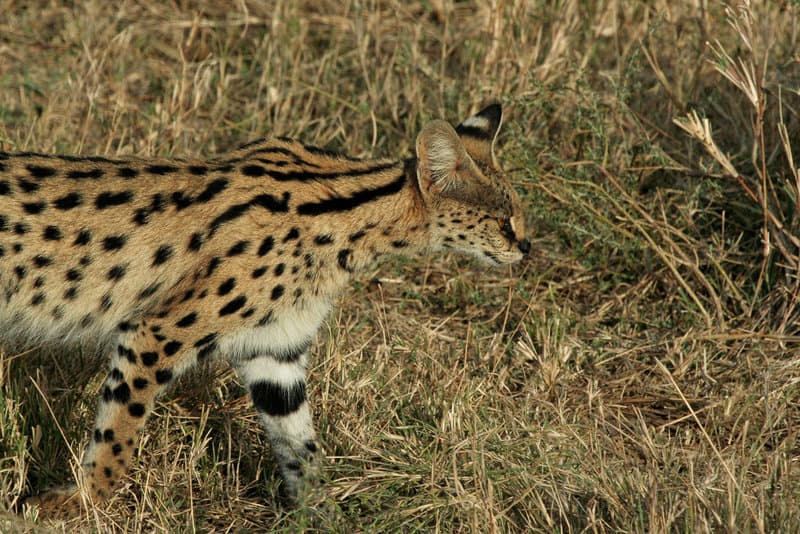
Servals generally thrive in areas far from human habitation
©Schuyler Shepherd (Unununium272), CC BY-SA 2.5, via Wikimedia Commons – License
Servals were once found throughout the African continent but are today extinct from the very south and in many parts of the north, primarily because they have been hunted for their pelts. They have also been captured and sold into the exotic pet trade and have even been cross-bred with domestic cats to produce smaller but similar-looking felines. Servals tend to survive more successfully in areas away from human settlements but when this is not possible, they are known to change their habits such as hunting at night rather than at dawn and dusk to minimize disturbance. Although they are not commonly known to actually attack livestock, they are often persecuted by farmers that fear for their domestic animals which has led to population decline particularly in certain areas.
Serval Cats as Pets
Serval cats can be found in the exotic pet trade, but they should not be kept as domestic pets. The primary reasons to not own a serval are:
1.) Many are captured by the illegal wildlife trade, so buying one can support illegal practices no matter the intention.
2.) Servals are wild animals and not domesticated, which makes them poor pets.
3.) Servals are illegal to own in most states.
Conservation Status and Life Today
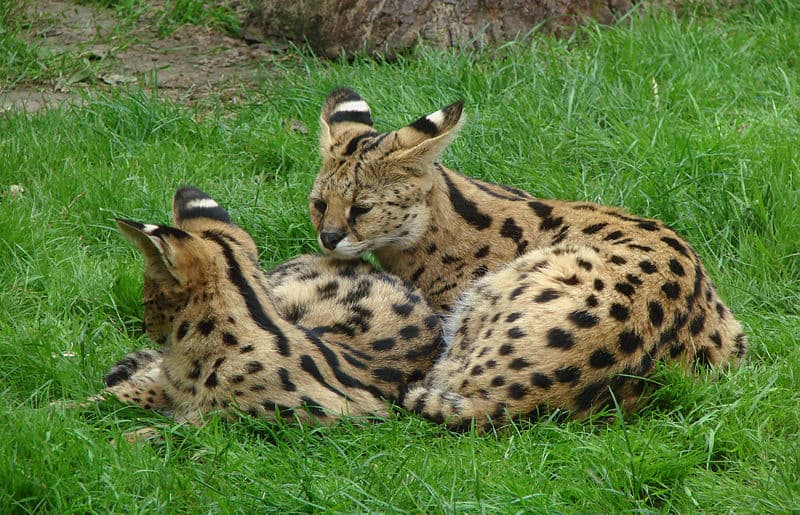
Captive-bred servals have been released into the wild to stabilize dwindling populations
©Vassil – Public Domain
Today, the Serval is listed by the IUCN as an animal that is of Least Concern from becoming extinct in its natural environment in the near future due to the fact that they are widespread and populations in many places are stable. However, they are now extinct from certain areas and have been declared locally Critically Endangered in the north where only a handful of small populations still exist. The reintroduction of captive-bred Servals has occurred in a number of regions to try to stabilize dwindling populations but the ongoing loss of their unique wetland habitats is causing concern to conservationists over the future of the Serval in Africa. Although the hunting of them is now prohibited in many African countries, pelts are still traded and in high numbers in some areas.
View all 293 animals that start with S How to Add Us to Google News


Serval FAQs (Frequently Asked Questions)
Are Servals herbivores, carnivores, or omnivores?
Servals are Carnivores, meaning they eat other animals.
What Kingdom do Servals belong to?
Servals belong to the Kingdom Animalia.
What class do Servals belong to?
Servals belong to the class Mammalia.
What phylum to Servals belong to?
Servals belong to the phylum Chordata.
What family do Servals belong to?
Servals belong to the family Felidae.
What order do Servals belong to?
Servals belong to the order Carnivora.
What type of covering do Servals have?
Servals are covered in Fur.
What genus do Servals belong to?
Servals belong to the genus Leptailurus.
Where do Servals live?
Servals live in sub-Saharan Africa.
In what type of habitat do Servals live?
Servals live in wetlands and grasslands close to water.
What are some predators of Servals?
Predators of Servals include humans, leopards, and hyenas.
How many babies do Servals have?
The average number of babies a Serval has is 2.
What is an interesting fact about Servals?
Servals can leap more than 1 meter into the air!
What is the scientific name for the Serval?
The scientific name for the Serval is Leptailurus serval.
What is the lifespan of a Serval?
Servals can live for 10 to 20 years.
How many species of Serval are there?
There are 10 species of Serval.
What is the biggest threat to the Serval?
The biggest threats to the Serval are habitat loss and hunting.
What is another name for the Serval?
The Serval is also called the African serval.
How fast is a Serval?
A Serval can travel at speeds of up to 40 miles per hour.
What is the difference between a serval and a caracal?
The main difference between a caracal and a serval is that caracals are golden brown, have black ear tufts, and occupy a larger range. Servals are yellow with black spots, don’t have ear tufts, and occupy a smaller range than the caracal.
What is the difference between a serval and an ocelot?
The key differences between the ocelot and the serval are their size, appearance, lifespan, habitat, diet, and habits.
What is the difference between a serval cat and a savannah cat?
The most significant differences between serval and savannah cats are their appearance, size, behavior, attack, and defense mechanism. The savannah cat is a hybrid of the serval and the domestic cat and is thus a domesticated cat. They both belong to the Felidae family, which houses other small cats, including the cheetah, the caracal, and the golden cat.
What is the difference between a cheetah and a serval?
While the serval and the cheetah might look indistinguishable because of their fur coloration, we can differentiate these cats through their size, morphology, and behavior. Moreover, both cats belong to the same Felidae family, which houses the caracal, golden cat, and savannah cat.
How to say Serval in ...
Thank you for reading! Have some feedback for us? Contact the AZ Animals editorial team.
Sources
- David Burnie, Dorling Kindersley (2011) Animal, The Definitive Visual Guide To The World's Wildlife
- Tom Jackson, Lorenz Books (2007) The World Encyclopedia Of Animals
- David Burnie, Kingfisher (2011) The Kingfisher Animal Encyclopedia
- Richard Mackay, University of California Press (2009) The Atlas Of Endangered Species
- David Burnie, Dorling Kindersley (2008) Illustrated Encyclopedia Of Animals
- Dorling Kindersley (2006) Dorling Kindersley Encyclopedia Of Animals
- David W. Macdonald, Oxford University Press (2010) The Encyclopedia Of Mammals
- Serval Information, Available here: http://animaldiversity.ummz.umich.edu/site/accounts/information/Leptailurus_serval.html
- About Servals, Available here: http://www.predatorconservation.com/serval.htm
- Serval Conservation, Available here: http://www.iucnredlist.org/apps/redlist/details/11638/0