
Quick Take
- All badgers have heterodont teeth, including incisors, canines, premolars, and molars.
- Badger dental formulae are species-specific.
- Badgers are opportunistic omnivores that eat both plant matter and animal flesh.
There are 11 recognized badger species belonging to the weasel family Mustelidae. They are grouped into four subfamilies: Melinae, Mellivorinae, Taxideinae, and Helictidinae. The American badger (Taxidea taxus) is the sole native species in North America, found from Canada to Mexico. Along with their sharp claws, badgers have thick fur and loose skin that allows them to twist and roll away from predators. Their foul-smelling anal secretions are also a very effective deterrent against predation. Much like a skunk’s spray, this potent musk is used for territory marking as well as defense. Badgers are formidable fighters, and predators often decide they are not worth the trouble, especially when considering their large, sharp teeth. Continue reading to discover everything you need to know about badger teeth.
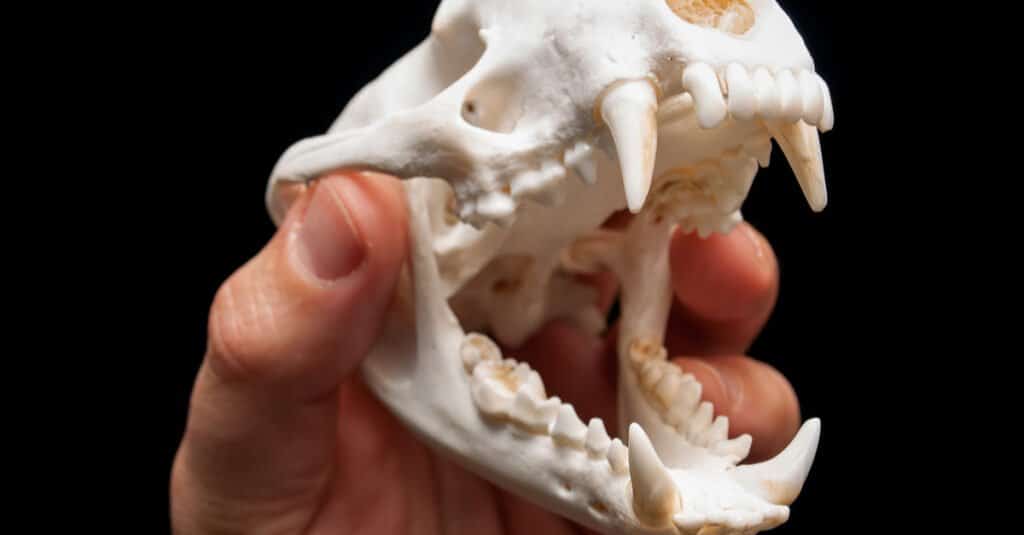
What Kind of Teeth Do Badgers Have?
Badgers are diphyodonts, meaning they develop two sets of teeth in their lifetime: deciduous (baby) teeth that fall out and are replaced by a single set of permanent adult teeth. All badger species have a full set of heterodont teeth: incisors, canines, premolars, and molars, but the number of premolars and molars varies among species.
Badger cubs’ deciduous (milk) teeth typically start erupting around four to five weeks of age, with their eyes opening around the same time, and they emerge from their dens. Their first permanent teeth appear around six to seven months of age, starting with molars and incisors, leading into the mixed dentition phase where both sets are present. Full development takes several months, with canines and premolars filling in later.
American Badger
The American badger has a dental formula of I 3/3, C 1/1, PM 3/3, M 1/2 = 34 teeth. This formula describes the number of each type of tooth in each quadrant of the mouth: left and right, upper and lower.
There are three incisors on each side of both the upper and lower jaws, totaling 12 incisors. There is one canine tooth on each side of both the upper and lower jaws, for a total of four canine teeth.
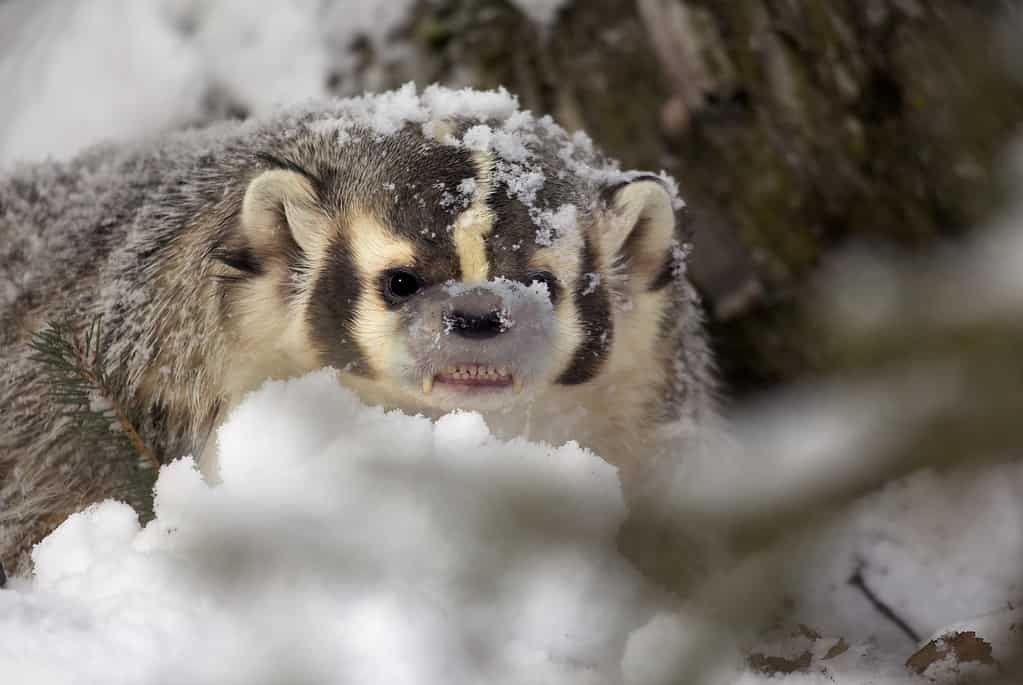
American Badgers have 34 teeth.
©moose henderson/iStock via Getty Images
American badgers have 12 premolars in total, with three on each side of the upper and lower jaws. The American badger has one molar on each side of the upper jaw and two on each side of the lower jaw, for a total of six molars, all located at the back of the mouth.
Eurasian Badger
Eurasian badgers (Meles meles) have a very similar dental formula to American badgers. The only difference is in the number of premolars this species has. Eurasian badgers have a dental formula of I 3/3, C 1/1, P 4/4, M 1/2 = 38 teeth.

Eurasian badgers have 38 teeth.
©Edward Hasting-Evans/Shutterstock.com
While the American badger has only three premolars per quadrant, the Eurasian badger has four, for a total of 16 premolars compared to 12 in the American badger.
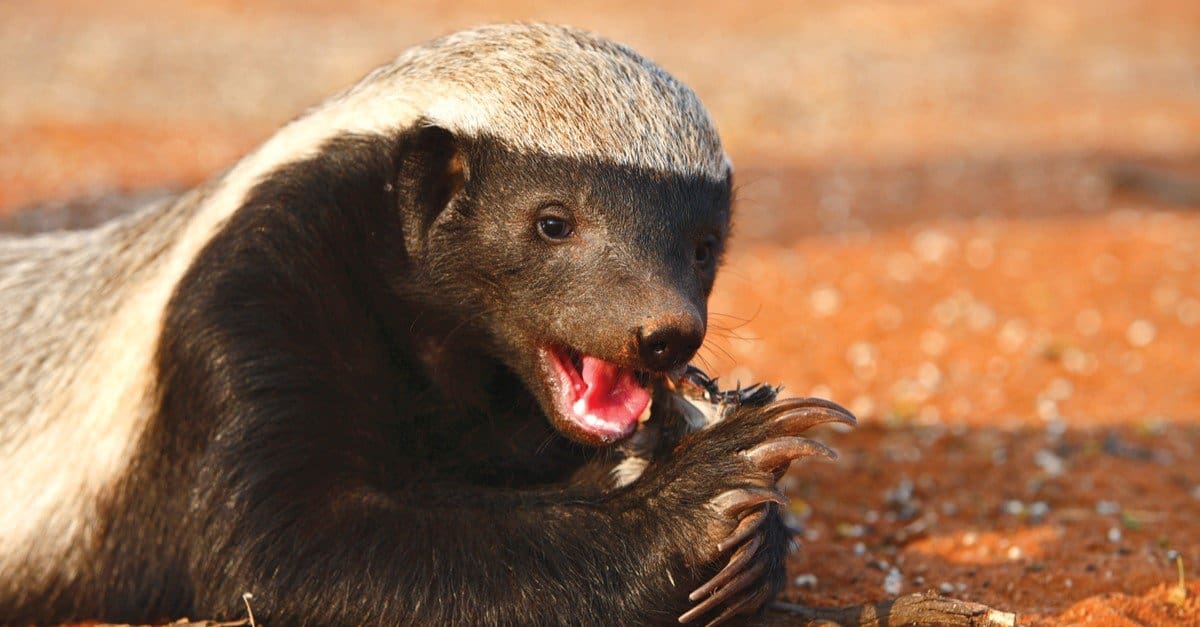
Honey Badger
The honey badger (Mellivora capensis) has a dental formula of I 3/3, C 1/1, P 3-4/3-4, M 1/2 = 34/38 teeth. Honey badgers sometimes have missing, small, or unusually placed teeth, but their dental formula is similar to both the American and Eurasian badgers. Honey badgers typically have three premolars in each quadrant, like American badgers, although they can have four, like Eurasian badgers.
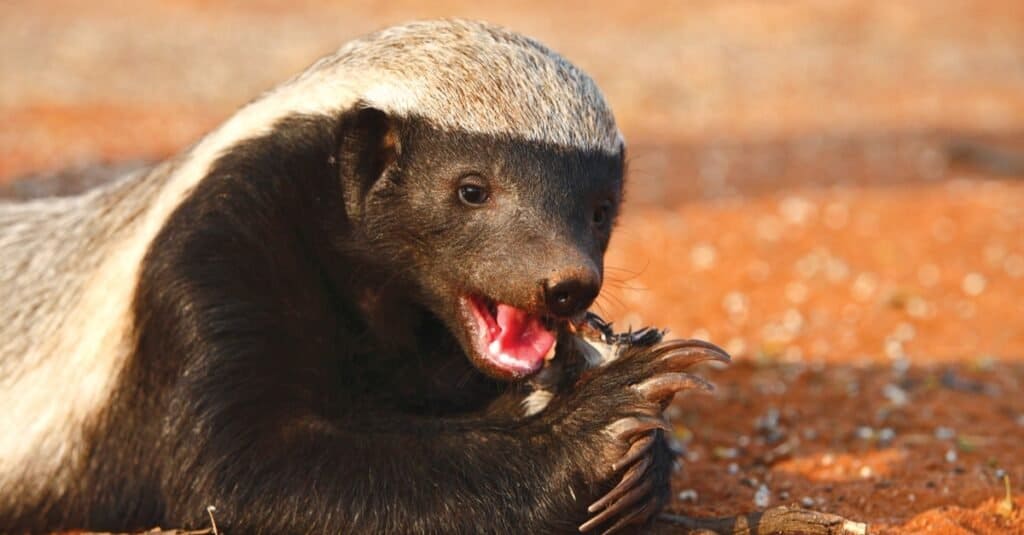
Honey badgers have between 34 and 38 teeth.
©Erwin Niemand/Shutterstock.com
How Do Badgers Use Their Teeth?
Incisors: The badger’s chisel-like front teeth are used for foraging, eating, grooming, and defense. Their incisors are useful for their plant-based diet, especially for cutting fruit from trees and vines or pulling earthworms out of the ground.
Badgers also use their front teeth for grooming. Grooming is a social activity in which badgers groom each other. When threatened, badgers bare their teeth, including their incisors, to show aggression and ward off predators.
Canines: As omnivores that feed on animal flesh, badgers rely on their large, razor-sharp canine teeth. Badgers use their canines for grasping and killing their prey, especially larger animals like rodents and rabbits. Because badgers also eat plants, their canines are not as large as those of strictly carnivorous animals. When they hiss, badgers display their canines to threaten predators.
Premolars and Molars: The badger’s premolars and molars function as carnassial teeth, acting like shears to slice flesh and crush bone. However, because badgers also eat plants, these teeth have flat crowns to help grind tough plant fibers.