
Quick Take
- Saltwater crocodiles produce the strongest bites directly measured, with peak forces exceeding 16,000 newtons and tooth pressures well over 3,500 PSI.
- This power clarifies an animal’s ecological role and, in paleontology, helps reconstruct extinct ecosystems by pairing bite force with skull design and feeding strategies.
- Despite the reputation, pit-type dogs typically generate only 230-250 PSI, far below the top end seen in breeds like Kangal shepherd or English mastiff.
- Read on to discover how the relatively weak jaw-opening muscles in crocodiles allow handlers to shut their mouths, despite their immense closing force.
Bite force might sound like a simple measure of how hard an animal can clamp its jaws, but it actually offers insight into feeding, hunting, and survival. In basic terms, bite force is the maximum force an animal’s jaws can generate when its teeth close on an object. Scientists study bite force to learn how animals process food, compare species, and infer how extinct animals may have lived. Whether cracking bones or slicing flesh, bite force reflects how evolution shaped skulls, muscles, and teeth for specific diets and behaviors. Understanding bite force helps explain why some animals rely on brute strength while others depend on speed, precision, or teamwork when feeding.
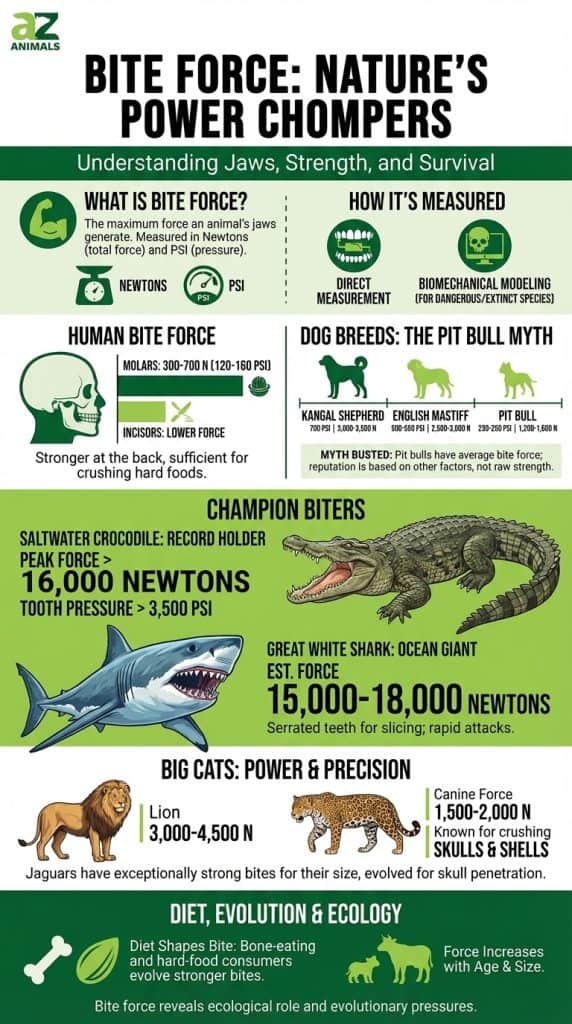
Explore the incredible bite forces of nature’s most powerful chompers, from the human jaw to the mighty saltwater crocodile and great white shark.
©A-Z Animals
How Scientists Measure Bite Force
Measuring bite force involves more than encouraging an animal to bite a hard surface. Researchers use specialized instruments called force transducers or digital dynamometers, which are padded metal sensors placed between the teeth. When the animal bites down, the device records the maximum force produced, usually reported in newtons. PSI, or pounds per square inch, is a related but different measure. PSI describes pressure, which is how much force is concentrated in a specific area, while newtons measure the total force of the bite. Together, these measurements help explain both how strong a bite is and how focused that force may be.
In humans and other cooperative animals, researchers measure maximum voluntary bite force during short efforts to reduce muscle fatigue. Multiple trials may be averaged for accuracy. For dangerous or uncooperative species, direct measurement is often impossible. In these cases, scientists rely on biomechanical modeling. These models use skull size, jaw shape, muscle attachment areas, and lever mechanics to estimate bite force. This approach is also essential for studying extinct animals known only from fossil remains.
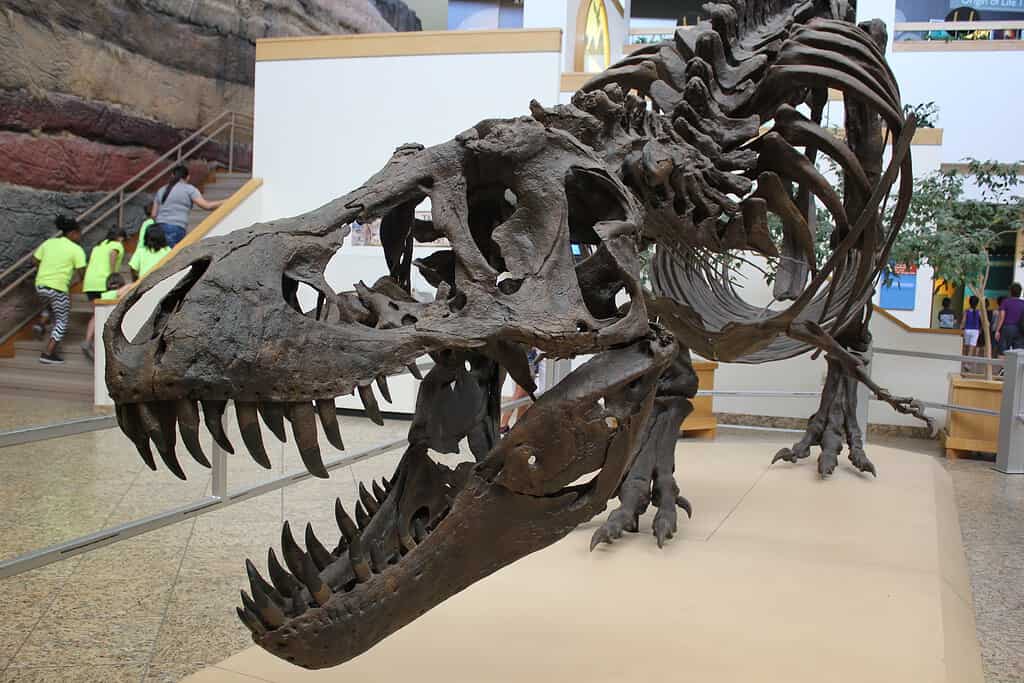
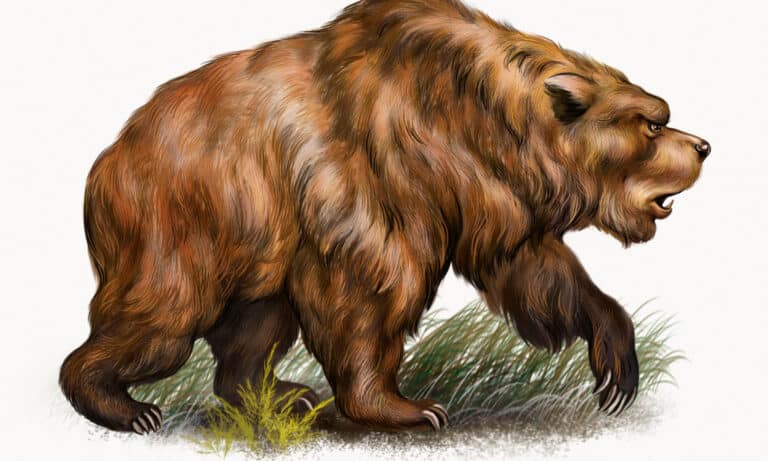
Researchers use biomechanical modeling to figure out an estimated bite force for extinct predators.
What Bite Force Actually Measures
Bite force represents the combined performance of the jaw system rather than muscle strength alone. Jaw muscles generate force, but skull shape and jaw geometry determine how that force reaches the teeth. The jaw acts as a lever, and its design strongly affects mechanical advantage.
Bite force is usually greatest at the back teeth. Molars sit closer to the jaw joint, allowing muscles to apply force more efficiently. Front teeth, such as incisors, experience lower forces because they sit farther from the joint. This tradeoff allows incisors to excel at cutting and grasping rather than crushing.
Human Bite Force: Stronger Than It Seems
Humans rarely think of themselves as powerful biters, yet their jaws are capable tools. Studies measuring adult human bite force report average molar values of about 300 to 700 newtons, with most people falling between roughly 350 and 500 newtons. When expressed as pressure, this translates to an estimated 120 to 160 PSI at the molars, depending on tooth contact area. Incisor bite forces are much lower, often less than half of molar values, and produce substantially lower PSI as well.
Bite force varies widely between individuals. Age, sex, facial structure, and dental condition all play roles. Males often show higher average values than females, though overlap is substantial. Dental health matters as well, since pain or missing teeth can limit how hard someone bites.

Humans have a stronger bite force in their molars than in their incisors.
©Studio Romantic/Shutterstock.com
Despite modest numbers compared with large predators, human bites are powerful enough to crush hard foods such as nuts and cooked bones. Biomechanical studies also show that human jaws transmit muscle force efficiently, reflecting adaptations for a flexible and varied diet instead of extreme strength.
Dog Bites: Are Pit Bulls the Strongest?
Domestic dog bite force varies widely based on skull shape, jaw muscle size, and overall body mass. Large mastiff-type dogs tend to rank at the top. Kangal shepherd dogs are often cited with bite pressures around 700 PSI, corresponding to roughly 3,000 to 3,500 newtons of force, while English mastiffs are commonly estimated in the 500 to 550 PSI range, or about 2,500 to 3,000 newtons.
Many people imagine pit bulls have the “hardest” bite, but available data does not support that claim. Estimates for pit-type dogs typically fall between 230 and 250 PSI, roughly 1,200 to 1,600 newtons, which is comparable to German shepherds and American bulldogs of similar size.
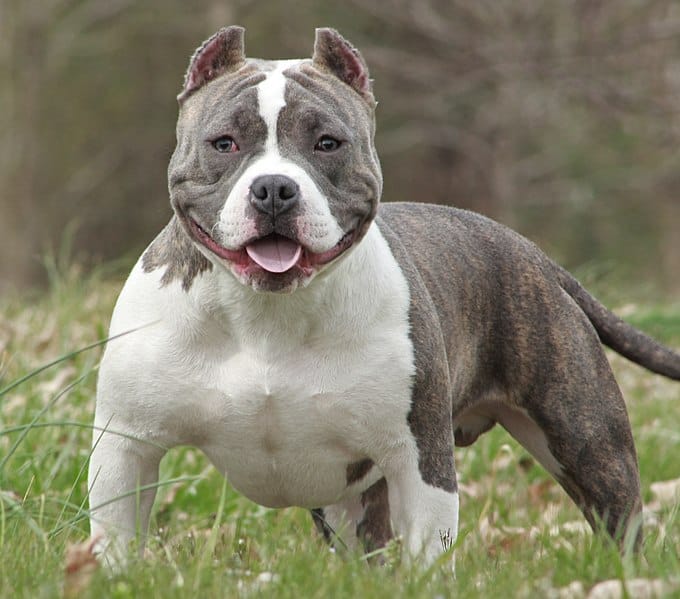
Pocket pitbulls only reach about 16 inches tall and have less powerful bites than larger pitbulls.
Smaller varieties, including so-called pocket pit bulls that may stand around 16 inches tall, produce lower absolute force simply due to reduced jaw size and muscle mass. The pit bull’s reputation comes less from raw bite strength and more from body build, persistence once engaged, and human factors such as breeding, training, and handling. Biting power alone does not determine danger or behavior; environment and responsible ownership are far more important than PSI or Newton figures.
Saltwater Crocodiles: Record-Breaking Jaws
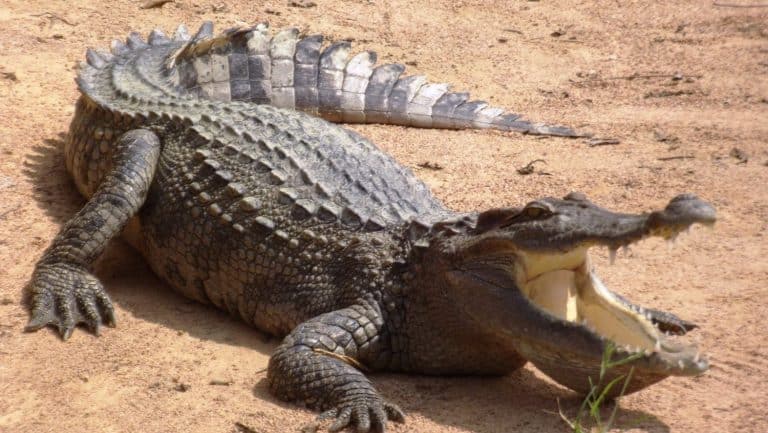
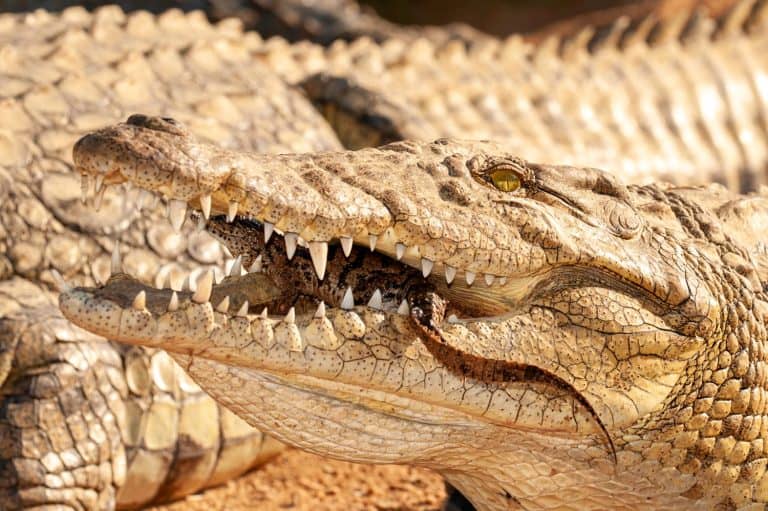
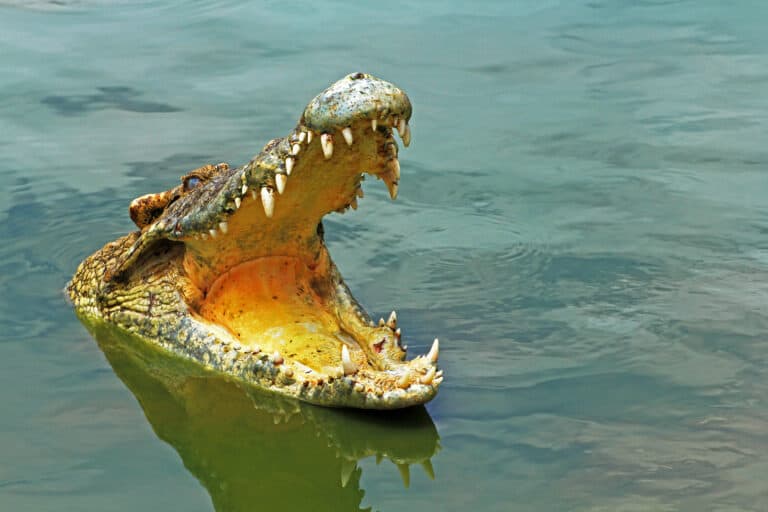
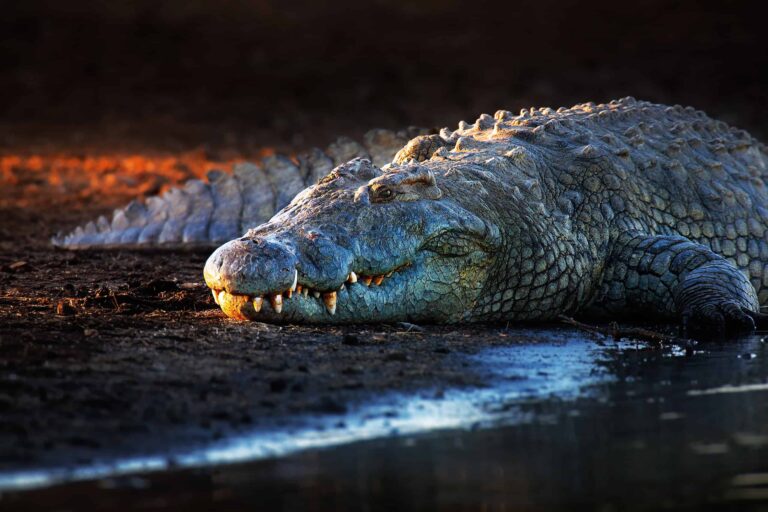
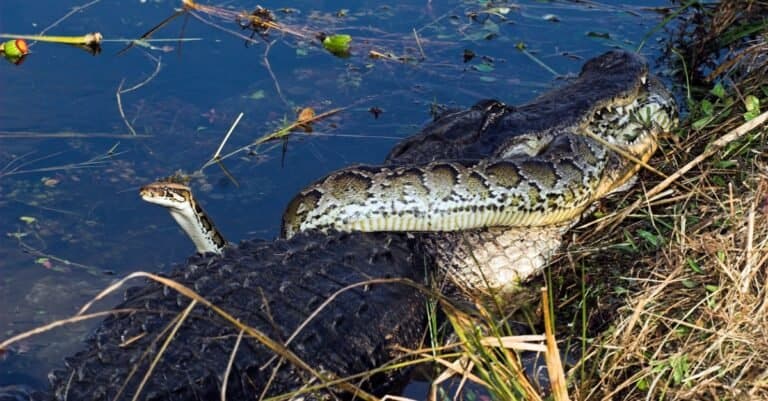
Among living animals, saltwater crocodiles produce the strongest bites ever directly measured. Controlled studies on restrained individuals have recorded peak bite forces exceeding 16,000 newtons in large adults, with one very large individual approaching the upper end of that range. In terms of pressure, this corresponds to estimated tooth pressures well above 3,500 PSI at the point of contact, far surpassing any mammal. This is easily enough to shatter a wooden baseball bat or bend a crowbar, but the crocodile uses it instead to sever the limbs and crush the skulls of large prey like pigs, deer, or water buffalo.
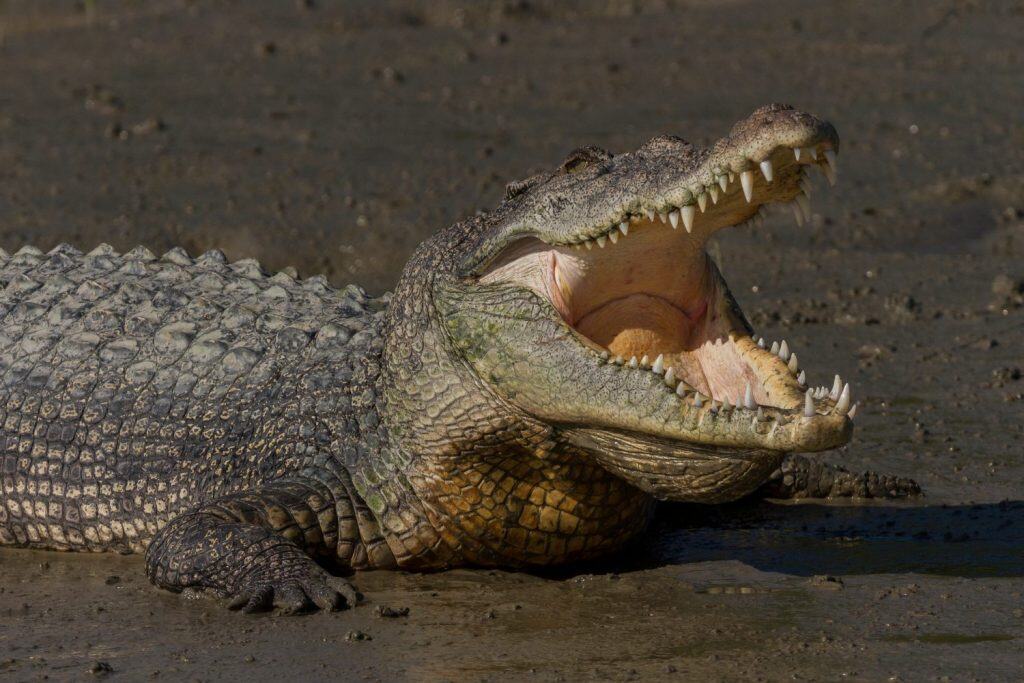
Of all land animals, saltwater crocodiles have the strongest bite force.
©Soumyajit Nandy/Shutterstock.com
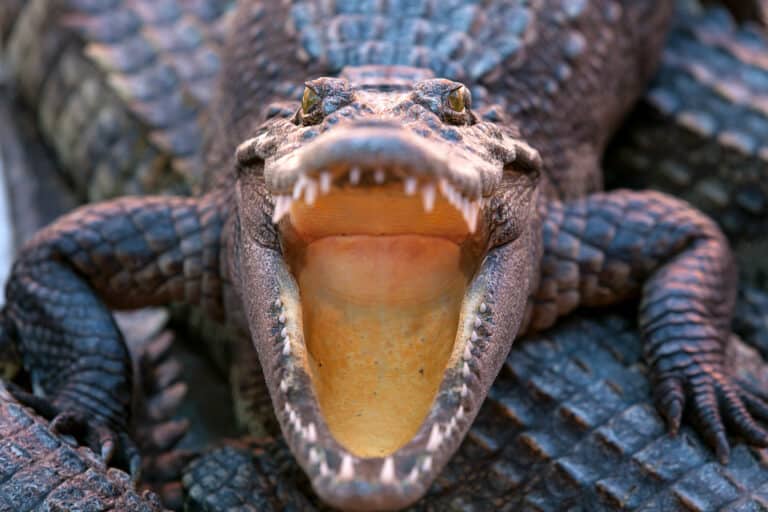
Crocodiles do have a weakness, though. They have a notable contrast between jaw strength and jaw opening ability. Their jaw-opening muscles are relatively weak. This imbalance explains why trained handlers can hold a crocodile’s mouth shut using tape or rope, despite the animal’s immense closing force.
Great White Sharks: Ocean Power Bites
Great white sharks rank among the most formidable biters in marine environments. Direct biting measurements with instruments are not possible for large sharks due to safety concerns. Instead, scientists rely on computer simulations based on jaw mechanics, muscle size, and body length.
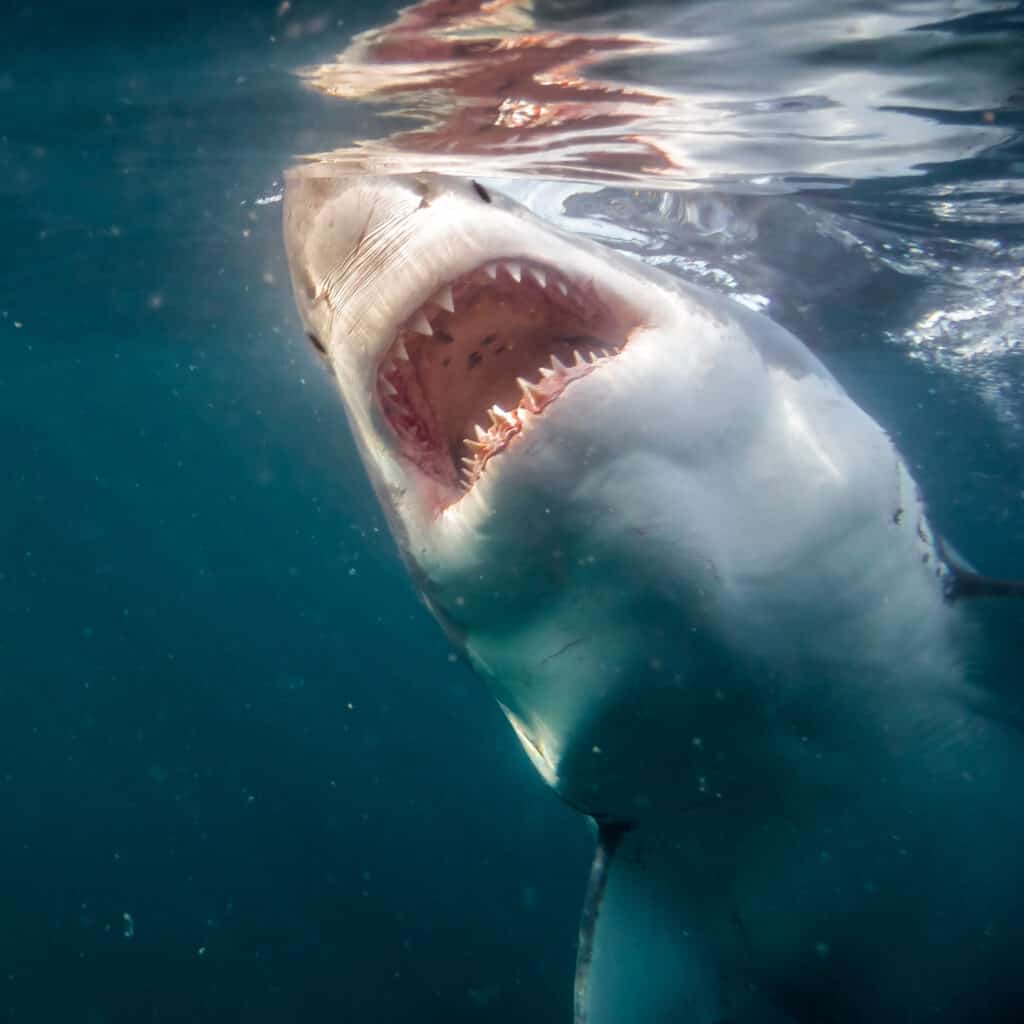
Large sharks like the great white shark can bite through a turtle’s shell.
©Vincent Legrand/Shutterstock.com
Biomechanical models estimate that large great white sharks can generate super-powered bites of over 15,000 newtons, with some estimates approaching or surpassing 18,000 newtons in very large individuals. These values place great whites among the strongest biters alive today.
The effectiveness of a shark’s bite comes from more than force alone. Rows of serrated teeth act like blades, slicing through flesh, blubber, and bone. Combined with rapid swimming speed and surprise attacks, this biting ability allows great whites to prey on seals, sea lions, and large fish with efficiency.
Big Cats and Their Killing Bites
Large cats use bite force differently from bone crushers like hyenas. Lions, tigers, and leopards rely on bites to subdue and kill prey through suffocation or spinal damage rather than crushing bone. Estimates for the power of a lion bite often fall between 3,000 and 4,500 newtons, depending on body size, jaw position, and measurement method. Tigers are believed to fall in a similar range, scaled upward with their larger mass.
Jaguars deserve special attention. Although smaller than lions and tigers, jaguars have exceptionally strong bites relative to their size. Biomechanical studies estimate canine bite forces of 1,500-2,000 newtons, paired with short, wide skulls built to tolerate high stress. Jaguars are known for killing prey by biting directly through the skull or shell, such as caimans and turtles—a behavior that is rare among other big cats.
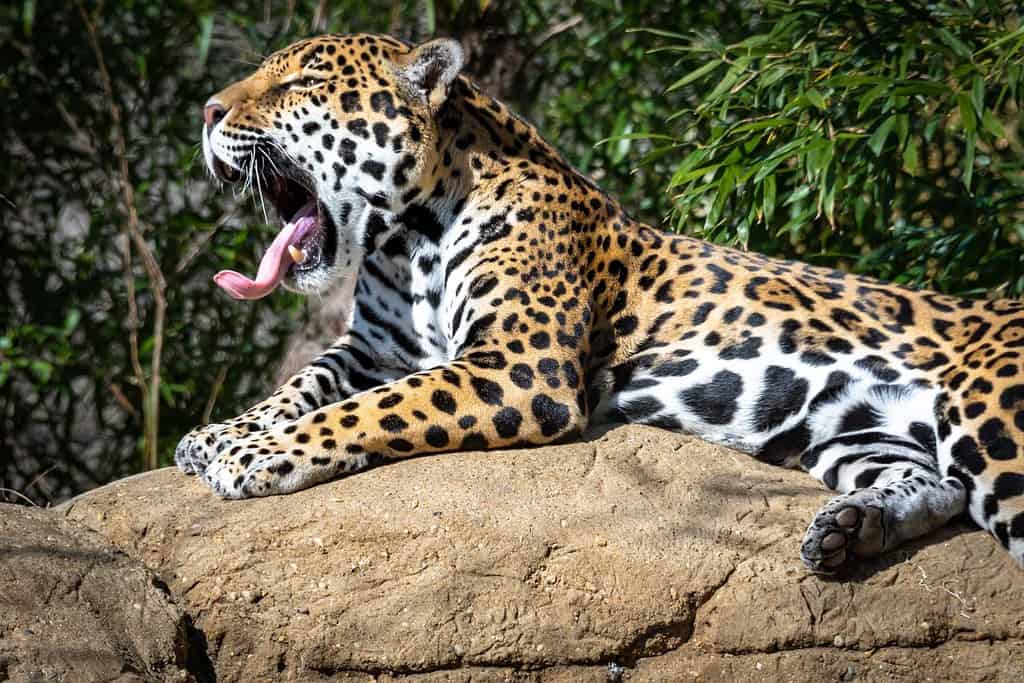
Jaguars have a stronger bite than most other big cats.
©Deborah Ferrin/Shutterstock.com
These differences illustrate how biting strength and anatomy are shaped by hunting strategy. Cats prioritize precision, control, and lethal placement over raw crushing power, combining strong jaws with sharp canines and powerful neck muscles to end a hunt quickly.
Bite Force, Diet, and Ecology
Diet plays a central role in shaping bite force. Species that regularly consume hard or resistant foods tend to evolve stronger bites relative to body size. Bone-eating carnivores, seed-cracking rodents, and shell-breaking marine animals often fall into this category.
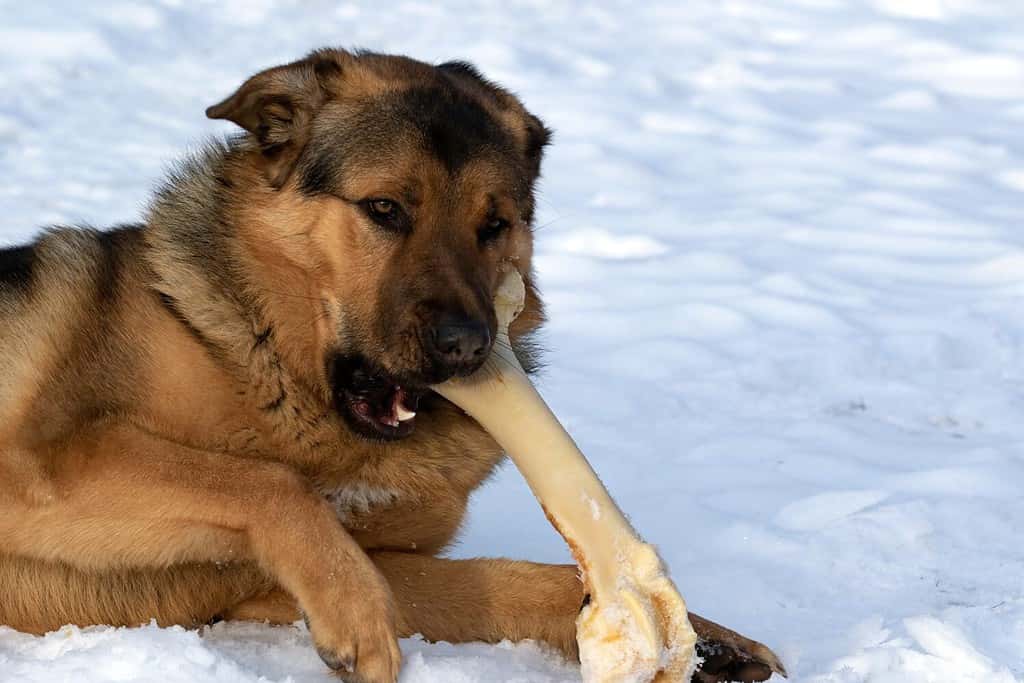
Bone-eating carnivores have stronger jaws and teeth for crushing bones and eating marrow.
©Viesinsh/Shutterstock.com
Predators that slice flesh or swallow prey whole may rely less on extreme biting power. Instead, they emphasize sharp teeth, fast jaw closure, or cooperative hunting. Comparative studies show that body mass is a strong predictor of absolute bite force across mammals, but dietary specialization causes some species to deviate from this pattern.
Herbivores also show variation. Animals that grind tough plant material require sustained biting ability. Giant pandas, for example, possess jaw muscles and skull structures adapted for crushing bamboo, resulting in high forces despite their plant-based diet.
How Bite Force Changes Over a Lifetime
Bite force develops gradually as animals grow. In humans, children produce much lower maximum force than adults. As jaw muscles strengthen and skull bones mature, bite force increases through adolescence and stabilizes in adulthood.
Tooth position continues to influence force throughout life. Posterior teeth consistently generate higher forces than anterior teeth, and these mechanical patterns shape feeding behavior. Young animals often eat softer foods until their jaws are strong enough to handle tougher materials.
Similar trends occur in other mammals. Juvenile carnivores may rely on parental provisioning or softer prey until their skulls and muscles reach adult strength. This gradual increase in bite force reflects the close link between physical development and diet.
Why Biologists Care About Bite Force
Bite force provides a practical way to compare how animals interact with their environments. High bite forces can signal the ability to process hard foods, capture large prey, or access resources unavailable to competitors. When paired with data on tooth shape and skull design, this helps define an animal’s ecological role.
In paleontology, bite force estimates allow scientists to test hypotheses about extinct species. By modeling fossil skulls, researchers can infer feeding habits and competitive interactions. These insights help reconstruct ancient ecosystems and understand evolutionary pressures. As measurement techniques improve, bite force remains a valuable tool for linking anatomy, behavior, and survival across living and extinct species.

Researchers use computer models to help them estimate the bite force of extinct animals.
©Max Acronym/Shutterstock.com
Power Behind Every Chomp
From everyday human chewing to the crushing jaws of crocodiles, bite force connects routine actions with survival challenges. Each bite reflects a balance of muscle strength, skeletal design, and behavior shaped by evolution. Studying bite force clarifies why some animals rely on sheer strength while others depend on speed or strategy. Behind every chomp lies a story of adaptation, trade-offs, and the constant push to survive in a demanding world.