
Have you ever seen a hippo get its teeth brushed? This video from CGTN Español shows how a zookeeper cleans the teeth of a very cooperative hippo. The friendly hippo keeps its massive mouth open for the entire cleaning, which is done with perhaps the world’s biggest toothbrush. Once the cleaning is complete, the hippo gets a fruit treat for a reward. Why do hippos need their teeth brushed in captivity, and how do they keep their massive chompers clean in the wild?
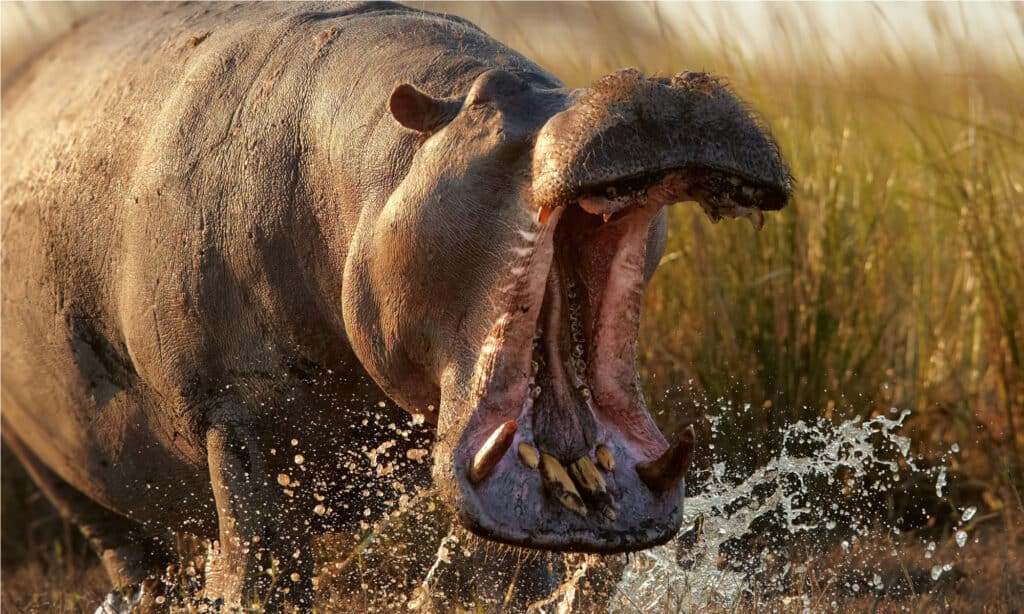
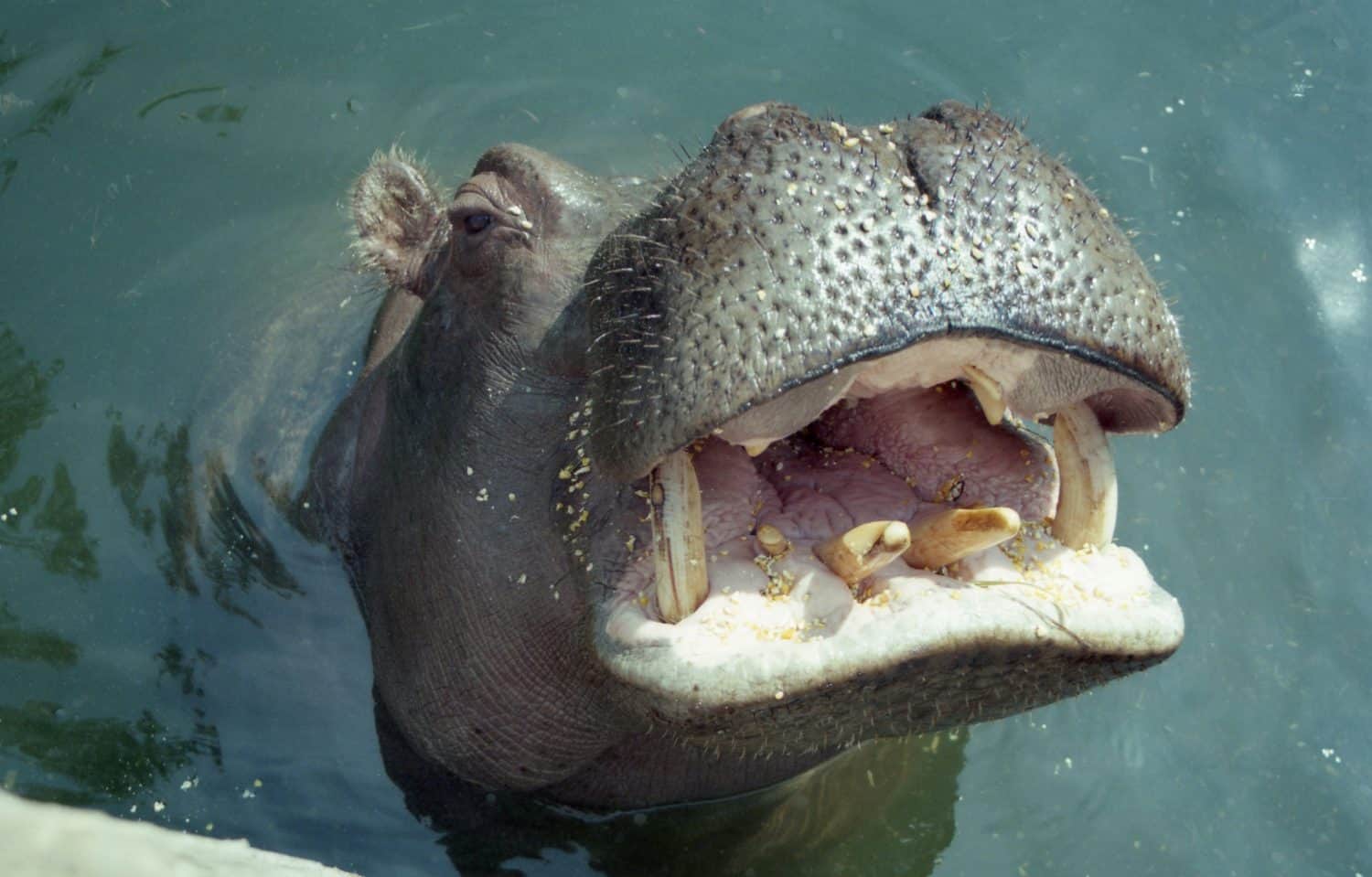
Hippos can open their jaws up to 150 degrees.
©Martin Mecnarowski/Shutterstock.com
Hippo Teeth Never Stop Growing
Hippos eat large amounts of grass and other vegetation each day, wearing down their teeth. But they don’t have to worry about this because their teeth continuously grow throughout their lives. Hippos may be herbivores, but unlike many herbivores that have broad, flat molars for grinding up vegetation, hippos’ teeth are a little different. Hippos have 36 teeth, including four canine teeth and eight incisors. The two lower canines are the largest in the mouth and curve forward. In the back of the mouth are the molars and premolars, which hippos use for chewing food.
The sharp, tusk-like teeth at the front of the mouth are used by hippos to assert dominance over other hippos and to defend themselves against predators. The incisors and canine teeth continue to grow throughout a hippo’s life. The upper teeth can reach nearly 16 inches in length, while the lower ones can grow even longer, sometimes exceeding 20 inches.
Why Do Hippos in Zoos Need Their Teeth Cleaned?
Whether in the zoo or in the wild, hippos benefit from having food and other debris removed from their teeth. In captivity, hippos can get their teeth cleaned by zookeepers. But in the wild, they rely on symbiotic relationships with birds and fish. Birds, such as oxpeckers, pick parasitic insects off hippos’ skin and have also been observed venturing into their mouths to feed. Barbel fish also help maintain hippo dental hygiene. These fish eat ticks and other insects from the hippos’ skin and even enter their mouths to remove debris from their teeth.
How Do Zoos Keep Hippo Teeth Clean?
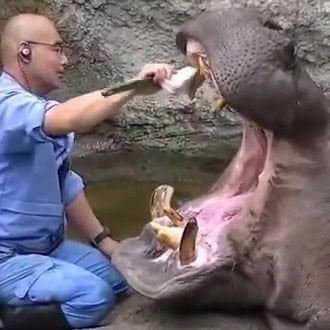
This zookeeper is using a large brush to clean a hippo’s massive teeth.
©CGTN Español / YouTube – Original
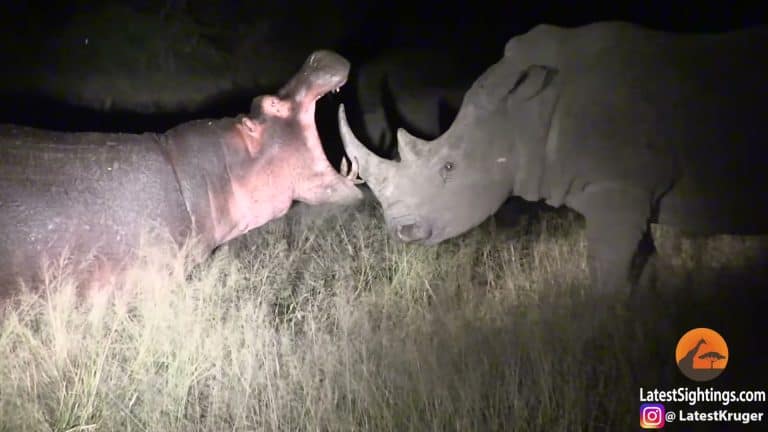
Similar to a dentist’s routine, the zookeeper in the video examines the hippo’s teeth and gums before starting the cleaning process. The zookeeper then reaches his hand inside the hippo’s wide mouth and brushes its teeth with a giant toothbrush. Hippos can open their jaws as wide as 150 degrees, which in the wild is often done to assert dominance. In the video, the hippo keeps its mouth open wide, making it easy for the handler to reach all parts of its mouth for cleaning.
Jia Hongwei, a zookeeper in China’s Chongqing Municipality, told CGTN that he cleans the teeth of their resident 30-year-old hippo twice a day. Hongwei explained that the hippo, named Bobo, seems to enjoy the daily brushing, “Normally, when he finishes his meal and gets his teeth brushed outdoors, he would appear quite like he’s enjoying it as the weather would be nice.”
In Japan, another zookeeper at Osaka Tennoji Zoo explained that zookeepers brush their hippo’s teeth using a carwash brush. Zookeepers spend about 15 minutes, twice a day, cleaning the hippo’s teeth. And in a Facebook post from the Toledo Zoo, the zoo explains they also clean their hippos’ teeth each day, “This daily routine helps remove excess hay and food to keep their gums healthy. Not to mention, they love chomping on some tasty treats once they’re finished!”
Is It Dangerous to Brush a Hippo’s Teeth?
Is it dangerous to reach inside a hippo’s mouth to clean its teeth? It certainly can be. Zookeepers seen on YouTube cleaning a hippo’s mouth have built a trusting relationship with the animal. These hippos are captive, familiar with humans, and accustomed to being handled by zookeepers. However, people should never approach a hippo in the wild. Hippos are wild animals and can be very territorial. With their bulk, strength, and sharp teeth, hippos can be dangerous. Their bite force is between 1,800 and 2,000 pounds per square inch (PSI). That’s a stronger bite force than a jaguar or polar bear.
Hippos’ Impressive Teeth Make Them Vulnerable to Poachers
Sadly, a hippo’s impressive, tusk-like teeth are sought after by poachers. As elephant ivory has become harder to obtain, demand for hippo teeth on the black market has increased. Conservationists warn that stronger measures are needed to protect hippos from the illegal trade of hippo teeth.