
There are eight extant species in the family Ursidae, commonly known as bears; however, there are over 100 extinct bear species. Polar bears (Ursus maritimus) and grizzlies (U. arctos horribilis) may seem large, but the largest bear to ever live dwarfed them both. Continue reading to discover the largest bear to ever exist and learn what happened to this massive beast. Let’s get started!
The Largest Bear to Ever Live
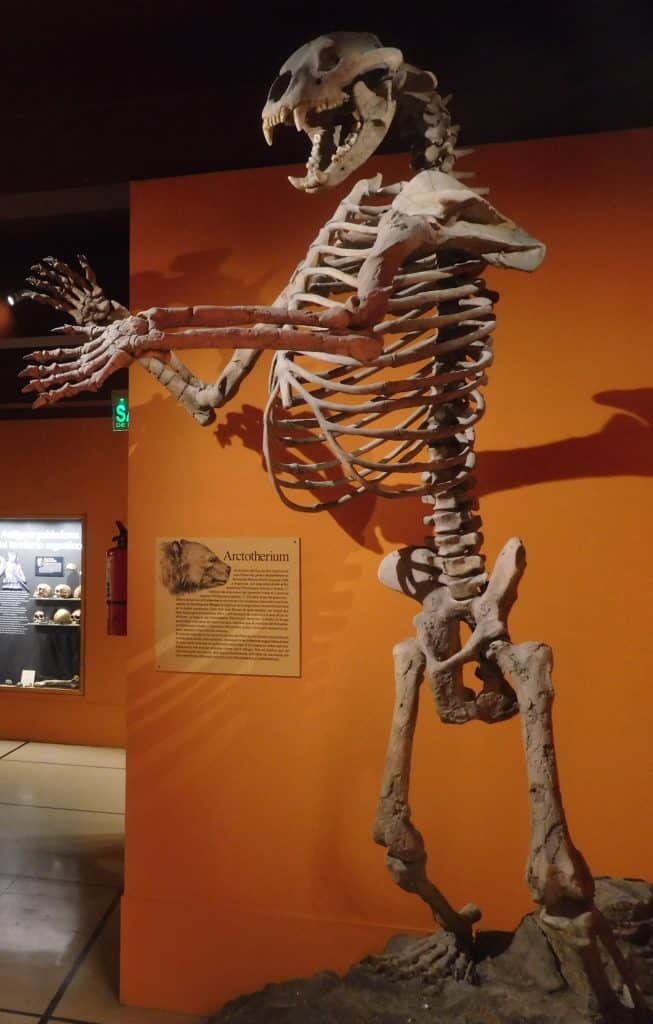
Arctotherium is a genus of large extinct bears.
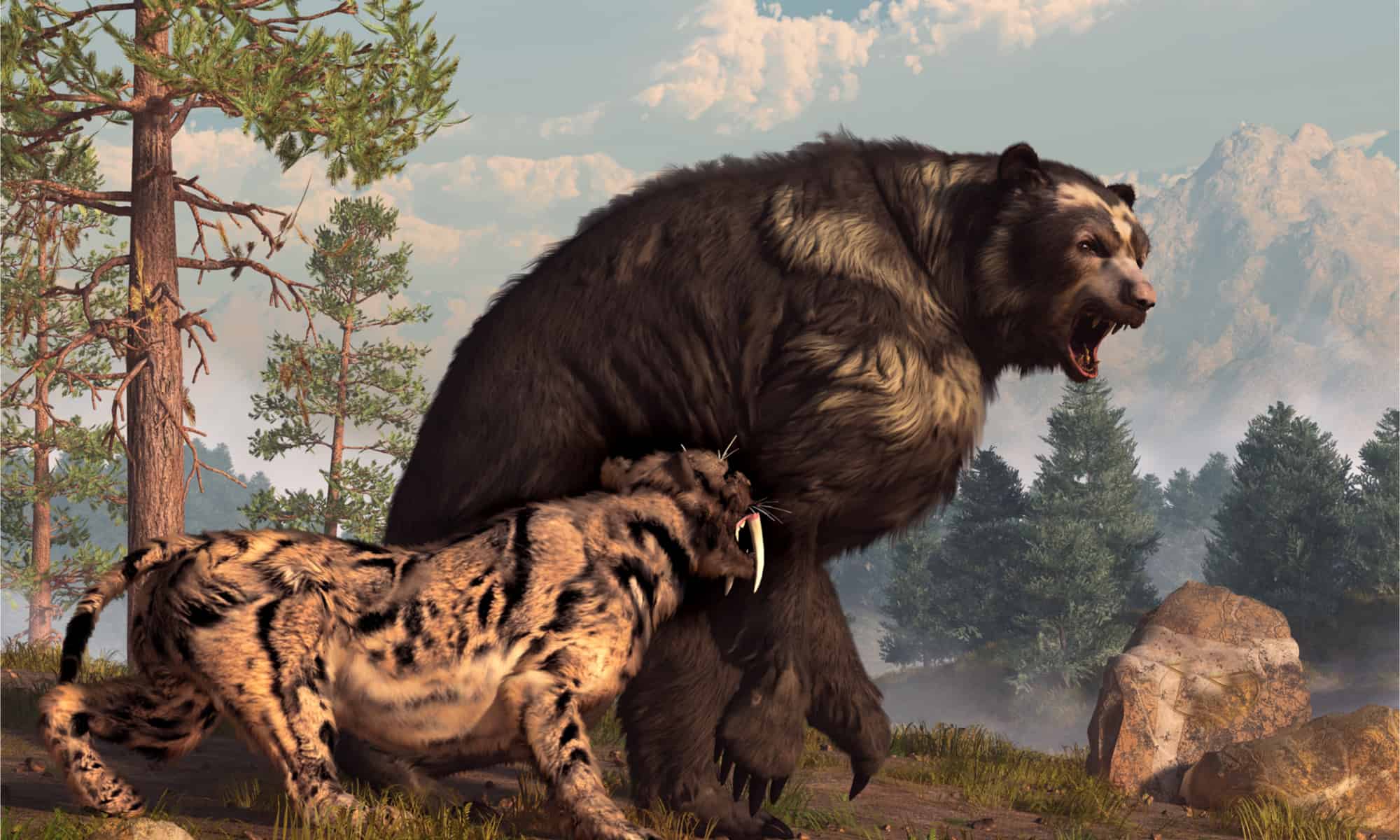
The South American giant short-faced bear (Arctotherium angustidens), was an ancient species of bear that lived from 3 million to 11,000 years ago. Although all members of the Arctotherium genus are extinct, this group of bears was the largest to have ever lived, with the South American giant short-faced bear being the largest member of the genus.
A. angustidens is estimated to have weighed between 900 and 2,645 pounds and stood between 11 and 12 feet tall on its hind legs. Its sheer size places it among the largest carnivorous land mammals.
One particularly large specimen, unearthed in Buenos Aires, Argentina, had an unusually large humerus. Using this new fossil as an estimate, it is possible that this particular South American giant short-faced bear could have weighed between 2,167 and 4,502 pounds.
A. angustidens fossils were first discovered in South America. The ancient ancestors of the species likely crossed the Isthmus of Panama during the Great American Interchange, a large-scale migration of animals, plants, and other organisms between North and South America that occurred after the formation of the Panamanian land bridge. The Panamanian land bridge reconnected the two continents approximately 2.8 million years ago. The highest concentrations of A. angustidens were likely found in Argentina, especially in Buenos Aires Province.
When Did the Arctotherium angustidens Live?
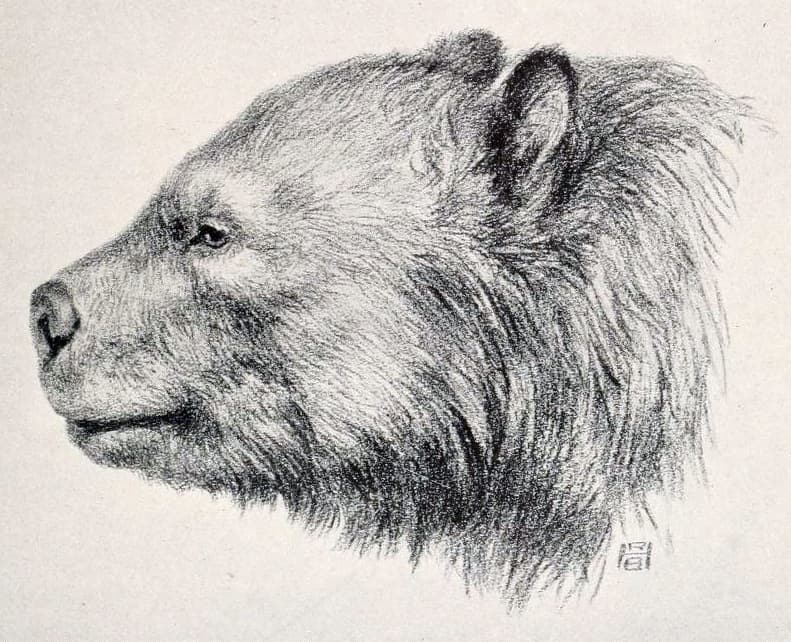
The Arctotherium, seen here in a sketch drawing, was found largely in South America.
© Robert Bruce Horsfall (1869–1948) / public domain – Original / License
The first members of the Arctotherium genus likely appeared around 2 million years ago and became extinct 10,000 years ago, spanning a period of about two million years. A. angustidens is believed to have gone extinct around 700,000 years ago, while other Arctotherium species survived until about 10,000 years ago.
This migration and the eventual evolution of the South American giant short-faced bear were likely encouraged by the extinction of the Sparassodonta, an order of carnivorous, marsupial-like mammals in South America. With little competition, the migrating bears would have thrived as they expanded into the region.
Although the South American giant short-faced bear was almost certainly the first member of the Arctotherium genus, other members evolved soon after, including A. vetustum, A. bonariense, A. tarijense, and A. wingei.
The last member of the Arctotherium genus likely lived until around 10,000 years ago. The genus likely went extinct as the large prey they hunted disappeared and competition from other predators, notably humans, increased.
What Is the Largest Bear Currently Alive?
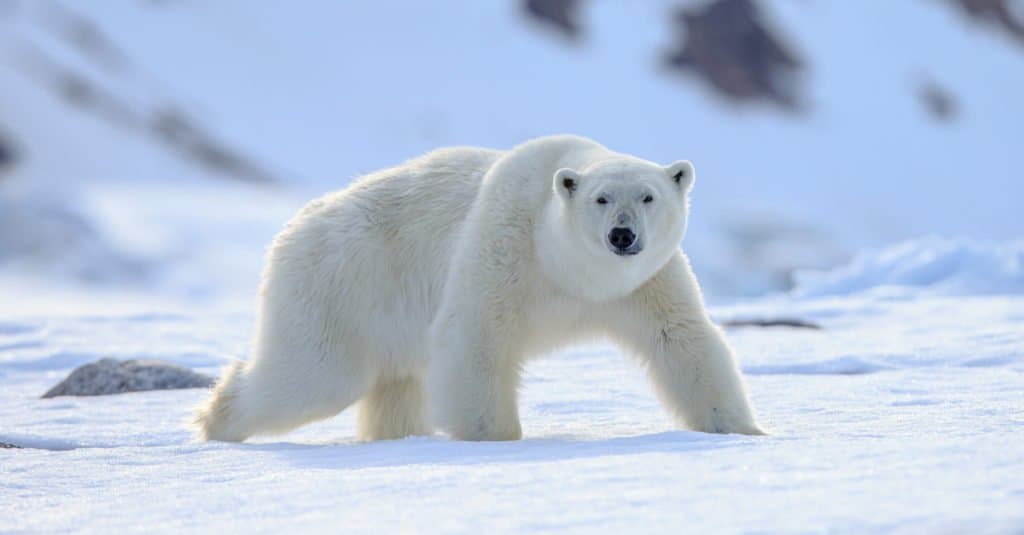
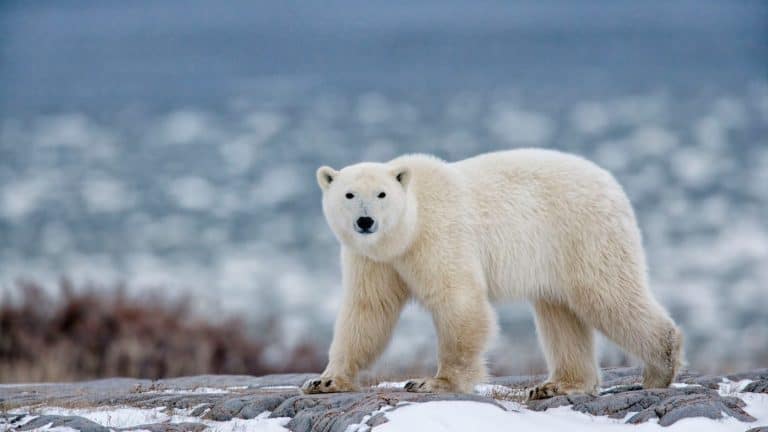
The polar bear is the largest living species of bear.
©Vaclav Sebek/Shutterstock.com
Polar bears are recognized as the largest extant bear species. Males, which are larger than females, can weigh up to 990 pounds and can stand up to 10 feet tall. The largest polar bear ever recorded was a male killed in Alaska in 1960. The specimen weighed 2,209 pounds and stood 11 feet 1 inch tall.
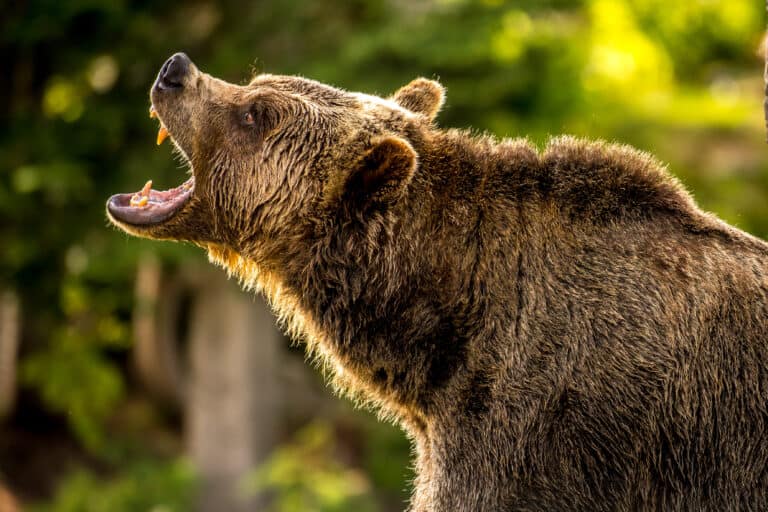
Grizzly bears, specifically Kodiak grizzly bears, are a close second. These grizzlies live in the Kodiak Archipelago in Southwest Alaska. At their largest, Kodiak bears can weigh up to 1,500 pounds and stand over 10 feet on their hind legs.
Other Large Bears in the World
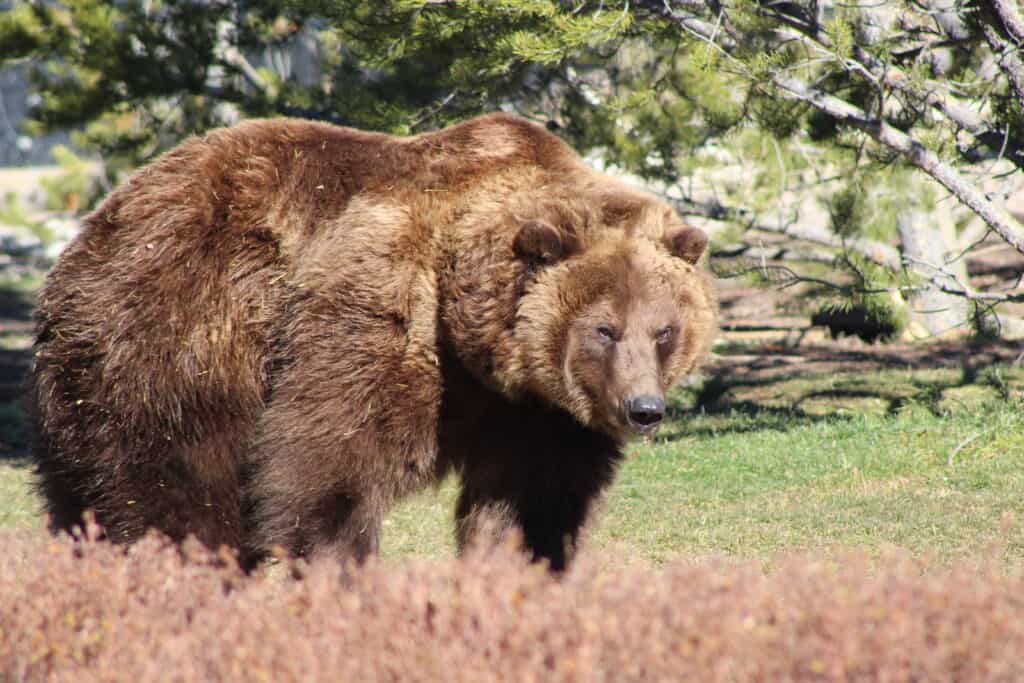
The Kodiak bear is the second largest bear species on Earth.
©Lisa Stoorza/Shutterstock.com
Kamchatka brown bears (U. arctos beringianus) are the largest subspecies of brown bear in Eurasia. They can weigh up to 1,430 pounds and stand up to nine feet nine inches tall on their hind legs.
The Ussuri brown bear (U. arctos lasiotus), is also known as the black grizzly bear or Ezo brown bear. These bears can grow up to 1,210 pounds and stand six to nine feet tall. They are found in Eastern Russia and its surrounding islands, as well as the Korean Peninsula, Northeast China, and Northern Japan.
The Closest Modern Relative of Arctotherium angustidens
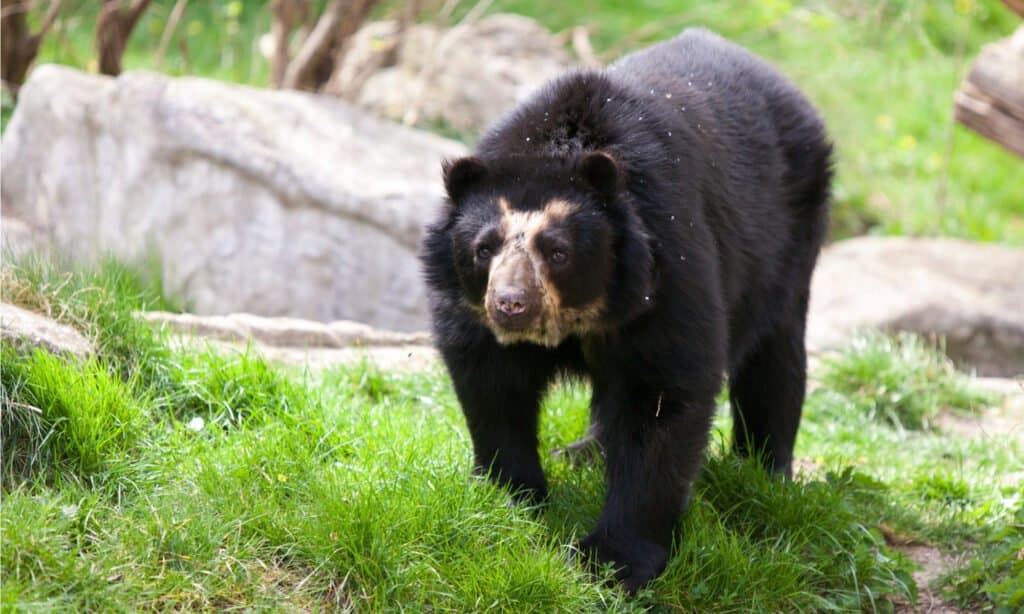
The spectacled bear is the closest living relative of Arctotherium angustidens, which lived in South America during the Pleistocene period.
©Andrei Preda/Shutterstock.com
Although no members of the Arctotherium genus remain, a closely related extant species is the South American spectacled bear (Tremarctos ornatus). Spectacled bears are also known as Andean bears, Andean short-faced bears, or mountain bears. They live along the Andean Mountain Range in South America. These bears generally weigh 220-440 pounds and stand six to seven feet tall when on their hind legs.