Quick Take
- One Arizona rattlesnake has a rattle so small it sounds like crickets, which makes it nearly impossible to recognize as a warning. Hear about the cricket-like rattle →
- Arizona is home to a rattlesnake whose colors literally mirror the rock layers of one of the world's most iconic landmarks. See the Grand Canyon-colored snake →
- Most rattlesnake bites in Arizona aren't accidents, and the reason behind them will make you rethink how dangerous these snakes actually are. Explore bite behavior facts →
- Four of Arizona's rattlesnakes are protected by state law, and the reason one of them qualifies might surprise you. See protected rattlesnake details →
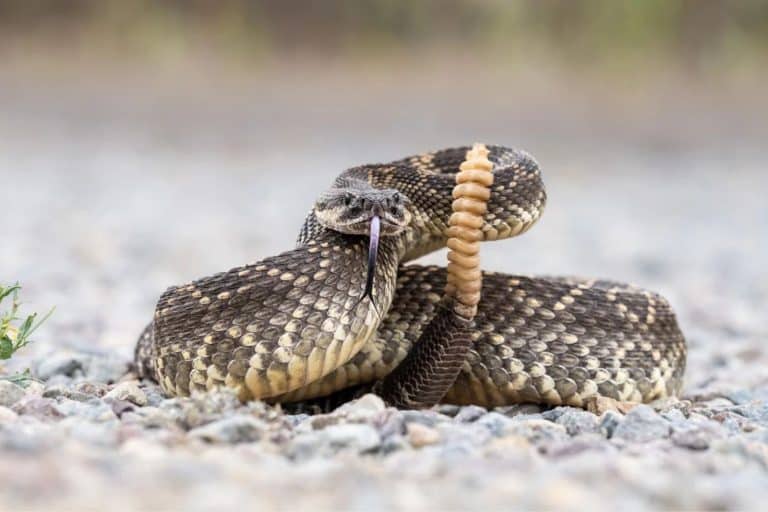
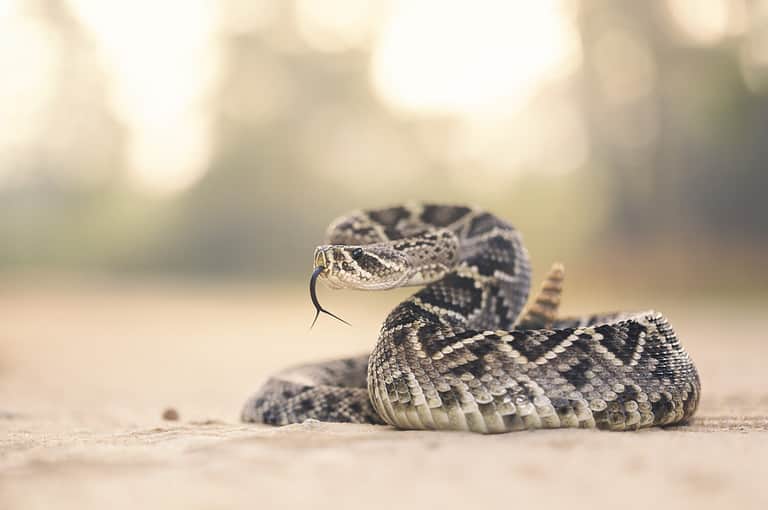
Arizona is home to the highest number of rattlesnakes in the United States. There are at least 15 different types of rattlesnakes in Arizona. However, these snakes are spread across large areas and prefer to stay away from humans as much as possible.
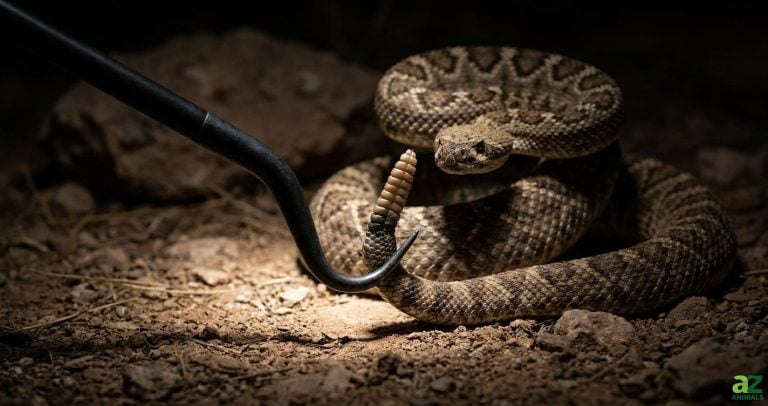
Most of the rattlesnake bites in Arizona occur when humans try to move, capture, or provoke a rattlesnake. Four species of rattlesnakes are protected by Arizona state law, and hunting any of the other types of rattlesnakes requires a license.
So, what types of rattlesnakes live in Arizona? Let’s take a closer look at some of these fascinating animals.
Western Diamondback Rattlesnake
| Scientific Name | Crotalus atrox |
| Range | Widespread throughout Arizona |
| Length | 48-72 inches |
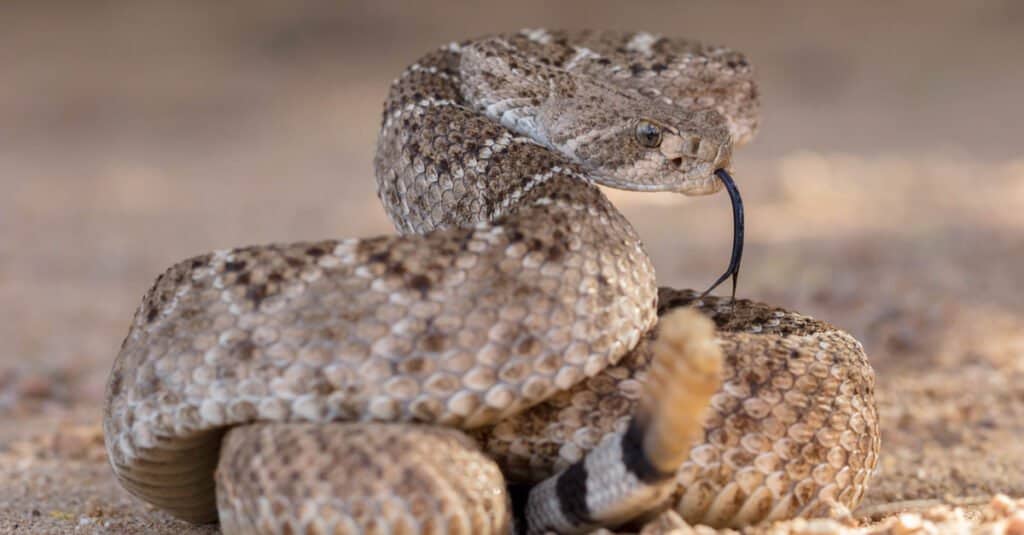
The western diamondback rattlesnake has very distinct black and white bands along the end of its tail.
©Alexander Wong/Shutterstock.com
The western diamondback rattlesnake is widespread throughout Arizona, although it is most commonly found in southwest desert areas. It is the largest rattlesnake in the state, typically growing from 3 to 5 feet in length, with a few individuals capable of reaching 7 feet. It can also be found throughout the southwestern U.S. and northern Mexico.
Western diamondback rattlesnakes are usually tan or gray (there are some groups that are also pinkish) with their namesake “diamond” markings running along the length of their bodies. The end of the snake’s tail is decorated with alternating black and white bands. The western diamondback rattlesnake is protected by Arizona state laws and cannot be collected or hunted without a license.
Northern Mojave Rattlesnake
| Scientific Name | Crotalus scutulatus scutulatus |
| Range | Most of Arizona |
| Length | 39-48 inches |

The Mojave Rattlesnake is widely considered one of the most deadly snakes in the United States.
©Steve Byland/Shutterstock.com
The Mojave Rattlesnake, or the Mojave Green, is a large snake found throughout most of Arizona. This snake typically ranges up to about 49 inches long, with a heavy body that is gray, yellow-gray, green-gray, or brown, with dark diamond-shaped splotches along its back.
Mojave rattlesnakes in lower elevations of Arizona are various shades of brown, often with a greenish hue. Snakes in higher elevations near the mountains tend to be darker and greener in color. The Mojave rattlesnake also has a white band on its tail, just before the rattle.
Speckled Rattlesnake
| Scientific Name | Crotalus mitchellii |
| Range | Western Arizona |
| Length | 24-30 inches |

The Speckled Rattlesnake is a master of camouflage and looks exactly like the speckled rocks surrounding it.
©Alexander Wong/Shutterstock.com
The Speckled Rattlesnake lives in the rocky areas of Western Arizona, usually in desert areas with shrubs or some trees. The color of these snakes varies widely, usually matching the rocks within the snake’s habitat. Reddish-colored speckled rattlesnakes are most common in Arizona, but they can also be off-white, light brown, tan, gray, yellow, pinkish, or orange.
Speckled rattlesnakes are typically 24-36 inches long, with dark rings along the length of their bodies. True to their name, these snakes are also speckled with tiny dark-colored flecks. This unique patterning acts as a brilliant camouflage for the speckled rattlesnake, making it nearly invisible amidst the rocks.
Northern Black-Tailed Rattlesnake
| Scientific Name | Crotalus molossus molossus |
| Range | All of Arizona except for some of the northeastern parts of the state. |
| Length | 24-48 inches |

The Black-Tailed Rattlesnake is sometimes called the dog-faced rattlesnake.
©Rusty Dodson/Shutterstock.com
The Northern black-tailed rattlesnake is common throughout most of Arizona except for some portions in the northeast. This snake is usually yellow, yellow-brown, or yellow-green, and 24-48 inches long. It is a subspecies of the black-tailed rattlesnake.
Dark diamond markings line the snake’s body, and a dark marking across the eyes and face resembles a facemask. Northern black-tailed rattlesnakes living on the border of Arizona and Mexico have a beautiful and bright color pattern with very bold black patches.
These snakes have black tails just before their rattles — hence the name “black-tailed” rattlesnakes.
Their habitat is grasslands, rocky areas, deserts, and high pine or boreal forests. While they spend much of their time hidden, northern black-tailed rattlesnakes are also good tree climbers.
Desert Massasauga Rattlesnake
| Scientific Name | Sistrurus tergeminus edwardsii |
| Range | The southeastern corner of Arizona |
| Length | 18-30 inches |

The Desert Massasauga rattlesnake is the smallest of the three subspecies of massasauga snakes.
©iStock.com/Shoemcfly
The Desert Massasauga only lives in the southeastern corner of Arizona in dry, rocky areas. It is a protected species in Arizona and one of the rarest snakes in the state. The desert massasauga is a smaller rattlesnake, usually around 18 inches long. It is sandy-colored (usually tan or gray), with large, brown blotches lined close together down the middle of its back.
It has a dark brown stripe along its cheek on both sides of the face, from the eye to the back corner of the mouth. There is also a very narrow white line just below this dark cheek stripe.
The desert massasauga is not an aggressive rattlesnake. These snakes are shy and generally prefer to slither away from threats and danger rather than defend or attack. The desert massasauga’s rattle is smaller and sounds more like crickets than the loud, distinctive warning sound of a larger rattlesnake.
Tiger Rattlesnake
| Scientific Name: | Crotalus tigris |
| Range | Central and South-Central Arizona |
| Length | 18-36 inches |
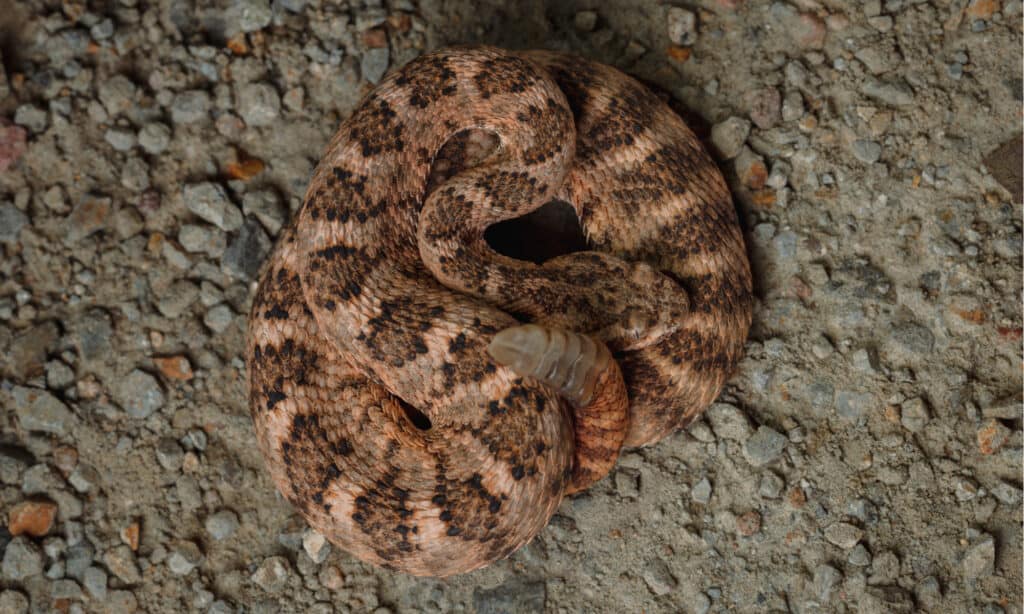
Tiger rattlesnakes have the smallest head of any rattlesnake.
©Alexander Wong/Shutterstock.com
The Tiger rattlesnake lives in central and south-central Arizona and Mexico. This snake grows to be around 18-36 inches long. The tiger rattlesnake has a gray, blue-gray, buff, lavender, or pink base color, with stripes running along its body like a tiger.
Tiger rattlesnakes eat small mammals such as deer mice, kangaroo rats, and packrats, as well as lizards such as spiny lizards.
Sidewinder Rattlesnake
| Scientific Name: | Crotalus cerastes |
| Range: | Sonora Desert in Southwestern Arizona |
| Length: | 17-30 inches |
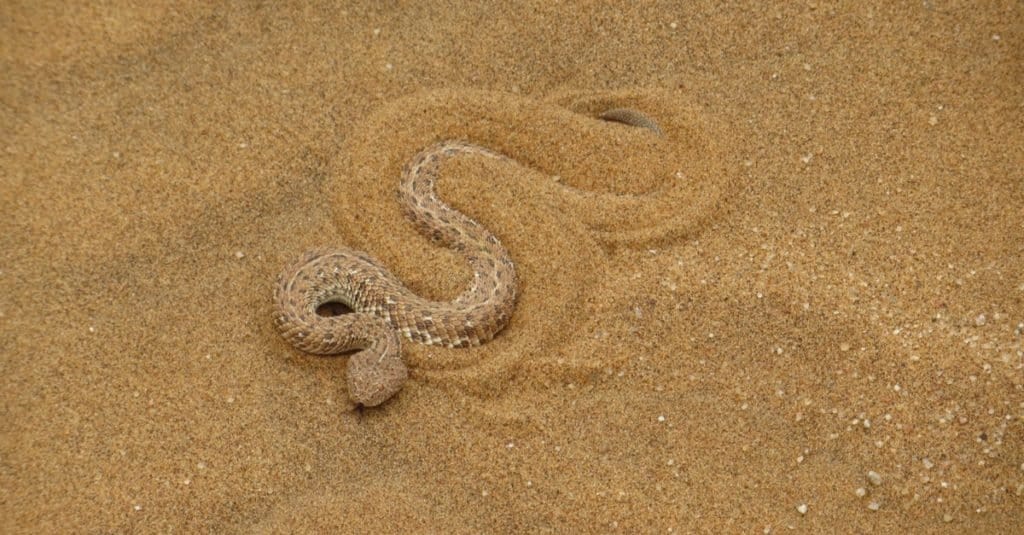
Sidewinders get their name from their unique form of side-stepping locomotion which is an adaptation for moving across loosely packed desert sands.
©Roger de Montfort/Shutterstock.com
The Sidewinder Rattlesnake lives in Southwestern Arizona in the Sonora Desert. Sidewinders are 17-30 inches long, with unique horn-like scales above their eyes, an adaptation that keeps sand from getting in their eyes.
These snakes have colors and patterns that blend into sand and sandy soil. They are usually yellow, tan, cream, or light pink, with dark blotches and small dark speckled marks along the length of their bodies. Sidewinders often bury themselves in the sand as they wait for a potential meal to pass by.
This snake’s name comes from its unique method of locomotion: moving sideways. This helps the snake easily move across hot, loose sand without getting burned or overheating.
All three subspecies of sidewinders are found in Arizona: the Sonoran sidewinder (Crotalus cerastes cercobombus), the Mojave Desert sidewinder (C. c. cerastes), and the Colorado Desert sidewinder (C. c. laterorepens).
Ridge-Nosed Rattlesnake
| Scientific Name: | Crotalus willardi |
| Range: | South-Central Arizona |
| Length: | 18-30 inches |
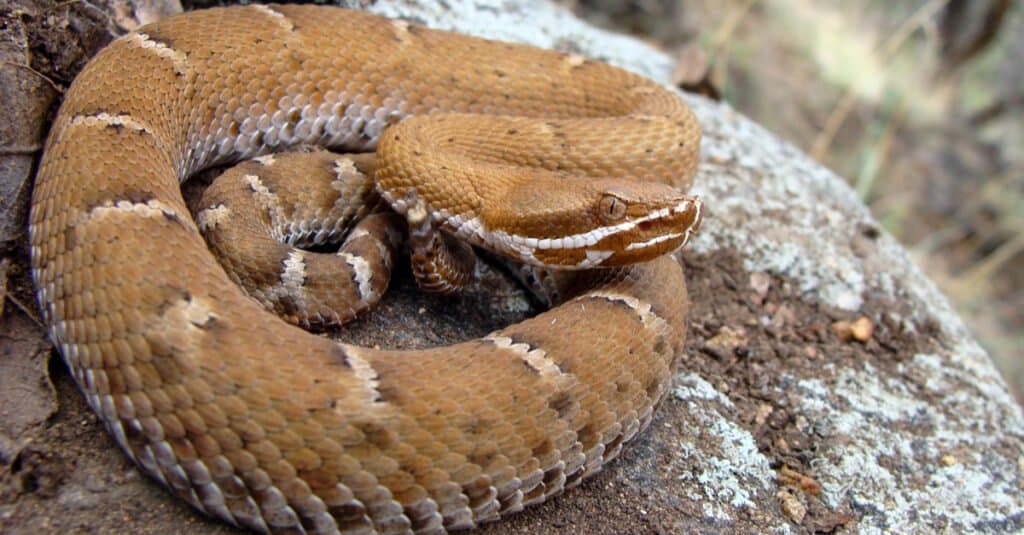
The Arizona ridge-nosed rattlesnake is the official state reptile of Arizona and is protected by state law.
©Matt Jeppson/Shutterstock.com
The Arizona ridge-nosed rattlesnake (Crotalus willardi willardi) and the New Mexico ridge-nosed rattlesnake (C. w. obscurus) are subspecies of the ridge-nosed rattlesnake.
The Arizona ridge-nosed rattlesnake is found in the isolated mountain ranges at higher elevations of southeastern Arizona. These snakes are also found in southwestern New Mexico and northern Mexico.
The Arizona ridge-nosed rattlesnake is 18-30 inches long. This snake is dark brown with white or pale stripes spaced out along the length of its body. Its face has very distinctive pale or white stripes across it. The survival of this rattlesnake depends on protecting its mountain forest habitat.

The New Mexico ridge-nosed rattlesnake is sometimes called the Animas Ridge-Nosed Rattlesnake because it is found in the Animas Mountains.
©Rusty Dodson/Shutterstock.com
The New Mexico ridge-nosed rattlesnake only lives in extreme southeastern Arizona. Its habitat also crosses into Southwest New Mexico and parts of Mexico. The New Mexico ridge-nosed rattlesnake is a threatened species.
These snakes are 20-24 inches long with dull shades of gray, red-gray, brown-gray, and sandy-gray that help them to camouflage with their surroundings. There are lighter bands or rings along the length of their bodies, as well as dark splotches. Some of the New Mexico ridge-nosed rattlesnakes may have white stripes across their faces like the Arizona ridge-nosed rattlesnake, but these marks are extremely faded when present.
Arizona Black Rattlesnake
| Scientific Name: | Crotalus cerberus |
| Range: | Central Arizona |
| Length: | 24-48 |
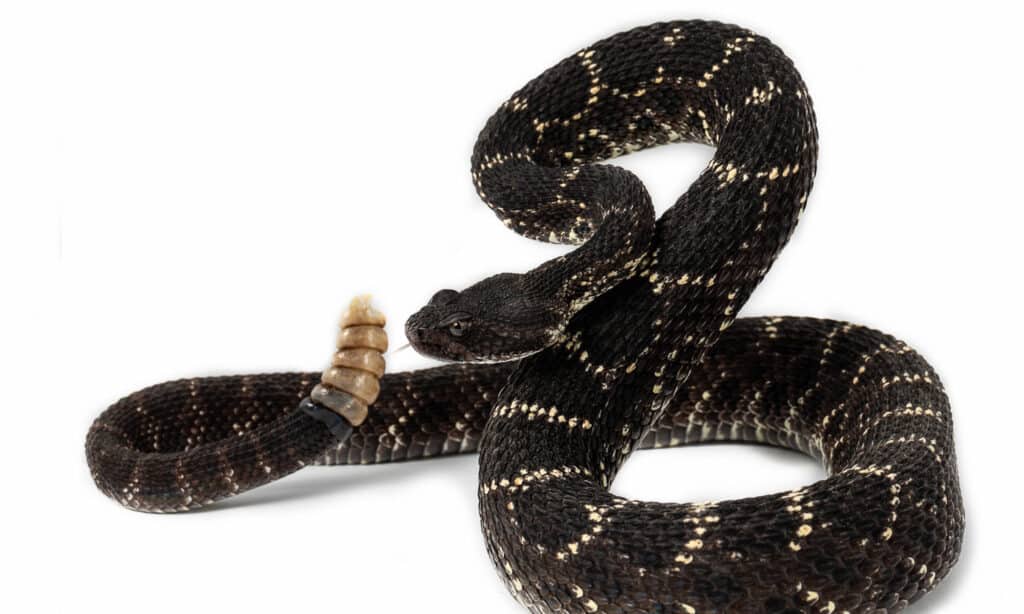
Arizona black rattlesnakes share communal dens and females may share parenting duties.
©Scott Delony/Shutterstock.com
The Arizona Black Rattlesnake only lives in central Arizona and the extreme western portion of New Mexico. These snakes are 24-48 inches long and are various shades of black and gray, with even darker blotches running along the length of their bodies.
Some snakes may have light ring patterns between the darker blotches. The Arizona black rattlesnake is also called the black rattlesnake, the black diamond rattlesnake, and the Cerberus rattlesnake.
Banded Rock Rattlesnake
| Scientific Name: | Crotalus lepidus klauberi |
| Range: | The southeastern corner of Arizona |
| Length: | 23-27 inches |
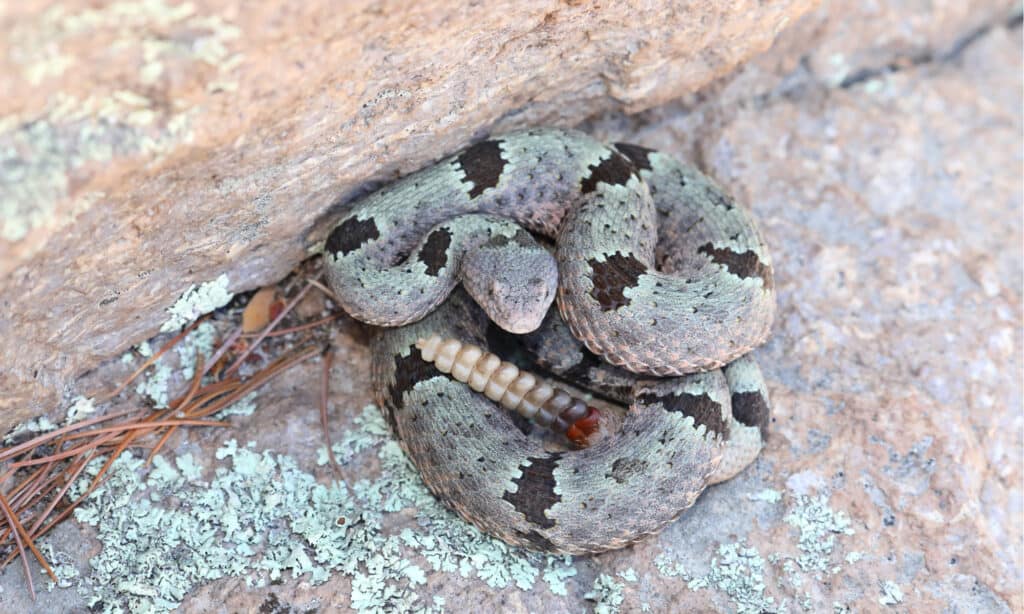
The Banded Rock Rattlesnake doesn’t travel very far and usually lives its entire life in the same area.
©Glenn McCrea/Shutterstock.com
The Banded Rock Rattlesnake only lives in rocky areas in the southeastern corner of Arizona. This snake is a subspecies of the rock rattlesnake and can blend into rocky environments with ease. The banded rock rattlesnake is 23-27 inches long, with black or gray banded markings.
These markings contrast beautifully with their dark green or gray body, making the banded rock rattlesnake a striking reptile. However, because of its unique appearance, this snake is frequently collected by humans, so the banded rock rattlesnake is protected by Arizona state law. Banded rock rattlesnakes are nonaggressive but can be nervous. These shy snakes do their best to avoid large predators and humans.
Twin-Spotted Rattlesnake
| Scientific Name: | Crotalus pricei |
| Range: | Southeastern Arizona |
| Length: | 18-26 inches |
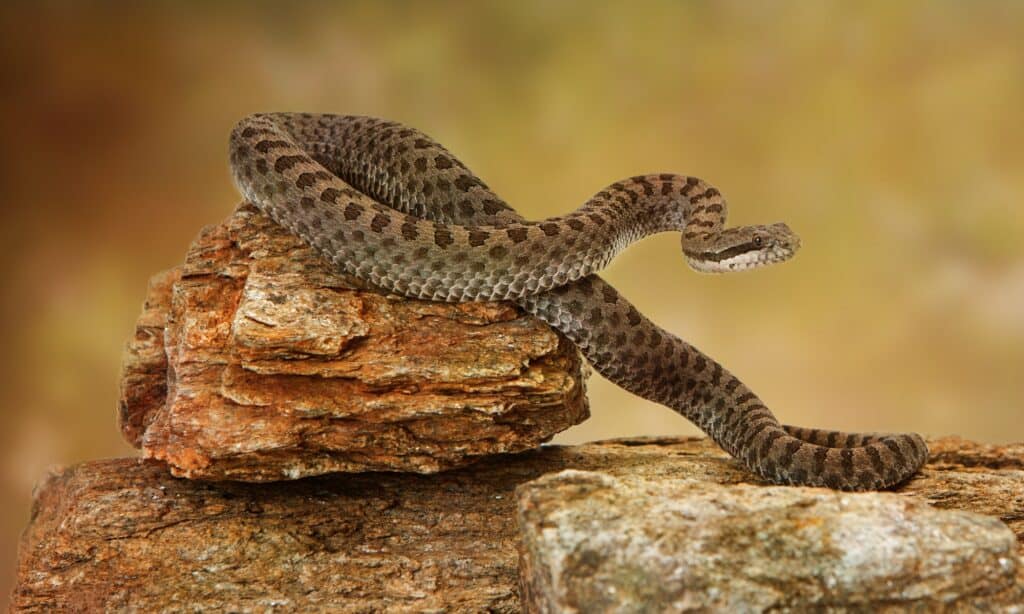
The twin-spotted rattlesnake is a venomous snake found mainly in southeastern Arizona and Northern Mexico.
©iStock.com/adogslifephoto
The Twin-Spotted Rattlesnake lives in the high mountain forests of southeastern Arizona and Durango, Mexico. This snake grows to be 18-26 inches long and is usually reddish-brown, light brown, tan, gray, gray-brown, or blue-gray. Its scales are rough and dotted with tiny speckles.
The twin-spotted rattlesnake gets its name from the two parallel rows of distinct dark patches running along its back. It also has a dark cheek stripe from each eye to the back of the mouth. Twin-spotted rattlesnakes are a protected species in Arizona.
Western Rattlesnake
| Scientific Name: | Crotalus oreganus |
| Range: | Central and Northwestern Arizona in the Grand Canyon |
| Length: | 24-60 inches |

Great Basin Rattlesnakes and the Great Basin gopher snake are very similar in appearance.
©Randy Bjorklund/Shutterstock.com
Arizona is home to two subspecies of the western rattlesnake: the Grand Canyon Rattlesnake (Crotalus oreganus abyssus) and the Great Basin Rattlesnake (C. o. lutosus).
The distribution of Great Basin rattlesnakes in Arizona is exceptionally localized and limited to higher elevations. Great Basin rattlesnakes are typically gray or yellowish-buff.
The Grand Canyon rattlesnake also has a limited distribution throughout Coconino County in north-central and northwestern Arizona, particularly within Grand Canyon National Park and its immediate surroundings.
The colors of the Grand Canyon rattlesnake, pink, light tan, red, yellow-green, and gray, reflect the varied rock layers of the Grand Canyon itself, allowing them to blend in with their surroundings. The darker blotches along their backs often fade as they get older.
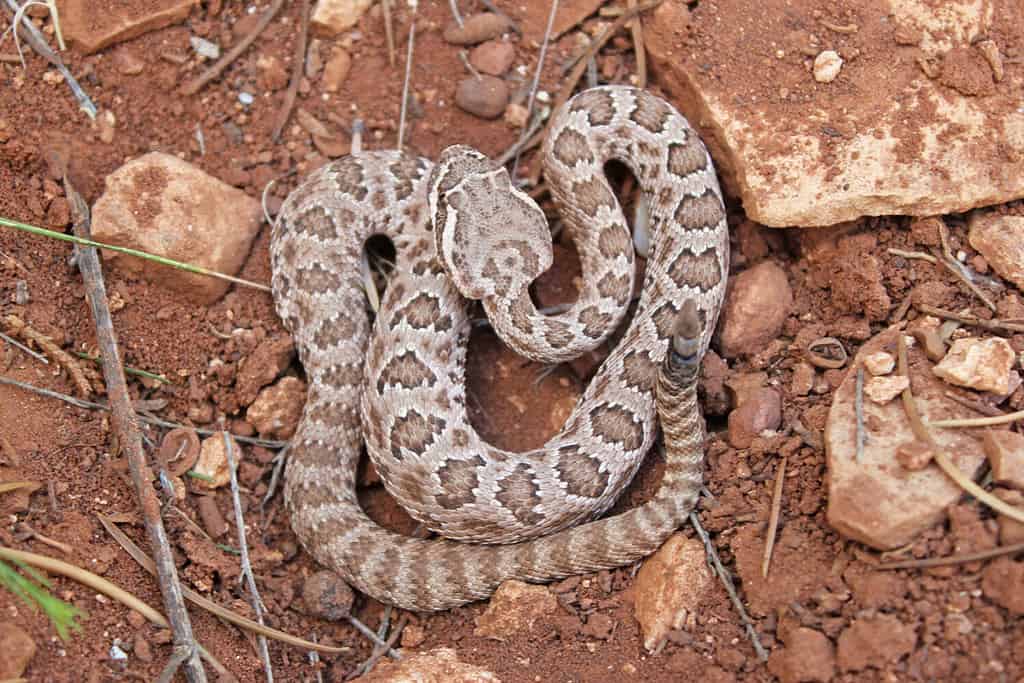
The Grand Canyon rattlesnake variant of the western rattlesnake is lighter in color than the Great Basin rattlesnake.
©Creeping Things/Shutterstock.com
Prairie Rattlesnake
| Scientific Name: | Crotalus viridis |
| Range: | Northeastern Arizona |
| Length: | 36-48 inches |
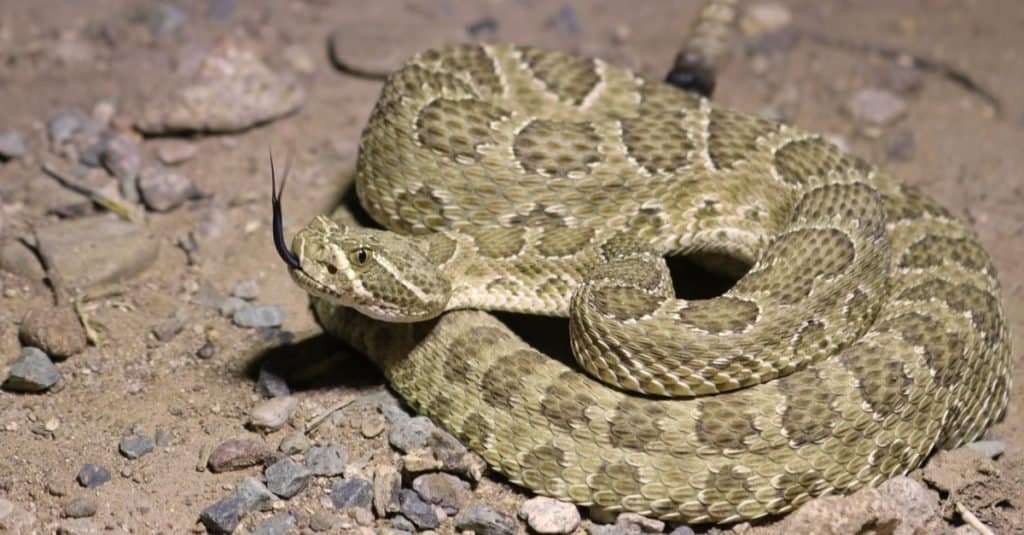
Prairie rattlesnakes spend most of their time slithering on the ground but they can also climb trees, navigate bushes, and are known to hide in rock crevices or small caves.
©Creeping Things/Shutterstock.com
The Prairie Rattlesnake, also called the Great Plains Rattlesnake, lives in northeastern Arizona. This snake’s appearance depends on its habitat, as its coloring helps it blend in. Prairie rattlesnakes can be brown, tan, red, or orange, with white-rimmed dark splotches along the length of their bodies. These snakes are 3–4 feet long with keeled (textured) scales.