Quick Take
- Millions of years ago, the earth was ruled by massive animals.
- Many of these most notable remarkable animals were dinosaurs.
- Among these ancient formidable animals was a specific non-dinosaur, prehistoric reptile known as Fasolasuchus.
- Fasolasuchus was covered in bony plates and reached a size of between 24 to 33 feet long.
Long before mammals dominated the land and even before the most famous dinosaurs appeared, Earth was home to a wide variety of powerful predators. While dinosaurs often get most of the attention when it comes to giant prehistoric carnivores, they weren’t the only massive creatures around millions of years ago. In fact, several large non-dinosaur predators once dominated ancient ecosystems, hunting hefty prey and shaping the food chains of their time.
Among these formidable animals was a specific prehistoric reptile. This biggest non-dinosaur land predator was quite powerful. By examining fossil evidence and scientific research, paleontologists have pieced together the story of this incredible hunter. This article takes a deep dive into the remarkable creature, revealing how it lived, what it hunted, and what it looked like.
The Largest Land Animals: Dinosaurs
©iStock.com/Orla
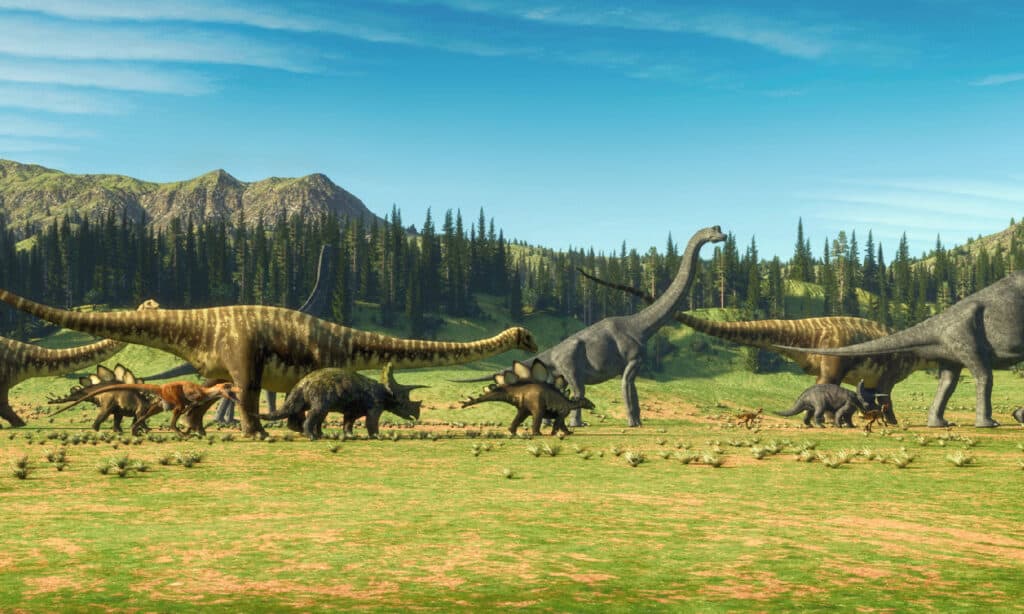
Dinosaurs were a group of reptiles that lived on Earth for around 180 million years. They appeared roughly 230 million years ago during the Late Triassic period. However, most dinosaurs became extinct by the end of the Cretaceous period, roughly 66 million years ago. Over the years, with the discovery of fossils and traces of life, more than 1,000 non-avian dinosaur species have been identified.
Although dinosaurs were believed to be some of the largest land predators, research and findings over the years establish that some dinosaurs were small and feathered, and a few eventually evolved into birds capable of flight. The largest dinosaurs were those with the longest length from head to tail, although gauging the size or weight of dinosaurs was also helpful in figuring out the largest.
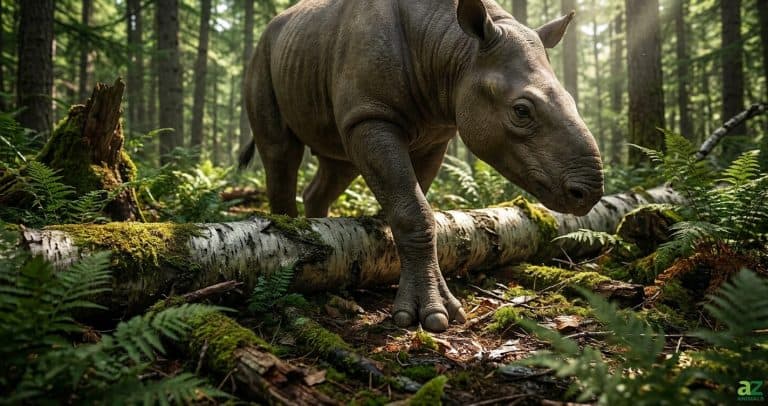
Dinosaurs had unique appearances: horned, armored, dome-headed, crested, long-necked, and sickle-clawed. Some were peaceful vegetarians, while others were flesh-ripping predators. Also, some dinosaurs were not fully terrestrial; some could move around in bodies of water. Despite this, dinosaurs were still the largest predators to walk the earth. However, other large non-dinosaur land animals also walked the earth long before humans, and the largest of them all was Paraceratherium.
Fasolasuchus: The Largest Non-Dinosaur Land Predator
©Adwo/Shutterstock.com
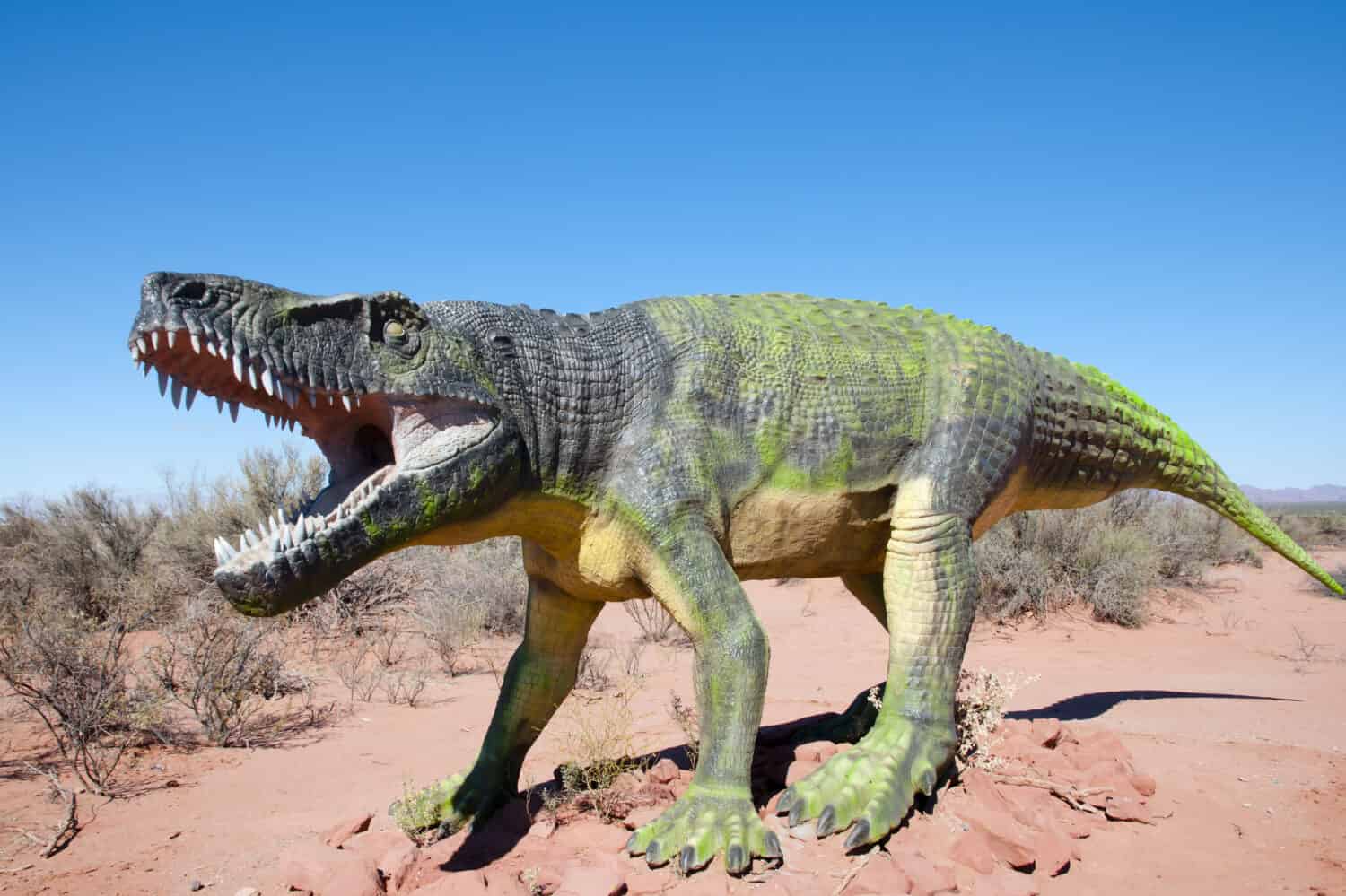
Fasolasuchus tenax is a prehistoric reptile that lived during the Late Triassic period, approximately 230 million years ago. It was discovered in Argentina and described by Argentine paleontologist Zulma Brandoni de Gasparini in 1995.
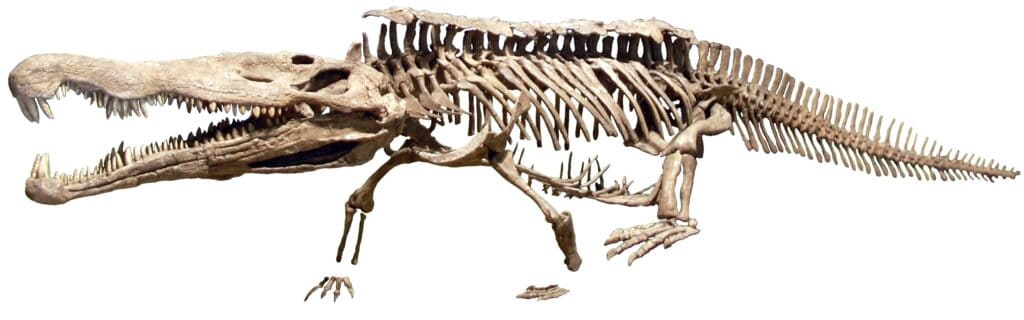
Fasolasuchus belongs to a group of reptiles called rauisuchids, which were large carnivores that roamed the Earth during the Triassic period. Fasolasuchus was one of the largest members of this group, measuring about 24-30 feet in length and weighing in at a hefty 4,000 pounds! This would make Fasolasuchus one of the largest known non-dinosaur terrestrial predators.
One interesting feature of Fasolasuchus is its powerful jaws. The fossilized skull shows large teeth with serrated edges, similar to those found in modern-day crocodiles. This suggests that Fasolasuchus was a fierce predator capable of taking down large prey.
While Fasolasuchus was an impressive creature, it is not related to dinosaurs. Instead, it belongs to a group of reptiles called archosaurs, including dinosaurs and their closest relatives.
Overall, Fasolasuchus provides another fascinating glimpse into the world of prehistoric life and reminds us just how diverse and awe-inspiring these creatures were millions of years ago.
Fasolasuchus was likely the biggest of the rauisuchians, reaching a size of between 24 to 33 feet long. Saurosuchus, another rauisuchian from Argentina, is estimated to be up to 9m long and could possibly be larger than Fasolasuchus, but without more conclusive evidence, it is impossible to know for sure.
What We Know About the Massive Animal
©Gorodenkoff/Shutterstock.com
In terms of appearance, Fasolasuchus likely resembled other large crocodile-like creatures from the Triassic period, with its broad head filled with sharp teeth designed for tearing flesh apart. Its skin would have been thick and scaly like modern-day crocodiles but instead covered in bony plates called osteoderms.
Fasolasuchus fossils are fragmentary, so osteoderm patterns are not well known. However, some speculate that Fasolasuchus likely had a unique physical characteristic – a single row of osteoderms running down its back. This feature is particularly noteworthy because other rauisuchians typically had more than one row, which provided them with some degree of protection against attacks from other rauisuchians who were attempting to bite their neck or spine.
As one of the largest rauisuchians in its ecosystem, Fasolasuchus may not have needed this additional defense mechanism. It’s possible that conflicts between different species were rare or non-existent for Fasolasuchus, and it only had to worry about potential challenges from others within its own species, such as contests over carcasses or mating opportunities.
Despite having fewer osteoderms than most of its relatives, Fasolasuchus was still an imposing creature with an estimated length of roughly 26–33 ft and a weight exceeding two tons. Its body was well adapted for life on land, featuring four powerful legs that helped it move quickly across the ground and a long tail that aided in balance and stability during sudden movements.
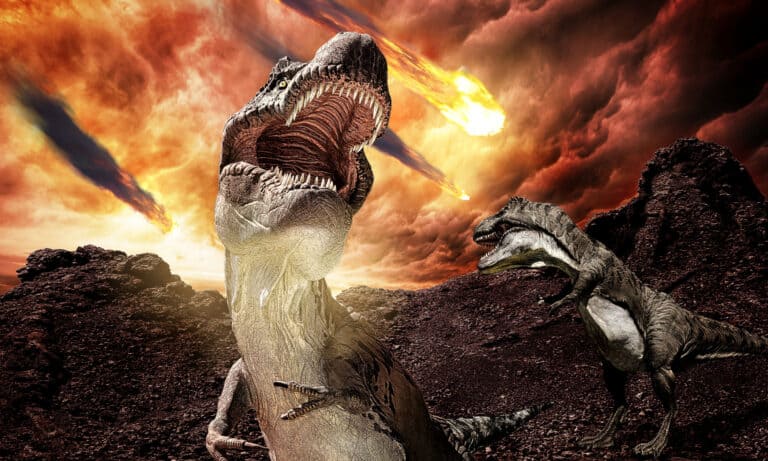
Fasolasuchus likely disappeared during the End-Triassic extinction (~201 million years ago) due to ecosystem collapse, volcanic eruptions, and climate change.
Other Large Non-Dinosaur Carnivores
During the Late Triassic period, there were a few other large carnivorous animals that coexisted with dinosaurs. Among them were phytosaurs, which were crocodile-like predators that could grow up to 20 feet in length.
Overall, these non-dinosaur predators played an important role in shaping ecosystems during the Late Triassic period and provided valuable insights into the diversity of life during this time period.
Another notable predator from this time was the Postosuchus, a distant relative of the modern-day crocodile that had sharp teeth for tearing through flesh. They were mostly quadrupedal, though occasionally could rear up. It is estimated to have been around 16-18 feet long and may have preyed on smaller dinosaurs.
Overall, these non-dinosaur predators played an important role in shaping ecosystems during the Late Triassic period and provided valuable insights into the diversity of life during this time period.
Carnivorous Dinosaurs
©Daniel Eskridge/Shutterstock.com
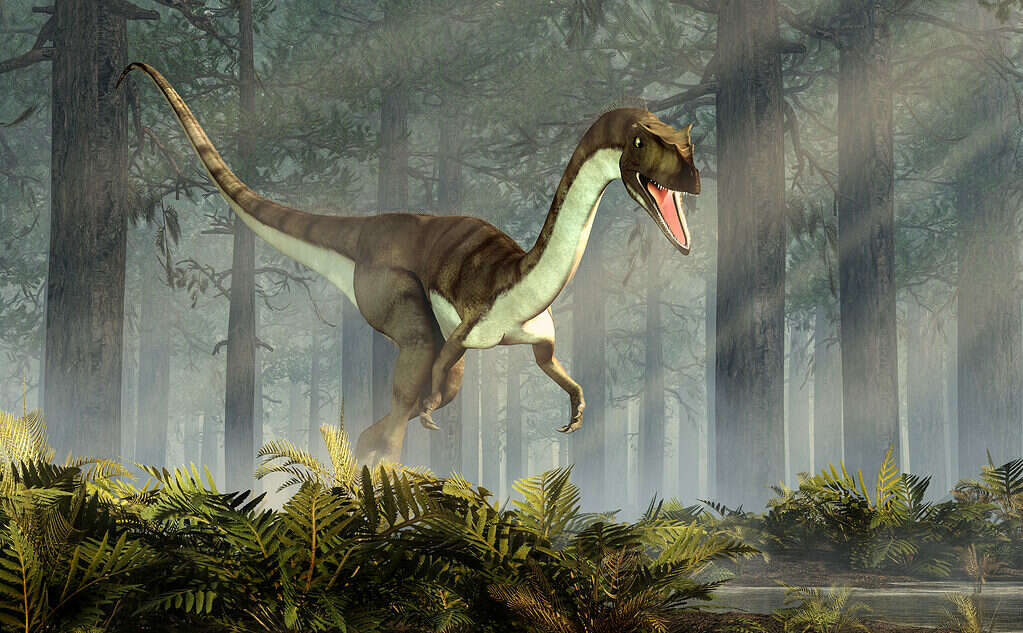
During the late Triassic period, several carnivorous dinosaurs roamed the earth. These included the Coelophysis, Dilophosaurus, and Herrerasaurus. The Coelophysis was a small bipedal dinosaur that lived in what is now North America. It had long legs and a slender frame, making it an agile hunter. The Dilophosaurus was also a bipedal dinosaur but much larger than the Coelophysis. It had distinctive crests on its head.
The Herrerasaurus was one of the earliest known carnivorous dinosaurs, living in what is now Argentina. It had large claws on its hands and feet for grasping prey and sharp teeth for tearing flesh. These three species were among the top predators of their time, hunting smaller animals such as reptiles and early mammals.