Quick Take
- A puffed-up beard isn't always a bad sign. One cause might surprise you.
- One puffing trigger hides a digestive problem that demands an immediate vet visit.
- Your well-meaning attempt to help could make things worse. Find out which one.
- Eight reasons, and some look nearly identical. Can you tell which one your beardie is showing?
Bearded dragons are popular pet lizards because they’re cute, friendly, and relatively easy to care for. Even though their requirements are simpler than many other lizards, it’s important to learn about common behaviors. This helps you provide them with the best environment and husbandry possible. It also helps you determine whether their behavior is a cause for concern. If your bearded dragon puffs up often, you may wonder whether you need to address an urgent health issue or make changes to their habitat. You might, but don’t panic. Here are eight common reasons why bearded dragons puff up.
1. Adapting to a New Habitat
Did your beardie get settled into their new home recently? Whether you rehome a dragon from a reptile rescue or buy one from a breeder, adjusting to a new home can take time. Beardies are pretty friendly lizards, but each one has their own personality and temperament. Some will simply need more time to adapt to a new home and environment.
Give your new companion a few weeks to get used to you and their new home. Don’t force any handling if they show stronger signs of aggression, like hissing. Talk softly to your dragon and offer food. Provided that you’ve set up an ideal enclosure with enough space and enrichment, they should warm up to you soon enough. Even if they’re not amenable to handling yet, they should at least stop puffing up whenever you stop by. However, if your bearded dragon appears lethargic and doesn’t want to eat while displaying this behavior, you should contact your vet for advice.
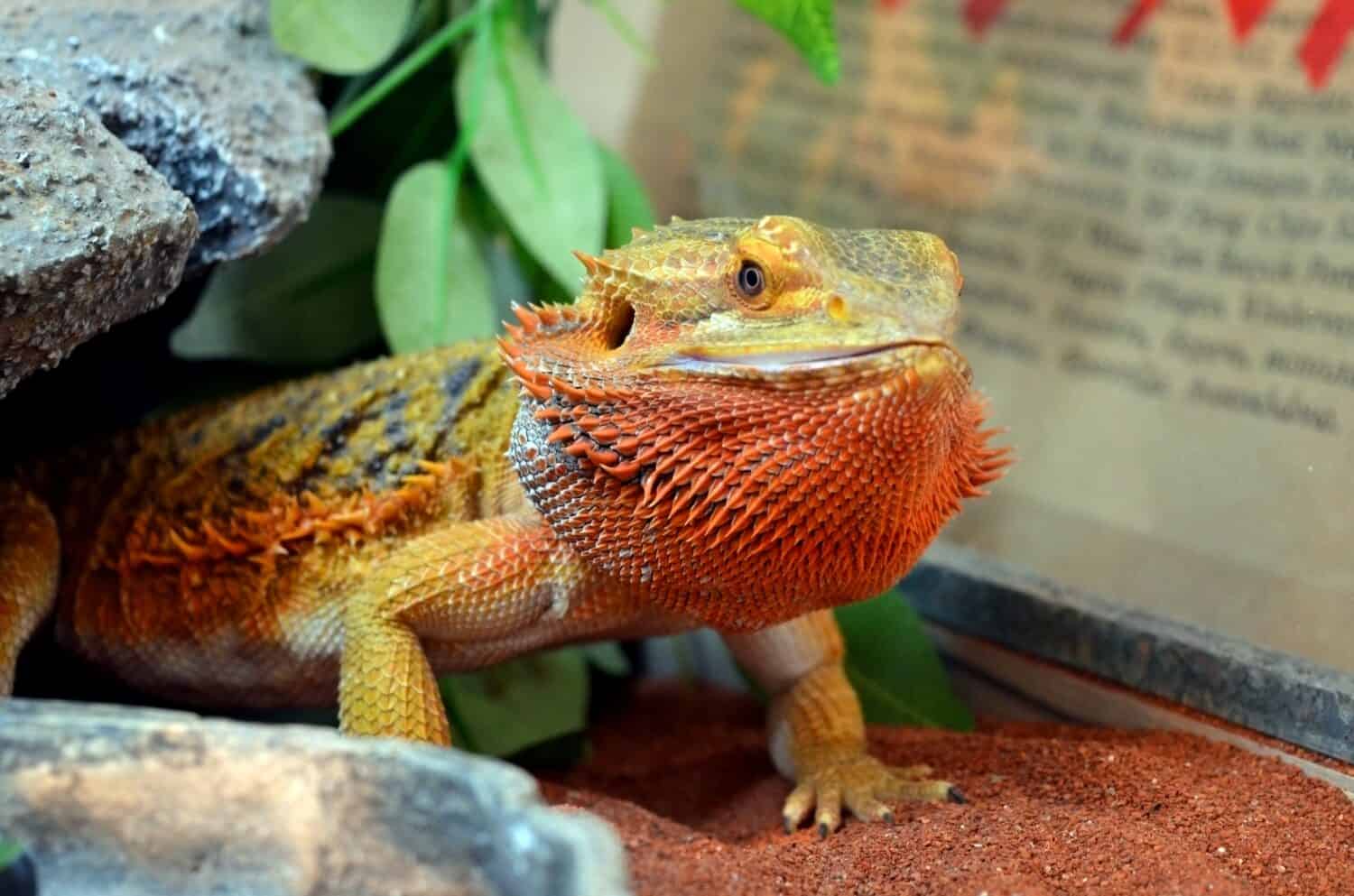
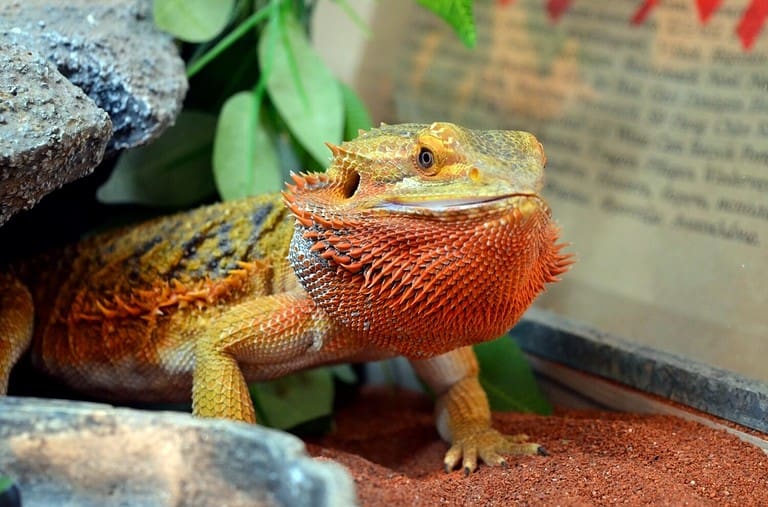
Puffed beards, defensive stances, and hissing are signs that you need to give your bearded dragon space.
©Sara Stanojevic/Shutterstock.com
2. Experiencing Stress, Annoyance, or Discomfort
Puffing up is a common sign of stress in bearded dragons. Puffing can indicate a temporary annoyance, like a cricket that keeps hopping away. Chronic puffing may signal more serious stress, especially if your beardie hasn’t eaten or defecated for an extended period.
Try to figure out what’s stressing out your lizard. Loud noises and unwanted handling are often the culprits. If it’s too hot or cold, or they don’t have adequate space and hides to use if they feel scared, this can also cause frequent puffing. Pregnant female bearded dragons can also puff up from discomfort.
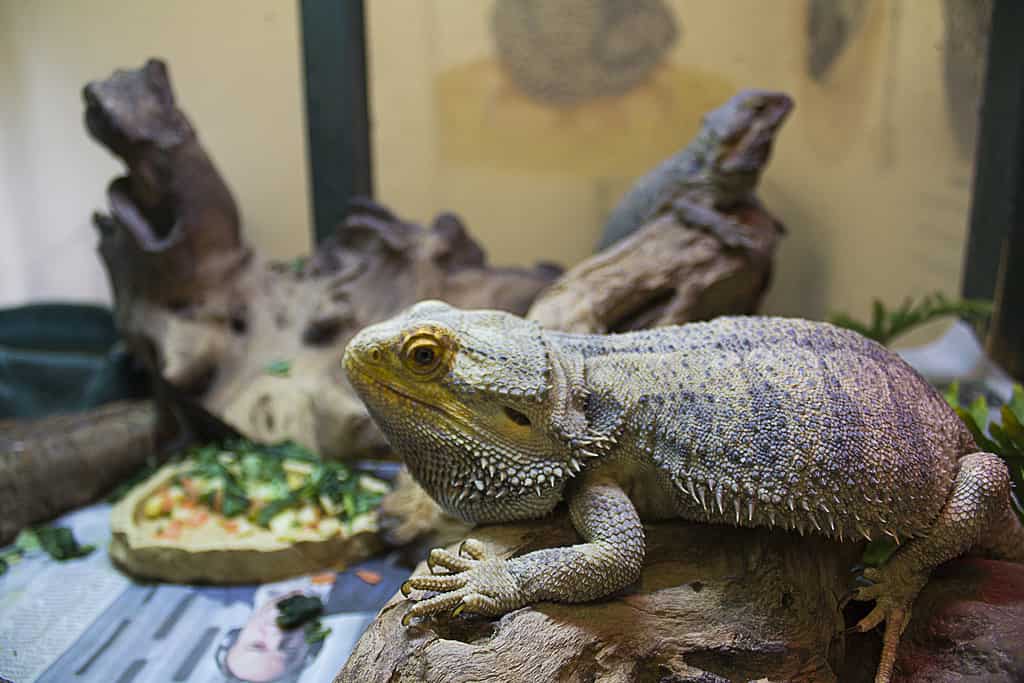
Your bearded dragon may puff up as a sign of stress, annoyance, or discomfort.
©Amber Roberts/iStock via Getty Images
3. Shedding
Puffing is sometimes the result of shedding skin. Bearded dragons shed as most reptiles do, and puffing out their beards can expedite the removal of old dead skin. If your lizard’s skin looks dull and flaky or like it has a waxy sheen, this is a sign they’re about to shed. Shedding is also a time when lizards can become irritable. It’s normal for shedding lizards to eat less and not be as playful. However, watch for overly lethargic behavior.
If your bearded dragon is shedding, don’t pull any pieces off. This can cause an infection and additional stress. Your dragon should be fine shedding their skin on their own in a few days. If they’ve been shedding for more than a week and seem unusually irritated to the point they’re constantly puffing up, you may need to consult a vet about stuck shed.

Bearded dragons often puff their beards out during shedding to expedite the process.
©Gayleen Froese/Shutterstock.com
4. Yawning
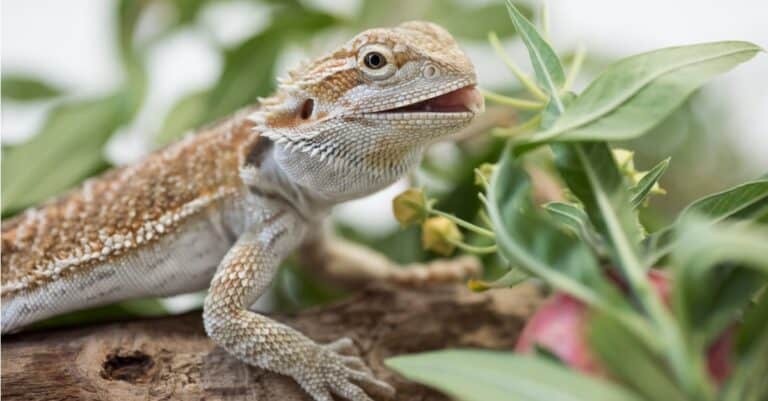
Bearded dragons can yawn just like people do. Puffing their beards is simply what some of them do when they yawn or stretch. This is especially common after sleeping, eating, or basking.

Bearded dragons yawn just like humans do.
©belizar73/iStock via Getty Images
5. Gastrointestinal Pain
If you’ve ever had times in your life when you had a hard time going to the bathroom, it probably didn’t make you very happy or comfortable. Indigestion from a big meal or incompatible food also leaves one worse for the wear. It’s no different for bearded dragons. They’ll express displeasure with gastrointestinal pain by puffing up their beards.
If they have a healthy appetite and eat regularly, they should also defecate regularly. If it’s just indigestion causing your dragon to puff their beard, it should stop after they’ve defecated. However, if you notice that your bearded dragon is eating, yet there’s a conspicuous lack of dragon droppings in the enclosure, it may be a sign that they have an impaction. The distress from impaction can make them puff up their beards and/or stomachs. Take them to the vet immediately if you suspect they may be constipated.

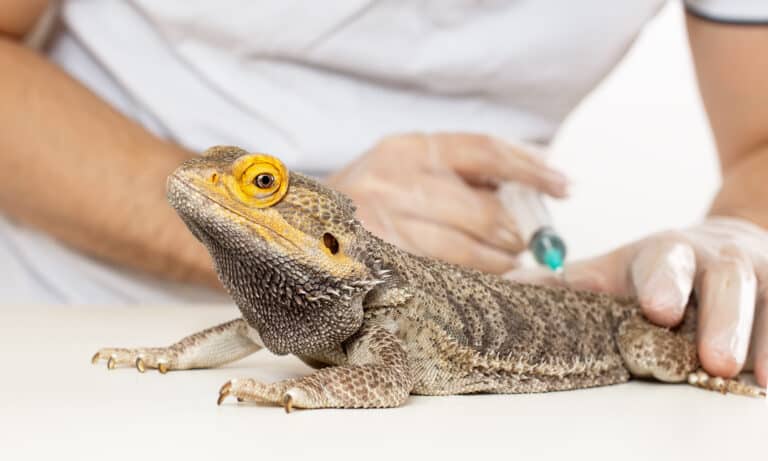
Bearded dragons can puff up if they experience indigestion or constipation.
©PhotoRK/Shutterstock.com
6. Courtship
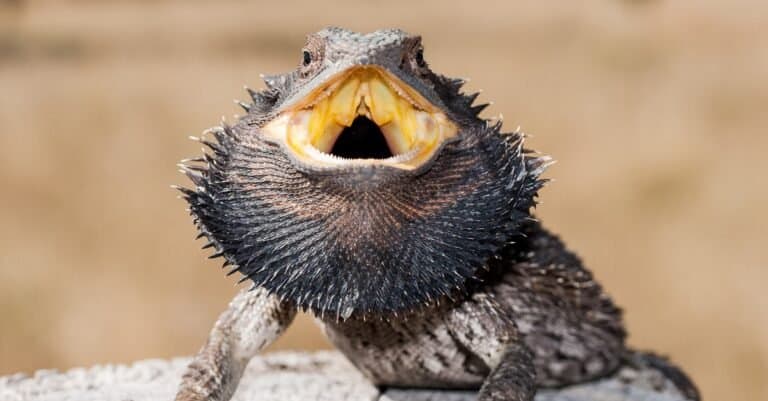
Bearded dragons also puff up during courtship. Just as puffing up makes them appear larger to threats, it also helps male dragons appear more daunting to the competition during mating. Their beards turn jet black and puff up during courtship displays. They will also open their mouths to gape while inflating their beards to intimidate their rivals.

During courtship displays, male bearded dragons’ beards turn black and puff up to intimidate their rivals.
©Opayaza12/Shutterstock.com
7. Excitement or Happiness
Puffing isn’t always a sign of distress or annoyance. Your bearded dragon could be perfectly happy. They may puff up when they are excited at feeding time or they just want to show off! Appearing larger is one way they strut their stuff for their humans. For bearded dragons, this means puffing out their beards.
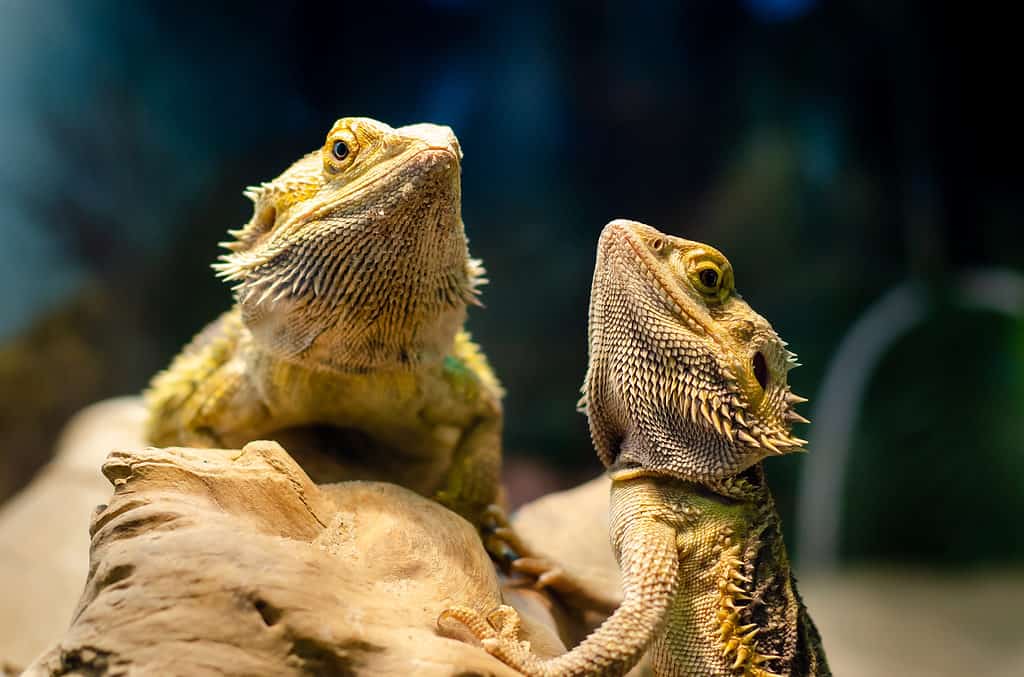
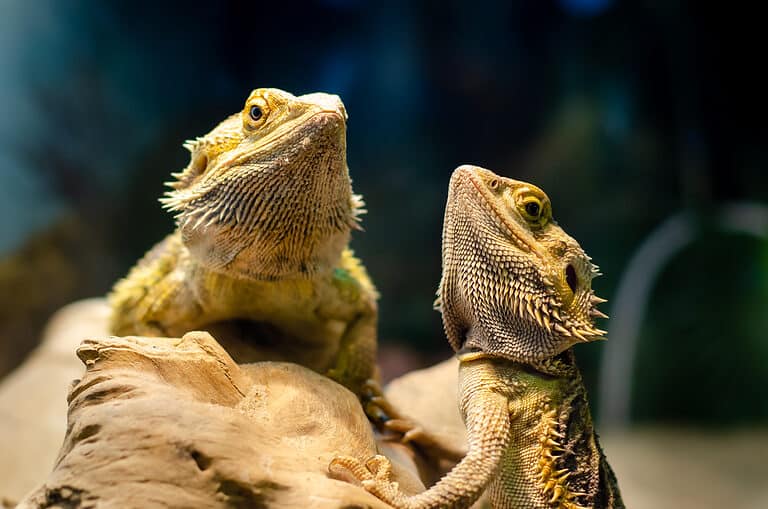
Your beardie may puff up when it is excited.
©Lutsenko_Oleksandr/Shutterstock.com
8. Aggression
Both male and female adult dragons can be territorial. Their beards will turn dark and puff up to show aggression or assert dominance. Dominant individuals may defend food sources or favorite basking spots. Puffing up may also indicate defensiveness if they are approached too abruptly or handled roughly.
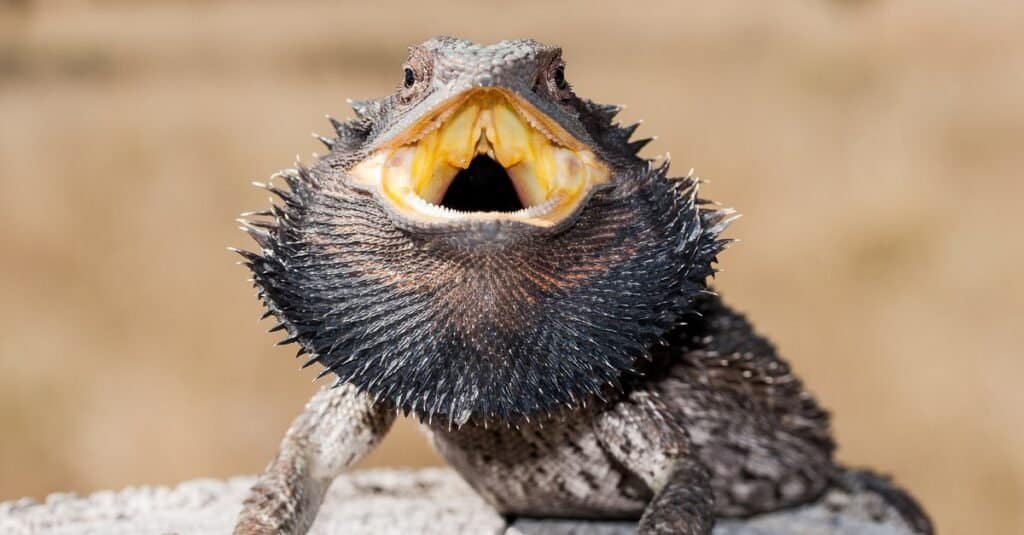
Bearded dragons puff up when they are feeling aggressive or defensive.
©Ken Griffiths/Shutterstock.com