
Quick Take
- Bearded dragons are popular U.S. pets and are native to Australia. They reach 18–22 inches and weigh 10–18 ounces.
- Sexing around 4–6 months shows males with prominent femoral pores and two hemipenal bulges, females with smaller pores and a single central bulge.
- Female dragons can form eggs without mating, risking egg binding; spaying is often recommended between 8–12 months.
Bearded dragons have become popular pets worldwide. Native to Australia, they are the most commonly kept pet reptile in the U.S. They are known to be friendly and often recommended for beginners. However, they have specific nutrition and habitat requirements to keep them healthy and thriving. If you have a bearded dragon, you may be wondering whether you have a male or female. Like most reptiles, it is quite difficult to tell them apart just by looking at them. That’s why we reached out to an expert for some tips on male vs. female bearded dragon differences.
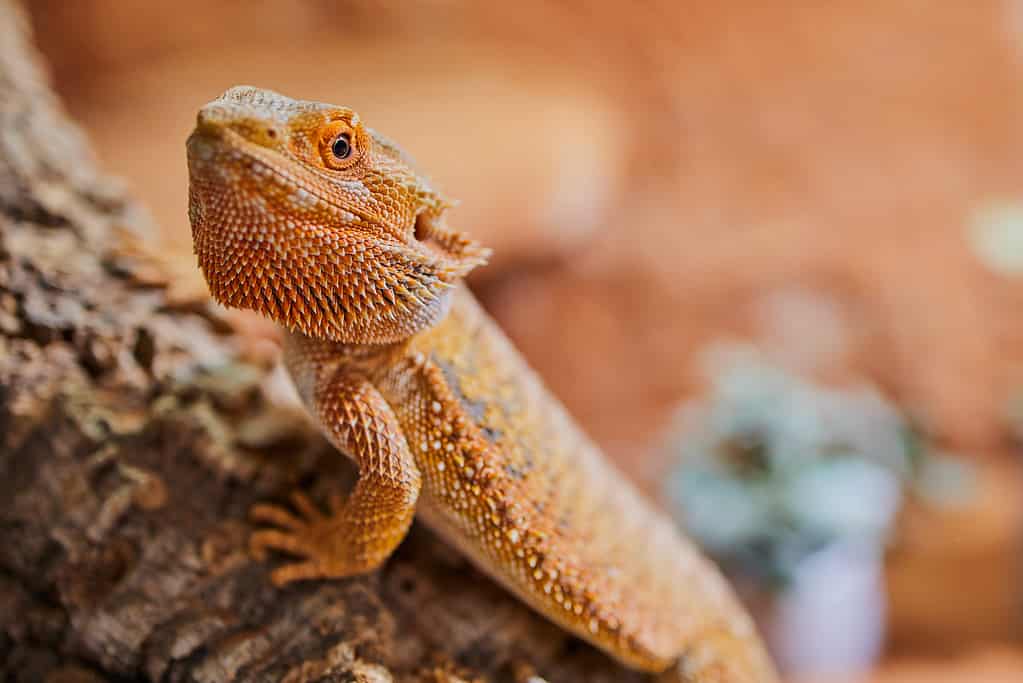
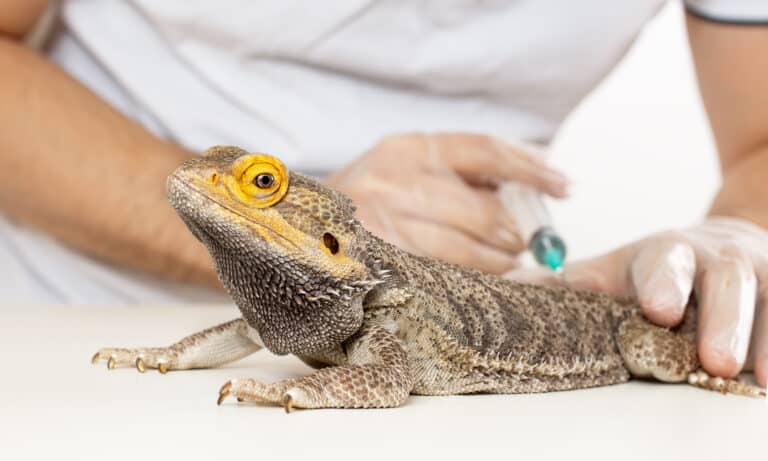
Bearded dragons are native to Australia.
©Claudia Nass/ via Getty Images
About Bearded Dragons
A-Z Animals spoke via email to Dr. Ann Murata, Exotics Veterinarian at Thrive Pet Healthcare Urgent Care in Torrance, California, to find out some fascinating details about these friendly, little lizards.
In the wild, bearded dragons (Pogona vitticeps) can be found throughout Australia. They grow to around 18 to 22 inches long and weigh about 10 to 18 ounces. Bearded dragons kept as pets can live for as long as 10 years when properly cared for. They prefer warm and dry habitats, such as deserts, savannas, and scrublands.
Bearded dragons are cold-blooded and love to bask in the sun to warm themselves. Dr. Murata recommends using a ceramic heat lamp and a UVB lamp on one side of the enclosure when setting it up. She advises that UVB bulbs should be replaced every six months to maintain effective UV levels. Aside from temperature needs, bearded dragons have other specific care requirements. Dr. Murata recommends checking out the Facebook group, Reptile Enrichment and Training, for more guidance and tips.
Why It’s Important to Know the Sex of Your Bearded Dragon
If you get your bearded dragon as a baby, there is no way to tell whether it’s male or female until it’s a little bit older. Dr. Murata tells us, “Most dragons can be sexed fairly reliably around 4–6 months old once their physical features are more developed.” Once you are able to tell whether you have a male or female, you can make important health decisions regarding the care of your bearded dragon.
For example, Dr. Murata says, “Female bearded dragons can form eggs without mating, which puts them at risk for egg binding. Many veterinarians recommend spaying between 8 and 12 months to reduce this risk. Males don’t have these reproductive issues, but two males should never be kept together because of territorial aggression.”
How to Tell Female Bearded Dragons From Males

There are some tell-tale signs to help you know if you’re looking at a male or female bearded dragon.
©Sara Stanojevic/Shutterstock.com
Once your bearded dragon is old enough, there are several signs you can look for to distinguish between the sexes. Dr. Murata says, “Male bearded dragons usually have more pronounced femoral pores, a wider tail base, and two hemipenal bulges beneath the tail. Females tend to have smaller pores and a smoother tail base with a single central bulge. Males may show stronger beard coloration, though dark beards can appear in both sexes due to stress, mood, or illness.”
Femoral pores are located along the thighs of some reptiles. Bearded dragons can rub their legs together to release an oil containing pheromones from these pores. The pheromones are used to either attract mates or mark territory.
Most dragons can be sexed fairly reliably around 4–6 months old once their physical features are more developed.
Dr. Ann Murata, Exotics Veterinarian at Thrive Pet Healthcare Urgent Care in Torrance, California
Behavior Differences: Male vs Female
We asked Dr. Murata what behavior differences we could expect between male and female bearded dragons. She tells us, “Males are often more active and territorial, especially as they mature. Head bobbing and beard flaring are common dominance behaviors and may lead to fighting between males. Females tend to be calmer and may arm-wave more often as a sign of submission, although every dragon has its own personality.”
Additionally, female bearded dragons may be observed digging more frequently than males. Dr. Murata explains, “Certain behaviors can appear more frequently in captivity due to limited space. Females may dig in preparation for egg laying, even without mating, a normal reproductive behavior not seen in males.”
Many Behaviors Are Due to Environment or Personality
Some differences are often attributed to sex, but are actually due to personality and environment. Dr. Murata says, “Both sexes can develop dark or black beards in response to stress or illness, not just dominance. Many behaviors that people assume are sex-related, like glass surfing or appetite changes, are usually influenced by environment or individual personality.”
Do Your Research First

Setting up a bearded dragon enclosure requires special care.
©Steve Buchus/Shutterstock.com
Bearded dragons can make affectionate and captivating pets. However, they do have specific requirements to keep them happy and healthy. For example, Dr. Murata tells us, “It’s best to avoid loose substrates such as sand, corn cobs, wood chips, or coconut husk, as they can cause intestinal blockages if accidentally ingested.” Before bringing a bearded dragon home, it’s important to do your research and ensure you have the time and energy to provide everything this fascinating reptile needs to thrive.