
Quick Take
- This disease earned the nickname 'the black plague of bearded dragons' for a reason, and even fast treatment does not guarantee the outcome you'd hope for. Understand the prognosis →
- The conditions inside your reptile's enclosure may be quietly encouraging fungal growth right now. Fix your enclosure conditions →
- Quarantine sounds straightforward, but there's a specific step most reptile owners skip that turns a safe introduction into an outbreak. Get quarantine steps right →
If you have a bearded dragon or other reptilian pet, you might have heard of the dreaded, often deadly yellow fungus disease. If left untreated, this skin infection can quickly become fatal, as well as spread to other reptiles in close quarters.
In this article, we speak with a herpetologist about how yellow fungus disease spreads, as well as how to prevent and treat it. Keep reading to learn how to keep your pet reptile healthy.
What Is Yellow Fungus Disease?
Yellow fungus disease, also called nannizziomycosis, is a severe fungal infection found in reptiles. This often-fatal skin infection, caused by the fungus Nannizziopsis guarroi, primarily affects bearded dragons and other captive reptiles.
“The disease is highly contagious and very deadly,” says David Lowbridge, herpetologist, animal educator, and co-owner of DJL Exotics. “It essentially alters the appearance of skin so that it looks more crusty, popcorn-y, which often results in frequent shedding in the infected individual.”
Unfortunately, as the disease progresses, it often causes severe weight loss, organ failure, and even death. This is why it’s commonly referred to as the black plague of bearded dragons.
“If not treated quickly, it can result in necrotic limbs or other parts of the body that are very unlikely to recover,” Lowbridge adds. “As a result, the individual will likely be lethargic, be unwilling to eat, and lose a lot of weight. Treatment is essential and quick. However, the prognosis is not good, and death is common.”
How Does Yellow Fungus Disease Spread?
Yellow fungus disease often starts in contaminated or humid environments where the fungus Nannizziopsis guarroi thrives. Once the fungus infects the reptile’s skin, the disease spreads easily among reptiles, especially those kept in the same enclosures. For example, pet stores that use shared enclosures for new and existing bearded dragons might find more cases.
“Infections often occur when new animals are introduced to a collection [that] is not quarantined,” says Lowbridge. “Also, re-using substrate or non-cleanable decor from an infected individual can cause the spread of disease or improper hygiene in a shop or home collection.”
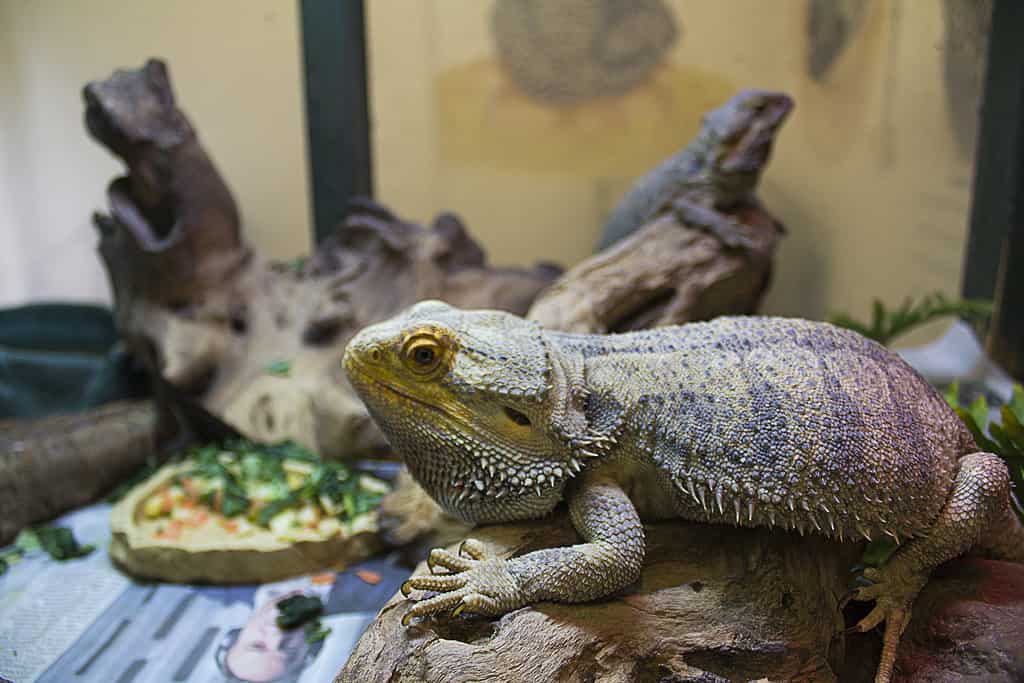
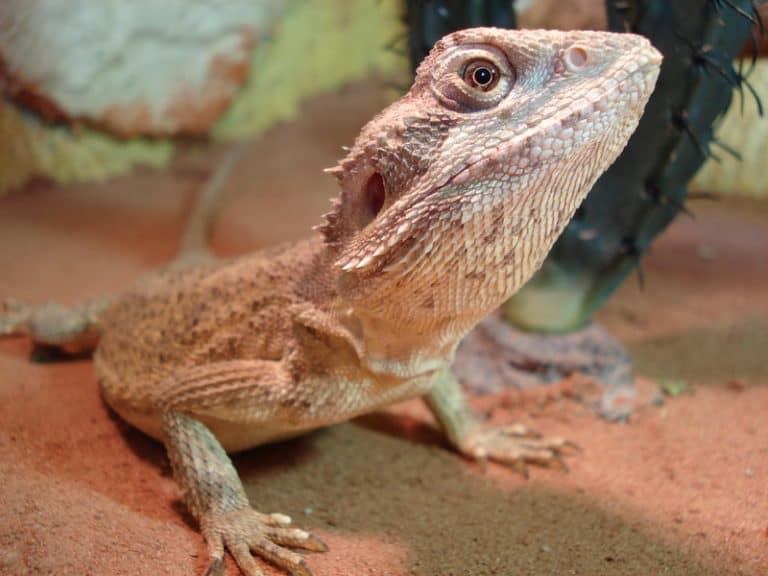
If you have more than one bearded dragon, immediately isolate the infected reptile from the rest of them.
©Amber Roberts/iStock via Getty Images
He recommends regularly washing your hands when transferring reptiles between enclosures. This helps prevent the spread of disease to healthy reptiles. Once a reptile is infected, it becomes incredibly contagious. Furthermore, the prognosis is usually bleak even with treatment.
“Using hospital-grade hand sanitizer is often highly effective at preventing the spread of the disease,” Lowbridge states.
Preventing Yellow Fungus Disease
Prevention of yellow fungus disease requires strict sanitation and quarantine procedures. It’s always better to be safe than sorry when introducing new reptiles into a shared enclosure.
“For those who have multiple reptiles, the way to prevent an outbreak is to follow strict quarantine procedures when introducing new individuals to the home,” says Lowbridge. “Have a good hand sanitizer and always use clean and sanitized decor inside the enclosure.”
Additionally, humid enclosures with high moisture and poor ventilation can promote fungal growth. Once the infection is present, it can spread like wildfire among other reptiles.
“For each individual species, as it is not just a bearded dragon disease, individuals should maintain the correct humidity,” says Lowbridge. “Using the correct ventilation and misting system should help with this.”
Treatment is essential and quick. However, the prognosis is not good, and death is common.
David Lowbridge, herpetologist, animal educator, and co-owner of DJL Exotics
Treating Yellow Fungus Disease
First and foremost, pet owners must recognize the signs of yellow fungus disease. The earlier the detection, the sooner the treatment, and the better the prognosis—and the less contamination among other reptiles. Though it’s often still deadly regardless of treatment, veterinarians typically recommend antifungal medications.
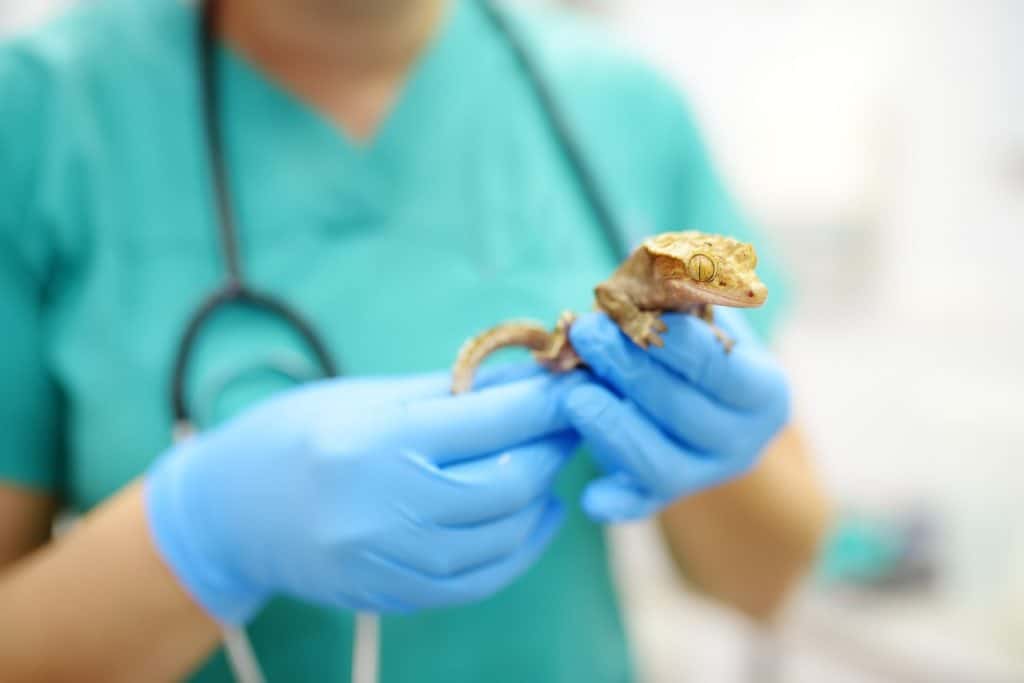
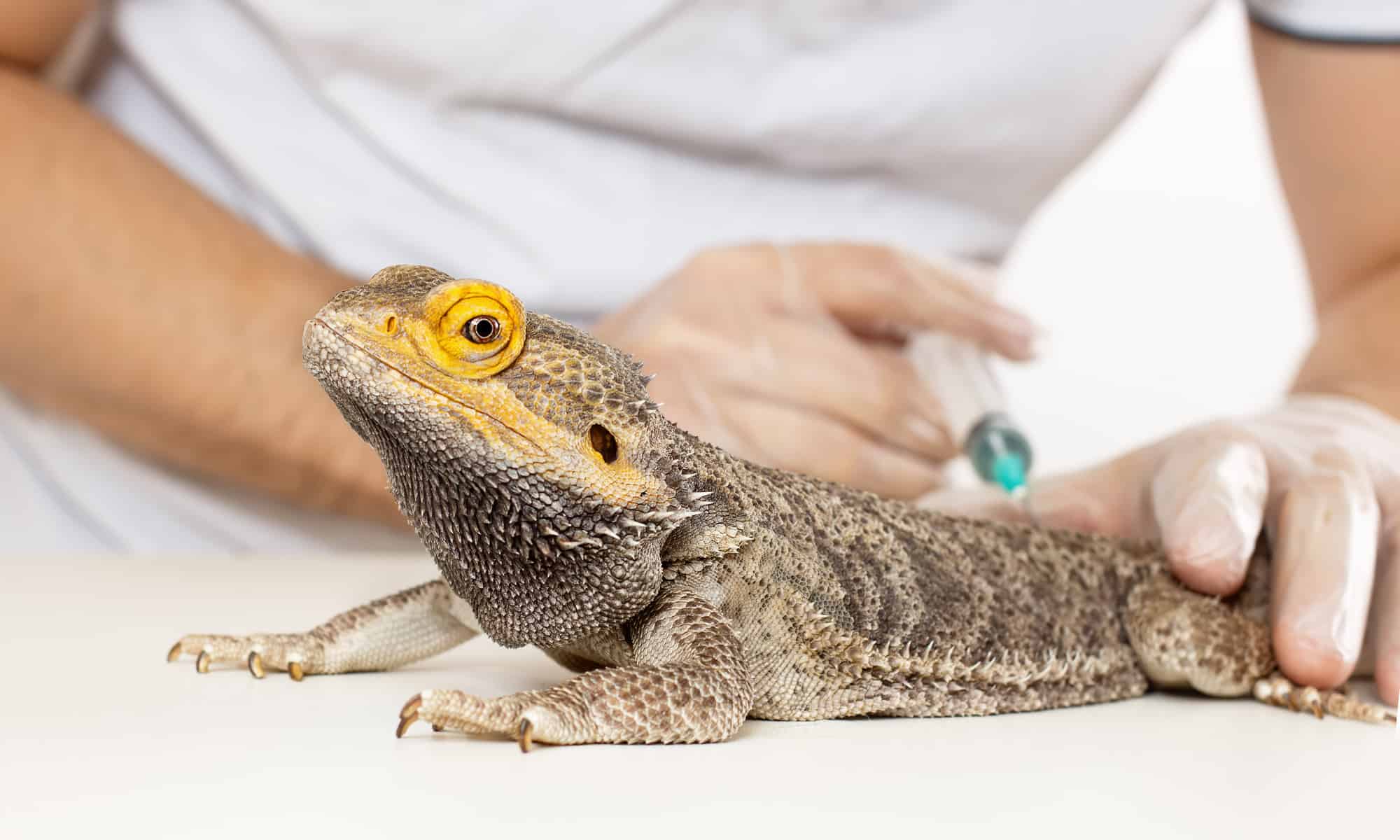
An exotic vet can help treat yellow fungus disease in reptiles.
©Maria Sbytova/Shutterstock.com
Symptoms of yellow fungus disease include yellow or brown skin, which is often thick and crusty. Some describe the skin markings as “butter-like” in appearance. As the disease progresses, the infected reptile might become lethargic, refuse to eat, or lose weight. If you notice any of these signs, it’s crucial to immediately separate healthy reptiles from infected ones and seek treatment from a veterinarian.
“Treatment often requires veterinary care, where they are given topical/systemic antifungal medication,” says Lowbridge.
Additionally, if you have multiple reptiles and one becomes infected, you must take action as soon as possible. The disease is contagious even in early stages, so isolating infected animals is crucial to preventing further spread.
“If someone has an infected Bearded Dragon, they should immediately quarantine it and seek treatment from their vet,” Lowbridge adds. “When handling the reptile, use disposable gloves. These gloves should be thrown away immediately after use and not kept in the house. It is also important to use a hospital-grade sanitizer before and after interacting with the infected reptile.”