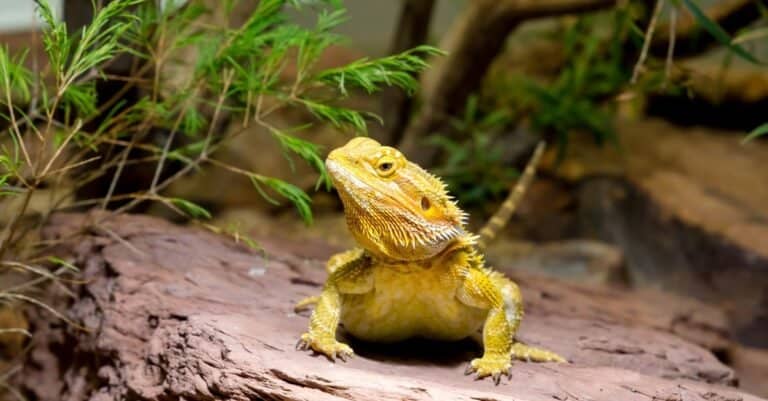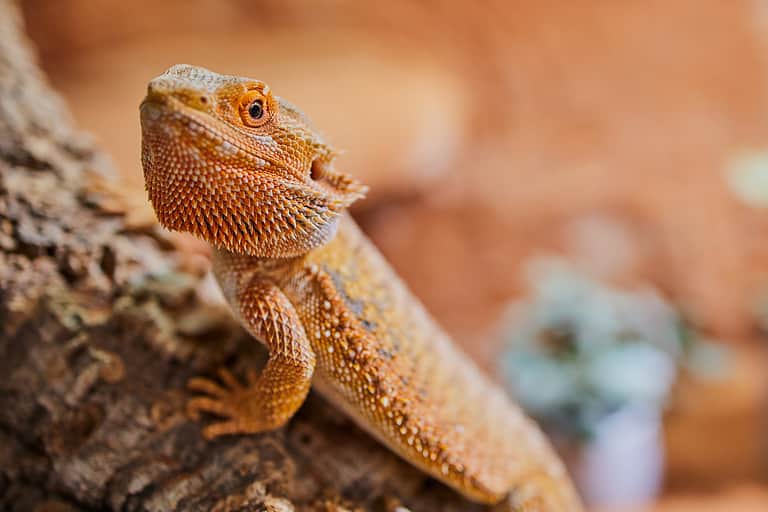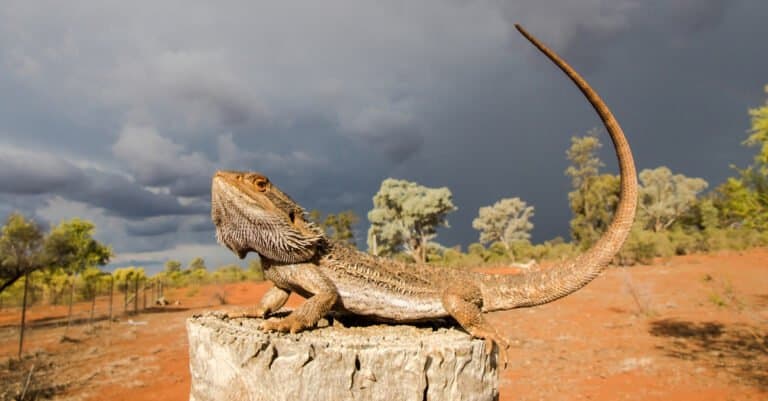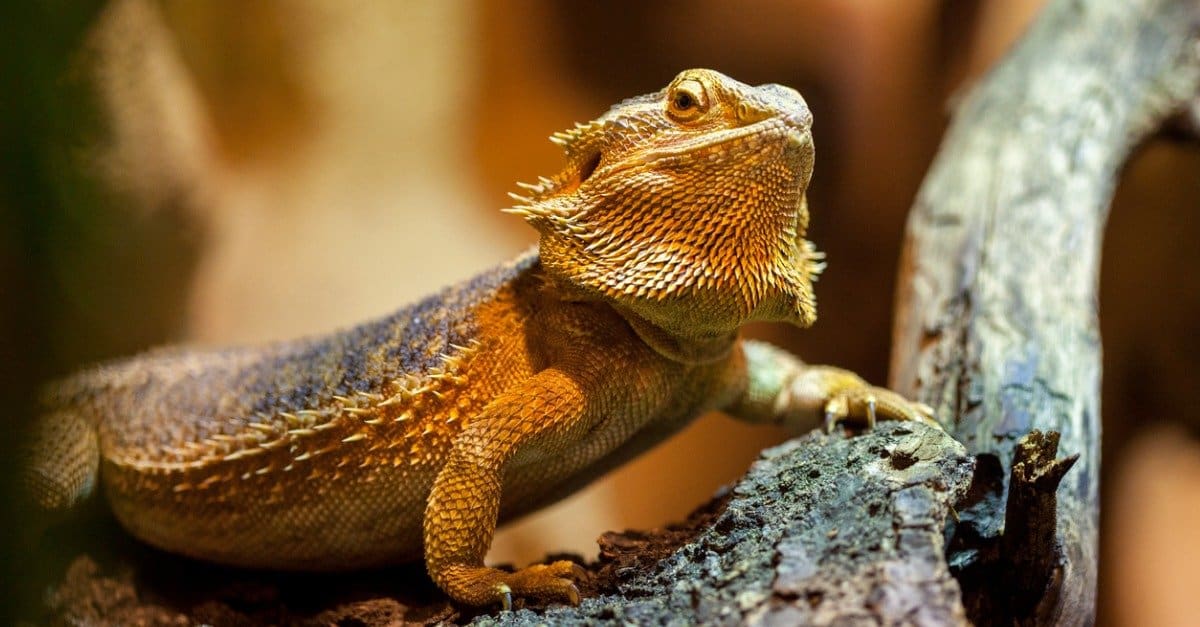

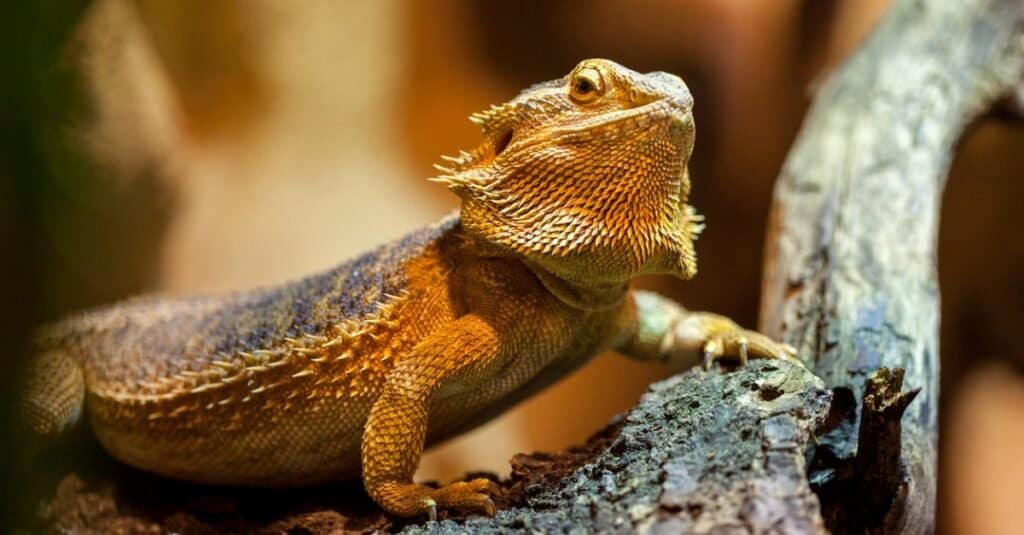
Bearded dragons, also known as pogona, are some of the most popular lizard pets around the world. They have a wild yet cute appearance, impressive intelligence, and a pretty cool name to go along with that. Most owners dotingly call them “beardies” and there is no denying their vivaciousness.
Below are 10 incredible facts you probably didn’t know about bearded dragons.
1. Bearded Dragons Do Not Actually Have Beards
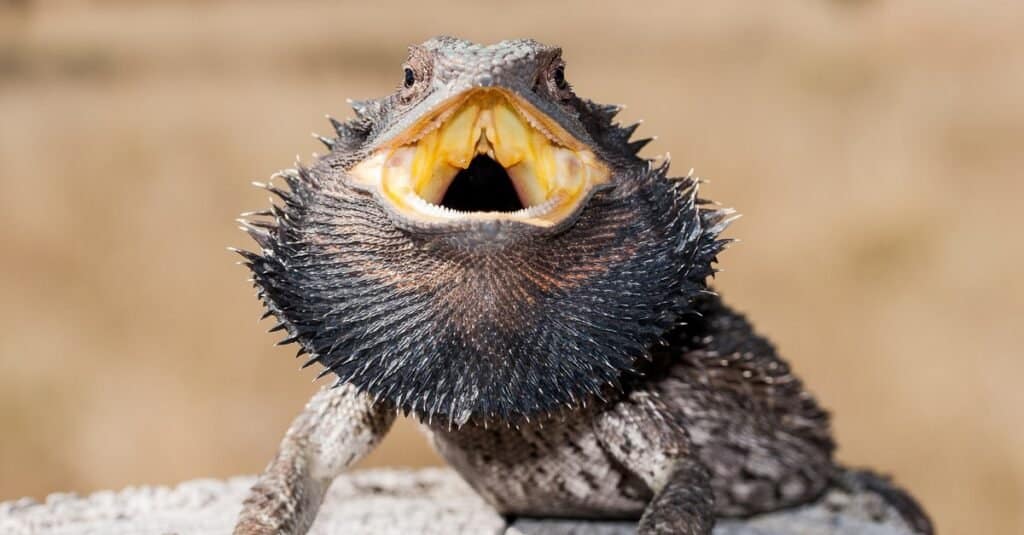
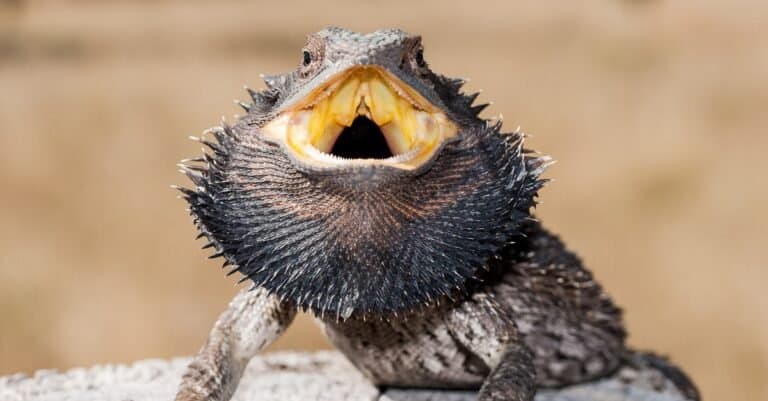
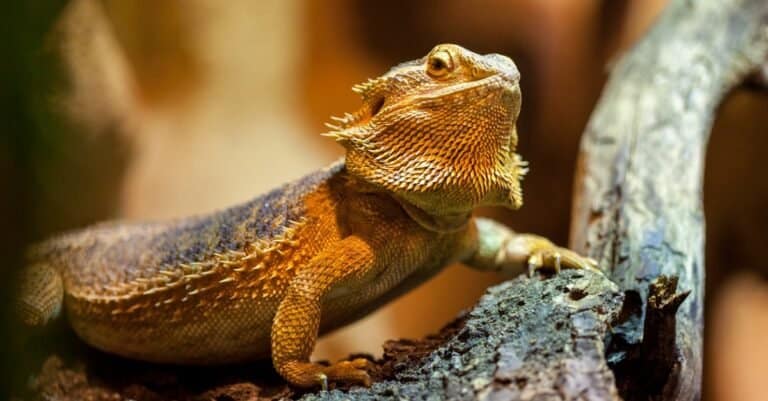
Bearded dragons have scales around their necks, which is their version of beards.
©Ken Griffiths/Shutterstock.com
While widely known as the bearded dragon, this reptile does not actually have a beard — at least not in a human sense. If you get a close look, you won’t find facial hair or anything of the sort. However, it does have scales around its neck, which is its own version of a beard. And as opposed to human society, both males and females have beards.
These scaly beards can serve as a form of defense against predators. When a bearded dragon feels threatened, it raises its chin and flares its scales out, making it look bigger than it actually is. The bearded dragon also deploys its beard as part of a mating call, in which it morphs into a dark color.
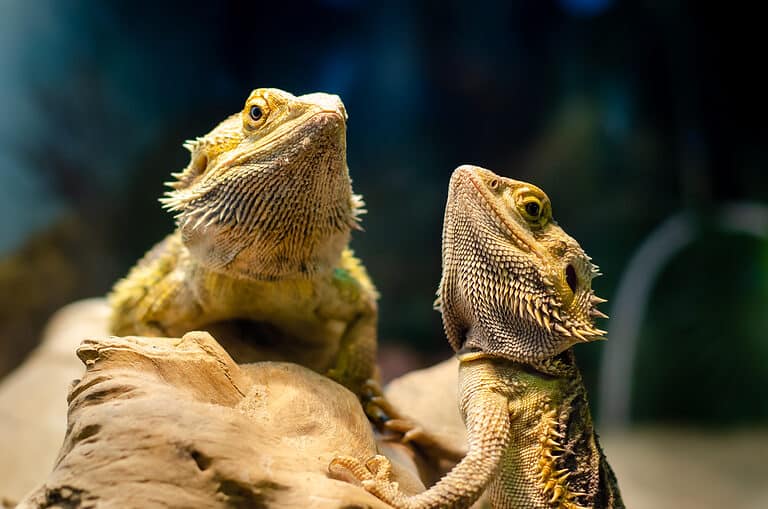
2. Bearded Dragons Are Solitary Animals
The only time bearded dragons interact with other members of their species is during mating season.
©iStock.com/huettenhoelscher
Bearded dragons are one of those animals that like to be by themselves and are fine all alone. They only interact with other beardies during the mating season, and once mating is over, they return to their space to be by themselves. It doesn’t get any more solitary than that, does it?
3. Bearded Dragons Are Venomous
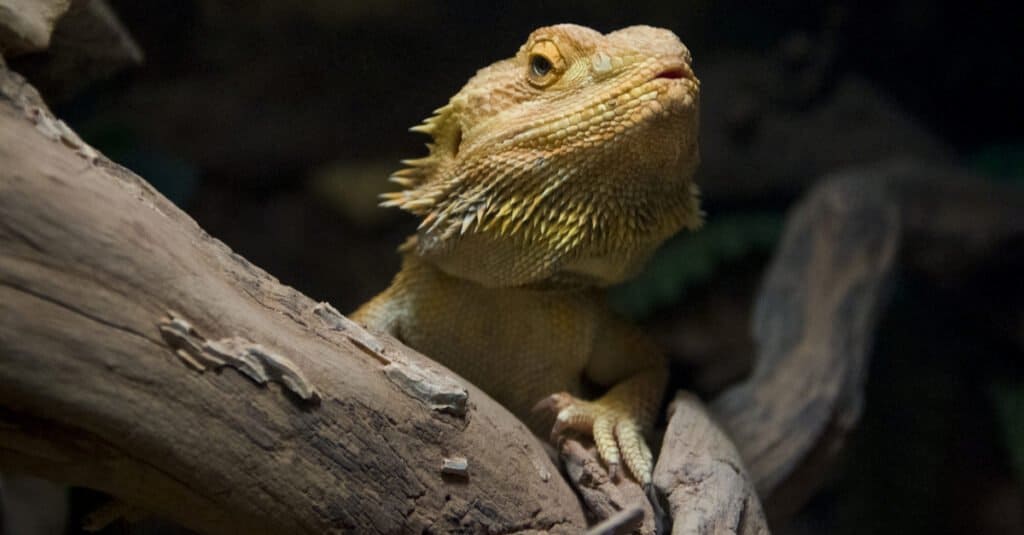
Although bearded dragons are venomous, typically their venom has no harmful effects on humans.
©Zhitkov Boris/Shutterstock.com
You might be surprised to learn that bearded dragons are venomous; however, their venom typically has no harmful effect on humans. Instead, their venom is mostly harmful to the insects they prey on and is largely innocuous to humans and many other animals. That pretty much explains why they remain one of the most loved pets in Europe and North America.
4. Bearded Dragons Are Naturally Averse to Fireflies and Avocados
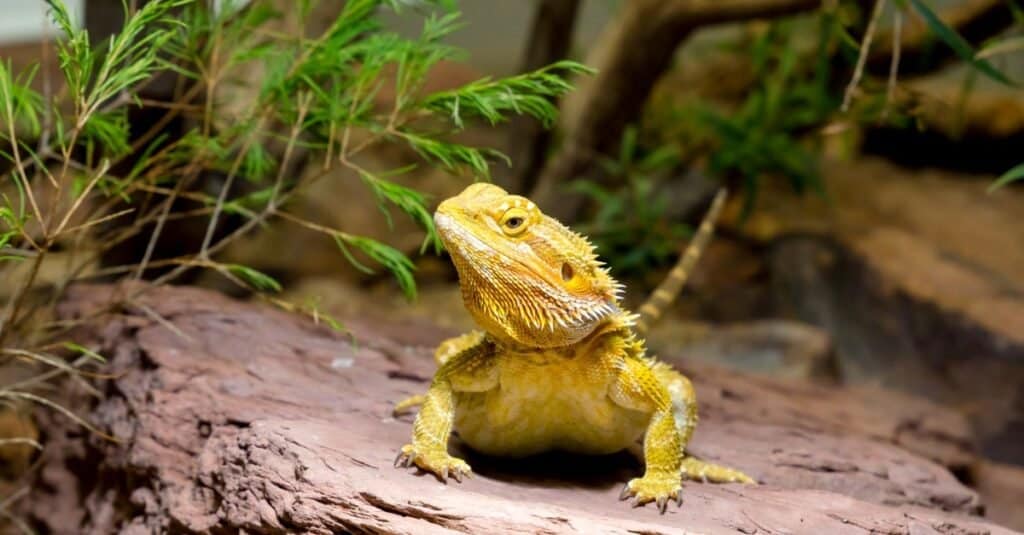
Bearded dragons could die from eating a firefly due to the toxins contained in the insect.
©iStock.com/Paul Oborowski
Bearded dragons cannot have fireflies for food because fireflies have toxins known as lucibufagins, which can affect their hearts to a lethal degree. This means they could actually die from eating as little as one firefly.
As for avocados, they contain excess oxalic acid, which, after consumption, could make bearded dragons very ill and possibly die. The avocados also have a high concentration of fat, which may cause obesity in bearded dragons and shorten their lifespan, especially if they are in captivity.
5. Bearded Dragons’ Urine Is Not Liquid
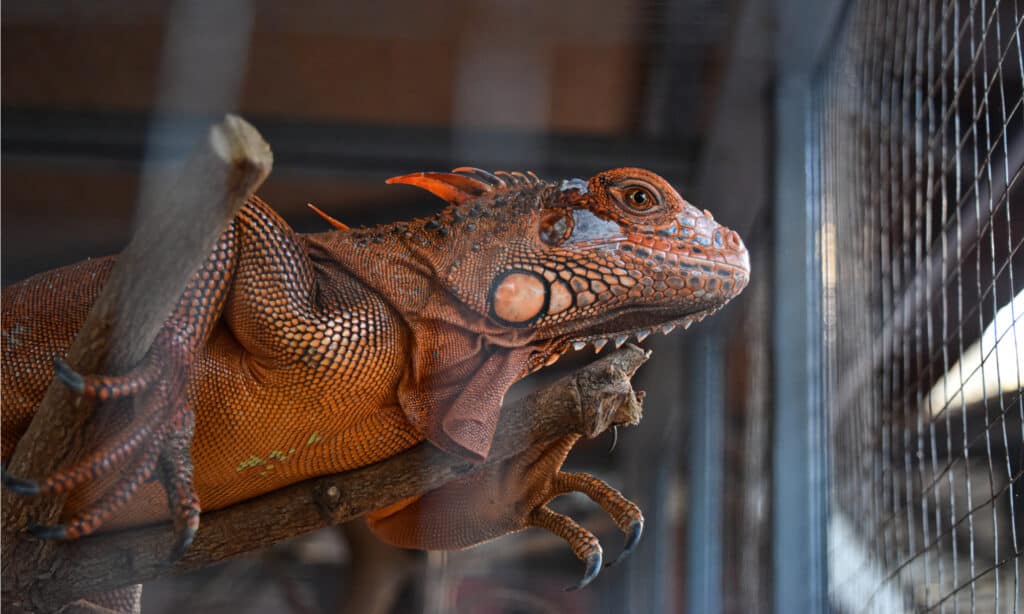
One advantage of keeping a bearded dragon as a pet is that its urine is not in liquid form.
©Built_Katbandit/Shutterstock.com
Yet another reason why bearded dragons are considered near-perfect pets is they do not urinate liquid — so there is no chance they would pee on you while you are playing with them. Their urine comes out as a powdery substance, known as uric acid, alongside other waste. Scientists say they do not urinate liquid because they are originally from deserts and their body conserves every drop of liquid.
6. Bearded Dragons Can Change Gender If Incubation Temperature Is Increased
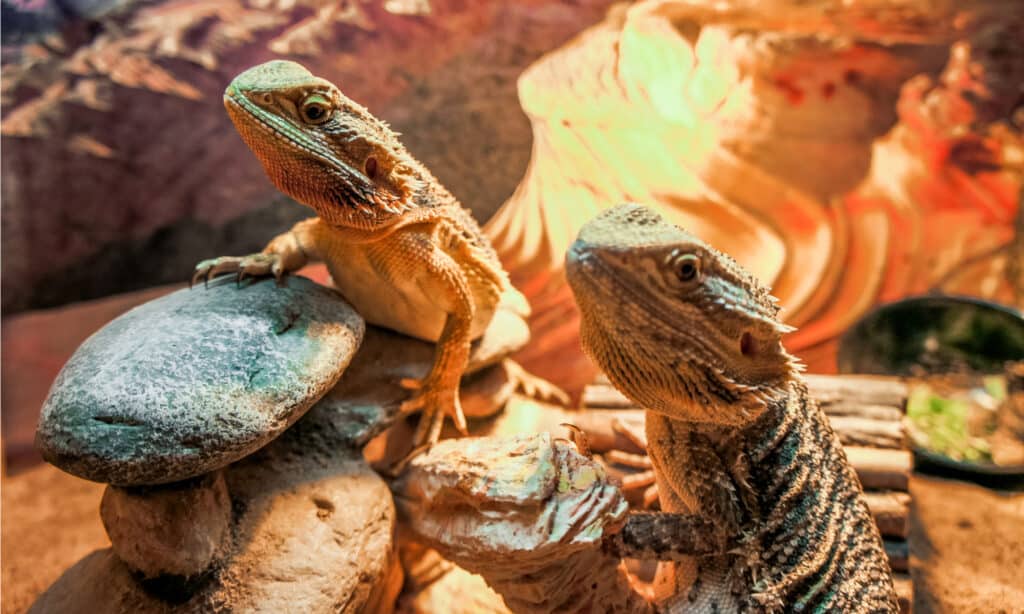
During incubation, if temperatures are extremely high, bearded dragon eggs will morph into females.
©Steve Buchus/Shutterstock.com
During incubation, the sex of bearded dragons can change. High incubation temperatures can cause genetically male bearded dragons to develop as females, a process known as temperature-dependent sex determination. However, if it’s low, then the eggs would most likely be male. Besides the sex change, warm temperatures can also negatively impact the bearded dragon’s learning ability by slowing it down.
7. Bearded Dragons Can Give Birth Twice From Mating Once
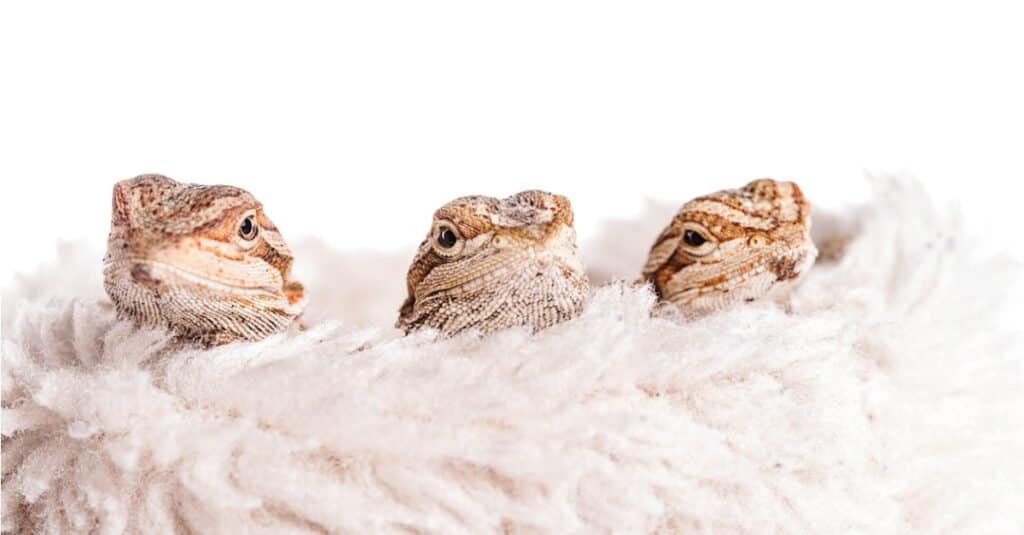
Females can lay up to two clutches of eggs (each 15-30 eggs) from one mating session.
©iStock.com/Kaan Sezer
Female bearded dragons can save sperm material from a male during a mating session to give birth again. This means the females can lay up to two clutches of eggs from one mating session. Bear in mind that one clutch can feature between 15 and 30 eggs. That way, they can increase the number of offspring from a single mating session.
8. Bearded Dragons Can Change Their Skin Color
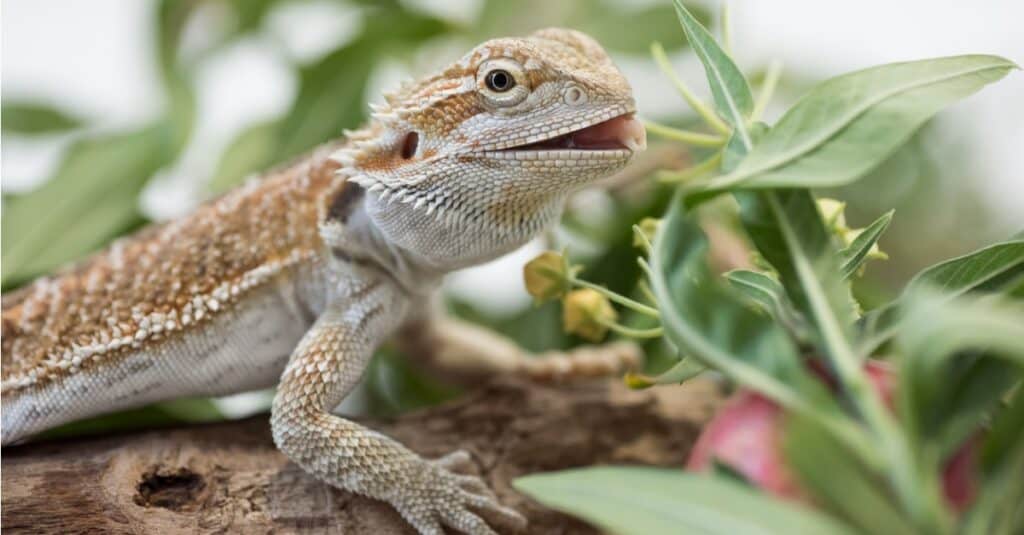
Bearded dragons can change their skin color to be lighter when temperatures rise.
©iStock.com/JeannetteKatzir
When you hear about an animal changing their skin color, you immediately think of the chameleon. While that’s right, bearded dragons can also change their skin color. Their color change is not as sophisticated or effortless as the chameleons and they often change to a darker skin tone to absorb some more heat. In the same vein, when it becomes too hot, they make their skin lighter.
9. Bearded Dragons Can Sleep While Standing
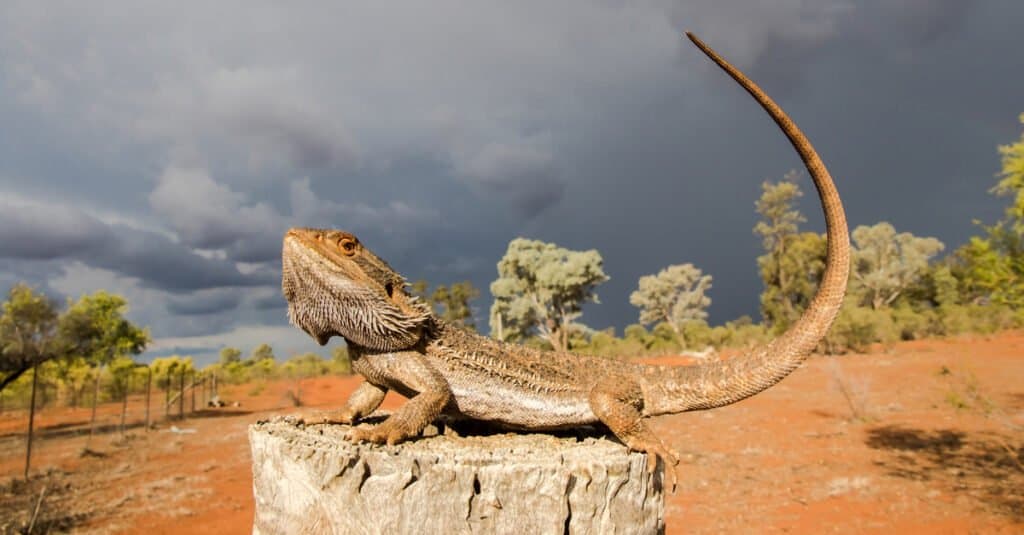
Bearded dragons have the ability to lock their hind legs and hold themselves upright.
©Ken Griffiths/Shutterstock.com
Bearded dragons have the rare “talent” of sleeping upright thanks to their natural ability to lock their hind legs and hold themselves upright. They often do this when they have to sleep between rocks, in which case they would just lock their hind legs, lean against something, and sleep away.
10. Bearded Dragons Wave to Acknowledge Each Other
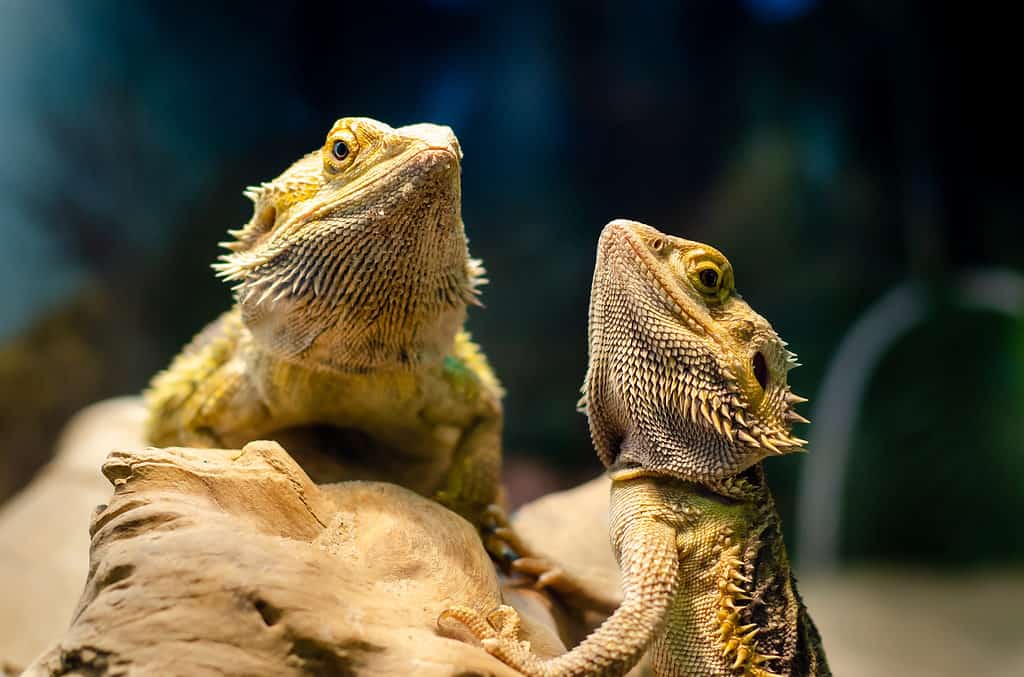
Bearded dragons acknowledge each other and humans by waving.
©Lutsenko_Oleksandr/Shutterstock.com
Much like humans, bearded dragons also wave to each other as a sign of acknowledgment. A male bearded dragon would wave to a superior male as a way of pledging submission, and the dominant male would bob its head as an assertion of its superiority. Females would also wave their arms to show that they were down for a mating session, and the males would bob their heads in response.
Bearded dragons also wave at humans, although not to greet per se but as some form of acknowledgement of human superiority. Bearded dragons are very modest, and they know their place, so they often wave to demonstrate this.