
Quick Take
- HISSS, a reptile shop in Portland, Oregon, has introduced twice-weekly yoga classes involving snake participants.
- Ball pythons, carpet pythons, and other larger reptiles are involved on a rotating schedule, one built around their feeding and sleeping habits.
- HISSS staff and snake handlers monitor classes closely to ensure the safety of both their human participants and snake participants.
- While yoga classes are currently sold out, HISSS is an informative, specialty reptile shop worth exploring if you’re a fan of this niche hobby or looking to learn more about reptiles in general.
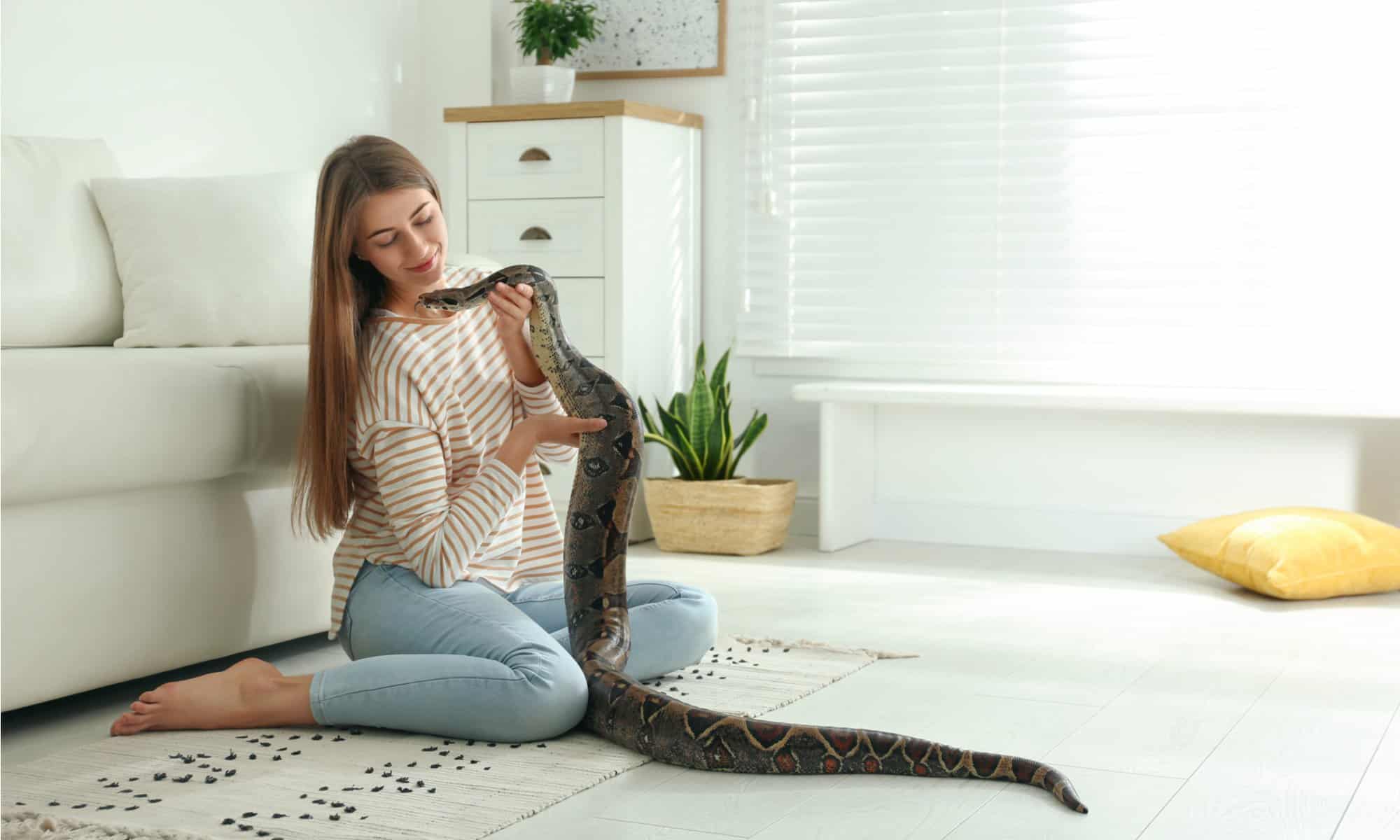
A new wellness routine is making a splash in Portland, Oregon, but it might not appeal to everyone. A recent Instagram reel showcases the classes debuting at HISSS, a boutique, holistic reptile shop on Portland’s Northeast side. What do a reptile shop and this unique wellness class have in common? Both involve snakes.
Snake yoga classes at HISSS Reptile Shop in Portland are taking off. Looking in at these snake yoga classes from the outside, many can’t help but wonder: what is the purpose, and are these classes safe for both the humans and reptiles involved?
We spoke to Dru Morales, owner of HISSS, for the answers, and he did not disappoint. Describing snake yoga as a mindful, guided session designed to help people engage with reptiles at their own pace, snake yoga appears as if it is here to stay, at least in Portland. In a city that loves to keep it weird, this is what snake yoga is all about, including how carefully classes are organized to keep these slithering friends safe.
Snake Yoga at HISSS: What to Expect
HISSS began hosting snake yoga classes in October 2025 with yoga teacher Katy Fay. We asked Morales what a typical class looks like, especially for those who may not know what to expect from their scaly classmates.
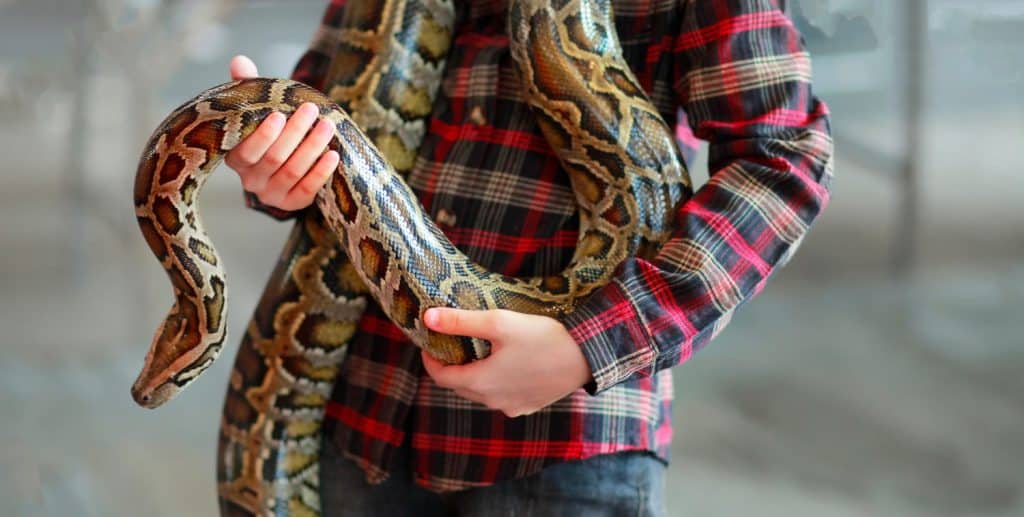
Snake yoga began at HISSS in Portland back in October 2025 and is consistently selling out today.
©KANGWANS/Shutterstock.com
“Everyone has a different comfort level,” Morales reports. “Some people want a snake to slither on them during a class, some people don’t. We built the class so you can participate fully either way.”
Morales relays that participants are encouraged to arrive about 15 minutes early for multiple reasons. While getting changed and laying out your yoga mat are musts, meeting the snakes before class begins is also encouraged. “It helps take the edge off,” Morales explains. “You’re not walking in, and suddenly there’s a snake on you. You can see who’s going to be out during the class, ask our reptile staff questions, and decide what you’re comfortable with before the class even starts.”
Consent Tokens: Seamless and Safe
During class, HISSS utilizes a simple consent system so handlers and guests aren’t guessing about comfort level around their yoga-loving reptiles. “We use ‘yes’ and ‘no’ tokens, things you set out where your mat is,” Morales reports. “It’s designed to be a signal for our handlers. If your token says no, we’re not bringing a snake to you. If it says yes, we’ll help facilitate that in a way that’s safe for you and the animal.”
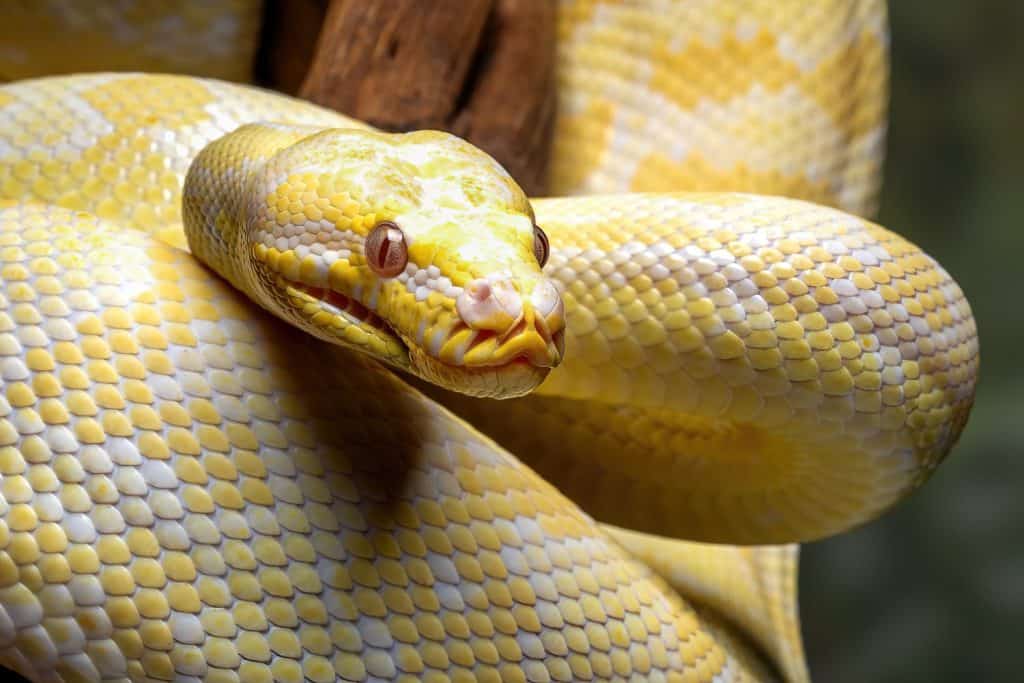
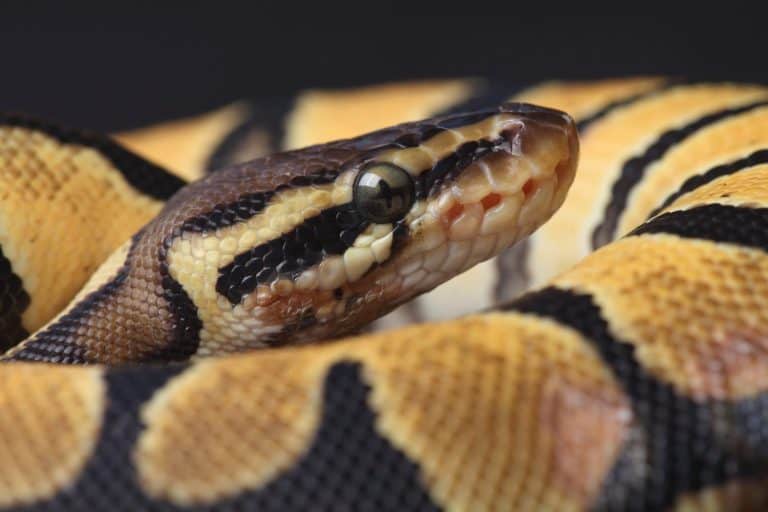
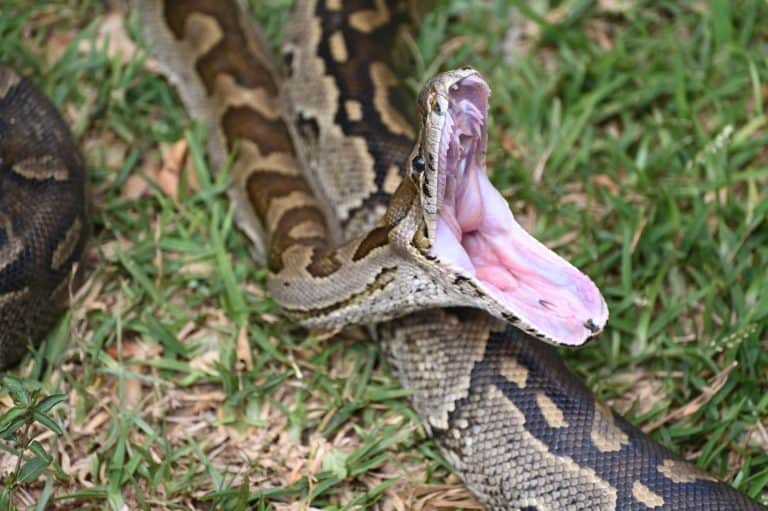
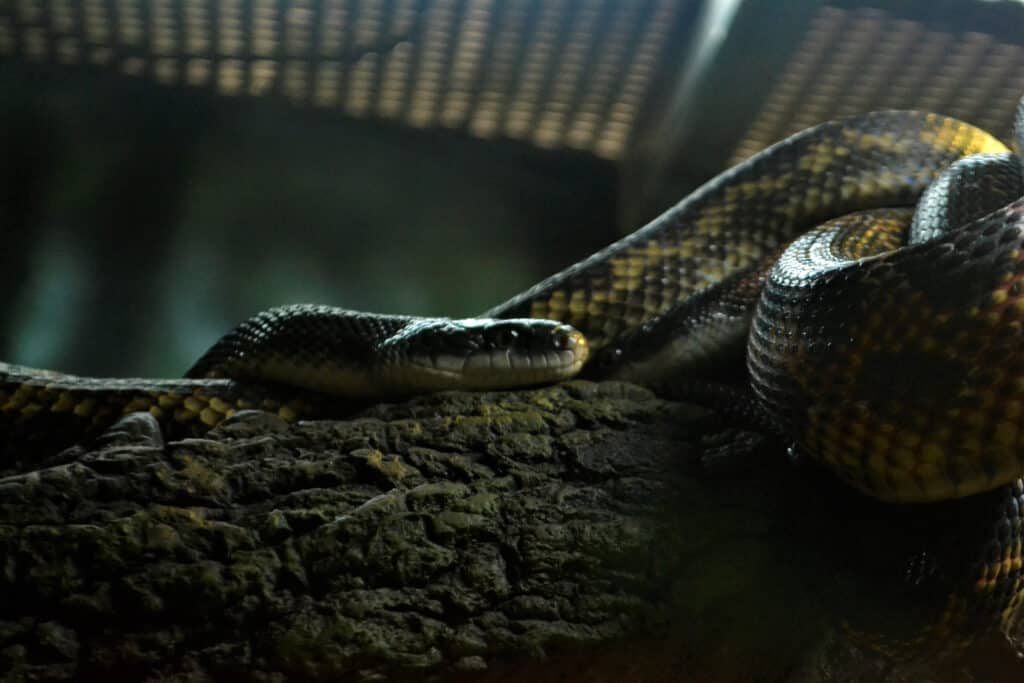
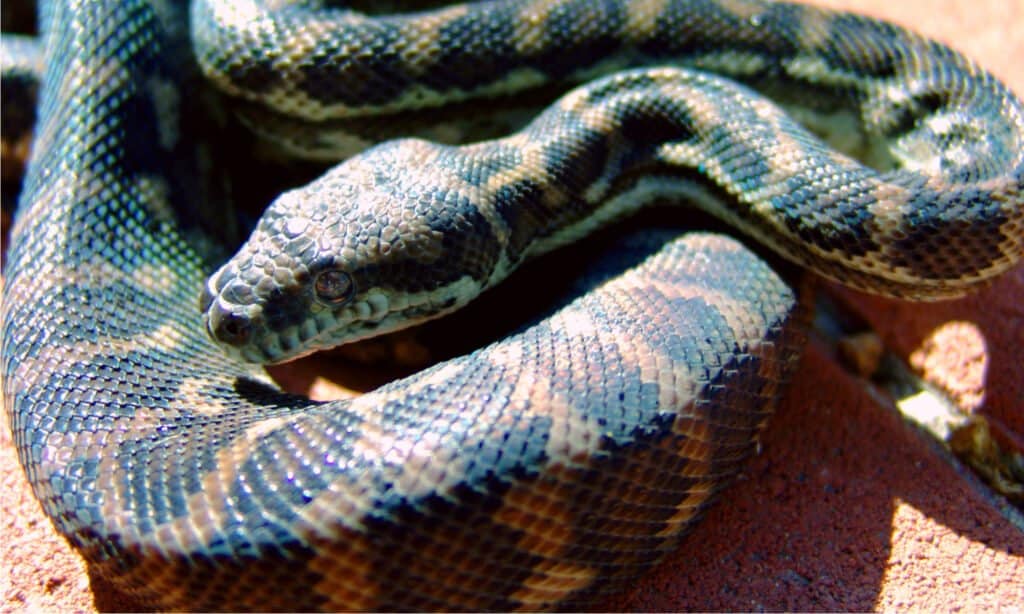
Different types of snakes are involved in snake yoga at HISSS, including carpet and ball pythons.
©Lauren Suryanata/Shutterstock.com
HISSS’ reptile handlers are trained in both animal and human behavior and actively observe both sides of the interaction. “Our staff is trained in animal behavior and human behavior,” Morales mentions. “We’re building a mindful, guided session for people to potentially get over their fears, or even encourage anyone who has an interest in the niche world of reptiles.”
Cobra Pose: Everyone’s Involved
The yoga itself is intentionally gentle. Morales describes it as mindful rather than intense: “We’re not doing hot yoga; there aren’t snakes slithering around through sweat all day.” The guided approach of each session allows the instructor to respond to what’s happening in the room, crafting unique stories and meditation scripts on the spot for every class.

The instructor for HISSS’ snake yoga classes incorporates reptilian stories and language during practices.
©SFIO CRACHO/Shutterstock.com
“Katy is great about building these sessions with the snakes in mind; she’ll ask participants to ‘breathe in, hiss it out,’ especially during cobra pose. Plus, since snakes sense the world through heat pits and vibrations, the added vocal cues seem to get them more involved, too,” Morales notes.
Choosing the Reptiles For HISSS Yoga Classes
HISSS’ reptile lineup changes depending on the day and on the animals’ schedules, according to Morales, but a typical class involves a minimum of four to six reptiles. “That’s realistic for us,” Morales explains. “And we’ll sometimes have other reptiles present too, like bearded dragons, a large tegu, or tortoises, depending on what’s going on in the shop that day.”
Morales mentions that the selection is purposefully deliberate. “We’re looking at their diurnal and nocturnal rhythms, and we’re planning around that. We’re also choosing animals that are well-socialized and appropriate for this environment.”
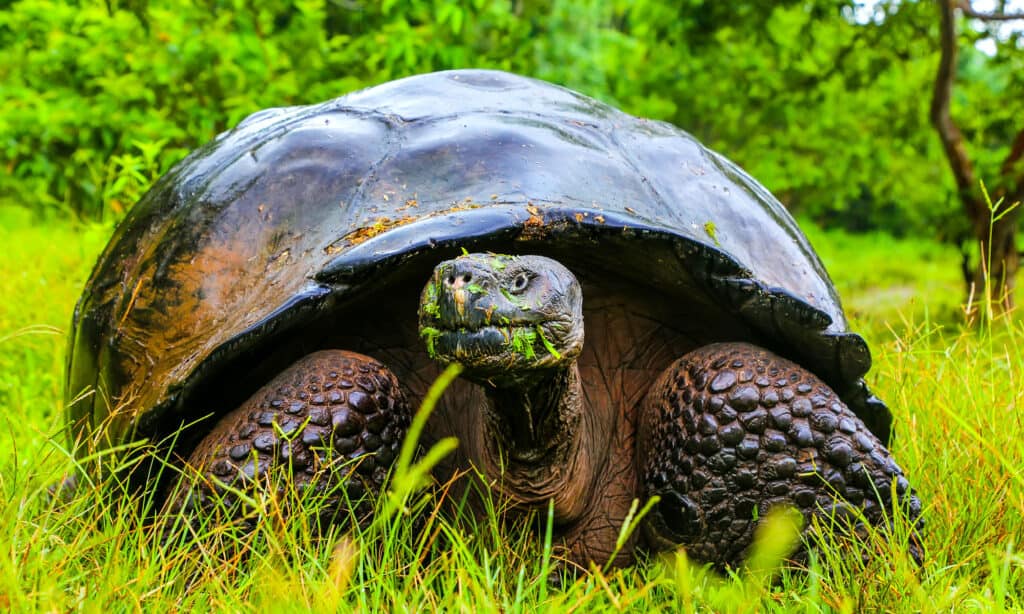
Large tortoises are occasional guests during snake yoga at HISSS.
©iStock.com/Donyanedomam
And it isn’t just their sleep schedules that HISSS pays attention to. Feeding schedules need to be monitored to avoid unnecessary stress or accidents. “They eat weekly,” Morales reports, “and we plan feeding so we’re not handling them or putting them in a yoga class right after a meal.” Morales mentions feeding the snakes on Wednesdays so they have time to digest before the next class, which is typically on Mondays and Saturdays.
Some people want a snake to slither on them during a class, some people don’t. We built the class so you can participate fully either way.
Dru Morales, owner of HISSS
Some reptiles in the shop are not meant for snake yoga, even if they are well-handled. “Smaller snakes under about two feet aren’t involved,” Morales reports. “We use longer-bodied, docile animals that we’ve handled consistently and are comfortable being out.”
Because HISSS also operates as a reptile shop and pet hotel, Morales said there are occasional opportunities to include larger animals staying on-site, but only if they are well-socialized. “If we have a larger animal on the property, we ask permission from their owners first,” Morales explains. “And we still have to make the call based on what’s best for that specific animal.”
The Handling Rules and Safety of Snake Yoga
Snake yoga involves a fair bit of education, as participants should never be grabbing or restraining the reptiles; their hands are often too busy locking down a yoga pose to do this in the first place. Instead, HISSS’ trained staff encourages participants to become a stable surface the snake can choose to use.
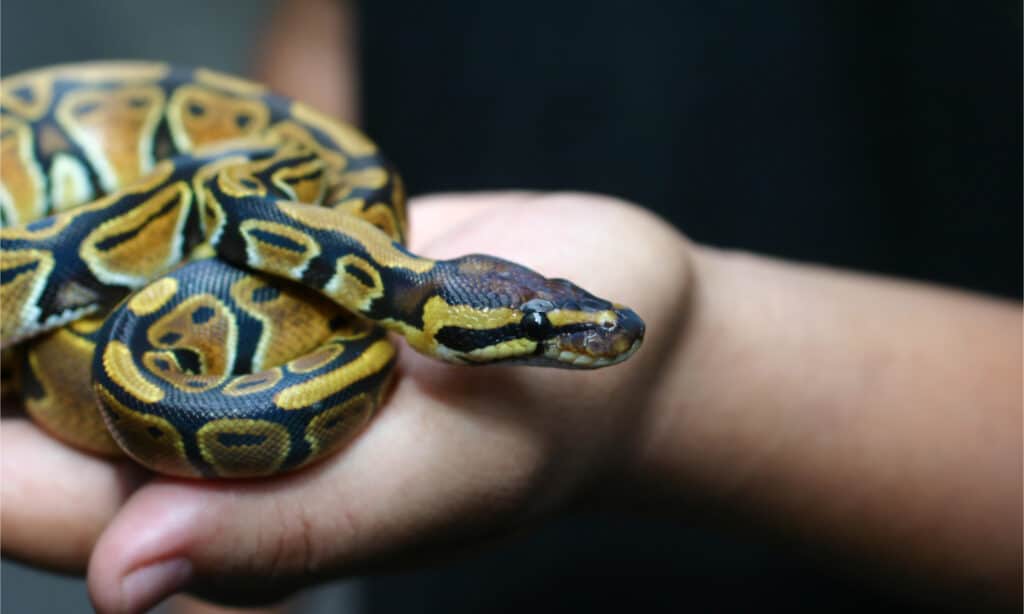
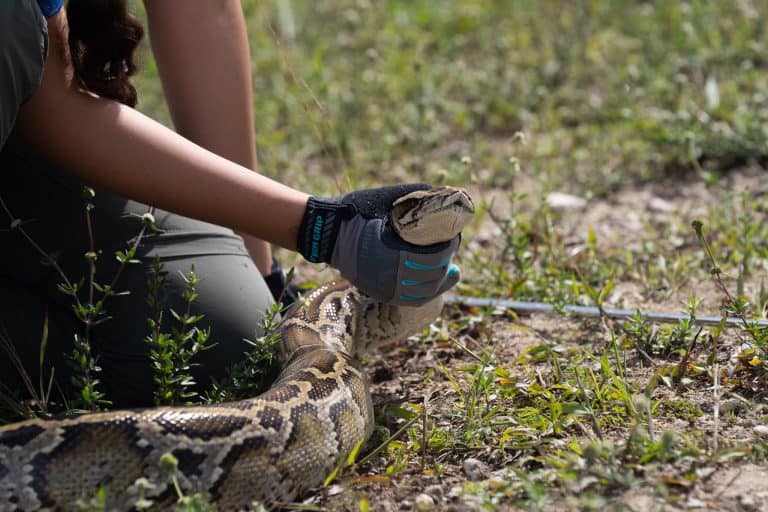
Snakes choose the participants during yoga practices, not the other way around.
©Krisda Ponchaipulltawee/Shutterstock.com
“We tell people: let the snake hold you,” Morales reports. “You’re basically a big tree trunk, and they may choose to climb on you, especially during certain types of poses.”
When a snake begins moving toward an area someone isn’t comfortable with, Morales reports that staff step in without making it awkward or uncomfortable for the participant involved. “If a snake is slithering somewhere a person isn’t okay with, our handlers move the animal,” Morales says. “That’s why they’re there.”
Etiquette and Hygiene at HISSS
HISSS also teaches basic snake etiquette, including how to touch the snakes if desired. “We show people how to pet down their backs, calmly, from beneath, not coming down from above,” Morales explains. “Just knowing how to approach these animals properly keeps everyone calm and prepared.”
Morales added that hygiene is also treated as a core safety practice within the studio. “Hygiene is huge, given that these snakes come from enclosed living situations. We clean and sanitize, and we offer hand sanitizer to participants at all times.”
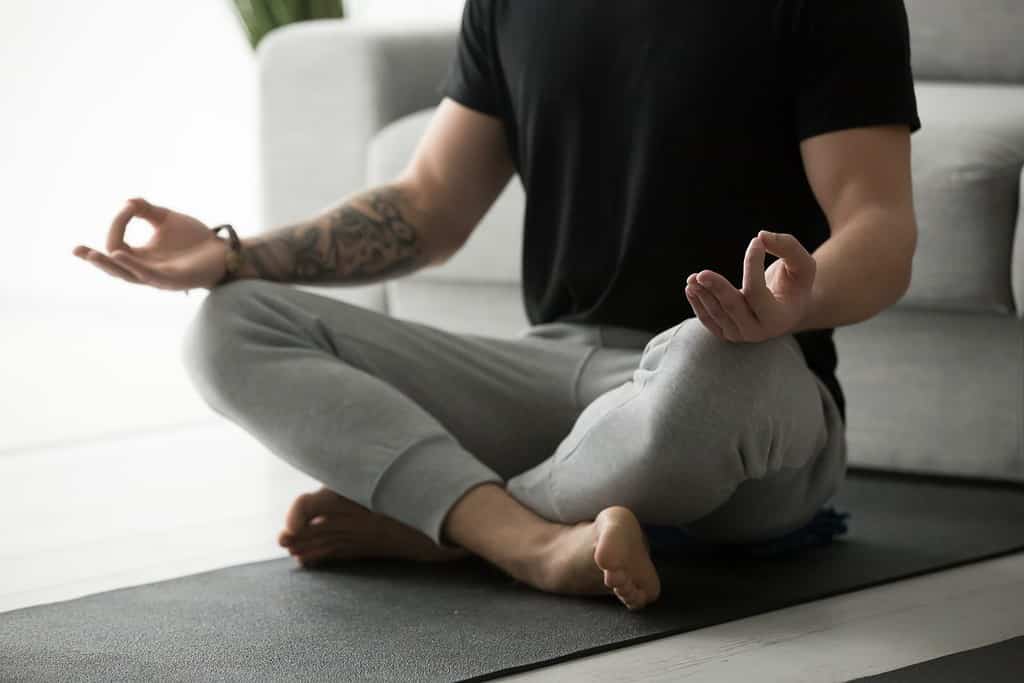
Hygiene and safety are top concerns during snake yoga hosted by HISSS.
©fizkes/Shutterstock.com
Morales also notes that many of the shop’s enclosures are bioactive living systems—an approach used in reptile husbandry to support healthier captive environments. This means the shop is already structured to reduce health problems through daily care.
The Snakes of Snake Yoga (and Other Reptiles)
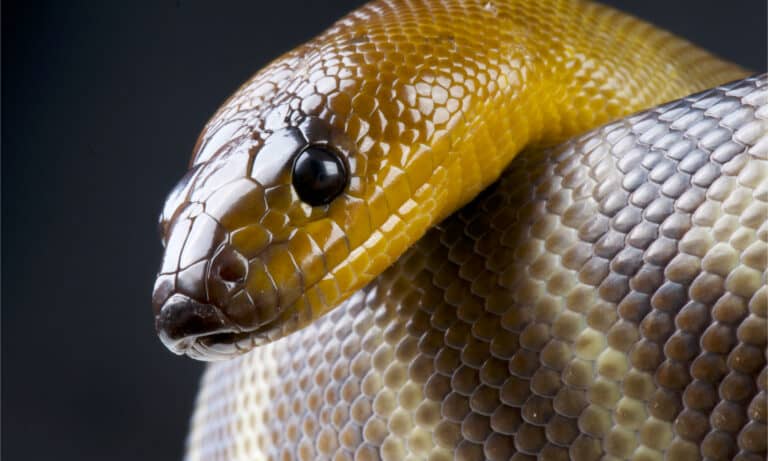
Morales said ball pythons are among the most common snake yoga hosts because they’re typically calm and predictable in a handled environment when properly socialized. “Ball pythons are usually three to five feet,” Morales explains. “And they tend to be most active around dawn or dusk, which is why we use them in our evening yoga class a lot.”
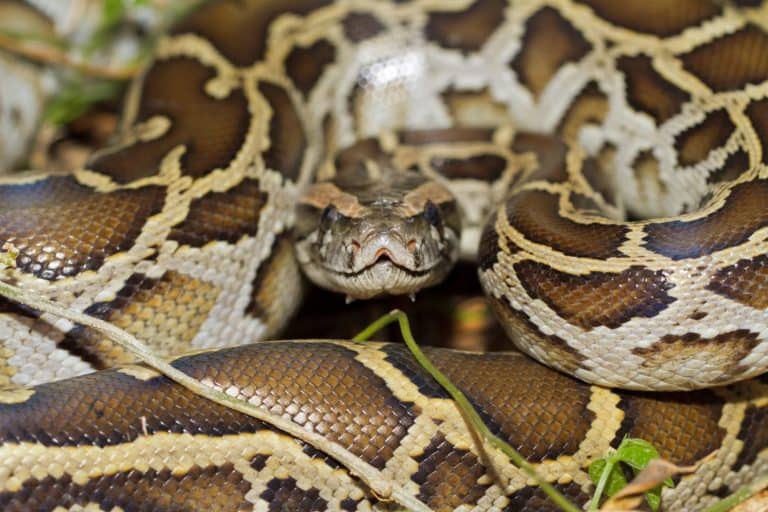
Morales mentions carpet pythons as a more arboreal presence during classes, explaining that upright, stable poses can give that animal a branch to explore if they so choose. “If someone’s in a warrior pose with their hands out, that can be a good moment,” Morales says. “It’s like being a tree for them.”
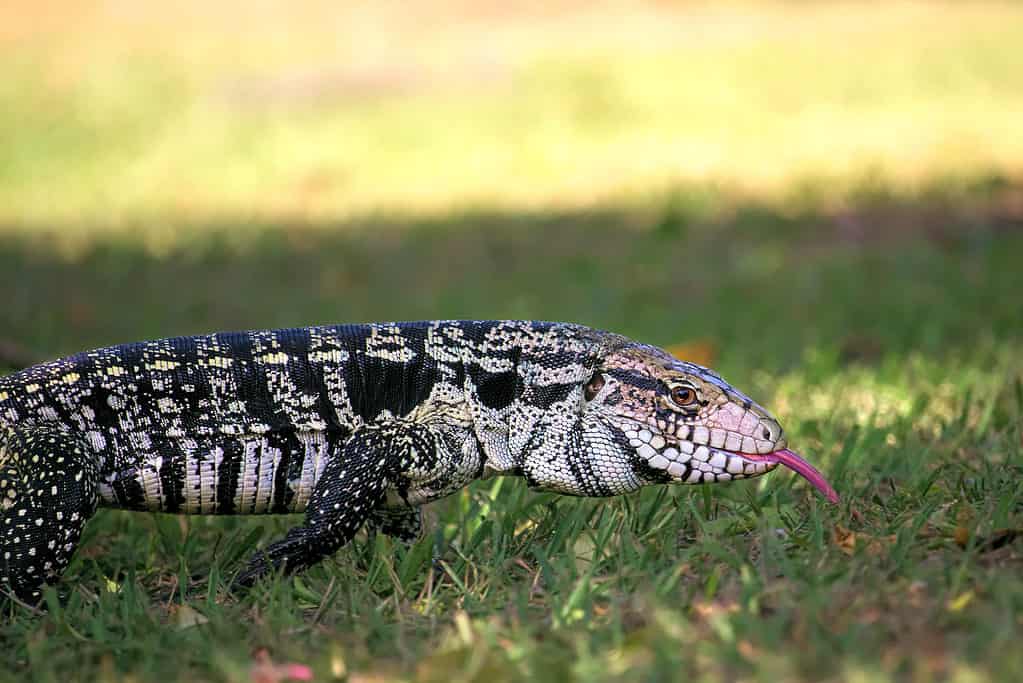
A tegu named Diamond may also make an appearance during snake yoga, and she’s a fan favorite.
©Nelson Donizeti/Shutterstock.com
Morales also notes that corn snakes are occasional participants, with other reptiles a part of the also taking part, including bearded dragons, slow-roaming tortoises, and a tegu named Diamond. “Diamond gets blueberries and fruit a lot after sessions, since we have water and snacks for our guests,” Morales mentions with a laugh, describing it as a post-class routine that participants love.
Keeping Snakes Safe During Yoga Sessions
One of the biggest issues facing HISSS is the potential for snake and reptile welfare to enter the conversation. However, HISSS understands reptile comfort and care; it’s their bread and butter.
For example, each yoga class is an hour long, but HISSS does not keep the same animals in constant interaction for the entire time, even though they are capable of it. “We rotate animals out every 15 to 20 minutes,” Morales adds, “which means you can end up seeing six to ten animals in a session. Swapping them out means it’s less intense for the animals.”
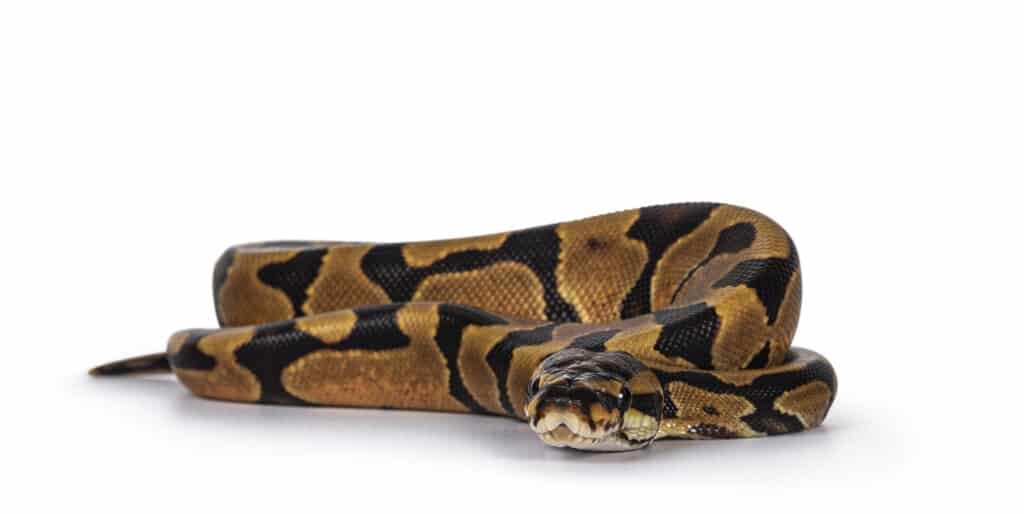
Ball pythons that are large and docile enough are mainstays of HISSS’ snake yoga program.
©iStock.com/Nynke van Holten
Morales brings up HISSS’ structured snake yoga in relation to certain educational contexts where an animal may be out longer, depending on the program. “This isn’t that, even though we have snakes from our shop that participate in educational workshops,” Morales states. “The duration here is shorter and more controlled. We cue things around poses so the animals stay safe, and we’re watching the entire time.”
How Yoga Classes Have Grown Since HISSS Opened
With classes currently offered on Monday evenings and Saturday mornings, it’s worth dropping in, even if you’re curious; the HISSS staff is available to answer any and all questions. When asked about how this phenomenon has grown, Morales mentions that snake yoga started small and grew only because demand kept rising.
“We began once a month back in October,” Morales states. “Then it became twice a month. Now we’re offering it twice a week. We’re also at about 40 people per class now, which is double where we started, and every class has been selling out since we began.”

Snake yoga classes have both doubled in size and the number of lessons offered since HISSS began offering them.
©iStock.com/jacoblund
And the pace hasn’t slowed. “February is already sold out,” Morales mentions, “and March is on the way there, too.”
HISSS: a Reptile Shop First, Not Just a Yoga Studio
Morales is direct about a misconception the business is running into, now more than ever: people assume HISSS exists mainly to host snake yoga and is primarily a yoga studio, where drop-ins and casual classes with snakes occur. “We work with reptiles for a living,” Morales says. “This is what we do every day, but we still have people walking into the shop and assuming they can just do yoga.”
HISSS is a full-scale reptile shop and pet hotel that supports people who need real, practical help, help that isn’t always available for exotic species like reptiles. “We sell food, we offer custom enclosure designs, we do sexing,” Morales reports. “People come to us for care questions and husbandry guidance. Yoga is only one thing we offer. It’s definitely not the whole shop.”
Morales also mentions that HISSS’ high standards for feeding and husbandry are part of what make their public-facing programs possible. “We use high-quality feed, and our live prey is fed a zoo-based diet. That quality transfers to our reptiles,” Morales says.
HISSS also offers specialized support that many big-box pet stores can’t match, as many reptiles require species-specific care that’s easy to get wrong. Ultimately, HISSS is a holistic reptile shop built around education and responsible husbandry, with yoga acting as a fun, informative addition.
Who Should Try Snake Yoga?
Morales says their yoga classes are designed to welcome a wide range of people, including beginners. “Everyone is welcome,” Morales says, adding the one rule that matters in a room full of animals: “Everybody stays on their mat, and, if you’re 12 or younger, you need to be with a parent or guardian.”
Morales also took the time to acknowledge that not everyone likes the concept of snake yoga when they first come across it. “Most people are receptive, but some people—maybe 10%—really don’t like the thought of it. We take that seriously, but we also know our animals, and we know what’s appropriate.”
The real question remains: would you ever try snake yoga?
©sharyn/Shutterstock.com
For the people interested in snake yoga and long to participate, Morales describes how one-of-a-kind the experience can be. “When a snake chooses you, when it actively comes over and says hi to someone on its own, that feels really special. They can pick up on a practitioner’s energy, and there’s nothing else like it.”