Quick Take
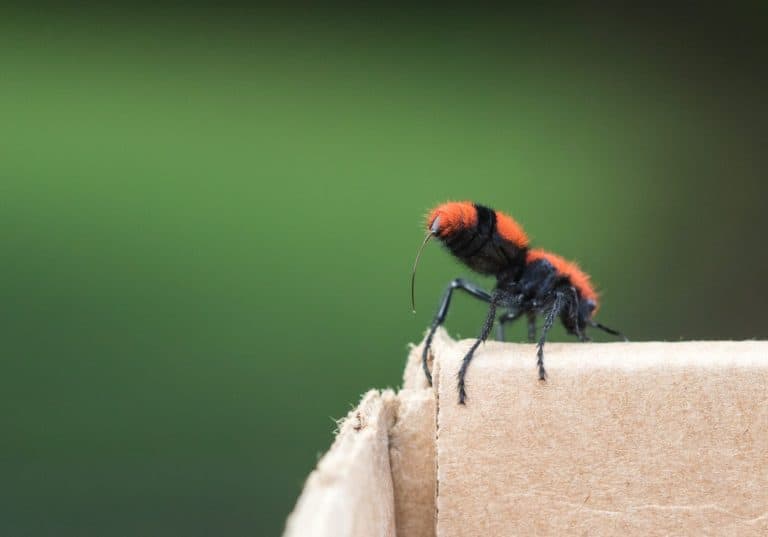
- One of these 'ants' is actually a wasp with a sting so brutal it earned a nickname no insect should ever have. Meet the 'cow killer' →
- A bright red bug living in your kitchen pantry right now could be ruining your food without you knowing it. See the pantry pest →
- One of these red bugs stains cotton crops red just by feeding, and it has even been mistaken for a completely different species. Discover the cotton stainer →
- Not every red beetle damages plants. One species actually does the opposite and helps protect trees. See the helpful beetle →
Red beetles and other red-colored bugs are some of the most eye-catching creatures found in nature. Their bright colors can make them easy to spot on leaves, flowers, and tree bark. Whether they terrify or amaze you, these red-colored beetles and bugs are sure to get your attention. Read on to learn more about these vibrantly colored insects.
The Scarlet Lily Beetle
The scarlet lily beetle, or Lilioceris lilii, is commonly referred to as the lily leaf beetle. These invasive beetles are Eurasian in origin. Lily Leaf beetles feed on lily leaves, stems, buds, and flowers. This bug arrived in North America in 1943 via plant imports from Europe. The scarlet lily beetle can severely destroy native and farmed real lilies as well as fritillaries. It can also harm the lily of the valley and Solomon’s seal. However, it does not harm daylilies, canna lilies, or calla lilies. They are shiny, scarlet-red beetles with black heads, legs, antennae, and undersides. They measure approximately 0.25 inches long.

Scarlet lily beetles are a beautiful, brilliant red color, but these pests can quickly destroy crops.
©iStock.com/Larysa Pashkevich
Red-Headed Cardinal Beetle
Red-headed cardinal beetles (Pyrochroa serraticornis) resemble lily beetles but the lily beetle has a more rounded body and dimpled wing cases. The red-headed cardinal beetle has a bright red head, thorax, and wing cases, black legs, and long, toothed antennae. They can be found across Europe except for the extreme northern regions. These beetles generally measure 0.4 to 0.8 inches in length. This beetle inhabits woodlands, hedgerows, parks, and gardens. During the summer, the adults can be seen basking on flowers or tree trunks.

Red-headed cardinal beetles are another invasive species across the world.
©Millie Bond – Copyright A-Z Animals
Common Red Soldier Beetle
The common red soldier beetle (Rhagonycha fulva), is a summer-loving beetle attracted to open-structured flowers like daisies, cow parsley, and hogweed. It inhabits grasslands, hedgerows, woodlands, parks, and gardens. The common red soldier beetle has long antennae and a slender body. It’s orangey-red with black markings on the wing casings. This beetle measures roughly 0.3 to 0.4 inches in length. The common red soldier beetle is widespread and common across Europe, Asia, and North America.

Common red soldier beetles are attracted to open-structured flowers like daisies
©iStock.com/Vlajko611
Red Flour Beetle
The red flour beetle (Tribolium castaneum) is a flat, long, dark reddish-brown beetle that measures around 0.125 inches long. It is Indo-Australian in origin and lives in temperate climates worldwide. However, in the U.S., it is primarily found in the southern states. The red flour beetle is known to infest grain or dry-stored food goods, notably cereal products such as flour, cake mix, cornmeal, crackers, and dry pet food. They are commonly found crawling in kitchen cabinets, pantries, and drawers.

Red flour beetles are found across southern states in the United States.
©iStock.com/Tomasz Klejdysz
Fire-Colored Beetle
Fire-colored beetles in the family Pyrochroidae can measure anywhere from 0.08 to 0.8 inches in length. These beetles typically have bright red, black-and-red, or orange bodies, large eyes, and a distinct neck region behind the head. They can be found going from flower to flower for pollen and nectar or resting on foliage. They do not cause damage to structures or gardens, and they are completely harmless to humans. These beetles can be found worldwide. They are generally found in the eastern part of North America.

The fire-colored beetle looks intimidating, but it is not dangerous to humans.
©Heywidh/Shutterstock.com
Red Firebug
The red firebug, or Pyrrhocoris apterus, is a common insect of the Pyrrhocoridae family. This bug measures 0.25 to 0.5 inches in length. Its vivid red color with two pairs of black spots may be confused with box elders or cinnamon bugs. Red firebugs cause little feeding damage to plants, but they can become pests inside the home, as they release a putrid odor when disturbed, as well regurgitate foul-smelling fluids from their guts. These insects may also permanently stain carpets, clothing, or other fabrics when smashed.

Firebugs release a foul odor when disturbed or handled.
©iStock.com/dmf87
Red Velvet Ant
The red velvet ant (Dasymutilla occidentalis), also known as the eastern velvet ant or cow killer, is native to North America. It is actually a wasp, not an ant. The females lack wings and are covered with hair, like ants, whereas males have wings and can fly. There are numerous orange-red hair patches on their thorax and belly. The red velvet ant is roughly 0.75 inches long. Female velvet ants have a powerful sting, earning them the moniker “cow-killer,” despite the fact that their sting is insufficient to kill a cow. Male red velvet ants have wings but no stinger.
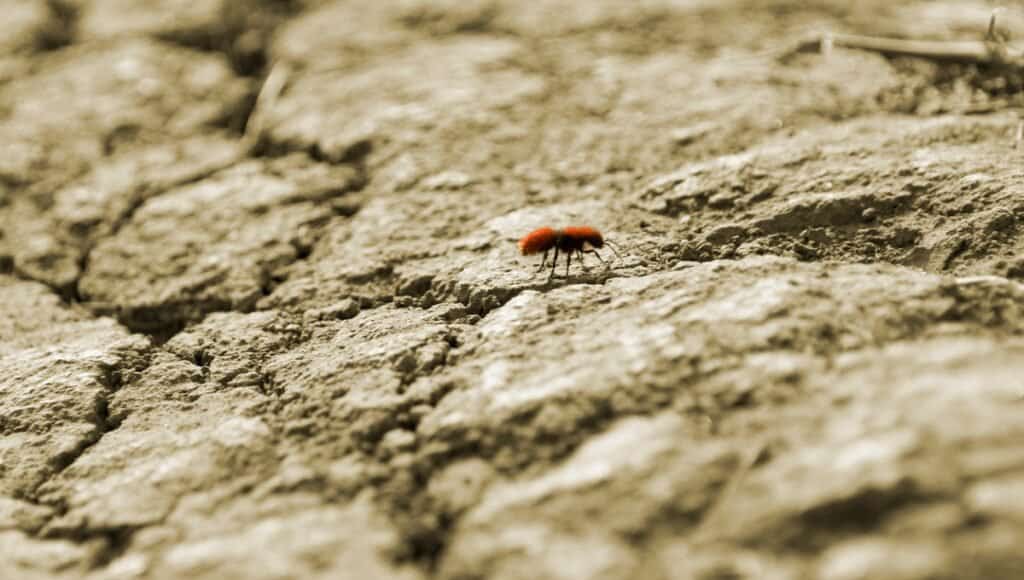
Red velvet ants are actually wasps.
©iStock.com/PJAlexander
Red Flat Bark Beetle
The red flat bark beetle (Cucujus clavipes) is an extremely flat, bright red beetle that lives between the loose bark and wood of dead and dying deciduous trees, such as poplar, ash, and birch. These beetles can be found throughout North America. They measure up to 0.50 inches in length. They are harmless to homes and other wooden structures. These beetles are generally considered to be helpful bugs, as they can control wood-boring pests.
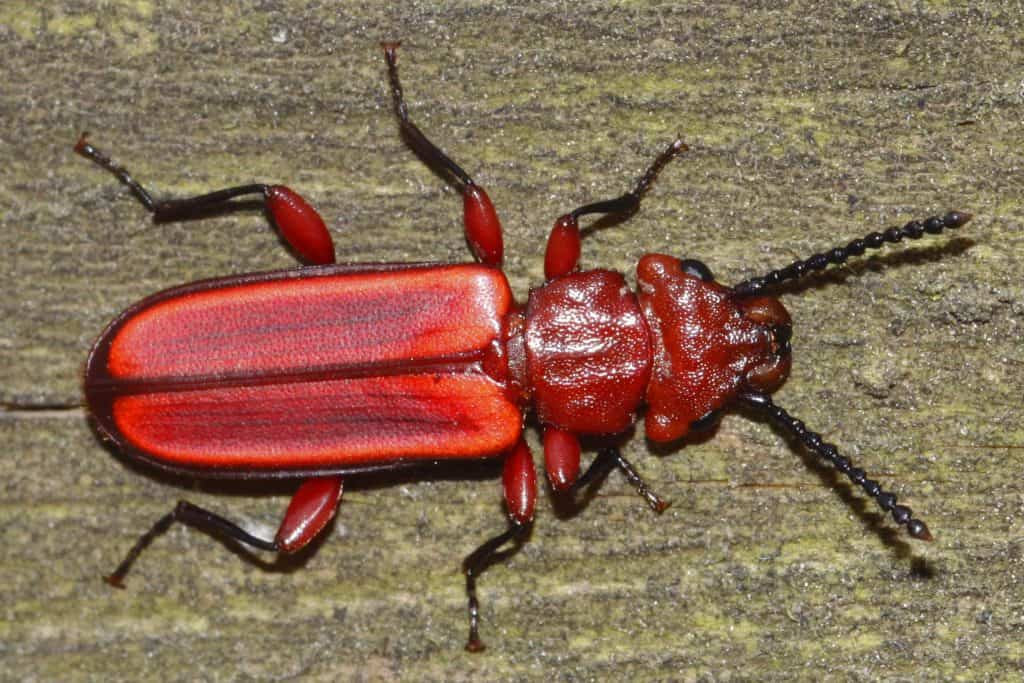
Red flat bark beetles live on dead and dying deciduous trees.