
Quick Take
- That tiny fly hovering near your sink might not be a fruit fly, and misidentifying it changes everything about how you treat it. Identify drain flies →
- One common kitchen pantry pest doesn't just eat your food. It also infests your medications. Meet the drugstore beetle →
- The boric acid cockroach trap requires one unexpected kitchen ingredient that makes it irresistible to roaches. See the boric acid trap →
- Silverfish aren't after your food, and what they're actually eating in your kitchen is far stranger. Discover what silverfish eat →
The kitchen is the heart of the home, a gathering place for families to cook, dine, and spend time together. However, it is also a breeding ground for a wide range of pests. Cockroaches, ants, fruit flies, drain flies, silverfish, and pantry pests such as beetles and weevils are the most prevalent pests in the kitchen. These insects hide in kitchen appliances, sinks, cabinets, or drains, particularly in the moist areas beneath sinks. These pests can transmit disease and cause structural damage. What attracts these bugs to kitchens, and what can you do to prevent and control them? Whether you have an existing bug problem or simply wish to secure your home from potential incursions, this guide will help keep your kitchen bug-free.
Cockroaches
Kitchen cockroaches (Blattella germanica) often have a flat, oval-shaped body appearance and a tan or light brown color with two dark parallel stripes on the pronotum. They have six legs and long antennae. The typical length of an adult German cockroach is 0.5 to 0.625 inches. You can also recognize cockroaches by their droppings. They produce small fecal droppings that resemble pieces of coffee grounds or black pepper. You might also notice smears or stains on surfaces where they have crawled.
Cockroaches prefer to hide during the day and are most active at night. They favor warm and dark settings, especially around appliances such as your refrigerator and dryer. Cockroaches are attracted to food and moisture and often appear near water sources such as sinks, pipes, and drains.
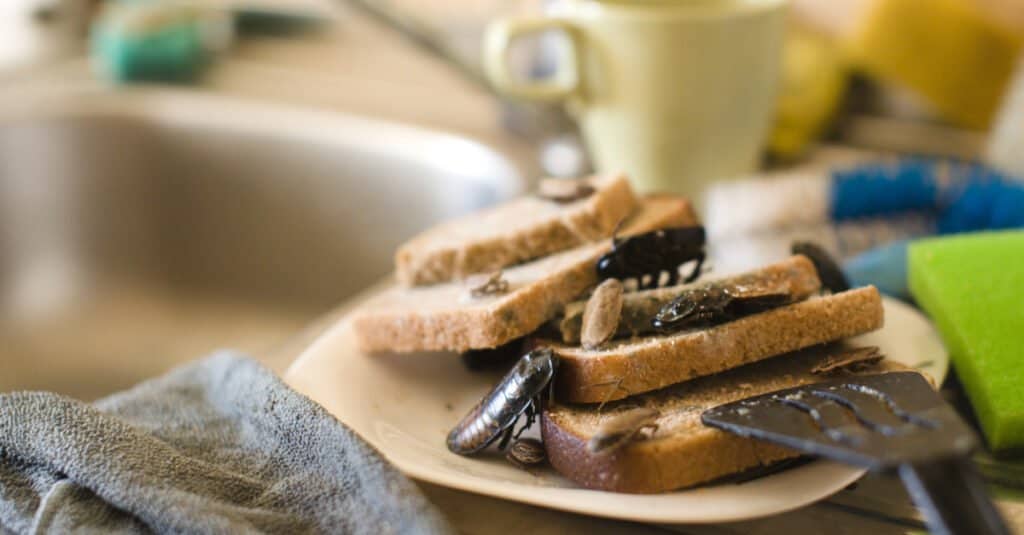
Cockroaches are attracted to food and moisture and often appear near water sources such as sinks, pipes, and drains.
©iordani/Shutterstock.com
It’s crucial to ensure there is no extra moisture or food debris on countertops or behind appliances if you want to remove cockroaches from your kitchen.
You can make a dough of boric acid, flour, and sugar to create cockroach traps. Place the traps behind cupboards and drawers and underneath sinks and ovens. The boric acid destroys the kitchen bugs as the sweetness draws them in.
Ants
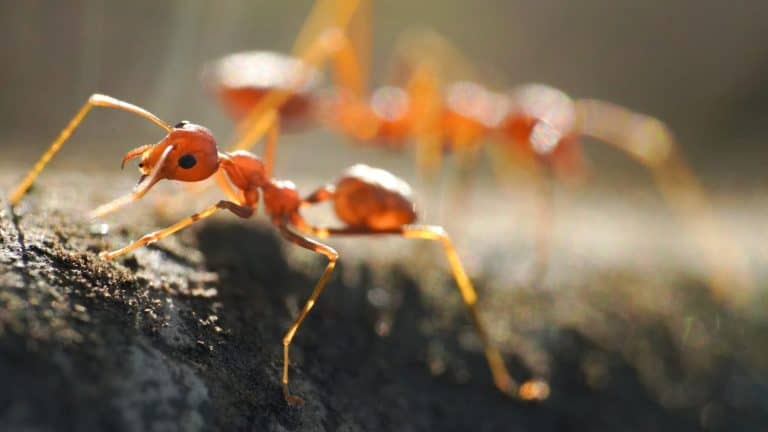
Odorous house ants (Tapinoma sessile) are a common pest issue in many homes across the globe. Although they are a nuisance, you can easily identify these pesky insects. They display two antennae on their heads, a slender waist with a bulbous body, and six legs. Their abdomen consists of a little stinger attached to the end of the body. Overall their appearance is shiny and hairless. They can range from dark brown to black in color and grow in length from 1/16 to 1/8 of an inch.
Observing the habits of these little scavengers might help you identify them. For example, you’re probably dealing with kitchen ants if you witness a line of ants moving directly from a food source to their nest. You may also observe ants in great numbers near sweet or syrupy spills, such as those from soft drinks, honey, or jam.
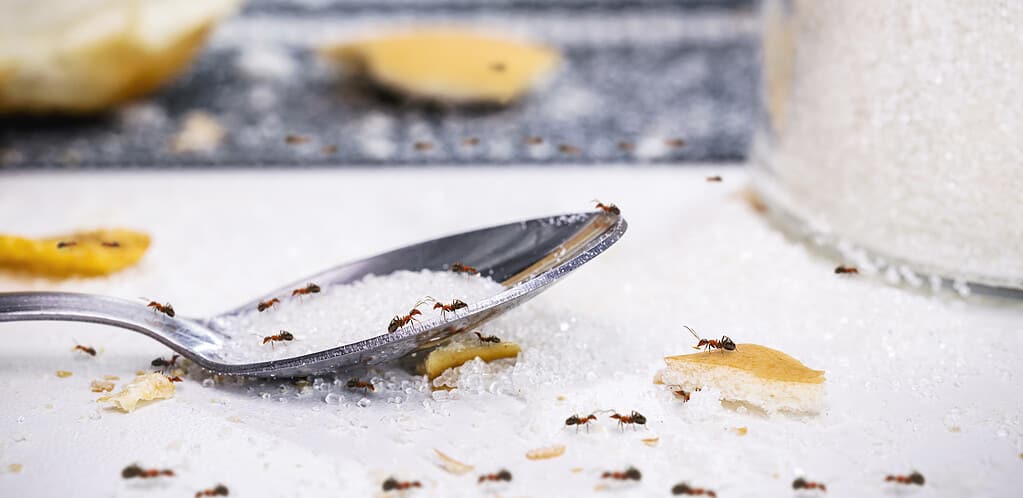
You may observe ants in great numbers near sweet or syrupy spills, such as those from soft drinks, honey, or jam.
©iStock.com/RHJ
The first step in getting rid of kitchen ants is determining their origin. Look for their trails, which are frequently evident near food sources, such as counters, cupboards, and pantry shelves.
Draw chalk lines at your home’s entry points if the ant colony is nesting outside your kitchen. Ant traps are another option to consider if you want to keep ants at bay and reduce their population indoors.
Fruit Flies
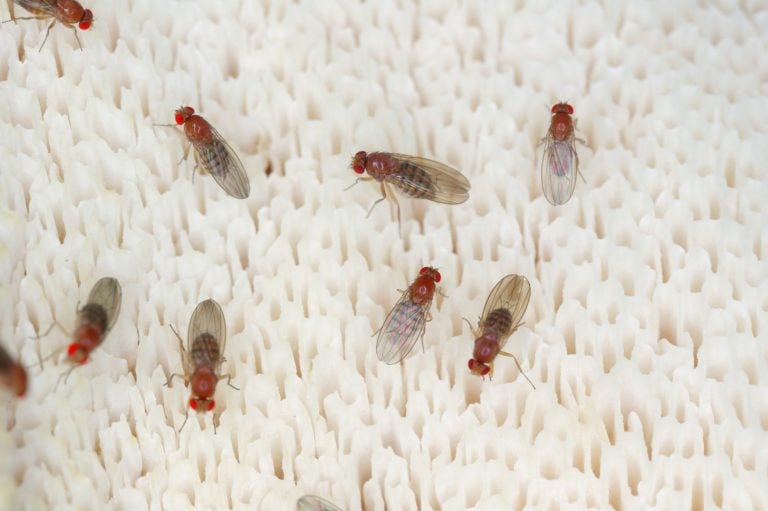
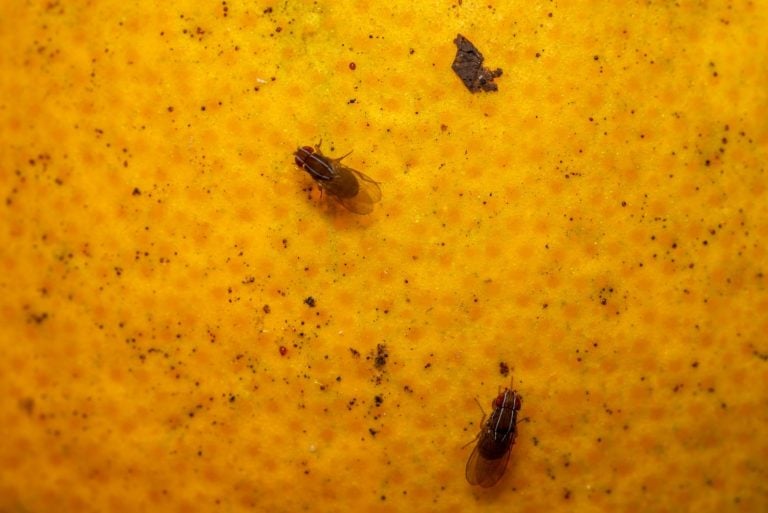
Fruit fly (Drosophila melanogaster) adults measure approximately 0.10 inches in length, with a yellow-brown body marked by transverse black rings across the abdomen and brick-red eyes. They have transparent wings with recognizable veins and short hair covering their bodies.
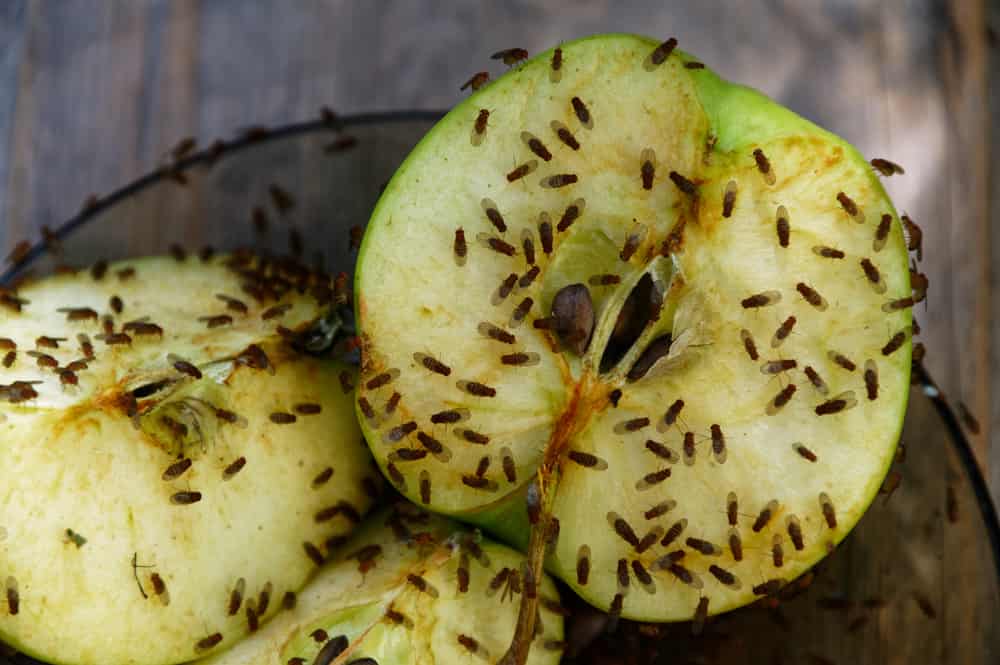
Fruit flies resemble tiny house flies.
©Anne Webber/Shutterstock.com
Fruit flies are drawn to overripe or rotting produce and sweet liquids like fruit juice and wine. Additionally, they tend to be attracted to moist regions like drains and garbage disposals.
Fruit fly infestations can be prevented and controlled by storing fruits and vegetables in sealed containers or in the refrigerator and discarding any overripe or damaged products.
Drain Flies
Damp places attract drain flies (Psychodidae), particularly those with stagnant water, decomposing organic matter, and bacteria. As a result of their attraction to garbage disposals, where they feed on food scraps and organic material that collects in the pipes, they are frequently found in kitchens.
These insects are tiny, non-biting flies that surround drains and sewers. Drain flies are also referred to as sewer gnats or moth flies. Many of these flies are brown or black, with long antennae and wings held over the body when at rest. They have a fuzzy, moth-like appearance.
Drain flies are distinguished by their size; they appear smaller than fruit flies. These gnats typically measure around 1/5 inch in length, though they can range from about 1/16 to 1/5 inch. They also have characteristic vein patterns on their wings that distinguish them from other varieties of flies.
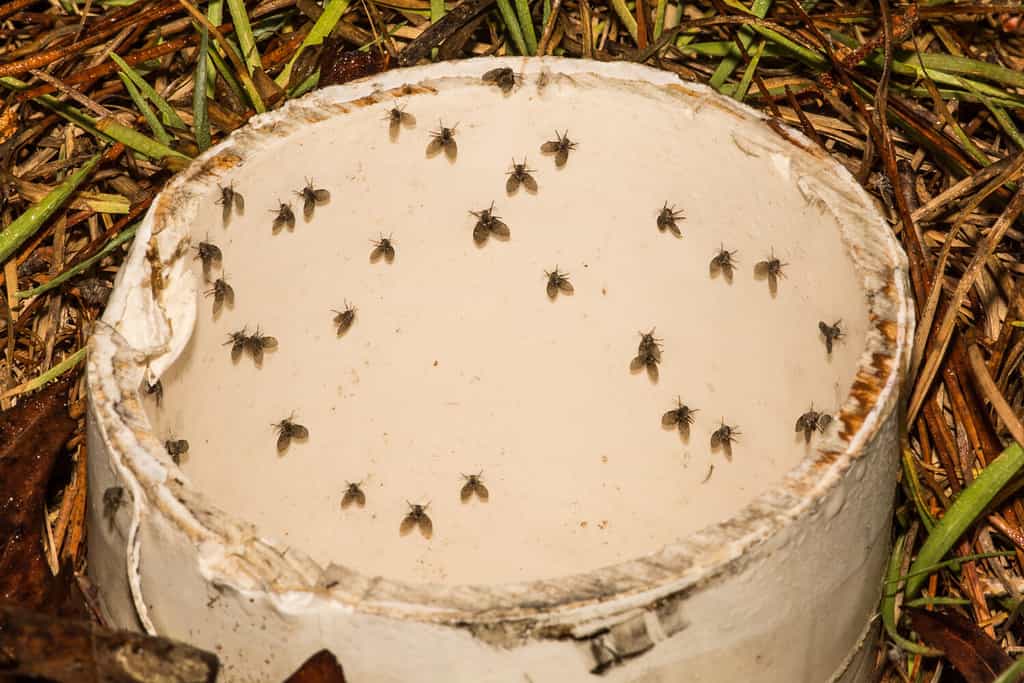
Damp places attract drain flies, particularly those with stagnant water, decomposing organic matter, and bacteria.
©Jay Ondreicka/Shutterstock.com
Cleaning and sanitizing drains, getting rid of stagnant water, and minimizing sources of organic waste are all crucial steps in getting rid of drain flies. In addition, professional pest management may be necessary in cases of severe infestations.
Silverfish
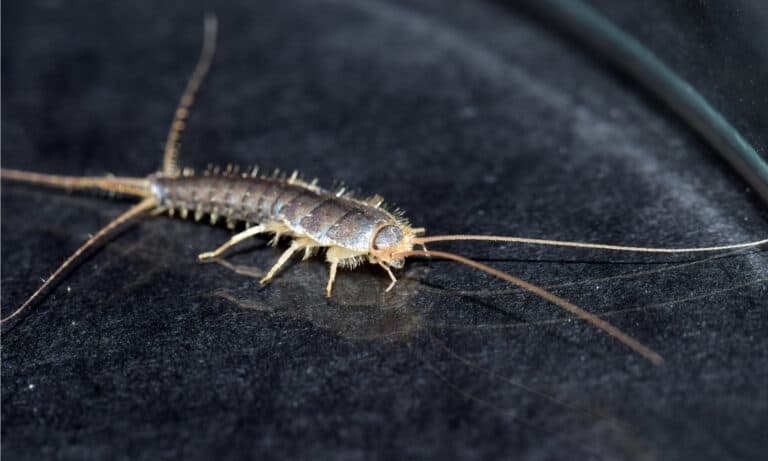
Silverfish (Lepisma saccharina) are slithering insects that are long, flat, and slender with silvery-blue or gray scales covering their bodies. Adult silverfish usually measure between 0.5 to 1 inch long, with two long antennae and three long bristles at the back of their bodies.
Silverfish are nocturnal and like humid, dark places. They feed on various materials, including starch, paper, and cardboard boxes. They can also eat mold and dead insects that hide in hidden areas of your kitchen.
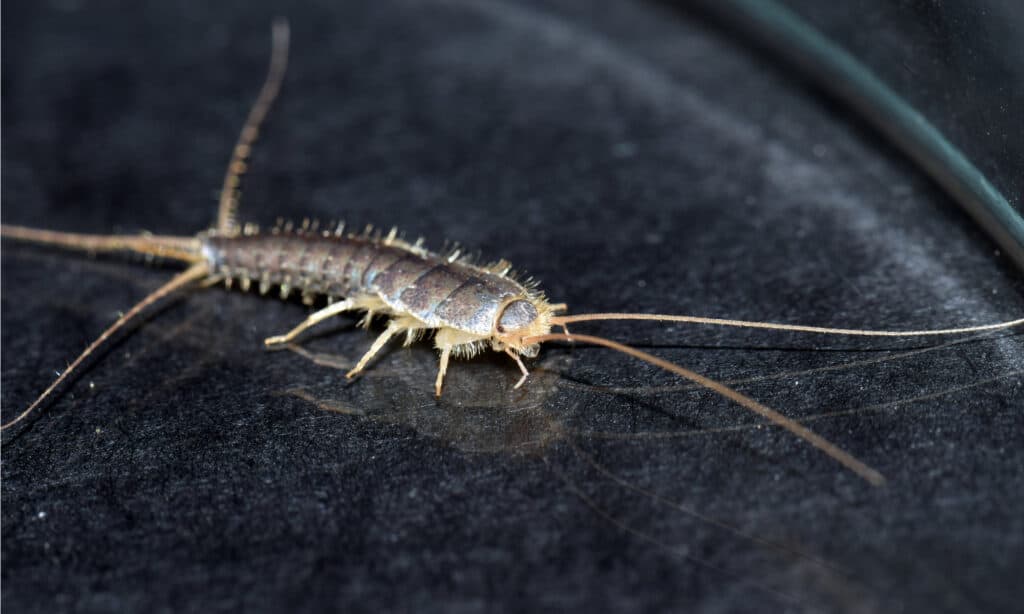
Silverfish do not carry any diseases and hardly bite humans.
©2Dvisualize/Shutterstock.com
You can keep silverfish at bay by using dehumidifiers, sealing cracks and crevices in walls and floors, and eliminating food sources. if necessary, an exterminator can apply insecticides.
Flour Beetle
The flour beetle (Tribolium confusum) gets its name because it is commonly found in flour and grains. It is a tiny, reddish-brown beetle with a length of about 1/7 inch. The beetle has a head separated from its thorax, and its body is elongated and flattened. Its clubbed antennae are almost the same length as the head and thorax combined. Flour beetles are recognized for their rapid reproduction, making them a common problem in the pantry.
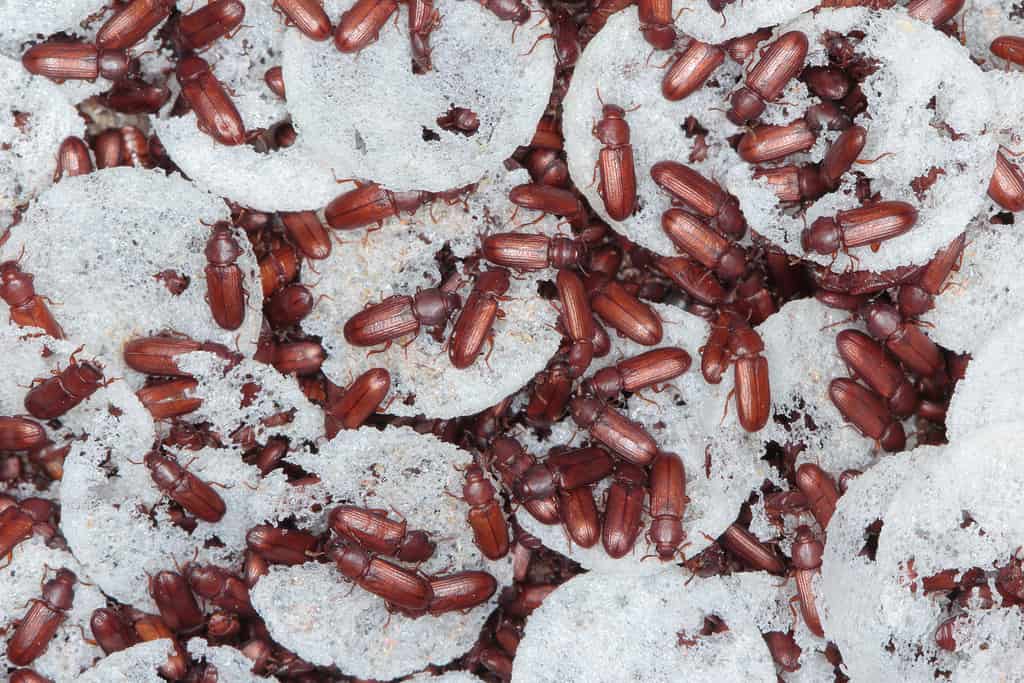
The flour beetle gets its name from the fact that it is commonly found in flour and grains.
©Tomasz Klejdysz/Shutterstock.com
Drugstore Beetle
The drugstore beetle (Stegobium paniceum) is a brownish insect that infests dry goods and medications. The adult beetle has a distinctive, elongated form and is around 1/10 to 1/8 inches long. Fine hairs cover its body, and the wing covers have longitudinal ridges.
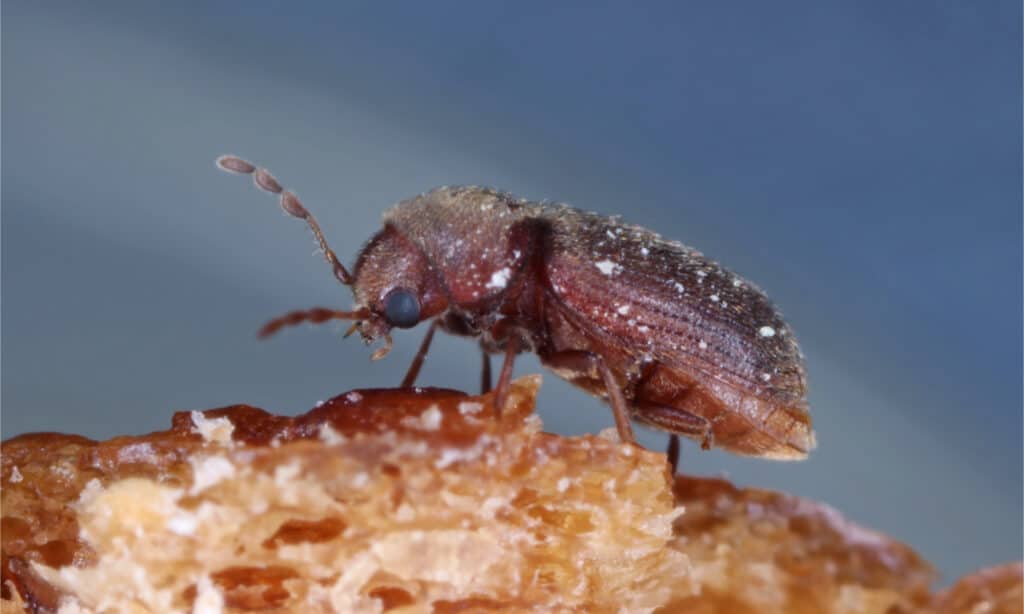
The drugstore beetles infest dry stored food and medications.
©Tomasz Klejdysz/Shutterstock.com
Sawtoothed Beetle
Sawtoothed grain beetles (Oryzaephilus surinamensis) infest a wide range of dry food items, including dried fruit, bran, rolled oats, brown rice, walnuts, breakfast foods, macaroni, sugar, and drugs. This beetle’s name refers to the saw-like projections on the parallel ridges of its wing coverings.
The adult beetle has an elongated, flattened body. its body is reddish-brown, with a small head tucked under its prothorax. Unfortunately, these beetles have a high rate of reproduction, which results in infestations that contaminate and ruin food.
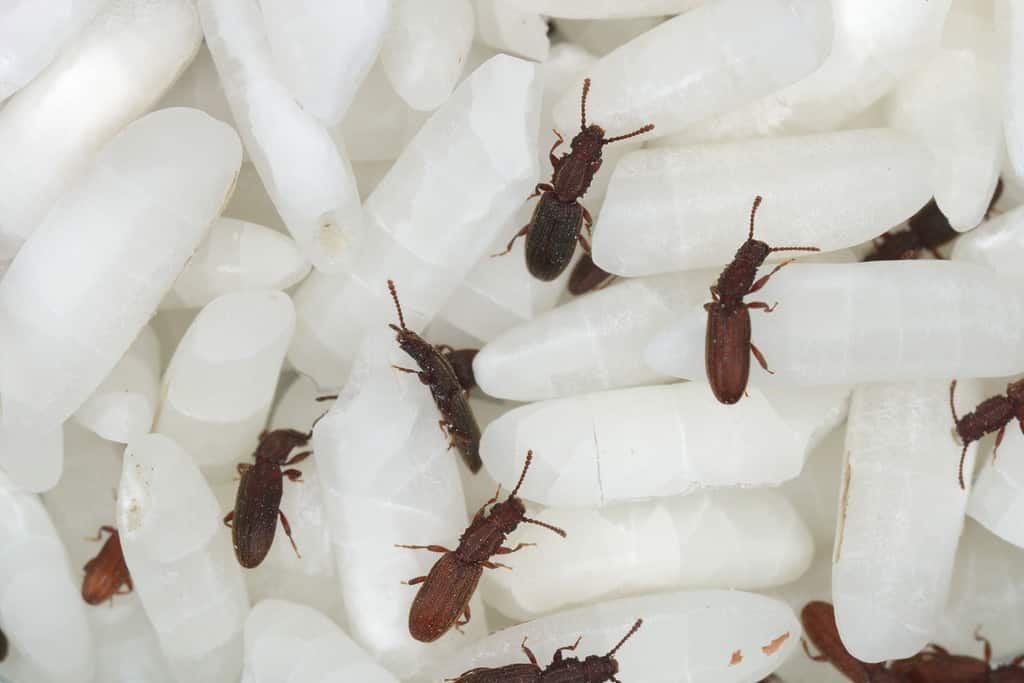
The sawtoothed grain beetles infest a wide range of dry food items.
©Tomasz Klejdysz/Shutterstock.com
Rice Weevils
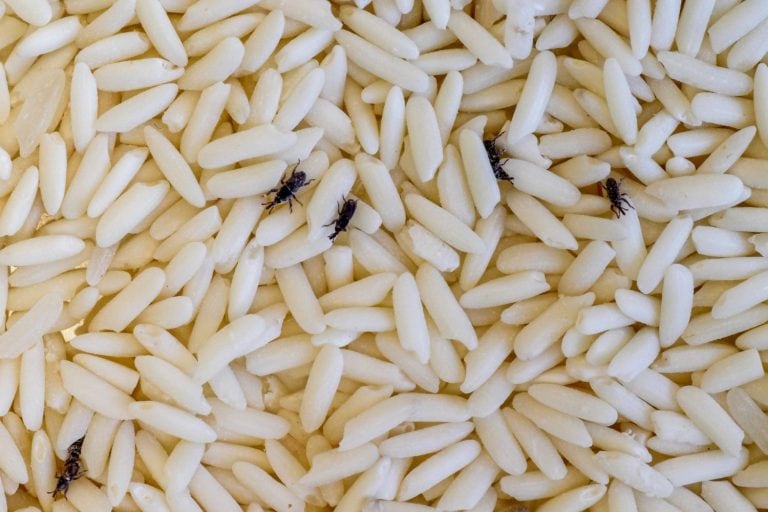
This tiny, brown insect, known as the rice weevil (Sitophilus oryzae), is a common pest that infests grains, including rice, wheat, corn, and barley. The adult weevil has a long, flattened body measuring between 3/32 and 1/8 inches. The tips of the elbowed antennae are small club shapes. The beetle has wing coverings coated in tiny pits of reddish dots, and its abdomen appears shorter than the coverings.
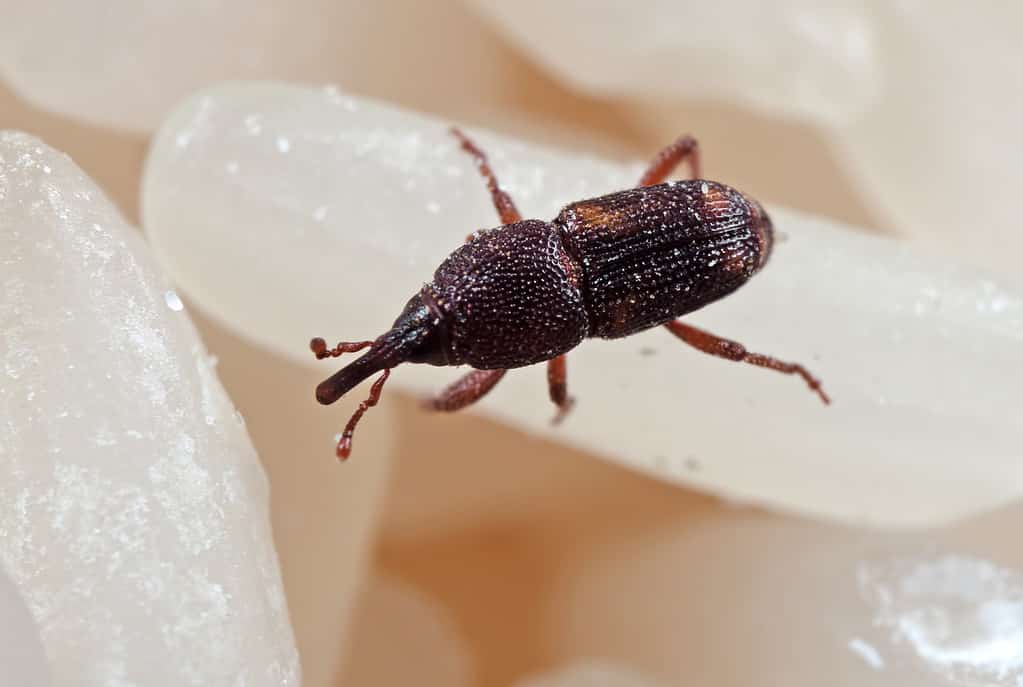
The rice weevil is a common pest that infests grains, including rice, wheat, corn, and barley.
©Cherdchai Chaivimol/Shutterstock.com
Beetles and weevils can contaminate food with their feces, shedding skins, and body parts, making it dangerous for humans to consume. To prevent pantry beetle problems, you must store dry food items correctly in airtight containers and regularly check them for signs of infestation.
Remember that kitchen bugs are not just an annoyance but also a health risk, so take precautions to keep your kitchen clean and bug-free to create a safe and healthy environment for you and your family.