
Quick Take
- The 'cow killer' earned its name from one of the most painful stings in nature, yet there are zero documented cases of it killing anything larger than a bug. Debunking the cow killer myth →
- Its venom uses completely different chemical weapons on insects versus mammals, and that dual targeting is the key to why it hurts so much. See the venom chemistry →
- The velvet ant isn't actually an ant, and that misidentification explains almost everything strange about its biology. Discover what it really is →
- A sting rated 'explosive' on the world's most famous pain scale protects this creature without any tissue damage, organ threat, or lethal compound, and this outcome is entirely by design. Pain vs. lethality explained →
Few insects have a reputation as fierce as the red velvet ant (Dasymutilla occidentalis). With its fuzzy scarlet-and-black body and legendary sting, it earned one of the most intimidating nicknames in nature: the “cow killer.” But behind the folklore lies a surprising scientific story.
Despite ranking at a terrifying Level 3 on the Schmidt Sting Pain Index, the velvet ant’s sting isn’t designed to kill. Rather than wasting energy on lethal chemical weapons, the velvet ant relies on brilliant evolutionary engineering: an excruciatingly painful sting designed purely to make attackers release it.
The Velvet Ant’s Infamous Sting
The red velvet ant earned its scary reputation thanks to the Schmidt Sting Pain Index, a 1-to-4 scale developed by entomologist Justin O. Schmidt to rank insect stings:
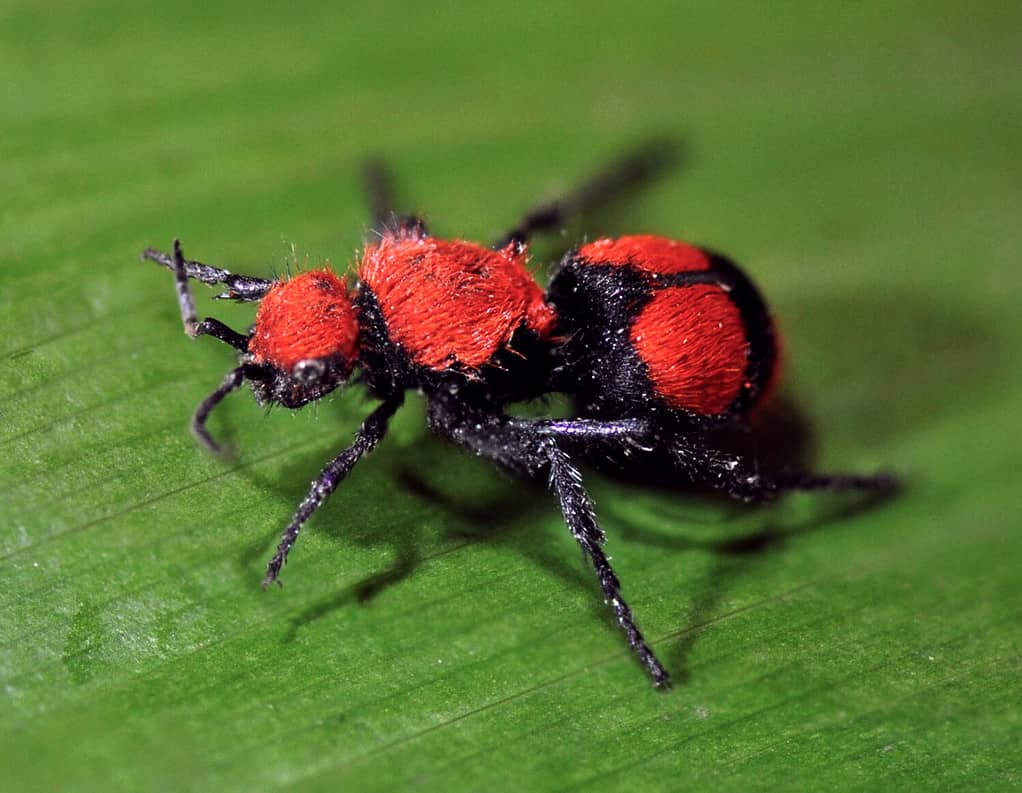
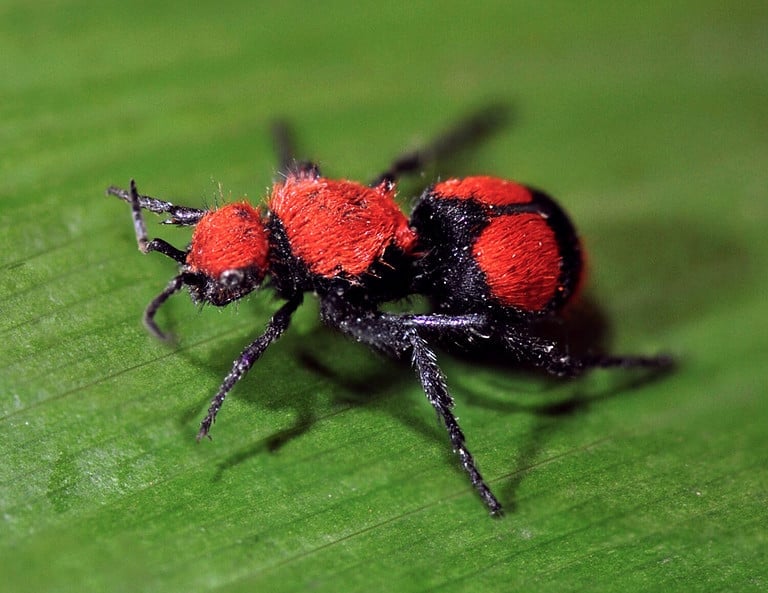
There are several thousand species of velvet ants, ranging from red to yellow, black, and gold.
©Tarsal Claw/Shutterstock.com
- Level 1: Sweat Bee — minor, brief discomfort.
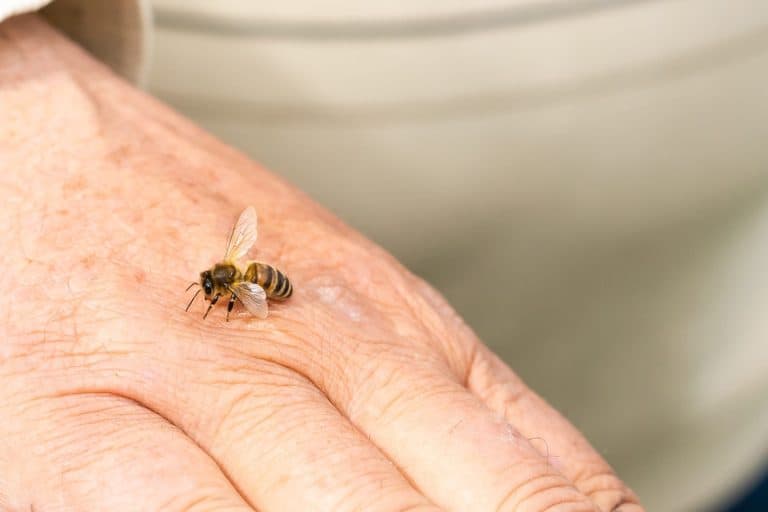
- Level 2: Honeybee / yellowjacket — standard, sharp pain lasting a few minutes.
- Level 3: Red velvet ant / paper wasp — explosive, intense, and long-lasting pain.
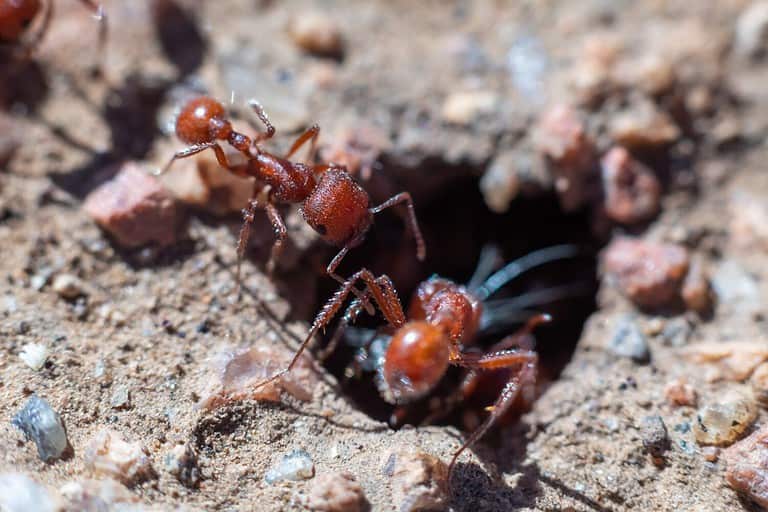
- Level 4: Bullet ant / tarantula hawk — extreme, paralyzing agony.
Schmidt rated the velvet ant at a severe Level 3, describing the sensation as “explosive,” like spilling hot frying oil across your skin.
While that description sounds like it would come from a highly dangerous animal, the ant’s venom tells a different story. Unlike deadly venoms that destroy tissue or trigger organ failure, velvet ant venom is built purely to trigger pain receptors. It sounds a massive alarm in the victim’s nervous system without doing real physical damage.
The Solitary “Cow Killer” Is Not an Ant at All
Despite its name, the red velvet ant is not an ant — it’s actually a wingless, solitary wasp belonging to the family Mutillidae. Found throughout the United States in open fields, forests, and backyards, these wasps are usually spotted scurrying along the ground. Their bright, fuzzy red-and-black bodies serve as a clear warning to predators to stay away.
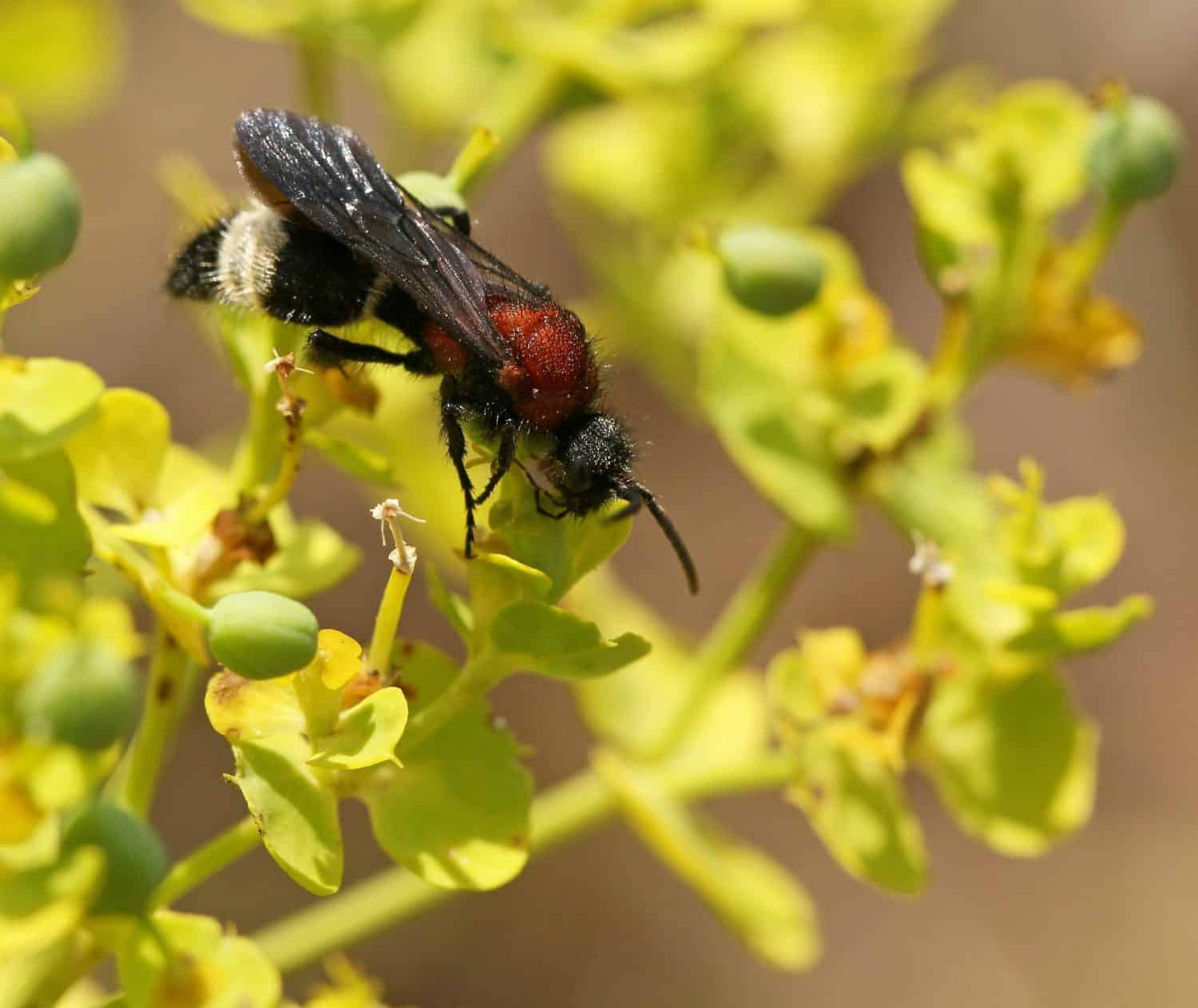
Only male velvet ants have wings.
©Haseeb385/Shutterstock.com
Beneath their bright warning colors, velvet ants have an unusually thick exoskeleton. Their rounded outer shell is so tough that it is nearly impossible to crush, requiring much more force than is needed to crush a honeybee.
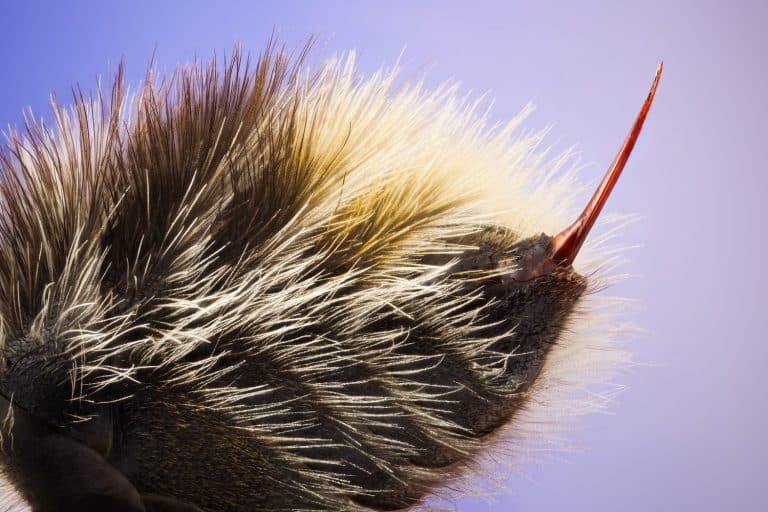
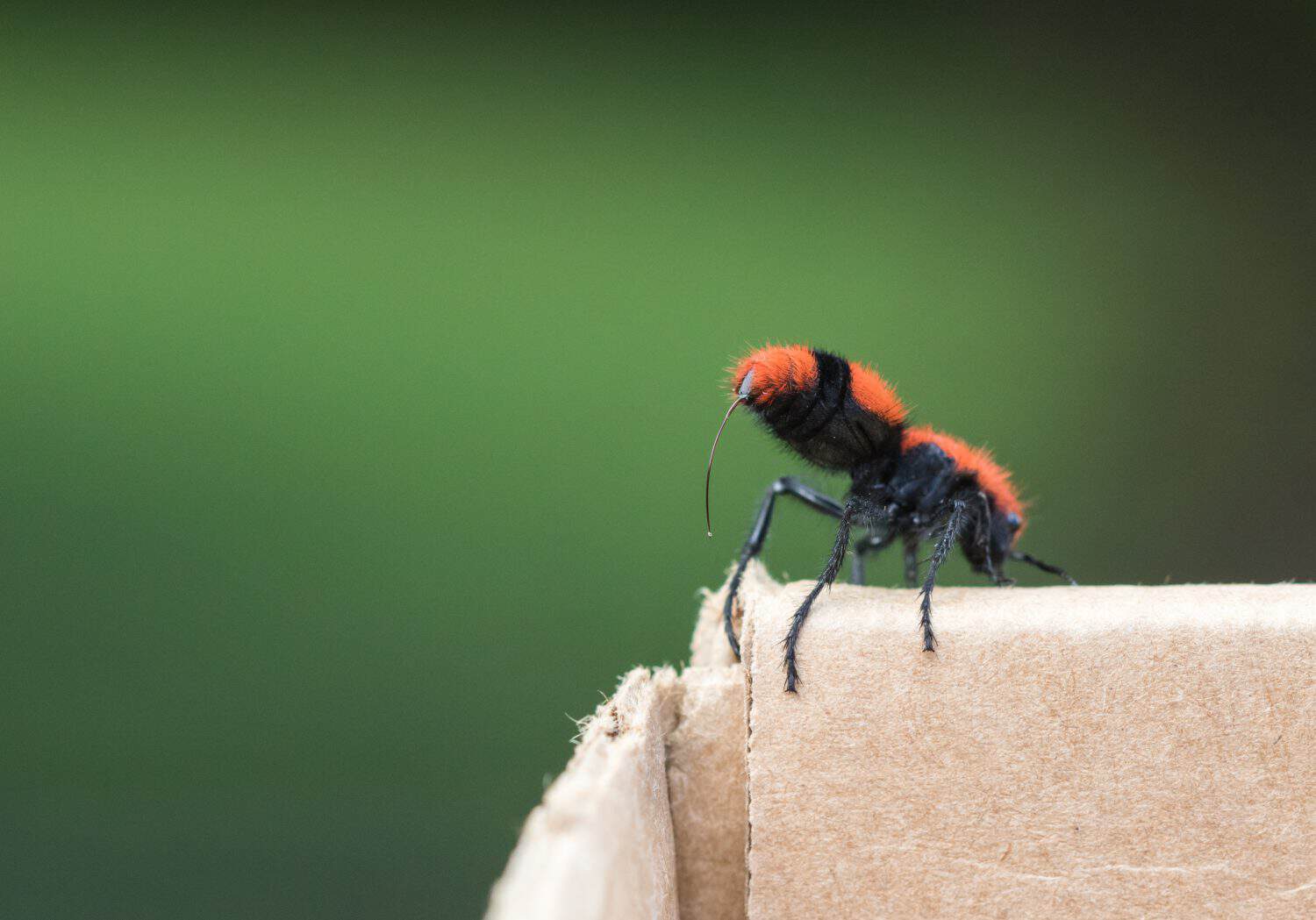
Male and female velvet ants look so different that they were once thought to be entirely different species. Females resemble ants and lack wings, and they have larger, furrier bodies and an unusually long and flexible stinger. This stinger is a modified egg-laying organ (ovipositor) that can bend easily in nearly any direction, allowing the female to defend herself against attackers. Males, in contrast, lack a stinger and cannot sting. They have two pairs of dark wings and a slimmer, more wasp-like body.
A Parasitoid With a Defensive Venom
Unlike bees or yellowjackets, velvet ants do not use their venom to hunt. Adult velvet ants actually feed on plant juice and nectar. Instead of hunting, females spend their time searching for the underground nests of other insects. After finding a host nest — often belonging to ground-nesting bees or wasps — the female velvet ant lays a single egg inside a host’s brood cell. The developing velvet ant larva feeds externally on the host larva or pupa before emerging as an adult.
Because velvet ants do not need venom to capture food, the female’s sting serves only one purpose: defense. When attacked by a bird, reptile, or mammal, a velvet ant does not need to kill its attacker. It only needs to inflict enough sudden, intense pain to convince the predator that the meal is not worth the trouble.
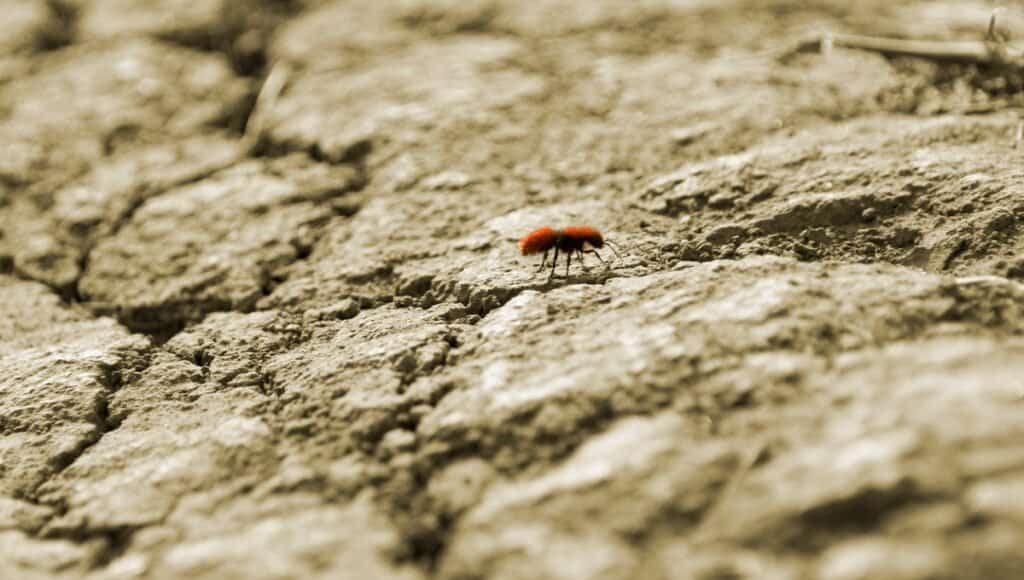
Velvet ants range from 0.125 to 1.25 inches in length.
©iStock.com/PJAlexander
The Science Behind the Pain
The velvet ant’s unusually painful sting gets its punch from a specialized chemical cocktail packed with tiny molecules called aculeatoxins. Unlike venoms that use destructive enzymes to break down flesh or tissue, this venom relies almost entirely on specialized peptides (short chains of amino acids). These peptides act like precision tools designed to trigger pain signals in specific animals:
- For invertebrates (insects/bugs), it uses the Do6a peptide to target DEG/ENaC channels.
- For mammals (humans/most predators), it uses membrane-active peptides to hit ASIC pain receptors.
In insects, the venom’s main pain trigger is Do6a, the single most abundant peptide in the velvet ant’s venom. Do6a targets specific Pickpocket/Balboa ion channels (Ppk/Bba) on sensory nerve cells, forcing these channels open and causing a sudden flood of sodium ions into the nerves. The nerve immediately fires off overwhelming pain signals, causing the attacking insect to retreat instantly.
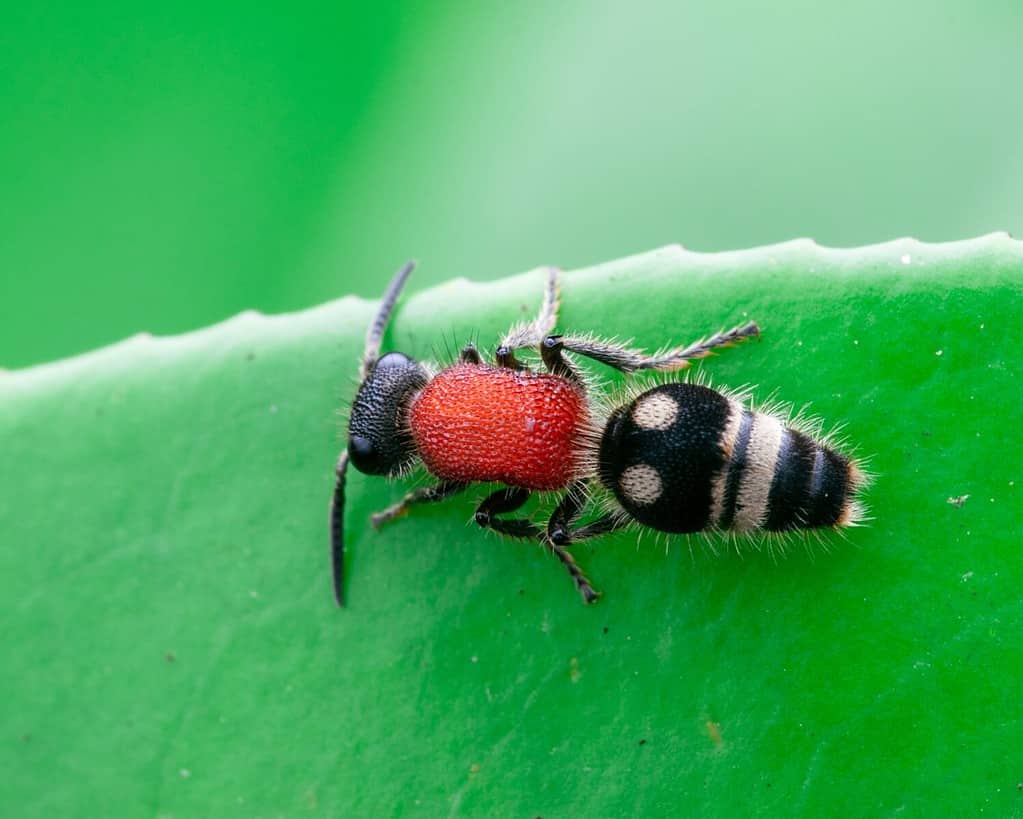
Velvet ants are not typically aggressive toward humans.
©RyanPictures/Shutterstock.com
In other words, Do6a acts like an emergency alarm system. Rather than destroying the predator, Do6a simply hot-wires its nervous system, convincing the attacker to stop. Interestingly, the Do6a peptide that tortures insects does not work on mammals. Instead, the velvet ant’s venom carries a completely different set of chemical tools to target creatures like us.
To trigger pain in mammals, the venom relies on peptides such as Do10a and Do13a. These peptides physically alter the outer surface of sensory nerve cells. This disruption increases electrical conductivity, forcing the nerve cells to fire out of control. It triggers mammalian pain receptors (nociceptors), including acid-sensing ion channels (ASICs).
Although it occurs through a different molecular pathway, the result is the same: an overwhelming pain response — a sudden, blinding flash of pain.
Why So Much Pain With So Little Danger?
The velvet ant’s venom is an excellent example of an important biological principle: pain and toxicity are two completely different things. A venom can be incredibly painful without being dangerous or fatal.
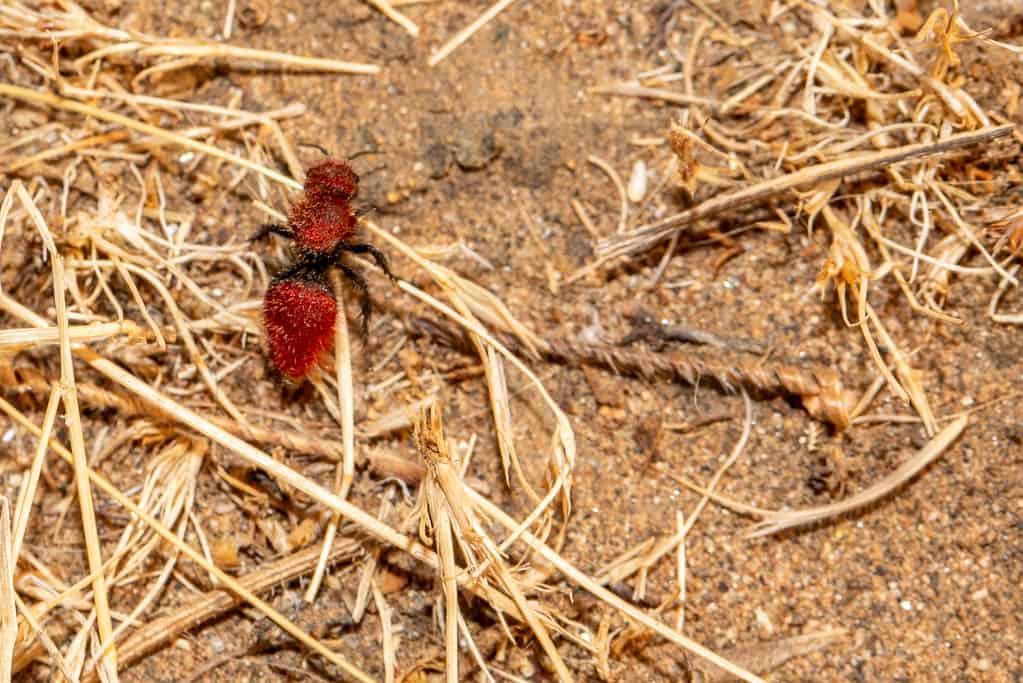
Velvet ants are actually solitary wasps.
©Warren Parker/Shutterstock.com
Because velvet ants do not hunt prey with their sting, they never needed to evolve lethal venom. Their survival strategy relies on immediate behavioral deterrence: as long as the predator drops them, they survive.
Velvet ant venom also lacks the high levels of destructive toxins that cause tissue damage or organ failure. Instead of causing organ failure or widespread tissue damage, velvet ant peptides primarily target sensory systems to trigger immediate pain. The goal is not to kill the attacker; it is to make the attacker drop the ant in shock so it can escape unharmed.
In other words, the velvet ant uses pure, intense pain as a psychological shield rather than as a deadly weapon.
The Truth Behind the “Cow Killer” Myth
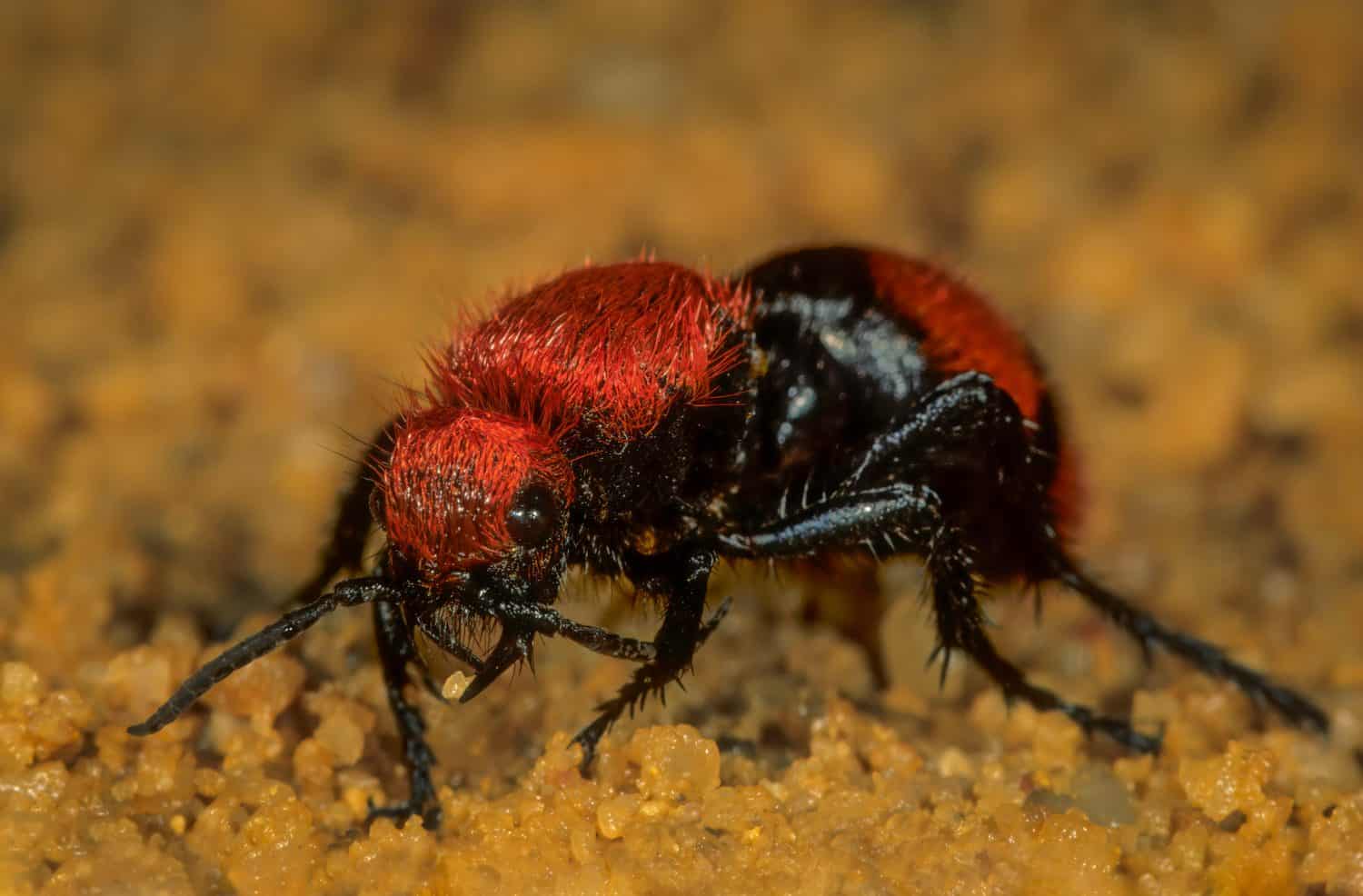
A female velvet ant’s stinger is up to half the length of its body.
©Gerry Bishop/Shutterstock.com
Few insect nicknames are more dramatic than “cow killer,” but this name is largely folklore. Despite the urban legend, there are no documented cases of a red velvet ant killing a cow, a horse, or a human. The myth survives because humans naturally assume that intense pain equals deadly danger. However, the velvet ant’s venom works very differently from other stinging insects.
A honeybee sting, for example, contains cell-destroying compounds that can cause swelling, tissue damage, and dangerous systemic allergic reactions. A velvet ant sting, in contrast, contains no tissue-destroying toxins. It bypasses real physical damage and goes straight to hotwiring your sensory nerves. The velvet ant isn’t a deadly assassin — it is simply a tiny, biological fire alarm.
Respect the Warning, Not the Myth
Despite the lack of physical danger, the red velvet ant’s sting deserves respect — a Level 3 on the Schmidt Index is no joke, and being stung will hurt intensely. However, these insects are not aggressive. They do not chase people, attack livestock, or seek out conflict. A female will generally sting only if she is stepped on, squeezed, or otherwise handled.
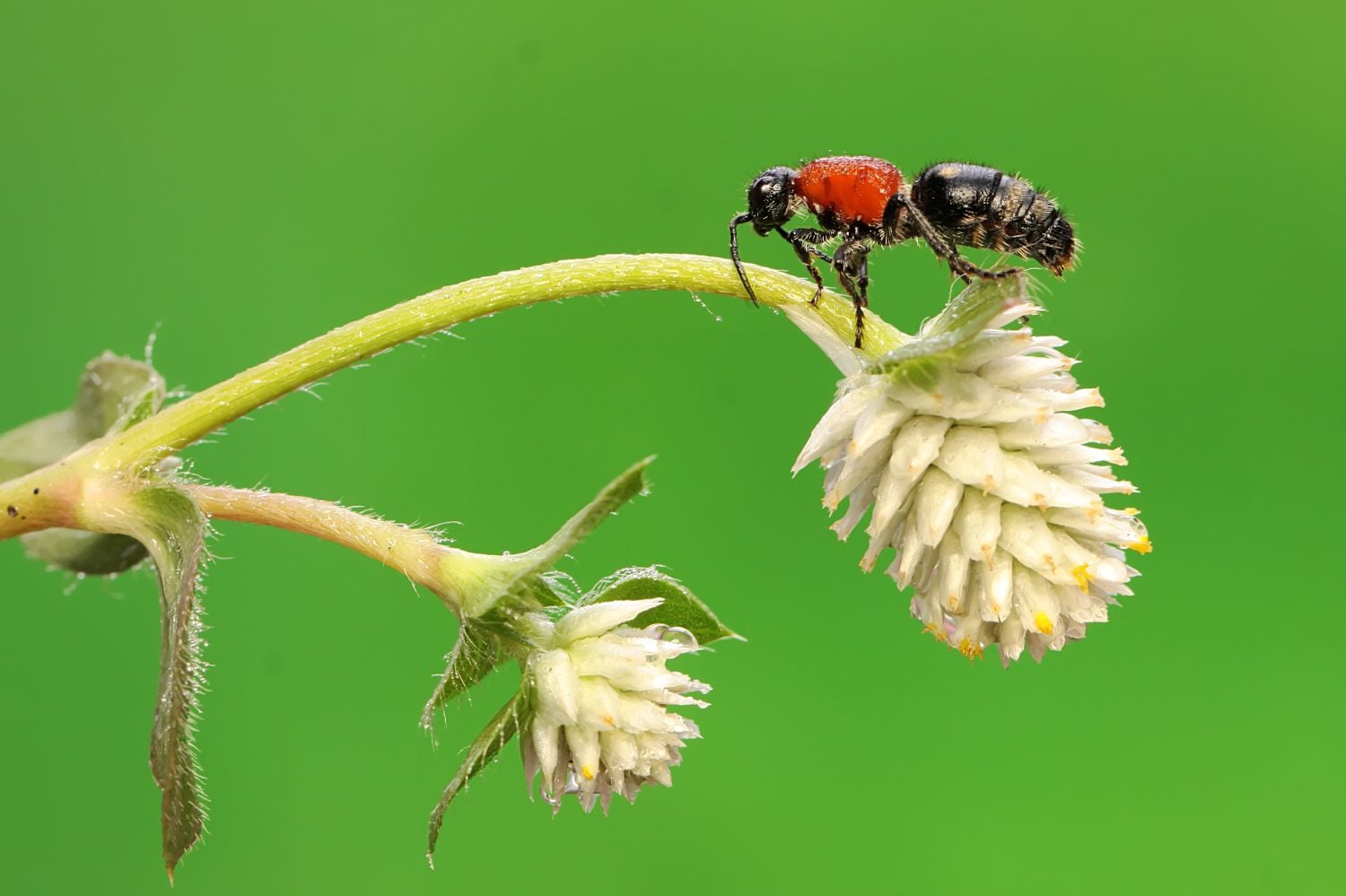
Stinging is the velvet ant’s last resort when threatened.
©I Wayan Sumatika/Shutterstock.com
The velvet ant’s painful sting is just the final layer of a multi-step defense system:
- Bright warning colors signal predators to stay away.
- Defensive sounds and odors provide a second signal for predators to back off.
- A tough exoskeleton makes velvet ants difficult to crush.
- Their rapid speed helps them quickly run from danger.
- A powerful sting serves as the painful last resort if a predator actually manages to grab a velvet ant.
The evolutionary precision of the velvet ant’s venom demonstrates that it does not need to kill in order to survive. By targeting pain pathways with incredible efficiency, it creates one of nature’s most memorable warnings: leave me alone or you will regret it.