
Quick Take
- Swans do not have teeth; they use serrated bills and lamellae to grip and process food.
- The serrated edges (lamellae) of the swan’s bills help them grip and process aquatic plants and algae, and occasionally small invertebrates
- Swan tongues have lamellae on both sides that trap prey and help uproot plants.
Swans are among the most graceful and beautiful birds. There are six recognized species of swans in the genus Cygnus: the trumpeter swan (Cygnus buccinator), the tundra swan (C. columbianus), the black-necked swan (C. melancoryphus), the black swan (C. atratus), the mute swan (C. olor), and the whooper swan (C. cygnus). The coscoroba swan (Coscoroba coscoroba) is the only species in the genus Coscorba. The U.S. has two native swan species: the large trumpeter swan and the more common tundra swan, both of which are white. Trumpeter swans are North America’s largest waterfowl. Swans are primarily herbivores whose diet consists of aquatic plants, roots, and leaves, though they may occasionally consume small invertebrates.
Swans, a symbol of love and romance for many, can be aggressive, especially when they are defending their young, which begs the question: Do swans have teeth?
Do Swans Have Teeth?
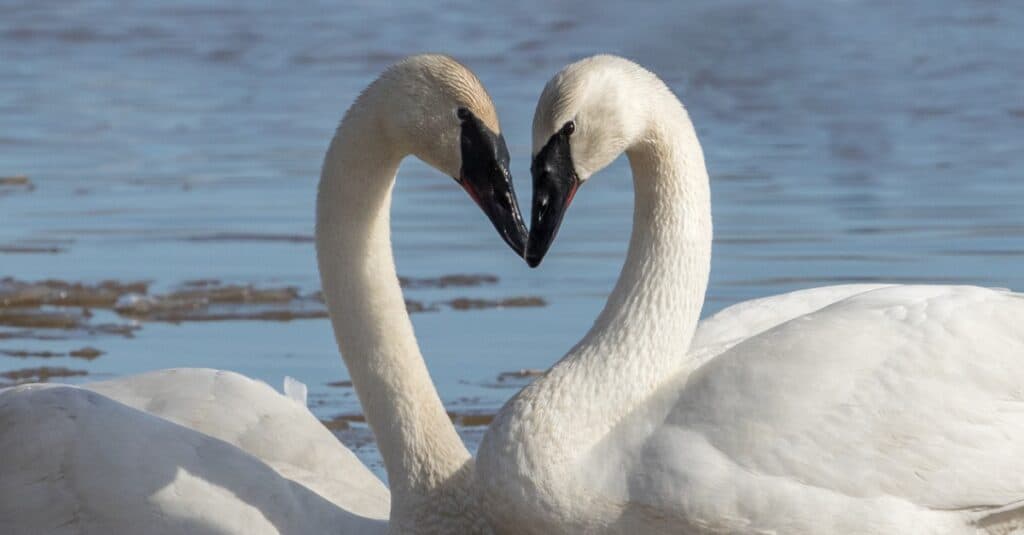
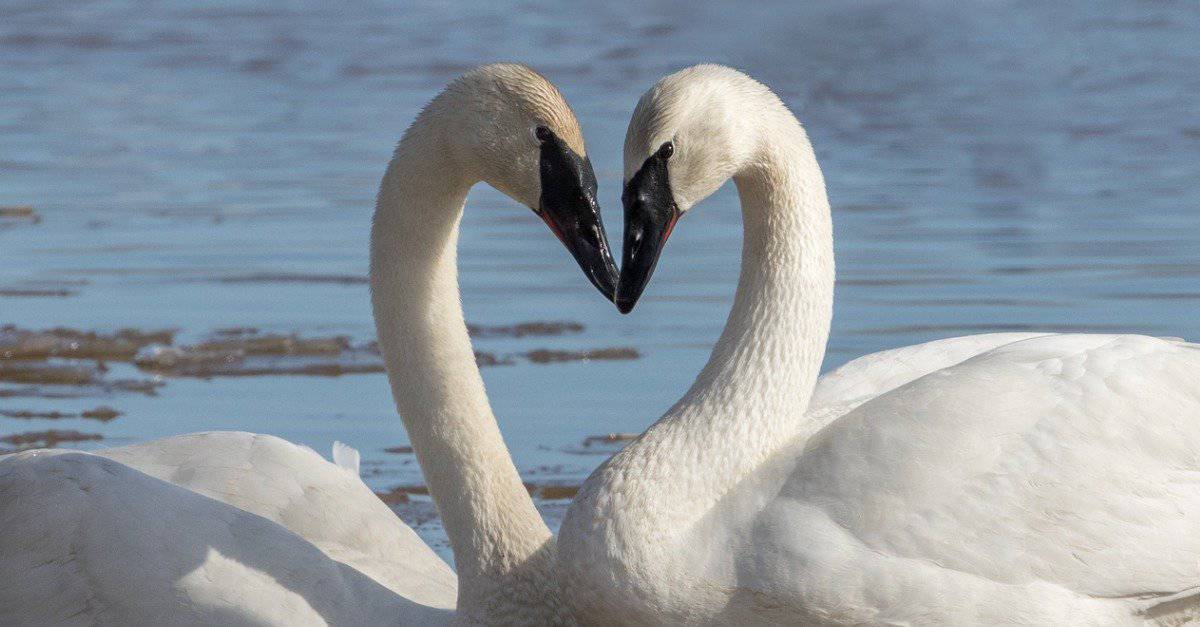
Like all birds, swans do not have teeth, but have strong bills with serrated edges.
©iStock.com/Dee Carpenter Photography
Swans do not have teeth. Instead, their strong bills have comb-like, serrated edges called lamellae (singularly, lamella), which act like teeth to grip and tear aquatic plants and small prey. Lamellae are made of keratin, the same fibrous protein that makes up the swan’s feathers and claws.
Without teeth to chew their food, swans rely on their gizzard, a muscular part of their digestive tract, to grind it up. Swans will purposefully swallow pebbles and other gritty items to help the gizzard further grind down the food.
How Do Swan Bills Work?

Trumpeter swans with their cygnets (baby swans). The word is derived from the Latin word cygnus, which means swan
©iStock.com/Zeke1
A swan’s bill is made up of a basal knob, the swan’s nares, upper and lower mandibles, a thin, keratinized layer, a serrated, comb-like lamellae.
A swan’s basal knob is the fleshy, often black, lump at the base of the upper bill, most prominent in mute swans, serving as a visual signal for sexual maturity and dominance. The basal knob swells in males (cobs) during the breeding season as an indication of health, fitness, and age.
The swan’s nares (nostrils) are crucial external openings for breathing, located on the upper mandible, often set back from the tip, and feature a hard *nail* for foraging roots and tough plants.
As mentioned, the swan’s lamellae function the same way teeth function in other animals. They are used to cut leafy vegetables and to pierce the flesh of other small vertebrates and invertebrates.
The swan’s upper bill is somewhat flexible, which helps it securely grip and scoop up bundles of grass or leaves. The lower bill has powerful mandibles capable of applying significant biting pressure to tear off tough plant materials.
Do Swans Have Teeth on Their Tongues?
Swans’ tongues have lamellae on each side, a distinctive structure that helps them dig up plants and hold small prey in their mouths.
Because their tongues have serrated edges, swans can easily remove plants from the ground. With their bills and tongues, swans are able to hold the grass in place while they uproot it from the ground.
Although lamellae aren’t actually teeth, they’re nonetheless capable of functioning similarly.