
Quick Take
- Slugs have a two-part feeding system: a simple jaw and a radula with thousands of microscopic teeth.
- Radula teeth are up to 27,000 and continuously regenerate from the back to replace worn teeth.
- The radula enables slugs to eat a broad diet from plants and algae to fungi and even other animals.
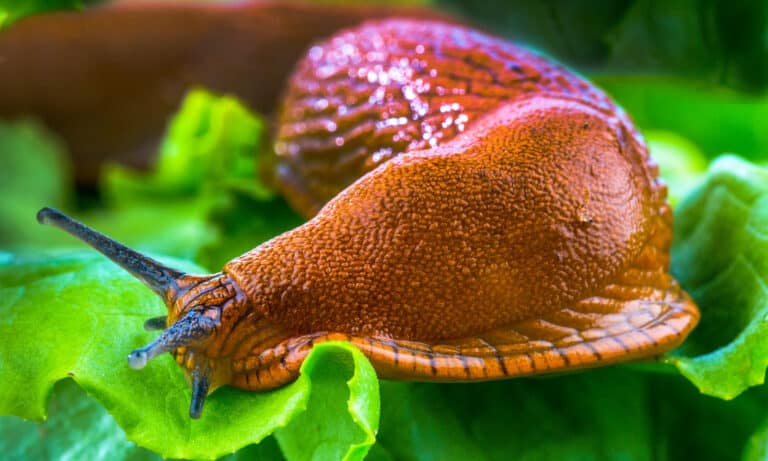
Have you ever wondered if slugs can smile — or if they even have teeth? Their smooth bodies and simple appearance might suggest they don’t, but appearances can be deceiving. Underneath that soft body and glistening exterior lies a surprisingly complex feeding apparatus!
Do Slugs Have Teeth?
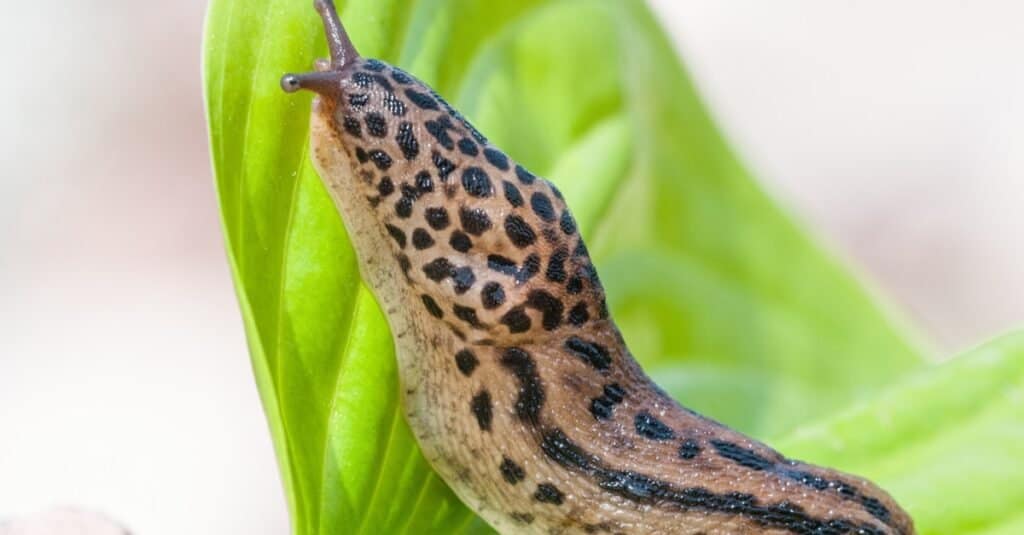
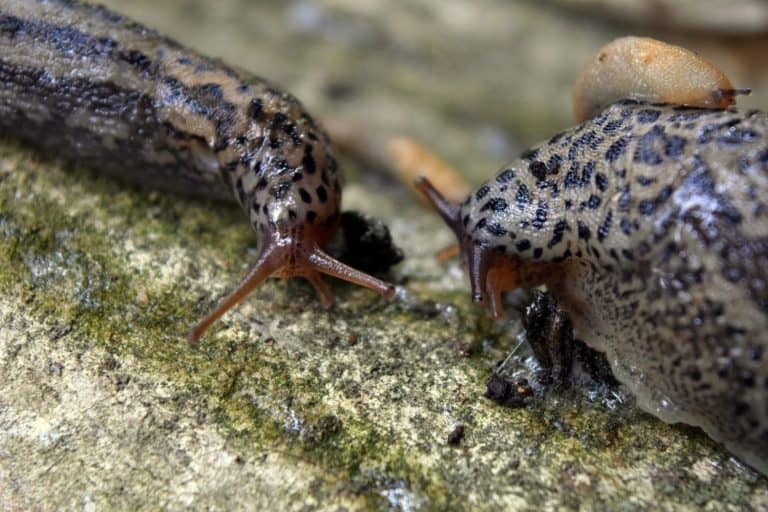
Slugs do not use their teeth to chew.
©MMCez/Shutterstock.com
Yes, slugs really do have teeth — but they don’t chew their food in the same way that humans do. While slugs have teeth, they lack the strong jaws necessary to chew or grind their food. Instead, they use a two-part feeding system: a jaw and a radula.
Slugs have a simple jaw, which acts like a clipper or an anchor, helping them grab and hold onto their food. But their true secret weapon is the radula, a flexible ribbon-like structure covered in tiny, razor-like teeth. This unique setup allows slugs to effectively rasp, scrape, or slice food into small, digestible particles. Think of it as having a razor-toothed tongue.
Because these teeth are so microscopic, slugs have an incredible number of them — not just several dozen, but tens of thousands! Some species have as many as 27,000 tiny teeth, all lined up in symmetrical rows on their flexible radula.
Thanks to the radula, slugs can eat almost anything, making them quite versatile in the food chain. Their diet ranges from fresh plants and decaying leaves to algae, fungi, and even other animals. Because of this broad diet, slugs fill nearly every ecological role: from plant-eating herbivores and meat-eating carnivores, to omnivores that eat both plants and meat, and detritivores that eat dead and decaying matter.
A Slug’s Razor-Tooth Tongue

©Ellen E. Strong, Lee Ann Galindo & Yuri I. Kantor / CC BY 4.0 / Wikimedia Commons – Original / License
The radula is a flexible, ribbon-like band made of chitin, the same durable material that makes up the protective shells of crustaceans and insects. Thousands of minute, backward-pointing ‘denticles’ (tiny teeth) cover the surface of the radula, each shaped with precision to match the specific diet of that slug species.
The radula is powered by a muscular, gristle-like structure beneath it called the odontophore. When the slug feeds, the odontophore pushes the radula ribbon out of the mouth. This movement allows the thousands of tiny teeth to scrape surfaces, akin to a small biological file.
The slug’s microscopic teeth wear out quickly because they are constantly scraping rough materials like tough plants, gritty soil, and stubborn algae films. To reduce the constant wear and tear, the radula operates like a self-regenerating conveyor belt. The slug continuously creates brand new teeth at the back end of the radula. These new teeth gradually move forward toward the mouth opening as the slug feeds, and the old, worn-out teeth at the front eventually fall off or are ground away.
How Slugs Eat
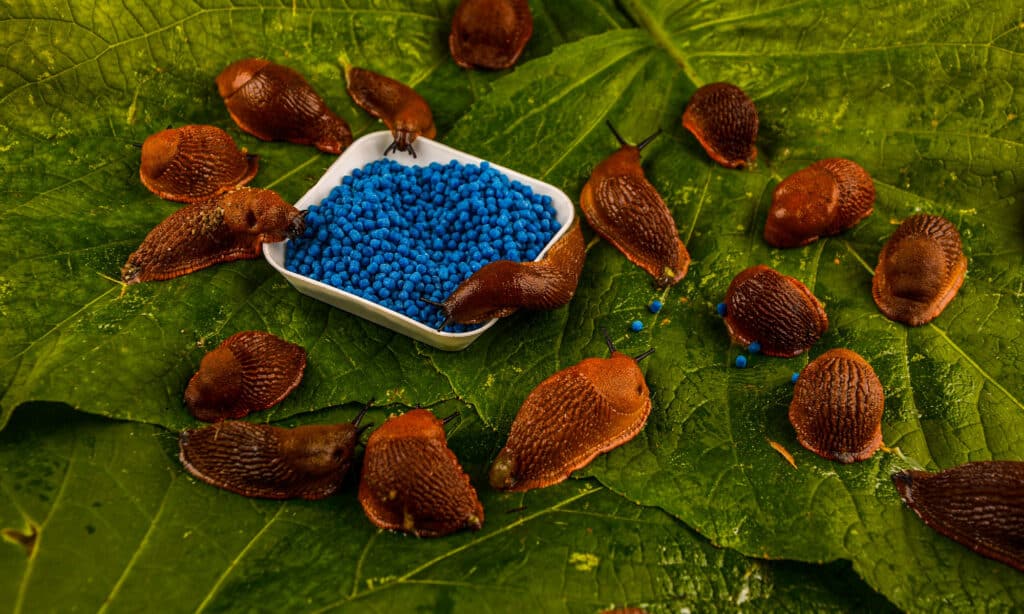
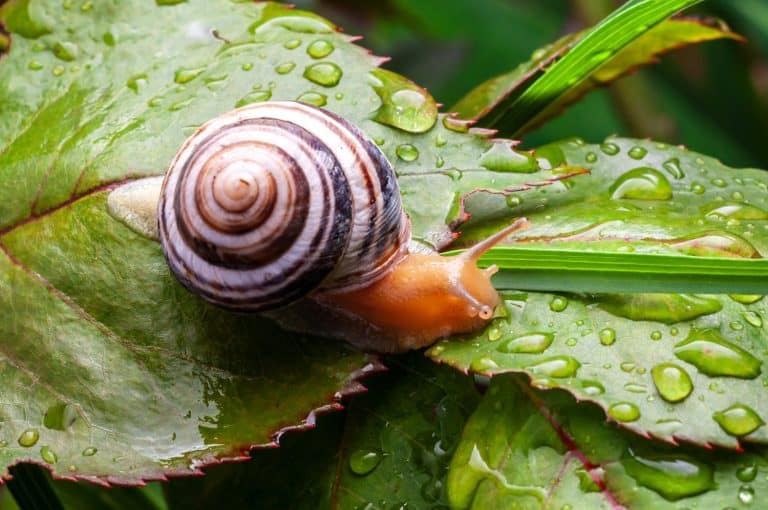
Slugs occupy a wide range of ecological roles.
©weha/Shutterstock.com
The slug’s unique feeding process requires precision and collaboration. It begins when the odontophore (the muscular structure supporting the teeth) pushes the tooth-covered radula out of the mouth. The radula is pushed back and forth across a surface with powerful muscles. This allows the backward-facing teeth to scrape and collect food particles.
While the radula scrapes the food, the slug’s simple, single jaw grips larger food chunks, holding them in place while the radula repeatedly rasps the surface clean. In essence, this combination of a gripping jaw and a moving, tooth-covered ribbon transforms the slug into a remarkably thorough, albeit slow-motion eating machine.
Radula Specialization

A slug’s radula typically has up to 27,000 teeth.
©CerberZero/Shutterstock.com
The fundamental design of a slug’s radula is pretty consistent across species. However, the specific shape and arrangement of the teeth are highly customized based on the species’ diet. Most land-dwelling slugs are herbivores or detritivores, so their radulas are built for broad, gentle scraping. They feature numerous rows of fine, curved teeth to create a wide, effective rasping surface. This is perfect for shaving thin layers of soft material — like algae films, decaying vegetation, and lichens — sort of like a flexible vegetable peeler.
Marine slugs, such as sea slugs and nudibranchs, have a wide variety of dental constructions. Herbivorous sea slugs, for example, often have serrated triangular teeth or teeth shaped like sharp blades. These teeth can puncture the tough cell walls of seaweeds to extract the nutrient-rich sap. Some species even have just one large, needle-like tooth per row.
Predatory slugs have highly specialized radulas that function as genuine weapons rather than just feeding tools. Their mouthparts may include long, sharp blade-like teeth, fangs that fold away and snap into place like switchblades, and hooked structures designed to seize slippery prey. These slugs are surprisingly potent hunters, using their specialized, razor-like denticles to effectively slice into the soft tissues of small invertebrates and earthworms.
A Mollusk’s Key to Success
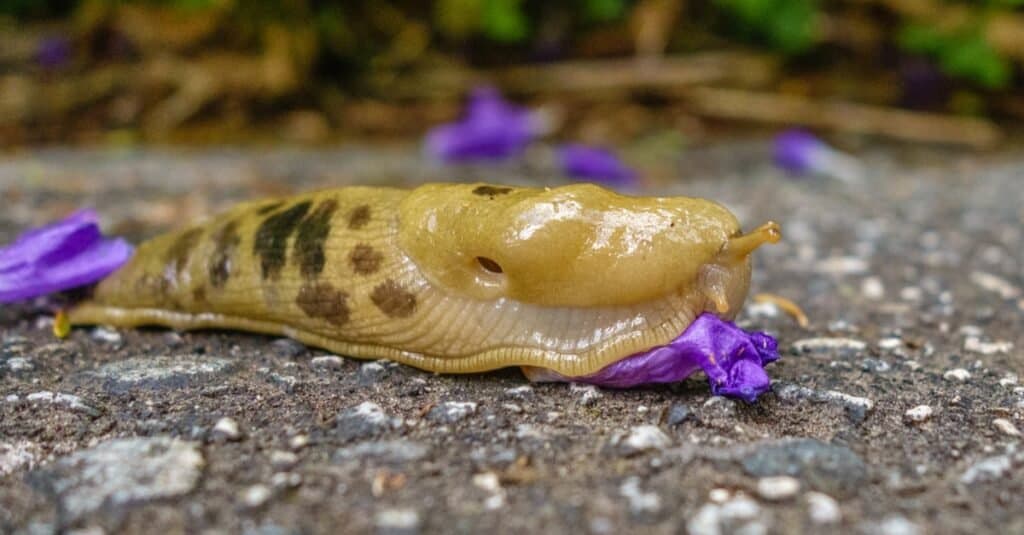
Slugs are vital as nature’s cleaners and recyclers.
©Heidi Besen/Shutterstock.com
Biologists celebrate the radula as one of the few feeding structures in the animal kingdom that has such an extraordinary level of adaptability. The teeth are endlessly renewable, constantly regenerating as they wear down to ensure the radula is always sharp and functional.
Although it is a single structure, the radula is mechanically versatile and can be modified to scrape, puncture, cut, shred, or drill material depending on the slug’s diet. This structure also supports rapid evolution, allowing the shape of the teeth to change easily over generations to match entirely new food sources, which supports a vast range of different lifestyles. In fact, this high degree of adaptability is the primary reason why mollusks (which include snails, slugs, and sea slugs) have become one of the most successful and diverse animal groups on Earth, thriving in every known habitat.
So, the next time you see a slug gliding carefully across a leaf, remember that beneath its humble exterior lies an evolutionary marvel: a conveyor belt of tiny teeth working silently beneath the surface.