
Quick Take
- Lemurs have a “built-in” toothcomb that helps the animal groom themselves and each other.
- Their secondary tongue, or “sublingua,” thoroughly cleans their toothcomb.
- These primates engage in allogrooming, which is a social form of group grooming.
Lemurs are known for their social grooming, but their best grooming tool is their tongue. Below their main tongue lies the sublingua—a stiff, secondary “tongue” used specifically to clean their specialized “toothcomb” teeth.
These primates have impeccable dental hygiene. Without their clean, unclogged toothcombs, lemurs cannot properly groom each other. A clogged toothcomb can lead to social isolation for the animal, potentially resulting in exile from its group. However, thanks to their double-tongue system, Madagascar’s most famous residents maintain their sharp appearance.
Meet the Toothcomb: Nature’s Built-In Grooming Tool
As stated above, lemurs have a natural toothcomb in their mouths. In most lemurs, the toothcomb is formed by six elongated lower teeth—four incisors and two canines—arranged in a tightly-packed row at the front of the lower jaw. The elongated teeth look like a hair comb—and they operate similarly.
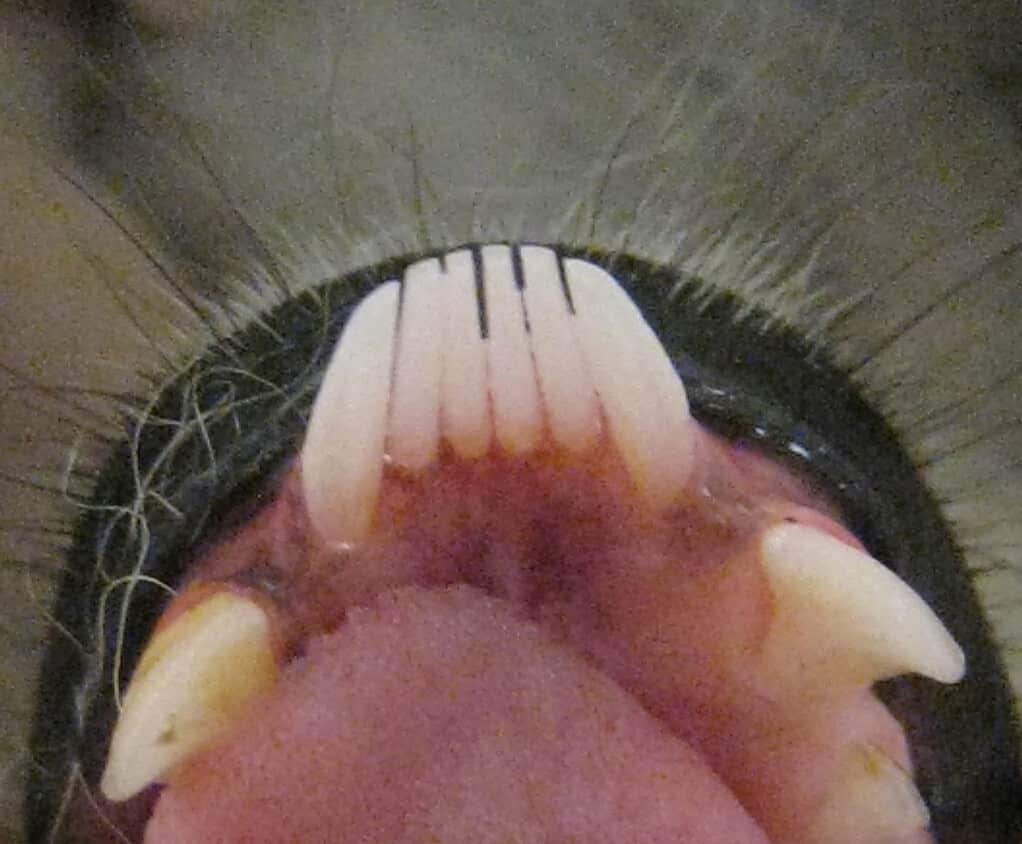
A lemur’s toothcomb is a row of elongated, forward-tilted teeth that resemble the teeth of a comb.
Lemurs use their toothcombs for more than just chewing and eating. They also engage in allogrooming, a behavior in which animals clean and maintain each other’s fur and bodies. Social grooming helps them bond, reduce stress, reinforce social structures, and, of course, keep each other clean. Due to the size and shape of a lemur’s toothcomb, this built-in grooming tool can remove parasites, dirt, and debris while brushing through hair.
The ‘Double-Tongue’ System: Lemur Oral Engineering
A lemur’s toothcomb is not self-cleaning. However, if it becomes dirty or clogged, it cannot perform its grooming function as usual. This is why lemurs have developed a “double-tongue” system to clean their toothcombs, allowing them to continue allogrooming and maintain their social health.
As part of this system, lemurs have an “under tongue” called the sublingua. This second tongue is keratinized and serrated to help clean the dental comb. This ensures the primates are ready for their next allogrooming session.

Lemurs possess a main tongue and a specialized structure beneath it called the sublingua.
©Jearu/Shutterstock.com
For example, a lemur grooms another lemur’s fur with its toothcomb, collecting debris in the process. It then uses its sublingua to scrape the toothcomb clean, preventing it from becoming clogged. The sublingua essentially serves as the lemur’s personal toothpick, dental floss, and toothbrush, all in one.
When the Comb Clogs: Social Consequences of Poor Dental Hygiene
As mentioned earlier, if a lemur’s toothcomb becomes clogged, it loses the ability to groom other lemurs. This can lead to social alienation, as the lemur can no longer contribute to its group. Allogrooming helps primates engage in social bonding and build trust within a troop. Losing this connection can impact a lemur’s survival. That’s why maintaining their toothcomb is crucial.