
Quick Take
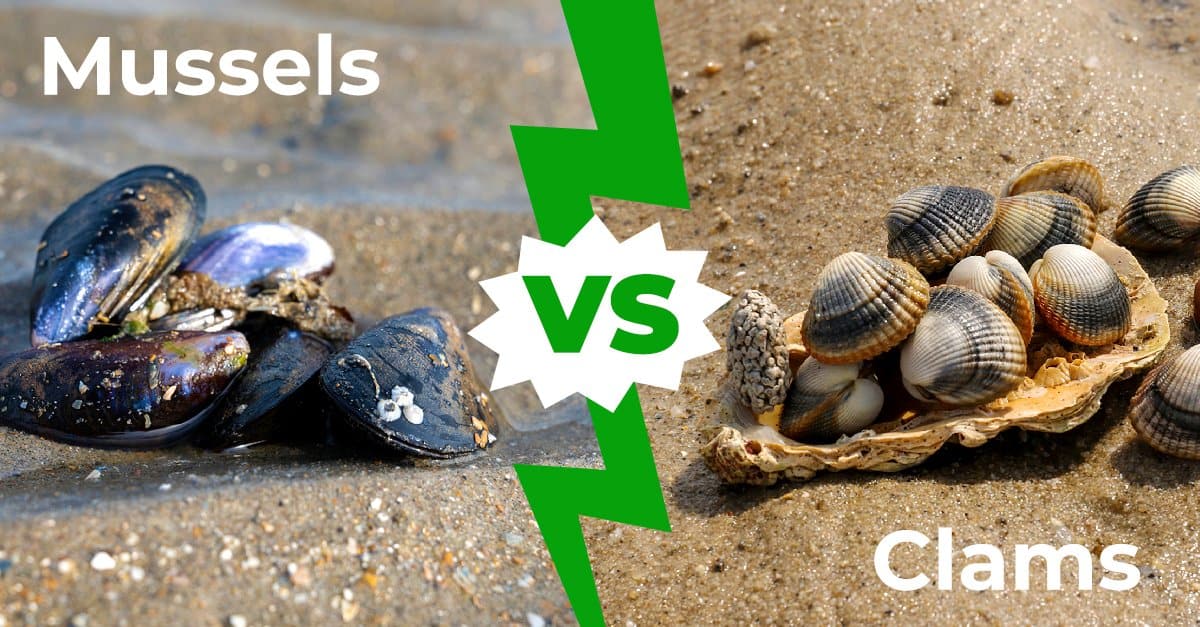
- Clams and mussels are filter feeders with two hinged shells, but differ in shell shape, color, and habitat.
- Clams have two equal shells and often burrow. Mussels attach with byssal threads and live in groups.
- Nutritionally, clams offer more vitamin C and B12, while mussels provide more thiamin, iron, selenium, and magnesium, and lower sodium.
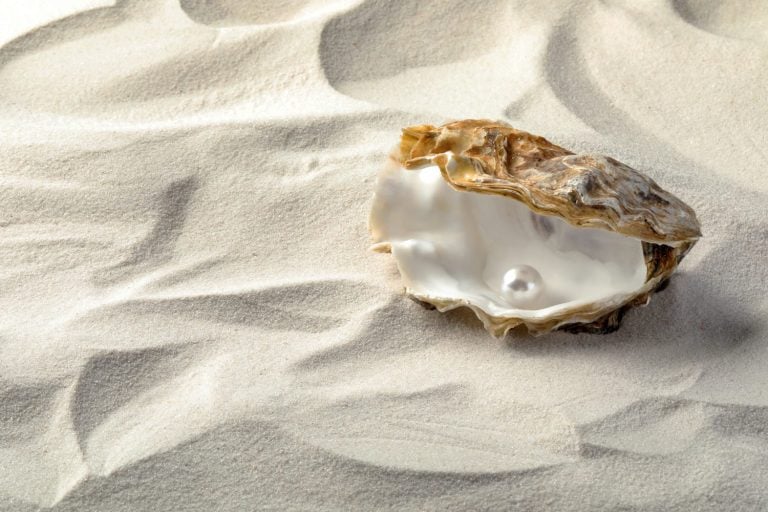
The common names clam and mussel both encompass numerous species belonging to the Bivalvia class of aquatic mollusks. Mussel primarily refers to species of either the family Mytilidae, the order Unionida, the genus Dreissena, or the genus Bathymodiolus. Clam refers to the taxonomic families Arcidae, Nuculidae, Mactridae, Cyrenidae, and Limidae, as well as the genus Corbicula and dozens more species from a variety of different genera. All clams and mussels are filter feeders, have exoskeletons comprised of a pair of hinged shells, and numerous species are edible and commonly served in a variety of seafood dishes. Some species of clams and mussels can produce pearls, though this is rare, and most of these pearls are not of gem quality. Continue reading to learn the differences and similarities between clams and mussels.
Shell
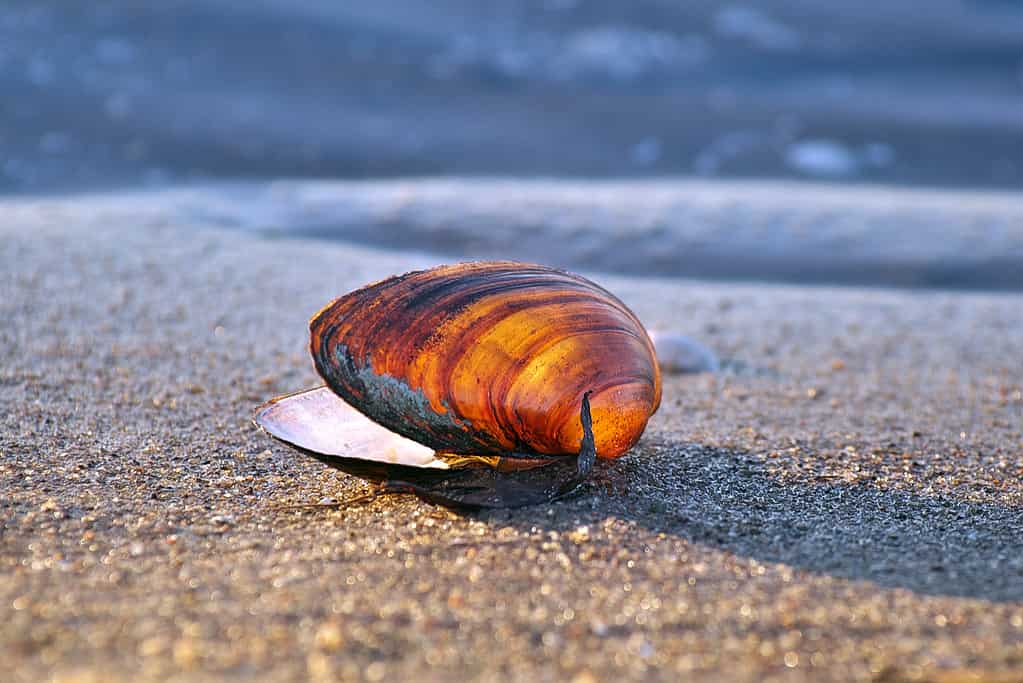
Clam shells come in a variety of colors and patterns.
©IJPhoto/iStock via Getty Images
Clam shells always have two equally-sized halves, and are typically oval, except for those of razor clams, which are primarily rectangular. On the outside, clam shells are usually white, gray, brown, or cream, and some species have bright shells of pink, yellow, or blue. The color and pattern vary based on the clam’s environment and the biomolecules the shell absorbs from the water. Additionally, clam shells often have ridges.
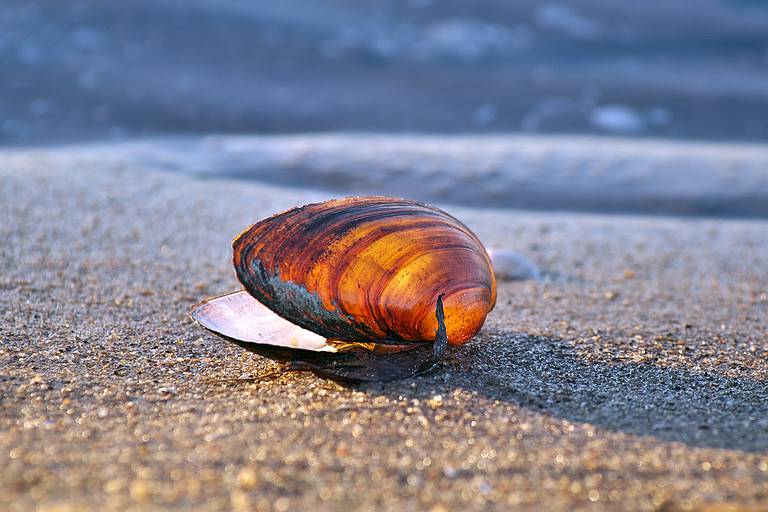
Mussel shells are rough and irregularly round or oblong, thin, and longer than they are wide. Their shells are typically black, dark brown, or blue outside, and silver inside. The innermost layer is called the nacreous layer and commonly known as mother-of-pearl.
Habitat and Distribution
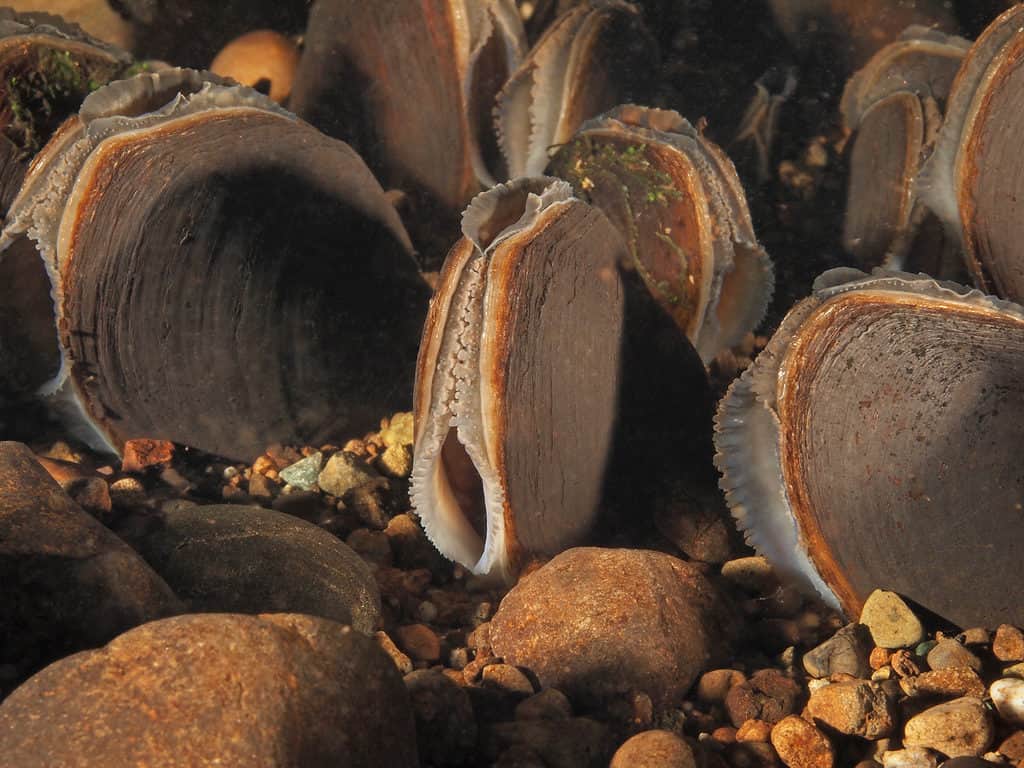
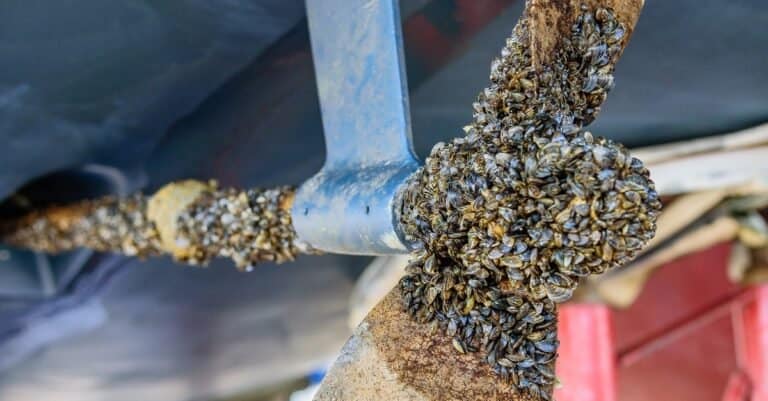
Mussels live in groups and attach themselves to substrates using their byssal threads.
Clams and mussels live in both freshwater and saltwater, but most species inhabit only one type of environment. Both clams and mussels have a worldwide distribution. Adult clams burrow into the mud or sand of the seafloor or riverbeds. They either live in groups or are solitary, depending on the species. Mussels live in groups and attach themselves to substrates using their thin byssal threads. Clams are often found in shallow waters. Mussels are common in intertidal zones, which are areas submerged by seawater only during high tide. Most mussels live in temperate, mild climates, whereas clams live in tropical, temperate, and cold-water regions.
Reproduction
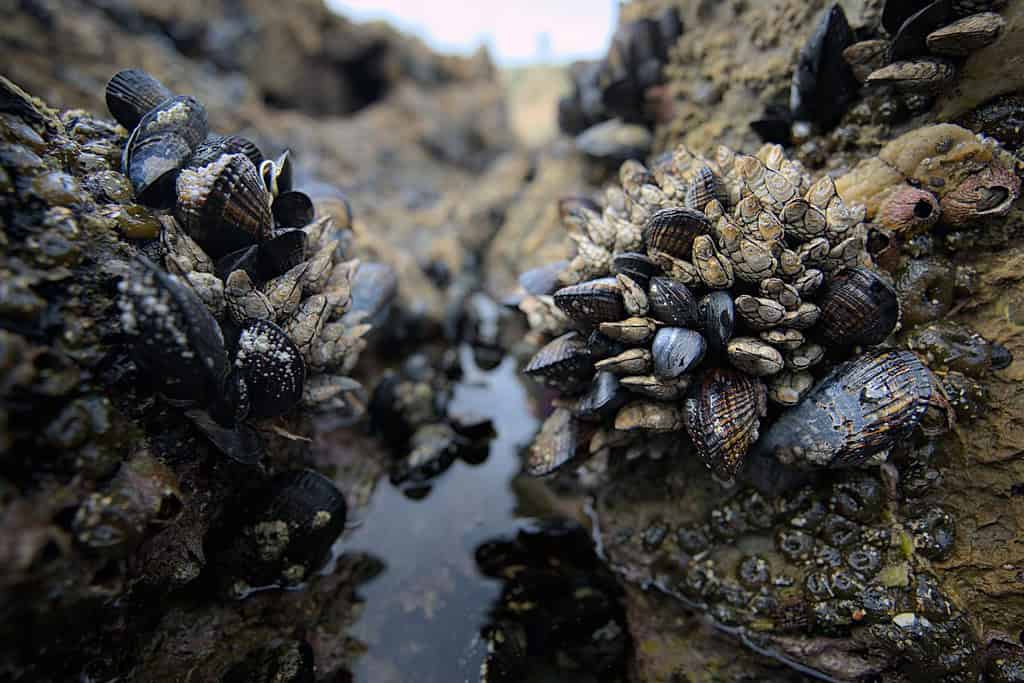
A group of mussels.
©Cavan-Images/Shutterstock.com
Clams and mussels both reproduce sexually. Clams reproduce through broadcast spawning, in which both males and females release sperm and eggs into the water when the temperature is around 50° Fahrenheit. The eggs are then fertilized externally and, within the next 12 hours, become trochophore larvae. After a few days, they begin to form a shell.
Marine and freshwater mussels are both dioecious. For freshwater mussels, males release sperm into the water, which then enters females through the incurrent siphon. Once the fertilized eggs become larvae, known as glochidia, they are released into the water, where they enter a parasitic stage by attaching themselves to the gills, fins, or bodies of fish. Similar to clams, the eggs of marine mussels are fertilized outside the body. The larval stage lasts from three weeks to six months, after which the young mussel attaches itself to a hard surface with its byssal threads.
As Seafood
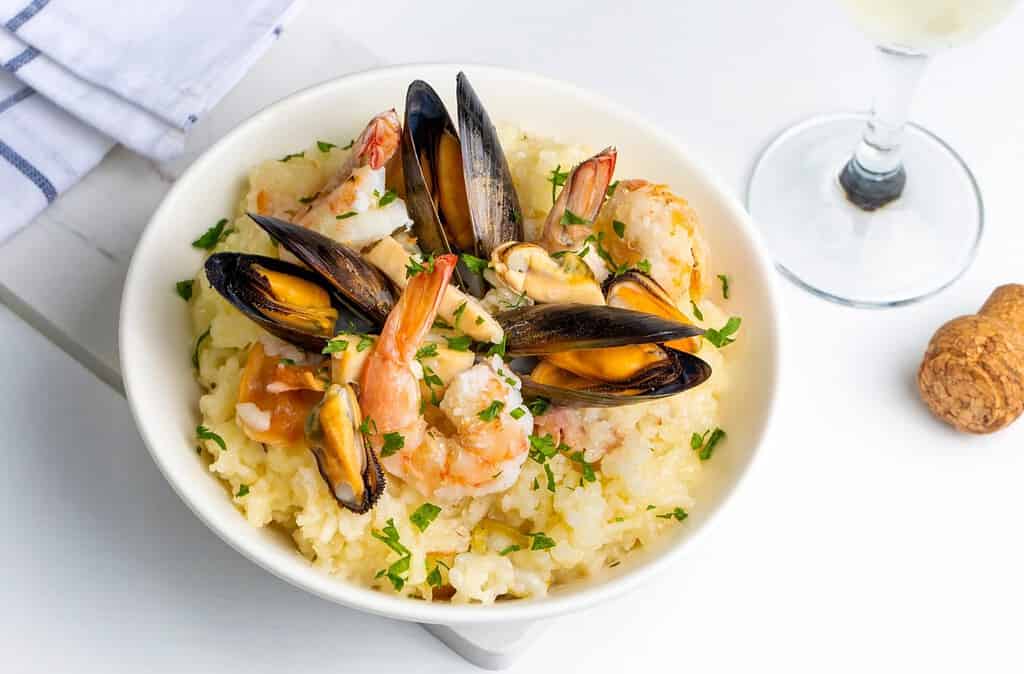
Mediterranean risotto with shrimps, mussels, octopus, and clams.
©Esin Deniz/Shutterstock.com
Clams and mussels are common seafood worldwide. While both have a similar chewy texture, clams have a stronger, salty or fishy flavor reminiscent of the sea, whereas mussels have a milder, more tender, and somewhat bland flavor. Both clams and mussels are cooked in various ways, including steaming, stuffing and baking, roasting, grilling, and stewing. Clams can be eaten raw, but mussels are generally recommended to be cooked to reduce the risk of foodborne illness, although they are occasionally eaten raw in some culinary traditions. Popular edible clams include hard clams (Mercenaria mercenaria), cockles (Cardiidae), soft-shell clams (Mya arenaria), ocean quahogs (Arctica islandica), and Atlantic surf clams (Spisula solidissima). For mussels, popular edible species include blue mussels (Mytilus edulis), New Zealand green-lipped mussels (Perna canaliculus), Mediterranean mussels (Mytilus galloprovincialis), and Pacific blue mussels (Mytilus trossulus).
Both clams and mussels are great sources of protein, are low in calories and saturated fats, and contain all essential amino acids, especially omega-3 fatty acids. They differ in the types and amounts of nutrients they contain. Both are rich in zinc, phosphorus, copper, magnesium, potassium, calcium, iron, and sodium. Compared to mussels, clams typically have more vitamin C, vitamin B12, calcium, phosphorus, copper, and potassium. Mussels are typically richer in vitamin B1, iron, selenium, folate, and magnesium, and contain less sodium than clams.