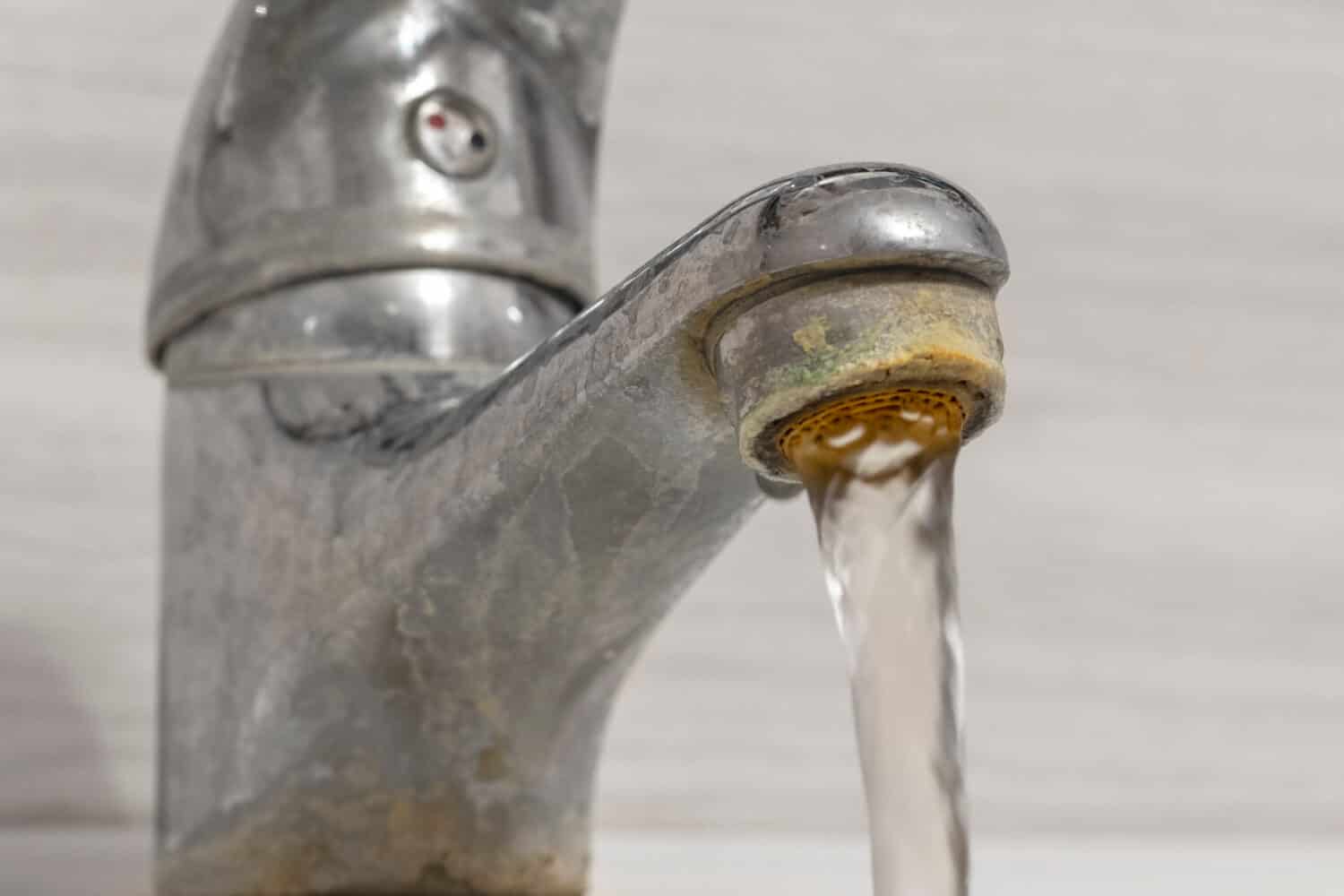

Quick Take
- Public water supplies have to be constantly monitored to maintain public safety.
- Clams react to pollution in water by closing their shells.
- In some water plants in Poland and elsewhere in the world, clams are employed as part of the monitoring process.
- When the clams shut their shells, an alarm is triggered.
It may sound too weird to be true, but this Instagram post is based on fact. Clams truly do help protect a Polish city’s water supply by detecting pollutants. However, the details of the scheme are a little more complicated than one simple snapshot can explain. We researched the truth behind the headline, and this is what we found.
How Do Clams Respond to Pollution?
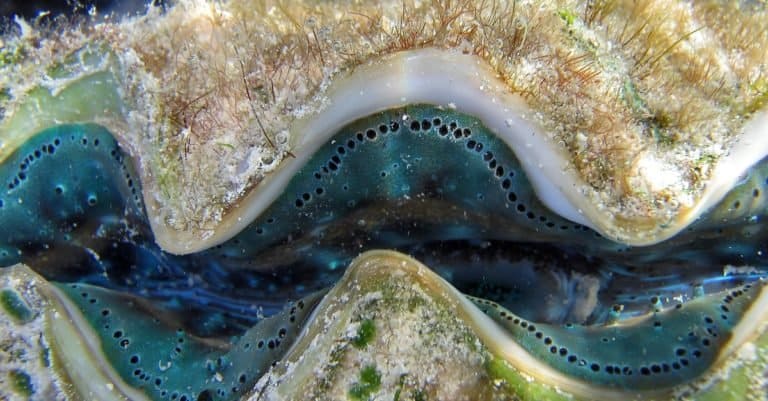
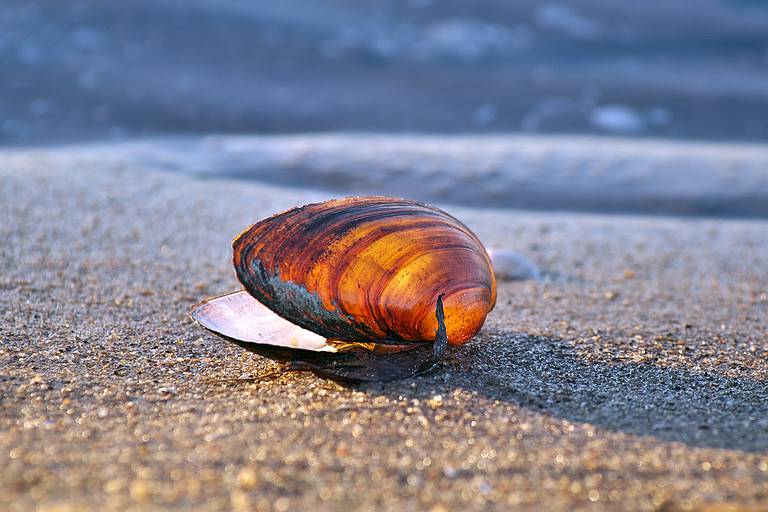
Clams are invertebrates in the phylum Mollusca. They belong to a group of animals called bivalves, which also includes oysters and mussels. They get their name from their two-part shell connected by a hinge at the back, enabling them to open and close.
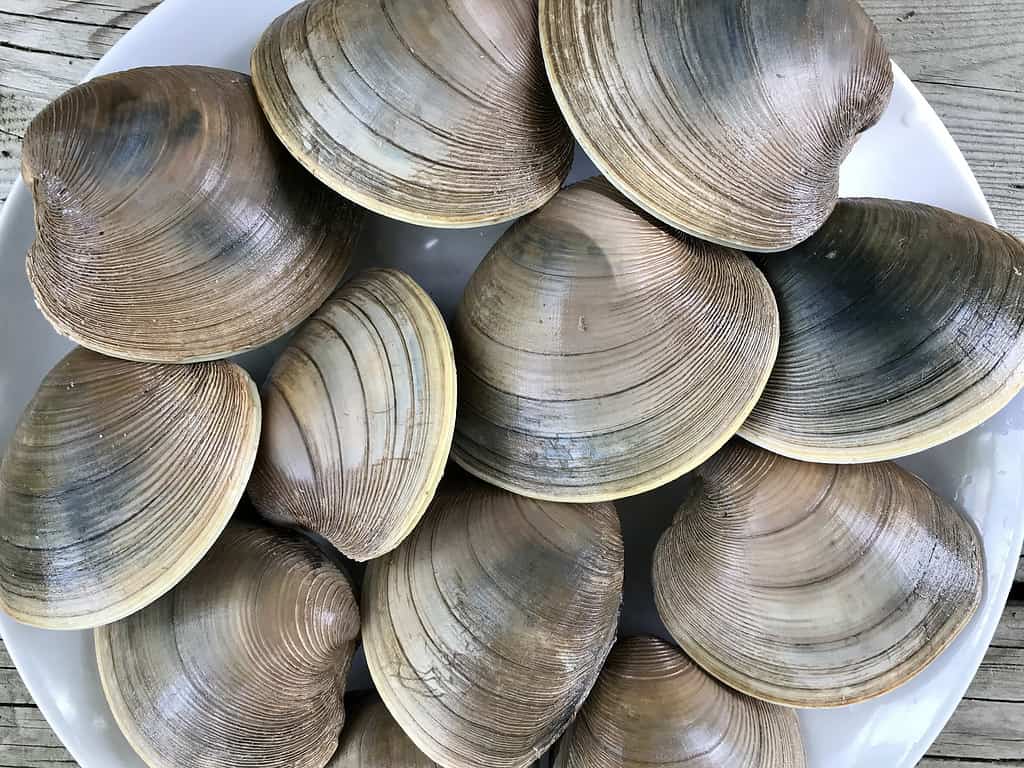
Clams are filter feeders.
©eastriverstudio/iStock via Getty Images
These guys need to pump water through their bodies to breathe (obtain oxygen from the water) and eat (they feed on tiny plankton and detritus). Clams can filter up to 24 gallons of water a day! They have stout, oval-shaped shells where both halves are the same size.
The important fact here is that clams, along with some other bivalve mollusks, can detect pollutants such as heavy metals when the infected water flows through their bodies. The chemicals make their cells react (this includes a condition called oxidative stress), and it causes the shell to close or reduce the size of the opening. At the same time, their heart rate changes in response to the pollutant.
Drinking Water Monitoring
Clean and safe drinking water is essential for public health. However, our water sources (rivers, reservoirs, and aquifers) are constantly under threat from pollution. Therefore, scientists must monitor the water before it reaches our taps.
Historically, this was achieved by spot sampling. Water scientists took samples of water and physically carried them to a laboratory to test them for a range of contaminants. The drawbacks of this method are obvious. By the time the results were available, thousands of gallons of drinking water may have already been consumed by the public. These days, therefore, real-time, continuous monitoring is the norm. This has been made possible by advances in hardware, software, information communications technology, and data analysis.
Our water supplies are constantly monitored.
©Irina Tkachuk/iStock via Getty Images
However, even in-situ monitoring has its limitations. There is such a diverse range of potential chemical contaminants out there, and it cannot test for everything. Contaminants disperse in flowing water in unpredictable ways. This is why scientists turned to the natural world for some help, specifically clams!
Using Clams to Monitor Water
Biomonitoring is the term used to describe systems that monitor an environment using a living organism as a bioindicator. What is going on in Poland is a type of biomonitoring. Not only do clams reliably react by closing their shells when they sense pollution in the water, but they are also sedentary and therefore easily handled in a monitoring situation. What’s more, studies have shown that they are sensitive to many of the chemicals regulated by the Environmental Protection Agency in America and the European Union. Using special sensors to monitor the position of their valves, they can set off alarms when their shell closes.
This system was implemented at the Dębiec Water Treatment Plant in Poznań, Poland, the early 1990s as one of the first instances of the system being used to monitor drinking water. The system has grown and has inspired similar systems in other locations in Poland. Also, a water plant in Minnesota uses the same principle but with freshwater mussels. A water plant on the Vistula River supplies water to the 1.8 million people living in Warsaw and uses clams to monitor the water. Should the clams sound the alarm, it prompts immediate investigation by scientists before potentially contaminated water is distributed
The Clams Are Not Working Alone
This is where the exciting headline is balanced with reality. The clams do not have sole responsibility for the safety of the water supply to Warsaw. In fact, they are not even the main part of it. There are many other sensors and detectors in the system.
The clams employed in Warsaw are collected from a very clean lake and taken to the water plant laboratory. There, they spend two weeks getting used to their new surroundings. During this time, they are also calibrated so the sensors know the angle of their shells when they are completely open and when they are completely closed. This is vital for interpreting their movement once they are put to work. In this water plant, eight clams are wired up to the sensors at a time and are attached to pedestals. Sensors are fixed to their shells with a special glue
If six out of the eight clams close their shells for more than four minutes and if, at the same time, the average closing percentage of them all falls below 25 percent, an alarm is triggered, and scientists investigate. The clams do a three-month shift before they ‘retire’ and are returned to their natural habitat.