
When it comes to describing the remarkable biodiversity of our oceans, we have only just scratched the surface. Despite hundreds of years of exploration and recording, there are huge numbers of marine invertebrates that have not yet been described. An estimated 91 percent of marine species are still unknown, unnamed, and undescribed. Others have been recorded, but there is still so much that we do not know about them. An initiative called The Senckenberg Ocean Species Alliance has made a new marine species discovery. It is a carnivorous bivalve and has been named Myonera aleutiana. Let’s find out more about it and the exciting alliance that led to its discovery.
Senckenberg Ocean Species Alliance (SOSA)
When it comes to ocean ecology, we have no time to waste. With many ocean ecosystems under considerable strain from human activities, the need to record what is out there has never been more urgent. This is the only way we can document changes and take action to address them.
The Senckenberg Ocean Species Alliance (SOSA) was launched in 2022. It is a project within the Senckenberg Research Institute and Natural History Museum Frankfurt, but it is actually a network of both organizations and individuals throughout the world.
Their mission is to revolutionize the naming of marine invertebrates by streamlining species description processes. The problem has been that there can be decades between a species being discovered and its official documentation. SOSA aims to overcome this bottleneck. In their latest research collection, they describe no fewer than 14 new species and two new genera!
What Are Bivalves?
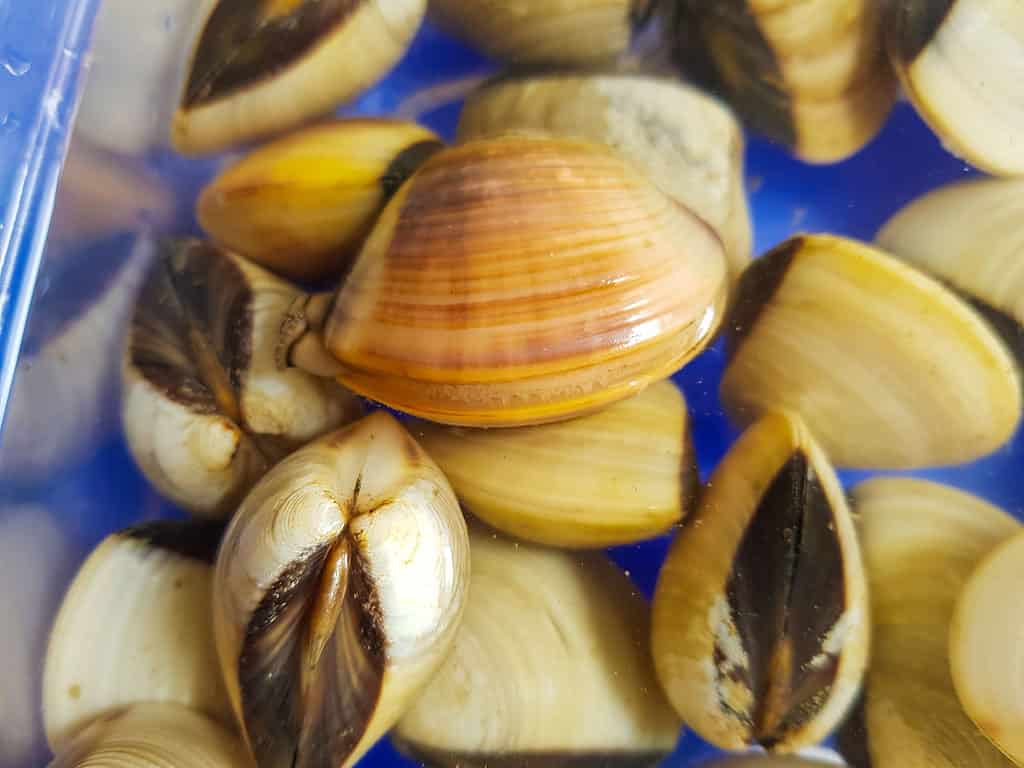
Bivalves mainly live in marine environments.
©Lam Van Linh/Shutterstock.com
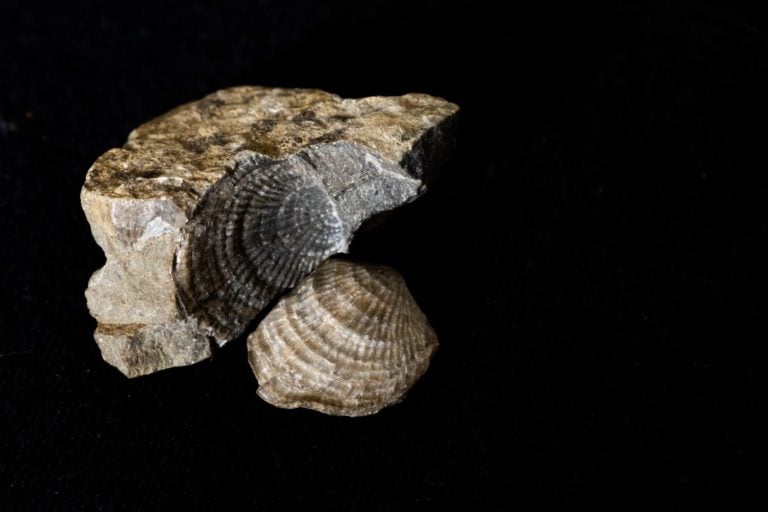
Bivalves are a class of animals that have two shells connected by a flexible ligament, which encase a soft body. All of them live in aquatic habitats, and most (80 percent) live in marine environments. Some swim by using their mantle cavity to force water movement or burrow into the sand, while others attach themselves to objects using sticky strings called “byssal threads.” Well-known examples are clams, mussels, oysters, and scallops.
New Carnivorous Bivalve Called Myonera aleutiana
One of the exciting new species discovered was a type of carnivorous bivalve called Myonera aleutiana. In the scientific paper describing the new species, the scientists note how challenging it can be to differentiate species from each other in the Myonera genus. This is because their anatomical and shell features are so similar.
The two specimens examined in this study were collected from the eastern part of the Aleutian Trench in the North Pacific Ocean off Alaska. The location gave rise to the name given to the new species. They were both adults and were both whole specimens. The holotype is the individual specimen that was used when the species was formally described. For this species, the holotype dimensions were recorded as: ‘Length: 7.4 mm; Height: 4.1 mm; Width: 3.1 mm’. It has a thin and fragile shell that is a translucent, olive color. The posterior dorsal margin is almost straight, and there are 16-18 equidistant concentric thin, featherlike plates (foliaceous lamellae) covering the shell with pustules between them.
The paratype helps to define the species. For this species, the paratype dimensions were recorded as ‘Length: 6.8 mm; Height: 3.5 mm; Width: 2.5 mm’. This individual had a single and short byssal thread that was visible both through the shell’s transparency and in CT images.
How and Where Was the New Species Found?
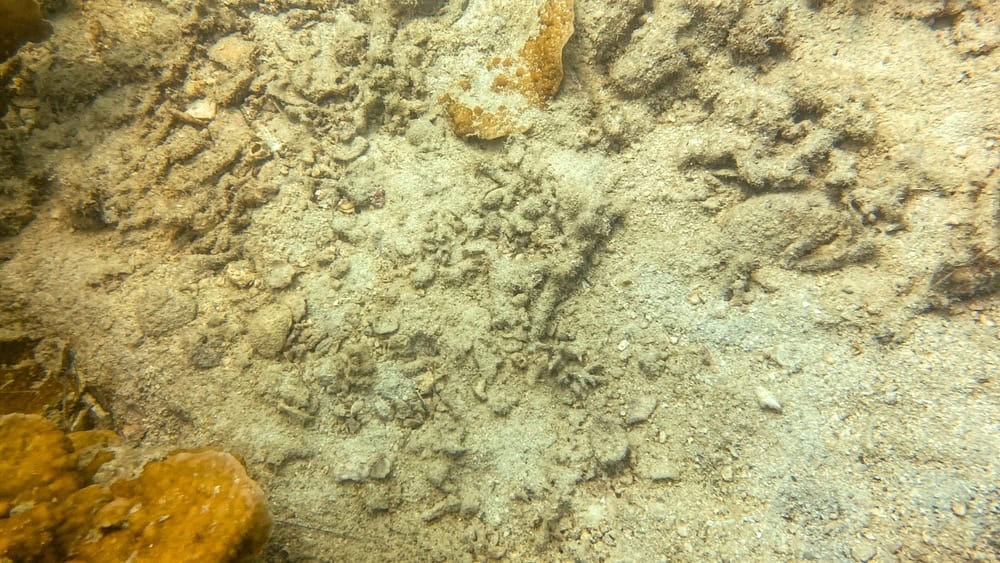
The new species was discovered by dredging the sea floor.
©Lifestyle_shots/Shutterstock.com
This new species was found at between 16961 feet and 17322 feet (5170–5280 m) deep, which is a new record for this genus. It has previously only been recorded at a depth of 14435 feet (4400 m) in the Tasman Sea, Southwest Pacific.
The specimens were collected by the AleutBio (Aleutian Trench Biodiversity Studies) expedition SO293. This expedition was conducted from 24th July to 6th September 2022. Samples were collected from the seabed at the sediment-water interface. To sample this challenging location, scientists combine a sledge-dredge and bottom plankton nets in one device called an epibenthic sledge (EBS).
The sledge is towed across the seabed, stirring up fine sediment. The sediment is washed through fine nets, and animals (including bivalves) are collected in the cod end (300 µm mesh size). Once onboard, the cod ends are sieved through a series of sieves, and the samples are preserved in precooled ethanol.
Non-Invasive Examination
Another remarkable thing about this story is that this is only the second bivalve species ever documented entirely through non-invasive micro-Computed Tomography (CT) scanning. In general, specimens have to be dissected to be accurately identified. Obviously, this causes a lot of damage to the specimen. This specimen, however, remained intact. Micro-CT scans take a series of X-ray images (radiographs) of an animal as it rotates 360°. These images are then digitally reconstructed to produce a 3D model, allowing scientists to visualize both internal and external structures. The technique is non-destructive. In this case, over 2,000 tomographic slices/images were taken to build up a complete picture of this creature. After painstaking examination of the images and comparisons to known species, the exciting announcement about a new species could be made.