
Not all bivalves are created equal. Oysters and clams are both bivalves—animals with two connected shells—but they have more differences than similarities. While the differences may not be obvious at first glance, these filter feeders are quite distinct from each other.
Oysters and Clams Are Noticeably Different Sizes
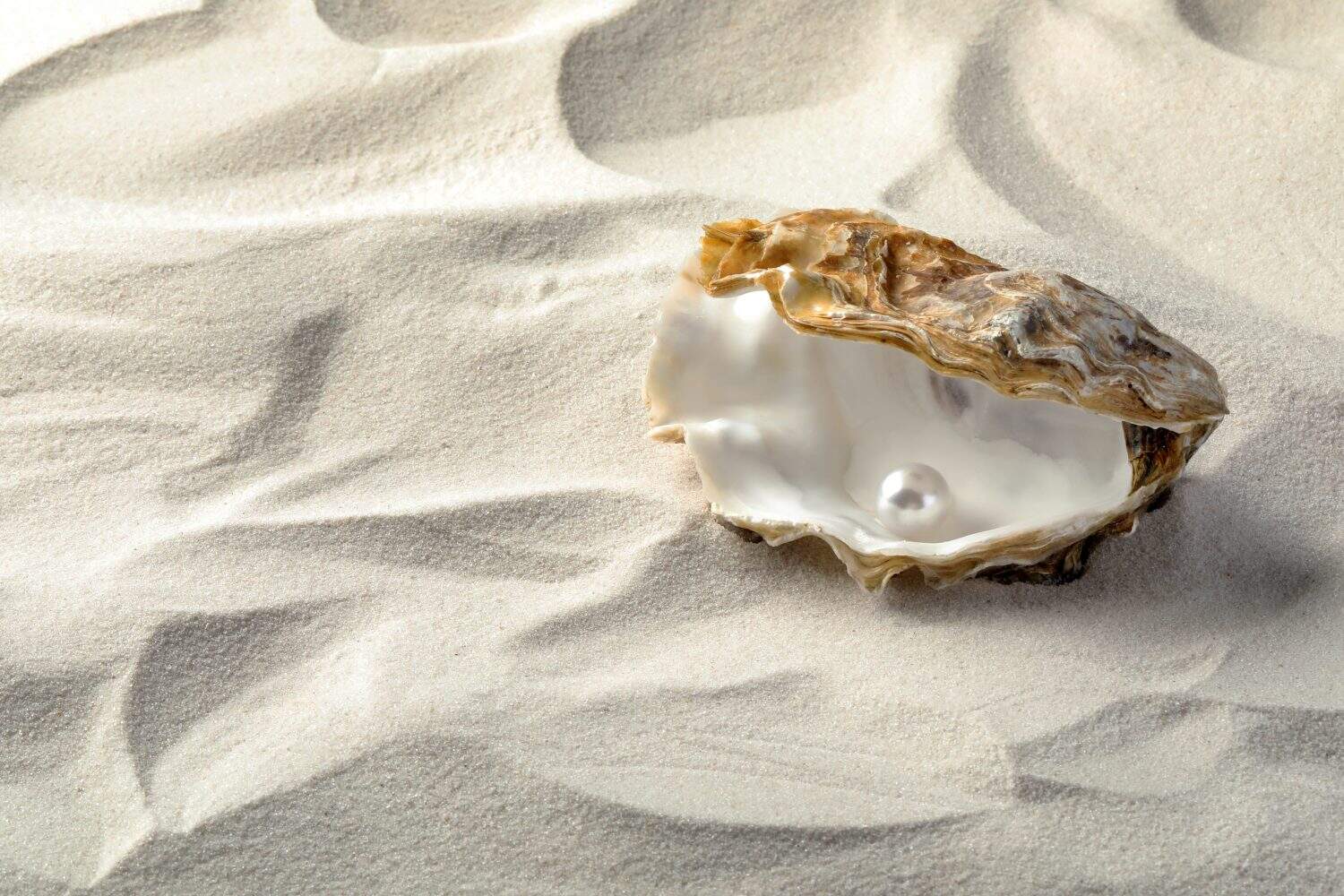
Oysters tend to be larger than clams.
©mikeledray/Shutterstock.com
One of the most noticeable differences between clams and oysters is their size. In general, oysters are larger than clams. Oysters tend to grow between three and five inches long. Anything larger than this is considered a substantial oyster. Oysters that fall in this size range typically weigh up to eight ounces. On the other hand, the majority of clams that are used for cooking are smaller. Soft shell clams range in size between three and four inches long, Hard shell clams can be as small as 1.5 inches long and up to four inches long. These clams weigh around 2.5 ounces.
While these are slight differences in the typical table-bound shelled creatures, both oysters and clams can grow substantially larger. For example, the giant clam can grow to be over 4.5 feet long and weigh 500 pounds or more. Conversely, large oysters can grow up to 14 inches long and weigh 3.5 pounds. The size and weight differences depend on the specific type of clam or oyster being observed. However, if size and weight are not enough to distinguish between the two, their appearance provides clear differences.
Clams and Oysters Look Nothing Alike
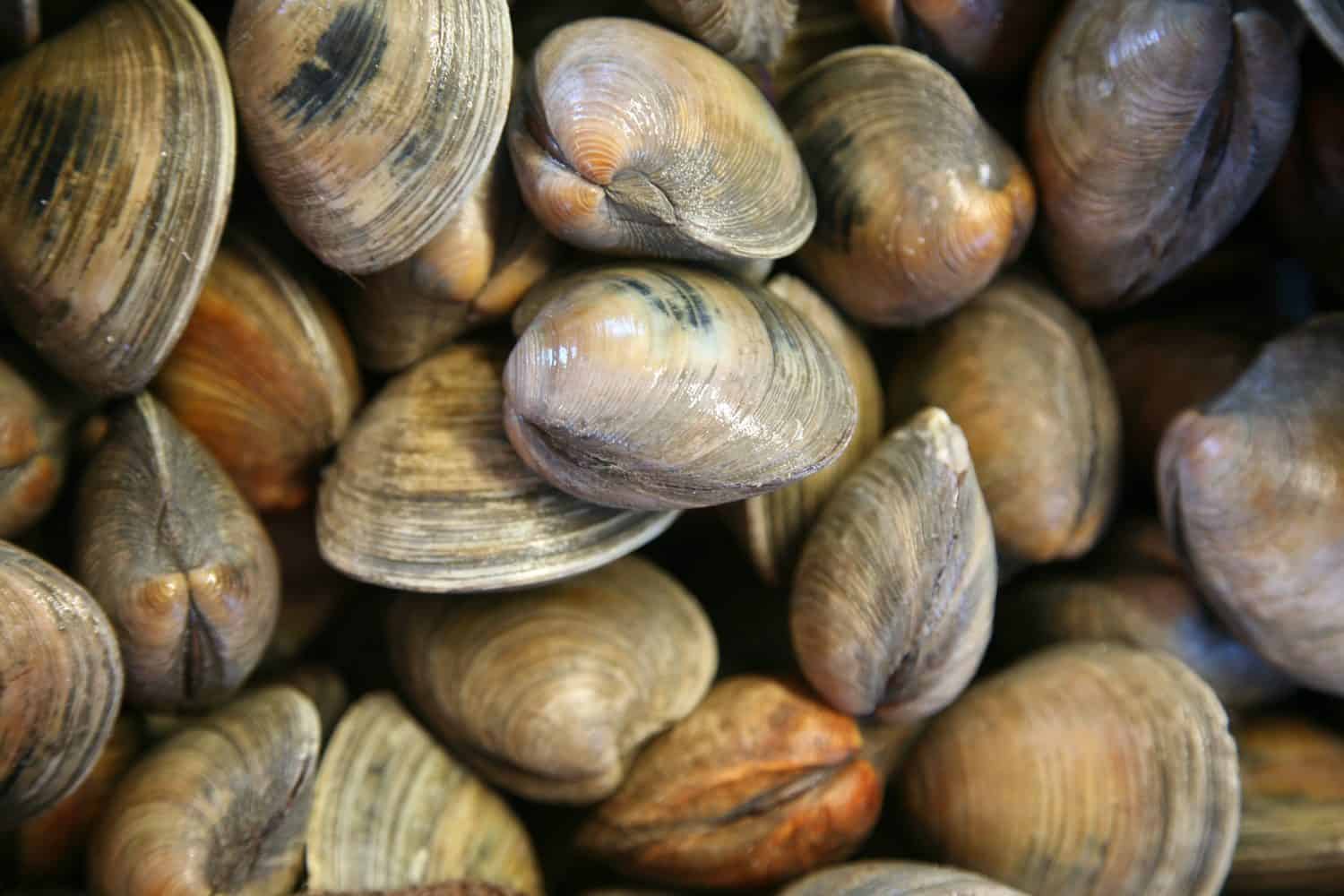
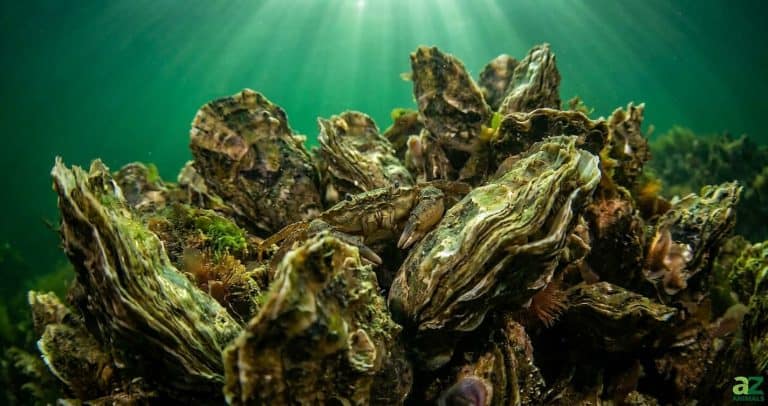
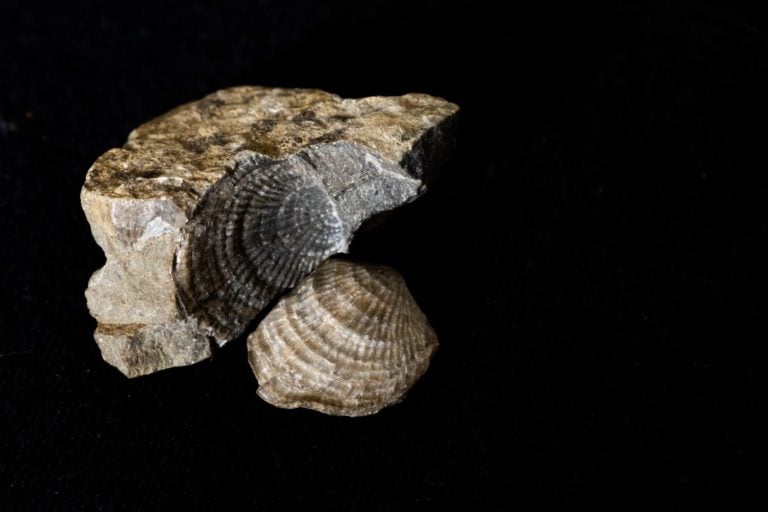
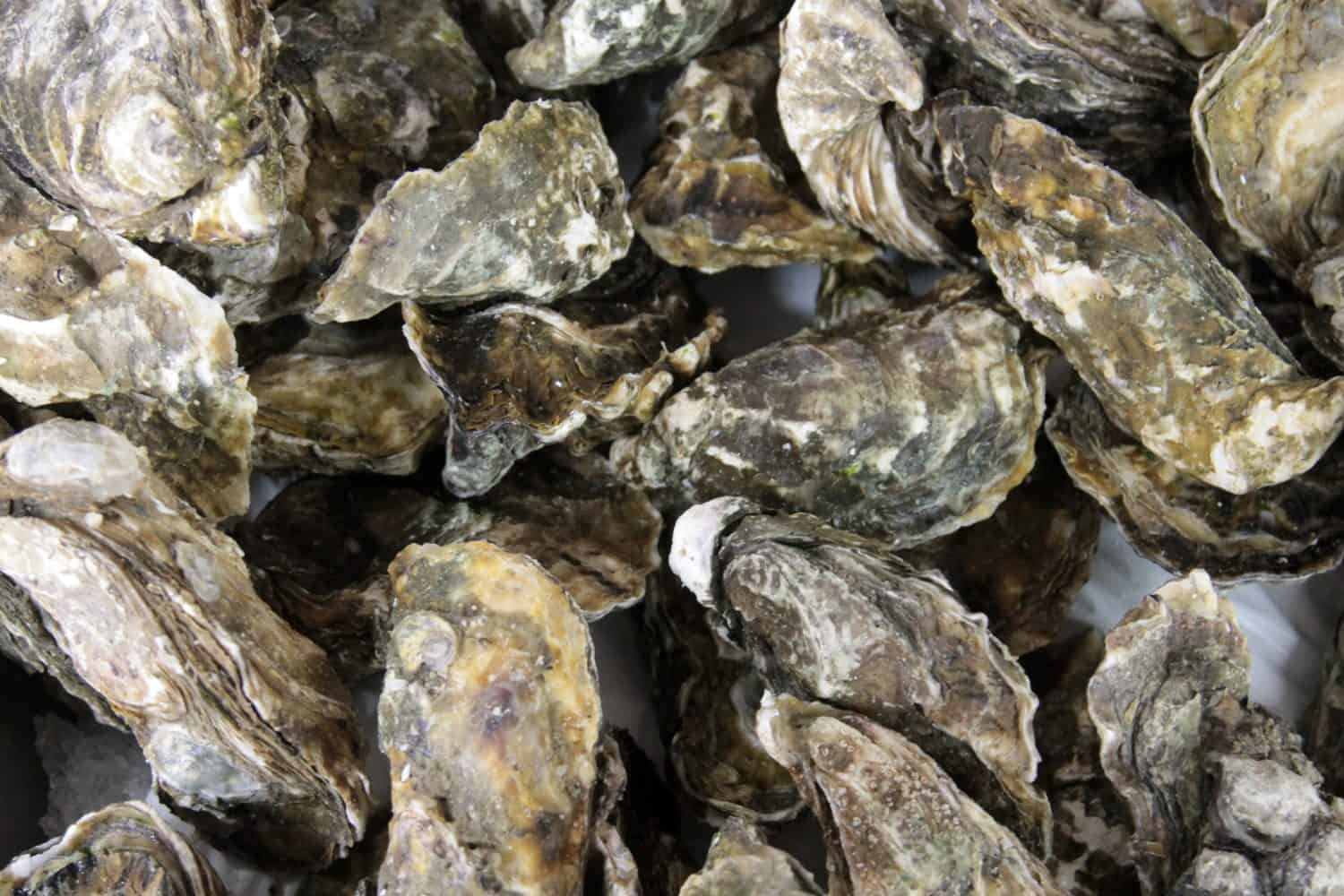
Clams are rounded and smooth with striations, whereas oysters are not uniform and have lumps and bumps.
©mikeledray/Shutterstock.com
The fact that clams and oysters are on the smaller side can make it confusing to tell the two apart. But, for those who have seen both an oyster and a clam, the shells of the two look nothing alike. To begin with, the shapes of the two shells are markedly different. Clam shells are quite uniform, with a larger top that tapers to a smaller bottom. Oyster shells, on the other hand, vary greatly in shape and may be more oval or irregular, with little consistency from one to the next. Additionally, the colors of the shells are different. Oysters can come in a variety of colors. Those colors include:
- Dark gray
- Blue
- Slightly purple
- Brown
- White
Clams also come in several colors. The colors a clam can be include:
- Mixture of tan and terracotta
- Blue
- Purple
- Brown
If these differences are not enough to distinguish a clam from an oyster, the texture of the two will. This is because clam shells are smooth with raised striations on them. Oysters have coarse shells that may have barnacles on them and are lumpy and bumpy. The location where each of these marine creatures lives plays a large part in their appearance as well.
Oyster and Clam Habitats
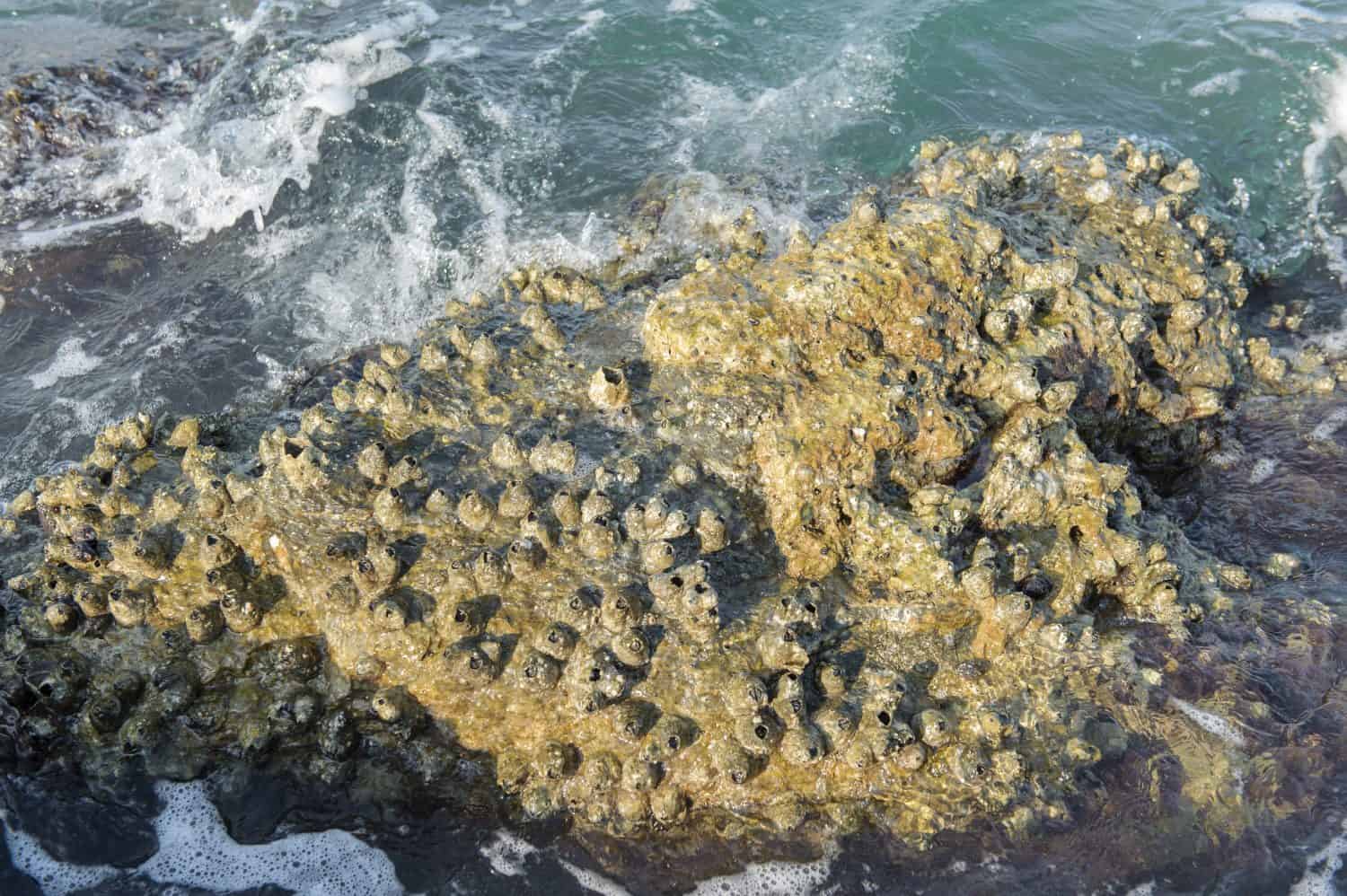
Oysters attach themselves to rocks in ocean tidal zones, whereas clams bury themselves in mud or sand.
©SONGPAN JANTHONG/Shutterstock.com
The oyster and the clam have different aquatic habitats they choose to call home, neither of which the other would be able to thrive in. Clams can live in both saltwater and freshwater environments. Clams live in shallow water, where the waves are gentle, just beneath the surface of the mud or sand. Larger clams can be found along coral reefs, slightly deeper in the ocean. Oysters prefer to live in brackish water. The aquatic environment where freshwater meets saltwater is where oysters can be found. Unlike clams, which burrow, oysters attach themselves to rocks, often forming clusters in areas that are submerged at high tide and exposed at low tide. This difference in habitat may contribute to the distinct tastes and textures of clams and oysters.
Oyster and Clam Tastes And Textures
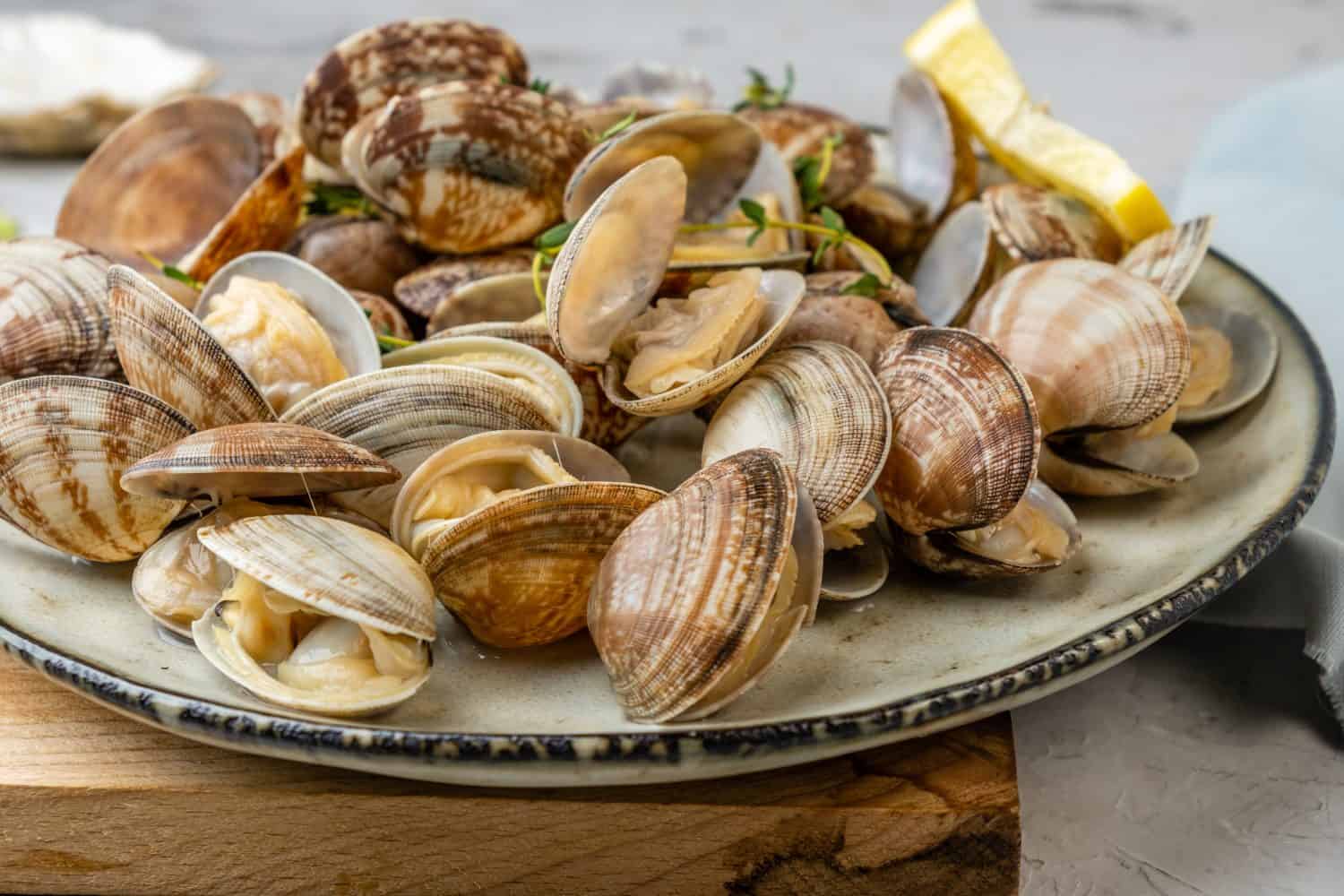
When prepared, clams and oysters have different flavors and textures from one another.
©Axel Mel/Shutterstock.com
Clams and oysters are not interchangeable when it comes to cooking with them. This is because the two have different flavor profiles and textures from one another. One of the main reasons for the taste difference between clams and oysters is the amount of seawater filtered through them daily. Clams filter 10 gallons of water daily, whereas oysters filter 50 gallons. This leaves clams tasting a bit sweeter and oysters a bit saltier. When it comes to the texture of oysters and clams, they are opposites of one another. When oysters are prepared to eat, they are soft and chewy. Conversely, clams are firm and tender. This is why the two bivalves cannot be substituted for one another in recipes, and is just another one of the many things that make oysters and clams so different from one another.