
Quick Take
- Hyenas are known as tough, dangerous predators. So why did one end up as a snake's meal, and which species pulled it off? See the hyena encounter →
- A snake's jaw isn't built the way you think, and that structural difference is the entire reason it can swallow something larger than its own head. Explore the jaw anatomy →
- The 150-pound hyena may be the largest documented snake meal on record, but scientists say that record almost certainly isn't the true limit. See the record meal →
- After swallowing a massive animal, a snake faces a hidden danger that has nothing to do with its prey, and this danger can last for weeks. Discover the hidden danger →
Snakes have one of the strangest and most shocking feeding styles in the animal kingdom. Unlike mammals, they do not tear their food into pieces or chew it before swallowing. Instead, many snakes use flexible jaws, powerful muscles, and an extremely expandable body to swallow prey whole. That means a snake’s meal can sometimes look almost impossible compared to the size of the snake itself.
Many snakes can also go long periods without eating, which makes their meals even more impressive when they finally strike. After catching prey, some species may spend days or even weeks digesting a single huge animal. For the largest snakes on Earth, that prey can include deer, wild pigs, antelope, crocodilians, and in one especially shocking case, even a hyena.
In this slideshow, you’ll meet several incredible snakes known for swallowing enormous meals. Some rely on venom, others use brute constriction, and a few are capable of taking down animals that seem far too large to fit inside a snake. One of the most astonishing examples is a species powerful enough to eat a 150-pound hyena whole, proving just how extreme a snake’s appetite can be.
What Is the Largest Animal Ever Eaten by a Snake?
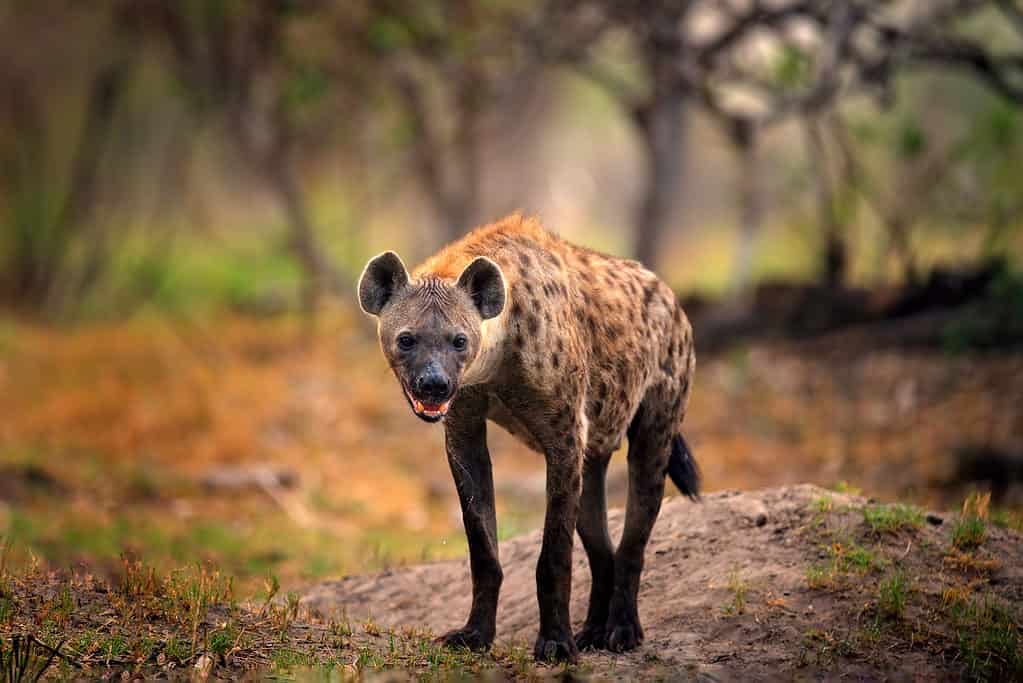
Hyenas are primarily scavengers and often steal food.
©Ondrej Prosicky/Shutterstock.com
The largest recorded animal ever eaten by a snake was a roughly 150-pound hyena swallowed by an African rock python in 2017. The astonishing encounter was documented by National Geographic, which filmed the 12-foot-10-inch python coiled around the hyena before beginning the slow process of swallowing it whole. For an animal most people think of as a predator, a hyena becoming a snake’s meal was shocking enough to make headlines around the world.
Before that encounter, the largest widely reported animal eaten by a snake was a 130-pound impala consumed by an African rock python in 1955. Both cases show just how powerful large pythons can be when they choose the right moment to strike. These snakes do not need claws, speed, or venom to overpower prey. Instead, they rely on ambush, strength, patience, and one of the most extreme swallowing abilities in the animal kingdom.
Still, it is important to remember that “largest recorded” does not necessarily mean “largest ever.” Wild snakes often feed in remote areas where no one is watching. It is entirely possible that larger animals have been swallowed by pythons or anacondas without ever being documented by scientists, cameras, or eyewitnesses.
Snake Swallowing Hyena

©KANGWANS/Shutterstock.com
The sight of a snake swallowing a hyena is so unusual because hyenas are usually thought of as dangerous predators, not prey. Hyenas have strong jaws, sharp teeth, and a reputation for being tough scavengers and hunters. In many ecosystems, they compete with lions, leopards, wild dogs, and other major carnivores. That makes the 2017 python encounter especially surprising, since it showed that even a formidable predator can become vulnerable under the right conditions.
African rock pythons are known to eat a wide range of animals, including mammals, birds, and reptiles. Although large predators such as big cats and hyenas can threaten pythons, the relationship is not one-sided. Rock pythons may occasionally target young, weakened, or isolated carnivores if the opportunity appears. The hyena case forced scientists and wildlife watchers to reconsider just how ambitious these snakes can be when choosing prey.
The encounter also highlights how risky large meals can be for snakes. Swallowing an animal as large as a hyena requires an enormous amount of energy and leaves the snake vulnerable while it digests. A python that has just eaten a massive meal may be slower, less mobile, and more exposed to predators or human disturbance. Even so, the reward can be worth it. One huge meal can sustain a large snake for a long time.
While the 150-pound hyena remains the largest recorded animal eaten by a snake, it may not be the absolute limit. Large constrictors live in habitats where many feeding events go unseen. Somewhere in a remote wetland, forest, or savanna, an even larger meal may have already happened without anyone there to record it.
Python Diets

©Padodo/Shutterstock.com
Pythons are among the most impressive eaters in the reptile world. They are capable of consuming animals that look far too large to fit inside their bodies. Depending on the species and the snake’s size, pythons may eat birds, monkeys, deer, pigs, goats, dogs, antelope, reptiles, and even crocodilians. Their diet changes based on habitat, prey availability, and the size of the individual snake.
In Florida, where Burmese pythons have become an invasive species in the Everglades, these snakes have been documented eating mammals such as raccoons, rabbits, foxes, and deer. In 2018, researchers documented a Burmese python swallowing a white-tailed deer that weighed about 35 pounds. That may not sound as extreme as a 150-pound hyena, but it was still an enormous meal relative to the snake’s own size.
Large pythons have also been involved in rare but serious attacks on humans. Reticulated pythons, the longest snakes in the world, have been reported in a small number of cases killing and consuming people. These incidents are extremely rare, but they show that the largest constrictors are physically capable of overpowering surprisingly large prey when conditions allow.
Rock pythons are especially famous for eating large animals, but they are not the only snakes capable of enormous meals. Several giant constrictors around the world regularly target prey that rivals them in size. The biggest snakes all share the same basic hunting strategy: grab, constrict, swallow, and digest.
Which Species of Snakes Regularly Eats the Largest Animals?
The snakes that regularly eat the largest animals are almost always giant constrictors. Unlike venomous snakes, constrictors do not depend on toxins to kill prey. Instead, they wrap their powerful bodies around an animal and squeeze until the prey can no longer breathe or circulate blood properly. This method allows large constrictors to overpower prey that would be impossible for many other snakes to handle.
The largest snakes in the world include the African rock python, green anaconda, reticulated python, Burmese python, Indian python, and amethystine python. These species can reach incredible lengths and weights, and they live in places where large mammals, birds, and reptiles are available as prey. Because they do not chew, every meal must be swallowed whole, which makes their feeding abilities even more impressive.
Each of these snakes has a slightly different range, habitat, and diet. Some live in swamps and rivers, while others thrive in forests, grasslands, or rocky areas. What they have in common is the ability to take down animals that would seem far too large for a snake to eat.
African Rock Python
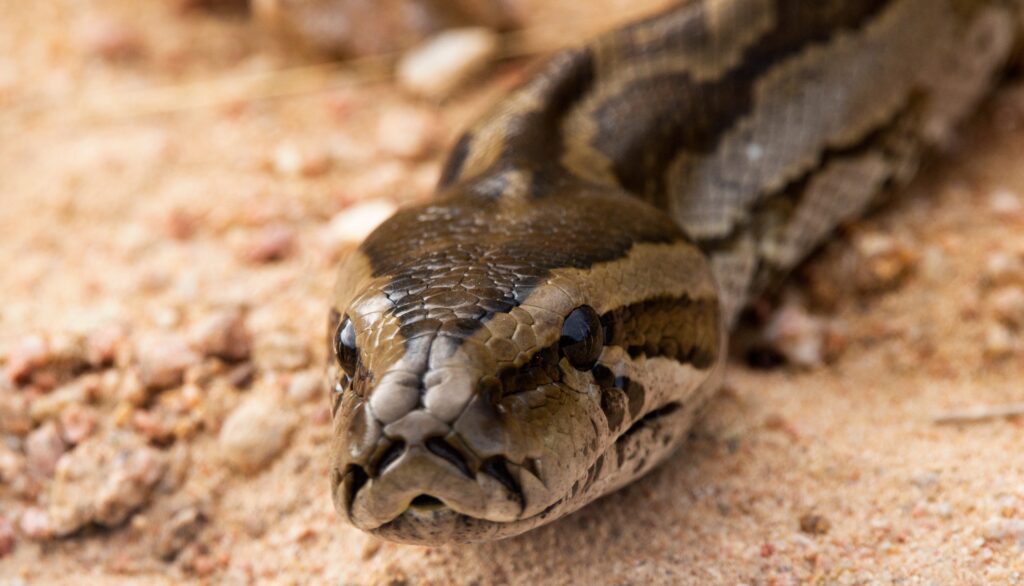
Southern African Rock Python
©Bruce Crossey/Shutterstock.com
The African rock python is found across much of sub-Saharan Africa and is one of the largest snakes in the world. It is a heavy-bodied constrictor with tremendous strength, allowing it to ambush and overpower large prey. This is the species that currently holds the record for the largest documented snake meal, thanks to the 150-pound hyena swallowed in 2017.
African rock pythons are opportunistic predators. They do not specialize in just one type of prey. Instead, they feed on whatever animals are available and manageable in their habitat. Their diet can include small mammals, birds, reptiles, and much larger animals when the python is big enough to handle them.
Because of their size and strength, African rock pythons are among the few snakes capable of threatening animals that are usually considered dangerous in their own right. They are not invincible, but when they catch prey by surprise, they can overpower animals that would be risky targets for almost any other snake.
African Rock Python Diet
The African rock python regularly eats a wide variety of animals, including monkeys, warthogs, antelopes, vultures, crocodiles, dogs, and goats. Its diet depends heavily on where it lives and what prey is available nearby. In some regions, it may feed mostly on smaller mammals and birds. In others, it may take much larger prey near rivers, farms, or savanna habitat.
These snakes are powerful enough to target mammals that can fight back, which makes every large meal a gamble. A warthog, antelope, or young crocodile can injure a python if the snake fails to secure its grip quickly. That is why ambush is so important. The python must strike suddenly, seize the prey, and coil before the animal has much chance to escape.
Once the prey is dead, the python begins the slow process of swallowing it whole. A large meal can take hours to swallow and days or weeks to digest. The bigger the meal, the more vulnerable the snake becomes afterward, but the payoff is huge. One successful kill can feed a large African rock python for an extended period.
Green Anaconda
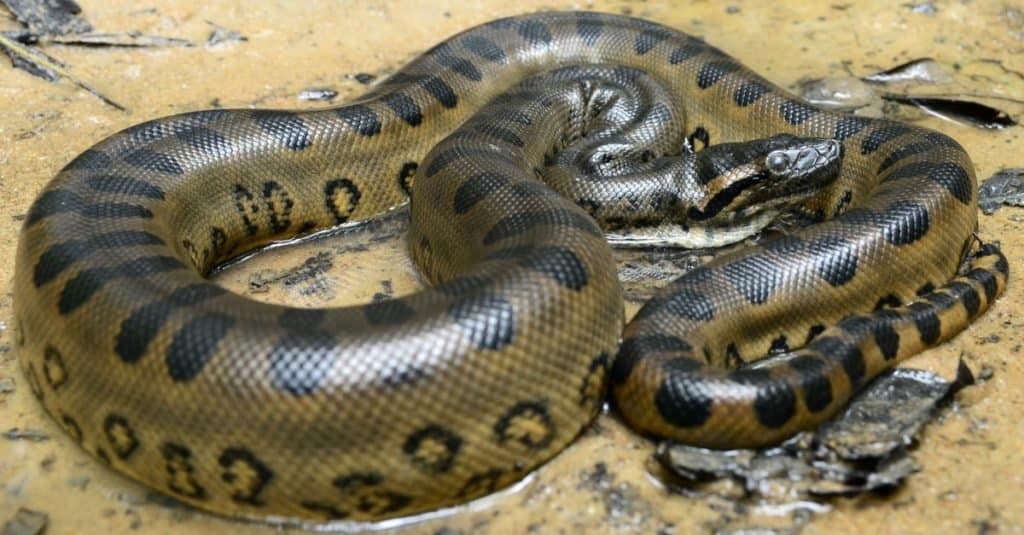
The Green Anaconda give birth to live young, that are about two feet long when they are born.
©Patrick K. Campbell/Shutterstock.com
The green anaconda is often considered the largest snake in the world by weight. While reticulated pythons can grow longer, green anacondas are famously massive, thick-bodied snakes that can weigh well over 100 pounds. They are native to South America and are closely associated with the Amazon Basin, wetlands, slow-moving rivers, and flooded forests.
Water is a major part of the green anaconda’s hunting strategy. These snakes are excellent swimmers and often ambush prey from beneath the surface. Their eyes and nostrils sit high on the head, allowing them to remain mostly hidden while watching for animals that come close to the water. This makes them especially dangerous to mammals and reptiles that come to drink, cross, or forage near rivers and swamps.
Because green anacondas are so heavy and aquatic, they can tackle large prey that many land-based snakes could not handle as easily. Their immense bodies allow them to overpower animals in the water, where prey may struggle to breathe, balance, or escape.
Green Anaconda Diet
Green anacondas eat tapirs, deer, capybaras, caimans, monkeys, birds, fish, and other animals that live near or enter the water. Capybaras are especially common prey because they share wetland habitats with anacondas. Caimans can also become prey, although attacking another reptile with strong jaws and armored skin is risky.
A large green anaconda does not need to eat frequently. Like other giant constrictors, it can survive for long periods between meals. When it does catch something large, the snake may spend days digesting in a hidden, sheltered location. Its metabolism allows it to make the most of a single large meal.
The green anaconda’s size, aquatic lifestyle, and ambush ability make it one of the most capable large-prey hunters among all snakes. In the water, few snakes are better built to overpower heavy mammals and reptiles.
Reticulated Python

©MarkLuk/Shutterstock.com
The reticulated python is widely considered the longest snake in the world. These snakes can reach lengths of more than 20 feet, with some exceptional individuals reportedly growing even longer. Native to South and Southeast Asia, reticulated pythons live in forests, wetlands, grasslands, and areas near human settlements.
Their length gives them enormous constricting power, and their range brings them into contact with many different prey animals. Reticulated pythons are strong swimmers and capable climbers, which allows them to hunt in several types of environments. They are also one of the snake species most often associated with extremely large meals.
Because they can live near villages, farms, and plantations, reticulated pythons sometimes encounter domestic animals and, in very rare cases, humans. These snakes are not constantly hunting large prey, but when a large individual finds the right opportunity, it can swallow an animal that seems almost impossible for a snake to consume.
Reticulated Python Diet
Reticulated pythons eat Indian civets, binturongs, monkeys, pigs, deer, birds, rodents, and other mammals. Their diet expands as they grow. Young reticulated pythons eat smaller prey, while large adults can take on pigs, deer, and other sizable animals.
One of the most striking reported meals involved a reticulated python consuming a sun bear. Sun bears are strong animals with claws and teeth, so this kind of prey would be extremely dangerous for a snake. Such cases are rare, but they demonstrate the outer limits of what giant constrictors may attempt.
The reticulated python’s reputation comes from its combination of length, strength, and bold feeding behavior. It is not the heaviest snake in the world, but it may be the most impressive when it comes to stretching across great lengths and swallowing large prey whole.
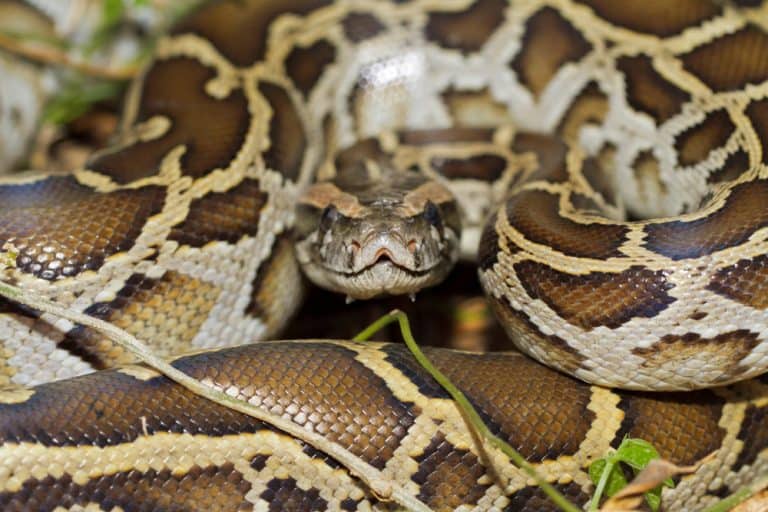
Burmese Python
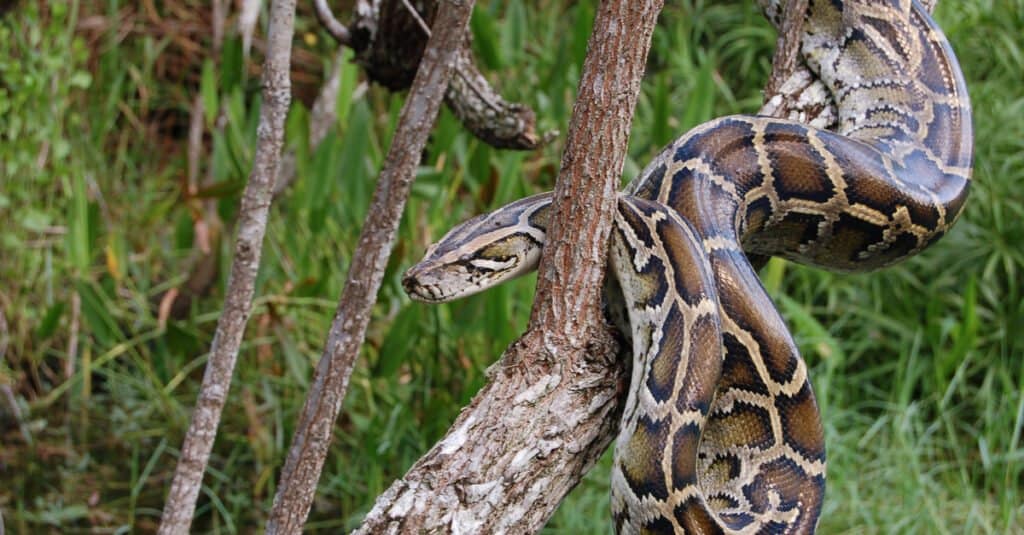
The exotic pet trade can be blamed for the invasion of the Burmese Python in the United States.
©Heiko Kiera/Shutterstock.com
The Burmese python is one of the largest snakes in the world and is native to parts of Southeast Asia, India, and Nepal. It has also become one of the most famous invasive species in the United States because of its established population in the Florida Everglades. In Florida, Burmese pythons have had a major effect on native wildlife populations.
These snakes are powerful constrictors that can thrive in wetlands, forests, grasslands, and marshy environments. Like other giant pythons, they are ambush predators. They wait for prey to come within striking distance, then grab it with sharp teeth and coil around it with tremendous force.
Burmese pythons are capable of eating surprisingly large animals. In their native range, they may prey on mammals, birds, and reptiles. In Florida, their diet has included many native species that were not adapted to deal with such a large invasive predator.
Burmese Python Diet
Burmese pythons eat foxes, rabbits, raccoons, pigs, goats, deer, birds, and alligators. In the Florida Everglades, researchers have found a wide variety of mammals inside Burmese pythons, including species that have declined sharply in some areas where the snakes are established.
One reason Burmese pythons are so successful is their ability to eat many different kinds of prey. They are not picky hunters. If an animal is the right size and comes within reach, a Burmese python may attempt to capture and swallow it. That flexibility makes them especially difficult to manage in places where they have become invasive.
Their ability to consume deer and alligators shows how far up the food chain these snakes can reach. While they are not the largest snakes by every measurement, Burmese pythons are among the most ecologically disruptive giant constrictors because of their broad diet and adaptability.
Indian Python
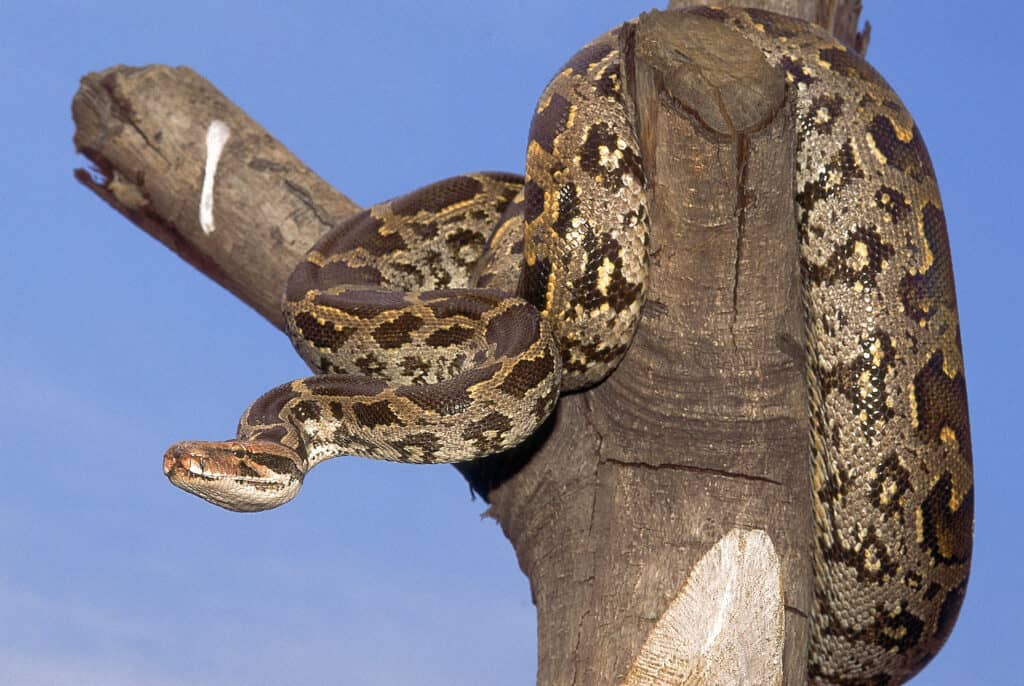
Indian Rock pythons are excellent climbers
©iStock.com/ephotocorp
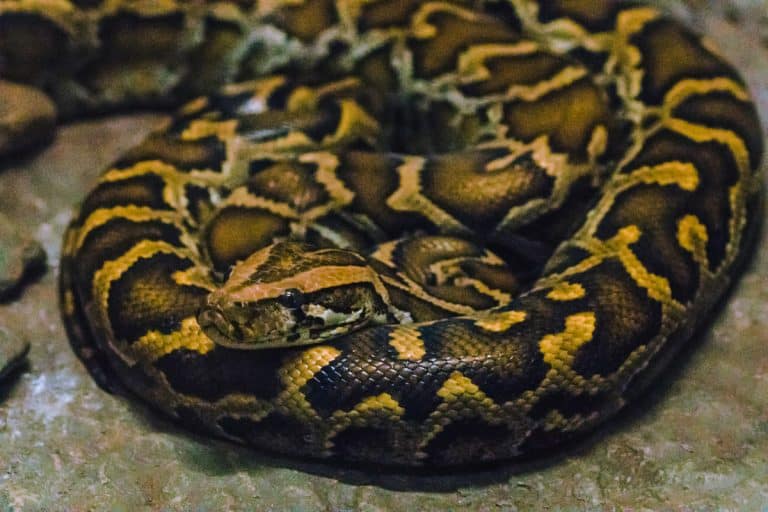
The Indian python is another large python species native to South Asia. It can be found in India, Nepal, Pakistan, Sri Lanka, Bhutan, and Bangladesh. These snakes live in a variety of habitats, including forests, grasslands, rocky areas, wetlands, and regions near water.
Although the Indian python is often overshadowed by the Burmese python and reticulated python, it is still a powerful constrictor capable of eating sizable prey. Like other pythons, it relies on stealth rather than speed. It waits for prey to come close, strikes, coils, and swallows the animal whole once it has been subdued.
Indian pythons play an important role in their ecosystems by controlling populations of small and medium-sized animals. Their size allows them to take larger meals than many snakes, although they are generally not as famous for record-breaking prey as African rock pythons or reticulated pythons.
Indian Python Diet
Indian pythons are known to eat small to medium-sized mammals, birds, and other reptiles. Their prey can include rodents, hares, birds, lizards, and other animals found in their habitat. Larger individuals are capable of swallowing more substantial prey when the opportunity arises.
Like other constrictors, Indian pythons do not need to eat every day. A single large meal can sustain them for a long time. After feeding, they often retreat to a secure place where they can digest without being disturbed.
The Indian python may not hold the most dramatic feeding record, but it still belongs among the major large-prey-eating snakes. Its flexible diet and powerful constriction make it a formidable predator across much of its range.
Amethystine Python
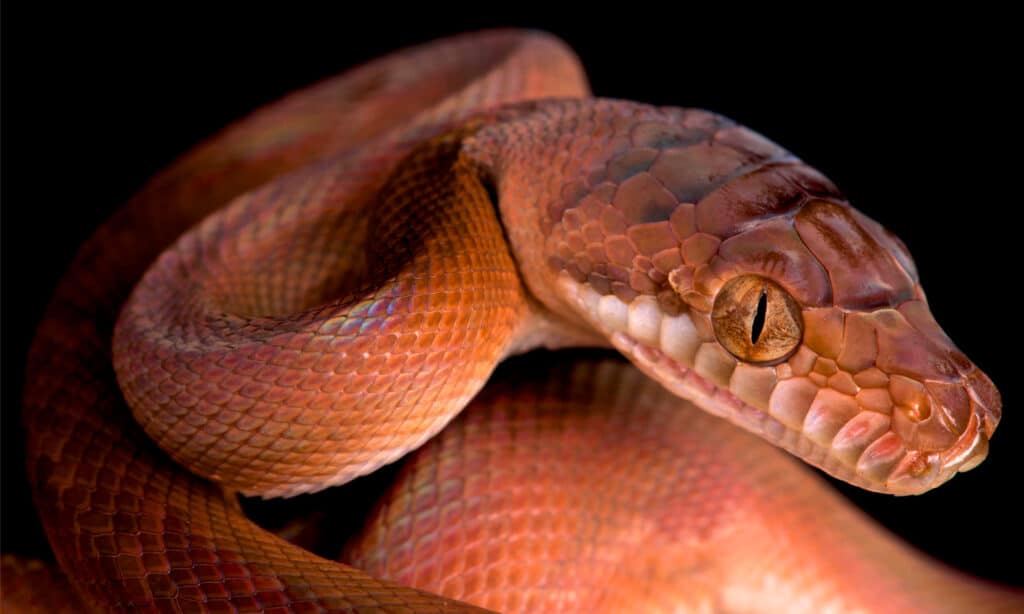
Amazon tree boa
©iStock.com/reptiles4all
The amethystine python, also known as the scrub python, is one of the largest snakes in the world by length and weight. It is native to Australia, Papua New Guinea, and nearby islands. These snakes can grow to impressive sizes and are known for their strength, climbing ability, and adaptability.
Amethystine pythons live in forests, woodlands, and areas near water, but they may also be found close to human settlements where prey is available. They are capable hunters on the ground and in trees, which gives them access to a wide range of animals. Their size allows them to take larger prey than most Australian snakes.
Like other giant constrictors, the amethystine python kills by wrapping around prey and squeezing. Once the animal is subdued, the snake swallows it whole. Its long, muscular body makes it one of the most impressive predators in its region.
Amethystine Python Diet
The amethystine python eats birds, bats, possums, wallabies, cuscus, small deer, rodents, and other mammals. Its diet depends on size and location. Smaller individuals focus on smaller prey, while large adults can take on animals that would be impossible for most snakes to swallow.
Because these pythons can climb well, they are capable of hunting animals in trees as well as on the ground. Birds, bats, and possums may be taken from elevated areas, while wallabies and other mammals may be ambushed closer to the forest floor.
The amethystine python is a reminder that giant snakes are not limited to Africa, Asia, or South America. Australia and New Guinea also have enormous constrictors capable of eating surprisingly large prey.
How Can Snakes Eat Animals That Are So Large?
Snakes can eat animals that seem impossibly large because their bodies are built very differently from mammals. They do not chew, tear, or cut food into pieces. Instead, they swallow prey whole. That sounds limiting, but snakes have evolved remarkable adaptations that allow them to stretch around animals much wider than their own heads.
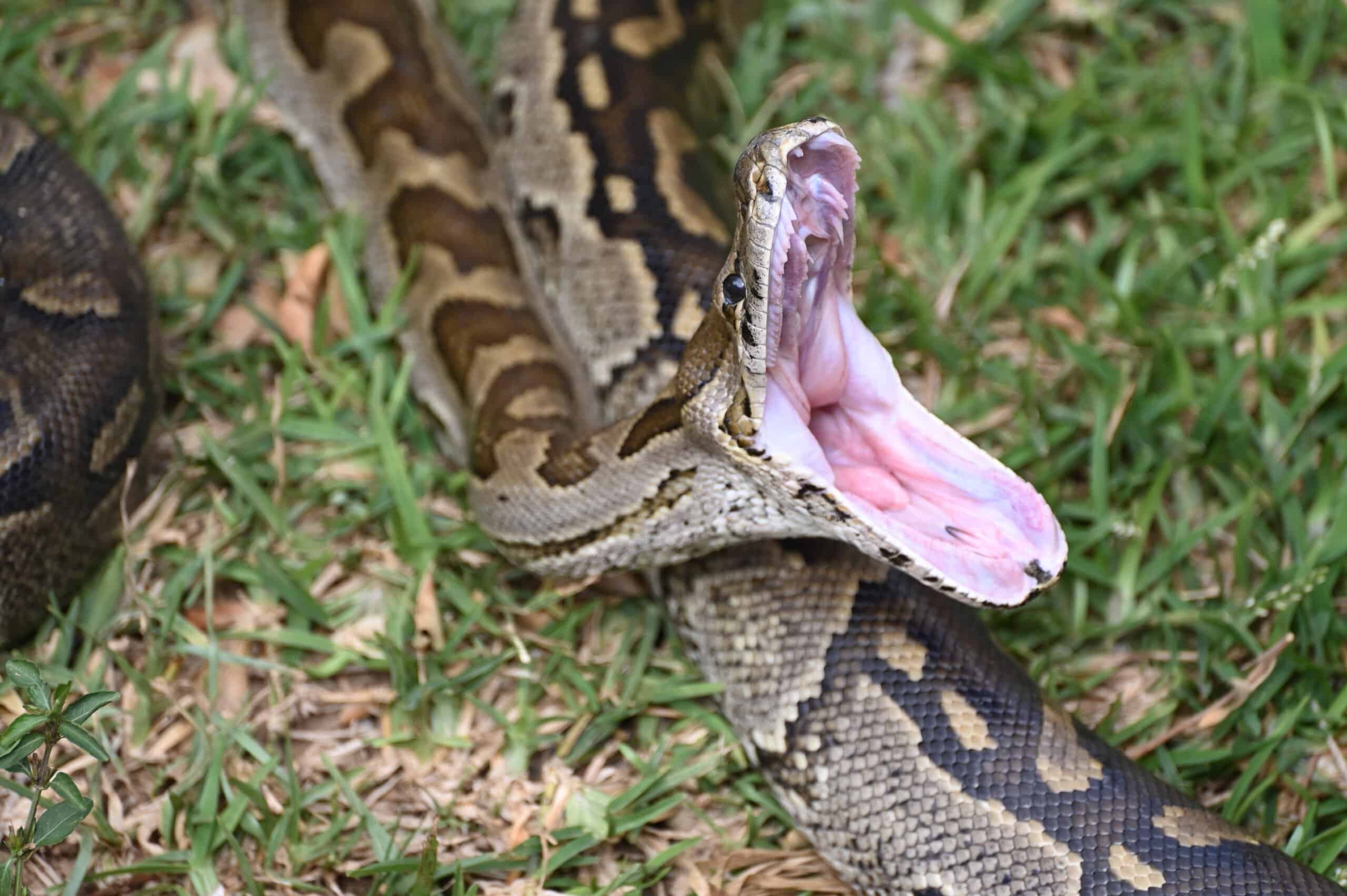
Much of this ability comes from a snake’s skull and jaw structure. A snake’s lower jaws are not fused together at the front like a human jaw. Instead, they are connected by flexible tissue that allows the two sides to spread apart. This gives the snake the ability to work its mouth over prey little by little, almost like walking its jaws forward.
Snakes also have extremely stretchy skin, flexible ligaments, and ribs that can expand around a large meal. Their bodies may look dramatically swollen after eating, but that expansion is part of the design. For a snake, swallowing a large animal is not a freak accident. It is a specialized feeding strategy developed over millions of years.
The primary traits that allow snakes to eat massive meals are their jaws, digestive system, and metabolism. Each part of the process matters. First, the snake must get its mouth around the prey. Then it must move the animal into its stomach. Finally, it must digest the meal slowly and efficiently.
Snake jaws are among the most unusual structures in the animal kingdom. Because the lower jaw is not fused, snakes gain flexibility that mammals do not have. They do not need jaw power for chewing because they do not chew at all. Instead, flexibility is far more important. Tendons, ligaments, and connective tissue allow the mouth to open far wider than a human mouth could.
Digestion
Once a snake gets its prey into its stomach, digestion begins in an intense and highly efficient way. The snake’s digestive system shifts into overdrive, producing powerful acids and enzymes that break down flesh, organs, and bones. A large meal may look impossible from the outside, but internally the snake is built to handle it.
As digestion begins, a snake’s internal organs can change activity levels dramatically. The heart, liver, intestines, and other organs may become much more active to process the sudden flood of nutrients. At the same time, the snake must remain relatively still because moving with a huge meal inside its body can be difficult and dangerous.
Snake digestion is powerful enough to break down most of an animal, including muscle, organs, and many bones. However, some materials are harder to digest. Fur, hooves, claws, feathers, and certain other remains may pass through or be regurgitated, depending on the species and the meal.
The larger the prey, the longer digestion takes. A snake that swallows a very large animal may need days or weeks before it can move normally again. During this time, it is vulnerable to predators, injury, and disturbance. That is why snakes often hide after eating.
Metabolism
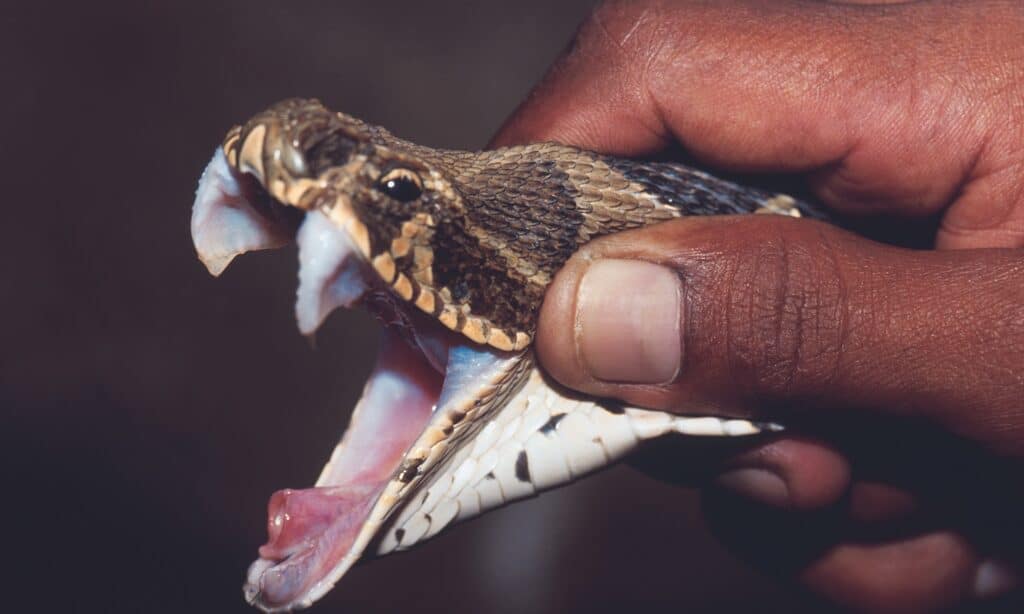
Russell’s Viper displaying erect fangs. These fangs are enclosed in a protective mucous sheath, and are kept folded at rest.
©iStock.com/ePhotocorp
Snakes can survive on huge meals because they have slow metabolisms compared with warm-blooded animals. As cold-blooded reptiles, they do not need to burn energy constantly to maintain a stable body temperature. This means they can go much longer between meals than mammals or birds of similar size.
After eating a massive animal, a snake may retreat to a safe, warm place and remain there for an extended period. Some snakes may digest for days, while others may take weeks after an especially large meal. If the meal is enormous, the snake may rest for close to a month while its body slowly breaks down the prey.
This slow metabolism is one reason snakes can take such dramatic feeding risks. A meal that looks absurdly large may provide enough energy to sustain the snake for a long time. For giant constrictors, one successful hunt can make it unnecessary to feed again for weeks or even months.
That combination of flexible jaws, expandable bodies, powerful digestion, and slow metabolism is what makes snakes such extraordinary predators. They do not need to eat often, but when they do, the results can be shocking. From deer and pigs to crocodiles and hyenas, the largest snakes on Earth prove that “too big to swallow” does not always apply in the wild.