
Quick Take
- Boas rely heavily on effective visual concealment to maintain high ambush success rates in the Amazon.
- Bright coloration actually functions as the ultimate camouflage in rainforest environments.
- The boa constrictor lives primarily in Central America.
The genus Boa includes species such as the boa constrictor, found throughout much of South America, and the boa imperator, primarily native to Central America and the northernmost regions of South America. While no exact number has been documented, experts estimate that thousands of snakes thrive in the region’s lush climates. Despite their abundance, many visitors often wonder why boa sightings are so rare.
Their elusive nature is by design, particularly when it comes to hunting. As ambush predators, they don’t reveal their location until it’s time to go in for a kill. However, boas have a few other adaptations that help keep them well-hidden from prying eyes.
The Elusive Nature of the South American Boa
For centuries, evidence of boas in an area was typically limited to occasional sightings or the remains of their prey. While extremely rare and almost exclusively involving captive or pet boas, there have been occasional reports of large boas attacking humans. They’re sneaky by nature and are practically imperceptible once they’ve found a hiding spot. Boas hunt by ambushing, meaning they remain concealed and wait for prey to come within striking distance. Once this happens, the animal has a slim chance of escaping, let alone evading the attack.
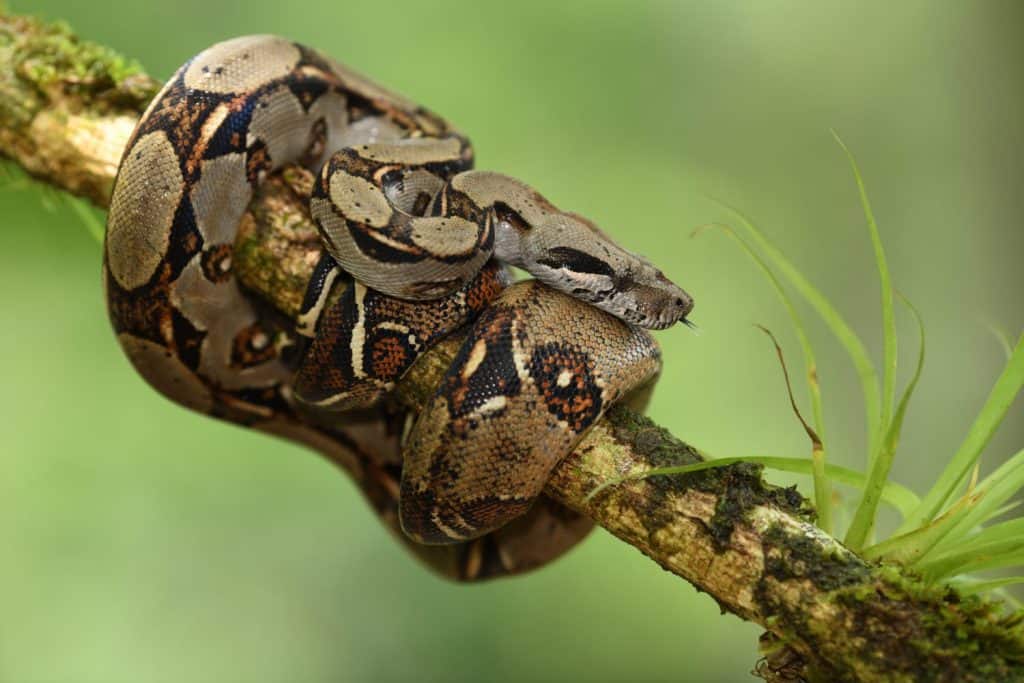
Boas lie in wait for the chance to strike.
©petrdd/Shutterstock.com
Boas use their forked tongue and Jacobson’s organ to detect chemical cues from prey. Some species also have heat-sensing pits to help locate warm-blooded animals. Their strike is extremely fast, typically occurring in less than a second, allowing them to hit an unsuspecting animal with lightning speed. Once prey is locked within their powerful jaws, boas begin to coil and constrict. Scientists theorize that the snakes can sense their prey’s heartbeat and adjust the pressure enough to lower the prey’s blood pressure, ultimately causing organ failure. In short, these are not the type of snakes most visitors would want to run into. However, their hunting style is part of what keeps them so well hidden. Without the element of surprise, they would fail to lock onto their prey.
Careful Camouflage Keeps Boas Hidden
South American boas are found in Brazil, Colombia, Ecuador, Venezuela, Bolivia, Guyana, French Guiana, Suriname, Peru, Paraguay, Trinidad and Tobago, and northern Argentina. Many of these countries contain dense tropical rainforests, though boas can also be found in dry forests, savannas, and other habitats, depending on the region. This environment is ideal for a snake that relies on blending in to ambush its prey. A boa’s coloring depends on its species and location; while most are a blend of dark brown, tan, and cream, some are neon green or yellow.
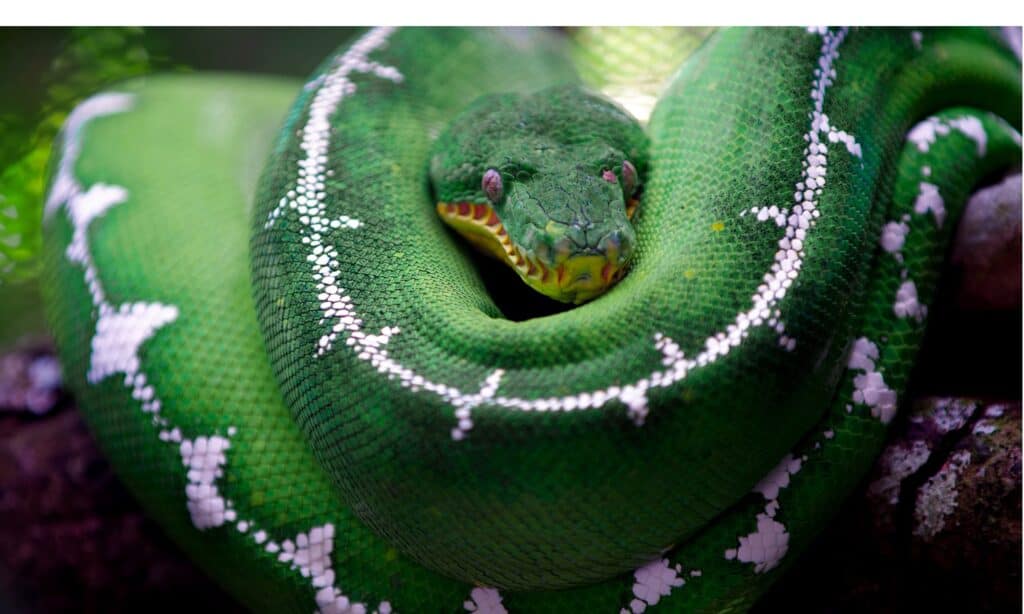
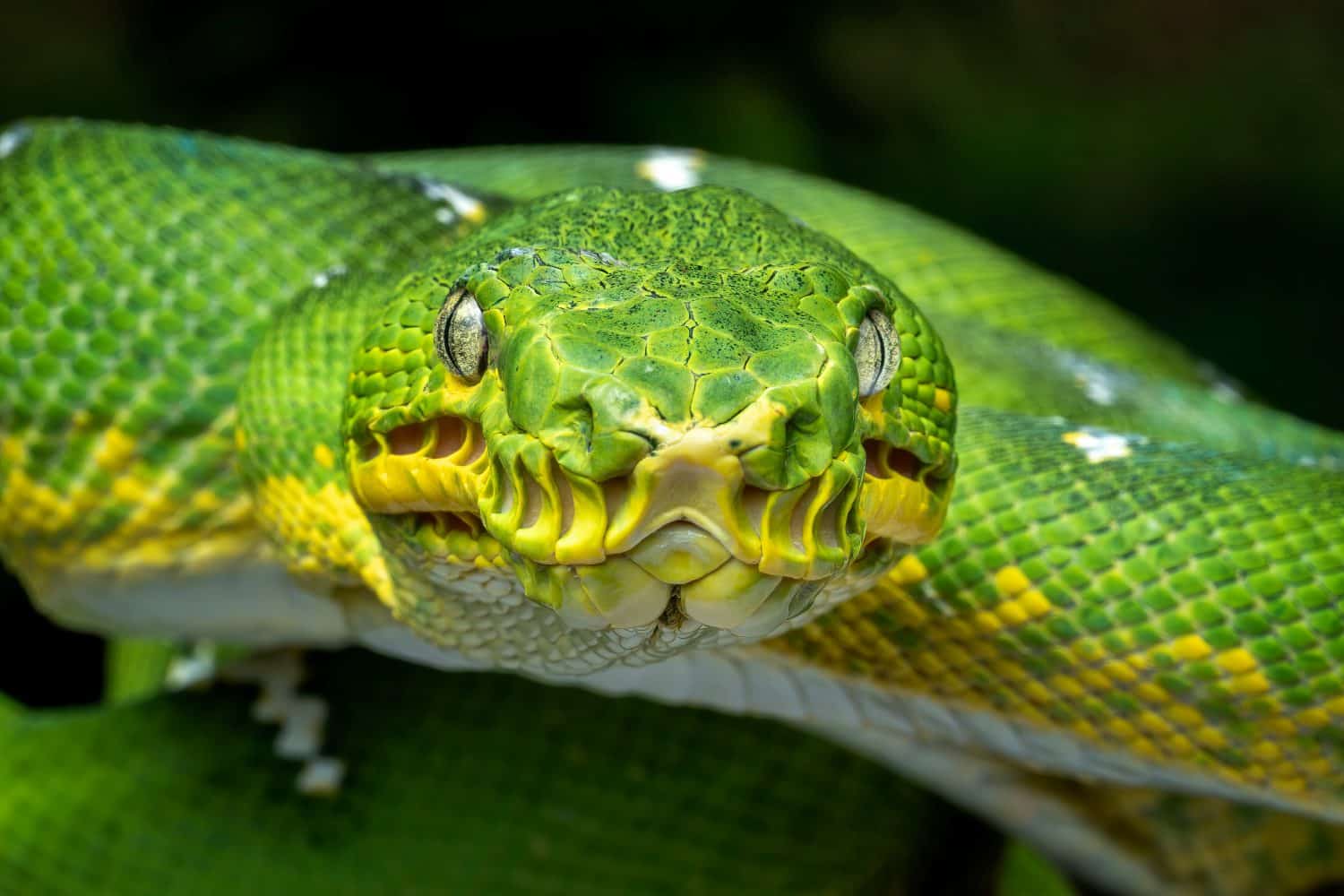
Amazon Basin emerald tree boas have a full dorsal line and are a darker green.
©iStock.com/Фадеев Олег
For example, the red-tailed boa is native to the dry woodlands and forests of Central and South America. Its coloring helps it blend into arid landscapes, typically among dirt, tree bark, and dry underbrush. They are typically ground hunters and wait outside burrows and at the edges of trails to ambush their prey.
In contrast, the emerald tree boa, native to rainforests throughout South America, spends most of its time in trees. It hunts from the canopy, ambushing prey by snatching it out of the air once it gets close. These arboreal snakes are bright green, helping them blend in with the surrounding foliage. It’s unlikely you would spot either of these species before it was too late, thanks to their exceptional camouflage.