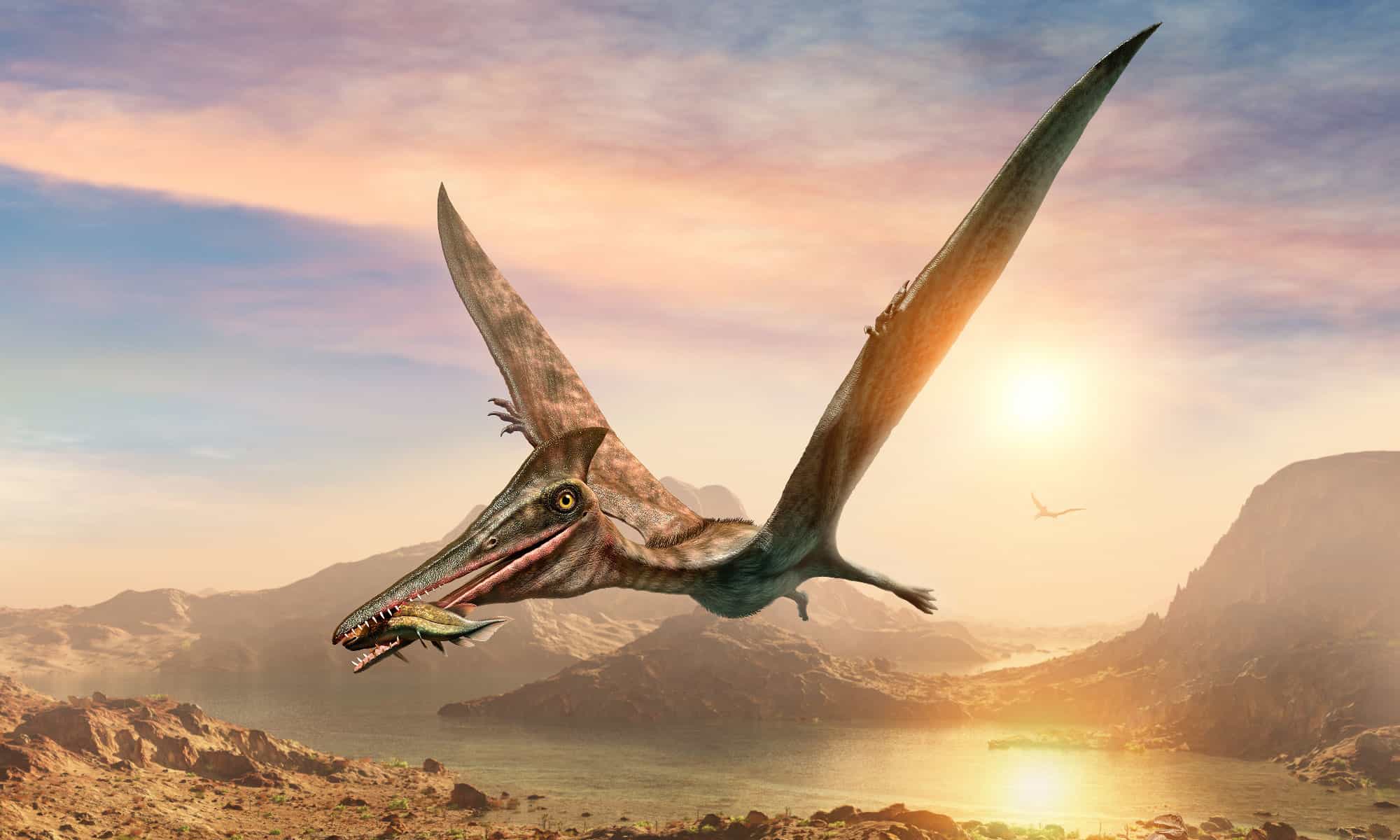

When we think of flying dinosaurs, most of us probably picture pterodactyls. However, even with a 5-foot wingspan, like some of our modern vultures, pterodactyls are up to seven times smaller than the largest flying reptiles. These reptiles are known as pterosaurs. They are generally measured by wingspan, which can be directly measured from complete fossil evidence or estimated by the size of specific bones. Keep reading to learn about the largest flying pterosaurs ever to exist on Earth.
Pterosaur vs. Dinosaur
Dinosaurs and pterosaurs are distinct groups of animals that share a common ancestor.
©iStock.com/Orla
The largest flying animals to ever exist are pterosaurs, but pterosaurs are not dinosaurs. Pterosaurs are flying reptiles that share a common ancestor with dinosaurs. Both pterosaurs and dinosaurs belong to the archosaur clade, which also includes crocodiles and birds.
These massive, winged reptiles evolved and lived during the Mesozoic Era (circa 252-66 million years ago) alongside dinosaurs. The earliest pterosaurs on record occurred during the Late Triassic Period (237-201 million years ago). The largest pterosaurs belong to the Azhdarchidae family, characterized by large skulls with elaborate cranial crests, long necks, short, stout bodies, and toothless jaws.
Paleontologists have discovered flying dinosaurs, such as Archaeopteryx and Anchiornis. However, they were much smaller than the pterosaurs on our list and did not appear until the Late Jurassic Period, around 165 to 150 million years ago.
Pterosaur Flight
From the fossil evidence, scientists have determined that pterosaurs had hollow bones, which made these animals lightweight enough to fly. Although they could walk on land, their wings were so long that they touched the ground. Pterosaurs are believed to have used their powerful legs to launch into the air, flapping their wings once they had enough ground clearance.
Although evolving gigantic wings was ideal for soaring, their wings would have been difficult to control in the high winds that are thought to have characterized the Late Cretaceous. Such conditions could have grounded them and may have played a role in their extinction. Read on to discover just how large the wingspans of these massive flying reptiles actually were.
5. Thanatosdrakon
| Scientific Name | Time Frame | Wingspan |
|---|---|---|
| Thanatosdrakon amaru | Between 89.6-86.3 million years ago | Estimates suggest up to 30 feet |
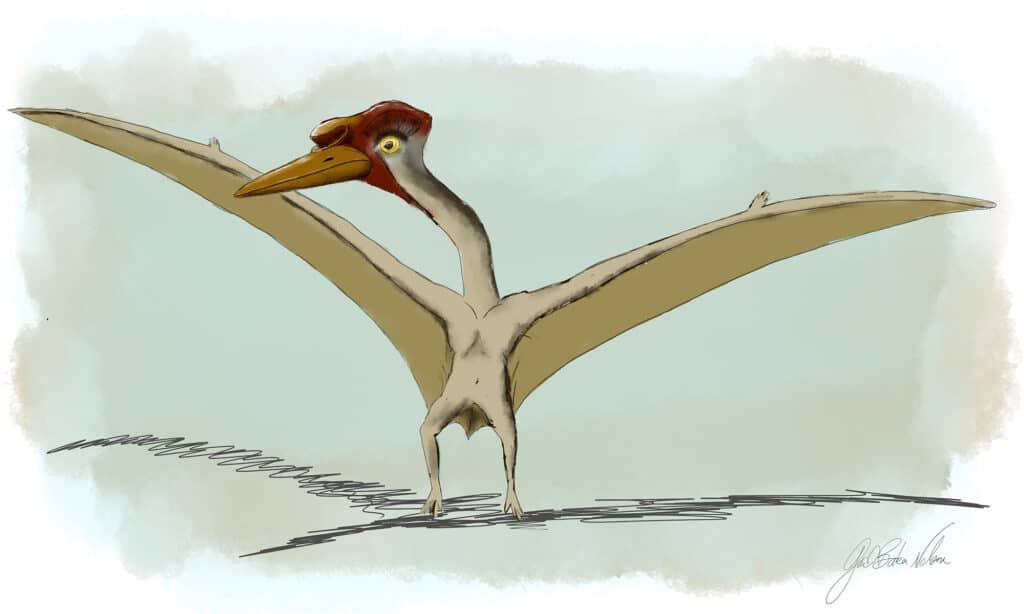
Thanatosdrakon, which means “dragon of death,” is estimated to have had a wingspan of up to 30 feet. Researchers unearthed two specimens of different sizes, one with a wingspan of around 23 feet and one around 30 feet. The smaller specimen is thought to have been a juvenile, indicating the larger specimen better represents the size of a mature animal. Thanatosdrakon lived during the Coniacian and Santonian ages of the Late Cretaceous, between 89.6-86.3 million years ago, in what is now central Argentina. To date, it is the largest known reptile to have ever flown in South American skies.
4. Cryodrakon
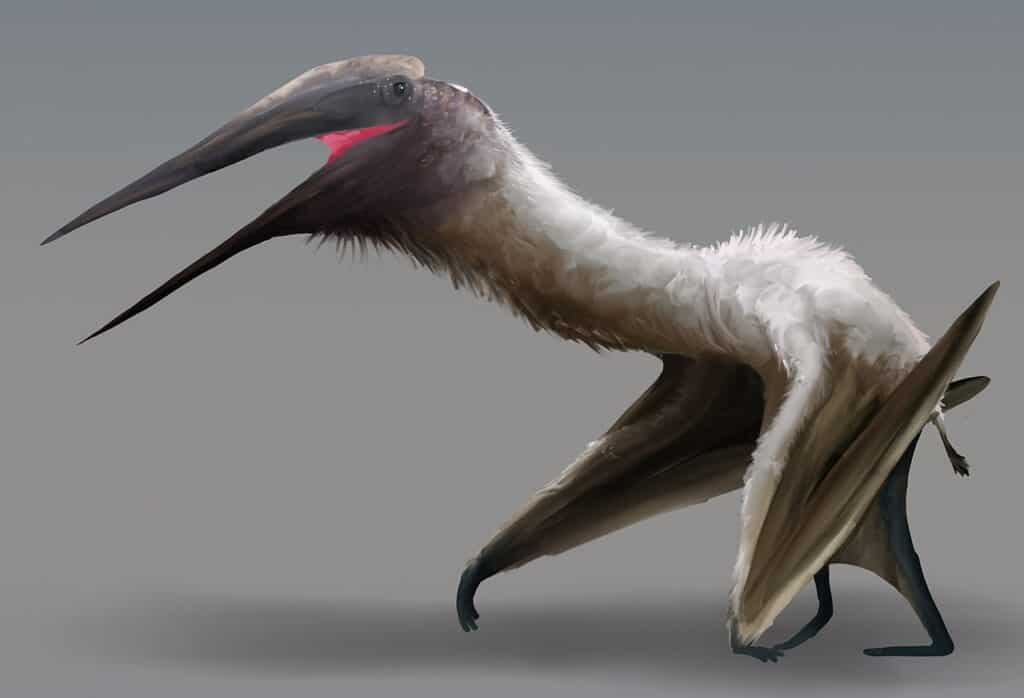
The Cryodrakon lived in what is now Canada.
| Scientific Name | Time Frame | Wingspan |
|---|---|---|
| Cryodrakon boreas | 77 million years ago | Estimates suggest up to 33 feet |
Fossils of the Cryodrakon boreas, or “cold dragon,” were found in what is now Alberta, Canada. Previously, the reference fossil was for a young animal with a 16-foot wingspan. However, researchers discovered part of a neck vertebra that was comparable to the larger cervical vertebra of another large pterosaur, Quetzalcoatlus northopi. So scientists were able to estimate that Cryodrakon likely had a wingspan of up to 33 feet. The Cryodrakon lived during the Campanian age of the Late Cretaceous, approximately 77 million years ago.
3. Arambourgiania
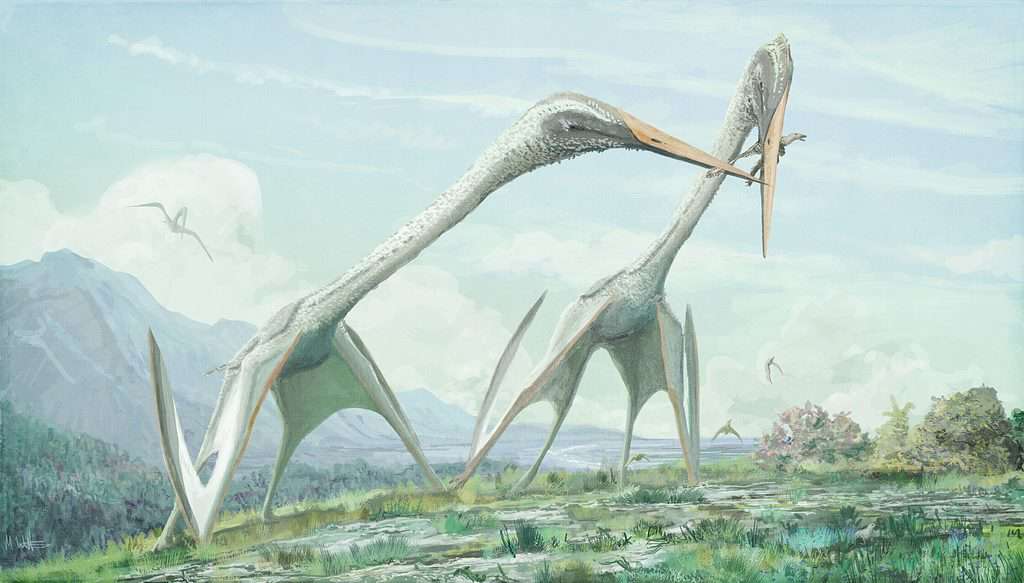
Fossils of the Arambourgiania philadelphiae were found in Jordan in the 1940s.
| Scientific Name | Time Frame | Wingspan |
|---|---|---|
| Arambourgiania philadelphiae | 72-66 million years ago | Estimates suggest up to 33 feet |
Arambourgiania philadelphiae, named for paleontologist Camille Arambourg, is primarily known from one long, cervical vertebra and the bones of a wing phalanx. However, researchers have been able to compare the bones with specimens of other large pterosaurs. Current estimates suggest the animal had a wingspan of up to 33 feet. It is believed to have lived in Jordan during the Maastrichtian age of the Late Cretaceous between 72-66 million years ago. Specimens tentatively identified as Arambourgiania philadelphiae have also been found in Morocco and the U.S.
2. Hatzegopteryx
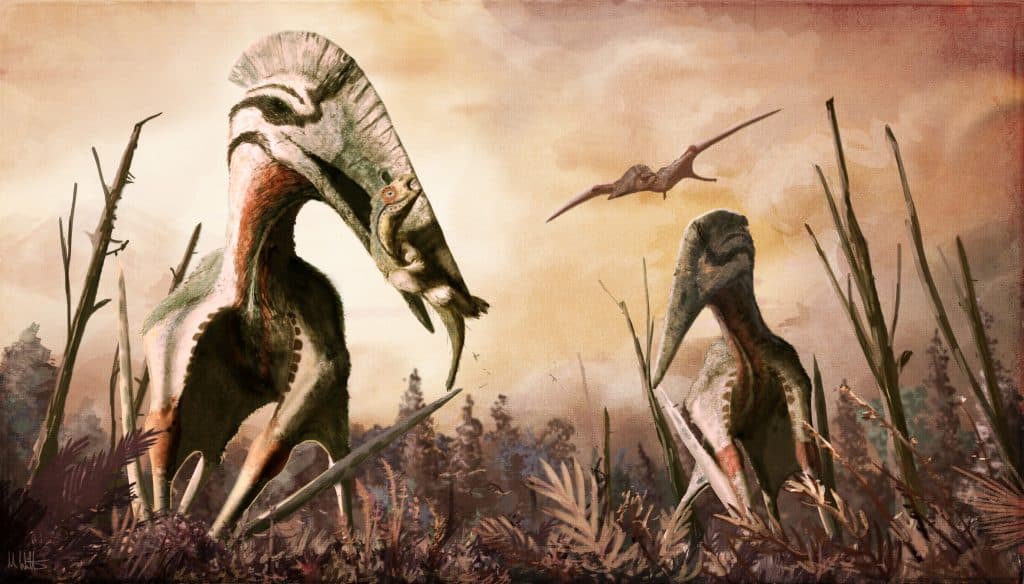
The Hatzegopteryx was discovered in Transylvania, which is in the country of Romania.
| Scientific Name | Time Frame | Wingspan |
|---|---|---|
| Hatzegopteryx thambema | 70.6-66 million years ago | Estimates suggest 33-36 feet |
Hatzegopteryx thambema, which means “Hațeg basin wing,” was found in what is now Transylvania in western Romania. By comparing its bones to those of other large pterosaurs, researchers determined that Hatzegopteryx had a wingspan of up to 36 feet. Scientists also believe that it had a shorter, stockier neck, suggesting there was greater diversity among Azhdarchidae than previously believed. Hatzegopteryx lived during the Maastrichtian period of the Late Cretaceous between 70.6-66 million years ago.
1. Quetzalcoatlus
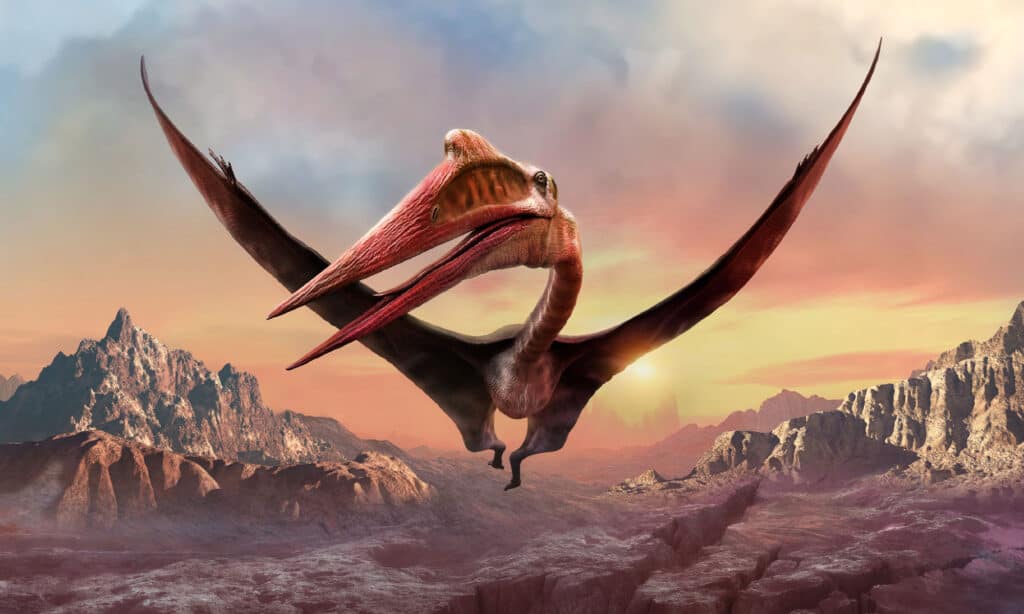
Named for a Mesoamerican deity, Quetzalcoatlus is currently believed to be the largest flying animal to ever exist.
©iStock.com/Warpaintcobra
| Scientific Name | Time Period | Wingspan |
|---|---|---|
| Quetzalcoatlus northopi | 68-66 million years ago | Estimates indicate 33-36 feet |
Quetzalcoatlus northopi was named for the Mesoamerican deity, Quetzalcoatl, which means “feathered serpent” in Nahuatl. Quetzalcoatlus holds the record for the largest flying animal to ever exist. While there have been some challenges to this record, the challengers have even fewer, and often more fragmentary, remains. Numerous remains have been found for Quetzalcoatlus, so scientists can more accurately reconstruct the animal’s proportions.
Quetzalcoatlus has an estimated wingspan of up to 36 feet, which is wider than an F-16 fighter aircraft. Its weight is estimated to have been as much as 550 pounds. This pterosaur had a neck that measured around 6 feet long with a 4-foot crested skull that has been compared to a stork’s. These animals lived during the Maastrichtian age of the Late Cretaceous, 68-66 million years ago. They inhabited what is now North America, specifically the region that includes Texas and New Mexico.