
Quick Take
- Although it is extinct, the California grizzly bear remains the state’s official land mammal
- The California red-legged frog is considered a threatened species under the U.S. Endangered Species Act.
- California has an official freshwater fish and an official marine (saltwater) fish.
California, the Golden State, is home to a diverse range of animal life, so it is no surprise that the state has designated 16 official animals to represent its unique identity. Official state animals are species or breeds recognized and designated by a government or state for their cultural, economic, historical, or ecological significance. Continue reading to discover the 16 official state animals of California and learn why they were chosen to represent the state.
Bird: California Quail
Also called the California Valley Quail, the California Quail (Callipepla californica) is known for its resourcefulness and makes its home in open areas throughout the state, particularly along the coast.
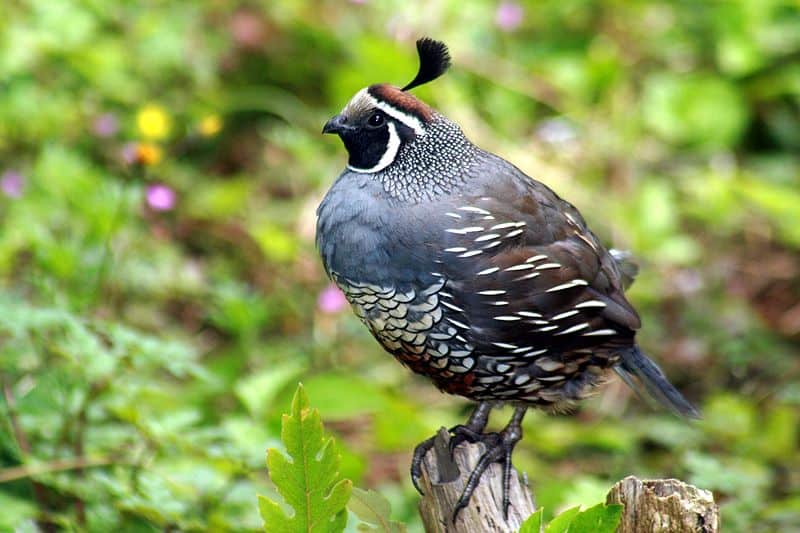
The California quail is a plump bird with a round head and a short plume
©Brocken Inaglory / Creative Commons – Original
This intriguing bird caught the attention of the Audubon Society, which nominated it as the official state bird. In 1931, the law was passed, and officials declared the California Quail as the state bird of California.
California quail average 10 inches long, with a wingspan of up to 14 inches. They are social birds that live in family groups. California quail are omnivores that eat seeds and insects.
California quail build their nests on the ground, typically in shallow, concealed, bowl-shaped depressions lined with grass, leaves, and feathers.
Freshwater Fish: Golden Trout
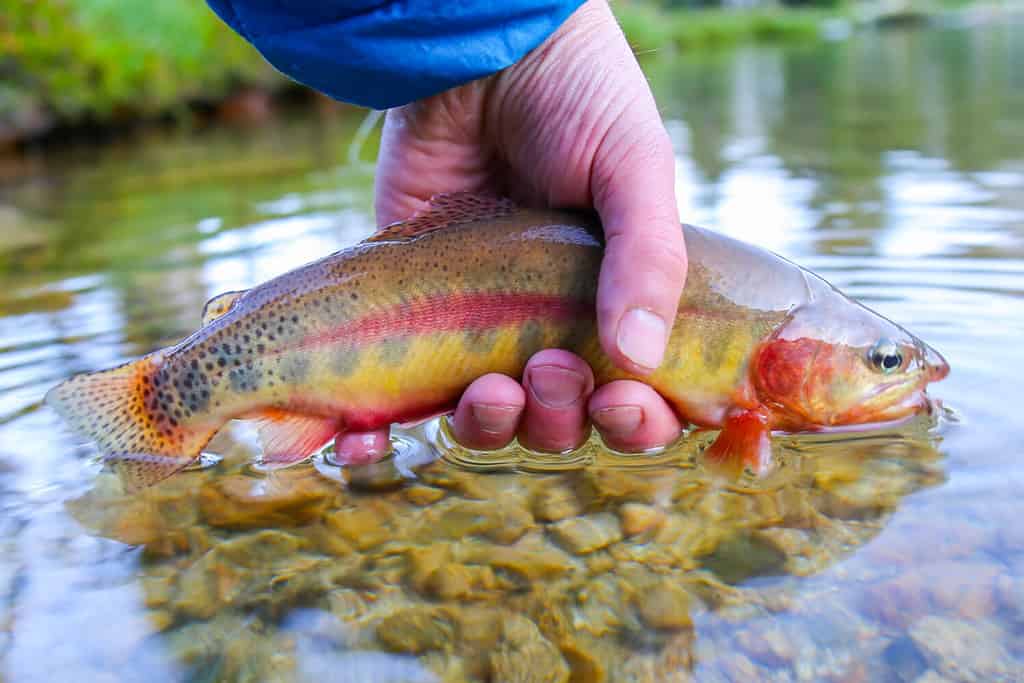
The golden trout is iridescent golden-yellow to reddish in color on the side with an olive-green back
©CSNafzger/Shutterstock.com
Due to its stunning appearance and exclusive native status, officials named the golden trout (Oncorhynchus aguabonita) California’s official freshwater fish in 1947.
Golden trout are iridescent golden-yellow to reddish on the sides, with an olive-green back, small round spots on their upper bodies, and a white or orange-tipped dorsal fin.
They are native to the high-altitude, cold-water streams of California’s Sierra Nevada mountains that feed on insects, small crustaceans, and smaller fish.
Land Mammal: California Grizzly Bear
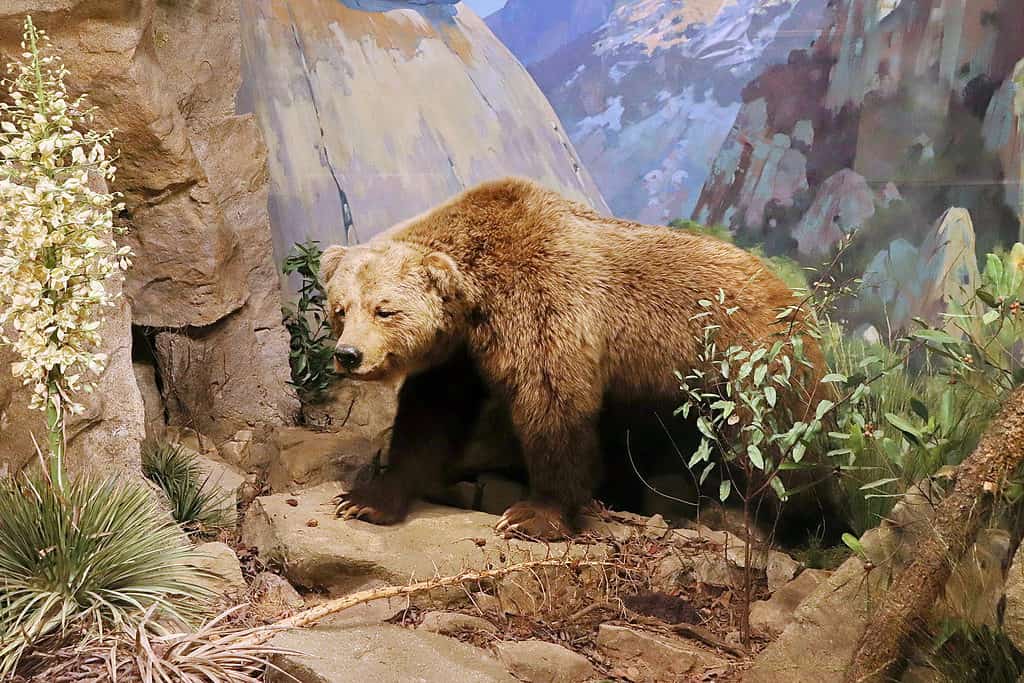
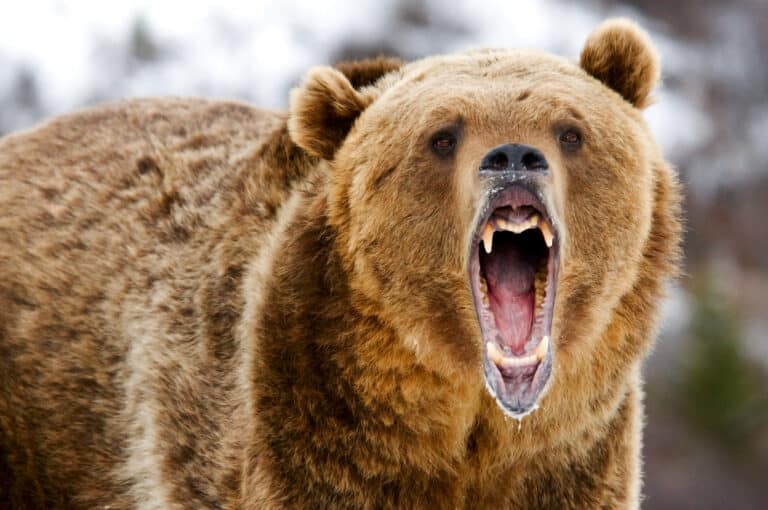
This bear was named the state mammal of California in 1953 because it is a historical symbol of the state.
©Vahe Martirosyan, CC BY-SA 2.0 <https://creativecommons.org/licenses/by-sa/2.0>, via Wikimedia Commons – Original / License
The California grizzly bear (Ursus arctos californicus) s a subspecies of the brown bear that is now extinct. The California grizzly bear was named the state mammal of California in 1953 because it once was a common and iconic species in the state. However, it was hunted to extinction. It represents the state’s natural heritage and history.
The California grizzly bear is the state’s official land mammal, despite being extinct since the 1920s. Interestingly, California is the only state in the United States to feature an extinct animal on its state flag and seal.
Insect: California Dogface Butterfly
The California dogface butterfly (Zerene eurydice), also called the dog-head butterfly, was officially named the state insect of California in 1972. This species is native only to California and inhabits specific regions between the Sierra Nevada and Coast Ranges from North-Central California to Baja California.
Dogface butterflies have orange and black wings, with wingspans of 2 to 2.5 inches.
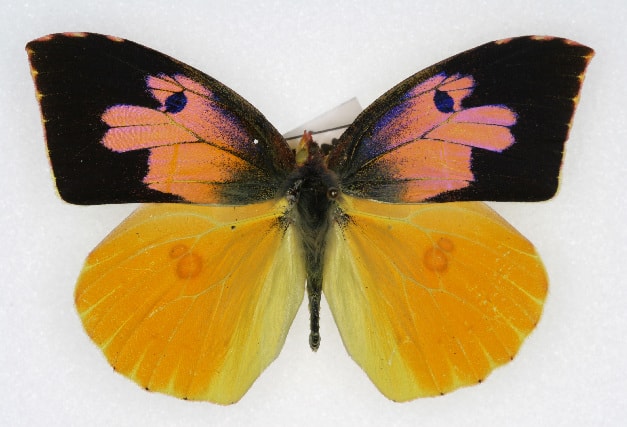
The California dogface butterfly gets its name from its distinctive shape resembling a dog’s face on the male’s forewings.
©Colorado State University, CC BY 3.0, via Wikimedia Commons – Original / License
California dogface butterflies are native to Central California and feed on nectar from wildflowers, mustard, and clover. They lay their eggs on False Indigo (Amorpha californica) as their larval host plant.
Reptile: Desert Tortoise
The desert tortoise (Gopherus agassizii) inhabits deserts throughout Northwestern Mexico and the Southwestern United States, including California.
The desert tortoise’s carapace (shell) is high-domed, thick, and brown, olive, or horn-colored, often featuring prominent growth rings on its scutes (shields). Mature desert tortoises are 9–15 inches in length, stand 4–6 inches high, and weigh 8–15 pounds.
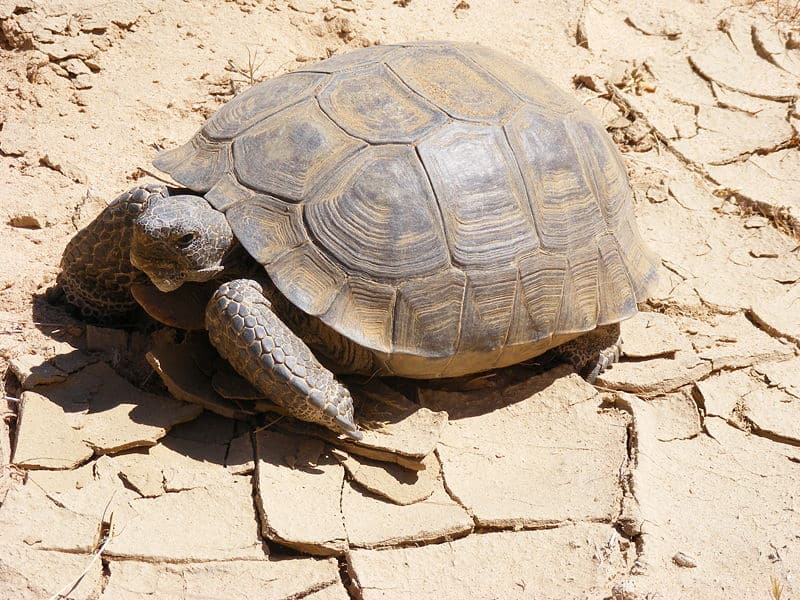
This tortoise played a significant role in implementing the California Desert Protection Act of 1994.
The desert tortoise is a solitary species that lives in underground burrows, which allows the species to remain cool even in the hottest conditions. The desert tortoise has a lifespan of up to 80 years.
Its endangered status has earned it protection under the law and has played a significant role in implementing the California Desert Protection Act of 1994. This species has been the State Reptile of California since 1972.
Marine Reptile: Leatherback Sea Turtle
The leatherback sea turtle (Dermochelys coriacea) also known as the lute turtle, was designated the state marine reptile of California in 1972 to raise awareness about the conservation of the species and to promote the protection of its habitats.
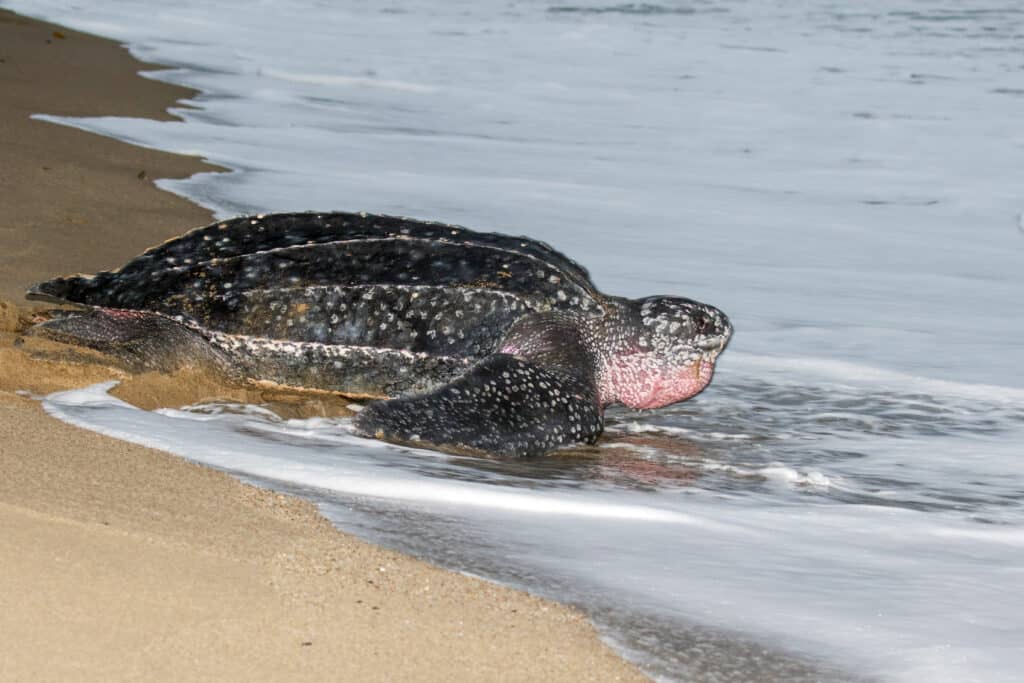
Leatherback sea turtles can dive to depths of nearly 4000 feet.
©iStock.com/AGAMI stock
The Leatherback, the largest sea turtle, can be 6 feet long and weigh up to 1,550 pounds. They are dark gray or black with a white or pink plastron (underside). These giant sea turtles feed primarily on jellyfish. They migrate long distances between their feeding and breeding grounds.
Fossil: Saber-toothed Cat
The saber-toothed cat (Smilodon californicus) was officially designated as the California state fossil in 1973. It was chosen due to the abundance of its fossils in the La Brea Tar Pits in Los Angeles.
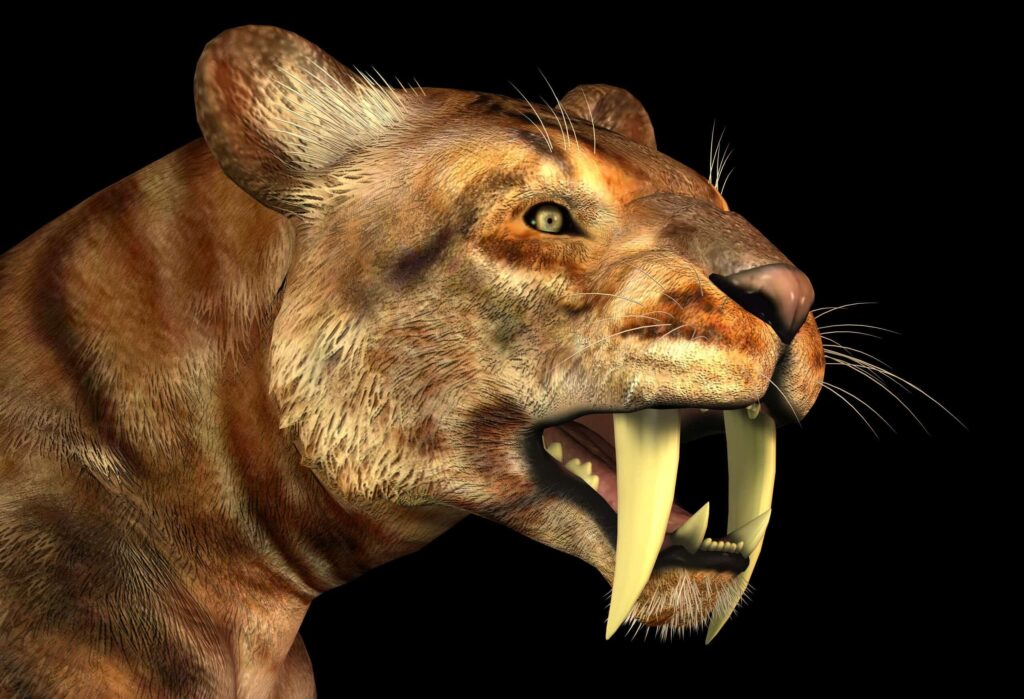
The Saber-tooth Cat also called Smilodon was a large predator that lived during the Pleistocene epoch in North and South America.
©iStock.com/CoreyFord
These predators roamed in California during the Pleistocene epoch and went extinct roughly 11,000 to 10,000 years ago. Saber-toothed cats became extinct as a result of climate change and the loss of their primary food source. As megafauna like mammoths and ground sloths vanished, these specialized, heavy-bodied predators could not adapt to hunting smaller, faster prey.
Marine Mammal: Gray Whale
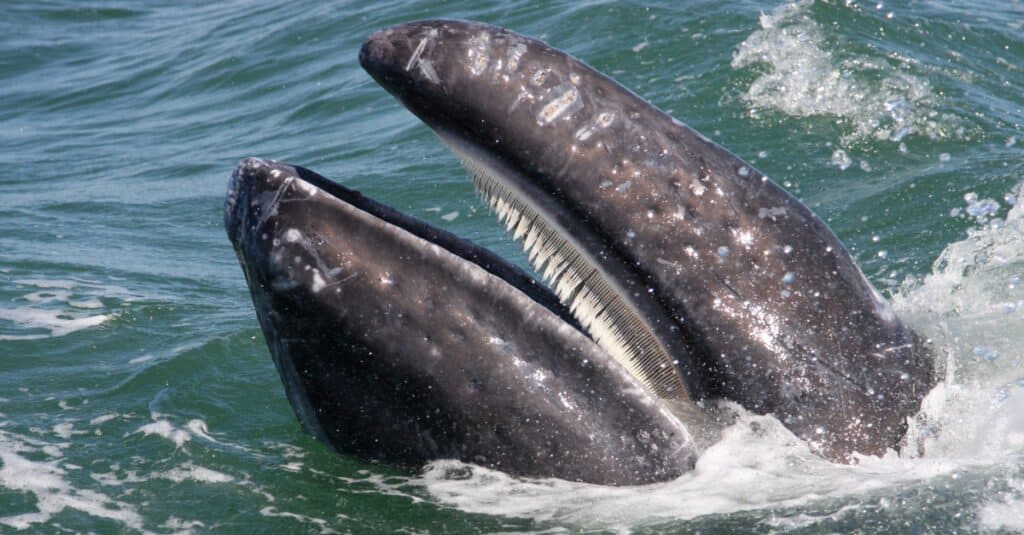
Gray whales live in social groups called pods.
©jo Crebbin/Shutterstock.com
The gray whale (Eschrichtius robustus) was designated the state marine mammal of California in 1975. Gray whales were hunted in California waters in the 19th century, and their populations declined drastically. However, they have since made a strong recovery and are now a common sight along the California coast during their annual migration. The best time to witness the gray whale migration along the California coast is from January to March.
The gray whale is a large, 40–50-foot-long baleen whale, with a mottled, slate-gray body heavily encrusted with white barnacles. Gray whales are filter-feeders whose diet consists of massive quantities of small, bottom-dwelling invertebrates, specifically amphipod crustaceans, from the seafloor.
Marine Fish: Garibaldi
In 1995, the California Legislature banned the commercial collection of Garibaldi (Hypsypops rubicundus), commonly called the Catalina goldfish. The ban aimed to protect the species from population depletion caused by high demand in the aquarium trade, while also designating the species as the official state marine fish.
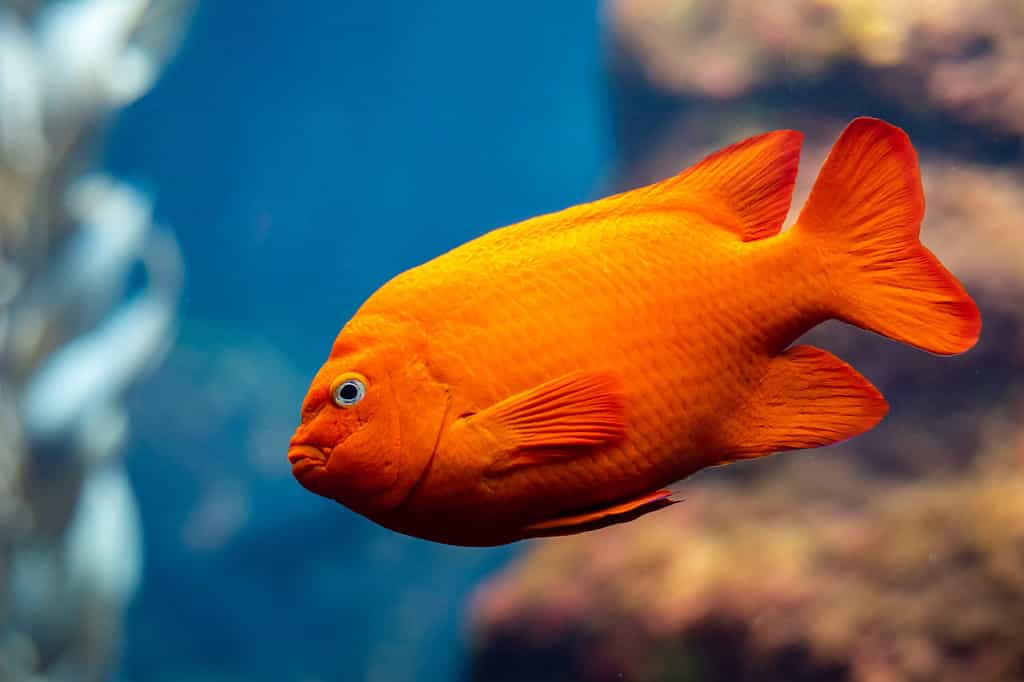
The Garibaldi is commonly called the Catalina goldfish.
©David A Litman/Shutterstock.com
The Garibaldi represents California’s abundant and diverse marine life and serves as a reminder to raise awareness and preserve its species and habitat.
Garibaldi are bright orange with round, disc-shaped bodies that average 12 to 14 inches long. They typically live near the shores of Southern and Central California. They are territorial, bottom-dwellers that feed on invertebrates and algae.
Amphibian: California Red-legged Frog
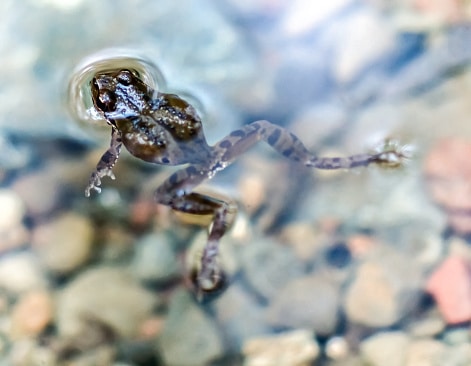
Mark Twain made the California red-legged frog famous in his short story, “The Celebrated Jumping Frog of Calaveras County.”
©yhelfman/ via Getty Images
The California red-legged frog (Rana draytonii) lives along the central coast and in the San Francisco Bay area. However, due to factors such as habitat destruction, the introduction of non-native species, and water pollution, this frog is now considered threatened. Conservation efforts are underway to preserve this species and protect its remaining habitats. In 2014, it officially became the state amphibian of California.
Red-legged frogs are medium-sized frogs that are about 5 inches long, with bright red legs and underbellies. Their dorsal (top) side is typically tan, brown, olive-brown, or reddish-brown, often with small black spots or speckled blotches.
Red-legged frogs live near streams, ponds, and marshes. They are nocturnal animals that feed on insects and other small invertebrates.
Pet: Shelter Pet
The shelter pet was officially recognized as the California State Pet in 2015. The resolution was passed to draw attention to the over 800,000 animals taken into shelters annually in California, and was followed up by a 2019 ban on pet stores selling commercially bred dogs, cats, and rabbits.
Retail pet stores in California cannot sell dogs, cats, or rabbits unless they are sourced from animal shelters or rescue groups, although individuals may still purchase animals directly from private breeders. Stores face up to $500 fines for each animal sold that is not sourced from a shelter or rescue group. Pet stores may partner with shelters or rescue groups to display dogs for adoption.

Over 3,600 pets were adopted during a single statewide Adopt-a-Pet Day in 2024.
©iStock.com/Valeriy Volkonskiy
Dinosaur: Augustynolophus
In 2017, the state of California adopted a law naming Augustynolophus (Augustynolophus morrisi) its state dinosaur. The Augustynolophus was a plant-eating saurolophine hadrosaur dinosaur that scientists discovered in the Moreno Formation in California. This species lived during the late Maastrichtian age and was one of the last dinosaurs to exist before the catastrophic Cretaceous-Paleogene extinction event.
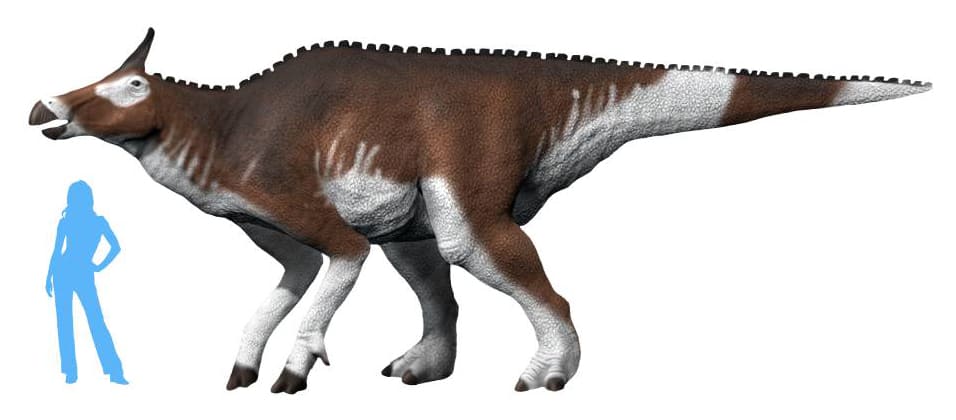
©Nobu Tamura email:[email protected] http://spinops.blogspot.com / CC BY-SA 4.0 – Original / License
The goal of naming a state dinosaur was to create more interest in paleontology among Californians. Augustynolophus fossils are only found in California, making it an excellent candidate for the state dinosaur.
Augustynolophus was a medium-sized dinosaur, approximately 26 feet long, 10 feet tall, and weighing up to 6,000 pounds.
Bat: Pallid Bat
The pallid bat (Antrozous pallidus) was officially recognized as California’s state bat on October 8, 2023, when Governor Gavin Newsom signed Senate Bill 732 into law. The legislation was championed by 13-year-old Naomi D’Alessio, who was a co-author of the bill.
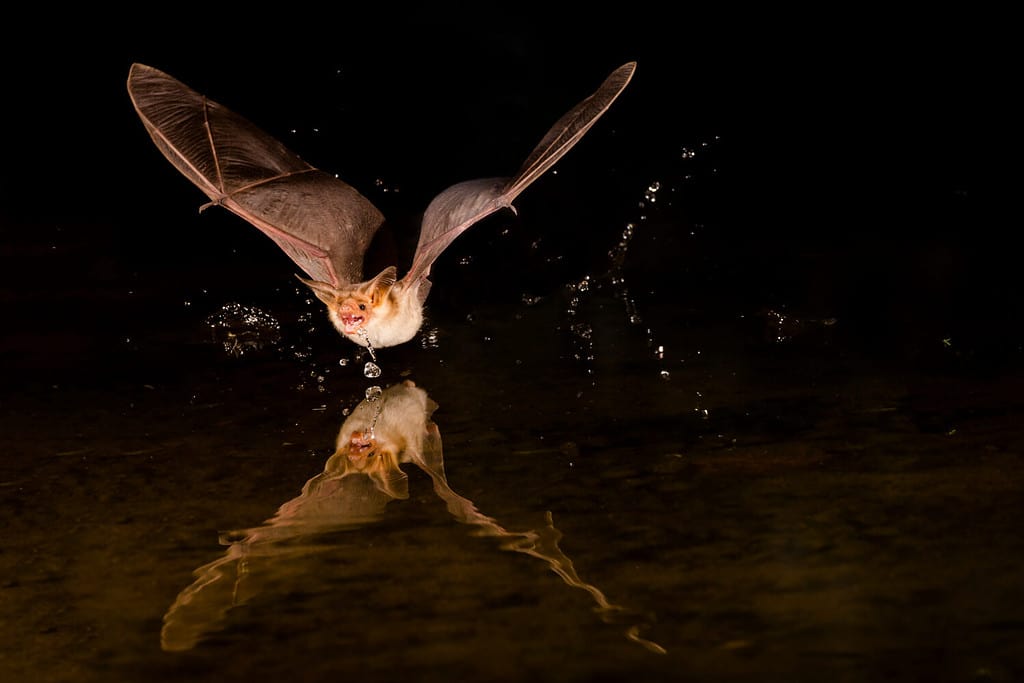
©Danita Delimont/Shutterstock.com
The pallid bat is a medium-to-large, pale yellow-brown insectivore with a 15–16 inch wingspan and distinctive large ears. Native to California’s deserts, oak woodlands, and rocky areas, they are ecologically vital as natural pest controllers, saving farmers millions by consuming beetles, scorpions, and crickets.
Land Mollusk: Banana Slug
The banana slug was officially recognized as California’s state slug on
September 27, 2024, when Governor Gavin Newsom signed Assembly Bill 1850. Proposed by Assemblymember Gail Pellerin, the legislation highlights the mollusk’s role in the redwood ecosystem and establishes it as a symbolic state icon.
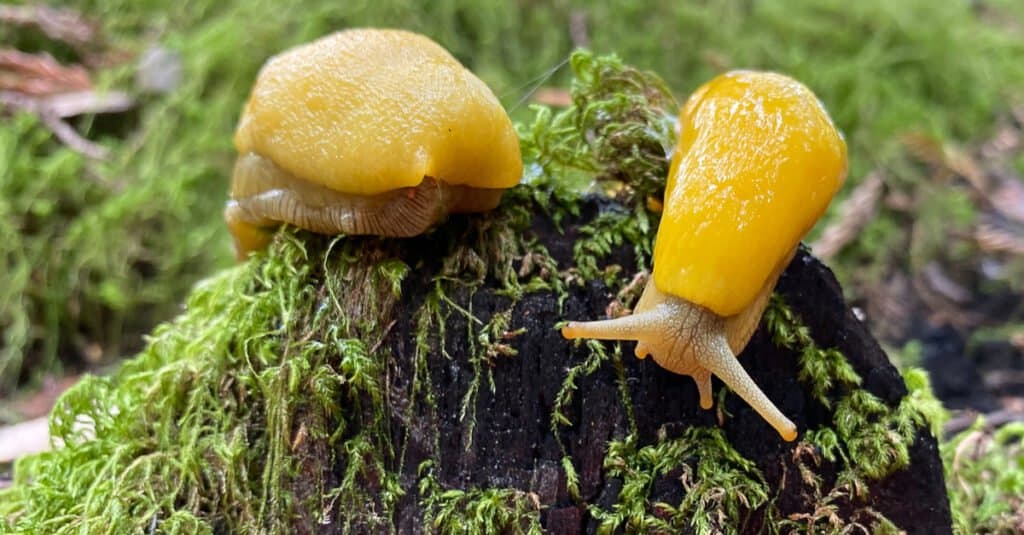
Banana slugs play an important role in the Coast Redwood ecosystem by feeding on detritus and fungi, which helps recycle nutrients in the forest.
©Meyta/Shutterstock.com
The banana slug is a terrestrial mollusk found in the moist, temperate redwood forests of the Pacific Coast, ranging from Alaska to California. These creatures are renowned for their vibrant color and unique biological adaptations, such as having mucus that serves as both a lubricant and a defensive agent.
They are the largest land slug in North America and the second largest in the world, growing up to 10 inches long. They breathe through a single, visible lung on the right side of their mantle called a pneumostome, which they can close during dry or stormy weather.
Sea Shell: Black Abalone
The black abalone shell (Haliotis cracherodii) was officially recognized as the California State Seashell on September 27, 2024. The shell was chosen for its historical use by California Native American tribes for food, trade, jewelry, and ceremony.

©James St. John, CC BY 2.0 <https://creativecommons.org/licenses/by/2.0>, via Wikimedia Commons – Original / License
The designation hopes to promote awareness of California’s marine life and the need to protect the species. The black abalone was previously listed as endangered due to withering syndrome, a fatal disease caused by the bacterium Candidatus Xenohaliotis californiensis, which has devastated up to 99% of the black abalone population in California since the 1980s. It causes the abalone’s digestive gland to fail, leading to starvation and death.
Following devastating declines from withering syndrome, populations in colder areas of California’s Channel Islands have increased nearly tenfold since 2000, thanks to active restoration, including translocation and potential captive breeding programs.
Crustacean: Dungeness Crab
The Dungeness crab (Metacarcinus magister) was officially recognized as the state crustacean of California on January 1, 2025. They have been commercially significant since the 1800s, and this designation formally honors the species’ cultural and economic importance to the state.
The Dungeness crab is a cornerstone of California’s economy, valued at over $80 million annually, and is crucial to coastal communities. Presently, they face significant threats from ocean acidification, which weakens their shells and impacts fishery stability.
Dungeness crabs are typically light brownish or yellowish-orange on top with darker purple-brown coloring, with white-tipped claws. They turn bright red when cooked, and their meat is said to have a sweet, delicate flavor.
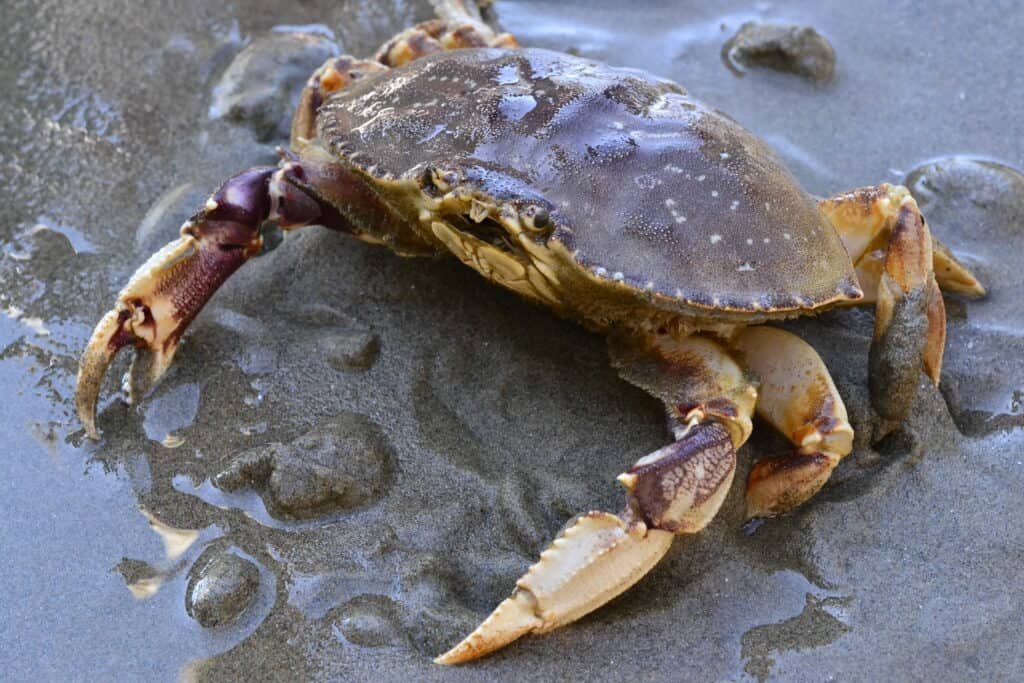
While they prefer shallower water, Dungeness Crabs have been found at depths of two hundred meters.
©Jennifer Nicole Buchanan/Shutterstock.com
Snake: Giant Garter Snake
The giant garter snake (Thamnophis gigas) was officially designated as the state snake of California on October 9, 2025, when Governor Gavin Newsom signed Senate Bill 765 into law. While previously listed as a threatened species under the California Endangered Species Act in 1971, this 2025 legislation gave it formal state symbol recognition.

The giant garter snake’s survival is reliant on the rice industry. Rice fields and their surrounding irrigation canals act as surrogate wetlands, replacing over 95% of the natural habitat that has been lost to development.
The largest garter snake species, the giant garter snake can be up to 64 inches long. They are olive-to-black with yellow stripes running the length of their slender bodies. As highly aquatic creatures, they rely on wetlands and agricultural rice fields for survival.