
Quick Take
- Mass extinction events are defined by a 75% loss in total species.
- These events can take tens of thousands to several million years.
- Experts are alarmed at today’s “unprecedented” population abundance loss in vertebrates and invertebrates.
In school, we learned about the asteroid that wiped out an estimated 76% of all creatures. Scientists now call this the fifth mass extinction. You’re reading that correctly: throughout Earth’s history, there have been five large-scale mass extinctions. Many scientists believe we’re currently going through a sixth mass extinction event that severely threatens our planet’s biodiversity.
While scientists have debated this argument for decades, the idea was popularized in The Sixth Extinction: An Unnatural History, which argues that we’re watching a human-sparked mass extinction. Over the past century, we’ve lost the Guam flying fox, Tasmanian tiger, Caribbean monk seal, and countless other species. Is it possible to recover and better protect our world’s incredible species? Here’s what the experts say.
What Were the First Five Mass Extinction Events?
The words “mass extinction” sound intense, like a frighteningly rapid loss of life. But, in reality, mass extinction events occur over periods ranging from tens of thousands of years to several million years.

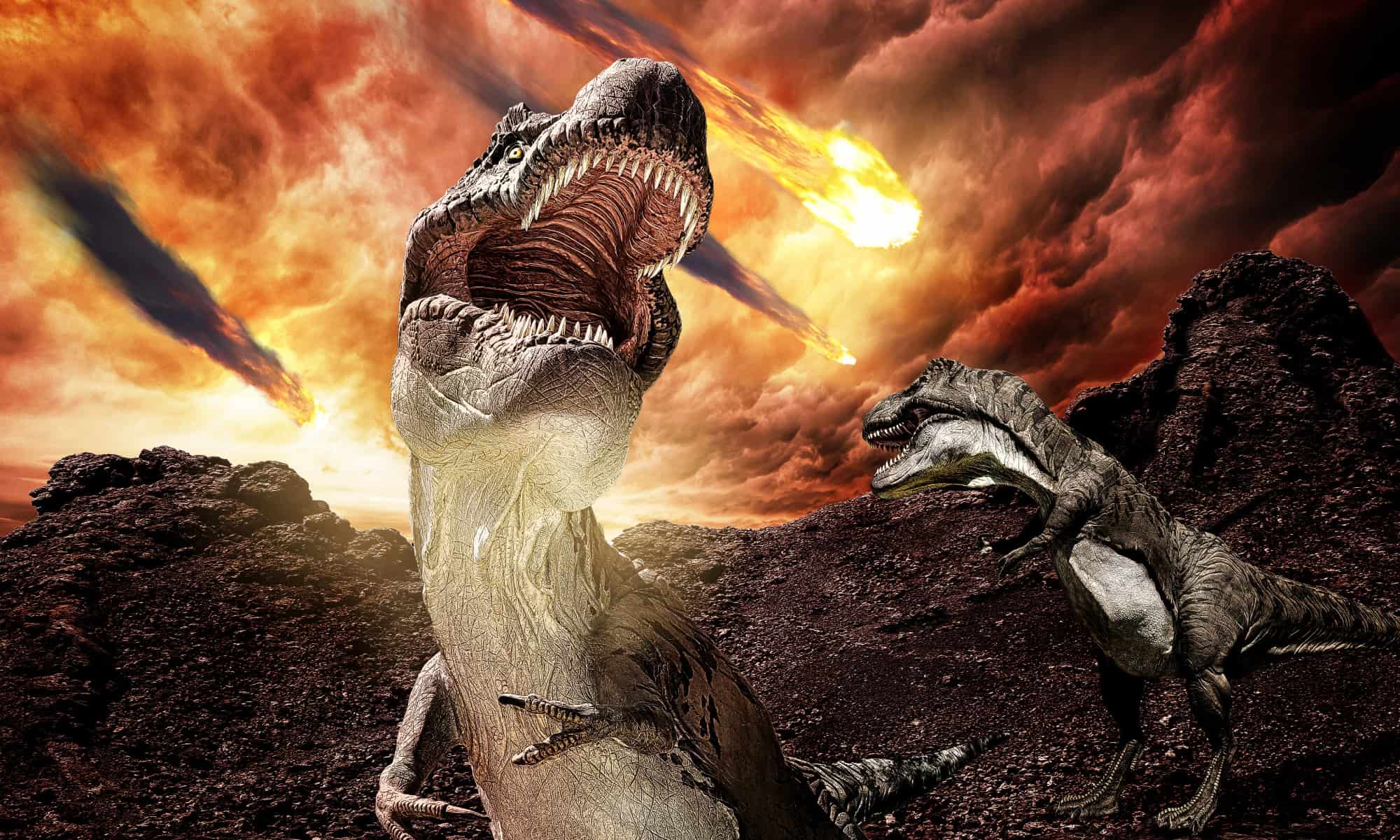
While Tyrannosaurus rex came to an end during the fifth mass extinction event, other dinosaurs like the Stegosaurus actually went extinct tens of millions of years earlier.
©Noiel/Shutterstock.com
According to the National Park Service, mass extinctions are defined by the loss of 75% of species or more in a short period of geologic time.
Exploring the Events
Scientists have identified five mass extinction events, which are:
- Ordovician-Silurian (or End Ordovician): 440 million years ago. An estimated 86% of species, 57% of genera, and 27% of families went extinct.
- Late Devonian: 365-370 million years ago. An estimated 75% of species, 35% of genera, and 19% of families went extinct, including reef-building corals.
- Permian-Triassic (or Late Permian): 250 million years ago. Known as “The Great Dying.” An estimated 96% of species, 56% of genera, and 57% of families went extinct.
- Triassic-Jurassic (or End Triassic): 200-210 million years ago. An estimated 80% of species, 47% of genera, and 23% of families went extinct.
- Cretaceous-Tertiary (or End Cretaceous): 65-66 million years ago. An estimated 76% of species, 40% of genera, and 17% of families went extinct.
Each previous mass extinction event was caused by natural disasters and extreme climate changes, such as ocean acidification, volcanic eruptions, or asteroid impacts—events that species could not survive or adapt to.
Introducing the Holocene Extinction
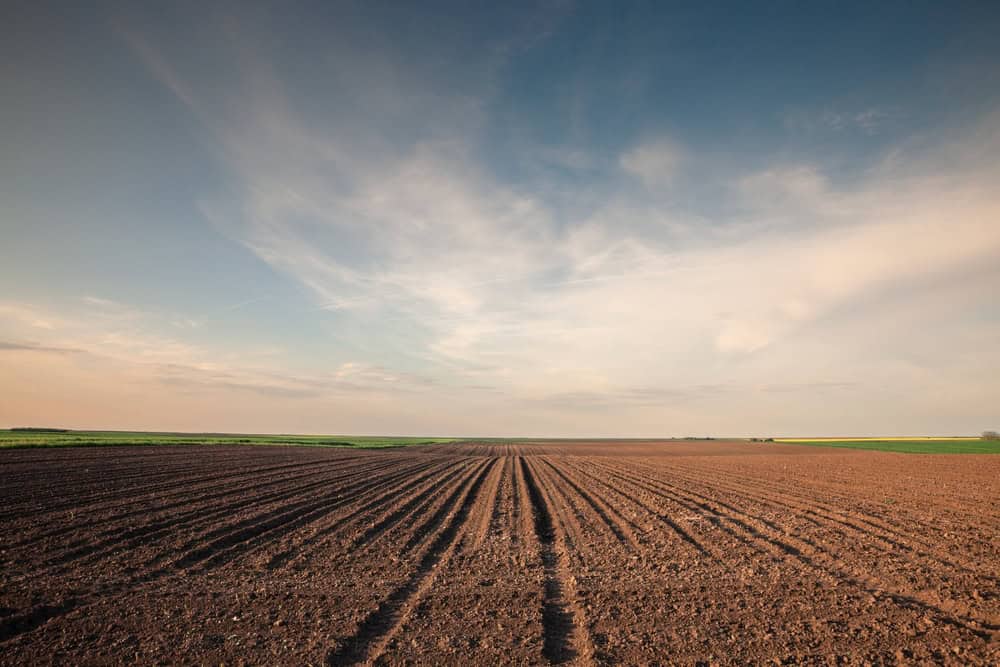
Agricultural changes affecting the land have harmed some animal populations by reducing their habitat.
©BalkansCat/Shutterstock.com
The sixth mass extinction event, termed the Holocene Extinction, is considered an ongoing crisis that began when agriculture and industrialization started having an outsized impact on the Earth.
Are We in a Sixth Mass Extinction?
The term “sixth mass extinction” is controversial. In 2023, ecologist Gerardo Ceballos argued adamantly that we are in the midst of a sixth extinction event. The study examined 5,400 vertebrate genera (excluding fishes) comprising 34,600 total species. Ceballos’ findings state that humans have caused the extinction of 73 genera since 1500.
Another study argues that official lists, like the IUCN Red List, don’t consider invertebrates. In addition, since 86% of land species and 91% of marine species still have yet to be identified, we may be facing losses even greater than scientists recognize. Tierra Curry, a Senior Scientist and Endangered Species Coordinator with the Center for Biological Diversity, says, “Silent extinctions don’t get enough attention.”

Curry believes it’s important to acknowledge the species we’ve lost. Here, she holds an effigy of an extinct Florida rainbow snake.
©Tierra Curry, Center for Biological Diversity
An Argument Against the Sixth Mass Extinction
However, others argue that genus-level extinctions have slowed considerably during the last 100 years, and we have not hit the 75% species loss. Regardless, says Scott Black, an internationally recognized conservationist and Executive Director of the Xerces Society for Invertebrate Conservation, “We’re on the trajectory, and we can say that with certainty. Animals are declining at unprecedented rates. That’s more important than debating the phrasing.”

Scott Black has helped protect and restore millions of acres of habitat.
©Scott Black
Curry adds, “I don’t say sixth mass extinction. It sounds numerical, like because it’s happened before, it’s inevitable that it’ll happen again. I say we’re in the midst of a heartbreaking biodiversity crisis where it’s too hot for caterpillars to metamorphose, and birds are falling out of the sky because they don’t have enough resources on their migratory pathway.”
What Is Happening in Our World?
In 2024, the World Wildlife Fund (WWF) released its 2024 Living Planet Report, which measures the average change in population sizes of 5,495 vertebrate species. Between 1970 and 2020, the average size of monitored vertebrate wildlife populations declined by 73%.
“Population decline often doesn’t get enough focus until an animal becomes imperiled,” says Curry. “If we could get involved before these animals became endangered, we could more cost-effectively save and protect them.”
As populations shrink, they become more vulnerable to extinction risk because they cannot necessarily protect themselves or remain resilient against disease or habitat loss. Further, overexploitation, such as in fishing or hunting, can make it hard for populations to rebound.
We’re in the midst of a heartbreaking biodiversity crisis where it’s too hot for caterpillars to metamorphose, and birds are falling out of the sky because they don’t have enough resources on their migratory pathway.
Tierra Curry, Senior Scientist and Endangered Species Coordinator with the Center for Biological Diversity
Regions at Risk
Although we’re massively losing biodiversity, not every region is evenly affected. The steepest population declines were recorded in:
- Latin America and the Caribbean: 95% (abundance loss)
- Africa: 76%
- Asia-Pacific: 60%
Regions in danger also include those facing intense pressure from deforestation, agricultural expansion, mining, and land overexploitation. According to the Living Planet Report, “Habitat loss and degradation, driven primarily by our food system, is the most reported threat to wildlife populations.”
Species at Risk
Understanding the extent of population abundance loss is shocking. For example, we’ve lost an estimated three billion birds since 1970. Curry specifically points out grassland species, which have declined by over 40%, and notes that 42% remain vulnerable to climate-related change.
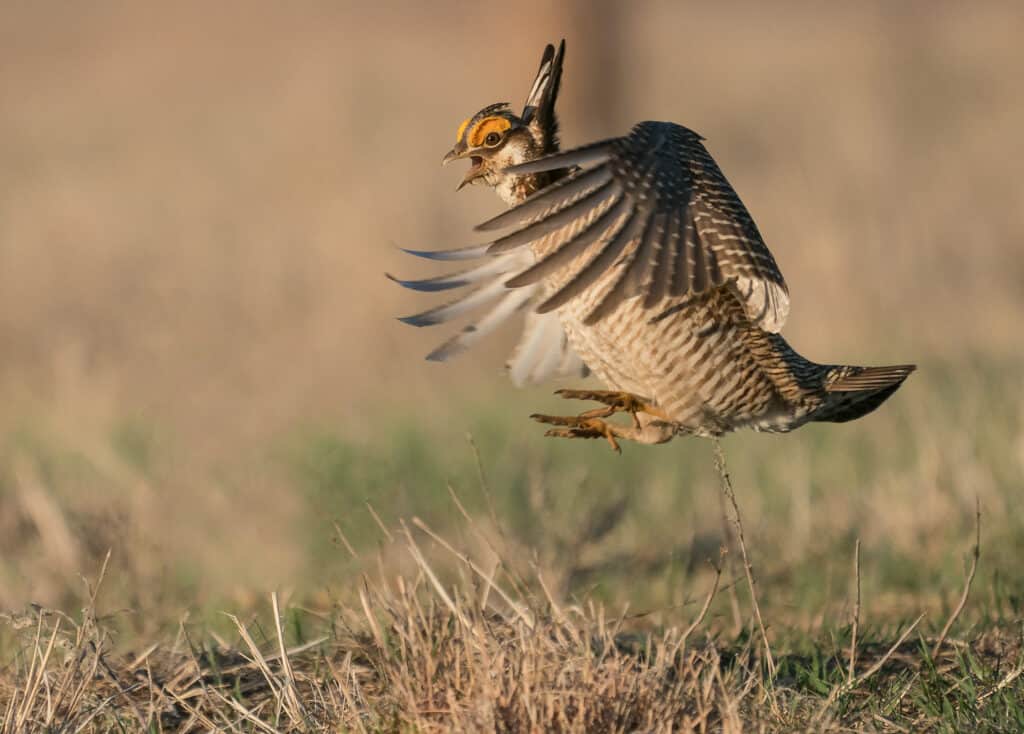
Habitat loss has caused the lesser prairie chicken to become endangered.
©Rob Palmer Photography/Shutterstock.com
Curry also discusses the harms of habitat loss, explaining, “Grasslands are being destroyed for agriculture, as well as for commercial and residential developments. Developers see grassland as empty space.”
Amphibians and Reptiles
“43% of amphibians globally are at risk,” shares Curry. The various threats impacting amphibians make conservation more difficult. To highlight this, Curry points specifically to the hellbender salamander.
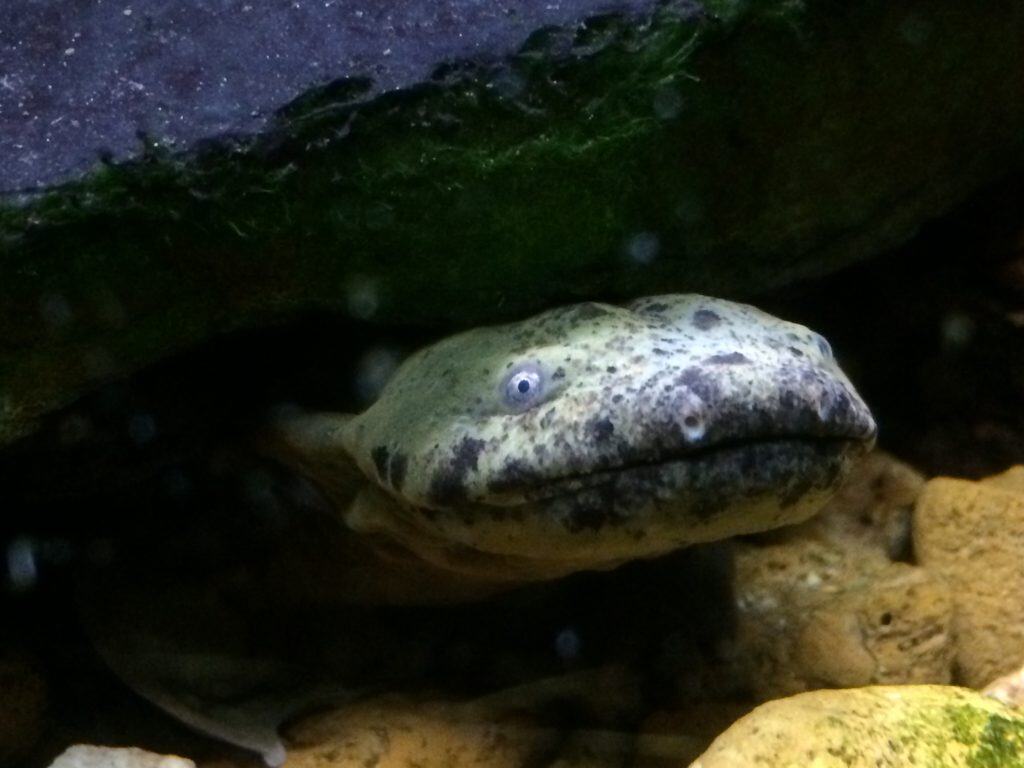
Hellbender salamanders can grow up to two feet long.
©Tierra Curry, Center for Biological Diversity
She explains, “Dams cut off their populations, decreasing genetic diversity. Then chronic river pollution lowers their immune system and increases stress levels, which increases disease vulnerability. Then climate change makes the water warmer, but they need cold water to breathe through their skin.”
Freshwater species are among the worst affected, with an 85% loss in population abundance, compared to 69% in terrestrial species and 56% in marine species.
Think About Invertebrates Too
Black also notes that population declines are also seen in invertebrates. He shares, “Unfortunately, we’re seeing pretty major declines in every invertebrate group being studied.”
For example, annual rates of insect abundance fall by 1-2% each year. “That builds up to become a 20%+ decline over 20 years,” says Black, “and we’re seeing that in butterflies, bees, and aquatic insects like mayflies and stoneflies.”
Aquatic invertebrates, such as snails, mussels, and coral, are also experiencing widespread devastation. Of North America’s 700~ freshwater snail species, 10% are extinct, 40% are endangered, and 15% are threatened.
45% of mussels are near-threatened, threatened, or extinct. Corals are even closer to the precipice, with some reports estimating that 90% of coral could be lost by 2030 if global warming reaches, and is sustained at, 1.5 degrees Celsius above pre-industrial levels.
Why Invertebrates Matter
Many people are misinformed about insects’ ecological importance. Says Black, “Insects are the base of our systems. Without them, there’s less native plant pollination, and less animals eating plants and returning nutrients back into the ground.”
Insects also support animals higher up in the food chain. Consider the grizzly bear. “Without insects, there would be no salmon for bears to eat, since insects are a key food source for juvenile salmon,” Black says. “If bears wanted to take advantage of another food source, they’d also be out of luck, since berries are pollinated by native bees.”
Says Curry, “When you break these links, the whole community collapses.”
What’s Causing Invertebrate Declines?
Black explains that corn fields or bluegrass lawns don’t provide invertebrate habitats, and other habitats are degraded. “We use more pesticides now than ever before, and herbicides that kill plants that insects rely on,” he says. “We’re also dealing with climate destabilization. Call it death by a thousand cuts.”
Curry agrees. In her experience advocating for monarch butterflies, she’s seen how populations are affected by logging, climate change, and milkweed loss. “People are always debating the factor, but it’s all of these things,” she says.
Hope Isn’t Lost
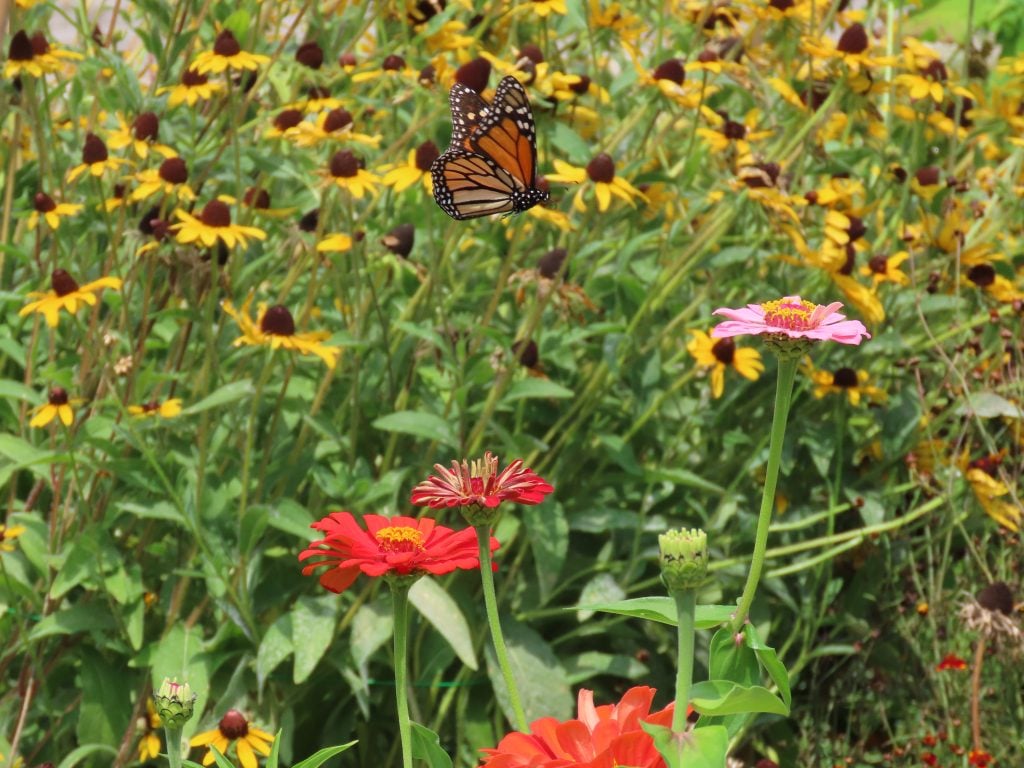
Planting milkweed or native flowers supports pollinators.
©Tierra Curry, Center for Biological Diversity
I personally struggle with eco-anxiety, which Curry notes can be common, saying, “Many people feel disempowered or overwhelmed. But throwing up our hands makes it easier to give up. There’s still so much we can save. Lean into your pain for the nature you love, then let that love drive you to action.”
Even though our continuously growing society is driving this crisis, our trajectory is not fixed. If we continue taking action, extinction and decline are not inevitable. Here’s how to get started.
Plant Pollinator- and Climate-Friendly Gardens
If you’re looking for a way to protect habitat, look to your lawn. “Planting climate-adaptive native plants can improve insect diversity, as well as provide resilience to native plants through pollination and pest control,” Black shares. “Just make sure you’re not contaminating your garden with pesticides!”
You can also add shallow water bowls with rocks in them for insects to land on. As Curry explains, “Native bees are in decline and need water, especially when facing extreme droughts.”
These actions can strongly improve your surroundings. Black tested this in his own garden. Ten years ago, he replaced bluegrass and non-native plants with native species. In his informal survey during the first year, he found a dozen species in his yard. “This past year, I found 100 species,” he says.
Become an Advocate
Sometimes it feels like we can’t make an impact on our own. But Curry shares the story of Purnima Devi Barman, a wildlife biologist who, while working on her PhD, saw villagers cutting down a tree housing a greater adjutant (or hargila stork) and its nestlings. “The community disliked these storks because they were loud and smelly,” says Curry.
Barman began educating others on the endangered greater adjutant. Her community organizing led to the formation of the Hargila Army. Curry shares, “They’ve rallied around the storks as a source of pride. Now people are employed to tell this story globally.”
Curry urges everyone to choose an animal or species they love and to find organizations working to conserve those species. You can also:
- Buy sustainable, organic produce
- Eat less meat
- Speak with your neighbors and friends about conservation
- Do not use pesticides in your garden
Get Involved in Policy Discussions
That said, Black emphasizes that we also need buy-in from governments, businesses, higher education institutions, high schools, and homeowners. Getting involved in advocacy and politics on a county-, city-, or state-level can be incredibly beneficial. “Learn local land use laws and go to public planning meetings,” Curry says. “Whether you’re advocating locally, or taking action to defend national forests, you can get involved in policy wherever you live.”
Resist
“There’s a misconception that scientists and conservationists alone are going to save communities,” says Curry. “But we can’t fight every local battle, so that really goes to community resistance.” This can look like:
- Advocating for sustainability in fashion or food industries (or others!)
- Joining Bee City USA affiliates to reduce pesticide use
- Pushing for pollinator-protective public incentives for farmers
- Asking lawmakers to change lighting practices to reduce the decline of night-flying insects
Whatever you do, take a step forward. You don’t have to do it alone, but it’s important to take the first step.