
Quick Take
- The Wisconsin record bowfin surpassed 13 pounds, which is comparable to a small Jack Russell terrier.
- Bowfin are are native to the eastern United States and parts of Canada, including southern Ontario and Quebec.
- Bowfin are freshwater fish that can breathe both water and air.
- Although bowfin meat is edible, many consider it poor table fare, and only catch these fish for the challenge.
Bowfin (Amia calva) are large, bony fish native to North America. They are favorites for many anglers because they are known to be strong and aggressive, offering an exciting challenge. In Wisconsin, some of the best places to fish for bowfin include Little Green Lake, Puckaway Lake, and Willow Reservoir. Continue reading to discover the largest bowfin ever caught in Wisconsin.
About Bowfin
Bowfin go by many names, including freshwater dogfish, beaverfish, grinnel, swamp trout, mudpike, and choupique, among others. They are sometimes referred to as primitive because they share certain morphological characteristics with their early ancestors. Bowfin are able to breathe both water and air. They use their gas bladders not only to aid in buoyancy, but also to breathe air from the surface.
Appearance and Size
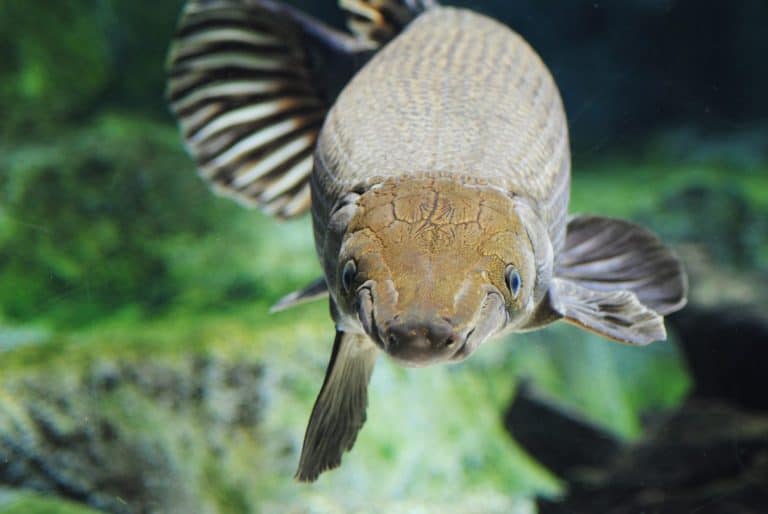
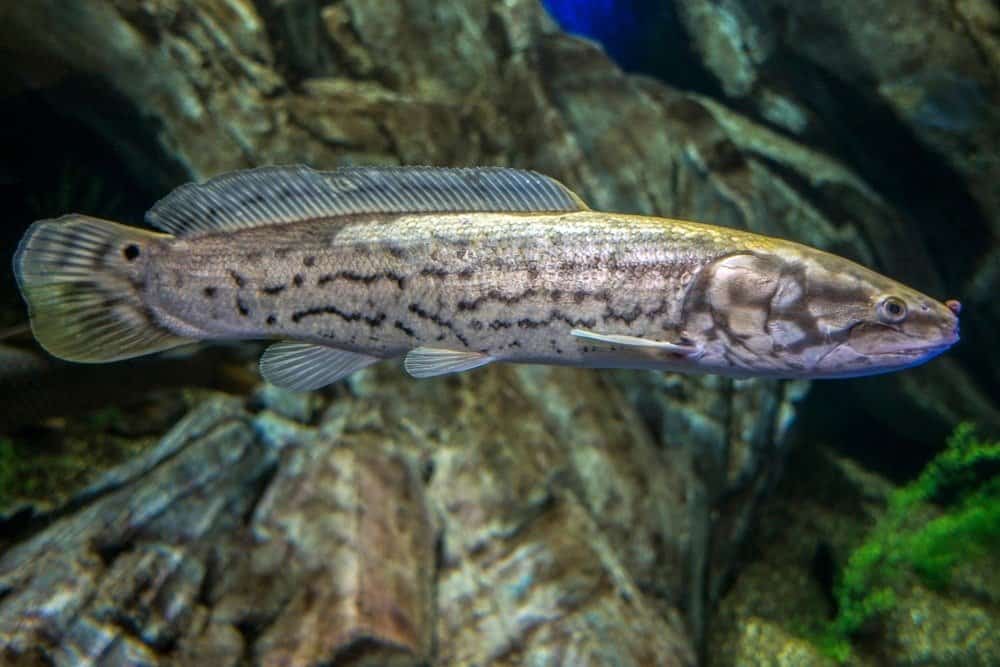
Bowfin have a distinct appearance. They have long, cylindrical bodies and are generally mottled olive to brown with lighter bellies. Net-like patterns on their sides help them camouflage. Bowfin have very long dorsal fins and rounded tail fins, both of which feature stripes. They also have barbel-like tendrils at each nostril. Adult males can reach about 24 inches long, while females can grow as long as 30 inches. They typically reach weights of around 8.5 pounds.
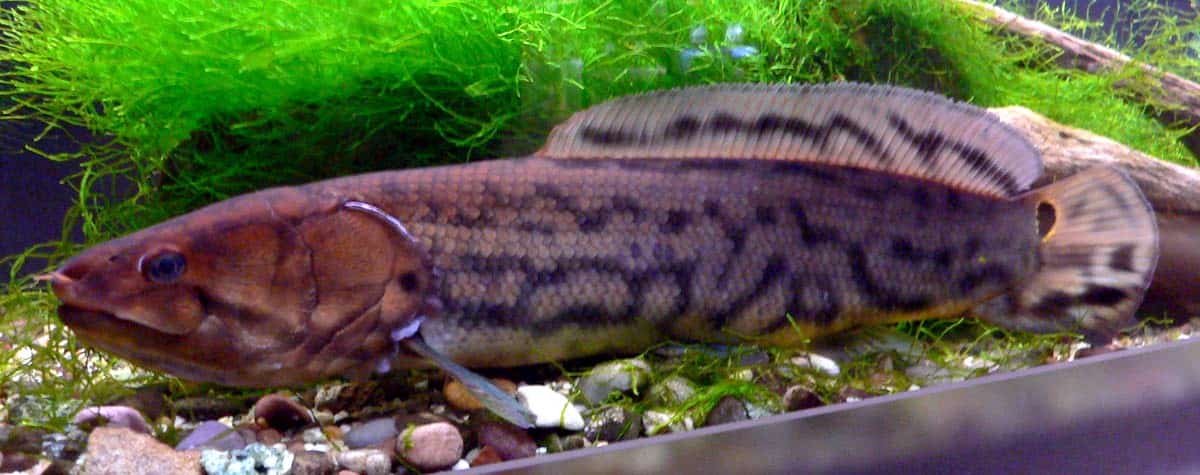
Female bowfin typically grow larger than male bowfin.
Distribution and Habitat
Bowfin are widespread throughout North America, especially in the eastern United States. They can be found in southern Quebec and Ontario through the St. Lawrence River and Great Lakes regions. These fish can be found in the Mississippi River Basin from Minnesota to Louisiana, as well as across the Gulf Coast from Texas to Florida. There is also a population in the Appalachian Mountains.
Bowfin prefer deep, densely vegetated, slow-moving backwaters, lakes, and streams. They favor clear water, but they are also tolerant of silt and mud. These fish can often be found taking shelter under roots, logs, or fishing piers.
Diet
The diet of bowfin changes as they age. Young bowfin usually eat insects and other microscopic organisms. However, when they reach 4 inches or longer, they start eating small fish. Mature bowfin consume fish, frogs, aquatic insects, and fish eggs. They are excellent hunters and are opportunistic feeders. Sometimes, anglers use live bait such as minnows, salamanders, and frogs to capture bowfin.
Predators
The main predator of bowfin is humans; however, they are also hunted by larger fish, mammals, and birds. One of the most common bowfin predators is the American alligator when they live in the same body of water. Although bowfin meat is edible, many do not consider it suitable as table fare. Fishermen who do consume bowfin recommend keeping them on ice or alive until just before cooking.
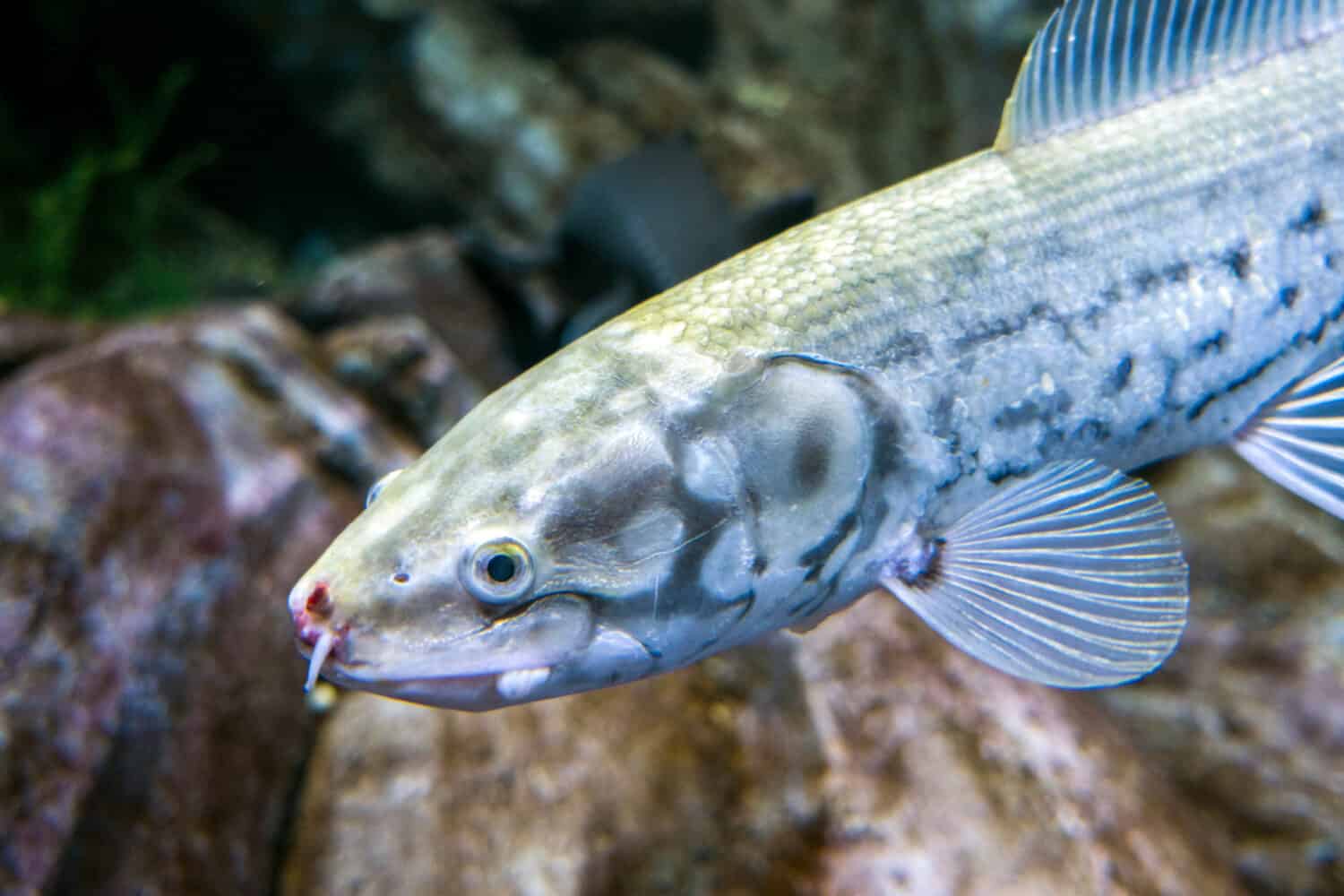
The largest bowfin ever caught in Wisconsin weighed over 13 pounds.
©Miroslav Halama/Shutterstock.com
What Is the Largest Bowfin Ever Caught in Wisconsin?
On July 19, 1980, an angler caught a hefty 13-pound and 1-ounce bowfin, which is about the weight of a small Jack Russell terrier. The fish was caught using hook and line in Willow Flowage in Oneida County and measured a whopping 31.6 inches long. A slightly longer bowfin was also caught in Wisconsin using alternative methods, which include bow and arrow, spear, crossbow, and hand-catching. In the Mississippi River in Buffalo County, an angler caught a 32.75-inch bowfin. The fish weighed 12 pounds and 4 ounces.
According to the International Game Fish Association, the all tackle world record bowfin weighed 21 pounds and 8 ounces. It was caught in Forest Lake, Florence, South Carolina on January 29th, 1980 by angler Robert Harmon. The all tackle length (fly) world record is 32.28 inches. The fish was caught in North Hero, Vermont on July 29th, 2018 by angler Richard Hart.