Quick Take
- One of New York's most iconic sportfish isn't actually the species its name claims it to be. Discover the sunfish truth →
- One of these five fish starts life looking completely normal, but then its own body rearranges itself in a way that seems biologically impossible. See fluke's body transformation →
- While most fish go quiet in the dead of a New York winter, one species becomes the most sought-after target of the entire year. Explore ice fishing's top target →
- A tiny, overlooked fish found in virtually every New York county quietly performs a pest-control role that benefits the entire ecosystem around it. Meet the pest-control sunfish →
EDITOR’S NOTE: We get letters from time to time from A-Z Animals readers, and not only do they remind us why we do what we do, but they also tell us what our readers want to know. In this case, Joseph, a 10-year-old from New York, wants to know about the most common fish in his home state. So, Joseph, here you go! We hope this inspires you to get out and explore New York’s waters this summer!
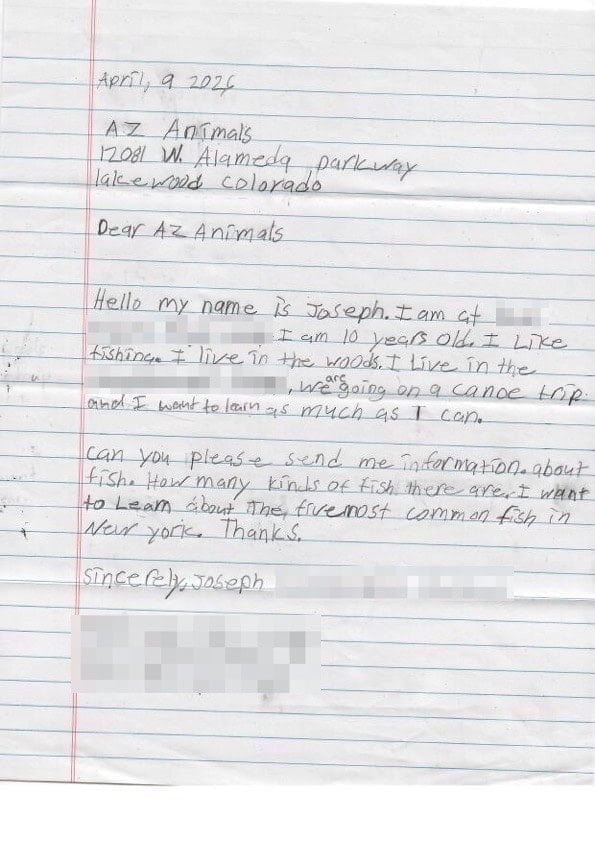
Joseph’s letter to A-Z Animals
©
*****
When people think of New York, they often picture the flashing neon signs of Times Square or the majestic peaks of the Adirondacks. Yet, sandwiched between these iconic landscapes lies another world entirely: a sprawling, vibrant aquatic network. New York is uniquely positioned as an ecological crossroads. It boasts over 7,500 lakes, approximately 52,000 miles of rivers and streams, and a sprawling marine coastline along the Atlantic Ocean.
Because the state spans everything from cold, deep glacial lakes to brackish estuaries and salty ocean reefs, it serves as a home or pitstop for hundreds of fish species. Whether you are an educator designing a biology lesson, a student researching local wildlife, or a casual nature lover, understanding these underwater neighbors is a fantastic window into our shared environment.
Based on data from the New York State Department of Environmental Conservation (NYSDEC) and NOAA, let’s dive beneath the surface to meet five of the most common and ecologically vital fish swimming in New York waters.

1. Striped Bass (Morone saxatilis)
Physical Characteristics & Size
The striped bass, affectionately called the “striper” by locals, is easily recognized by its sleek, silvery body marked with seven to eight prominent, dark horizontal stripes running from its gills to its tail. These fish can grow to massive sizes. While the average striper caught ranges from 20 to 35 inches long and weighs 5 to 20 pounds, they can occasionally exceed 4 feet and top 70 pounds!
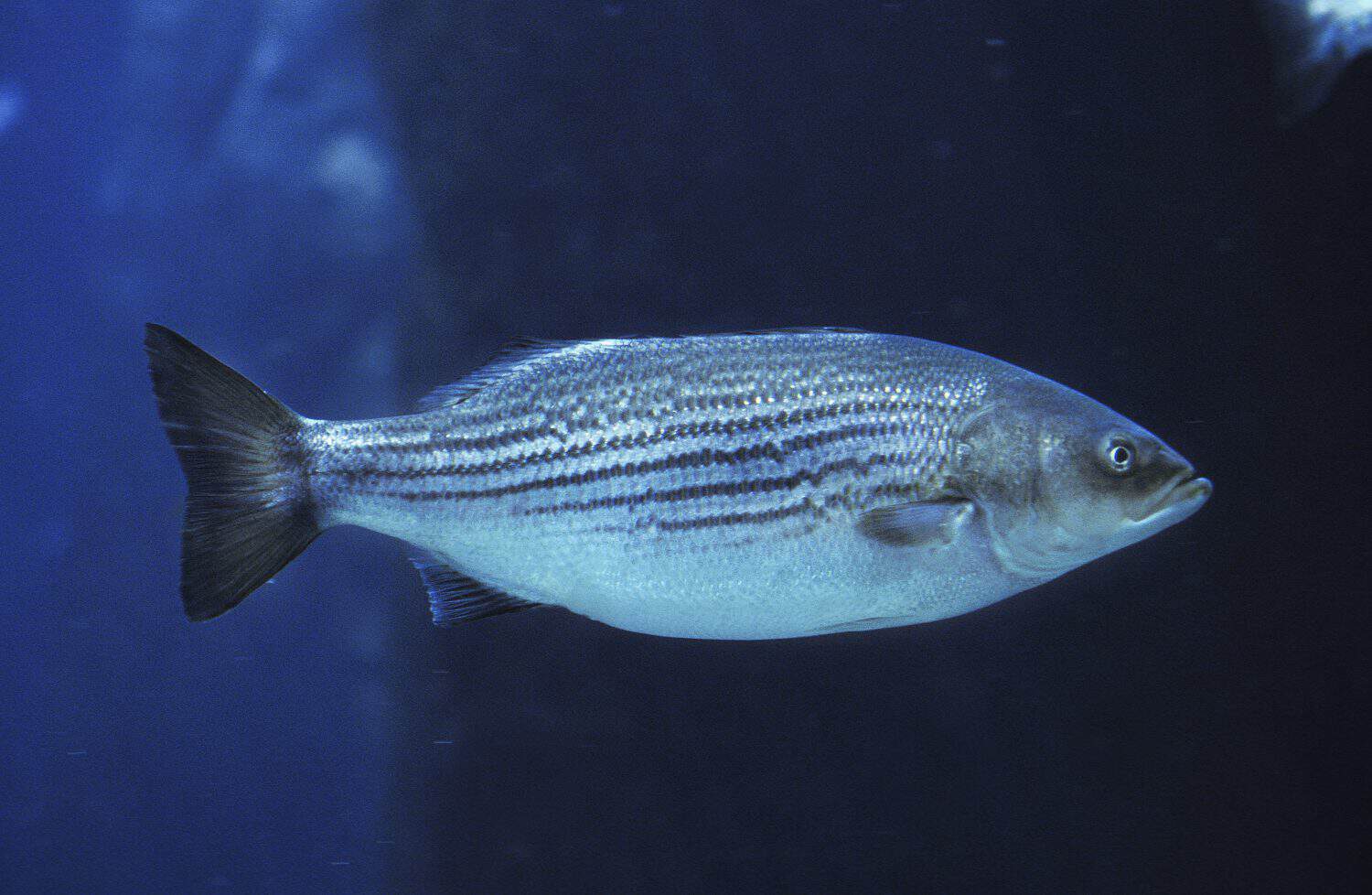
Recognized a striped bass by its silvery body marked with seven to eight prominent, dark horizontal stripes running from its gills to its tail
©slowmotiongli/Shutterstock.com
Habitat & Distribution
Striped bass are anadromous, meaning they are fish that migrate between saltwater and freshwater environments. They spend their adult lives in the saltwater of the Atlantic Ocean, but migrate into freshwater rivers every spring to spawn. In New York, they are incredibly abundant. You will find them heavily concentrated around the coastal waters of Long Island, throughout New York Harbor, and up the tidal portion of the Hudson River.
Ecological Role & Conservation
As top-tier predators, adult stripers are voracious feeders. They keep ecosystems balanced by hunting smaller schooling fish like menhaden (bunker), herring, and crabs. Because they are highly prized by both recreational anglers and commercial fisheries, their populations are carefully monitored. If you plan to fish for them in the Hudson River or coastal districts, the NYSDEC requires enrollment in a no-fee Recreational Marine Fishing Registry to help scientists track and protect this critical species.
2. Largemouth Bass (Micropterus salmoides)
Physical Characteristics & Size
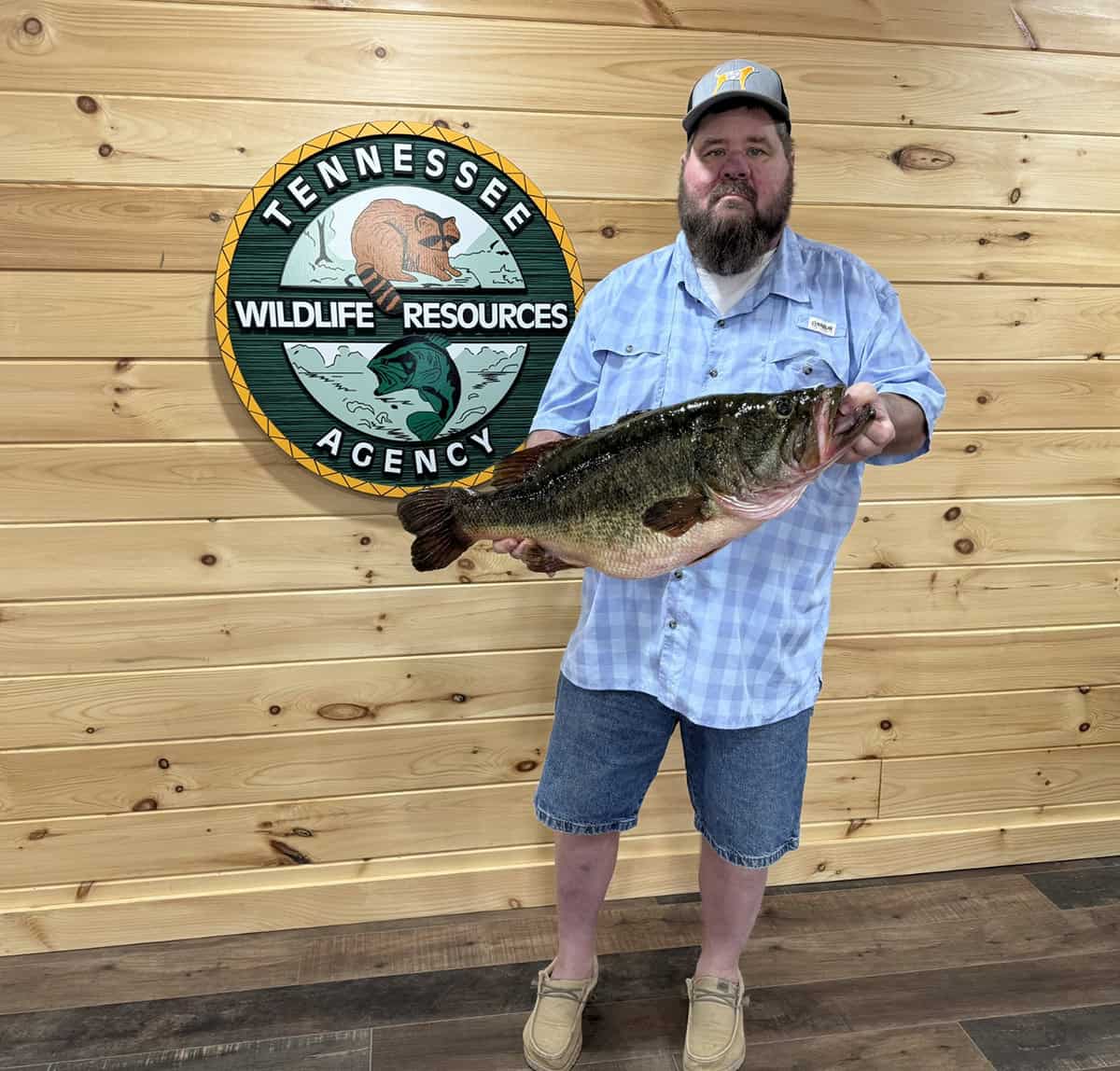
Despite its name, the largemouth bass isn’t a true bass at all. It’s actually the largest member of the sunfish family! It features a thick, robust body that is typically olive-green to dark green, helping it camouflage perfectly against underwater plants. Its most defining feature is its jaw: the upper jaw extends well past the back margin of its eye. They generally stretch between 12 and 18 inches long and weigh around 1 to 4 pounds, though a healthy New York specimen can occasionally break the 10-pound mark at lengths of 24 inches or more.
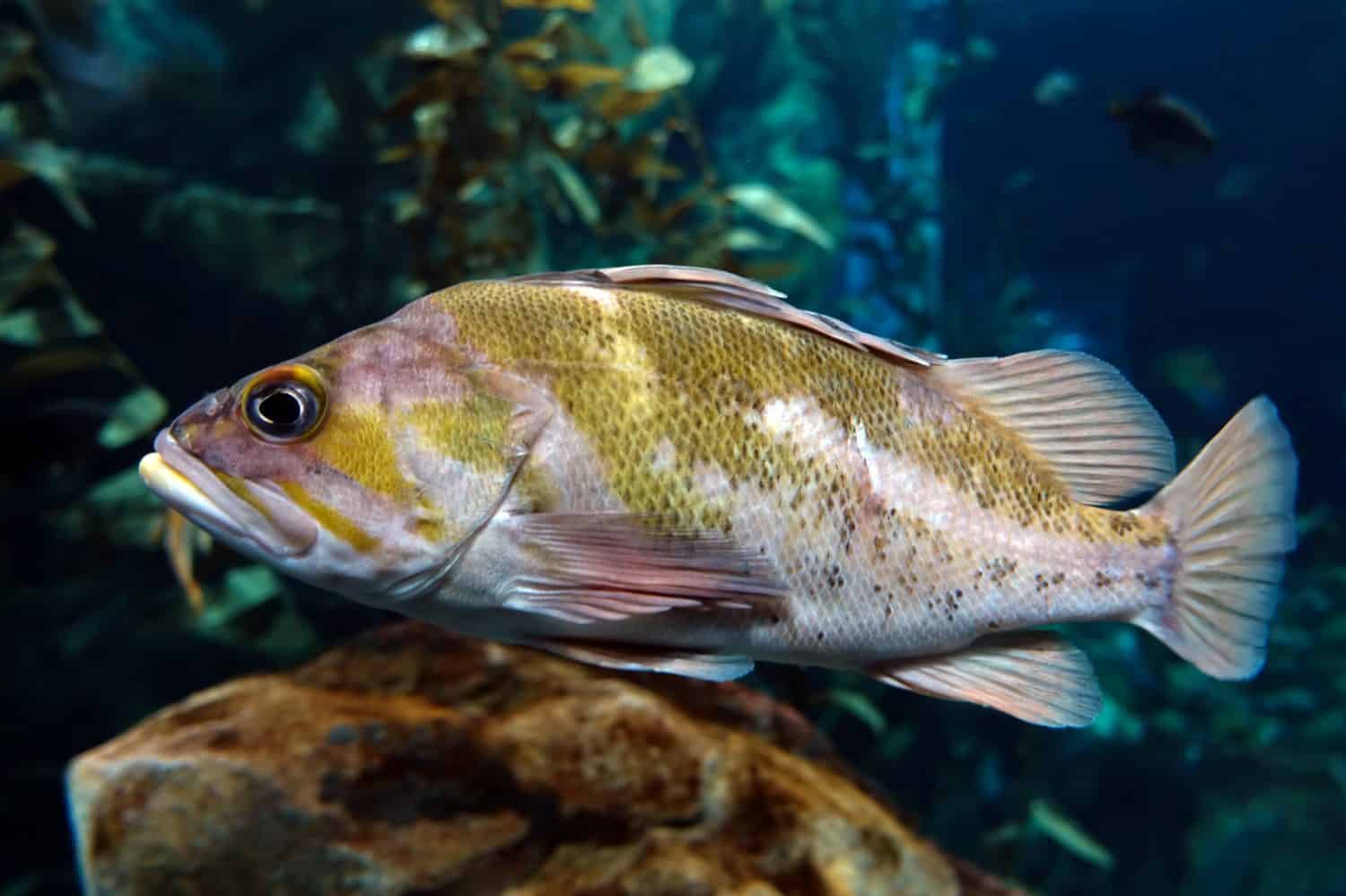
The largemouth bass is the largest member of the sunfish family.
©Miroslav Halama/Shutterstock.com
Habitat & Distribution
This is a strictly freshwater species. Largemouth bass prefer warm, shallow, and quiet waters with plenty of cover, such as aquatic weeds, logs, and lily pads. They are distributed ubiquitously across New York State, thriving in everything from small neighborhood ponds to major systems like the Finger Lakes, Lake Champlain, and the St. Lawrence River.
Ecological Role & Fishing
Largemouth bass are ambush predators. They sit completely still in the weeds, perfectly hidden, before using their cavernous mouths to vacuum up frogs, crayfish, insects, and smaller fish. They are arguably the most popular freshwater sportfish in New York. Because they are hardy and highly adaptable, their conservation status is secure, making them a fantastic, reliable target for catch-and-release fishing throughout the summer.
3. Summer Flounder / Fluke (Paralichthys dentatus)
Physical Characteristics & Size
The summer flounder, widely known as “fluke,” is one of the ocean’s most bizarre and fascinating marvels. Fluke are “left-eyed” flatfish. They begin life looking like a normal fish, but within a month, their right eye physically migrates over to the left side of their head! They spend their lives swimming sideways along the ocean floor. Their top side is a mottled brown that can shift to match the sand’s color and pattern like a chameleon, while their underside is stark white. Fluke average 15 to 22 inches in length.
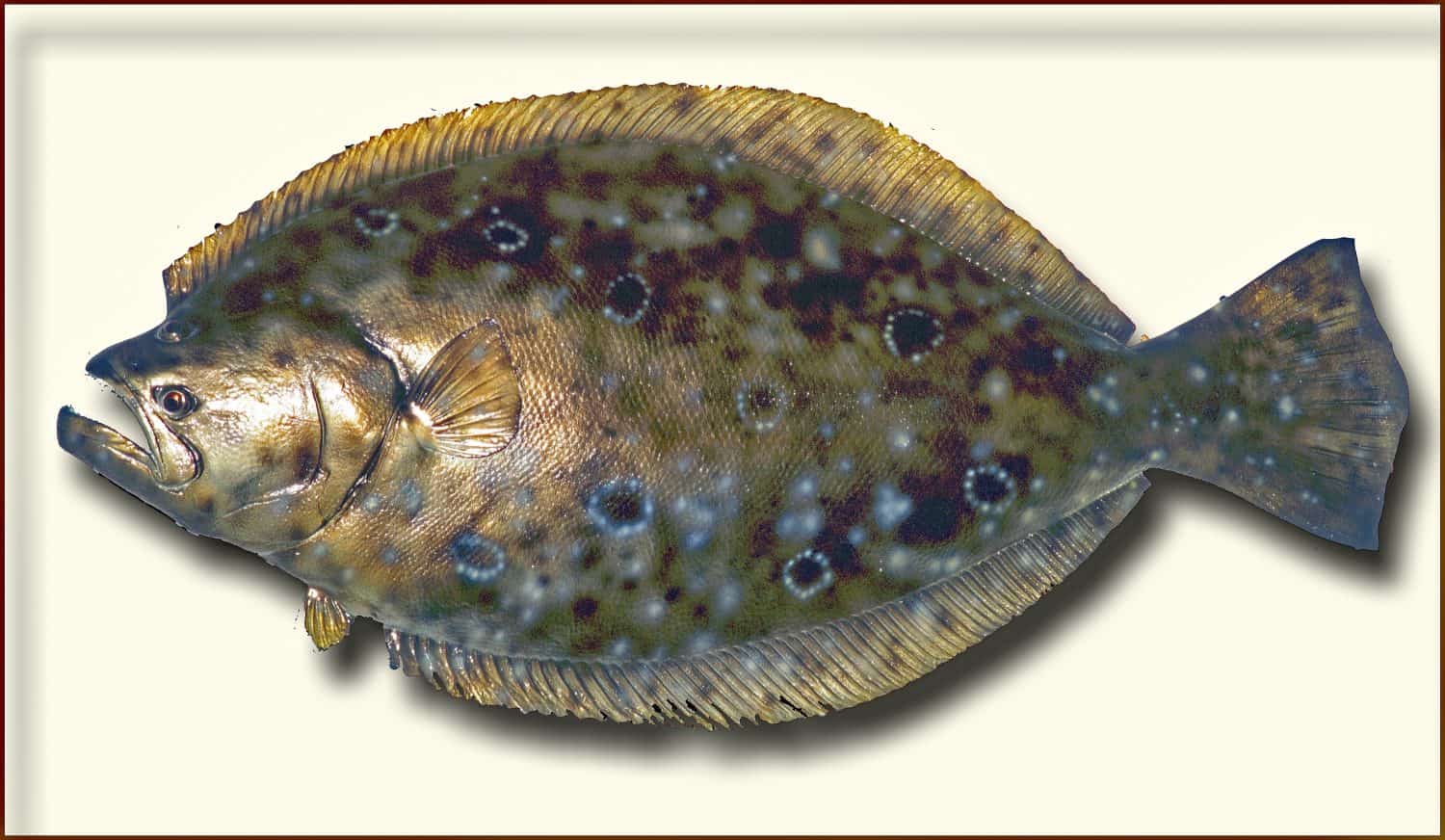
Summer flounder, also known as “fluke,” are “left-eyed” flatfish.
©Arthur E Gurmankin/Shutterstock.com
Habitat & Distribution
Fluke are strictly saltwater fish. They exhibit a distinct seasonal migration: they move inshore into shallow bays, estuaries, and coastal channels during the warm spring and summer months, and retreat offshore to deep ocean waters during the winter. They are exceptionally common in the marine waters surrounding Long Island, including the Great South Bay and Long Island Sound.
Ecological Role & Management
Fluke are masters of disguise. They bury themselves in the sand with only their eyes sticking out, waiting to ambush unsuspecting shrimp, squid, and small fish with their surprisingly sharp teeth. Fluke are a staple of New York’s summer seafood culture and a top priority for state fisheries management. NOAA and the NYSDEC strictly enforce seasonal limits, size minimums, and bag limits to prevent overfishing and ensure their populations remain sustainable.
4. Pumpkinseed Sunfish (Lepomis gibbosus)
Physical Characteristics & Size
If you have ever seen a child catching their very first fish at a New York dock, chances are it was a pumpkinseed sunfish. These little fish are stunningly beautiful, featuring a highly compressed, disc-shaped body covered in shimmering spots of orange, green, yellow, and blue. They get their name from their shape, which resembles a pumpkin seed. You can distinguish them from other sunfish by the vibrant, bright orange-red spot on the edge of their black ear flap. They are small, typically around 4 inches, though they can reach up to 11 inches in length.
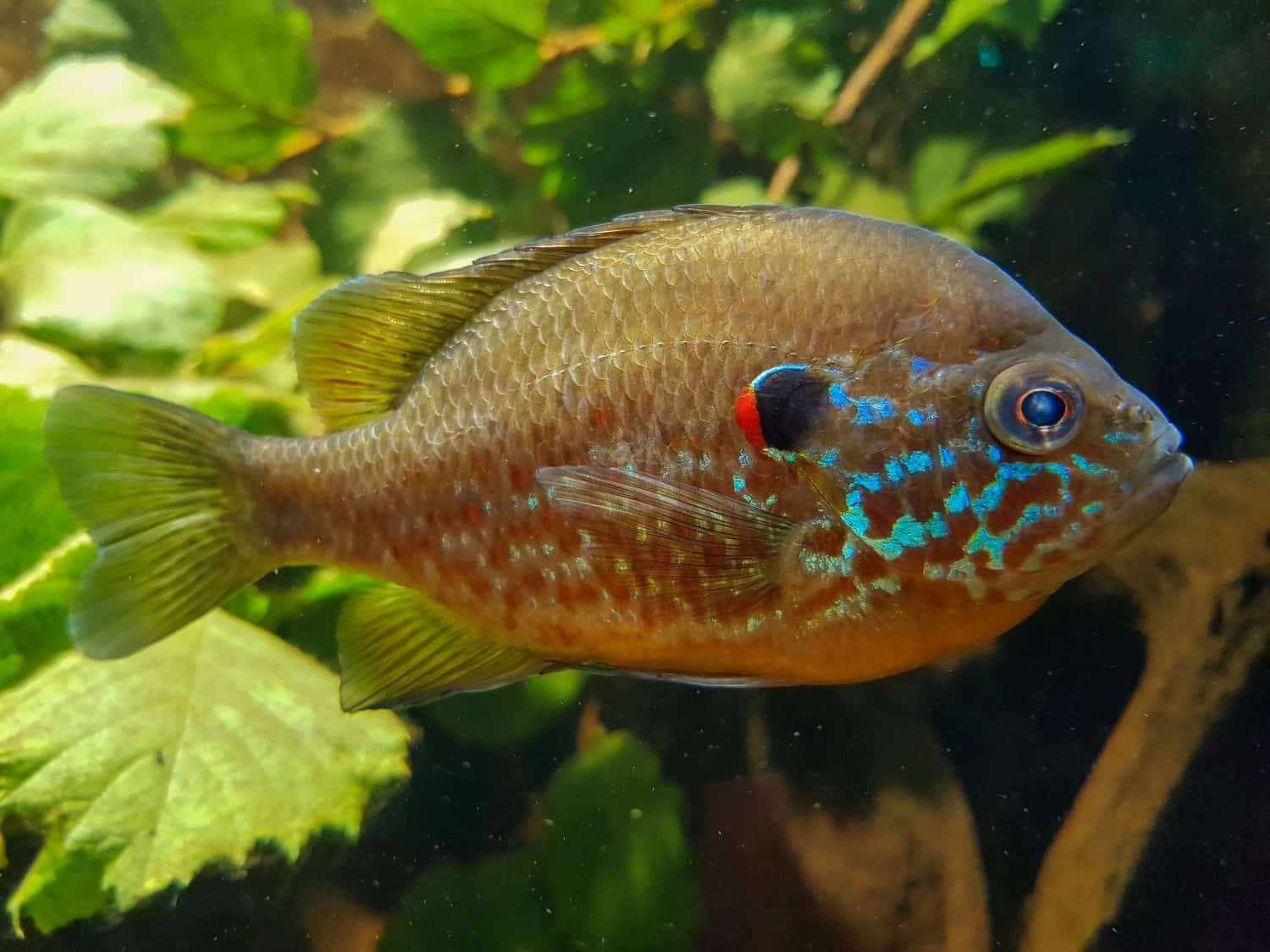
Pumpkinseeds play a crucial role in controlling aquatic parasites.
©Fabian Junge/Shutterstock.com
Habitat & Distribution
Pumpkinseeds are native freshwater fish that prefer clear, quiet lakes, ponds, and slow-moving streams with plenty of vegetation. They are the most abundant sunfish species in New York State and can be found in virtually every county, from the wilderness waters of the Catskills to the ponds of Central Park.
Ecological Role & Significance
Pumpkinseeds swim in small schools and feed primarily on aquatic insects, snails, and small crustaceans. By eating snails, they play a unique role in controlling aquatic parasites. In turn, they serve as a foundational food source for larger predators like largemouth bass and northern pike. They are incredibly resilient, reproduce efficiently, and face no conservation threats, making them an ideal species for educational nature studies.
5. Yellow Perch (Perca flavescens)
Physical Characteristics & Size
The yellow perch is a striking freshwater fish characterized by its bright yellow-to-brass-colored body, accented by six to eight dark, vertical bars draped across its back and sides. They possess two distinct dorsal fins, the front one being quite spiny, and their lower fins often exhibit a vibrant orange hue. They generally range from 6 to 12 inches in length.
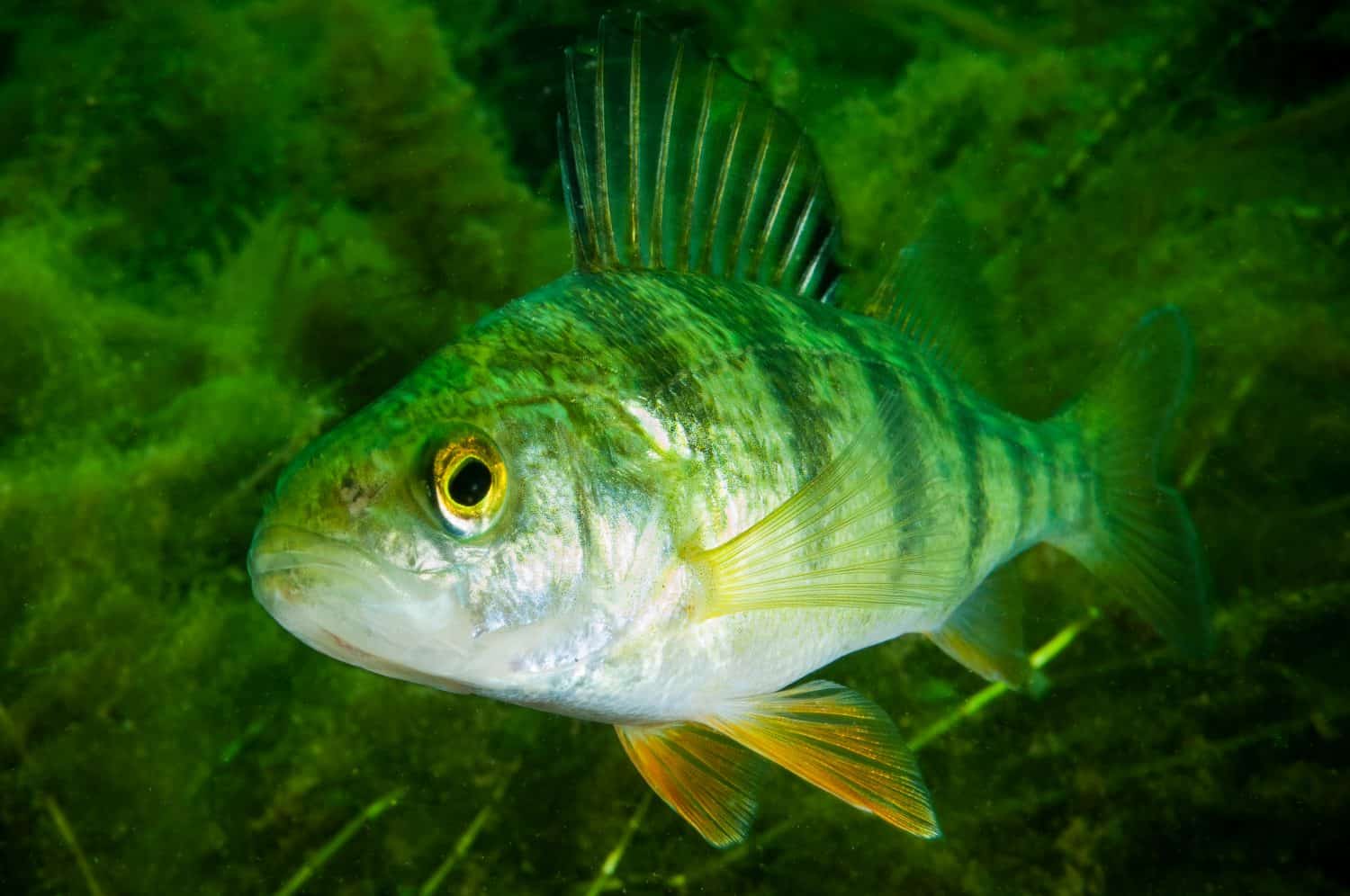
One characteristic of yellow perch are their orange lower fins.
©RLS Photo/Shutterstock.com
Habitat & Distribution
Yellow perch thrive in a variety of freshwater environments but prefer clean, cool-to-warm lakes, reservoirs, and slow rivers with moderate vegetation. They are highly prevalent in New York’s large water systems, including Lake Erie, Lake Ontario, the Finger Lakes, and Oneida Lake.
Ecological Role & Seasonal Abundance
Yellow perch are social creatures that travel in massive, synchronized schools of similar-aged fish. They feed on zooplankton, insects, and small minnows. Because they remain highly active during the freezing winter months when other fish slow down, they are the undisputed kings of New York ice fishing. They serve a dual ecological purpose: they act as a vital intermediate link in the food web, converting small invertebrates into energy that feeds apex predators like walleye and lake trout, while also providing a sustainable, delicious food source for humans year-round.
Conclusion
From the camouflage of the ocean-dwelling fluke to the striking stripes of the migrating bass, New York’s common fish species reflect the incredible variety of the state’s watery landscapes. Each of these five fish plays a specialized, irreplaceable role in keeping our aquatic wild places healthy and balanced.
Protecting these species isn’t just a job for scientists; it is a collective effort. By respecting fishing regulations, keeping our waterways free of litter, and remaining curious about the world just beneath the surface, we can ensure that New York’s rich underwater heritage remains vibrant for generations to come.
*****
So Joseph, there you have it! We hope you enjoyed this article your letter inspired us to write.
If you want to get in touch with A-Z Animals, visit our contact page here. We’d love to hear from you.