
Quick Take
- Dalmatian pelicans are the largest of all pelican species, measuring over six feet from tip to tail, with a wingspan of over 11 feet.
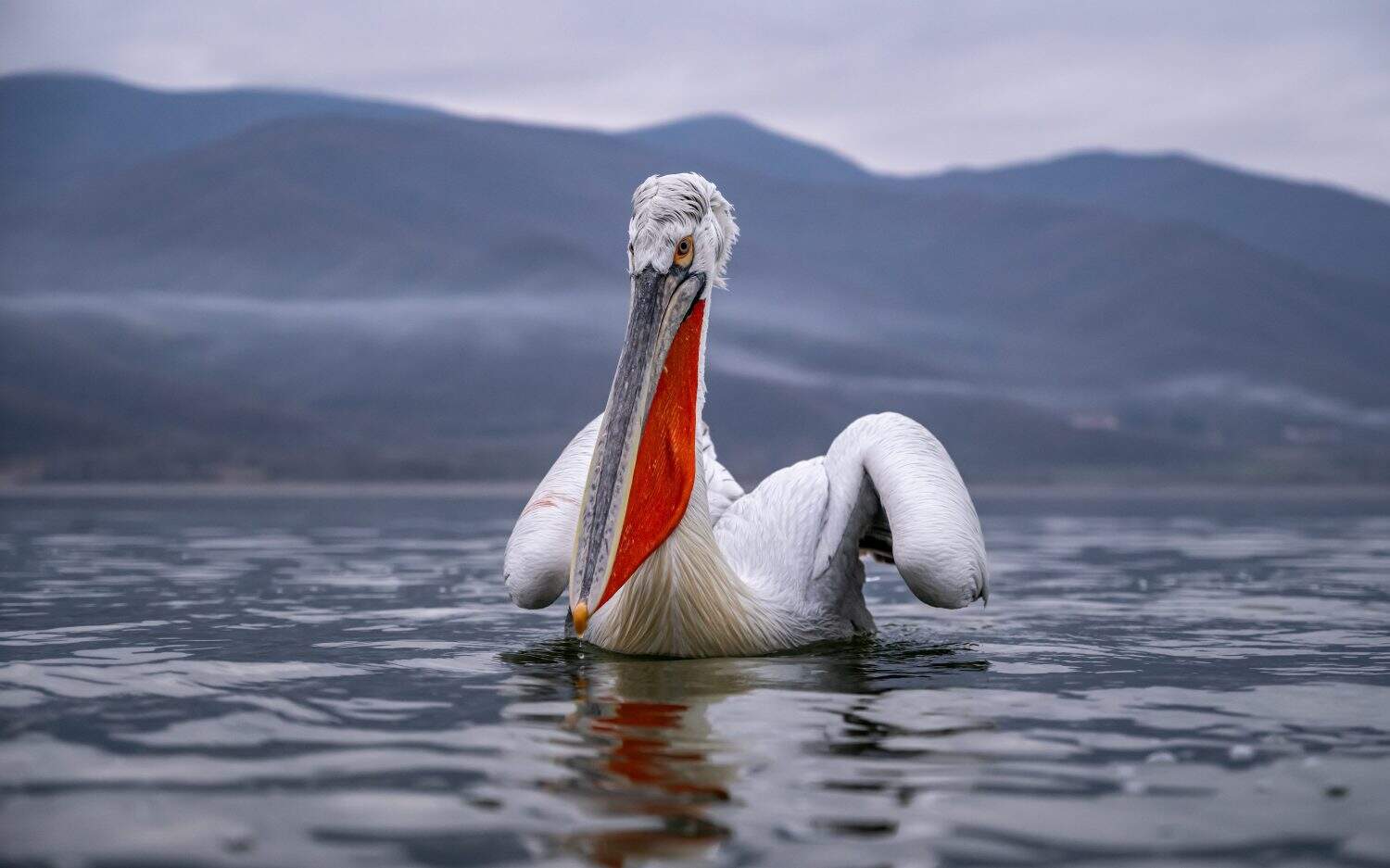
- Dalmatian pelicans are unique in that their grey bills and vibrant orange gular pouches, and white feathers can make them appear patriotic.
- It is only during breeding season that the gular pouches turn orange. They are otherwise yellow.
- Dalmatian pelicans are a “near threatened” species, with 10,000 to 20,000 left in the world.
Pelicans, in general, are interesting-looking birds. The key feature that stands out is their gular pouch, which can hold gallons of water at a time. While this feature is unmatched by any other bird species, pelicans are not vibrantly colored birds. Overall, pelicans were not blessed with coloration that makes them stand out in their environment. However, there is one species of pelican that stands out for its striking appearance: the Dalmatian pelican, which has a bill that looks almost patriotic.
The Dalmatian Pelican Looks Like It Stepped Out of a Painting
Pelicans are not often thought of as being colorful birds. Instead, birds living in tropical locations are adorned with feathers in colors that rival any rainbow. The exception to this rule is the Dalmatian pelican. While its name may remind people of the Dalmatian dog, the bird’s appearance is quite different, making it a marvel of Mother Nature.
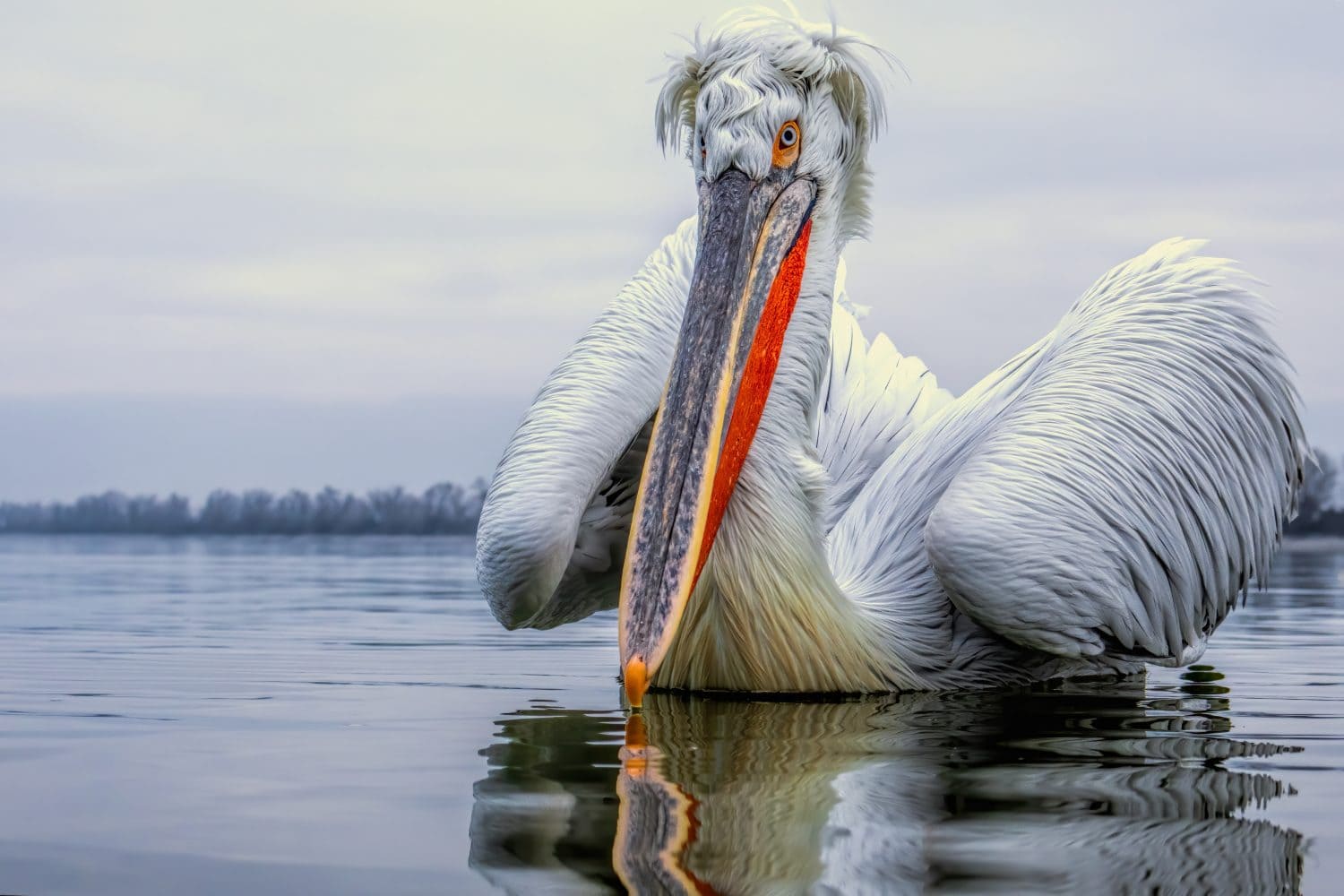
The Dalmatian pelican’s coloration stands out from that of other pelican species.
©Gerdzhikov/Shutterstock.com
The Dalmatian pelican is not covered in black-and-white spots. Instead, as seen in a particularly striking Instagram picture taken by Mark Smith Photography, the feathers are white, gray, and silver. It is not the feathers that grab the attention, however. The bill of the Dalmatian pelican, which can range from yellow to whitish gray, sometimes appears blue as it reflects the color of the water.
If you look closer, you’ll notice the gular pouch is bright orange. However, this intense coloration only occurs during mating season; at other times of the year, it is yellow. When these colors are combined, as seen in the picture—which resembles a painting more than anything found in nature—the Dalmatian pelican appears almost patriotic. The Dalmatian pelican is truly in a class of its own.
The Dalmatian Pelican Is Massive
There are eight different species of pelicans. While each has impressive features—such as a large wingspan, an oversized bill, or remarkable fishing prowess—the Dalmatian pelican may be the grandest of them all.
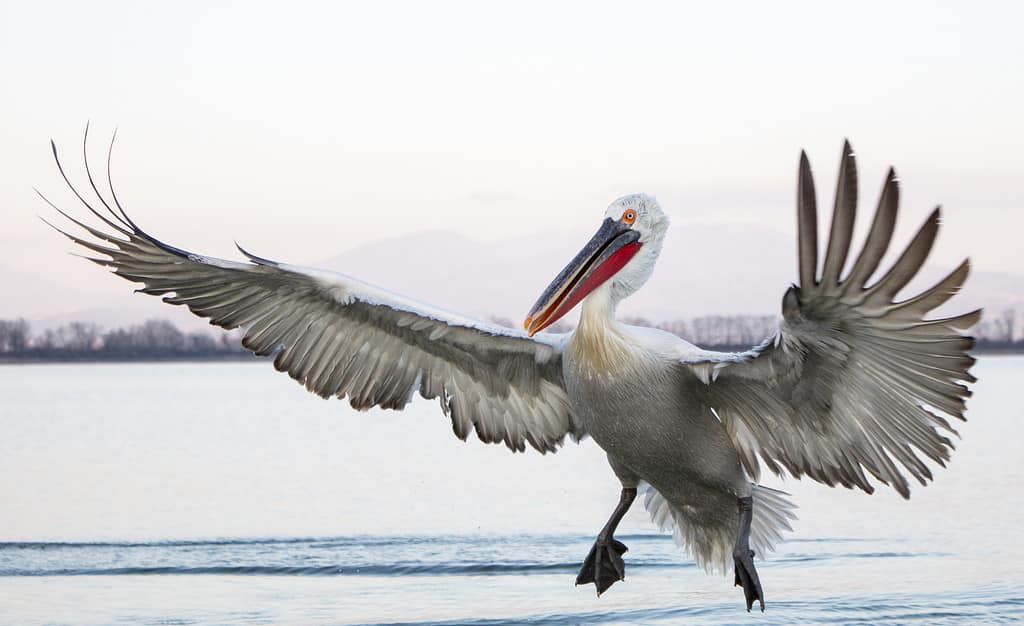
Dalmatian pelican of Kerkini Lake.
©
The Dalmatian pelican is not only massive, but it is also the largest of all the pelican species. From tip to tail, the Dalmatian pelican measures in at over six feet long. However, this is nothing compared to its wingspan, which is nearly double its length at 11 feet or more.
With its size, it would be easy to imagine the Dalmatian pelican weighing quite a bit. This is not the case. Instead, the Dalmatian pelican has hollow bones. Hollow bones help the Dalmatian pelican not only to fly but also to swim effortlessly. As a result, a Dalmatian pelican typically weighs between 22 and 33 pounds, even though it appears much larger. According to the Phoenix Zoo, this makes them expert swimmers and flyers, but their large size tends to make them awkward on land.
Why is the Dalmatian Pelican’s Bill and Gular Pouch So Special?
The spectacular colors of the Dalmatian pelican’s gular pouch are quite unique. However, it is the overall structure of the beak and the gular pouch combined that is special. Given its size, it should come as no surprise that the Dalmatian pelican’s beak is lengthy. Measuring 15 to 18 inches long, the beak is also outfitted with a hook at the end to grab onto fish when hunting.

Dalmatian pelicans’ bills and gular pouch make them impressive fishermen.
©Georgios Alexandris/Shutterstock.com
Aside from its bright colors, the gular pouch is also a very useful fishing apparatus. The Dalmatian pelican scoops up water to fill its pouch (up to 46 cups at once!), which is then filled with fish from its watering hole. The water is then filtered out, leaving only the fish behind. This fishing method is necessary because the Dalmatian pelican consumes up to four pounds of fish each day. If it had to rely solely on its beak to catch fish, it likely would not meet its daily food requirements.
Dalmatian Pelicans Are Monogamous
Among pelican species, the level of dedication shown by males varies. When it comes to Dalmatian pelicans, once a pair forms a bond, they are monogamous. Both males and females tend to the nest and help raise their young during the breeding season, which typically results in two to three chicks.

Dalmatian pelicans are monogamous during the breeding season.
©Shubhrojyoti/Shutterstock.com
During the breeding season, the pelican’s gular pouch turns bright orange. This coloration signals to other Dalmatian pelicans that the pelican is open and ready to form a pair. The potential pair will engage in courtship, and once they choose each other for the season, they remain together.
Dalmatian pelicans may be monogamous during a breeding season, but they do not necessarily mate for life. Each mating season brings new options. However, because Dalmatian pelicans return to the same breeding grounds annually, many form long-term monogamous bonds. This bond is typically broken only if one bird does not return to the breeding grounds or is no longer able to breed.
Are Dalmatian Pelicans Endangered?
Dalmatian pelicans have become extinct in some regions they once called home. During the medieval times, these massive birds lived in Britain. However, due to drained waterways and overhunting, Dalmatian pelicans disappeared from the region.
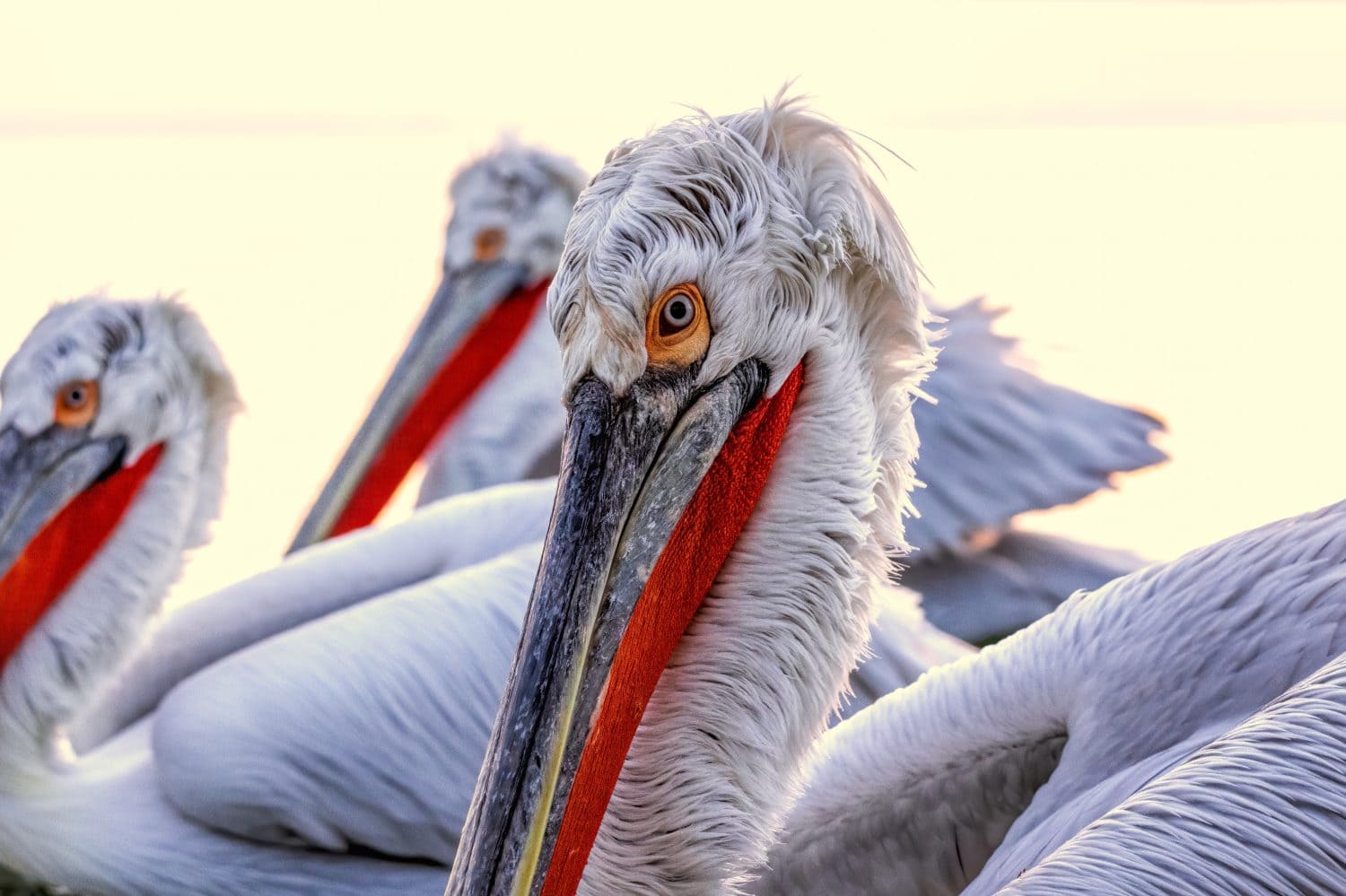
Dalmatian pelicans are classified as “near threatened” and continue to face population declines.
©Gerdzhikov/Shutterstock.com
Thanks to conservation efforts, there are plans to restore waterways where the birds once lived, giving them a fighting chance of avoiding extinction. This is a necessary step, as the birds are classified by the IUCN as “near threatened” and their population continues to decline.
Today, there are an estimated 10,000 to 20,000 Dalmatian pelicans left on the planet. This is substantially higher than the all-time low of just 1,000 Dalmatian pelicans in 1980. However, considering there were millions of Dalmatian pelicans on the planet at the beginning of the 1800s, this demonstrates how much the population has declined in just a couple of centuries.
Threats Dalmatian Pelicans Face Today
Some of the threats that led to the Dalmatian pelican’s decline are the same as those that existed thousands of years ago. There are also new dangers that now threaten these impressive birds. The threats that Dalmatian pelicans face include:
- Habitat loss
- Human interference in waterways via fishing and boating
- Climate change
- Powerline collisions
- Pollution
- Poaching

Dalmatian pelicans are threatened by habitat loss, pollution, poaching, and more.
©Shubhrojyoti/Shutterstock.com
Conservation groups are working to save the Dalmatian pelicans. The primary focus is on the locations where most nesting grounds are found. In total, 27 nesting sites are receiving habitat improvements in countries such as Ukraine, Romania, Bulgaria, and Greece. In other locales where the Dalmatian pelican nests in smaller numbers, such as Albania, North Macedonia, Montenegro, and Turkey, the goal is to increase populations by creating safe environments that the birds return to.
Although the Dalmatian pelican is not yet an endangered species, without intervention, its population will continue to decline worldwide. The hope is that, before this point is reached, Dalmatian pelican populations will have stabilized or even increased. This will give the Dalmatian pelican a chance to survive at a time when so many animal species are being lost from the planet forever.