

What is a marble fox? Do they make good pets? Are marble Arctic foxes the same as marble foxes? A reader recently asked these questions, so we got to work and found the answers. Let’s dive in!
What Is a Marble Fox?
Marble foxes aren’t a naturally occurring species. Instead, they’re the offspring of red and silver foxes purposefully bred by humans. Other names for the animal include “Canadian marble fox,” and “Arctic marble fox.”
What Makes Them Special?

Marble foxes are the human-bred offspring of red and silver foxes.
©Geoffrey Kuchera/Shutterstock.com
These foxes are special because of their fur — their thick, gorgeous, coveted fur. Secondly, they’re delightfully clever animals.
The feature that is most loved about the marble fox is the symmetrical, dark pattern above their eyebrow and along their nose. Some marble foxes have black stripes that frame the sides of their face, though these markings are especially rare. The marble fox is bred for various blends of grey, black, and brown, just like marble. They are also known for their exceptionally furry, pointy muzzles and large ears.
How This Beautiful Fur Came to Be
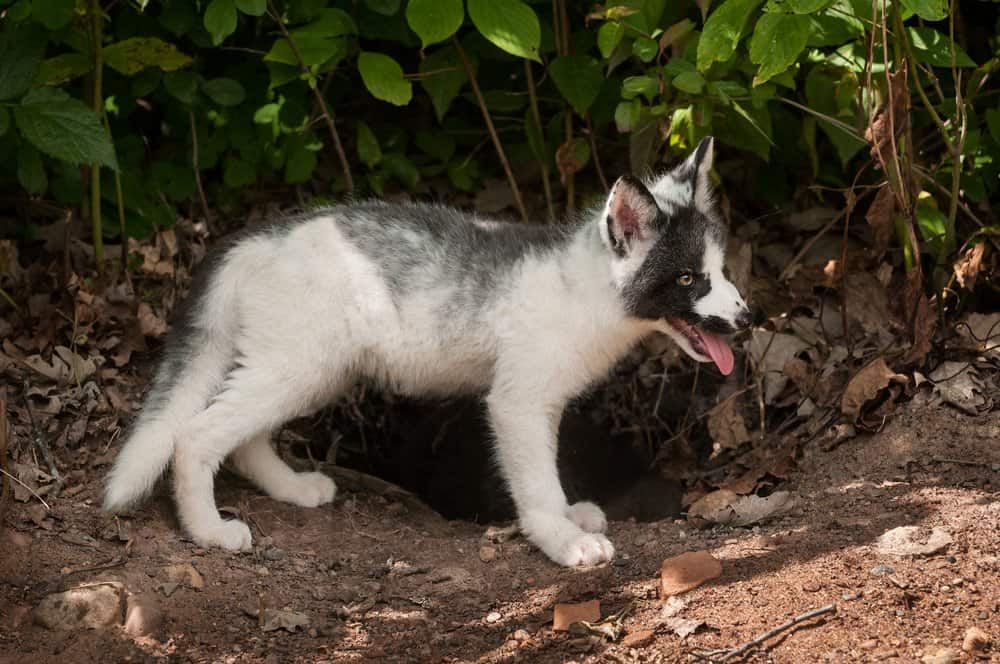
The Canadian marble fox’s coloration is a genetic mutation known as a “color phase.”
©Holly Kuchera/Shutterstock.com
As their name suggests, Canadian marble fox coats are reminiscent of stone marble: mostly white with delicate streaks of gray, black, or tan artistically woven throughout.
Scientifically speaking, their coloration is a genetic mutation known as a “color phase.” The highlight hue typically runs down the spine and across the face. Many look like they’re wearing old-fashioned burglar masks.
When Were Marble Foxes Created?
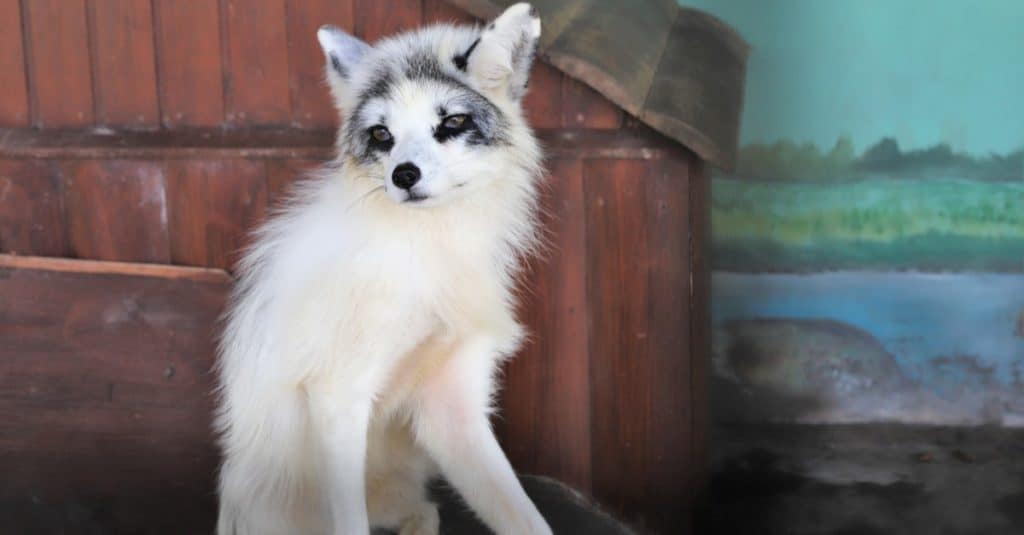
The variations in the fur patterns of the marble fox make them unique.
©Michkasova Elena/Shutterstock.com
There is very little information on the history of the marble fox, other than a brief statement from the Fur Commission USA stating that the first hybrid marble fox was born in a litter on the Norwegian farm of a man named Sverre Omber in 1945. While details are unclear, breeders took offspring and began selectively breeding them for the fur trade over time.
Do Marble Foxes Make Good Pets?
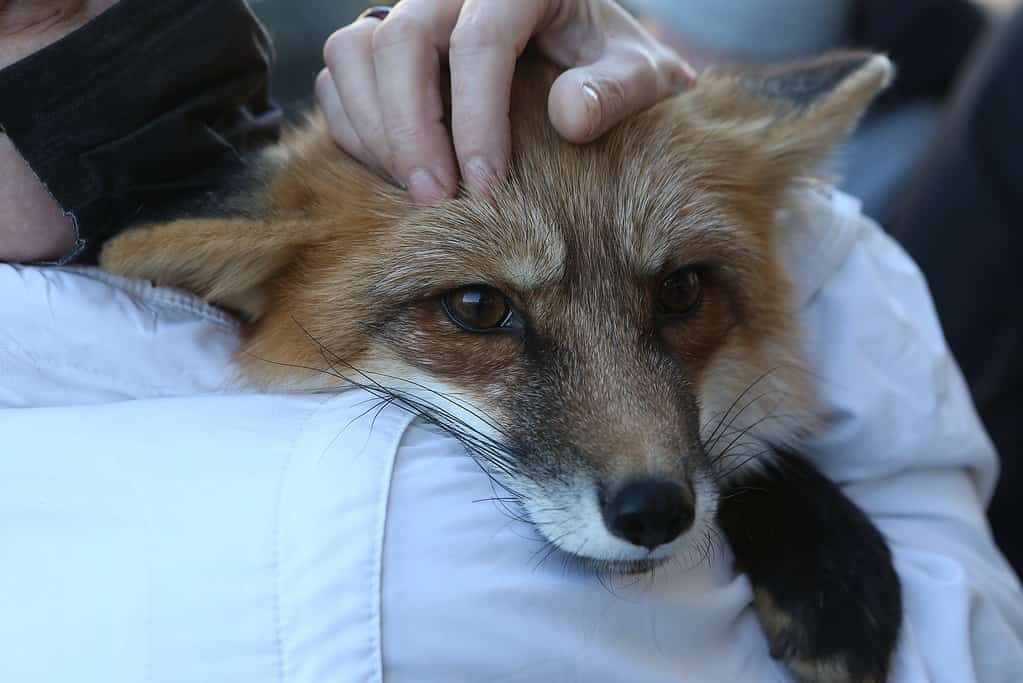
Foxes can make good pets because they’re lively, affectionate, and playful — but there’s more to it than that.
©Sergey Bezgodov/Shutterstock.com
Foxes are popular exotic pets, but they’re illegal to keep in 35 states. Folks in the following jurisdictions can legally own foxes, but make sure to check with your local county and city codes as well:
- Arkansas
- Florida
- Indiana
- Kentucky
- Michigan
- Missouri
- Nebraska
- New York
- North Dakota
- Ohio
- Oklahoma
- South Dakota
- Tennessee
- Utah
- Wyoming
But just because you can have a pet fox doesn’t mean you should have a pet fox.
People with cats and small dogs shouldn’t get foxes due to their prey drive. Chickens are also untenable yard partners.
Before welcoming a pet fox into your home, do the research — and then do it again! Living with one is vastly different than living with a dog or cat. For instance, you don’t need a large, enclosed outdoor pen with a roof and three-story tower for the average family pet — but for a fox, it’s a must. They enjoy straw, dirt, and hiding places for playtime as well.
Activity and lots of attention are also on the marble fox must-have list. If these needs aren’t met, they will get destructive.
Bonding and Buying

Having a pet fox is vastly different than a having pet dog or cat, and one should do their research before welcoming a pet marble fox into their home.
©Holly Kuchera/Shutterstock.com
The first six months are critical bonding times for foxes, and finding one as young as possible is best. It could mean the difference between a successful and fraught relationship. Foxes are typically born in April, so start contacting breeders in March.
According to owners, talking to them incessantly during the baby bonding period goes a long way. They learn your voice, which strengthens the relationship.
Marble Fox Nature

It is important to bond with a pet fox within the first six months of ownership to establish a bond.
©Geoffrey Kuchera/Shutterstock.com
Spaying and neutering foxes is a good idea. However, unlike dogs and cats, they will continue to mark their territory post-procedure.
Another difference between traditional pets and foxes is predictability — or a lack thereof. We learn our dogs’ and cats’ patterns because they establish daily routines. Their reactions are uniform and predictable, which allows us to plan for their comfort and ours.
But marble foxes — like all wild foxes — are famously unpredictable. One day they may respond positively to a given stimulus only to reject it the next.
Final Things to Understand Before Getting a Fox

Remember: even pet foxes are still wild animals.
©Tatiana Dokolina/Shutterstock.com
- If you’re in search of a cuddle buddy, marble foxes aren’t the answer. Yes, they have personalities — and are impressively independent — but they’re not super affectionate. Many don’t even like to be touched.
- Even if they bond with you, foxes will run away if given the opportunity. As such, quality enclosures are essential.
- Foxes cannot be punished like dogs and cats. Attempting to do so could end in disaster.
- Scent sensitive? You may want to think twice about living with a marble fox. They smell way worse than dogs. Their stench is on par with skunk stank.
- Foxes like to dig and burrow in holes to escape the heat; make sure to provide this for them.