
Quick Take
- Dogs and wolves lick muzzles and faces to greet each other and establish pack hierarchy.
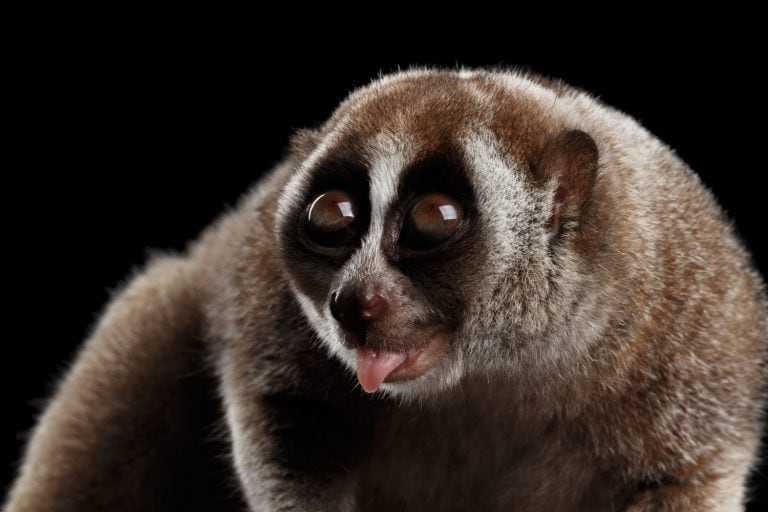
- Lemurs use a special toothcomb in their mouth to groom each other. This looks like nuzzling and kissing.
- When contact between flamingos is beak-to-beak, it signals a territorial fight rather than affection.
- Male gentoo penguins present tiny pebbles to the females to show affection.
With Valentine’s Day upon us, it’s the perfect time to check in on how the animal kingdom is gearing up for the most romantic holiday of the year. Just kidding. Animals don’t send sappy greeting cards or buy heart-shaped boxes of chocolates. But they do show affection, and they don’t need a calendar prompt to do it. Here are 14 of our favorite animals who look like they’re kissing! But are they? Read on to find out.
Domestic Dogs
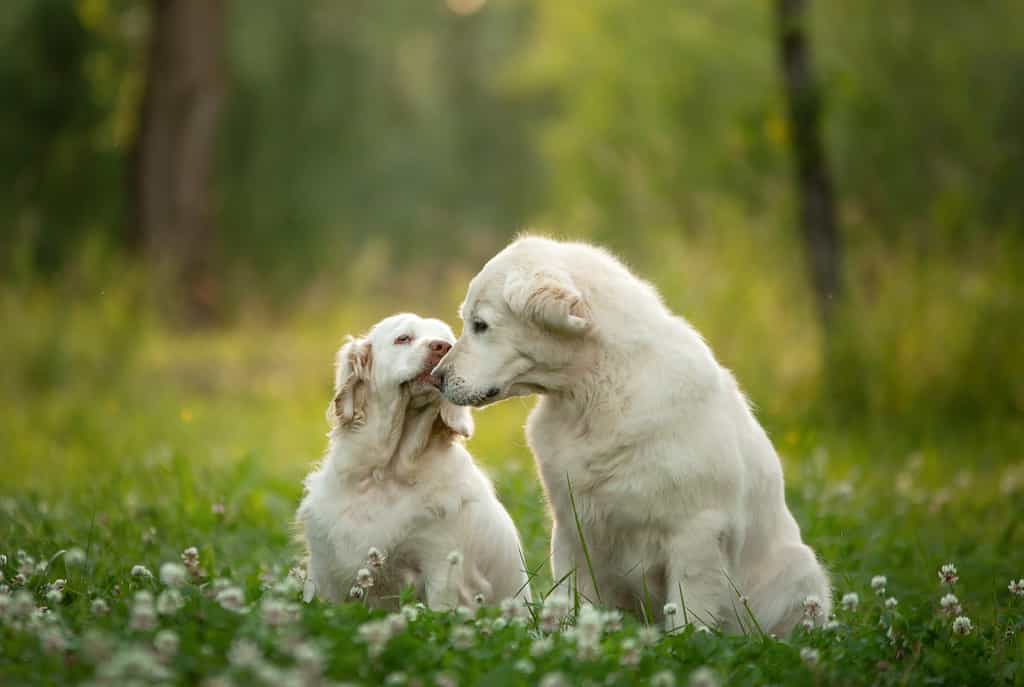
Dogs lick each other’s faces for many reasons.
©Anna-av/iStock via Getty Images
Dogs lick each other’s faces often, making it look like they are kissing. This instinct is driven by their pack mentality. A dog “kiss” is a way of social bonding. It tells the other dog, “Hey, you’re part of my tribe.” It can also be a sign of submission, letting the other dog know they come in peace.
The dog’s drive to lick also has to do with a specific sensory organ on their nose, the vomeronasal organ. This organ helps them “taste” scents. So when a dog licks another dog, or even you, it’s their way of gathering data.
Pigeons
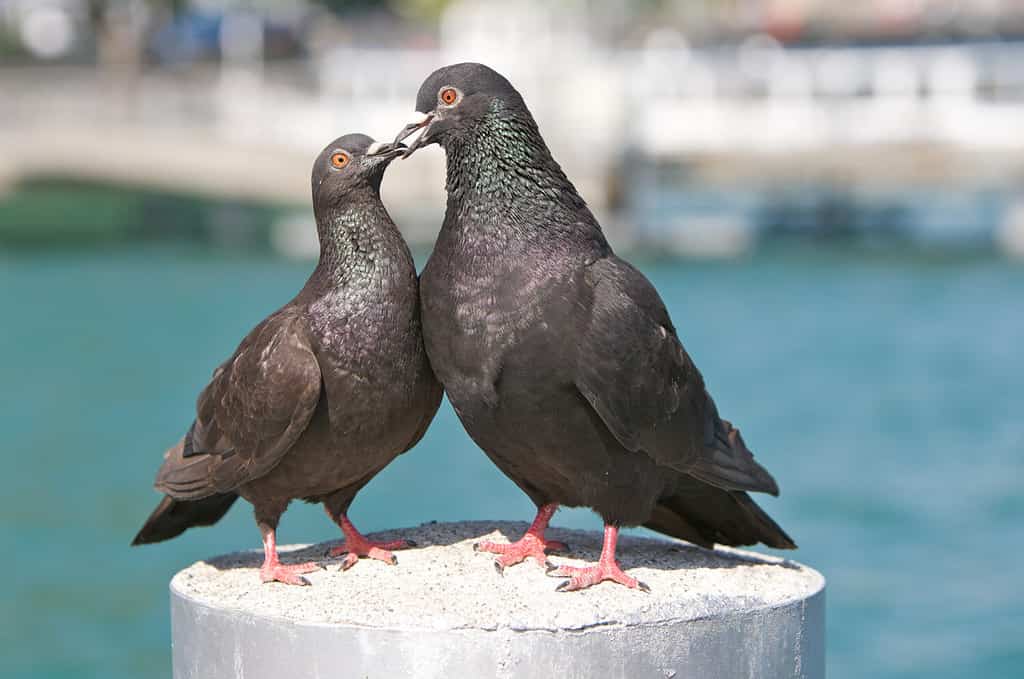
Birds of a feather really do flock together, especially when romance is in the air.
©potomacpix/Shutterstock.com
Almost everyone has seen two pigeons who appear to be canoodling on a park bench or tree branch. Pigeons are monogamous and often mate for life. So, in some circumstances, they really are kissing—at least pigeon style. The beak-to-beak contact strengthens their bond and helps them get in the mood to mate.
Other times, pigeon pairs are doing something called ritualized feeding. As chicks, pigeons get their food from their parents’ mouths. As adults, the male will often regurgitate a small bit of food into the female’s beak. It reassures the female that he will be a good provider for their future children.
Monkeys and Apes
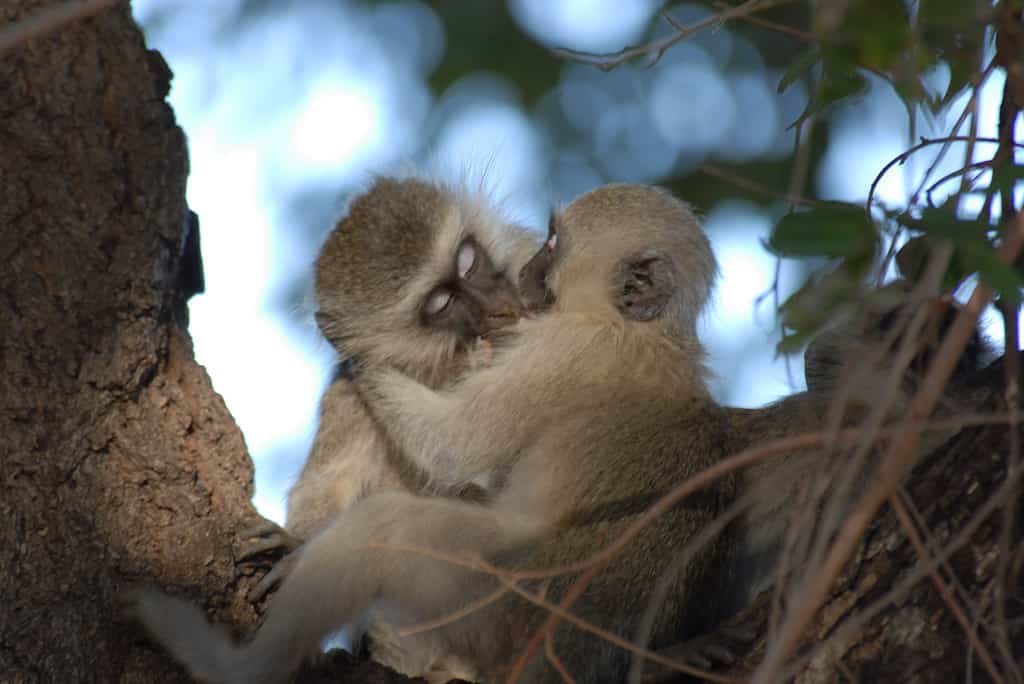
These vervet monkeys are just one primate species that appear to kiss.
©Amanda Coetzee/iStock via Getty Images
Many monkeys and apes can be spotted performing mouth-to-mouth contact that looks like a kiss. For some, like the bonobo, kissing is pretty similar to a human kiss. They use it as a way to resolve conflicts, greet each other, and reduce stress. They even use their tongues! Other primates, like orangutans and chimpanzees, press their lips together to bond with offspring or end a grooming session.
But other primates appear to kiss for very different reasons. Vervet monkeys use their lips and teeth to extract hard-to-reach parasites and keep up with their obsessive grooming habits. Hardly romantic. Other primates, like the macaque, pout their lips and appear to blow kisses as a sign of aggression. It’s a warning to others to back off.
Wolves
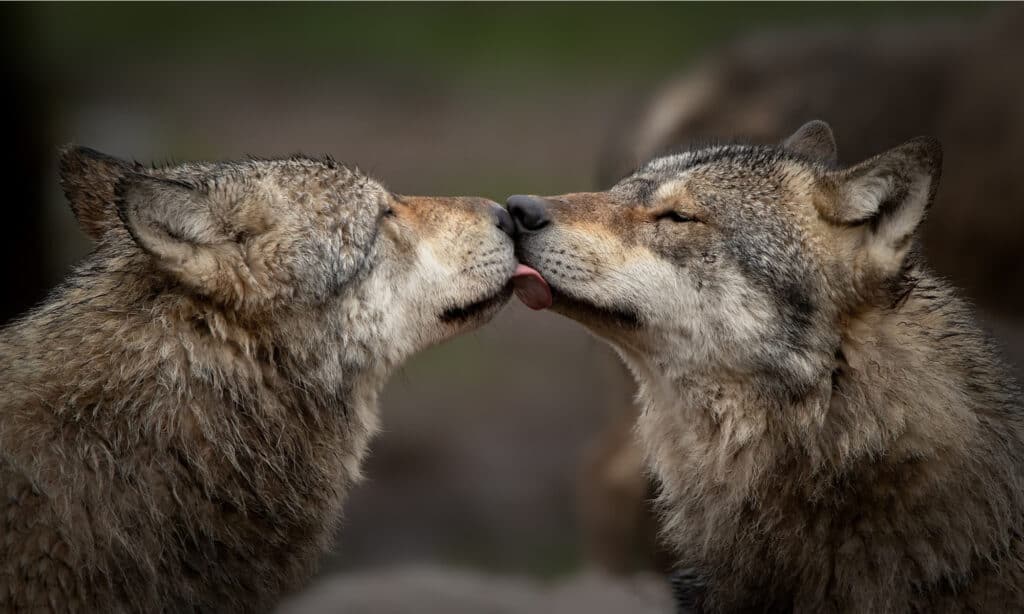
Wolves “kiss” as a way to greet each other and show their rank in the pack.
©Pat-s pictures/Shutterstock.com
Wolves, like dogs, are pack creatures. Their reasons for engaging in what looks like kissing revolve around that pack mentality. When a dominant wolf, like the alpha, returns to the pack after being away, the submissive wolves will lick the alpha’s muzzle in greeting. It’s a sign of gratitude. They’re thrilled their leader is back and want to enforce the pack bonds and hierarchy.
This group greeting usually involves a lot of frenetic energy, too. The pack jumps around and lots of whining is involved. There may even be some “muzzle pinning,” where one wolf holds another’s snout in their mouth. Mated wolf pairs will also “kiss,” but that is done to reinforce their partnership rather than as a romantic gesture.
Lemurs
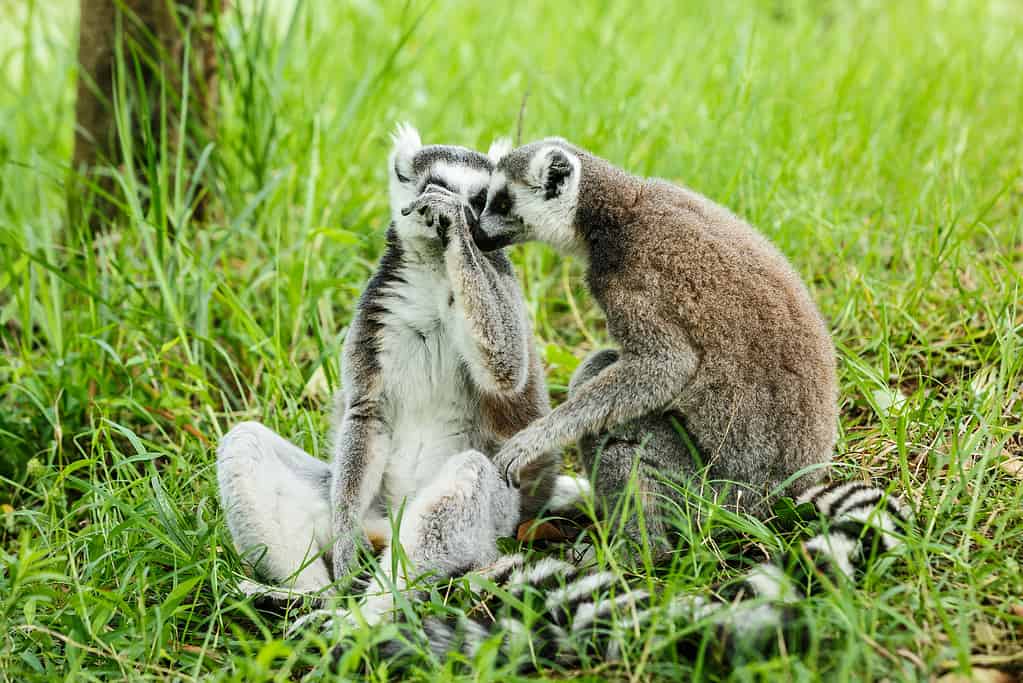
Lemur kissing is really part of their grooming habits.
©zhaojiankang/iStock via Getty Images
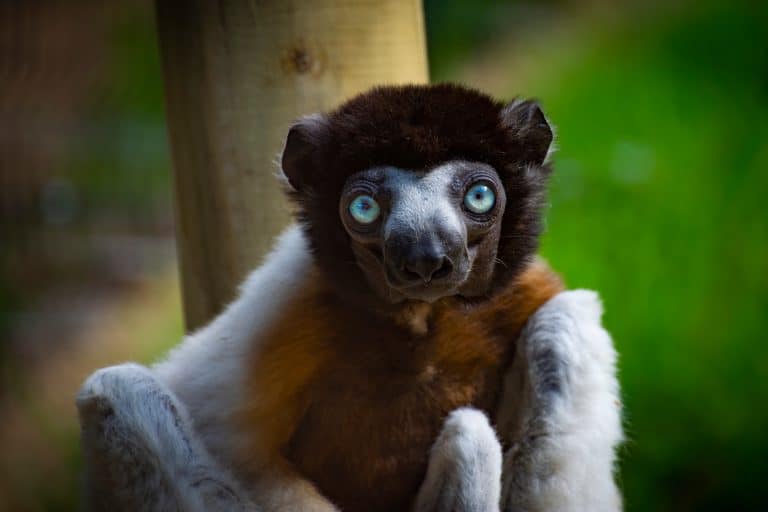
Lemurs may look like they’re kissing when they’re up close and nuzzling. What they’re actually doing is grooming, and they use a special tool to do it. Their lower jaws have a unique design where their teeth are tilted forward. It’s called a toothcomb, and it does pretty much exactly what its name suggests.
What looks like lemur kisses is actually the animals getting close enough to use their toothcomb to groom each other’s fur. Lemurs take the phrase “you scratch my back, I’ll scratch yours” literally. To keep the toothcomb clean, lemurs have a tiny tongue-like structure called a sublingua underneath their main tongue. They use it to extract fur and debris from the toothcomb after each grooming session.
Black Bears
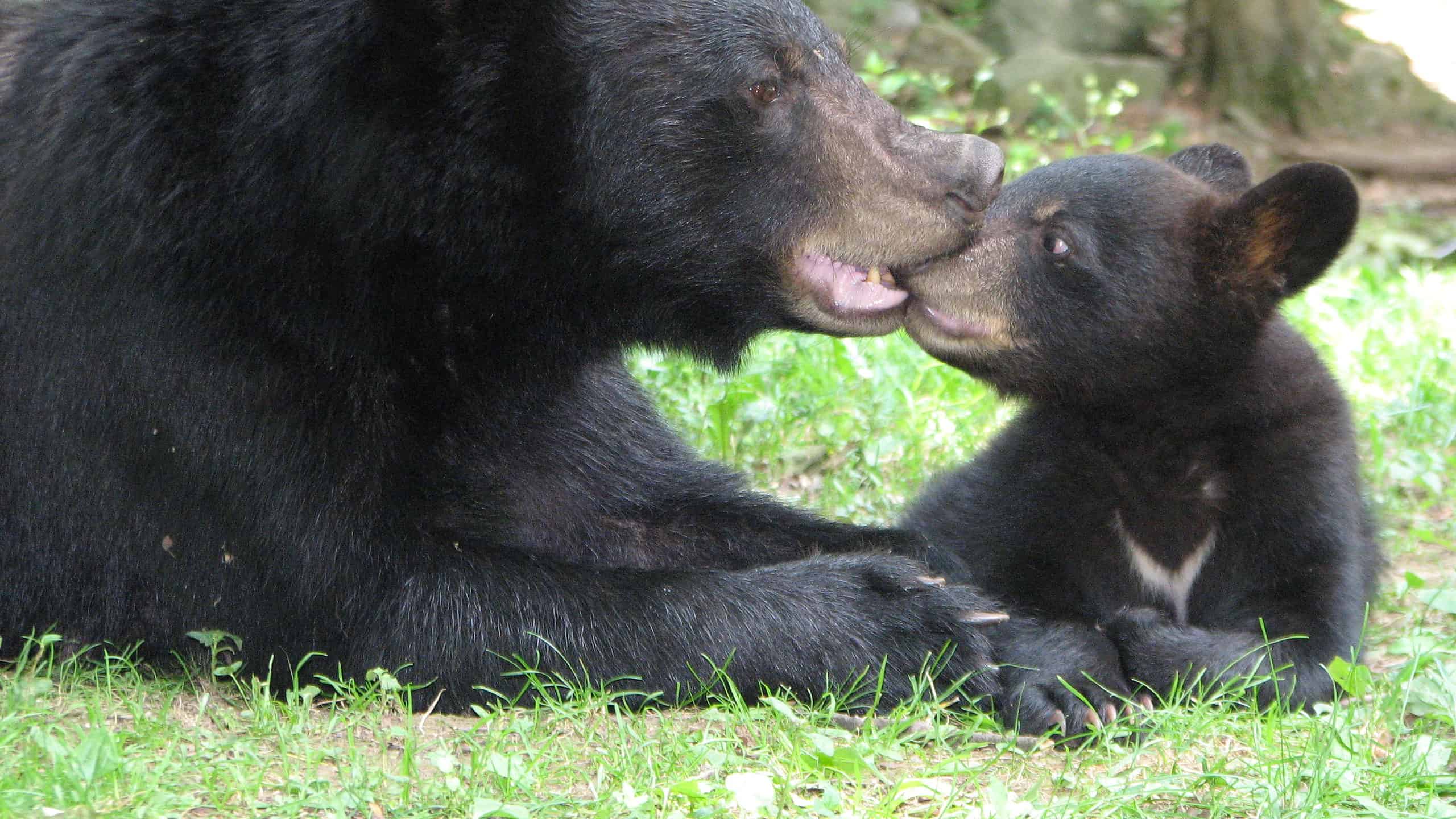
A mother bear gently nibbles at her cub as they lie on the grass.
©Susan Kehoe/Shutterstock.com
Black bears do engage in muzzle nuzzling among family members or as part of mating and courtship rituals. Adult bears will lick another bear’s mouth or face in greeting if they know the other bear. During courtship and mating, the male and female bear will stay together for several days. During that time, they will nuzzle and lick each other’s faces, especially after eating.
But it is mother bears and their cubs who demonstrate the closest thing to a human kiss. Often, mother bears will be seen cradling a young cub in their forelegs, then licking and nibbling at the cub’s head and face. In response, the cub will often “purr” to show its contentment. It’s a true mother-and-child bonding moment.
Tree Squirrels
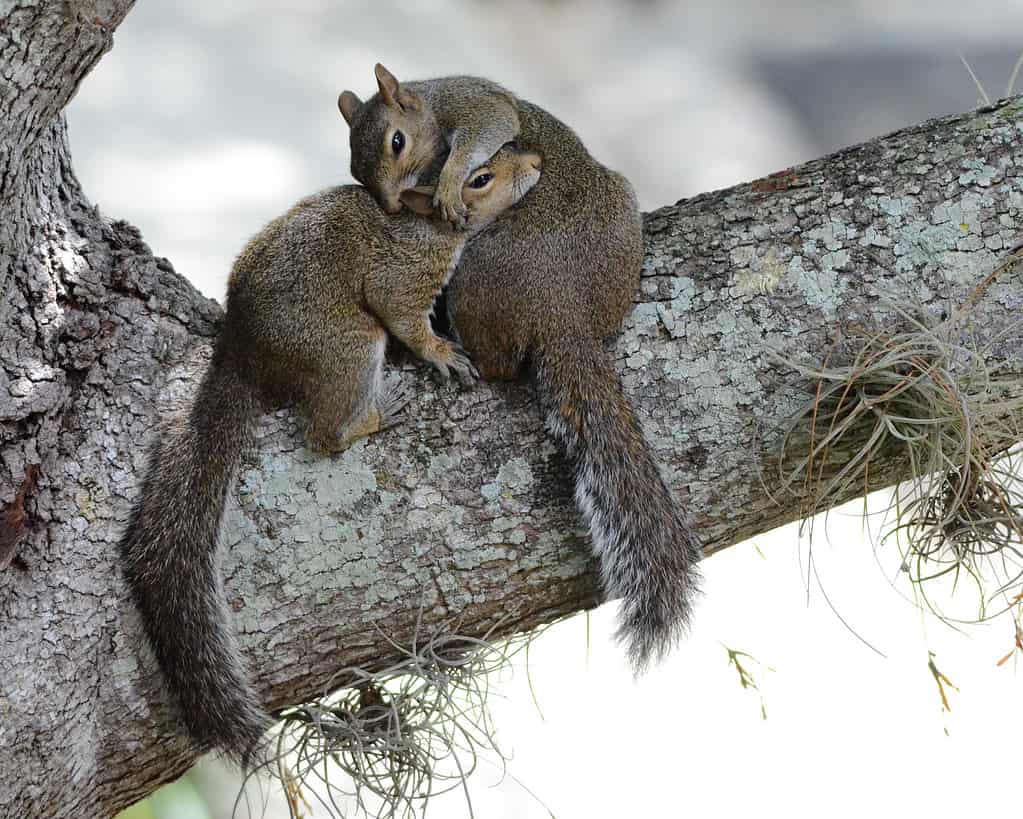
A squirrel couple embraces during mating season.
©iStock.com/BetsyMoseley
For squirrels, touching their noses and mouths together is an important ritual. It’s a social greeting that helps each squirrel identify the other as friend or foe. Squirrels are notoriously territorial. There are scent glands around their mouths and on their cheeks that emit a signature scent unique to each squirrel. When two squirrels encounter each other, their brief “kiss” tells them everything they need to know.
There are times, though, when squirrels touch noses for different reasons. One is during courtship. Males will usually chase females as part of the process. Once they catch up with each other, a nose touch reassures the female that the male is more interested in mating than stealing her treasured nuts. Sometimes you’ll also see mother squirrels touching noses with their offspring. It’s the offspring’s way of getting their mother’s attention.
Prairie Dogs
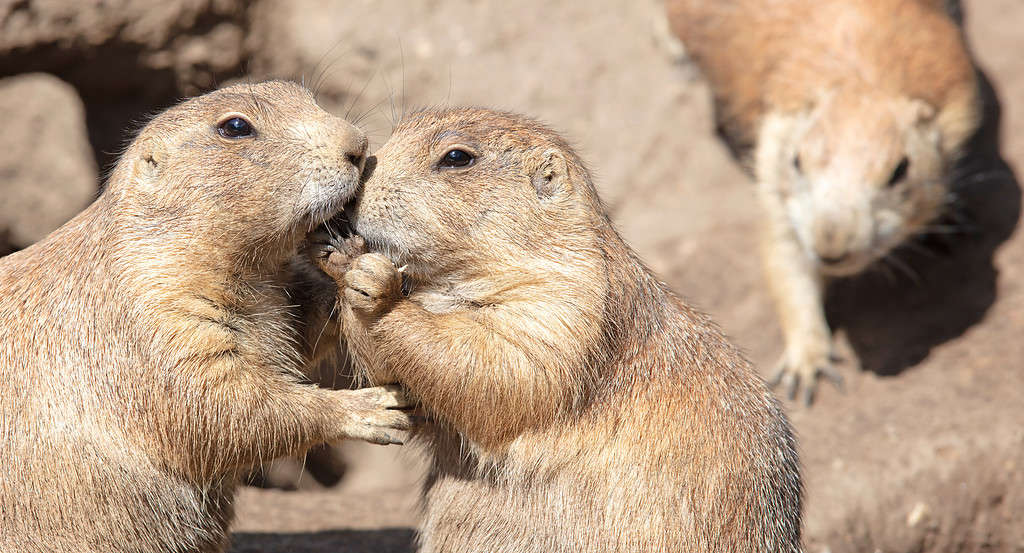
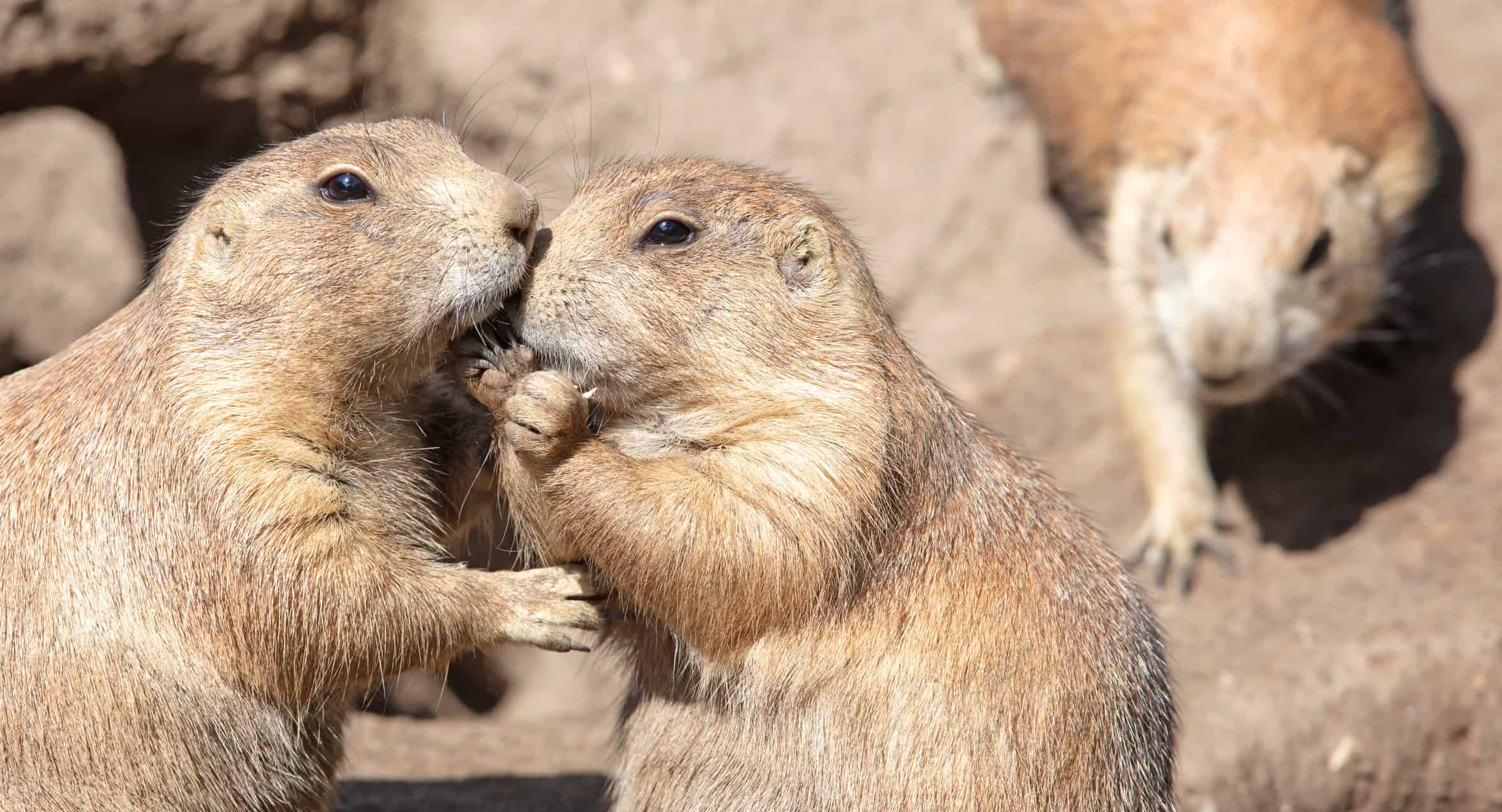
Prairie dogs are some of the most “kissiest” animals on the planet.
©MyImages_Micha/iStock via Getty Images
If you’ve ever seen a group of prairie dogs in the wild, you likely saw a lot of lip-to-lip action. But it isn’t necessarily an affectionate thing. Prairie dogs form large colonies, with hundreds of them living together in vast underground colonies. But not every dog on the prairie belongs to the same colony, and keeping each colony safe is every prairie dog’s mission. When two prairie dogs meet, they cautiously touch their mouths. Thanks to refined scent glands around their mouths, prairie dogs can instantly identify if the other is part of the underground family or a member of a rival faction.
Penguins
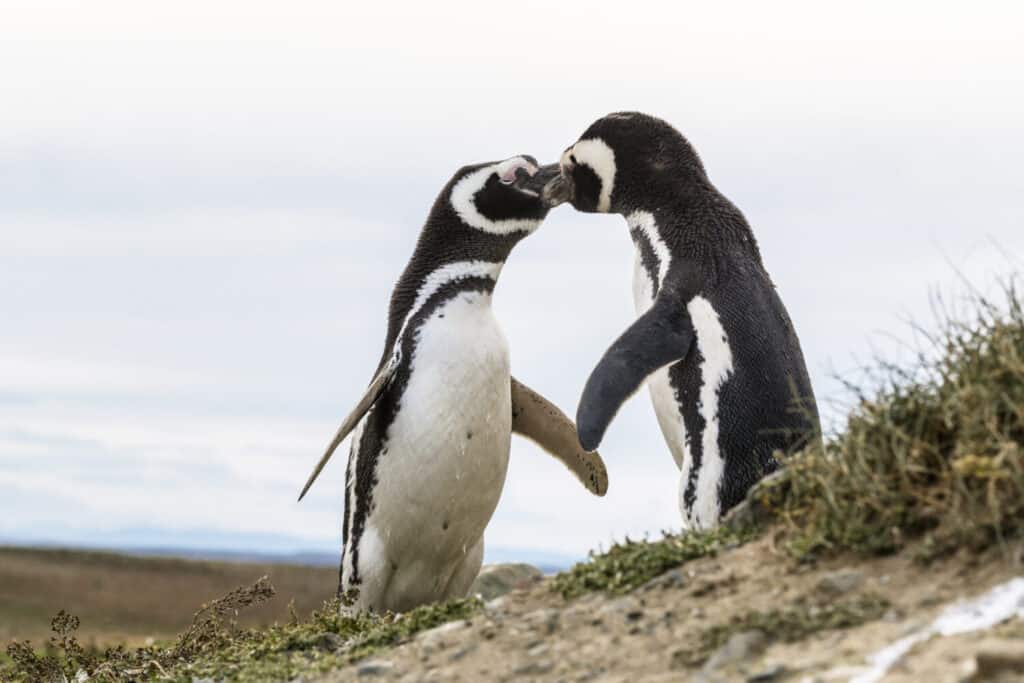
Penguins take their mating seriously.
©Sergey Didenko/Shutterstock.com
For penguins, life literally depends on finding and keeping a mate. So it’s no surprise they have an arsenal of kissing-like strategies to win over a partner. The most common beak-based maneuver is called “billing” when two penguins rapidly tap or rub their beaks together. It is a greeting after a long absence and reinforces their partnership. It’s often followed by loud braying, with both penguins pointing their beaks at the sky.
Some species, like the gentoo, have an even more elaborate kissing ritual. The male will find the most perfect round pebble, approach the female, then drop the present at her feet. If she finds the pebble suitable, she’ll bow, the two will start “billing,” and penguin romance is born. The couple will then use the pebble to build and fortify the nest for their future egg to insulate it from the frozen ground.
Macaws
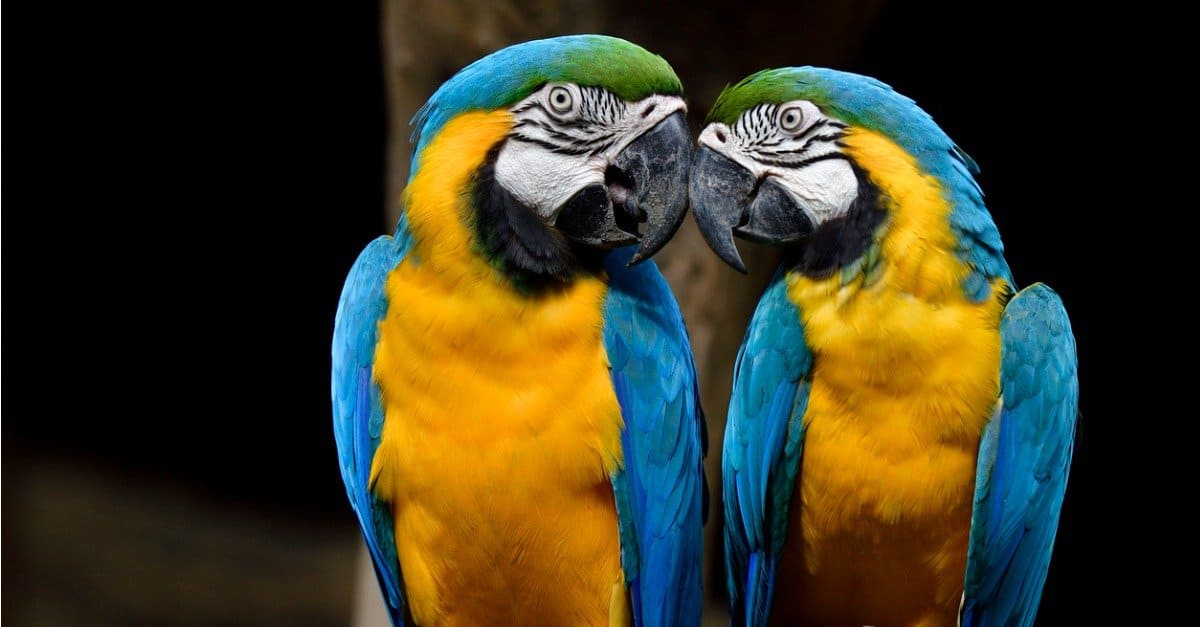
Macaws often mate for life and have a variety of kissing strategies to show their affection.
©iStock.com/PrinPrince
Macaws are famous for their monogamous approach to relationships. They often mate for life and use their version of kissing to keep their long-term relationships strong. They have three main beak activities to do this. One is billing, where they clack their beaks together to demonstrate their partnership to other macaws.
The partners also use their beaks to clean each other’s head feathers, a spot a macaw cannot naturally reach on their own. Then there’s the most common form of macaw kissing called allofeeding. The male regurgitates a small bit of food into his partner’s beak. It’s his way of telling her she made the right life partner choice. He’ll be able to keep her fed while she incubates the couple’s eggs.
Domestic Cats
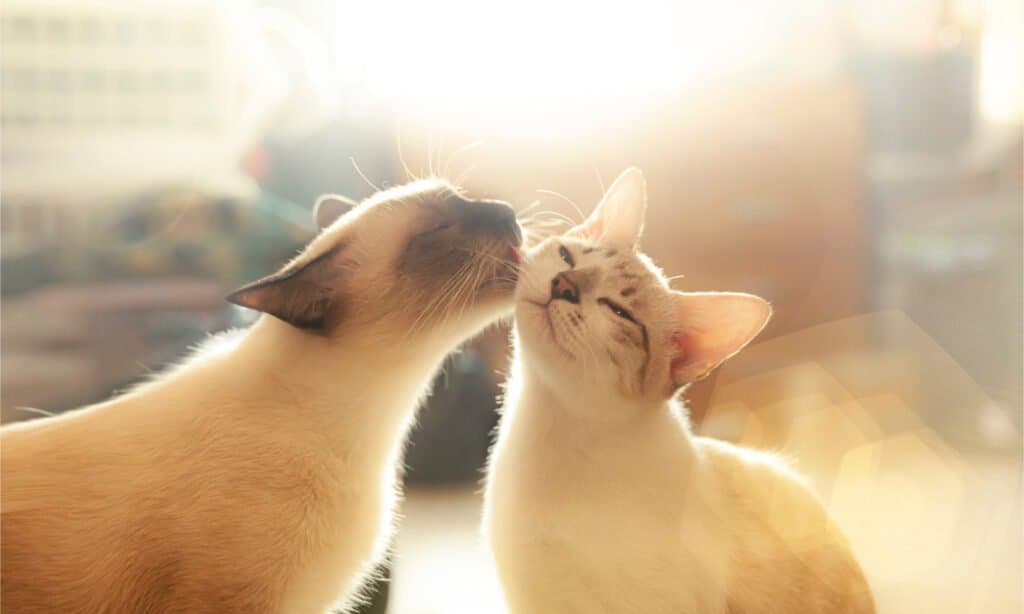
Your house cat shows affection, just not in the way you think.
©bombermoon/Shutterstock.com
Domestic cats definitely have a love language, but it’s not what you think. When you see two cats touching noses, it’s a polite hello to size up where the other cat’s been. When you see one cat licking another’s face, it’s a grooming behavior that shows affection.
When cats are really in love, they show it in a different way. They do a slow blink to the object of their affection. In the wild, closing their eyes is the ultimate vulnerability. When a cat slowly blinks at another cat (or even you), it means they trust you. That’s the closest thing to cat love there is.
Flamingos
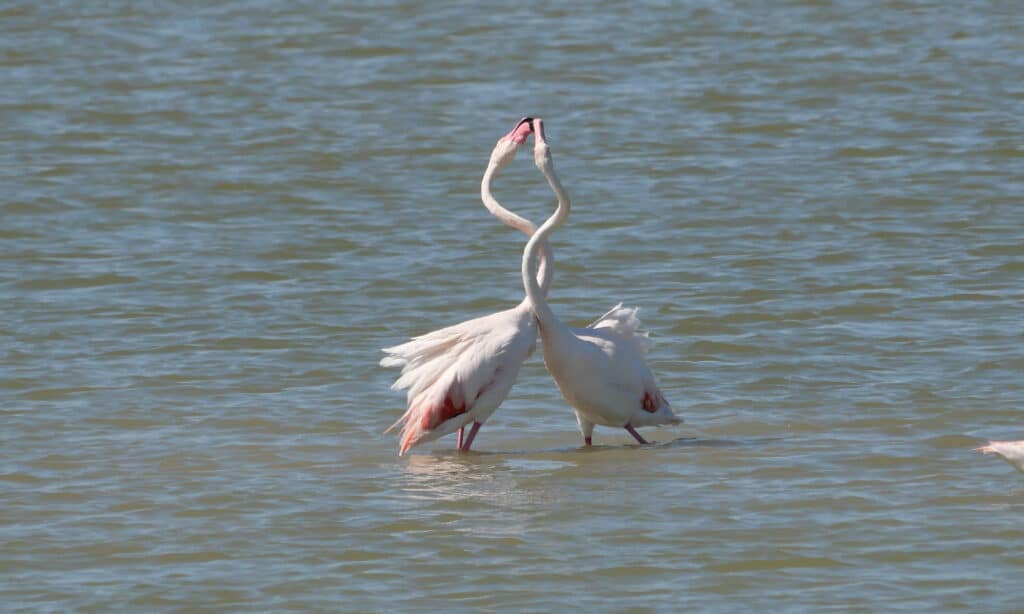
These flamingos aren’t kissing, they’re fighting.
©FilippoPH/Shutterstock.com
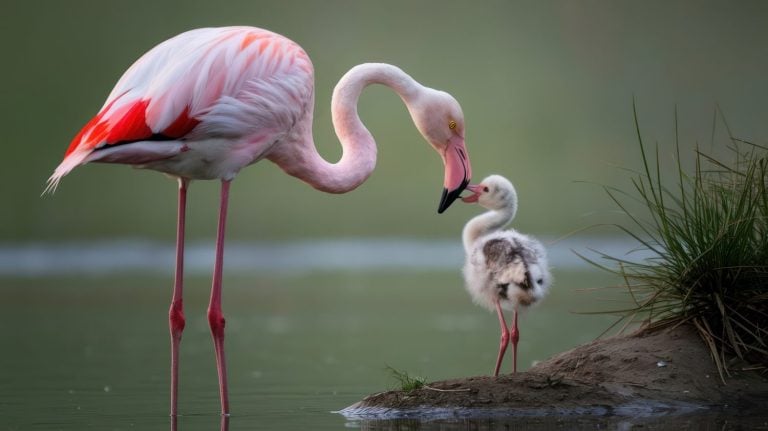
Flamingos are romantic tricksters. You will often see two of them stretching their necks and touching beaks with each other. Since they have hooked beaks, many times their beaks will become locked together, making it look like the pair is kissing. It’s anything but romantic. Flamingos are quite territorial,l and when another bird gets too close, the threatened bird goes into bird fencing mode. What looks like kissing is actually fighting.
Flamingos do use their beaks to show affection, but it is usually between parent and child. A parent will produce crop milk—a reddish-pink liquid—and deposit it into the mouths of their hungry chicks. That mouth-to-mouth contact looks like kissing, but it’s not. When flamingos really dig each other, they perform a synchronized dance, no beaks involved.
Guinea Pigs
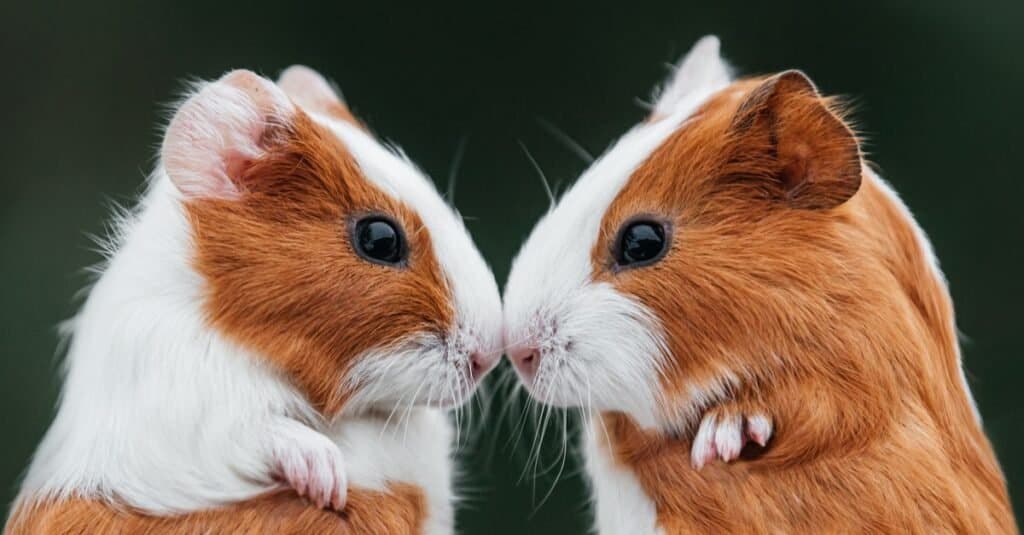
Two lovely guinea pigs nose to nose in summer. Guinea pigs have a variety of sounds to communicate with each other.
©Rita_Kochmarjova/Shutterstock.com
When guinea pigs are nose to nose, they aren’t kissing. They’re doing a quick scent swap upon meeting one another. They have highly sensitive scent glands around their nose and mouth. These scent glands let them identify friend or foe and quickly assess whether the new arrival belongs to their group.
When guinea pigs are feeling affectionate, they don’t look like they’re kissing at all. Instead, they go into performative art mode. They do something called popcorning, where they jump into the air and hop around. It means they’re happy. If they’re really excited, you might also hear a loud whistling called wheeking.
Tortoises
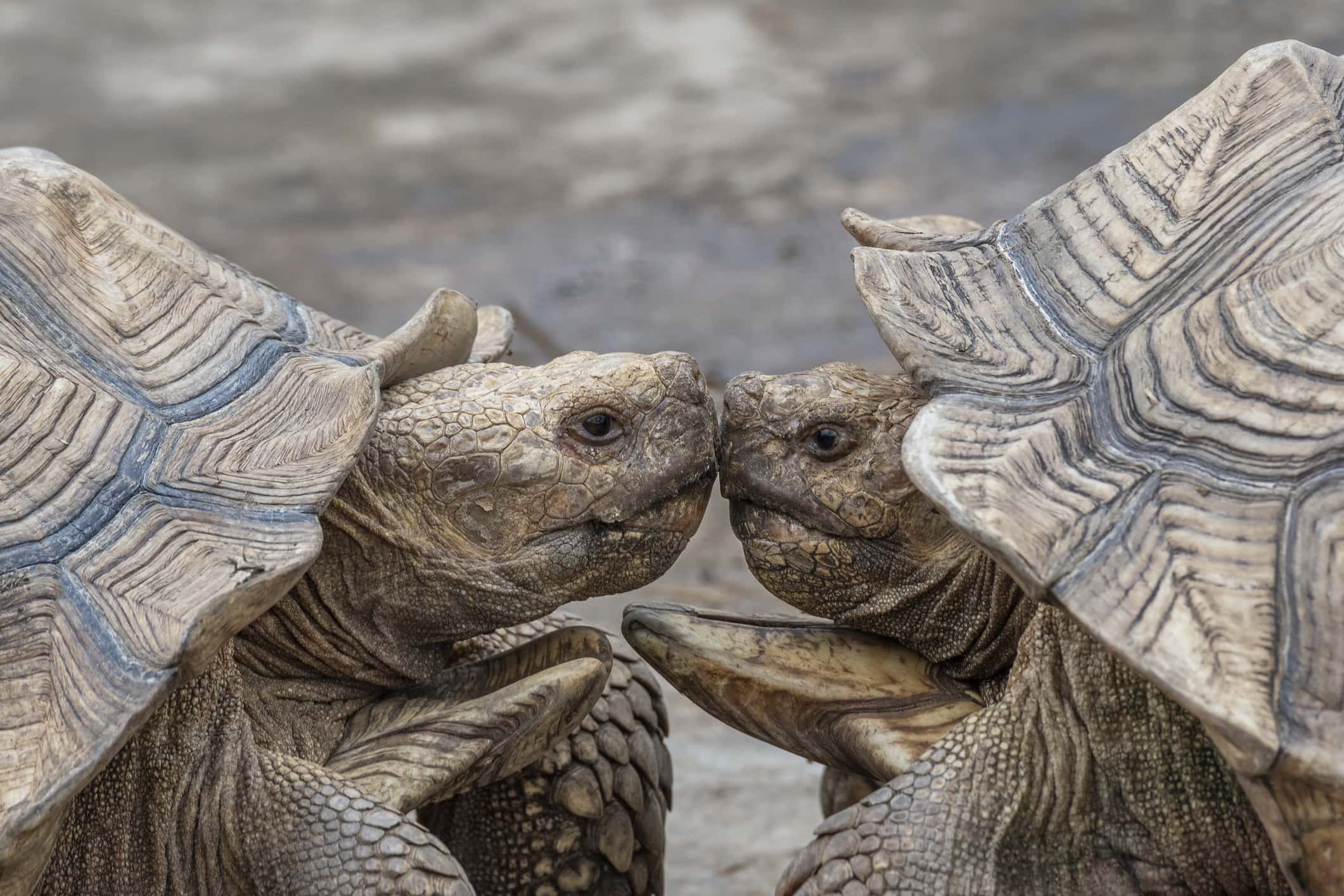
Kissing? More like measuring each other up for a fight.
©LeeYiuTung/ via Getty Images
If you see two tortoises nose to nose, you’re probably not seeing the start of a fine romance. It’s far more likely you’re about to bear witness to a tortoise rumble. Tortoises have a refined sense of smell, and they’re notoriously antisocial. When they touch noses, they’re sizing up the opposition. They’re quickly determining whether it’s a future mate or rival.
If their rival turns out to be a suitable mate, the courtship looks nothing like affectionate kissing. Instead, the male tortoise bobs his head up and down at the female, then bites her legs or the front of her shell. While humans might not think this looks appealing, for tortoises, it’s a natural part of courtship and mating.