
Quick Take
- Lesser-known cat breeds such as the Lykoi, Peterbald, and LaPerm have distinct looks and strong, people-focused personalities.
- Many were developed from natural mutations or modern breeding programs.
- Some require specialized grooming or skin care, making research essential before choosing one.
Most people can recognize a Siamese or a Persian at a glance, yet the cat world includes many rare breeds that few pet lovers encounter. Some have coats that look unusual or otherworldly, while others act more like dogs than the culturally stereotypical aloof cat. These lesser-known breeds can make devoted companions if owners understand their needs and grooming routines, and are willing to invest in the costs associated with purchasing and caring for them. Learning about them expands your knowledge and may help you discover a breed that fits your home and lifestyle.
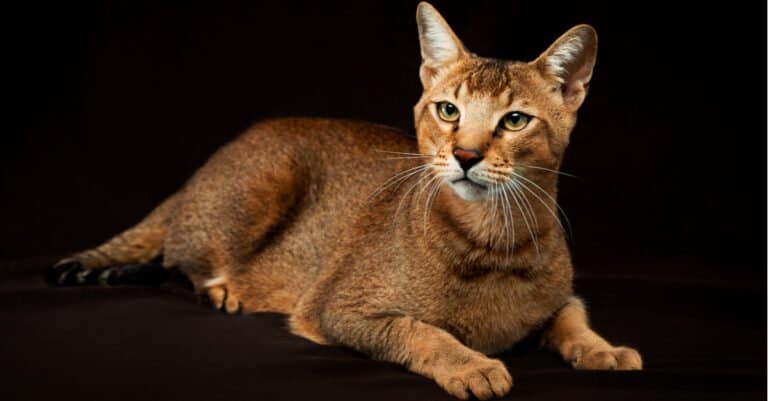
Sokoke
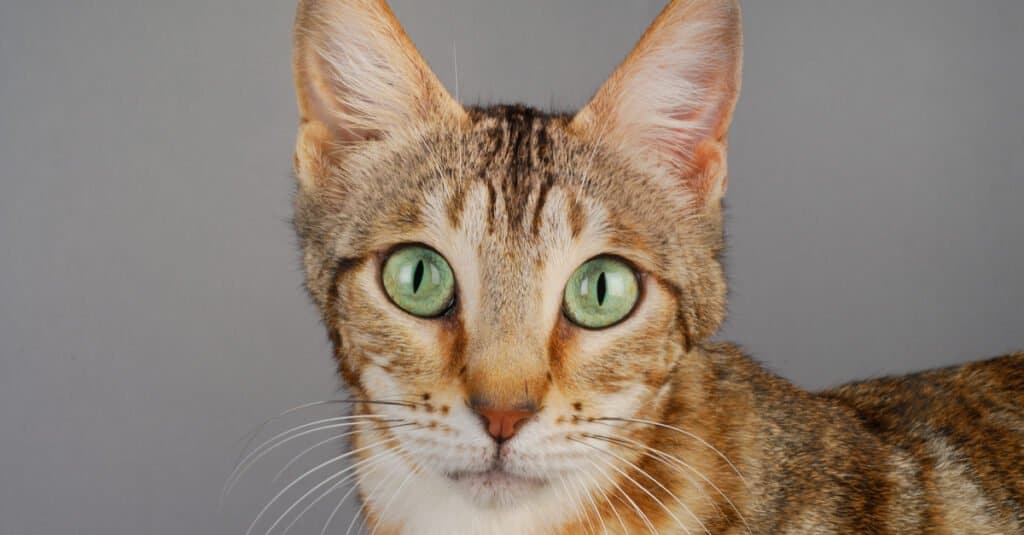
Sokokes are difficult to find outside Europe.
©COULANGES/Shutterstock.com
Originating in Kenya, the Sokoke is one of the rarest natural cat breeds in the world. It developed from native forest cats in the Arabuko Sokoke Forest and was formally recognized in the late 20th century. The breed is known for its short coat patterned with a distinctive “wood grain” or marbled tabby design.
Sokokes are highly active and intelligent. They tend to bond closely with their families and enjoy climbing and exploring high spaces. Because of their rarity outside Europe and limited breeding programs, Sokokes can be difficult to find. Their energetic temperament suits households that can provide enrichment and interactive play.
Chartreux
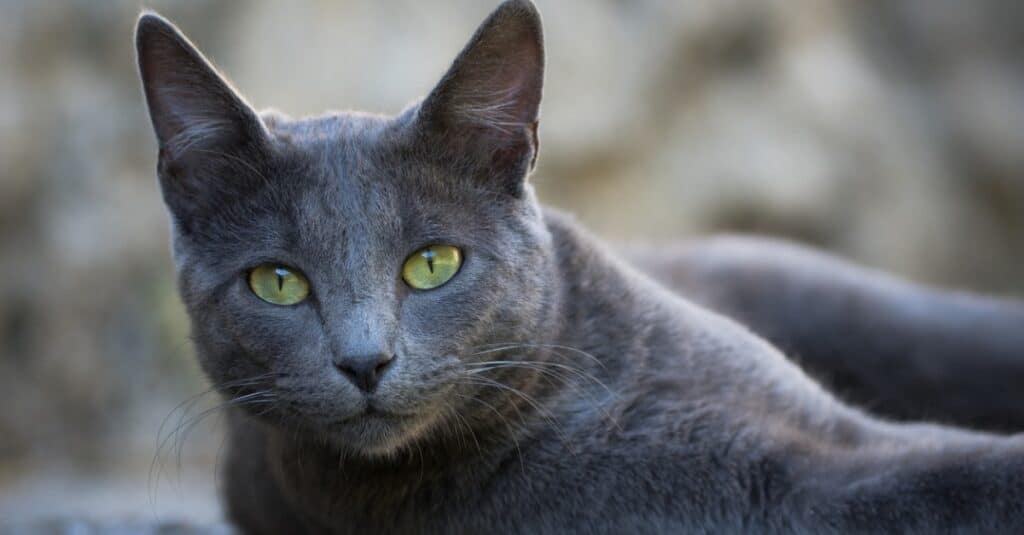
The Chartreux is the national cat of France.
©iStock.com/Marc Andreu
The Chartreux is a historic French breed known for its dense blue-gray coat and copper or gold eyes. Though more common in Europe, it remains less familiar to many North American cat owners. Historical records trace the breed back several centuries, and it gained formal recognition in the 20th century.
Chartreux cats are typically calm, quiet, and affectionate without being overly demanding. Their thick double coat requires regular brushing but is not overly difficult to maintain. They are known for strong hunting instincts and sturdy builds. While respected among breed enthusiasts, they remain less widely known than similar breeds like the British Shorthair.
Khao Manee
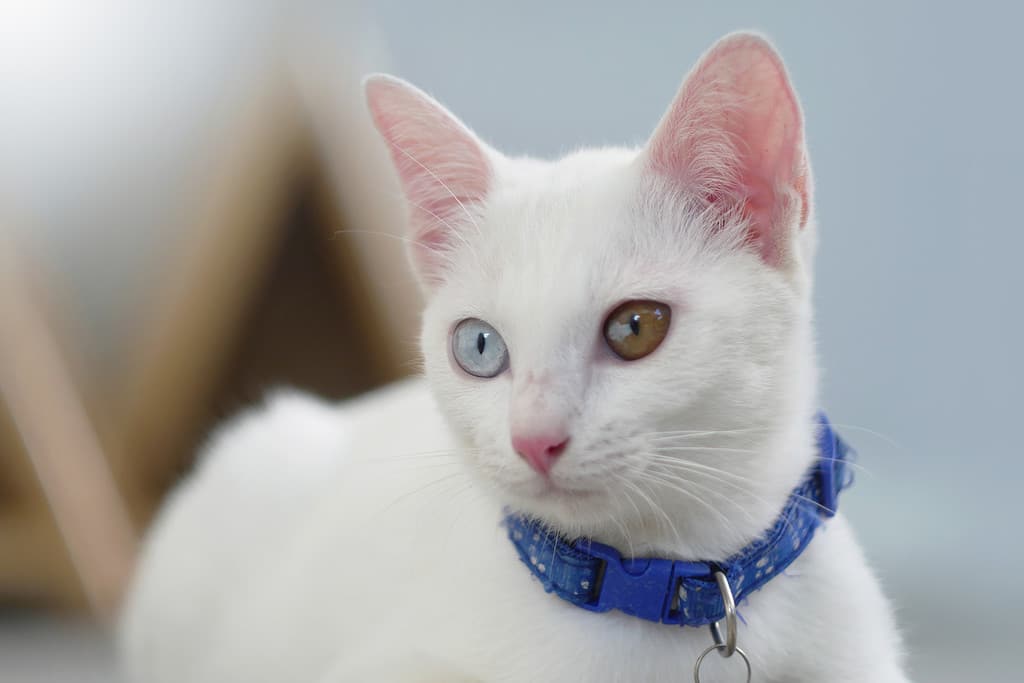
The clean white coat and unusual eyes of the Khao Manee are distinguishing features of the breed.
©ApisitWilaijit/iStock via Getty Images
The Khao Manee comes from Thailand and has existed for hundreds of years. Its name means “white gem,” referring to its pure white coat and striking eyes, which may be blue, gold, or odd-colored. Historically, the breed was associated with Thai royalty and was rarely seen outside the country until recent decades.
These cats are social and playful. Many enjoy being the center of attention and form strong bonds with their owners. Because the breed only recently expanded beyond Thailand, reputable breeders remain limited, and kittens can be expensive. Their bright white coat and vivid eyes make them memorable once seen.
Japanese Bobtail

Japanese bobtails are playful, sociable, and vocal pets.
©slowmotiongli/Shutterstock.com
The Japanese Bobtail has a long history in Japan and appears in traditional art and folklore. The breed is known for its short, pom-pom tail, similar to but genetically distinct from the Manx. Japanese Bobtails are slender, athletic cats with silky coats that may be short or long. They are active, vocal, and intelligent. Many enjoy games of fetch and interactive toys. The breed gained recognition in Western cat registries during the 1960s and 1970s. Although respected among enthusiasts, it is still less common in many households compared to more mainstream breeds.
Lykoi
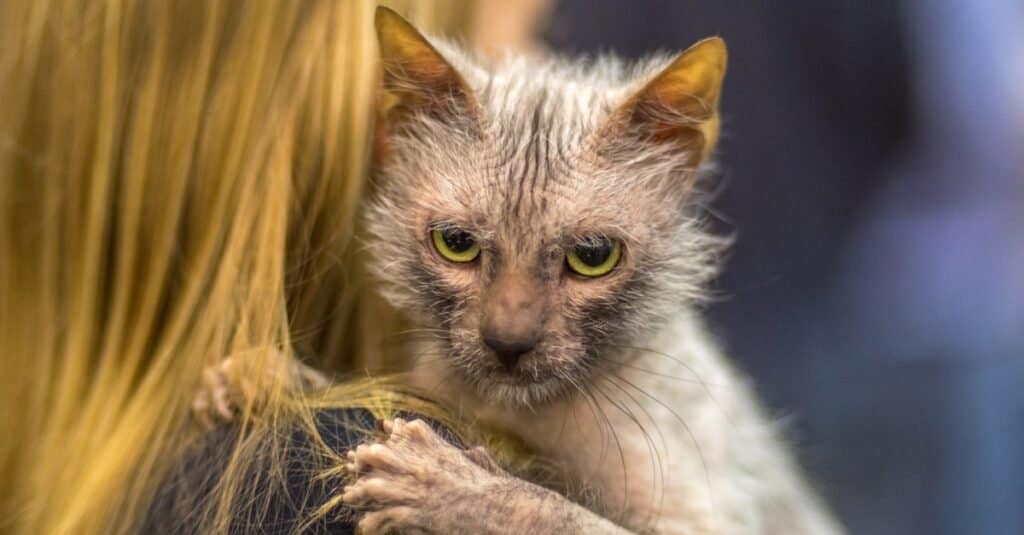
Despite their feral appearance, Lykoi cats are friendly, affectionate, and playful with humans and other animals.
©Jaroslaw Kurek/Shutterstock.com
Nicknamed the “werewolf cat,” the Lykoi stands out for its sparse coat and mask-like face. This appearance comes from a natural mutation that causes partial hairlessness, especially around the eyes, muzzle, and legs. The breed developed in the United States during the early 2010s and received recognition from The International Cat Association in 2017. Lykoi are affectionate, playful, and alert. Many follow their owners from room to room and enjoy interactive toys.
Because their coat can shed heavily during seasonal changes, grooming needs vary. The breed remains rare, so reputable breeders often charge between $1,500 and $2,500 per kitten. Their unusual look draws attention, yet their personality often surprises people who expect a shy, timid, or aggressive cat.
Peterbald
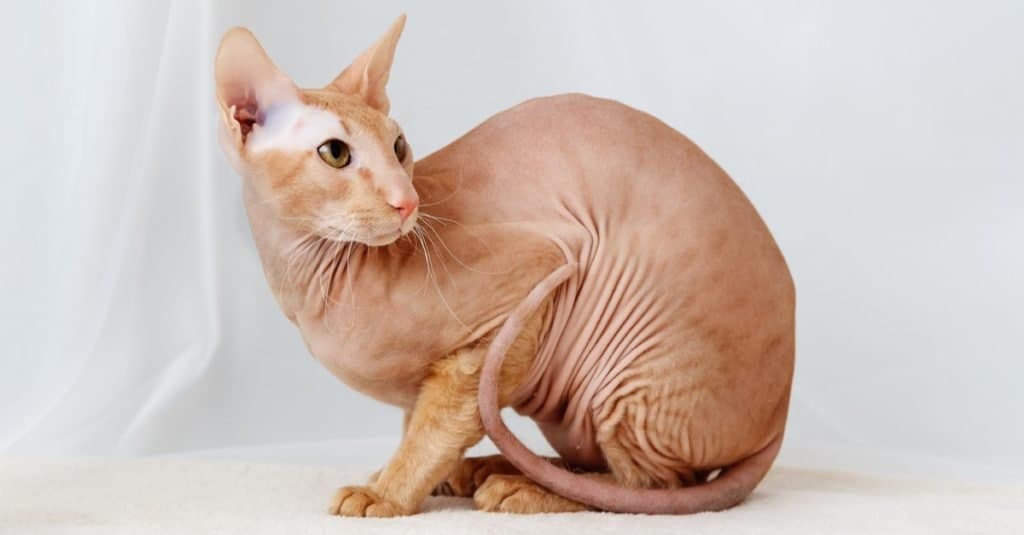
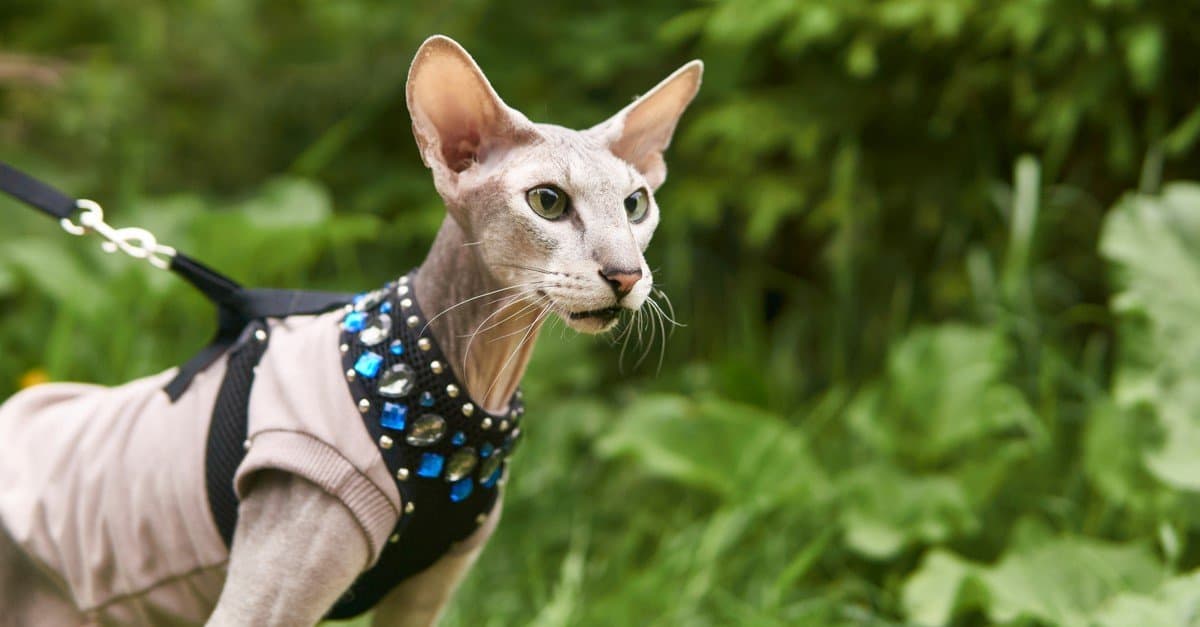
The Peterbald cat is sensitive to extreme temperatures and should typically be an indoor cat.
©Ires003/Shutterstock.com
Originating in Russia in 1994, the Peterbald resulted from crossing an Oriental Shorthair with a hairless Don Sphynx. The breed can appear hairless, velour-coated, brush-coated, or shorthaired, and kittens sometimes change coat type as they mature. These cats have slim bodies, large ears, and wedge-shaped heads.
Peterbalds are social and vocal. Many owners describe them as attentive and people-focused. Their skin requires special care, including occasional baths to remove natural oils. Because they lack insulation, they need an extra warm house during cold weather. Their skin is also sensitive to sunlight; they can get sunburned. Most Peterbald owners manage this by limiting direct sun exposure, using window films that block UV rays, or providing shaded resting spots. Sunscreen can be used only if it is specially formulated for cats, as human products can irritate feline skin. Kittens from established breeders often cost between $1,700 and $3,000. Their specialized care and rarity keep them uncommon.
Kurilian Bobtail
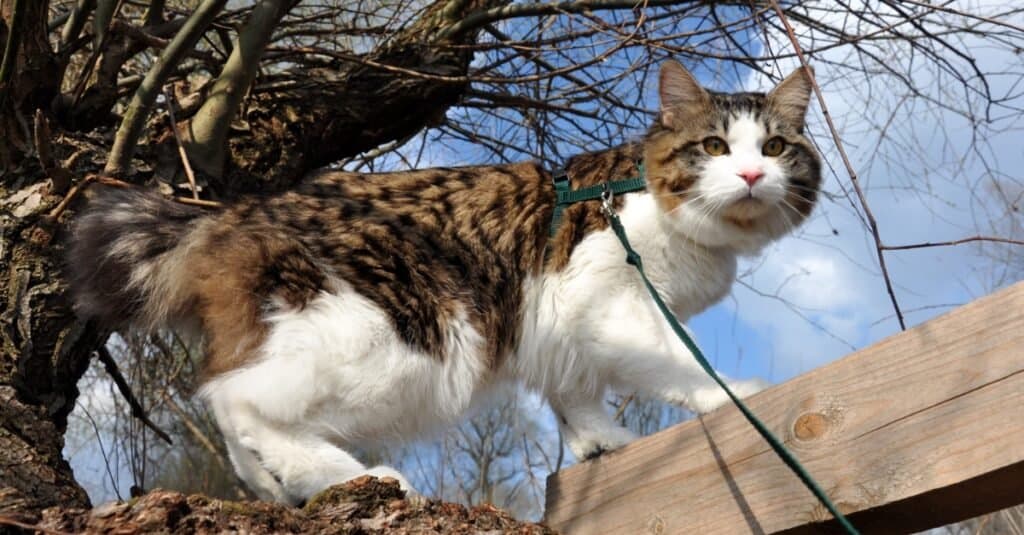
Kurilian Bobtail cats greatly enjoy the outdoors and are highly athletic.
©iStock.com/Oksana Lyskova
Native to the Kuril Islands between Russia and Japan, the Kurilian Bobtail developed naturally over centuries. The breed is known for its short, pom-pom tail, which can vary in shape between individual cats. These cats have strong hind legs and powerful bodies built for climbing and jumping. Their temperament tends to be gentle and loyal. Many bond closely with family members and adapt well to homes with other pets. Outside of Russia and parts of Europe, the breed remains rare. Limited availability in North America contributes to higher prices and lower visibility.
Toyger
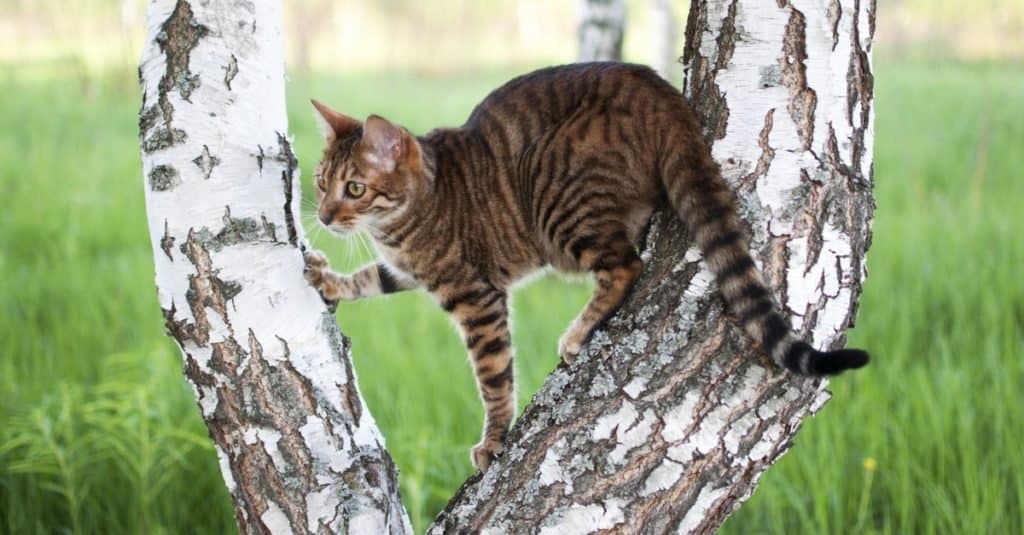
Toygers are normally active and very curious, and tend to be very vocal.
©Kutikova Ekaterina/Shutterstock.com
Created in the United States in the 1980s, the Toyger was bred to resemble a tiger while remaining fully domestic. The breed features bold vertical stripes and a muscular frame. It is recognized by The International Cat Association. Toygers are usually confident and sociable. They enjoy play and human interaction. Breeders continue refining the coat pattern, which contributes to higher kitten prices. Because breeding programs remain limited, Toygers are still uncommon despite growing interest.
Selkirk Rex
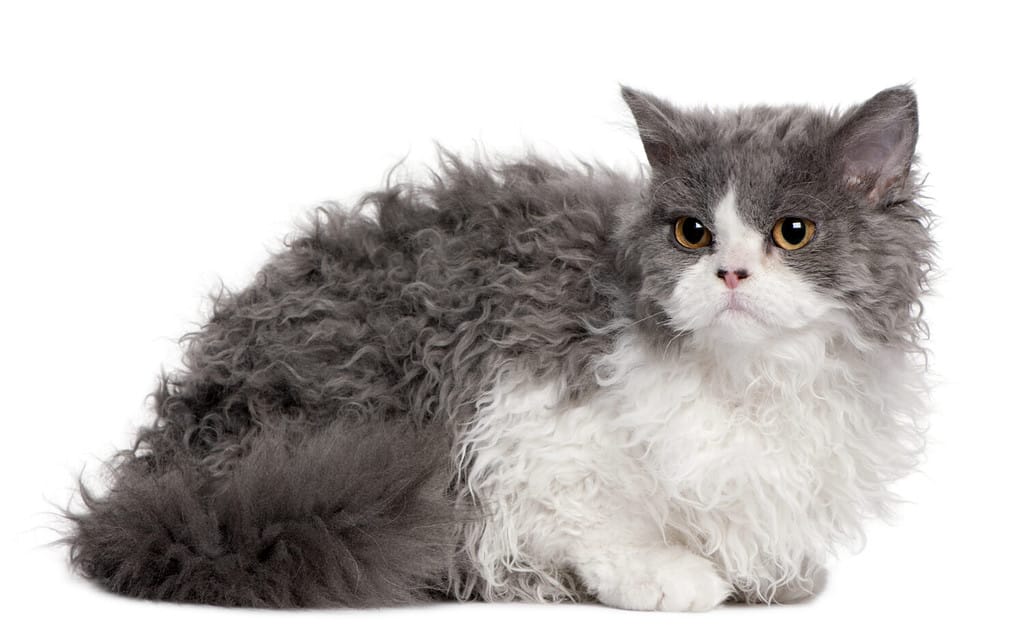
This breed has an overall medium-sized body with short legs and large ears, giving them an adorable teddy bear look.
©Eric Isselee/Shutterstock.com
Developed in Montana in 1987 from a spontaneous mutation, the Selkirk Rex has a thick, curly coat and a sturdy build. Unlike other rex breeds, Selkirks have a more rounded body and face. The curls can appear in short or long coats. These cats often show patient and affectionate temperaments. They adapt well to varied living situations. Gentle brushing keeps the coat healthy. Although major registries recognize the breed, Selkirks are less common than many long-established breeds.
Minskin
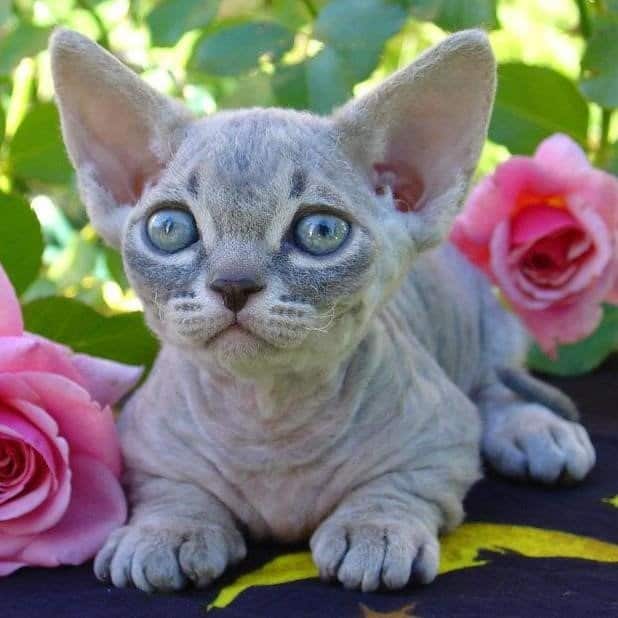
The Minskin is a cross between Sphynx and Munchkin cats, resulting in a breed that is both hairless and adorably short.
©By Paulmcsorley https://commons.wikimedia.org/w/index.php?curid=26572384 – Original / License
Introduced in the early 2000s, the Minskin blends Munchkin, Sphynx, Burmese, and Devon Rex ancestry. The result is a small cat with short legs and sparse fur on the torso, with thicker fur on the face and extremities. The breed remains in development in some registries. Minskins are playful and social. Because of partial hairlessness, they may need warmth and gentle skin care. Limited breeding programs and higher costs make them difficult to find.
LaPerm
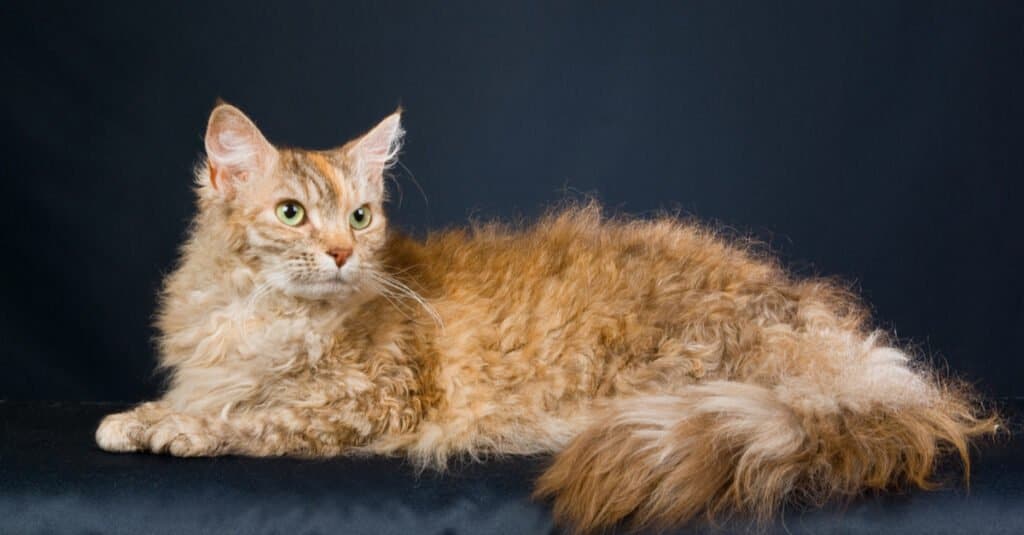
LaPerms have wild-looking, but surprisingly manageable coats.
©Linn Currie/Shutterstock.com
Curly ringlets define the LaPerm, a breed that began with a spontaneous mutation in Oregon in 1982. The coat may be short or long, and the curls range from loose waves to tight spirals. The breed gained recognition in major registries during the 1990s and early 2000s. These cats tend to be affectionate, clever, and social. Many enjoy sitting on shoulders or curling up in laps.
Despite their curls, grooming is manageable. Their coats resist matting more than those of some long-haired breeds. LaPerm kittens often cost between $900 and $1,500, depending on lineage and region. Limited breeder numbers keep them less visible than more common breeds.
American Curl
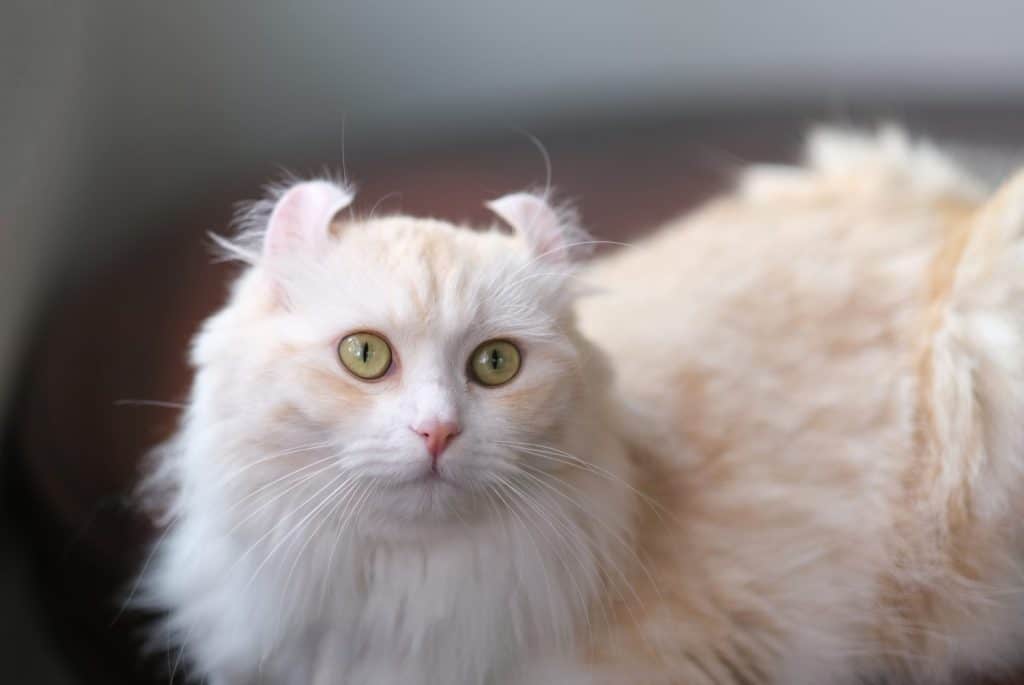
The unusual backward-curving ears of the American Curl are a major attraction for breeders.
©Noi Pattanan/Shutterstock.com
The American Curl traces back to a stray cat in California in 1981 whose ears curled backward due to a natural mutation. Breeders established the trait through careful selection. The breed gained recognition in major registries during the 1980s and 1990s. American Curls are affectionate and adaptable. Their ears require gentle handling but little special care. Though more established than several breeds on this list, they remain less common than many mainstream cats.
Devon Rex
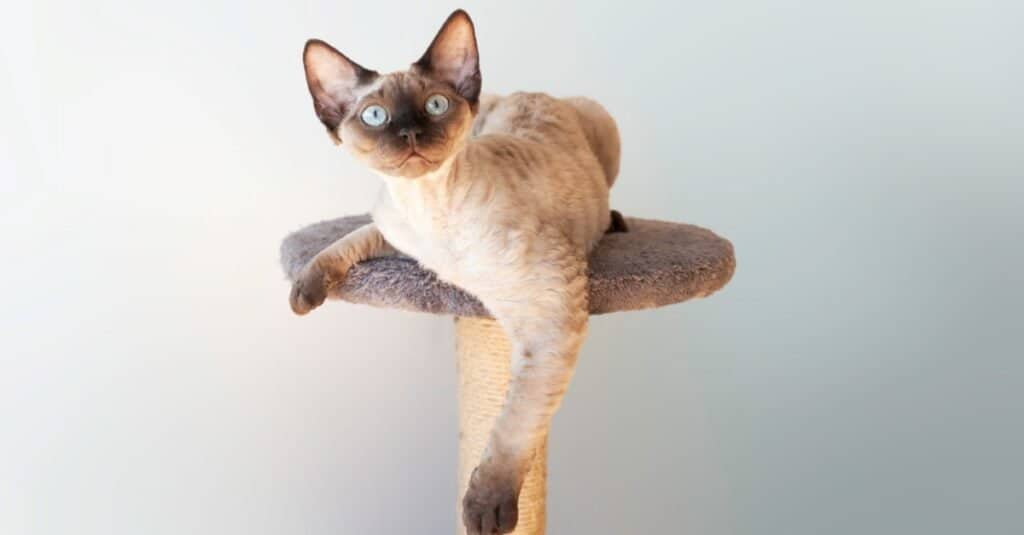
The Devon Rex is capable of learning difficult tricks, but can be hard to motivate.
©Veera/Shutterstock.com
The Devon Rex originated in England in 1960 after a naturally curly-coated kitten was discovered in Devon. Unlike the Selkirk Rex, this breed has a very fine, soft coat with loose waves and an elfin appearance marked by large ears and wide eyes. Their slender bodies and high cheekbones give them a distinctive look. Devon Rex cats are playful, affectionate, and highly social. Many seek warmth and may perch on shoulders or curl up under blankets. Their thin coats shed less than those of most breeds, but still require gentle care.
Turkish Van
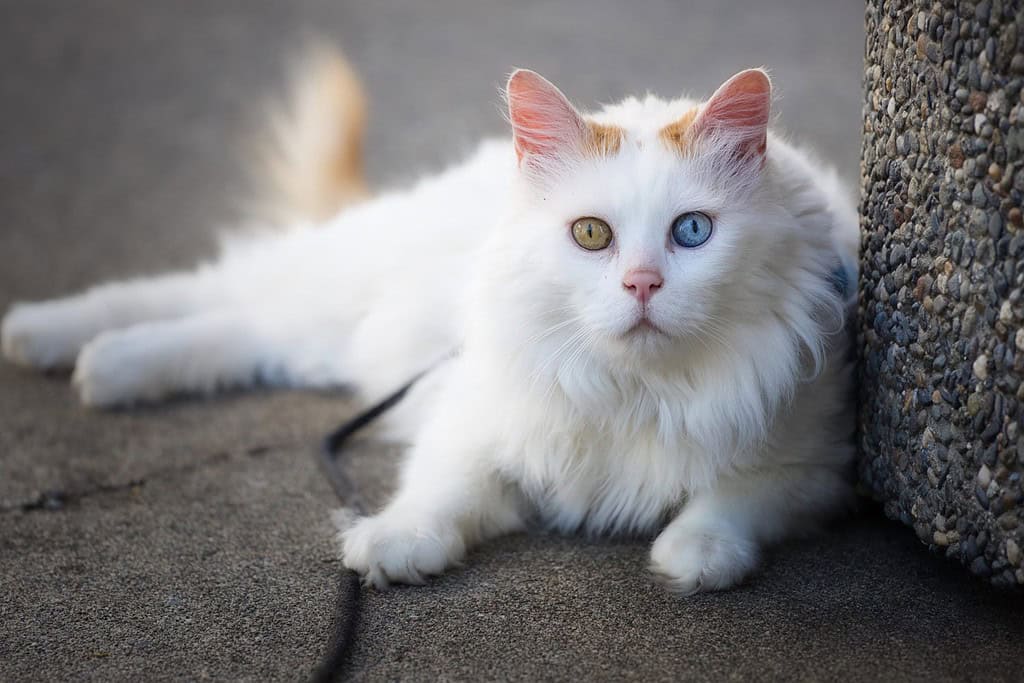
The Turkish Van has a long coat that resists matting.
©Barrie Barrington/Shutterstock.com
The Turkish Van traces its roots to the Lake Van region of eastern Turkey. The breed is known for its coat color: a mostly white body with colored markings on the head and tail. The fur is semi-long and resists matting. Often described as energetic and confident, Turkish Vans are famous for their interest in water. Many will play in sinks or dip their paws into bowls. They are strong jumpers and benefit from vertical climbing spaces. While respected among breeders, they remain relatively uncommon outside specialized circles.
Singapura
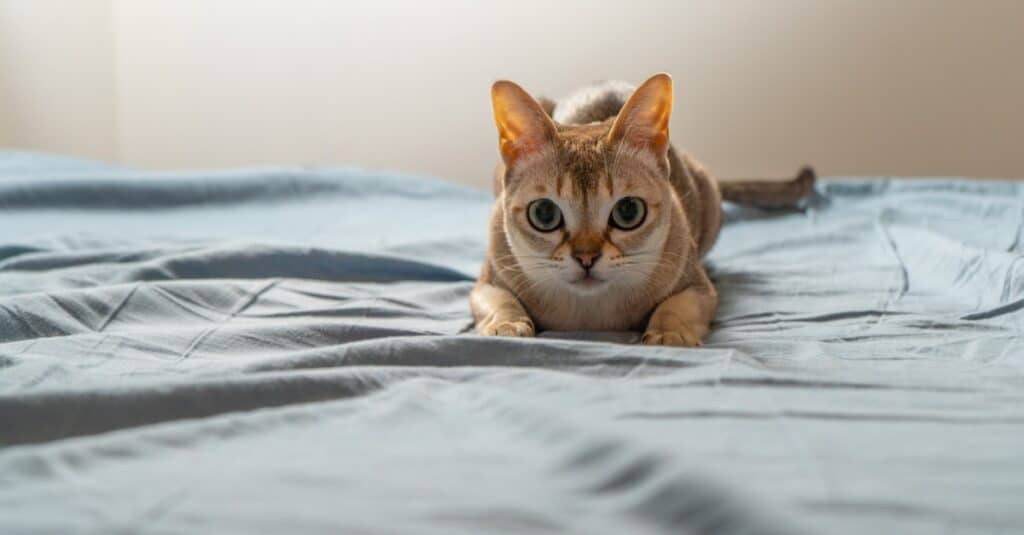
The Singapura is known as one of the tiniest cat breeds in the world.
©iStock.com/Viktor
The Singapura is one of the smallest recognized cat breeds. It developed from cats found in Singapore during the 1970s and was later established in the United States. The breed has a short, ticked coat in warm sepia tones and large, expressive eyes. Singapura cats are active, curious, and affectionate. Despite their small size, they are bold explorers and enjoy climbing to high perches. Their petite frame does not require special care, but their rarity can make them difficult to find.
Why These Breeds Remain Rare and Expensive
Careful breeding programs play a major role in keeping these cats uncommon. Many of these breeds have small founding populations, so responsible breeders move slowly to preserve health and genetic diversity. They prioritize health testing, thoughtful pairings, and stable temperaments over rapid expansion. As a result, kittens are produced in limited numbers, and waiting lists are common. This controlled approach protects the breed’s future but naturally limits how often these cats appear in everyday homes.
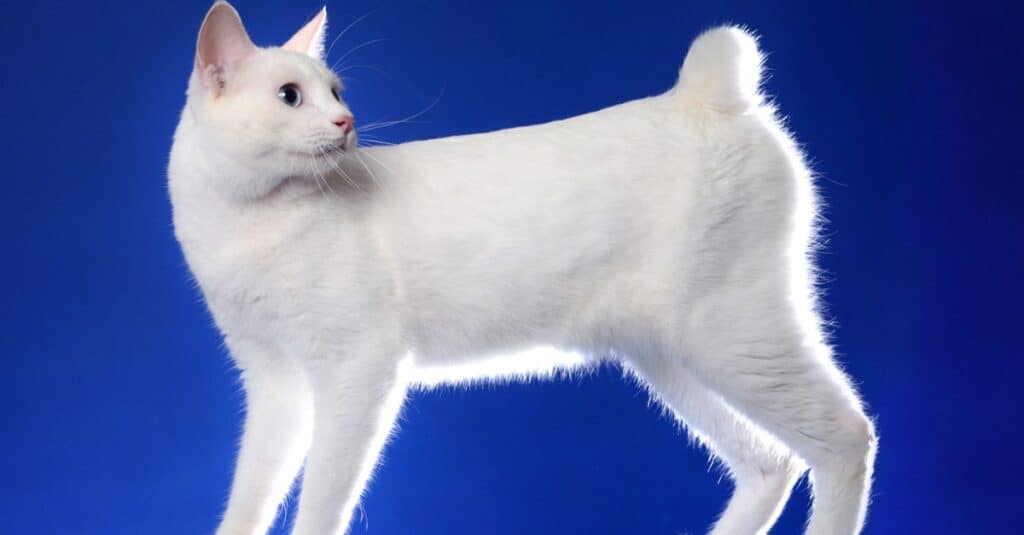
A solid white Japanese Bobtail.
©iStock.com/fuiyau yap
Uncommon care requirements also contribute to their rarity. Hairless or curly-coated breeds may need regular skin care, special grooming routines, or protection from temperature extremes. Some have higher energy levels or specific environmental needs that do not suit every household. Prospective owners must be prepared for these differences before bringing one home. The combination of deliberate breeding and specialized care keeps these breeds less visible than more familiar cats.
Exploring Rare Feline Companions
Uncommon breeds such as the Lykoi, LaPerm, and Peterbald show how varied domestic cats can be. Each has its own look, personality, and care requirements. While they may cost more and require extra planning, informed families can build strong bonds with these distinctive cats. The world of cats extends far beyond familiar breeds, offering many options for those willing to learn.