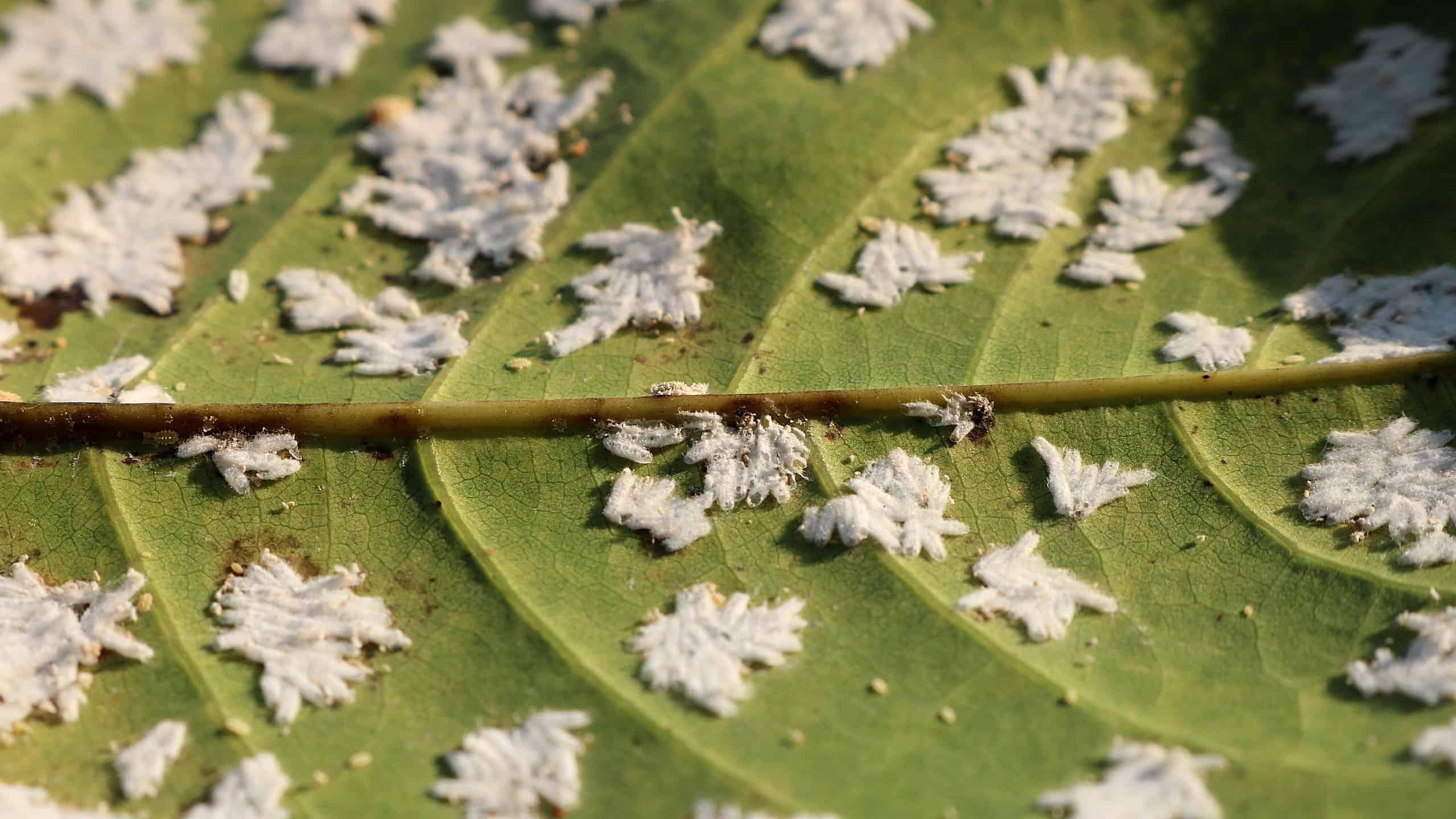

Quick Take
- That tiny speck crawling across your mattress might not be dust, and whatever it actually is could be triggering your allergies. Mites hiding in mattresses →
- One of these insects can vector serious diseases in humans, yet most people brush it off as harmless floating debris. Disease-vectoring flying midges →
- Some of these look-alike bugs are quietly destroying your pantry or garden while you mistake them for a cleaning problem. Pantry-destroying grain mites →
- At least one of these insects actually benefits your ecosystem, though only until its population hits a tipping point. Ecosystem role of snow fleas →
Lint and dust are made up of tiny, lightweight particles. Lint consists of natural fibers such as cotton or wool, while dust consists of skin cells, hair strands, pollen, insect parts, and soil particles. All of this matter can accumulate in carpets and fabric upholstery over time. Lint and dust can also create dust bunnies, those small, soft clumps of dust, hair, and lint that gather in hidden or rarely cleaned areas. But what if the white material you see is not actually lint or dust? Surprisingly, several types of insects closely resemble lint or dust. Continue reading to learn about some of these insects.
White Aphids
White aphids, also called woolly aphids, are small, soft-bodied insects that come in a variety of colors, including white. They are typically found on plants and feed on the sap from the leaves or stems. Aphids reproduce quickly, and their population can increase rapidly during warm weather months, creating large numbers of individuals within a short period of time.
When there is an infestation, it’s easy to miss individual aphids due to their size and color, which makes them look like lint or dust.
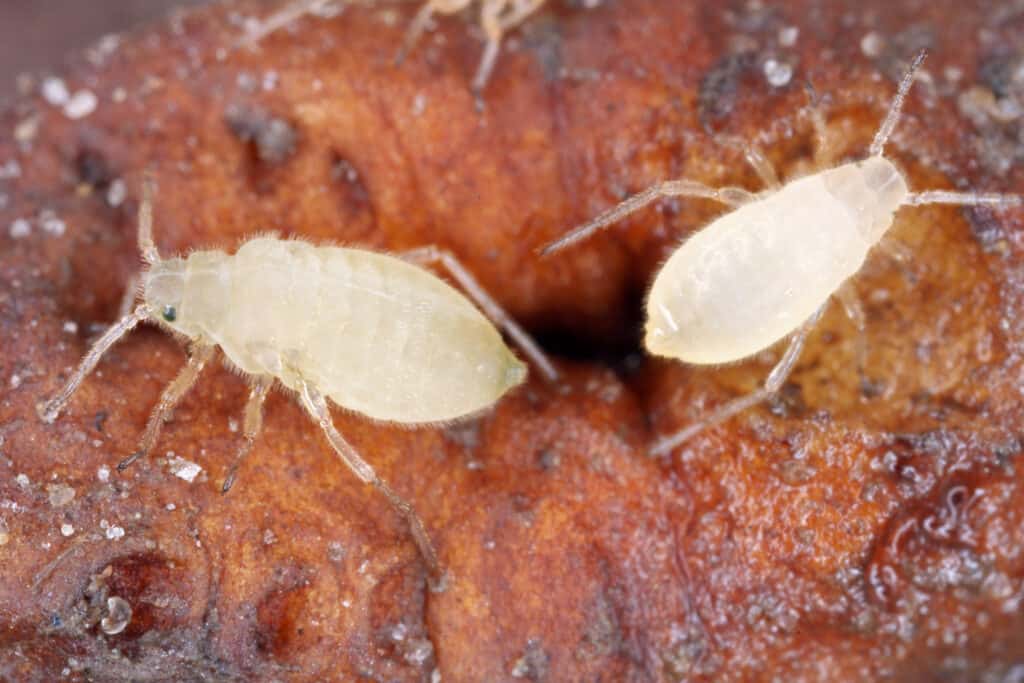
Root aphids range in color from white to whitish-yellow or brown.
©Tomasz Klejdysz/Shutterstock.com
Dust Mites
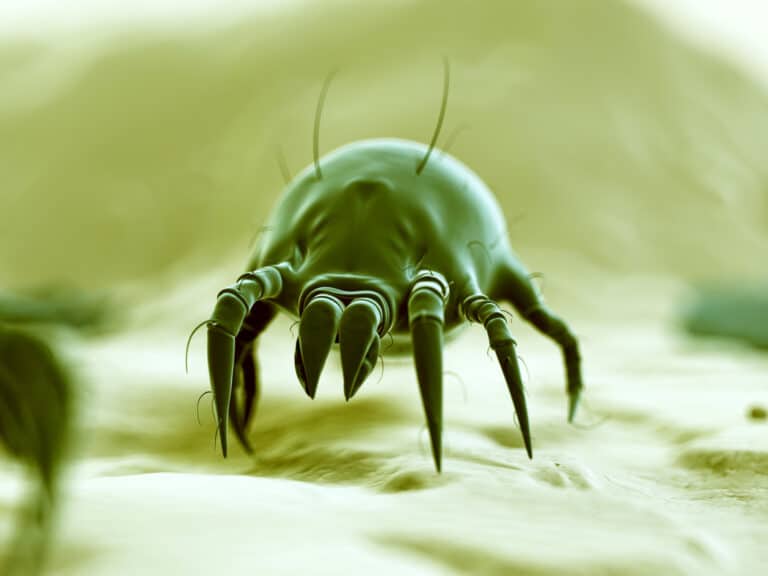
Dust mites are small arachnids that are too small to be seen with the naked eye. They feed on skin cells and other organic matter such as dust, pollen, mold spores, and animal dander. Because of this diet, they are often mistaken for lint or dust when observed.
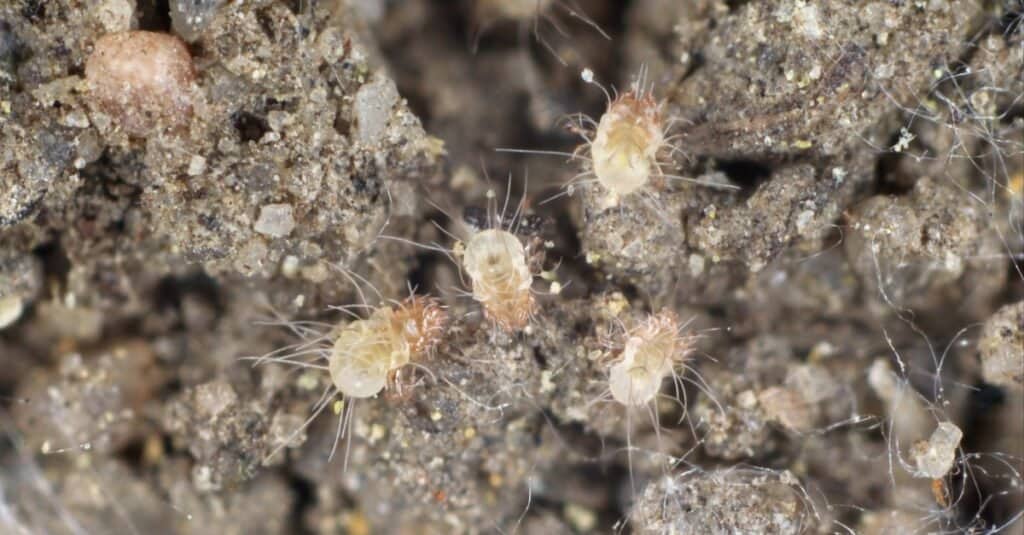
Dust mites thrive in warm and humid environments. That is why mattresses, pillows, or carpets are some of the most common places to find them.
©Tomasz Klejdysz/Shutterstock.com
Dust mites thrive in warm and humid environments. That is why mattresses, pillows, or carpets are some of the most common places to find them. Dust mites do not bite humans directly as fleas do. However, they can still cause serious allergic reactions in people who have asthma or allergies related to house dust. To reduce the presence of these pests, vacuum regularly while paying close attention to bedding items such as blankets or sheets where dust mite colonies tend to form.
Whiteflies
Whiteflies are small, sap-sucking insects that feed on the leaves of plants. They get mistaken for dust or lint because of their light color. Whiteflies tend to stick to clothing and fabric, making them look like particles of dust or lint.
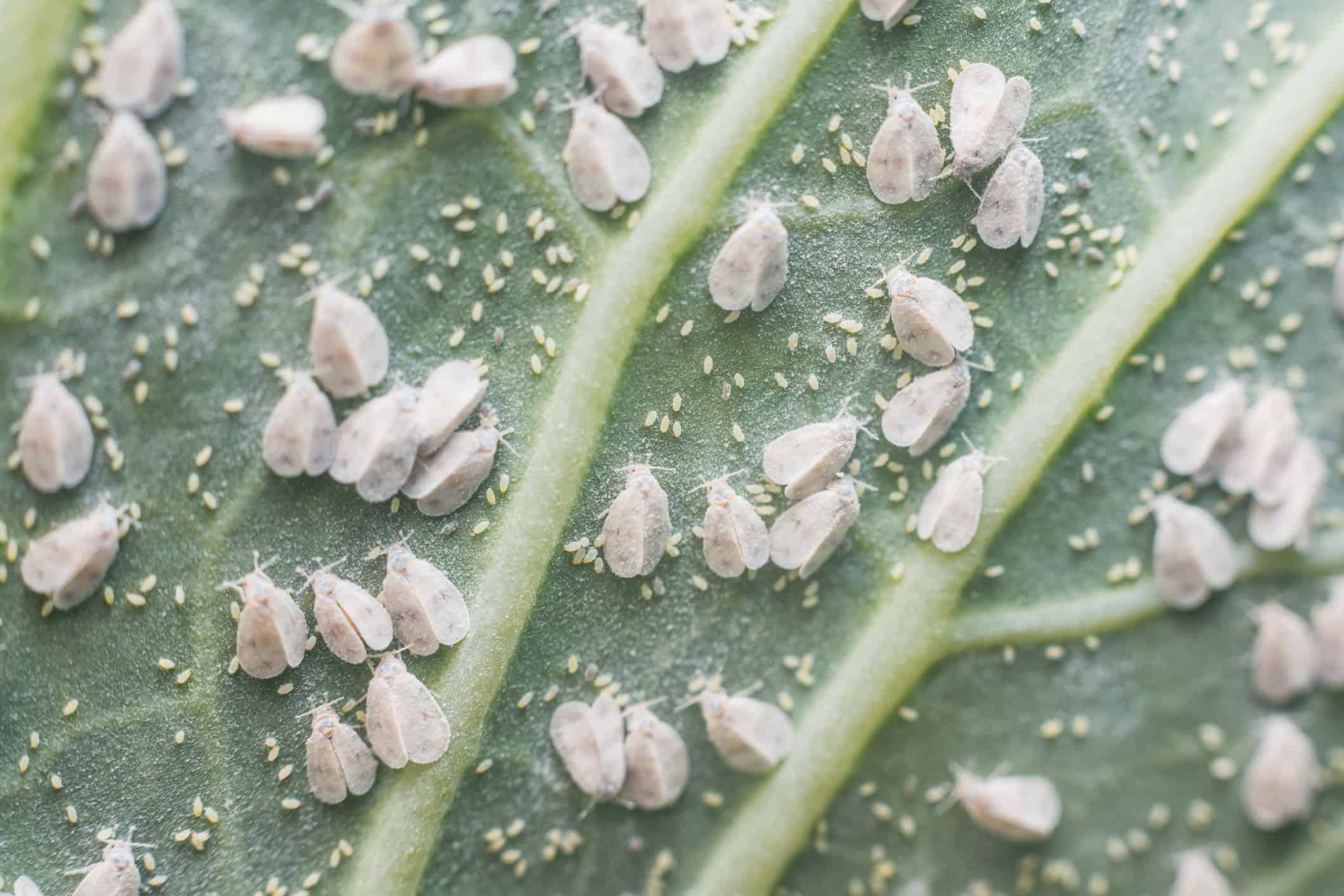
Whiteflies can cause significant damage to crops.
©iStock.com/Andrei310
Whiteflies can cause significant damage to crops. Their feeding habits can strip a plant of foliage in short order. They excrete honeydew, which is a sticky liquid that encourages mold growth and attracts other pests, such as ants. To prevent an infestation, regularly check your plants for signs of whitefly activity. Whiteflies can be controlled by trapping on sticky cards, pruning off affected branches, or using chemical treatments.
Grain Mites
Grain mites are small, white arachnids that feed on stored grain and cereals. They are often mistaken for dust or lint because of their tiny size and color. Grain mites can reproduce quickly, so an infestation can spread easily if not addressed promptly. They prefer warm, humid environments with a plentiful food supply, such as pantries and cupboards where grains are stored. As they consume the grains, they produce a fine powdery substance. That is why they may be confused with lint or dust particles when seen in large numbers.
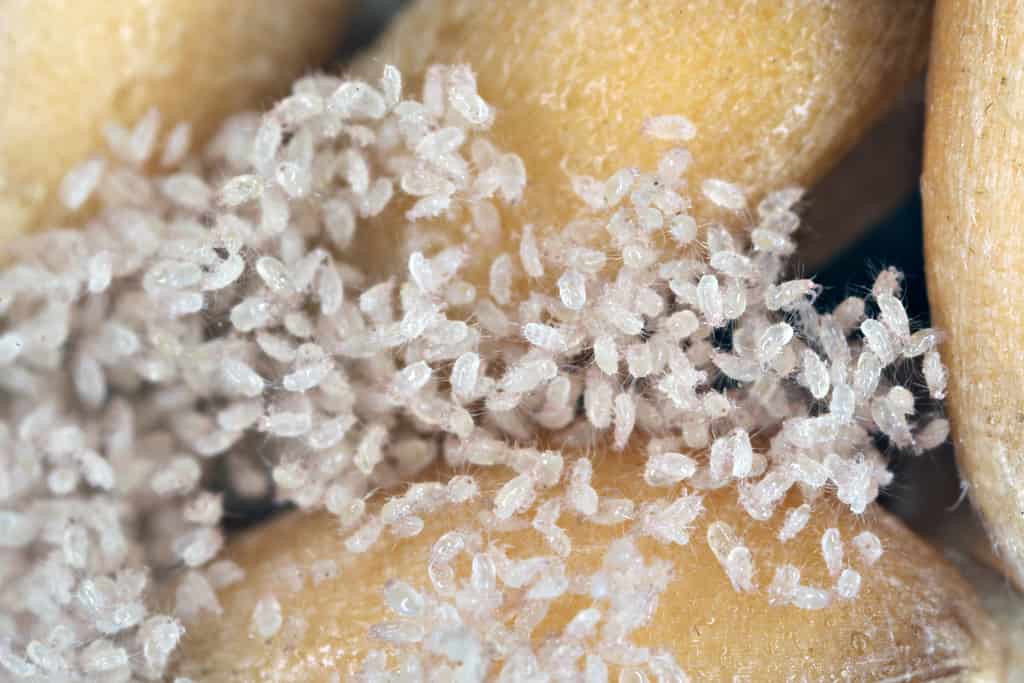
Grain mites are small, white arachnids that feed on stored grain and cereals.
©Tomasz Klejdysz/Shutterstock.com
In addition to causing damage to crops and stored grain products, grain mites have also been known to cause skin irritation in humans from the mites themselves or their droppings. If you encounter an infestation, discarding contaminated foods and thoroughly cleaning any surfaces the mites may have come into contact with will help keep your home free of these pests.
Mealybugs
Mealybugs are small, soft-bodied insects that typically measure 1/10 to 1/4 of an inch in length. They have a white, waxy coating on their bodies which gives them the appearance of lint or dust particles. Mealybugs feed on plants and crops by sucking sap from leaves, stems, and roots. They can cause significant damage to both indoor and outdoor plants.
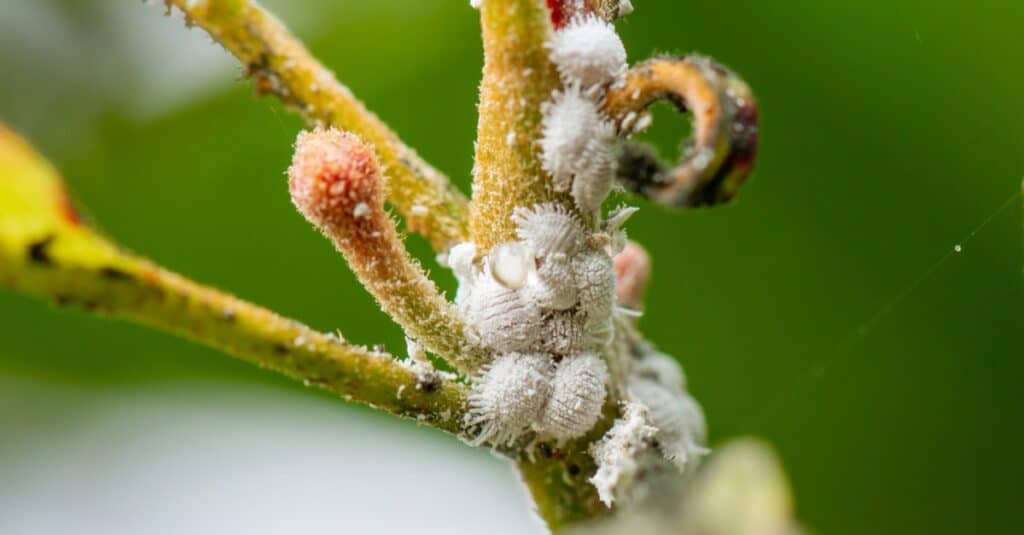
Mealybugs have a white, waxy coating on their bodies, which gives them the appearance of lint or dust particles.
©phomphan/Shutterstock.com
Mealybugs also excrete a sticky honeydew substance, which attracts other pests like ants and may result in sooty mold. To control mealybug infestations, inspect your plants regularly for signs of activity, such as wilting or yellowing foliage or cottony masses near the base of stems. Hands-on removal methods include using rubbing alcohol swabs or applying insecticidal soap sprays directly onto affected areas. Biological controls such as ladybugs may also be used to help reduce populations in home gardens or farms.
No-See-Ums
No-see-ums, also known as biting midges, are tiny flying insects that measure only about 1/8 of an inch. Because of their extremely small size and light coloration, they can often be mistaken for dust or lint when seen with the naked eye.
No-see-ums feed on blood and are attracted to damp areas such as marshes, poolsides, and beaches. In addition to feeding on humans and animals, no-see-ums can also cause damage to plants by sucking out their juices with their piercing mouthparts. Although they are primarily a nuisance due to their bites, some species of no-see-ums are known vectors of diseases such as bluetongue virus in animals and Oropouche virus in humans
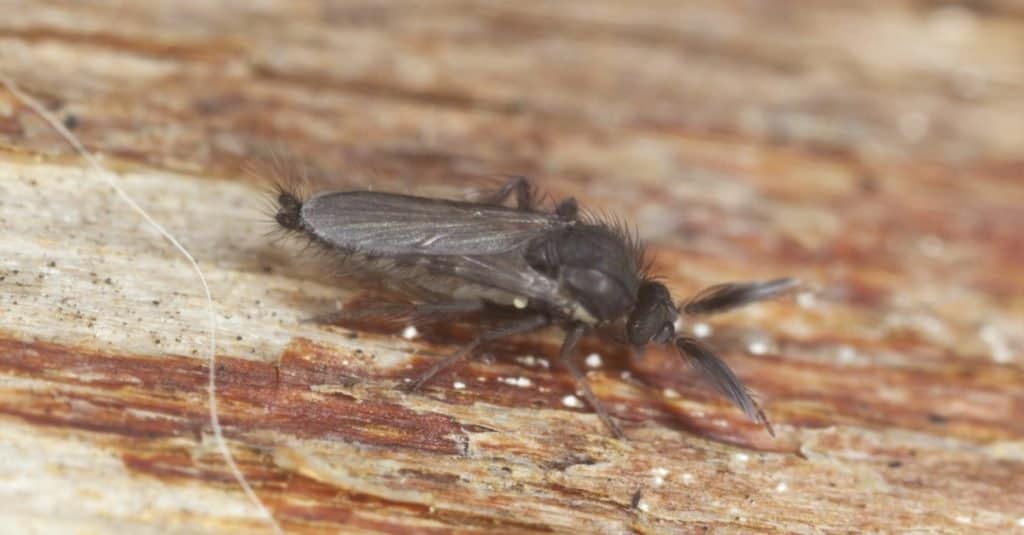
No-see-ums are a nuisance due to the itching sensations caused by their bites.
©Henrik Larsson/Shutterstock.com
Snow Fleas
Snow fleas are tiny jumping insects that belong to the family Hypogastruridae. They can be found in areas with snow cover. These small bugs measure approximately 1/4 inch long. They are dark brown or black, sometimes with speckled wings and long antennae. They are commonly mistaken for dust or lint due to their small size and dark color, which makes them almost invisible against many surfaces.
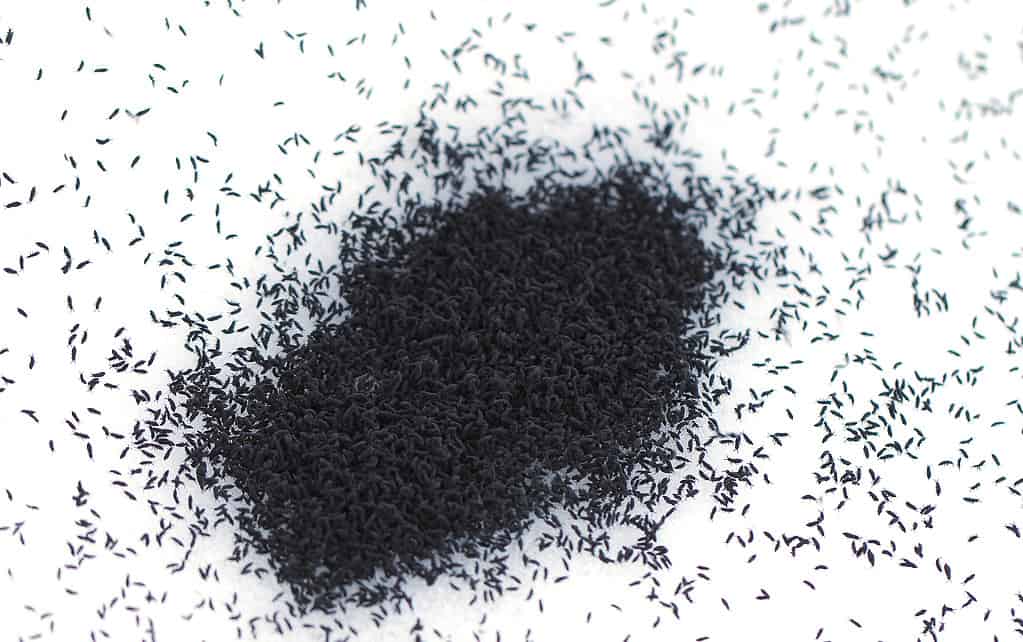
Snow fleas can be found in areas with snow cover.
©David Schliepp/Shutterstock.com
Snow fleas feed primarily on fungal spores but will also consume decaying plant material present in the snowpack layer of soil beneath it. They help break down organic matter over time and breed rapidly under suitable conditions of moisture and temperature. Although snow fleas are beneficial organisms, they may become pests if their populations grow too large.
Cottony Cushion Scale
Cottony cushion scale is a type of insect commonly found in gardens and greenhouses. They get their name due to the presence of white, waxy material that resembles cotton or lint on their bodies. These pests feed on plants, often sucking the sap out of leaves, which can lead to stunted growth and wilting of the plant if it is allowed to continue.
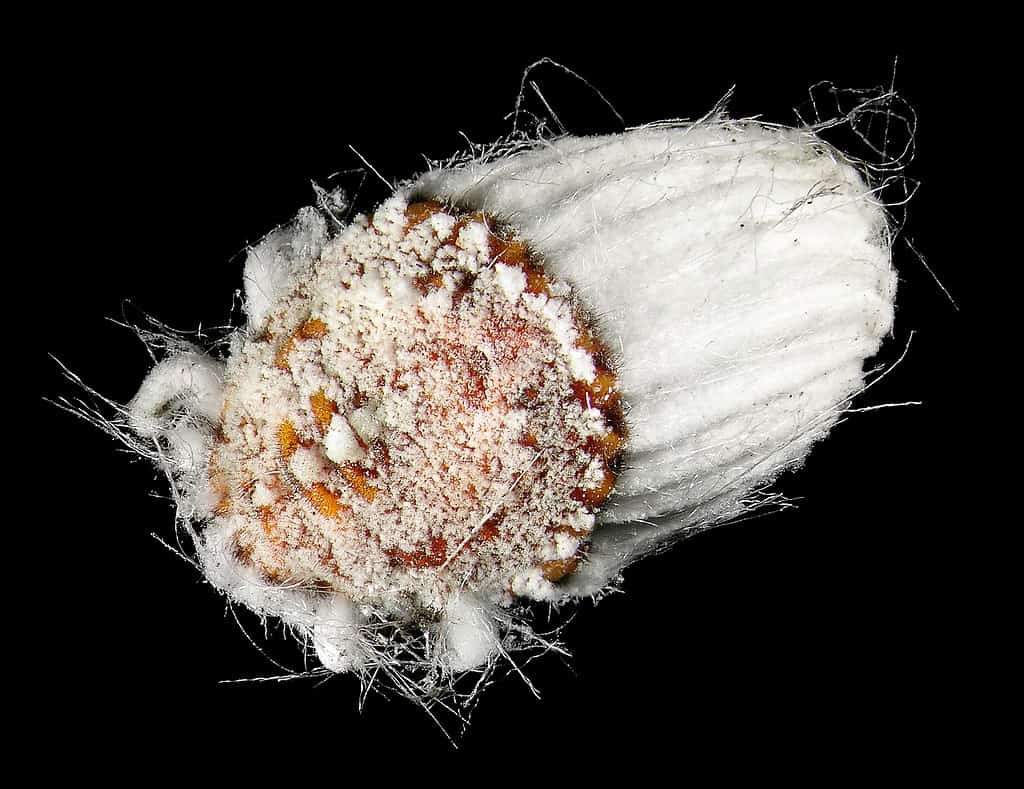
Female cottony cushion scale can lay over 1,000 bright red eggs directly into a hollow, cottony chamber called an ovisac. The ovisac is a barrier that prevents desiccation (drying out) and shields eggs and emerging nymphs from predators.
©Protasov AN/Shutterstock.com
The bugs’ small size (adults grow only up to 1/8 inch long), color, and wax production make them easily mistaken for dust or lint particles when found indoors. It’s important to properly identify these insects, as they can quickly become an infestation if not treated promptly. Pesticides such as pyrethrins or neem oil solution sprays, applied directly to affected plants, can help control them.