
Quick Take
- Grabbing lice shampoo first could be the wrong move. Some of these imposters signal a completely different problem in your home. Bed bugs as imposters →
- One of these eight look-alikes actually has 'lice' in its name but has nothing in common with the real thing, a creature most people have never heard of. Booklice explained →
- At least two of these bugs are actually arachnids, not insects. That distinction changes how you identify and deal with them. Ticks as arachnids →
- One look-alike is invisible to the naked eye, yet still gets blamed for the same itching and irritation as lice. Invisible dust mites →
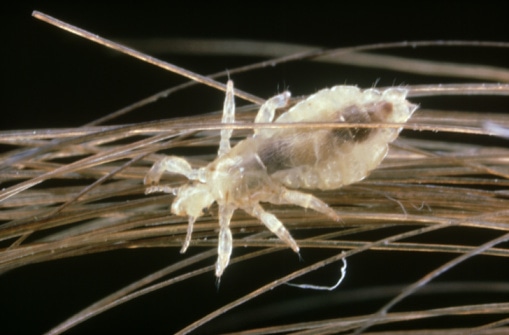
Spotting a tiny bug on your body can immediately trigger panic about lice, whether it was found in your hair or not. However, several other pests and insects closely resemble lice at first glance and are frequently mistaken for the hair-loving insects. Compared to lice, many of these pests have noticeable physical differences, behave in alternate ways, are found in telltale locations, and pose entirely separate problems. Some are harmless, while others are biting parasites that can cause infestation, itching, and irritation. Before reaching for lice shampoo or assuming the worst, learn how to ID these common look-alikes and quickly spot the difference.
1. Bed Bugs (Cimicidae)
©Jay Ondreicka/Shutterstock.com
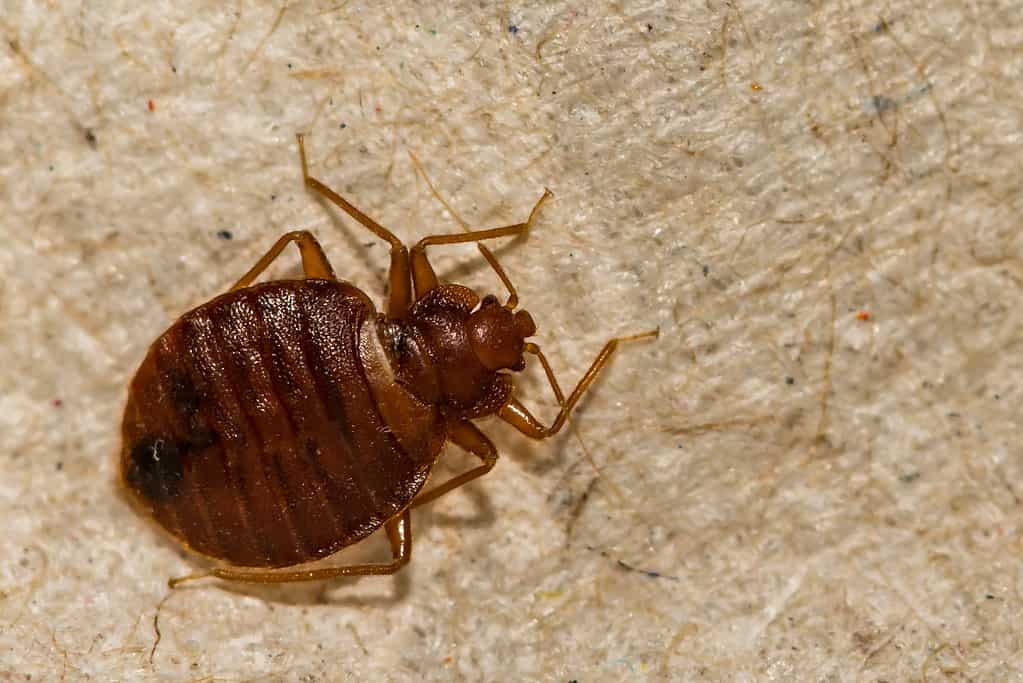
Bed bugs are small parasitic insects that feed on blood, which is one reason they are sometimes confused with lice. These pests typically hide in mattresses, furniture, carpets, and cracks near bedrooms rather than living directly on the human body. Bed bug bites can cause itching and irritation, although many people do not notice the bites immediately. Infestations are often spread through luggage, used furniture, hotels, and ridding your home of these insects can be challenging.
How To Tell the Difference
Bed bugs are broader and more oval-shaped than lice, and they are usually reddish-brown in color. Unlike lice, bed bugs do not live in human hair and are most commonly found hiding near beds.
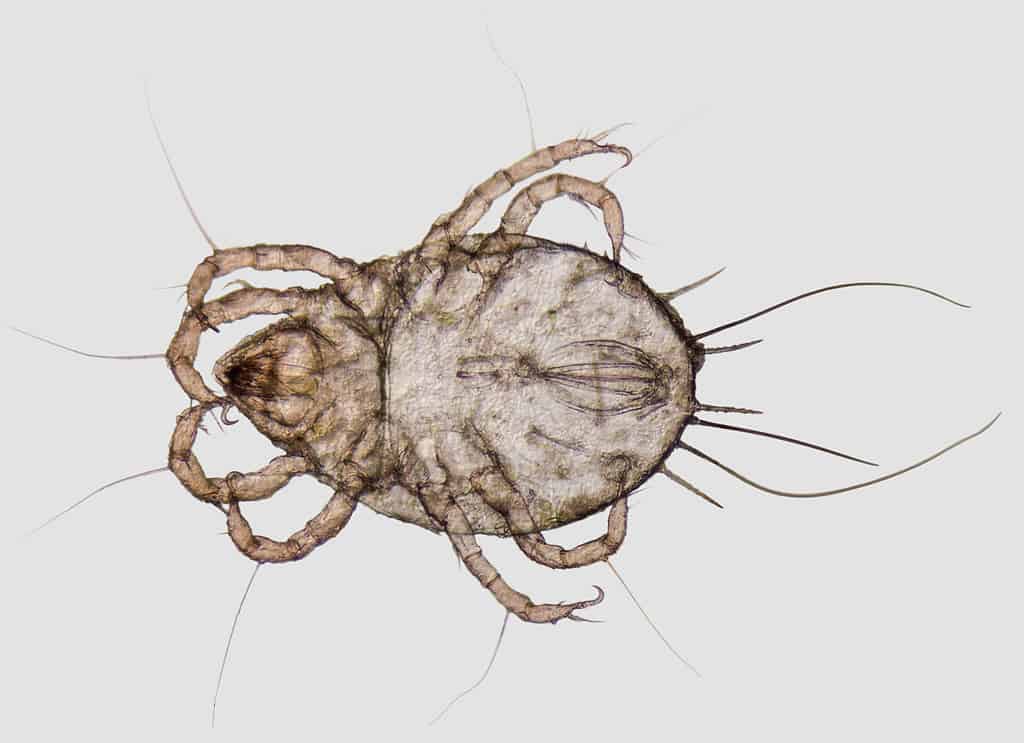
2. Dust Mites (Dermatophagoides farinae)
©PRILL/Shutterstock.com
Dust mites are microscopic arachnids commonly found in bedding, carpets, upholstered furniture, and any dusty area of a home. They feed primarily on dead skin cells and prefer warm, humid environments. Although dust mites do not bite humans, they can cause allergies and respiratory issues in sensitive people. Because they are so tiny, people may mistakenly believe the skin irritation they cause is due to lice.
How To Tell the Difference
Dust mites are way too small to be seen clearly without magnification, while lice are usually visible to the naked eye. Lice also live directly on the scalp or body, whereas dust mites live in fabrics and dust.
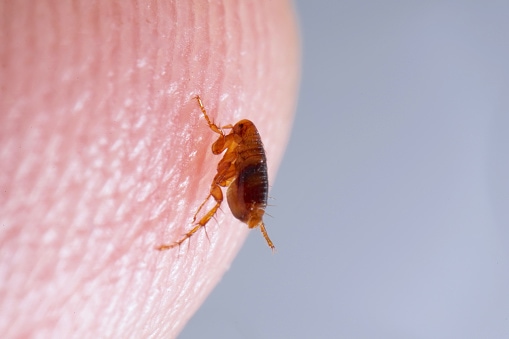
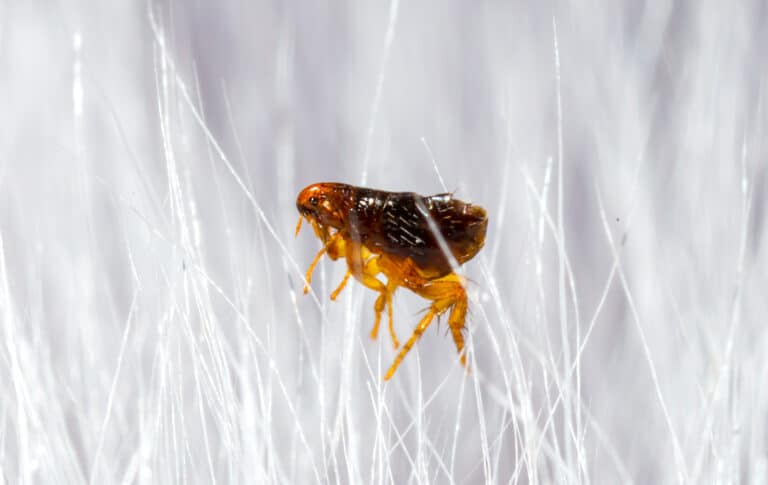
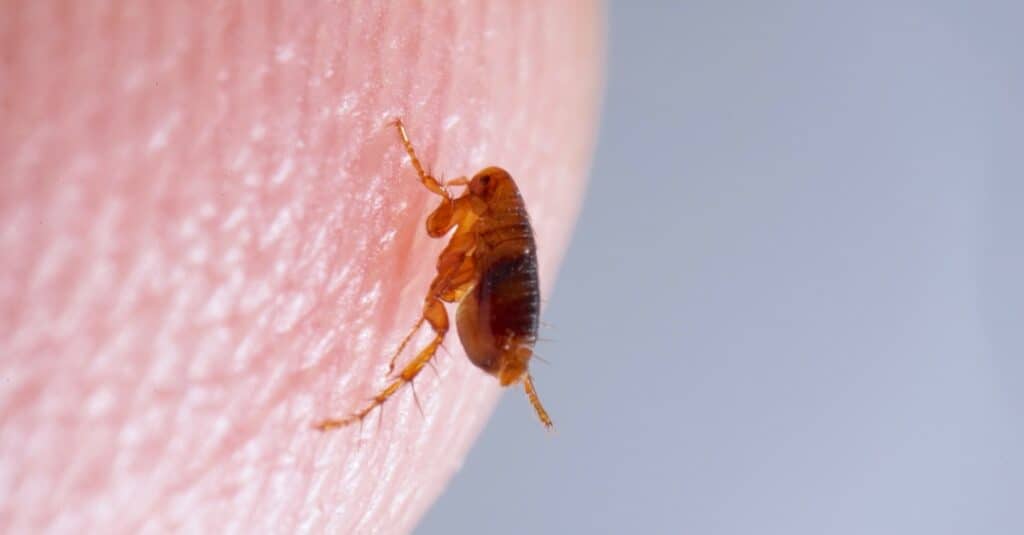
3. Fleas (Siphonaptera)
©iStock.com/S.Rohrlach
Fleas are tiny parasitic insects that commonly live on pets, mainly dogs and cats. They feed on blood and can bite humans, often leaving small itchy marks on the skin. Fleas are extremely active and capable of jumping long distances relative to their size. Infestations are usually treated by deep cleaning and using flea-control products on pets.
How To Tell The Difference
Fleas are darker, rounder, and much more mobile than lice. Unlike lice, fleas jump quickly and usually come from pets.
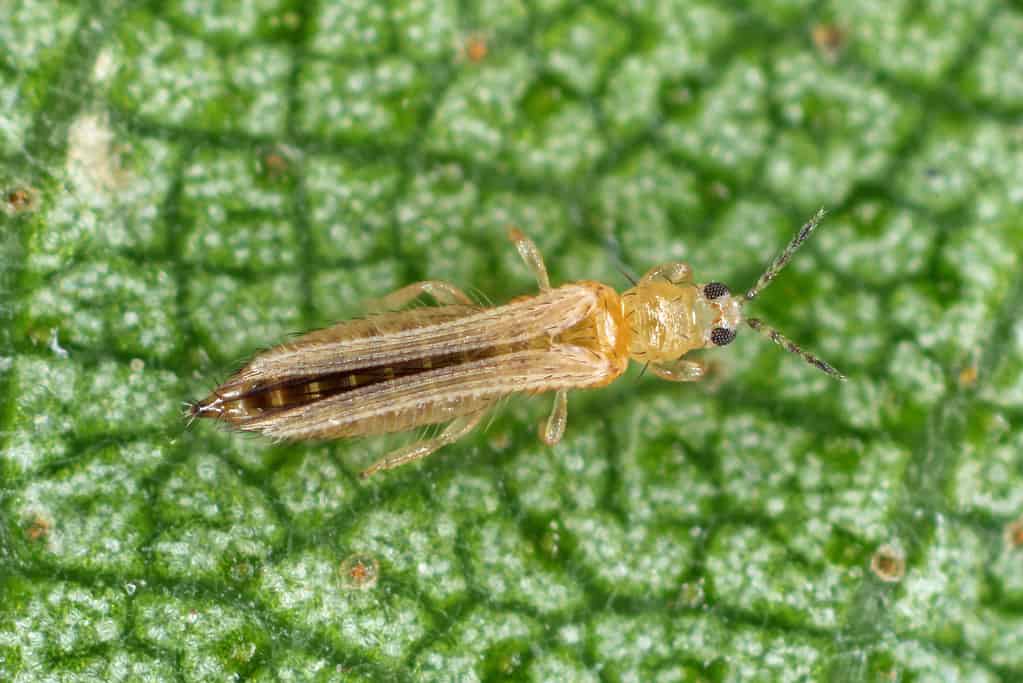
4. Thrips (Thysanoptera)
©Tomasz Klejdysz/Shutterstock.com
Thrips are tiny insects that feed on plants by poking a hole in the surface of leaves and sucking out nutrients. These insects are often found outside in gardens but may also be on indoor plants. Heavy thrip infestations can damage plants, causing discoloration or stunted growth. Some thrips are so small and slender that they may look a lot like lice at first glance.
How To Tell the Difference
Thrips are usually longer and darker than lice, and many species have narrow wings. Unlike lice, thrips are associated with plants rather than the human scalp or body.
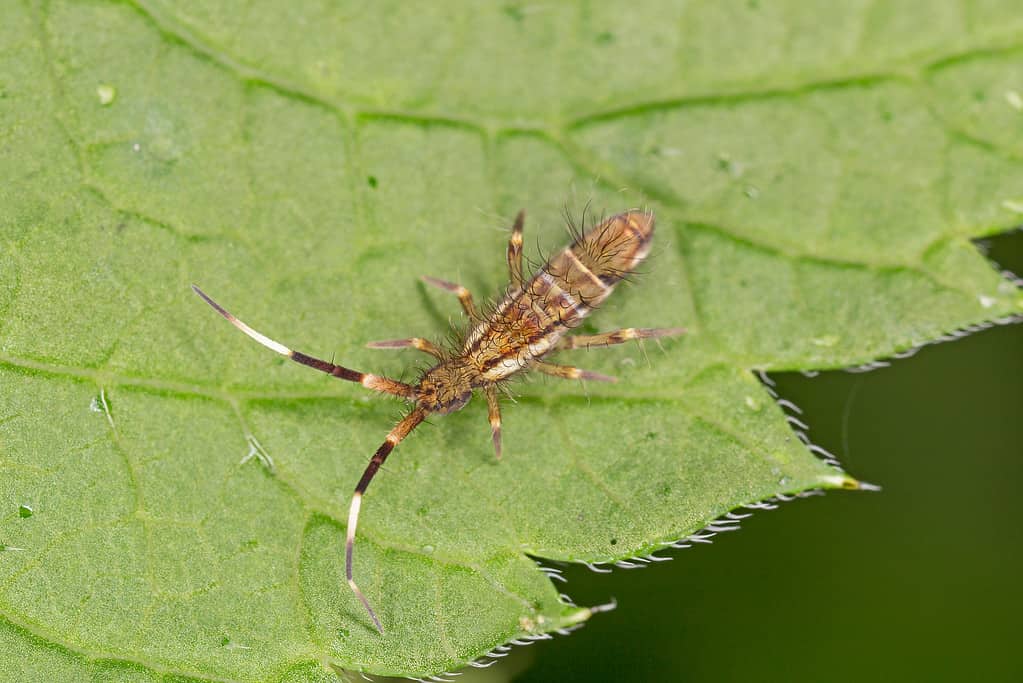
5. Springtails (Collembola)
©Ihor Hvozdetskyi/Shutterstock.com
Springtails are tiny wingless arthropods commonly found in damp environments. They love soil and mulch but can also live in bathrooms and basements. Instead of blood, they feed on mold, fungi, and decaying matter. Many species have a unique appendage that allows them to leap into the air when disturbed. Although harmless to humans, their small size sometimes causes them to be mistaken for lice.
How To Tell the Difference
Springtails are excellent jumpers, while lice crawl slowly and cannot jump. They are also most often found in damp areas of the home instead of in or near human hair.
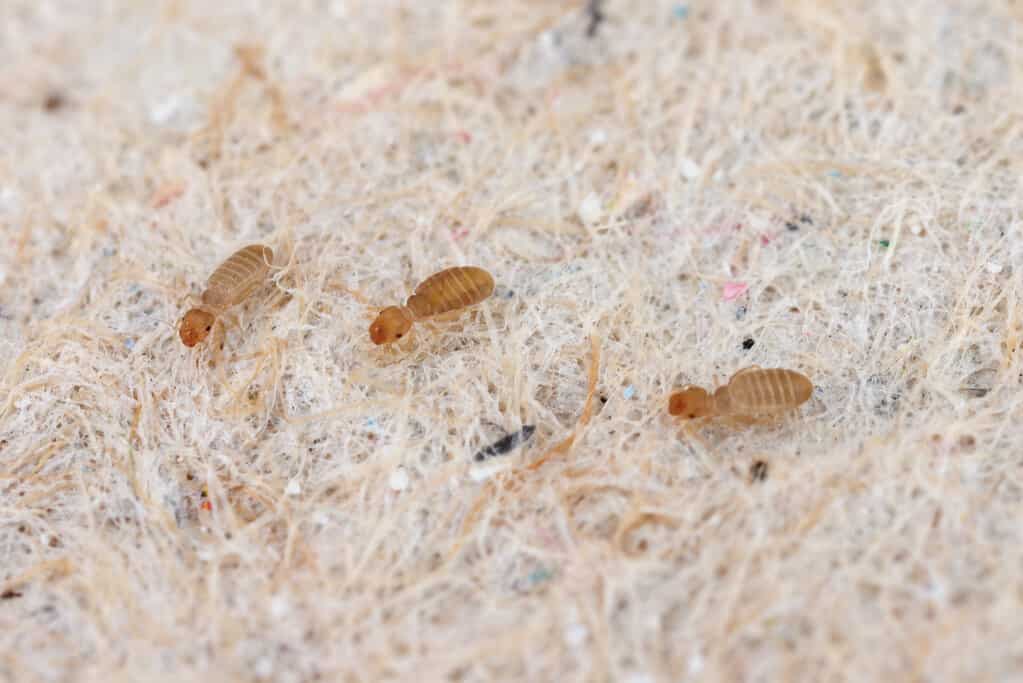
6. Booklice (Psocoptera)
©omasz Klejdysz/Shutterstock.com
Booklice are tiny pale insects generally living in humid environments where mold and mildew are found. Though “lice” is in their name, these bugs are completely different critters. They eat materials such as paper, glue, fungi, and stored grains; they do not feed on blood. These pests are often seen near damp storage areas containing items like old books and used cardboard boxes. People may mistake them for lice, though they pose no risk to humans.
How To Tell the Difference
Booklice are usually lighter in color and are often found near damp paper products instead of on people. Unlike lice, booklice do not bite humans or live in hair.
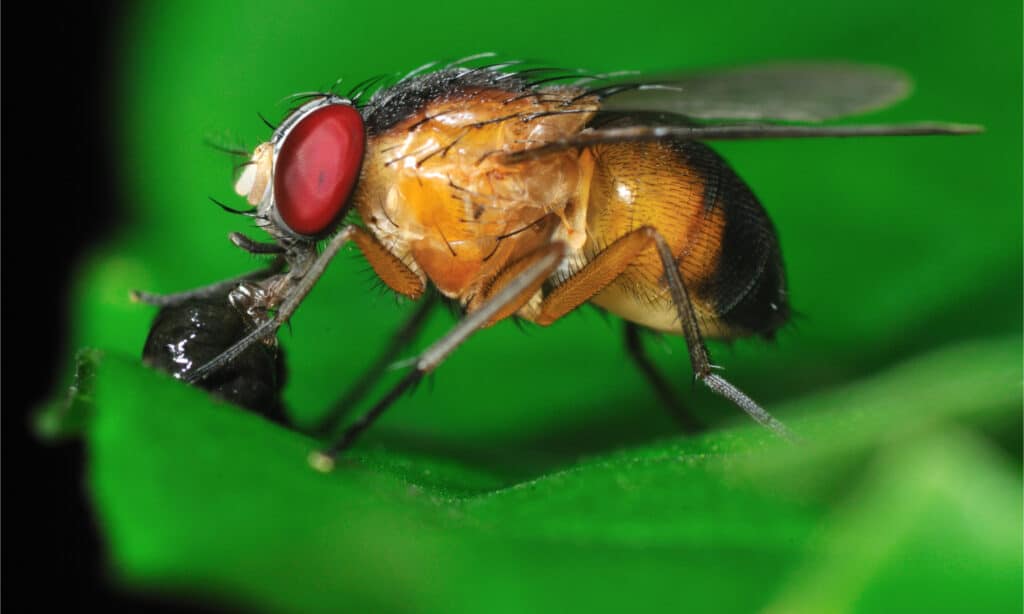
7. Gnats (Nematocera)
©Jordan Lye/Shutterstock.com
Gnats are small flying insects that are attracted to moisture, standing water, plants, and food. Many species feed on nectar or decaying organic material, although some types may bite humans. Gnats frequently swarm near sitting food in sinks, garbage, houseplants, or outdoor puddles. Their tiny size sometimes causes them to be mistaken for lice if they land on the body.
How To Tell the Difference
Lice are wingless parasites that crawl slowly through hair, while gnats are highly active, flying insects. If they are buzzing through the air, they are not lice.
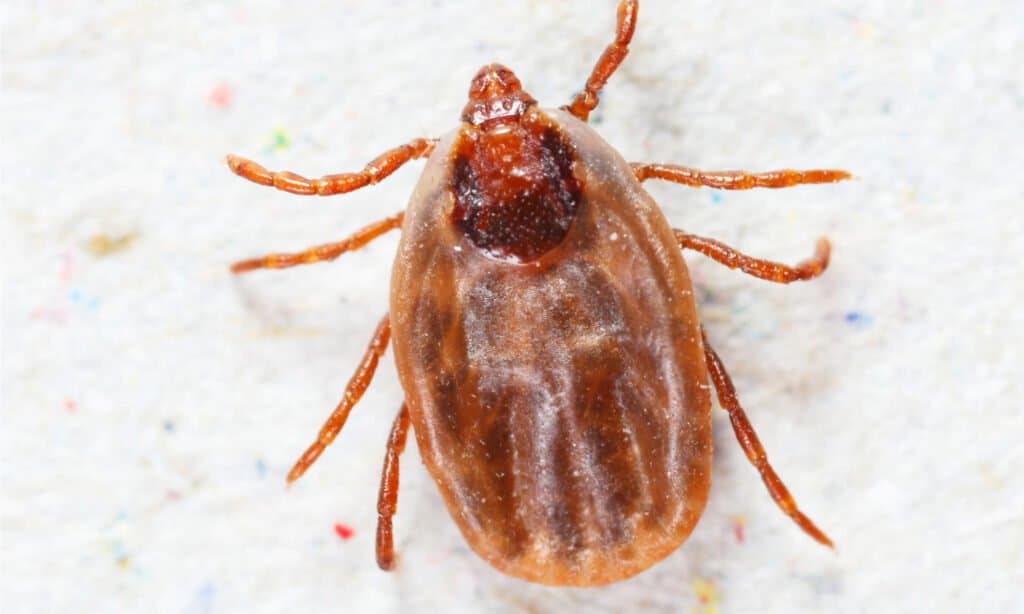
8. Ticks (Ixodida)
©7th Son Studio/Shutterstock.com
Ticks are small parasitic arachnids that feed on the blood of humans and animals. They are commonly found in wooded, grassy, or heavily forested areas where they wait for hosts to pass by. Once on a human or pet, ticks embed their mouth into the skin and begin feeding; they may remain attached for several days. Some ticks in certain regions of the country can spread serious illnesses such as Lyme disease, making swift removal important.
How To Tell the Difference
Ticks attach firmly to the skin and remain in one location while feeding, unlike lice which crawl through hair. Ticks also have eight legs because they are arachnids, while lice are six-legged insects.