
Quick Take
- One bug on this list looks so identical to another that even experts need a microscope to tell them apart. See the near-identical bugs →
- Some jumpers here aren't even insects, so misidentifying them could mean treating the wrong problem entirely. Meet the non-insect jumper →
- One beetle shares fleas' signature jumping ability and nearly identical size, yet it targets something completely different than you'd expect. Discover the jumping beetle →
- Knowing whether a bug can jump, crawl, or fly is the fastest way to rule out a flea, though the test trips up most people. Compare jumping vs. crawling →
Fleas are among the most annoying and recurring parasites for dogs, cats, birds, livestock, and even wild animals like otters and raccoons. Fleas might be tiny, but their capacity to spread diseases and cause suffering to their animal hosts should not be underestimated. While fleas may play some role in the ecosystem, if left unchecked they can cause serious health problems. However, not all small, dark insects you see are fleas. This article discusses bugs that look like fleas and how to spot the difference between them.
What Do Fleas Look Like?
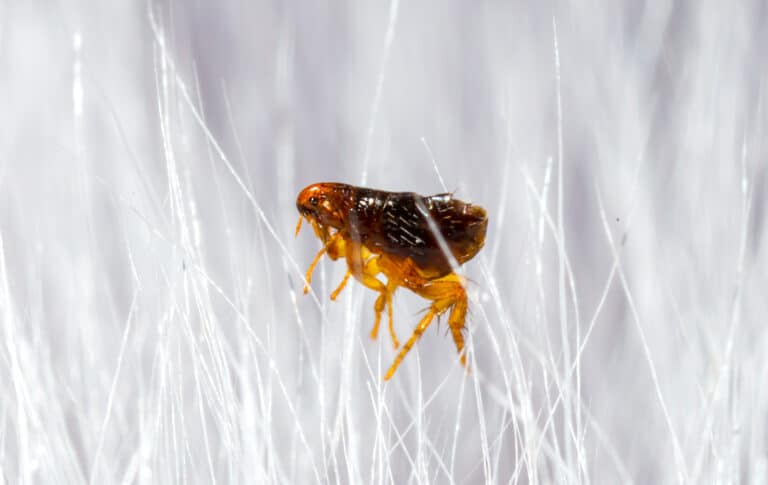
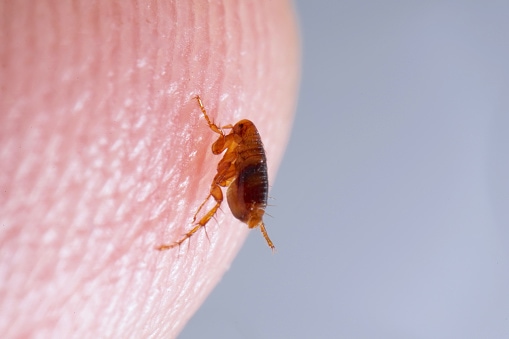
“Flea” is a term that refers to the Siphonaptera order, consisting of around 240 genera. The most common flea species is the cat flea, Ctenocephalides felis. Despite the name, the cat flea also infests dogs and other mammals. Adult fleas are dark reddish-brown with narrow, oval shaped, vertically flattened bodies. They measure between 0.0625 and 0.125 inches long. Fleas have six legs, with the last pair of legs being much longer to aid in jumping. Their legs end in claws that they use to latch onto the host. They have a slim proboscis, or beak, that they use to drink blood. They do not have wings. Their antennae are short and club-shaped and tuck into grooves behind their eyes.
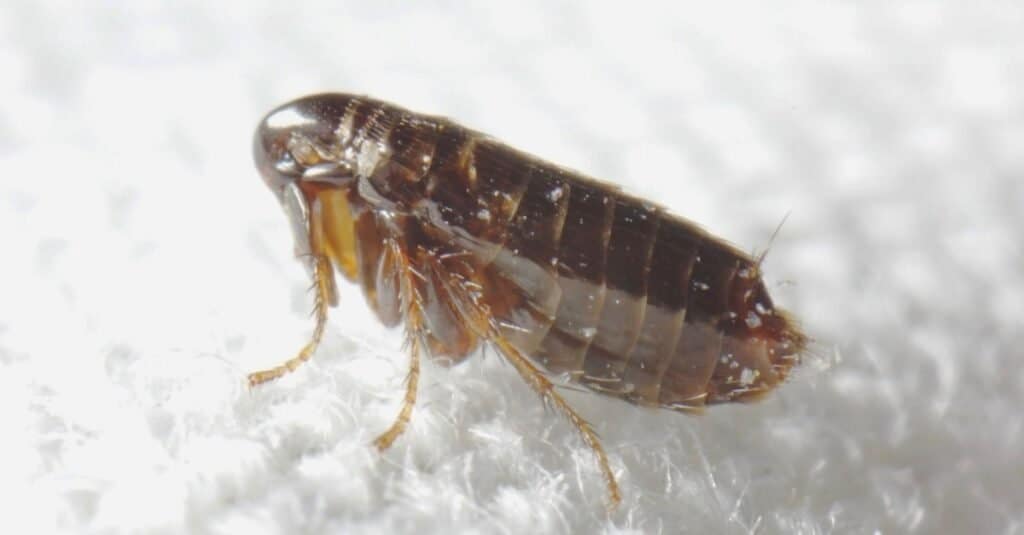
Adult fleas have powerful claws that they use to grasp the host’s body.
©iStock.com/S.Rohrlach
1. Aphids
Aphids belong to the infra-order Aphidomorpha in the order Hemiptera. There are around 6,000 species found all over the world. These parasitic insects feed on leaves, stems, and other tender parts of plants. Their colors vary from green, black, red, yellow, brown, or gray, depending on the species. Aphids measure 0.0625-0.125 inches long. Generally, they have pear-shaped bodies, antennae, and long legs. Needle-like mouthparts pierce through the plant to suck sap. Aphids have a pair of backward-projecting tube-like structures called cornicles near the rear of their bodies, which distinguishes them from fleas and most other insects.
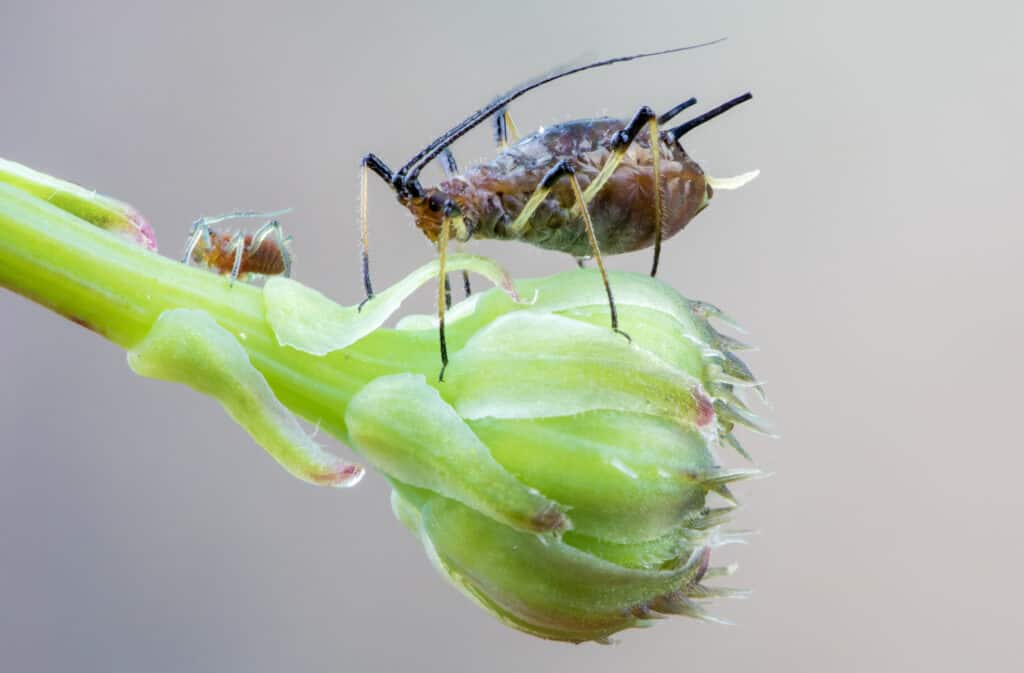
Aphids feed on soft, new plant growth.
©Rainer Fuhrmann/Shutterstock.com
2. Bed Bugs
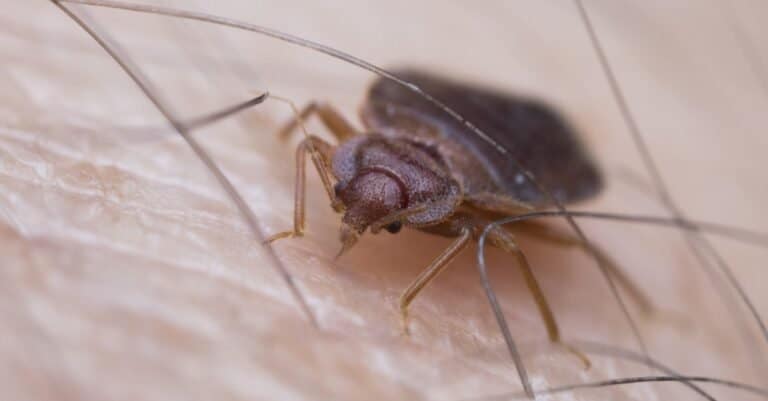
Bed bugs are insects in the Cimex genus. They can be found in bed frames, mattress seams, cracks in furniture, and baseboards. They primarily feed on human blood, while fleas primarily feed on other mammals. Both their bites may irritate the skin or cause rashes. On average, bed bugs measure 0.19-0.25 inches long, so they are larger than fleas. Bed bugs are light brown to reddish-brown and they have broad, flat, oval-shaped bodies. They crawl and cannot jump, while fleas can both crawl and jump.
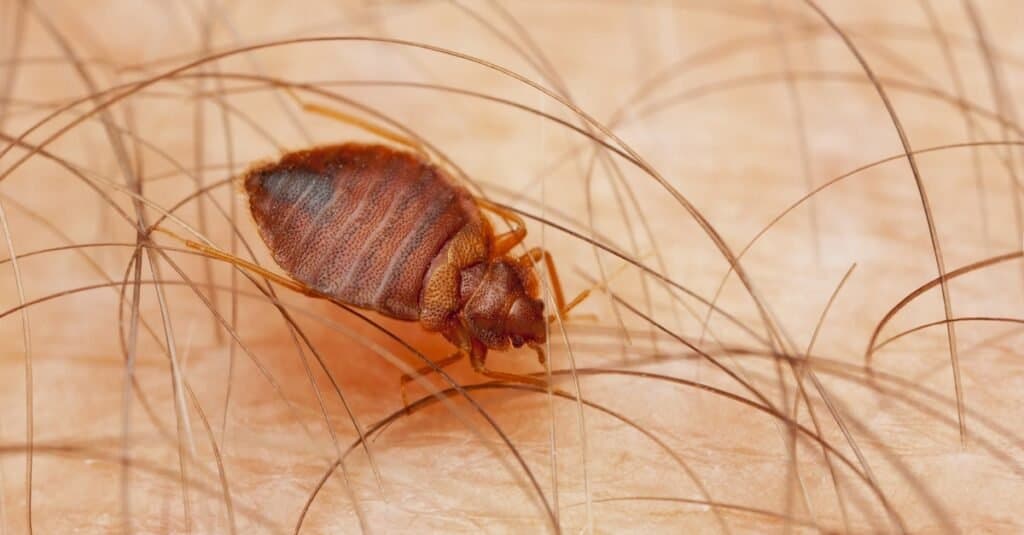
Bed bugs feed on humans, not animals.
©Pavel Krasensky/Shutterstock.com
3. Bat Bugs
Bat bugs refer to species in the Cimicidae and Polyctenidae families, which are blood-sucking parasites that infest bats. They look almost identical to bed bugs. They are flat, broad, oval-shaped insects that grow up to around 0.25 inches. Species vary in color, ranging from beige to reddish-brown. Bat bugs have longer hairs on their thorax than bed bugs, but this can only be seen under a microscope. Like bed bugs, bat bugs are unable to jump and can only crawl.
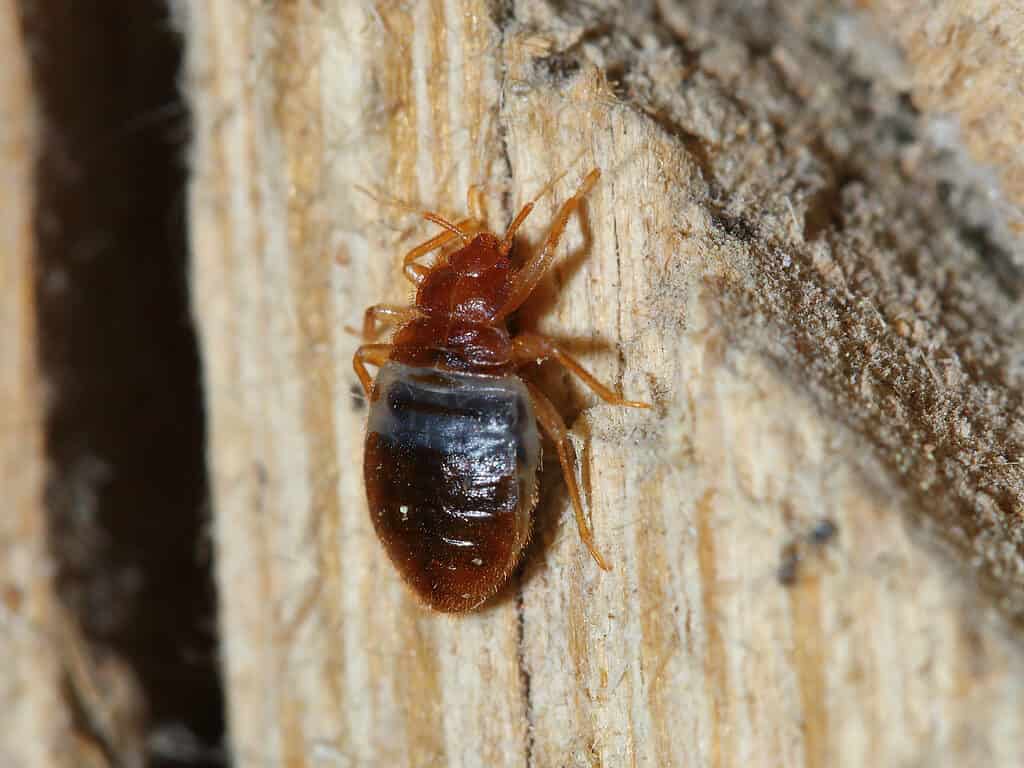
Bat bugs are flat, oval-shaped insects that infest bats.
©iStock.com/Zdenek Macat
4. Black Carpet Beetles
Black carpet beetles, known as Attagenus unicolor, are parasitic species that feed on animal products containing keratin, such as leather, silk, wool, dead insects, and dried plants. They are usually found in kitchen cabinets, wardrobes, and carpets. Adults grow about 0.12–0.20 inches long, so they are larger than fleas. They have shiny black or dark brown oval-shaped bodies with hard shells. Black carpet also have functional wings.
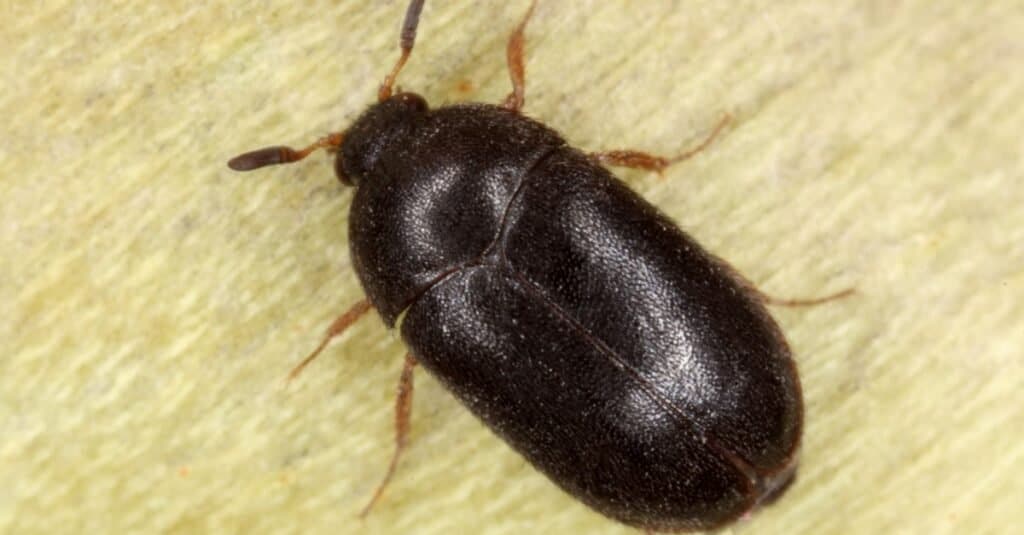
Black carpet beetles are usually found in kitchen cabinets, wardrobes, and carpets.
©Tomasz Klejdysz/Shutterstock.com
5. Springtails
Springtails are not insects; instead, they are terrestrial arthropods in the order Collembola. There are around 8,000 species found all over the world. They are generally found in damp areas outside, such as under leaf litter, mulch, or soil. Springtails have soft, rounded bodies and generally measure between 0.02 and 0.4 inches in length. While most springtails are smaller than fleas, there are some species that are larger than the average flea. Springtails come in a variety of colors, depending on the species. They do not have wings, but they can jump due to a spring-like structure on their abdomen called a furcula.
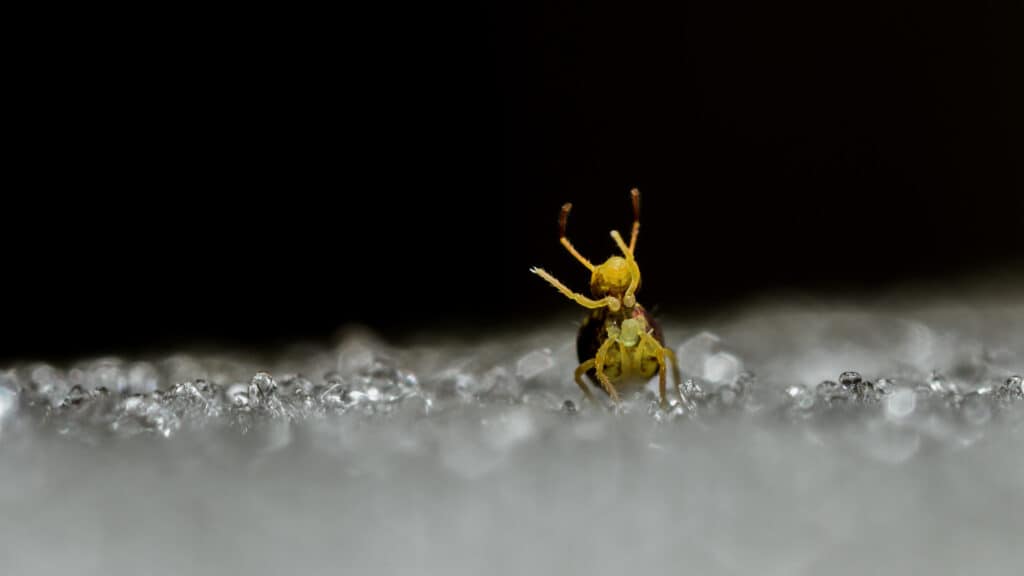
Springtails get their name from their ability to jump.
©thatmacroguy/Shutterstock.com
6. Confused Flour Beetles
The confused flour beetle (Tribolium confusum) feeds on dry good such as cereal, flour, and grain. It is roughly the same size as the average flea at around 0.125 inches. It also has a reddish brown body, but that is where the similarities end. This beetle has a flat, oval-shaped body, hard shell covers (elytra), and visible antennae. They cannot jump or fly; they can only crawl.
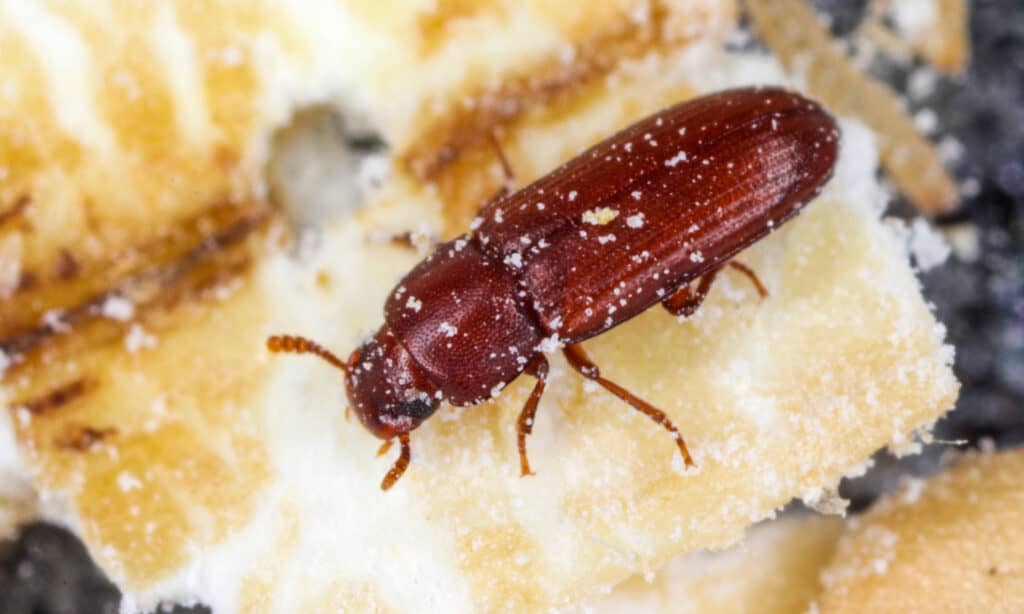
The confused flour beetle has a flat oval body and straight antennae facing opposite angles.
©Tomasz Klejdysz/Shutterstock.com
7. Flea Beetles
Flea beetles are herbivores that make tiny holes on leaf surfaces when feeding. They are jumping leaf beetles that belong to the family Chrysomelidae. There are around 8,000 species in 500 genera. These beetles are oval shaped with hard shells. Like fleas, they are characterized by large hind legs that give them amazing jumping skills. However, flea beetles can not only jump, they can also walk and fly. Their color depends on the species, but most are dark and metallic. These insects measure approximately 0.059 inches to 0.16 inches.
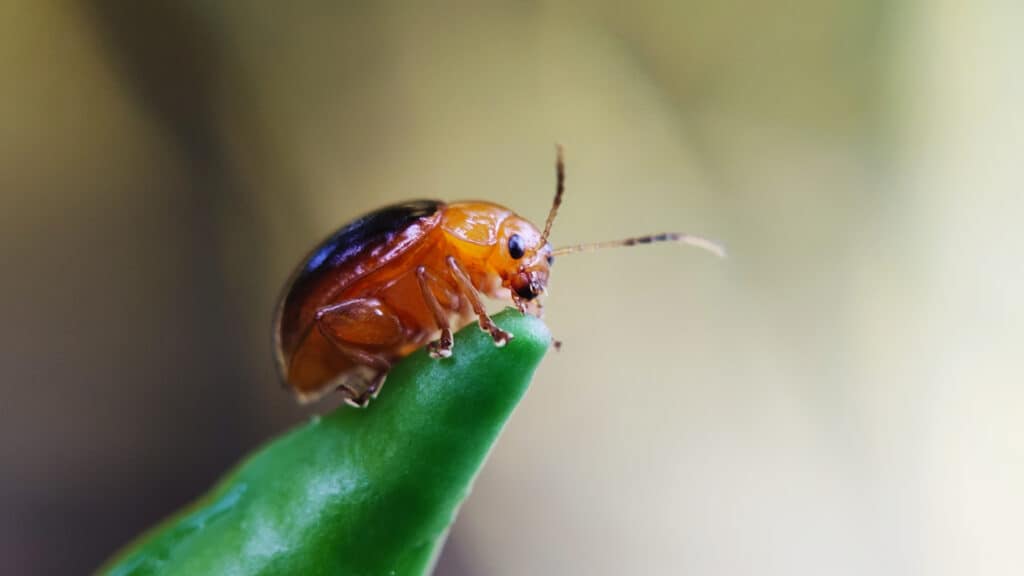
Flea beetles munch tiny holes on leaf surfaces.
©KAISARMUDA/Shutterstock.com
8. Ticks
Ticks are parasitic arachnids whose saliva contains chemicals used to numb the area so that animals and people don’t feel the bite. Unlike fleas, ticks have eight legs like other arachnids that help them move on their hosts’ skin. They cannot jump or fly. Ticks have flat, oval-shaped bodies that swell up when they consume blood. They can be brown, tan, reddish, black, or yellowish colored. A fully fed adult female can reach 0.5-0.625 inches. They also do not have antennae, but their first pair of legs can sometimes be mistaken for antennae.
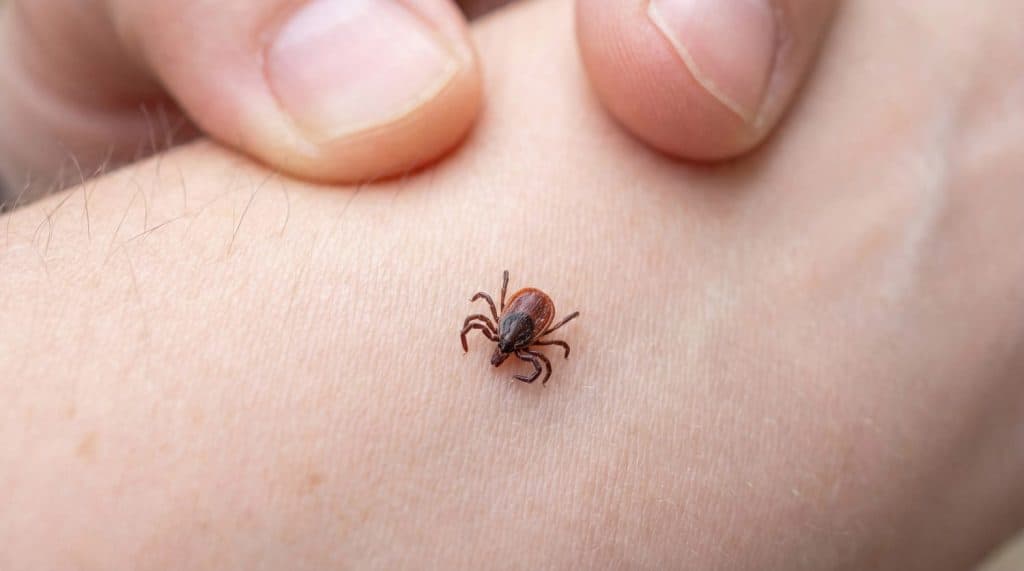
Ticks are arachnids, so they have eight legs instead of six.
©JLugonStudio/Shutterstock.com