
Some are so tiny you only notice they feasted on you by the mark left on your skin. Others carry potentially deadly diseases. Discover five annoying insects in Georgia that are in numbers and looking to bite! Plus, learn a few prevention tips!
5 Annoying Insects in Georgia That Are in Numbers and Looking to Bite
1. Mosquitoes
Scientific name: Culex pipiens
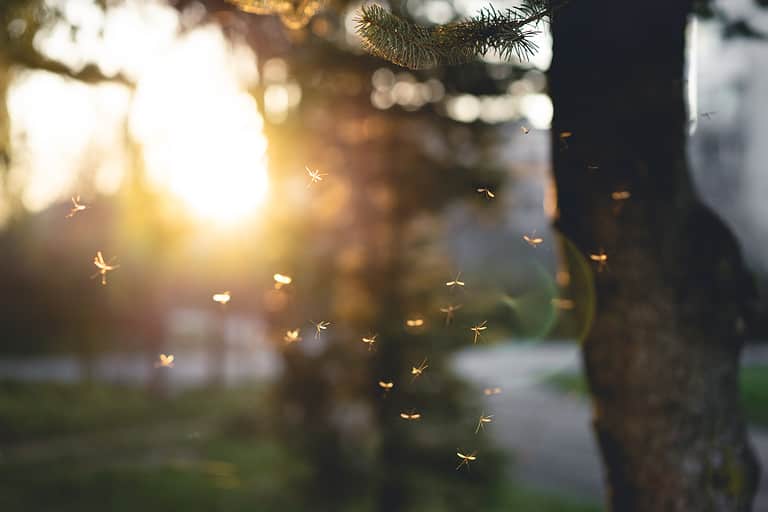
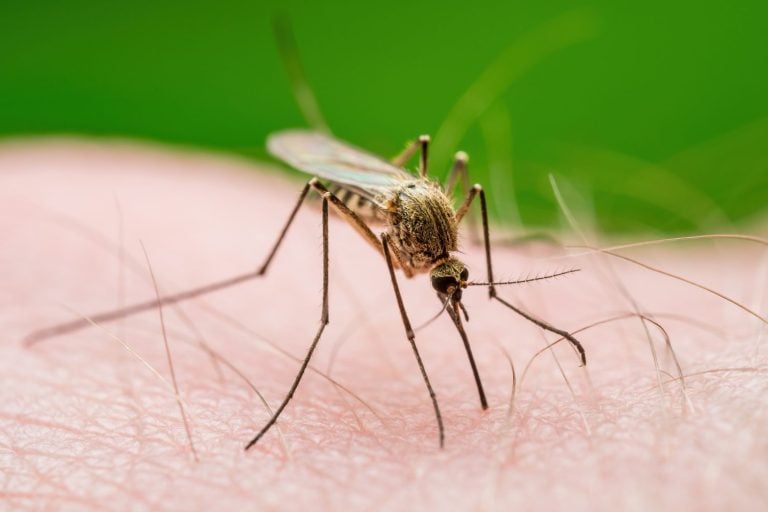
Mosquitoes are common flying insects that gravitate toward standing water. These insects bite and feed on hosts, including you and your pets. The Georgia Department of Public Health warns about mosquito-borne diseases and offers tips for decreasing your chances of a bite. Although more mosquito bites do not result in any type of infection, the risk remains. Reports of the West Nile virus are most common in the state of Georgia though other diseases have been reported including eastern equine encephalitis and La Crosse encephalitis.
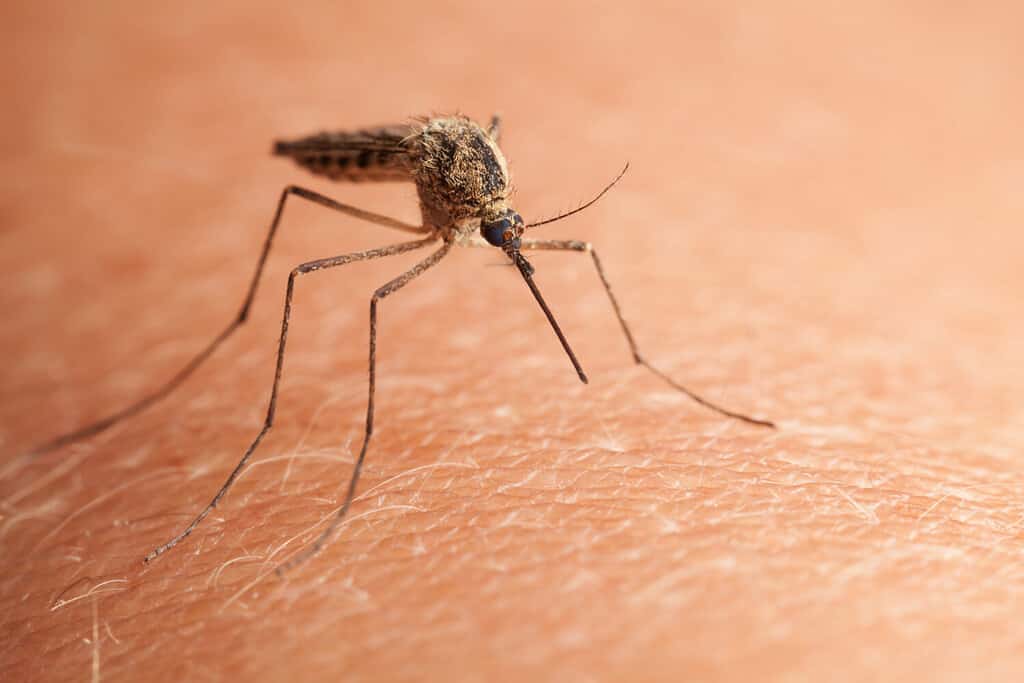
Mosquitoes gravitate to standing water.
©Anest/Shutterstock.com
2. Deer and Horse Flies
Deer Fly Scientific name: Chrysops
Horse Fly Scientific name: Tabanidae
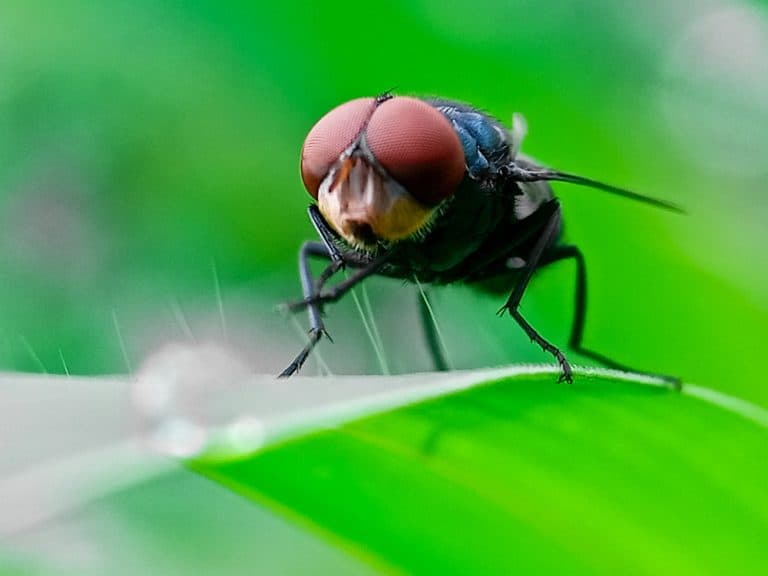
Both deer flies and horse flies are rather large in comparison to other species. Their job is to bite and yours is to stay away from them! Despite their names, these flies don’t just bite deer and horses and like mosquitoes, both of these flying insects are known for transmitting disease. They do present a significant danger to livestock and may transmit diseases such as hog cholera virus and equine infectious anemia virus. The females are the ones in desperate need of blood in order to create new offspring. When you head outdoors, protect yourself so you don’t become a host for these pesky and dangerous insects.
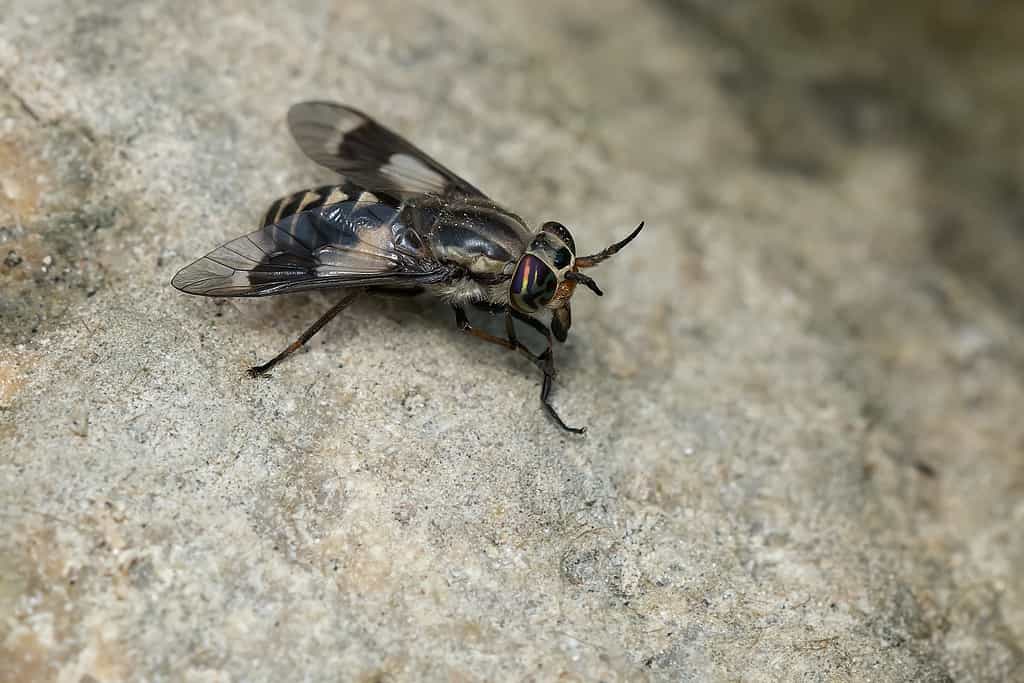
Deer flies have razor-sharp mouthparts.
©Paul Reeves Photography/Shutterstock.com
3. Biting Midges (No-see-ums)
Scientific name: Culicoides sonorensis
These insects are tiny and can be extremely annoying, especially when they swarm. Their bites are painful since they really get a mouthful just before they suck your blood! They are normally found in marshes or near bodies of water. They gravitate to humid environments, and they only measure between one to three millimeters in length. They are not always visible to the naked eye, which makes them extra sneaky. The females are blood crazy, but the males do not bite. Instead, they feed on nectar. While they display a taste for sugary substances, the females have a taste for blood. This form of sustenance is in the name of motherhood. Although these tiny monsters are almost imperceptible when flying solo, they gather in large numbers, which offers a fair warning.
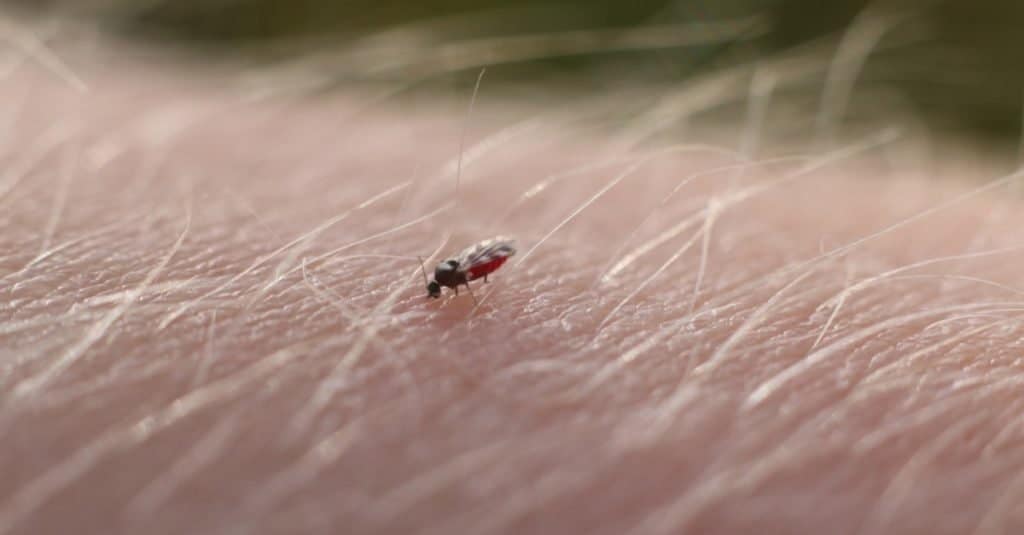
Biting midgets are so tiny, they’re nearly imperceptible.
©Jamierpc/Shutterstock.com
4. Chiggers
Scientific name: Trombicula autumnalis
Chiggers are very small in size, matching the size of a single grain of salt. Despite their size, they can be very powerful on your arm as they can leave tiny orange, yellow, or reddish color dots. These small wounds are enough for an infection. When out and about, watch out for grassy or wooded areas as these are their normal habitats. In order to feed themselves, they inject enzymes strong enough for their hosts to shed skin. Then, they can feed on the liquefied tissue. Sounds appetizing, right? Although not a fun time for their hosts, chiggers enjoy the smorgasbord they create.
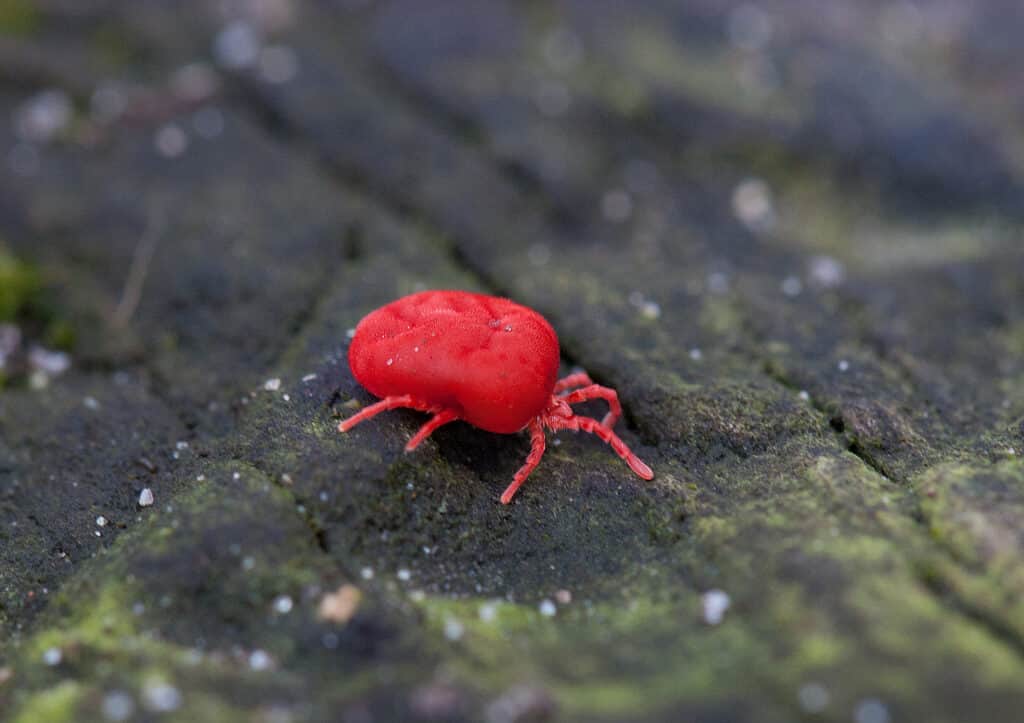
Chiggers are also known as berry bugs.
©Matauw/Shutterstock.com
5. Fleas
Scientific name: Siphonaptera
These creatures are one to four millimeters long. They normally live in or close to pet areas or where wild animals live. That is not to say that if humans are nearby, they won’t look the other way. On the contrary, they see you as a feast! Since fleas have the ability to jump up to 13 inches horizontally and without wings, they can really make their rounds from host to host. Fleas are a nuisance and carry dangerous bacteria and parasites. To keep them from infesting your home environment, keep pet areas clean and vacuum frequently, emptying any contents outdoors.
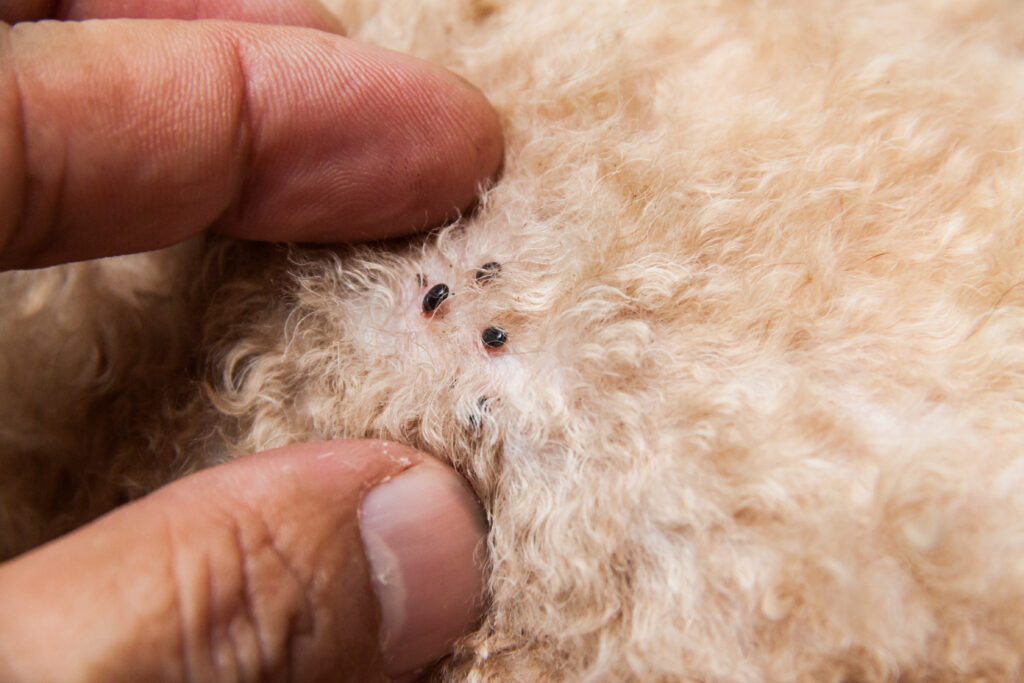
Prevent flea infestations by keeping a clean, well-vacuumed environment.
© ThamKC/Shutterstock.com
How to Prevent Insect Bites in Georgia
One way to prevent insect bites in Georgia is to use clothing as a protective layer when outdoors. Although it may seem counterintuitive on hot days, wearing long sleeves and long pants protects your skin from insect bites. Consider avoiding the outdoors when insects are most active (usually around sunrise and sunset) and make the most out of indoor environments.
Additionally, use insect repellants that contain DEET, which is proven most effective against mosquito bites. Check around your home for standing water and drain it so that it doesn’t attract mosquitoes especially. Do a walk-through of your home to check window screens and screen doors and repair any that have holes to ensure you have a protective barrier that keeps all insects from entering your home.