
Quick Take
- Oysters have no brain, no eyes, and no head, but they can still detect what's happening around them. Explore their unique anatomy →
- These tiny filter feeders perform a water-cleaning feat so large it rivals municipal filtration, and they manage to do it every single day. See their filtration power →
- Oysters can switch sexes, and the trigger behind the change is stranger than you'd guess. Discover the sex-change trigger →
- New York City's early skyline was quietly built using a material dredged straight from the harbor. Uncover the building secret →
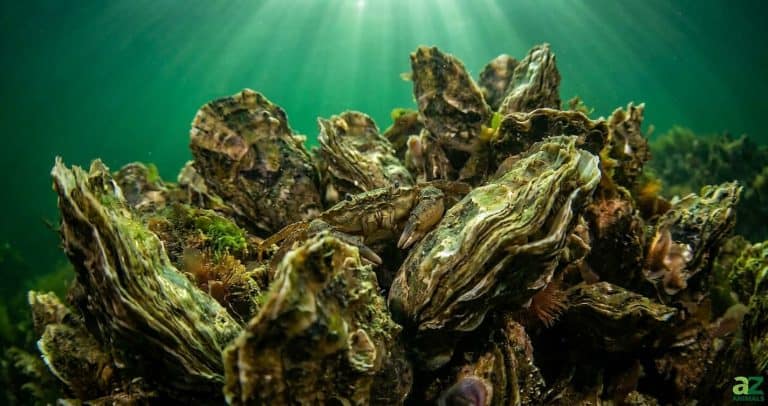
Oysters are marine mollusks that are part of the shellfish family. The word “oyster” is actually a common name for many different species. True oysters belong to the family Ostreidae. Humans have been eating oysters for thousands of years, but oysters have been on Earth for around 200 million years. What else should you know about these ancient marine animals? Read on to learn 10 incredible oyster facts.
1. Oysters Have Highly Specialized Bodies
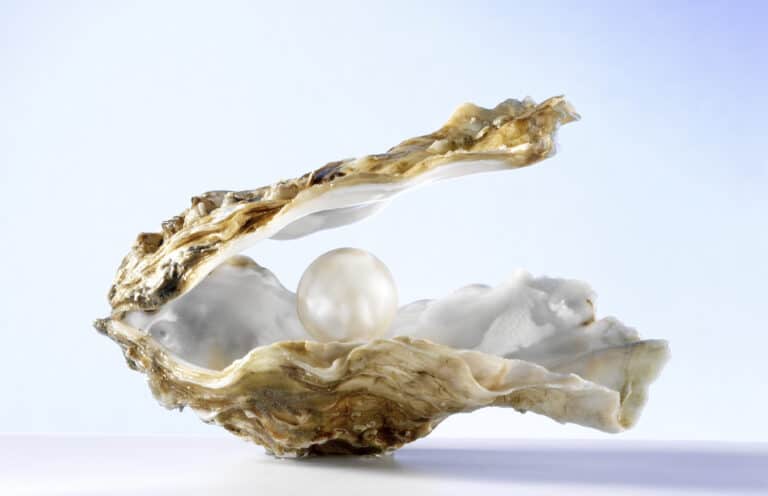
It might be hard to imagine because they’re so small and simple, but oysters have highly specialized bodies. Oysters are bivalves, which are animals with two-part, hinged shells. They have a powerful central adductor muscle that consists of two distinct parts. The larger, striated, translucent part quickly closes the shell, while the smaller, opaque muscle holds it closed for long periods. Oysters do not have heads, brains, or eyes, but they can sense light and shadow with specialized cells on their bodies. They also have hearts, digestive systems, and gills.
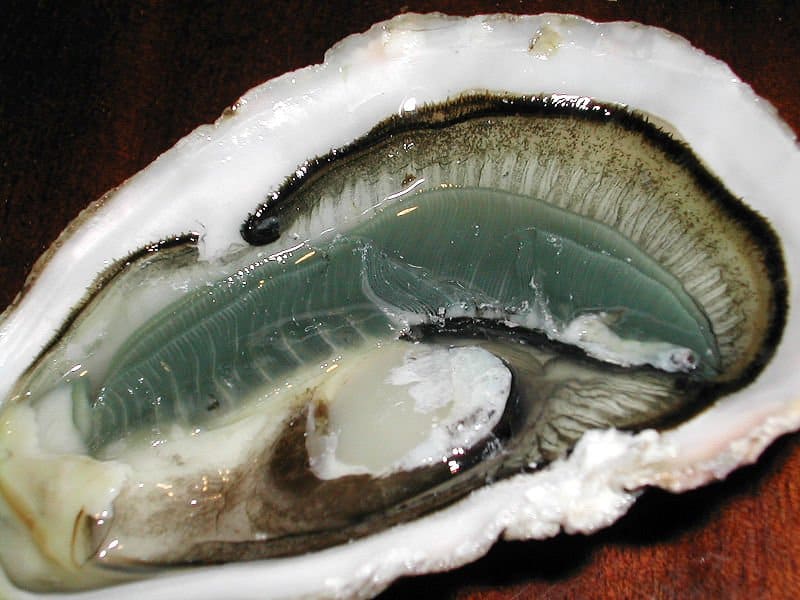
Oysters have strong adductor muscles that pull and hold their shells closed.
©Anthere / Creative Commons – Original
2. Oysters Have Gills
Similar to fish, an oyster has gills. Oysters are filter feeders, so they use their gills for both breathing and eating. As water moves across the gills, the oyster absorbs oxygen and releases carbon dioxide. Their hearts pump blood through their gill tissues to carry oxygen to the rest of the body. They eat tiny plants like phytoplankton and algae by pumping water over their gills. Tiny, hair-like structures in their gills called cilia trap food particles as the water flows back out.
Oysters use their gills to breathe and filter food.
©Kim McGrew/Shutterstock.com
3. Oysters Are Picky Eaters
Oysters are filter feeders that consume both plant and animal matter, including phytoplankton and zooplankton. However, an oyster won’t eat every type of plant material that is trapped in its gills. Oysters are actually very selective about the food they consume. They prefer phytoplankton and specific types of algae. Once the cilia in the gills trap microscopic particles from the water, special mouth parts sort through the food and other debris. The mouth parts guide the good food to their digestive system, while the excess is expelled as waste.

One food source that oysters prefer is phytoplankton.
©GizemG/Shutterstock.com
4. Oysters Clean Up Bodies Of Water
Nitrogen and phosphorus are necessary for coastal ecosystems to support marine life. However, too much nitrogen and phosphorus can be dangerous. Human activities like farming or poorly designed septic systems can dump too many nutrients into the water. This can cause high algae levels, often called an algae bloom. However, oysters can remove the particles before they have a chance to create an algal bloom. A single oyster can filter as much as 50 gallons of water daily. They consume the excess nutrients as part of their daily diet. They also improve water clarity, stabilize pH levels, and prevent degradation and oxygen depletion in the water.
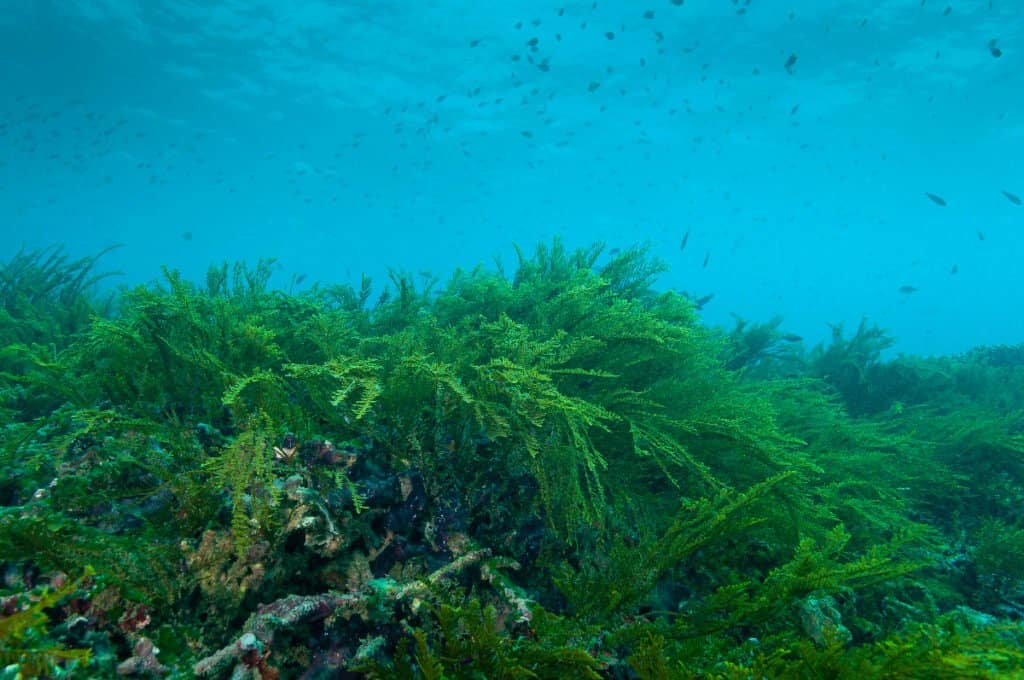
Oysters help prevent algal blooms.
©Jesus Cobaleda/Shutterstock.com
5. Oysters Can Poop
Waste collects inside an oyster’s shell cavity as it digests food. Unwanted food, as well as dirt and sand, are expelled as pseudofeces, which is waste material bound in mucus that is rejected before passing through the digestive tract. The oyster periodically expels pseudofeces forcibly from the mantle cavity. Feces — waste that has passed through the digestive tract — is eliminated through an anus located near the adductor muscle.
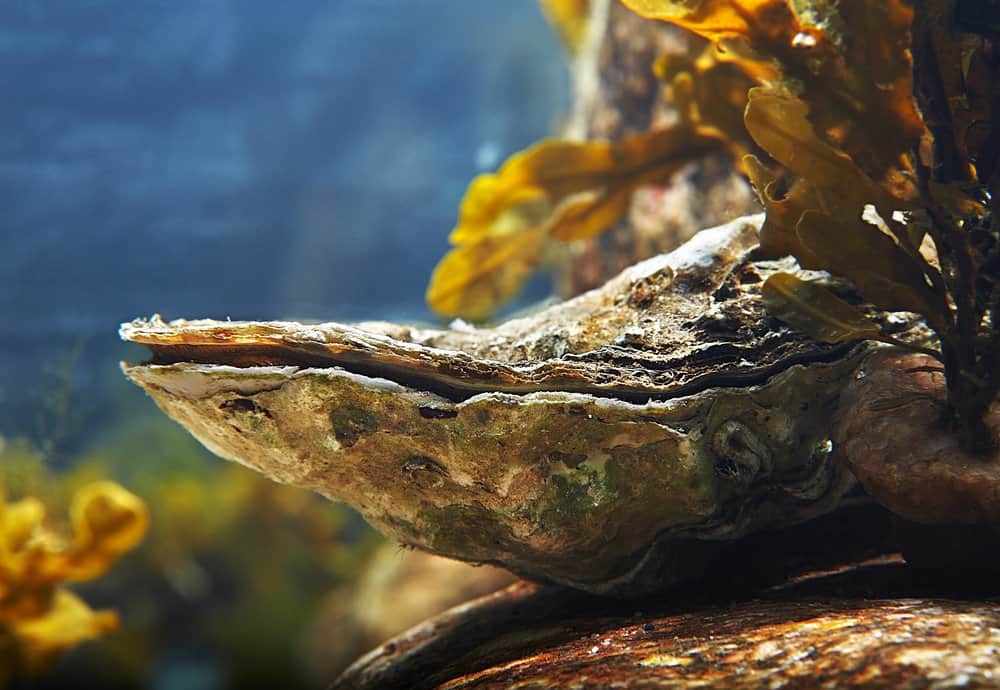
Oysters clap shut when they are ready to poop.
©Pix Box/Shutterstock.com
6. Oysters May Look and Act Different In Different Environments
Oysters have a unique ability to change certain traits depending on their environmental conditions. This is known as having high phenotypic plasticity. Phenotypic plasticity means the same species can change their appearance, behavior, and structure in response to environmental stressors. In oysters, this typically manifests as temperature tolerance, adapting to a different salinity, or changes in shell structure.
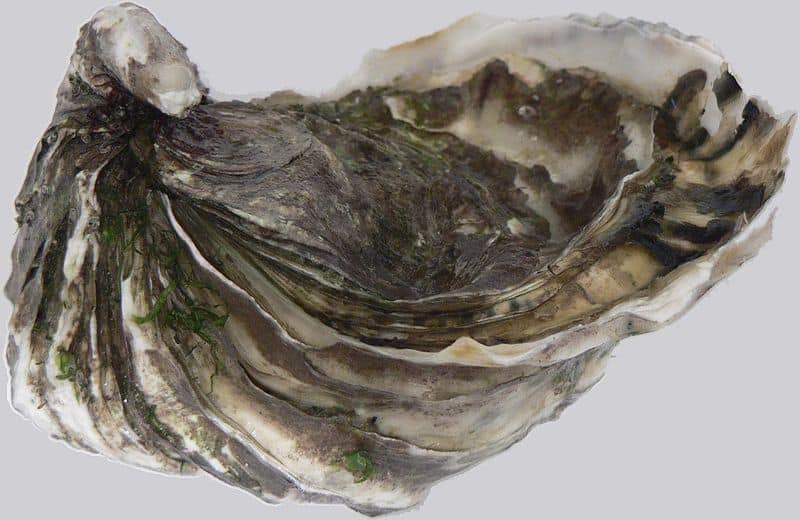
Categorizing oysters is tricky because their appearance can vary depending on their environment.
©David Monniaux / Creative Commons – Original
7. Oysters Can Change Sex
High phenotypic plasticity also allows oysters to change sex in response to environmental conditions. Some oysters begin as males and change to female as they get larger, but other species can repeatedly alternate between male and female depending on the sex ratio among nearby oysters, as well as external conditions like water temperature or acidity.
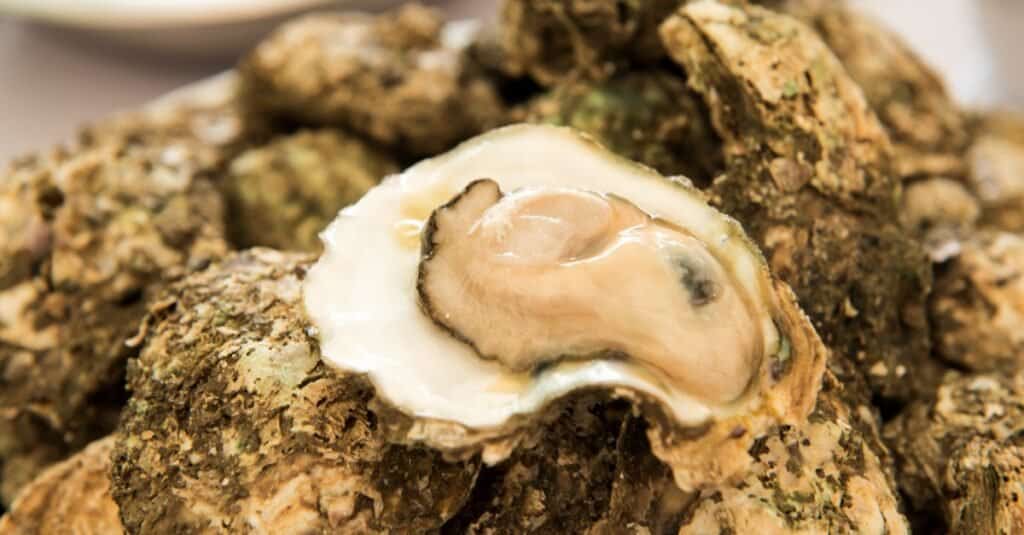
Oysters vary in sex depending on their environmental conditions and different physiological stressors.
©wasanajai/Shutterstock.com
8. Salt Helps Oysters Grow Faster
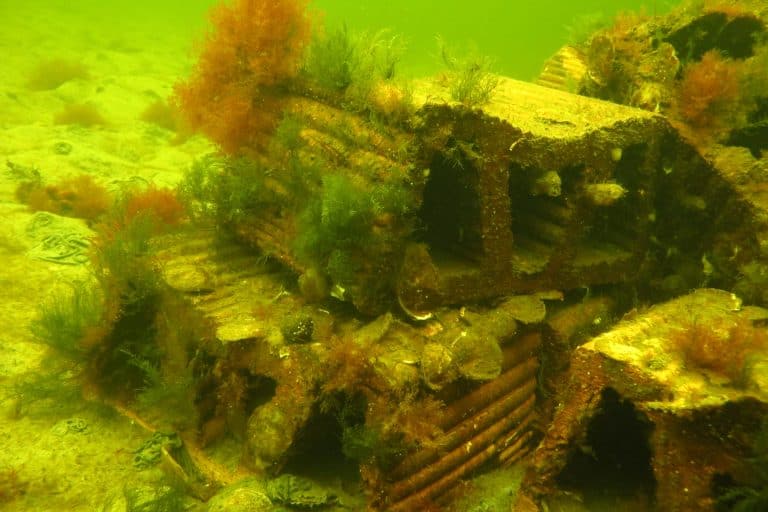
An oyster will usually grow 1 inch every year. They typically grow faster if they live in water with high salinity, although too much salinity can be harmful. An oyster’s ability to respond to the salinity in its environment begins when it is a baby. When an oyster larva attaches to a hard surface, typically old oyster shells, it is called a spat. Oyster spat receive environmental and chemical cues. If anything about its environment isn’t suitable, the cues will let it know to detach and settle elsewhere.
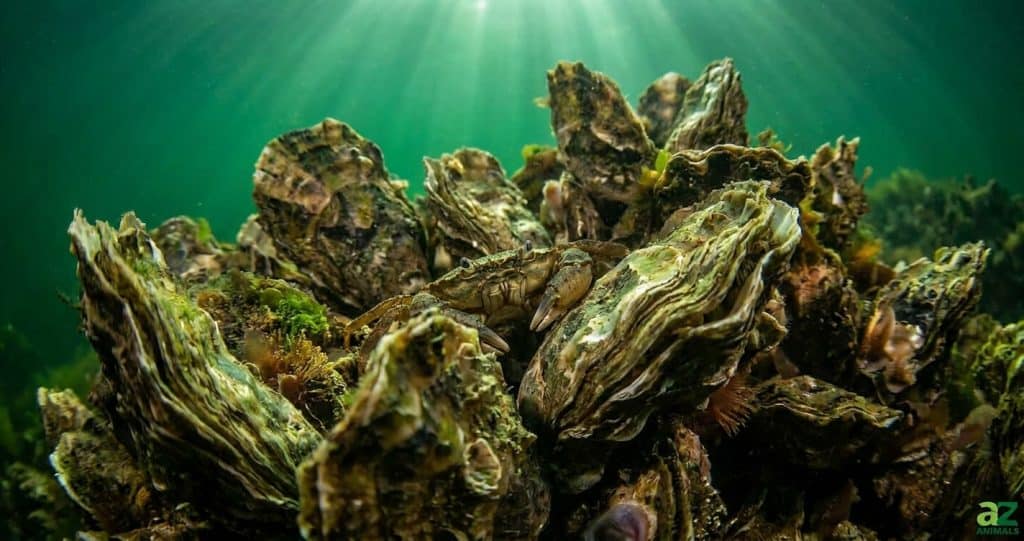
The amount of salt in an oyster’s environment can dictate its size.
©A-Z Animals
9. Oyster Shells Were Used As Mortar
Well into the 1800s, New York City had an overabundance of oysters and gigantic oyster shells. There were so many oversized oysters that New Yorkers would repurpose discarded shells as mortar paste. The oyster-made mortar paste was used to build all sorts of buildings across the city. Trinity Church is one example of a building constructed using oyster shells. Now, scientists are using the chemistry behind how oysters build reefs to create stronger cement that cures faster.

Oysters were used as building materials in New York City in the 1700s.
©shutterupeire/Shutterstock.com
10. Female Oysters Can Lay 100 Million Eggs at a Time
Oysters generally have high reproduction rates, but few larvae reach adulthood. For example, a female Eastern oyster can lay over 100 million eggs at a time. However, oysters release their eggs and sperm directly into the ocean, where fertilization is a matter of chance. Floating larvae and oyster spat are also easy prey for fish, crustaceans, and filter feeders. Changing water conditions can also be fatal to large numbers of larvae before they can find something to attach to.
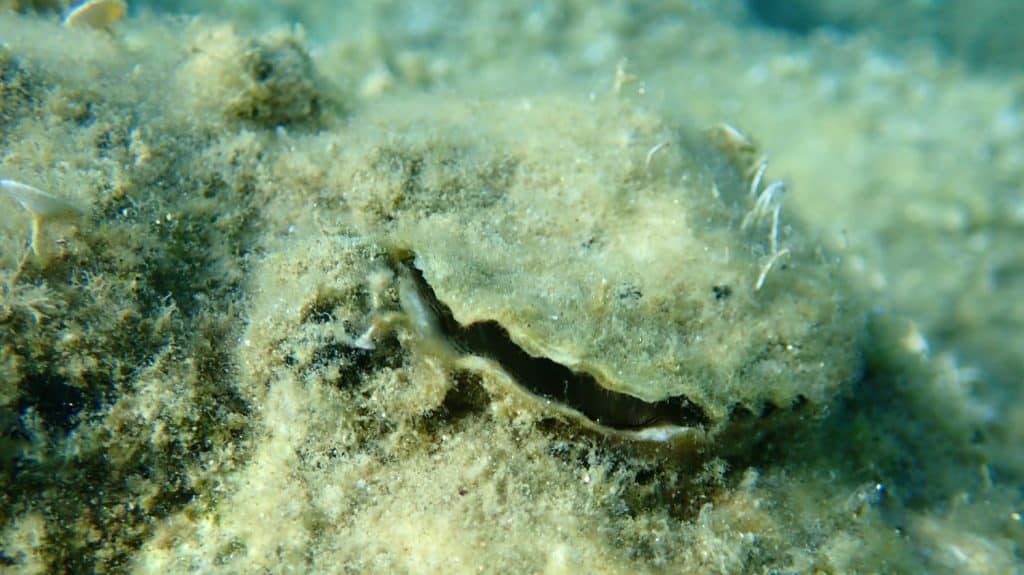
Female oysters release their eggs directly into the ocean, where fertilization is a matter of chance.
©Alexey Masliy/Shutterstock.com