
Quick Take
- One Florida crab gets harvested for its claws every year, yet somehow it survives the process every single time. See the claw regrowth →
- Florida has a crab that lives in trees and another that's barely the size of a pea, and both are surprisingly common. Meet the tree-climbing crab →
- A tiny crab with no remarkable defenses is quietly destroying Florida's coastal marshes, and the unlikely cause turns out to be overfishing. How overfishing fuels erosion →
- The ghost crab has a sensory ability that almost no other creature on the beach can match, and this remarkable trait is hiding in plain sight. Discover the 360° eyes →
Florida is home to thousands of species of crabs that vary widely in size, shape, color, diet, and more. Although it’d be nearly impossible to cover every single one of them, we’ve compiled a list of more than 15 of Florida’s most fascinating, incredible, and unique types of crabs you should know about, whether you’re a Sunshine State native or just plan on visiting. Keep reading to learn all about them and what they look like, as well as some interesting facts about each one.
1. Florida Stone Crab (Menippe mercenaria)
The Florida stone crab is one of Florida’s most popular and well-known crabs, mainly due to its claws being a popular and delicious food source. Incredibly, though, the stone crab can regenerate its lost claws in around one year or more. This allows fisheries to harvest the crabs’ claws yearly without fatally wounding them. Although this crab is average in size overall, with a 3-to-4-inch carapace, a single claw can weigh close to half a pound.
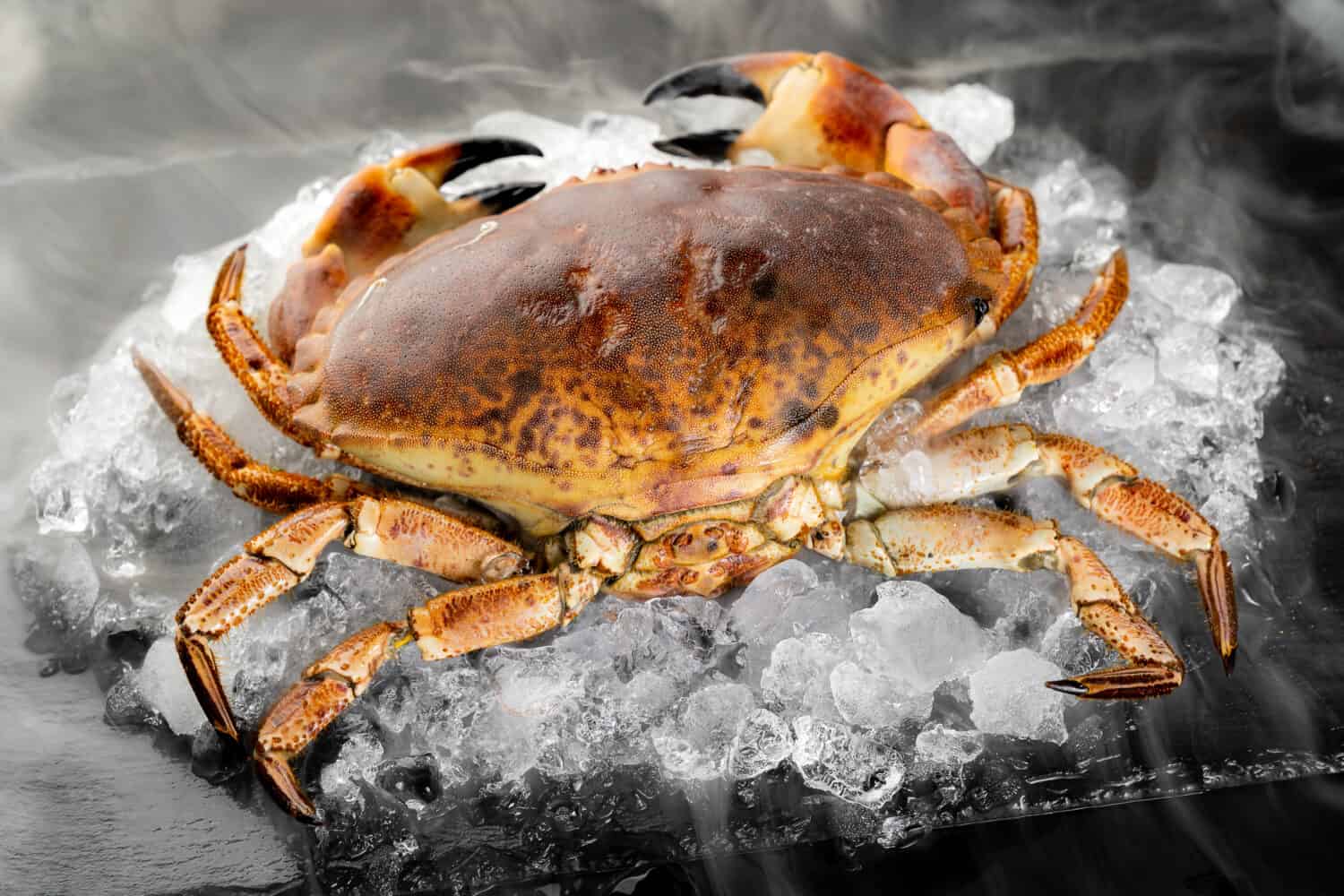
Florida stone crabs’ claws are a delicacy, particularly in Florida where the species is abundant.
©vichie81/Shutterstock.com
2. Blue Land Crab (Cardisoma guanhumi)
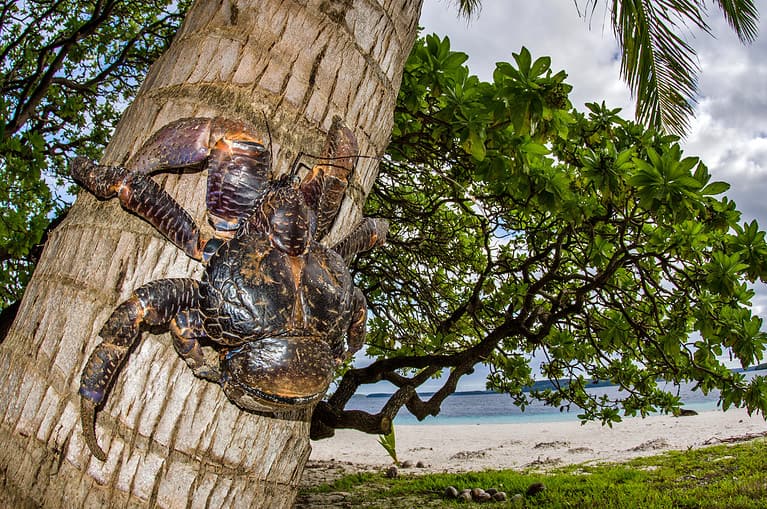
The blue land crab gets its name from the color of its carapace, which can vary in color from a vibrant royal blue to pale gray. It’s also one of Florida’s most prominent edible crabs aside from the stone crab and golden crab. It prefers warm tropical and subtropical coastal regions from Brazil through the Caribbean and Gulf of Mexico north to Florida. They spend most of their adult life on land in deep burrows underground near estuaries and sandy coastal areas. These crabs must keep their gills moist in order to breathe. The carapace measures up to 6 inches wide and they can weigh up to 18 ounces.
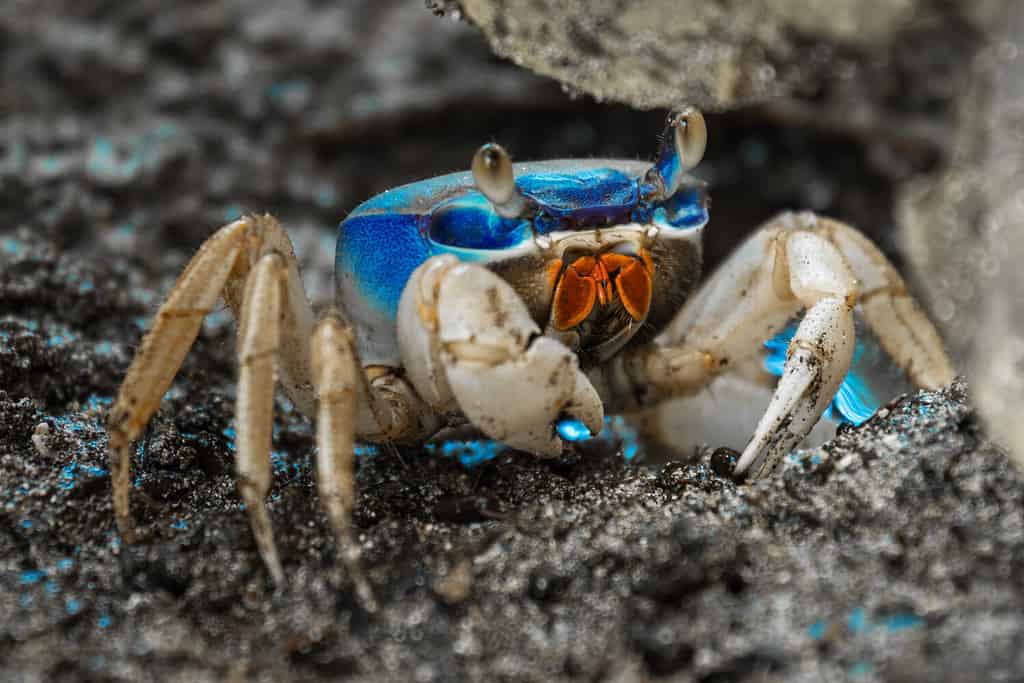
The blue land crab’s carapace ranges in color from bright blue to a ghostly gray.
©Dudarev Mikhail/Shutterstock.com
3. Sand Fiddler Crab (Leptuca pugilator)
The sand fiddler crab is one of around 100 unique species of fiddler crabs. These small crabs only measure about 1.5 inches wide. Male fiddler crabs always have one claw that is much larger than the other. Their common name references the way they often hold and move their claws in a “fiddling” motion when attempting to attract mates. Sand fiddler crabs are especially abundant in Florida’s coastal mudflats. They often burrow into the soft sand and muddy substrate to evade predators. Additionally, they use their burrows as shelter during the winter months, during which they enter a hibernation state.
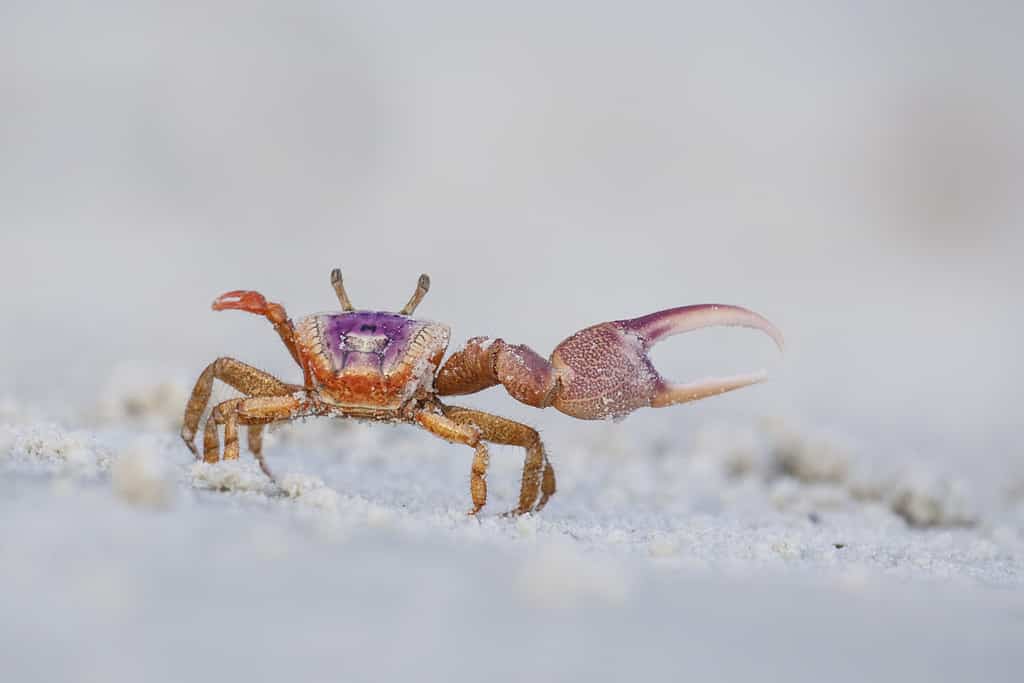
This male sand fiddler crab commonly moves its large claw in a fiddling motion to attract females.
©Tory Kallman/Shutterstock.com
4. Atlantic Mole Crab (Emerita talpoida)
The Atlantic mole crab is perhaps better known to Florida locals as the “sand flea” for its small size and flea-like body shape. It’s one of Florida’s smallest crabs, typically only reaching 1 inch long at most. It filter feeds by burrowing its body backward into the sand and raising its long, feathery antennae to filter out plankton and algae. Although shorebirds occasionally feed on the Atlantic mole crab, the species is fairly adept at avoiding predation. This is due to its ability to burrow into sandy substrate very quickly and its sandy-colored, well-camouflaged carapace.
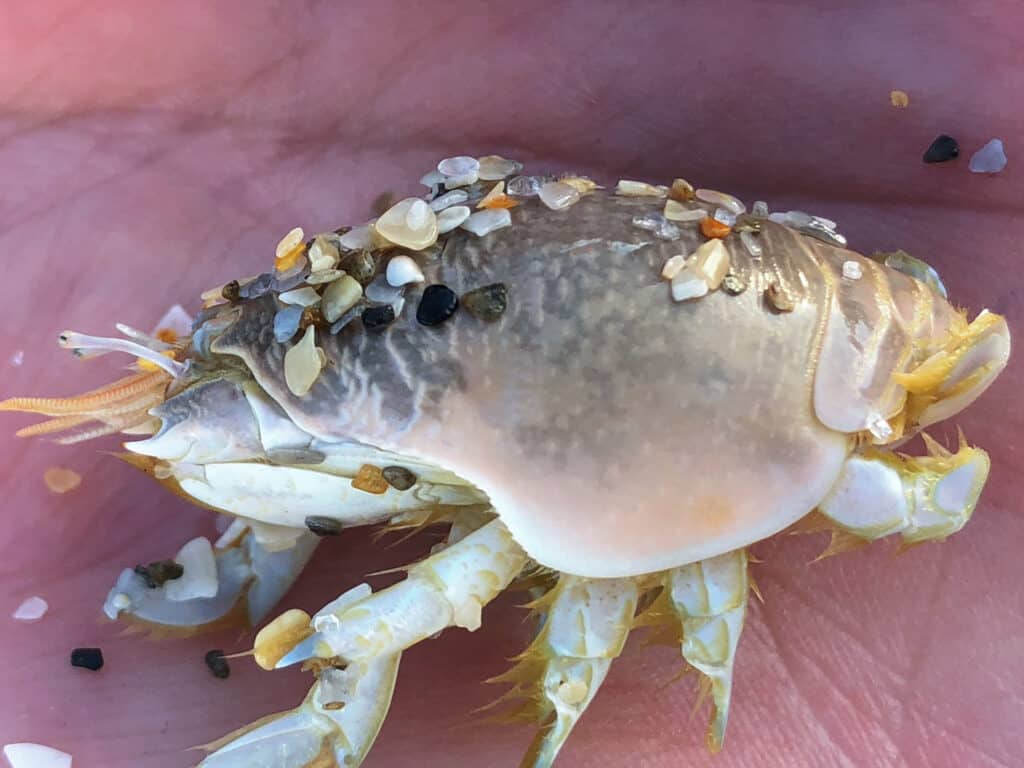
Also known as sand fleas, Atlantic mole crabs are one of Florida’s smallest crabs at barely an inch long.
©iStock.com/Jaimie Tuchman
5. Speckled Swimming Crab (Arenaeus cribrarius)
The speckled swimming crab gets its common name from its white-speckled carapace and its last pair of back legs that are flat like paddles to help it swim more quickly. Their carapace measures 2-5 inches wide. Speckled swimming crabs prefer shallow, sandy ocean beaches and often burrow into the sand, where they leave just enough of their bodies above the surface so water can access their gills. These crabs are nocturnal and strictly solitary, refusing to even interact with other members of their species aside from breeding. Though they mainly feed on ocean detritus, speckled swimming crabs also sometimes eat small fish, mollusks, and even other, smaller crustaceans.
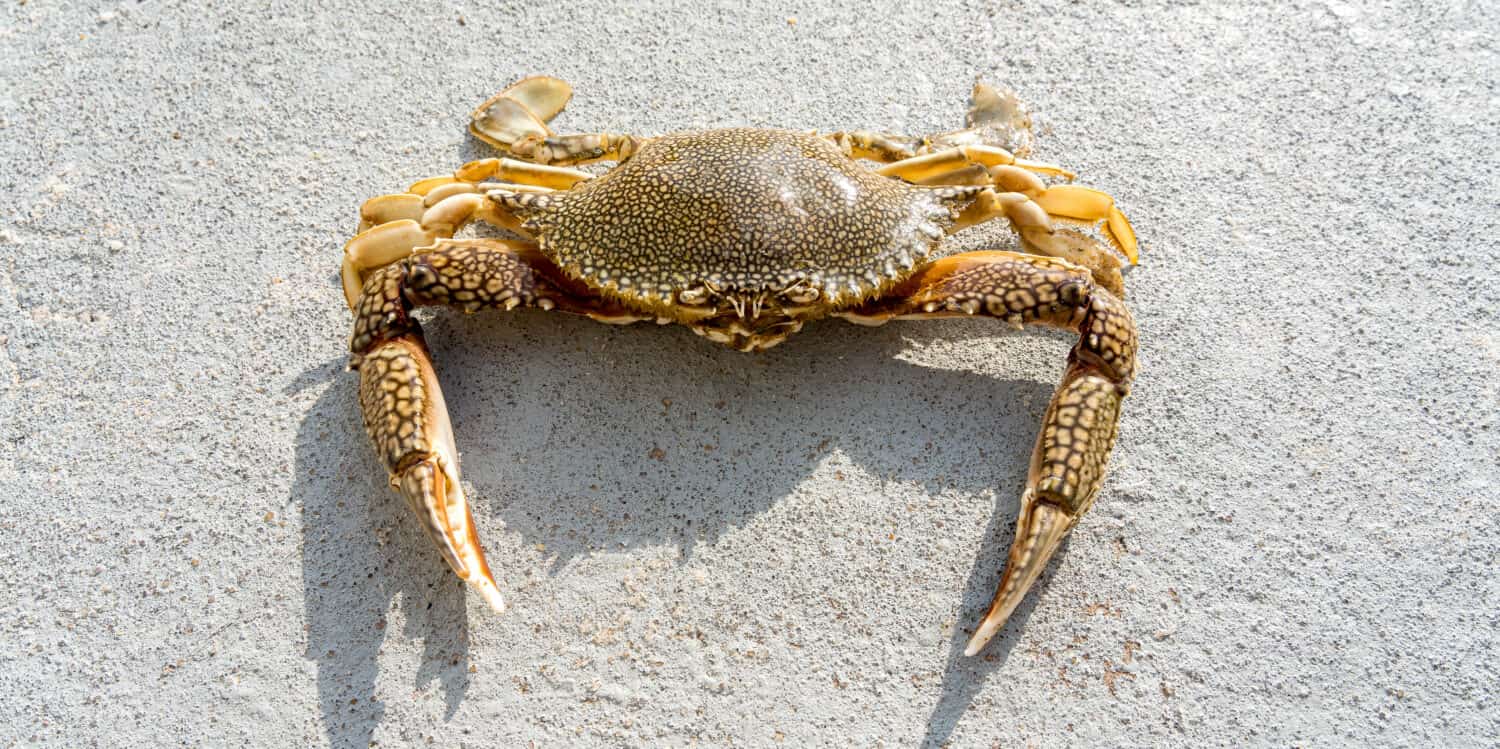
Speckled swimming crabs are nocturnal and solitary.
©Sergey and Marina Pyataev/Shutterstock.com
6. Red-Jointed Fiddler Crab (Minuca minax)
The red-jointed fiddler crab is abundant throughout Florida’s brackish salt marshes. They tend to avoid waters with high salinity. As their common name implies, the joints of the male’s claws are a vibrant red. They have a shell width of about 1 to 1.5 inches, making them one of the larger fiddler crabs in North America. Like most fiddler crabs, the males of this species have one claw that is much larger than the other. When attracting females, it will raise and move its large claw in a fiddling motion. Red-jointed fiddler crabs breed every two weeks throughout summer, usually in a burrow dug by the male with the help of its massive claw.
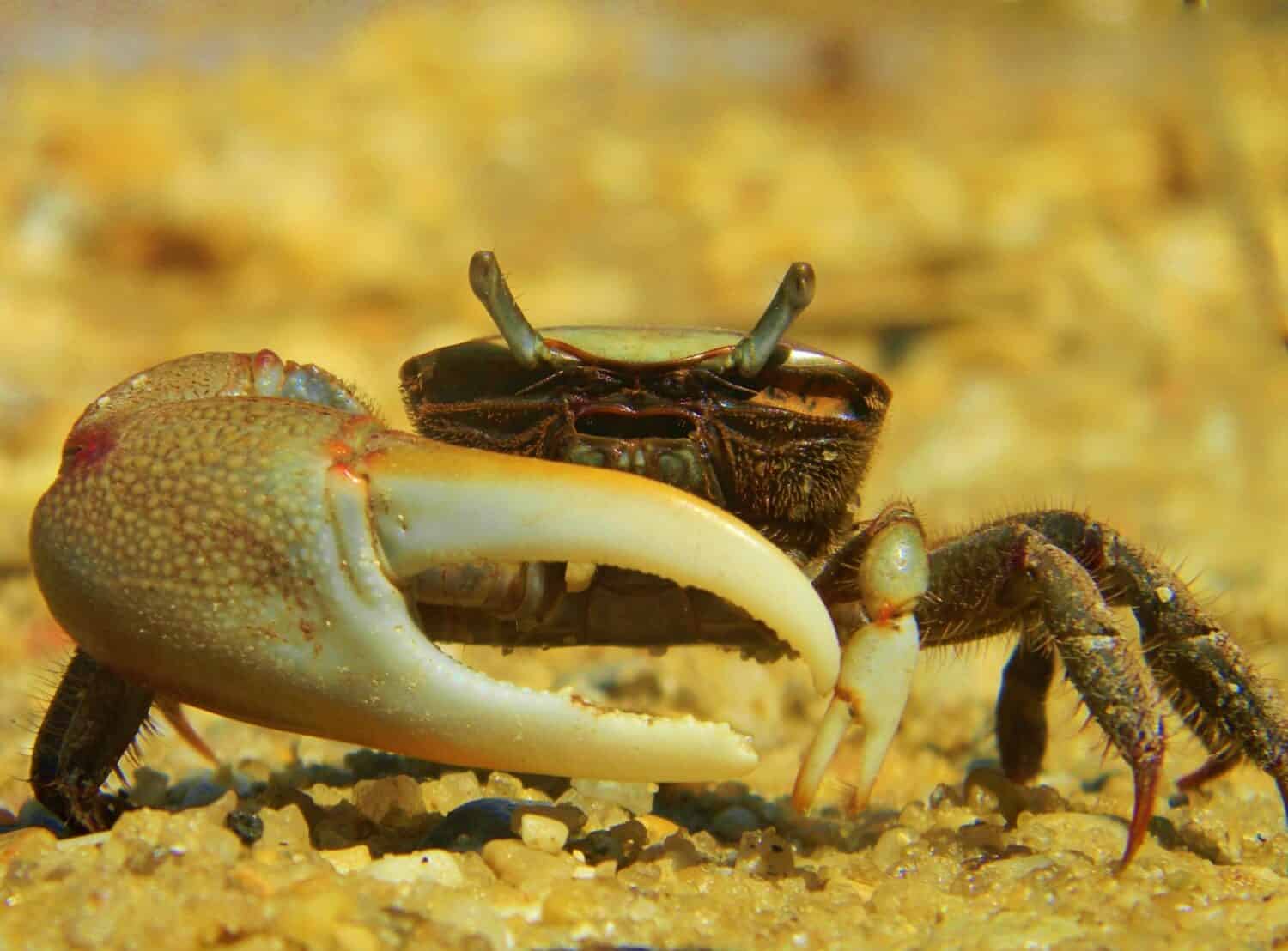
The red-jointed fiddler crab’s claw joints range in color from a dull orange to bright red.
©Mike Raube-Boyer/Shutterstock.com
7. Mangrove Tree Crab (Aratus pisonii)
As its common name suggests, the mangrove tree crab is a skilled climber that mainly inhabits mangrove trees along Florida’s coastlines. It’s also one of the Sunshine State’s smallest crabs, averaging just under 1 inch long. The pointed, raised hairs on its limbs help it climb, and its small, lightweight size allows it to sit comfortably atop the trees’ leaves without weighing them down. Although the mangrove tree crab most commonly lives in red mangrove trees, it can also sometimes be found in white and black mangrove trees. It is an omnivorous species, but the majority of its diet consists of mangrove tree leaves.
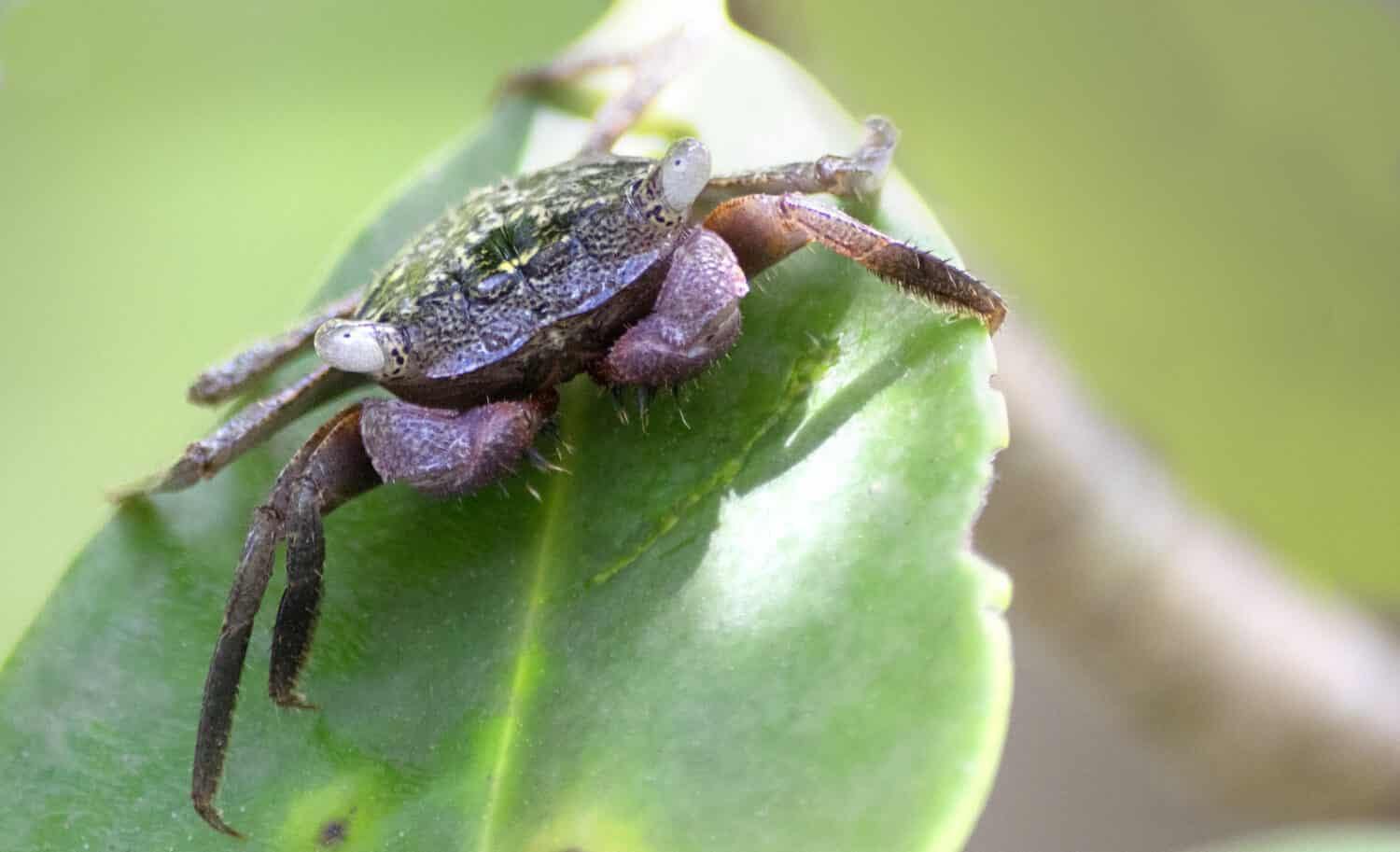
The mangrove tree crab has pointy hairs on its limbs that give it a better grip while climbing.
©K Quinn Ferris/Shutterstock.com
8. Calico Crab (Hepatus epheliticus)
The calico crab is known by a few common names, including the leopard crab, due to the unique leopard-like spots adorning its carapace. It’s also sometimes referred to as the Dolly Varden crab, which references the character Dolly Varden from Charles Dickens’ novel Barnaby Rudge. Varden was described as having a rosy blush across her face, and in the 1870s, a type of fabric with lots of small, red spots was often sold as “Dolly Varden fabric.” The calico crab mainly prefers shallow, coastal waters and is one of Florida’s smaller crabs at just 2-4 inches long on average.
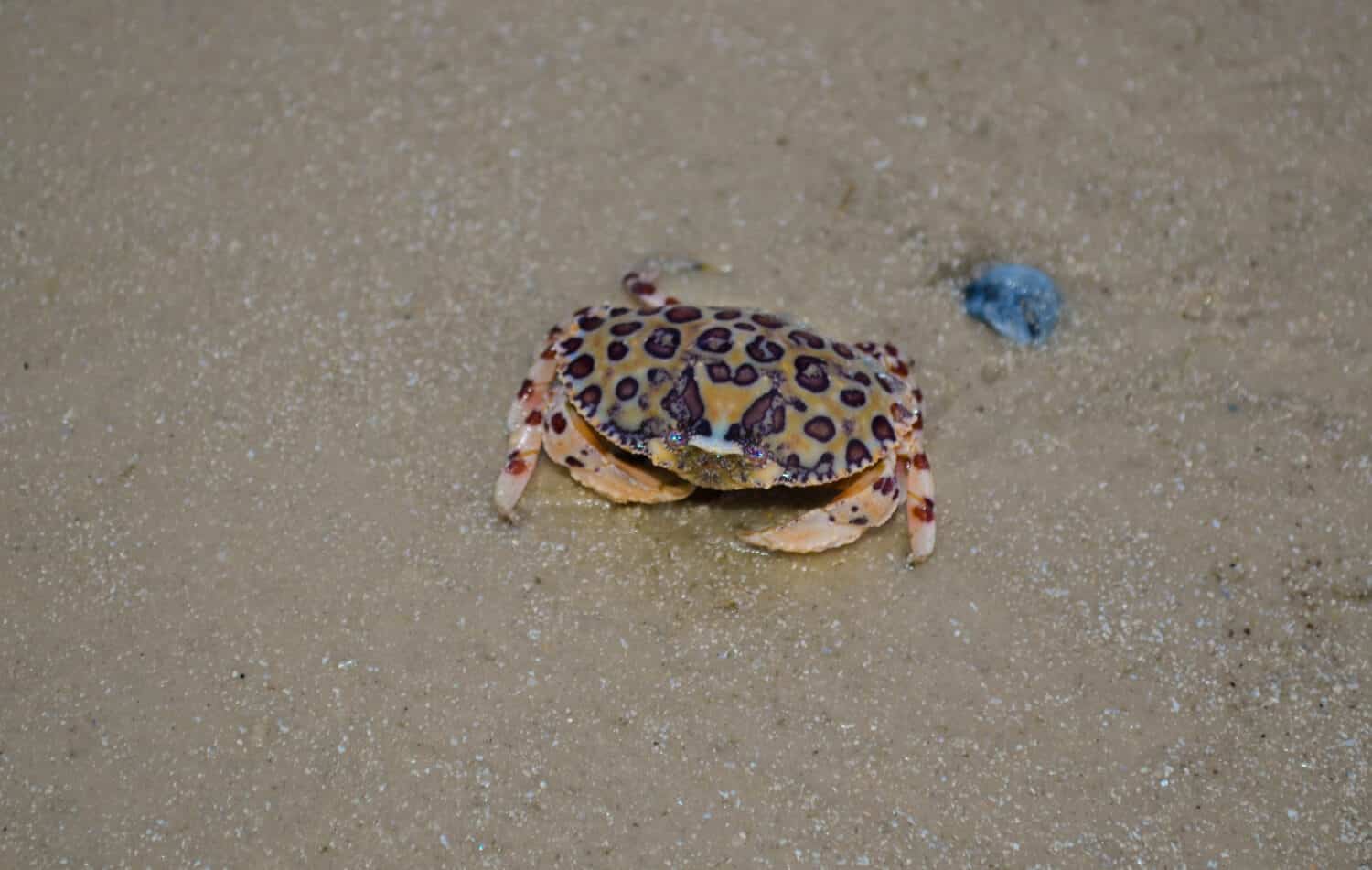
The calico crab is also commonly known as the leopard crab due to its uniquely leopard-like spots.
©Laurel A Egan/Shutterstock.com
9. Atlantic Ghost Crab (Ocypode quadrata)
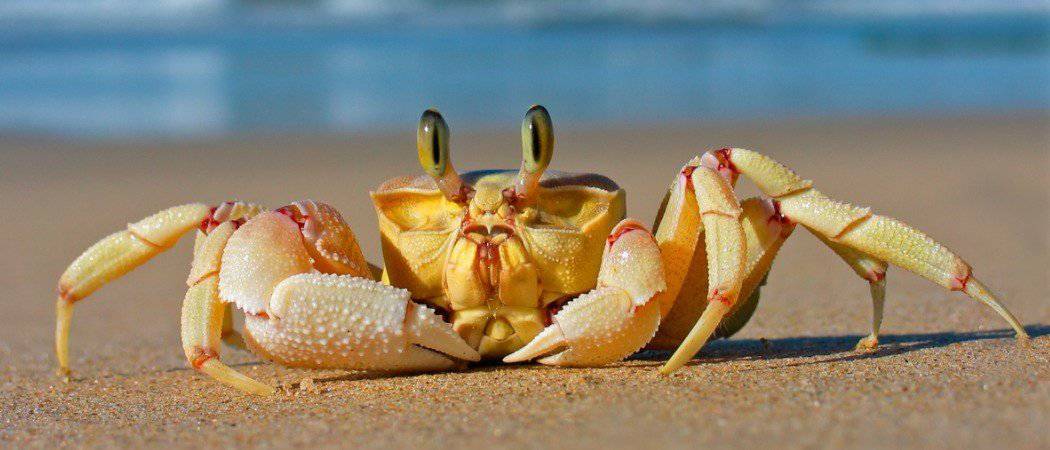
The Atlantic ghost crab is one of around 21 unique species of ghost crabs, which get their common collective name from their nocturnal nature and typically pale, ghostly gray coloration. Despite their small size, they are skilled burrowers, often digging up to 4 feet deep into the sandy substrate they inhabit. Atlantic ghost crabs average just 2 inches wide when fully mature. They are mainly terrestrial as adults, though they have to occasionally venture into the water to keep their gills moist. Notably, they have well-developed eyes that can rotate 360 degrees, giving them an excellent field of vision.
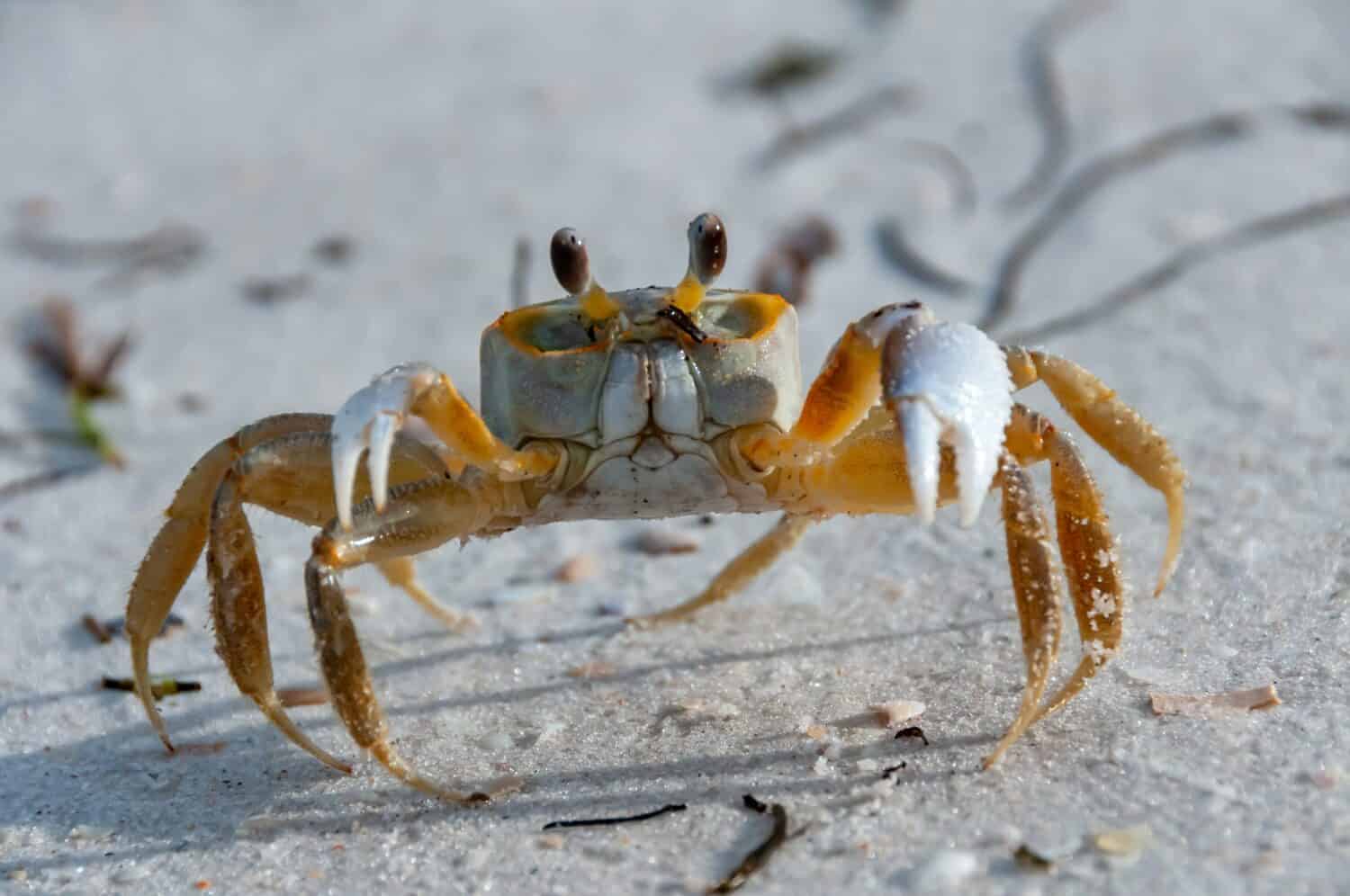
Atlantic ghost crabs can vary in color from orange to light yellow and even pale gray.
©Oleg Kovtun Hydrobio/Shutterstock.com
10. Longnose Spider Crab (Libinia emarginata)
The longnose spider crab gets its common name from the long, pointed protrusion of its carapace between its eyes and spindly, spider-like legs. Its rounded, spiny carapace averages 2 to 4 inches wide when the crab is fully mature, though males are slightly larger than females. Longnose spider crabs are found all along North America’s eastern coastlines. They often venture into much deeper water than most crabs, commonly being found as deep as 160 feet. The species also frequents seagrass meadows, which it can use for camouflage and as a food source.
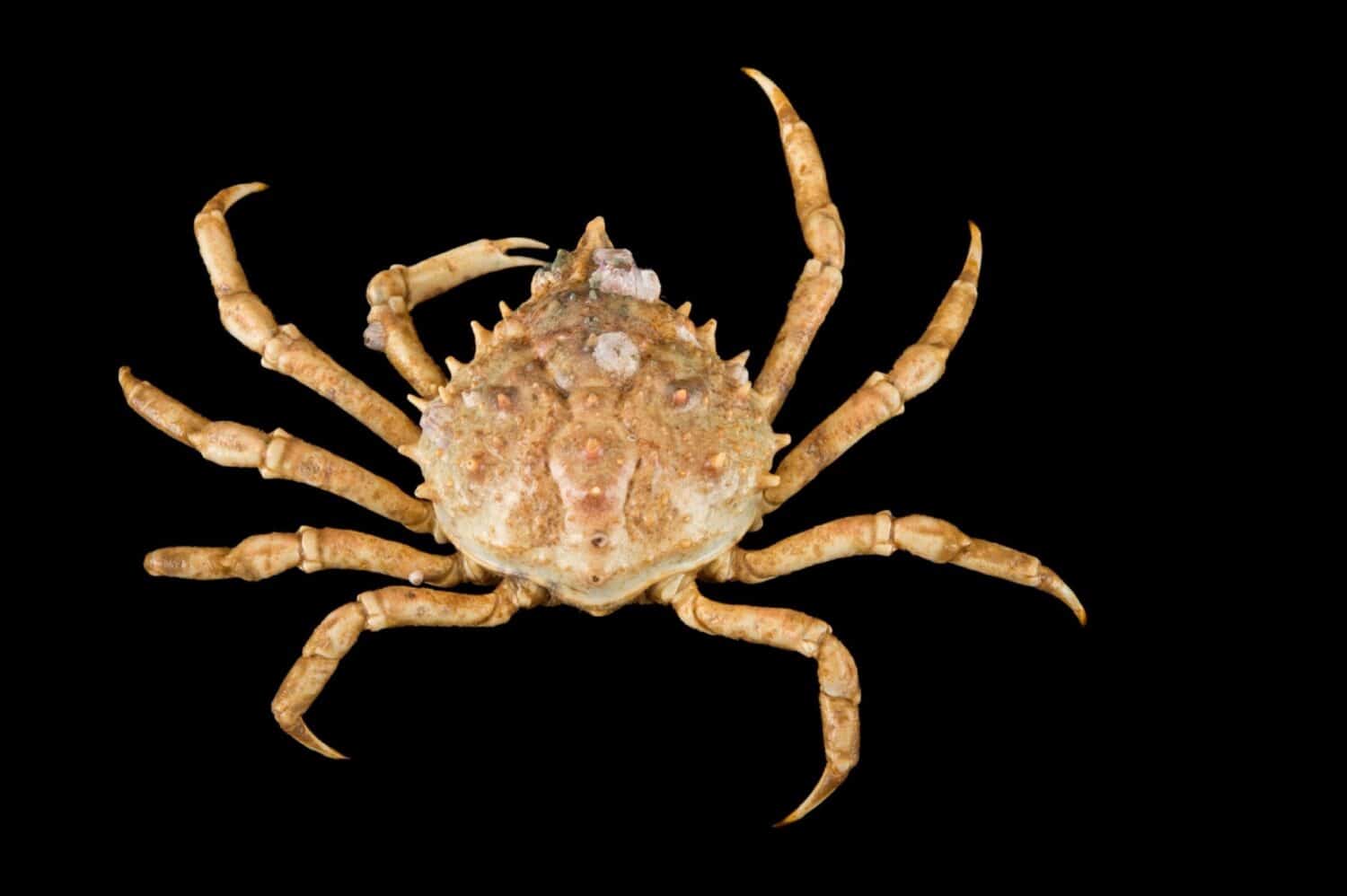
The longnose spider crab is easily recognizable due to the pointy, beak-like protrusion between its eyes.
©Usha Roy/Shutterstock.com
11. Purple Marsh Crab (Sesarma reticulatum)
Purple marsh crabs grow up to 1 inch wide and are purple or brown with dark speckles. They primarily inhabit coastal salt marshes from Massachusetts to central Florida. Unfortunately, overfishing of most of their natural predators like cod and dogfish has caused overpopulation. Purple marsh crabs mainly feed on salt marsh grasses like cordgrass. As a result of the species’ overpopulation, salt marshes in Florida and elsewhere along the east coast have significantly eroded and declined. In turn, though, they’ve also proven to be a valuable food source for birds like night herons. Researchers are still unsure of how the purple marsh crab will affect these salt marshes and their resident animal and plant species long-term.
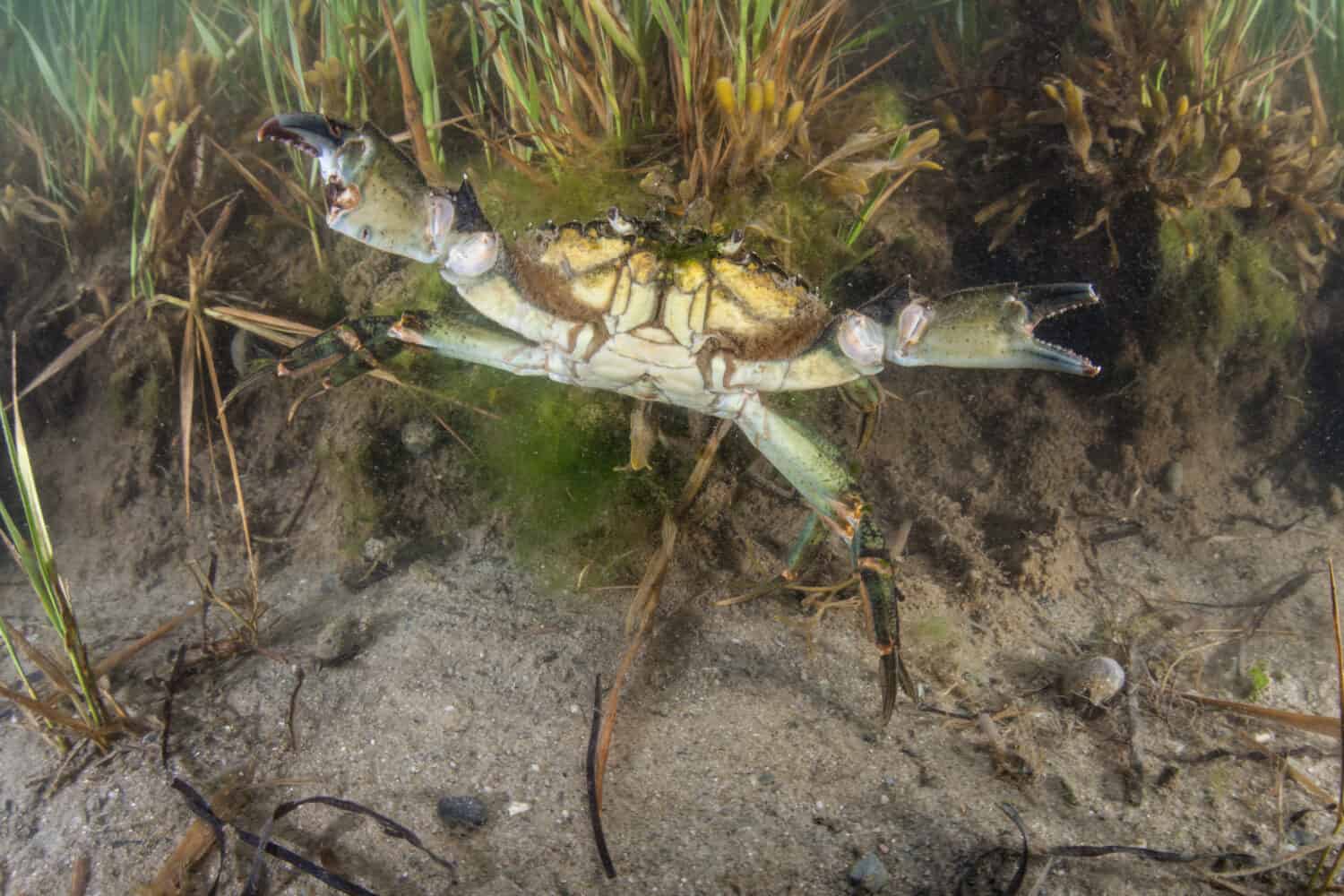
The purple marsh crab’s carapace can vary in color from vibrant purple to dark brown.
©Ethan Daniels/Shutterstock.com
12. Giant Red Hermit Crab (Petrochirus diogenes)
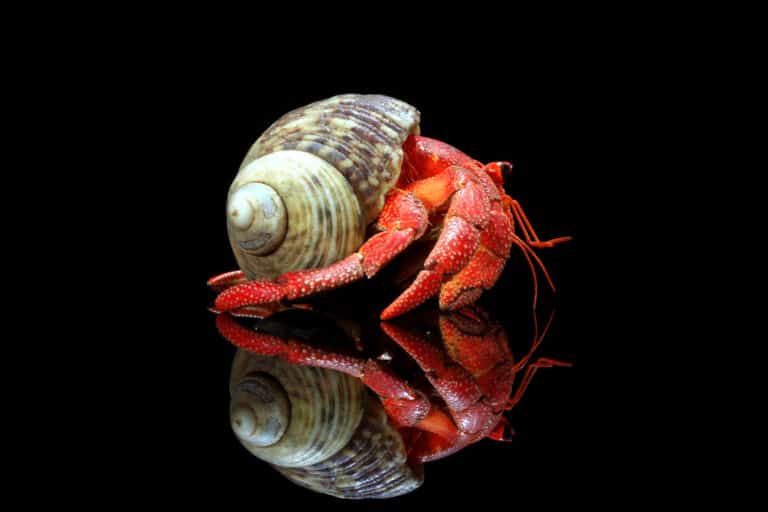
Of the more than 800 species of hermit crabs, the giant red hermit crab is among the largest. It’s so large that it commonly inhabits the shells of queen conch, which can reach up to 12 inches long. To obtain their massive conch shells, giant red hermit crabs often attack and eat the mollusks living inside. In turn, the crab gets a meal and a new home. It’s common throughout the Caribbean, though it can be found as far north as North Carolina’s coastlines. As its common name suggests, its body is mostly orange to reddish.
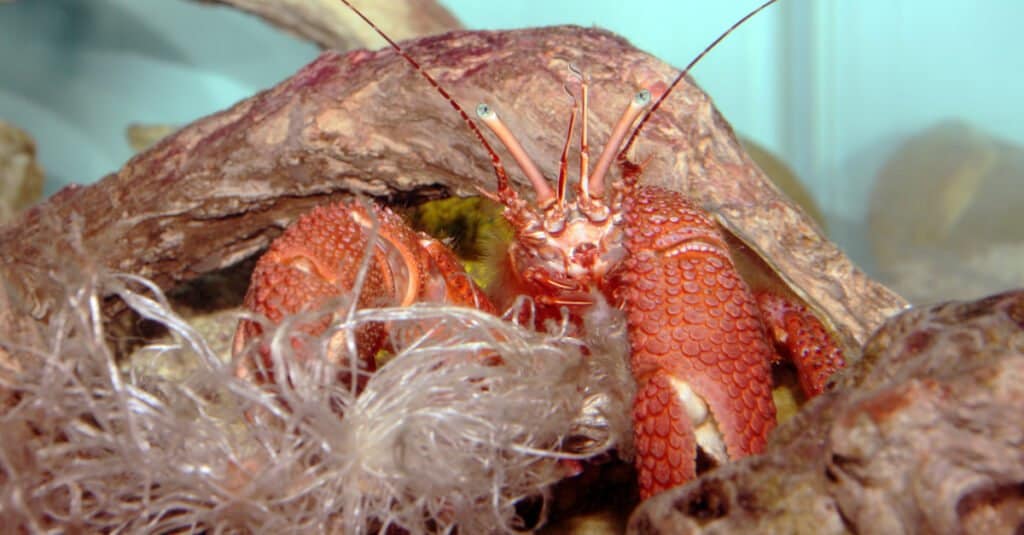
The giant red hermit crab is one of the largest species of hermit crab at up to 12 inches long.
©Joseph M. Arseneau/Shutterstock.com
13. Pea Crab (Pinnotheres pisum)
Up next, we have the smallest crab on our list and one of Florida’s very smallest crabs, the aptly-named pea crab! Averaging just 0.20 to 0.39 inches long, this unique species is a common parasite of oysters and clams. It enters the shells of these bivalves by quite literally rubbing and tapping them with its claws until they open, allowing it to enter the shell and feed on the mollusk within. Although bivalve mollusks are the pea crab’s primary hosts, they can parasitize a wide range of species, including sea urchins, sea cucumbers, and sea squirts.
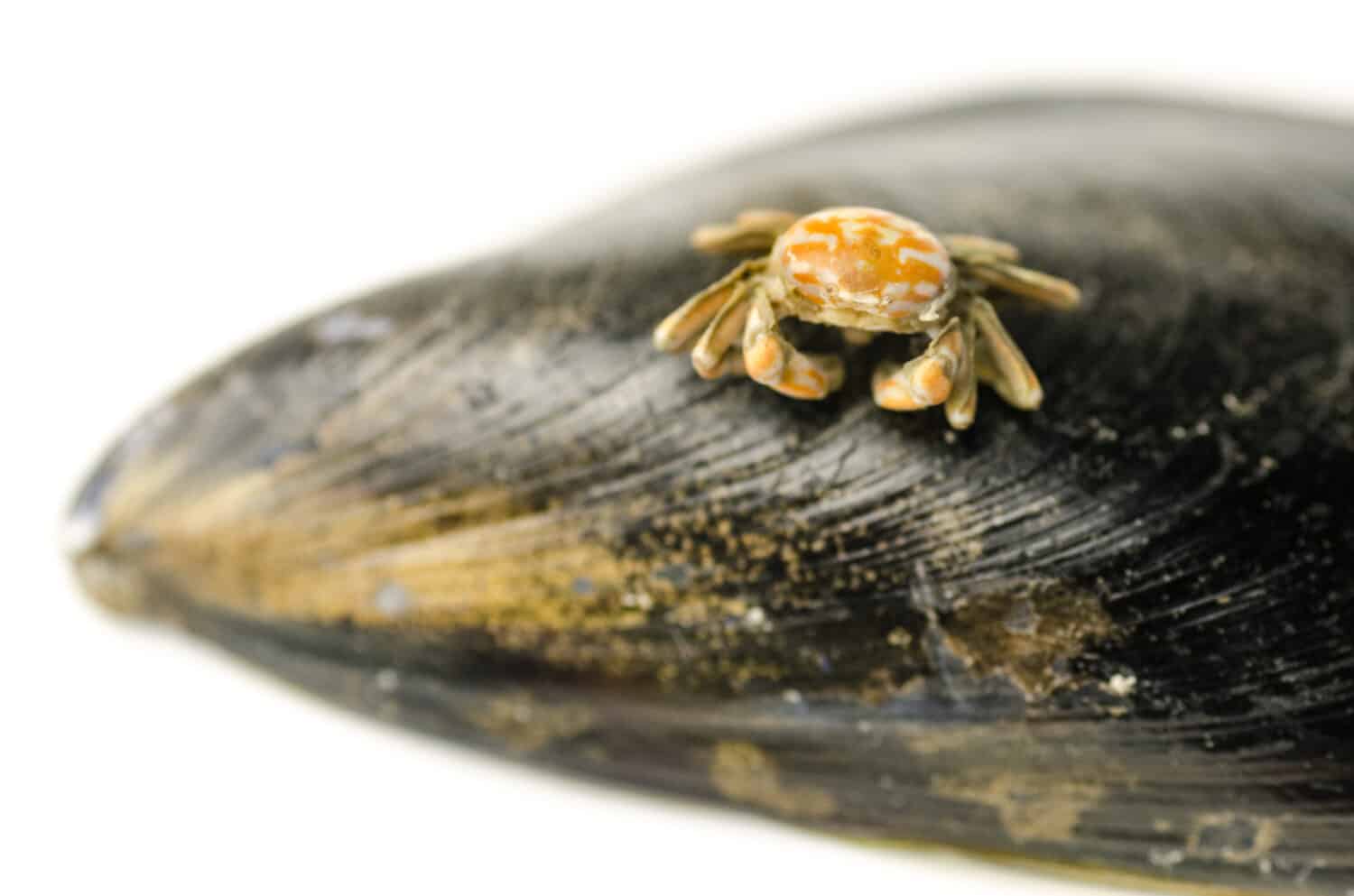
The pea crab is a common parasite of bivalve mollusks.
©mastersky/Shutterstock.com
14. Atlantic Blue Crab (Callinectes sapidus)
Although it’s sometimes known as the Chesapeake or Maryland blue crab, this hardy species can be found as far south as the Gulf of Mexico. It’s one of Florida’s most prominent and well-known edible crabs due to its rich, buttery flavor. True to its main common name, its limbs are often a rich, royal blue. Meanwhile, its carapace can range in color from reddish brown to dull orange.
The Atlantic blue crab is also one of Florida’s larger crabs, measuring around 7 to 9 inches wide when fully grown. It exhibits prominent sexual dimorphism, most notably in the size and shape of its carapace and abdomen. While males have a longer, thinner abdomen, females are much wider and rounder in shape.
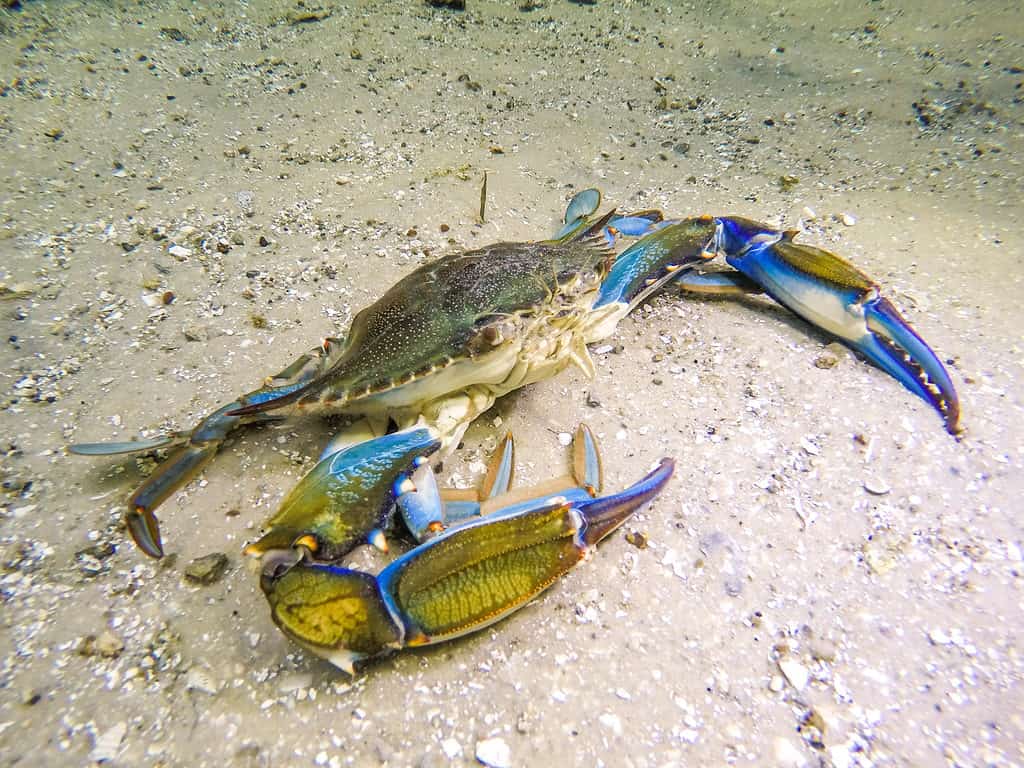
Atlantic blue crabs have bright blue limbs and claws.
©Jen Helton/Shutterstock.com
15. West Indian Spider Crab (Mithrax spinosissimus)
Like most other types of spider crabs, the West Indian spider crab has long, spindly limbs covered in short, pointed spines. It is common throughout Florida as well as the Caribbean Islands. It’s one of Florida’s largest crabs as well as the largest Caribbean reef crab, measuring around 7 inches long and weighing nearly five pounds when fully mature. Although the West Indian spider crab is an omnivore, not much is known about its diet. It mainly resides in deeper waters in reef caves as deep as 130 feet. Its large, well-developed legs allow it to walk along the ocean floor with ease.
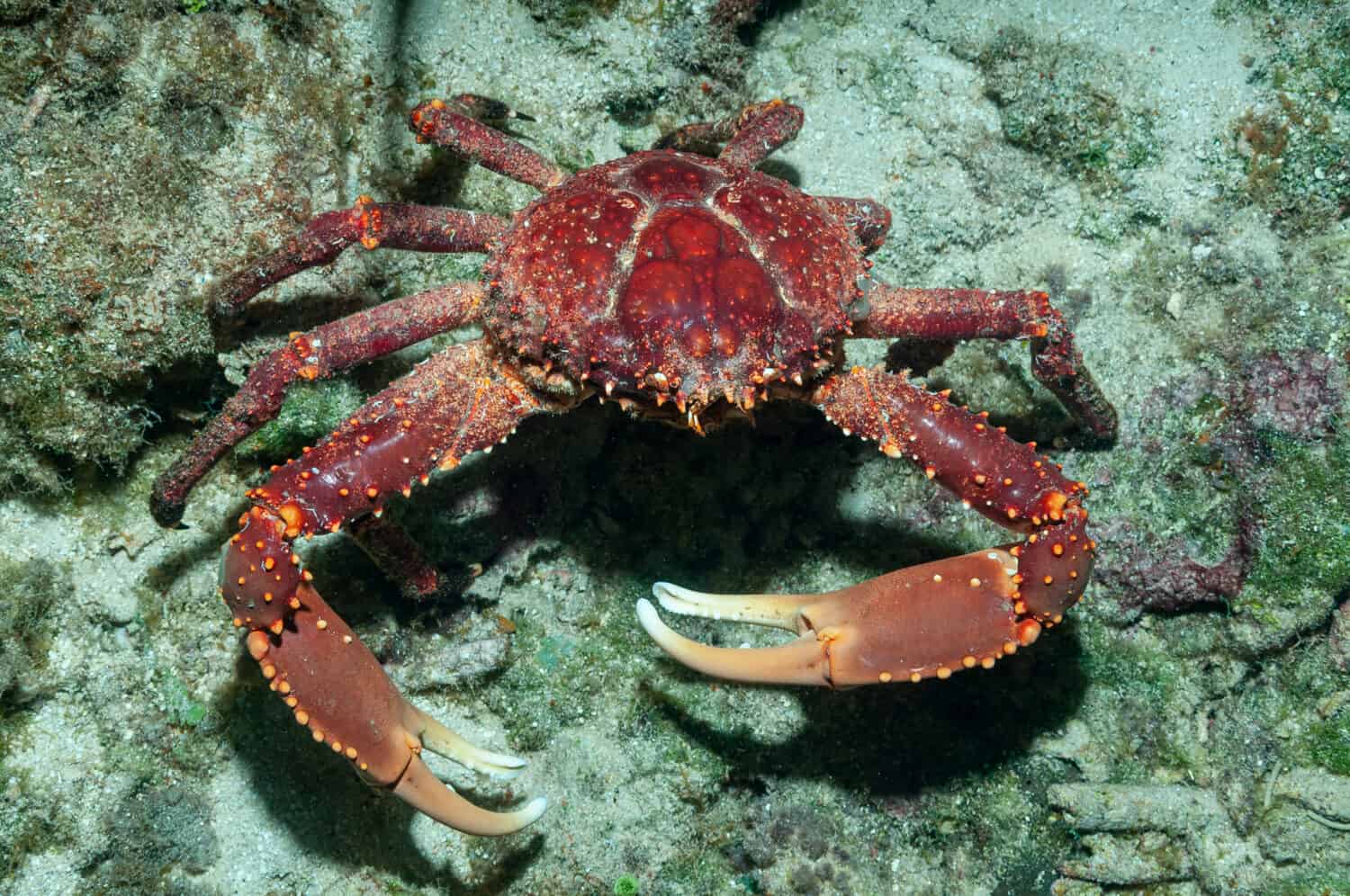
The West Indian spider crab is the largest Caribbean reef crab as well as one of Florida’s largest crabs.
©Jesus Cobaleda/Shutterstock.com