
Quick Take
- The snake itself is often the cheapest part of owning one, and most first-time buyers don't realize where the real money actually goes. See the ongoing costs →
- Two corn snakes that look nothing alike can share the same species name, and the price difference between them might genuinely shock you. See morph price differences →
- Buying from a pet store instead of a breeder seems like the safer, easier choice. However, there is a catch that most new owners only discover after paying. Compare breeder vs. pet store →
First-time snake owners love corn snakes because they are friendly and easy to handle. Caring for these snakes is a long-term commitment, but corn snakes are one of the most cost-effective snakes to own. Setup costs, including the enclosure, heating, and lighting, will be the biggest expense. The initial cost for the snake itself is relatively low for a regular, healthy snake. Their care remains affordable due to their simple requirements compared to other snakes. Find out how much it costs to own a corn snake in 2026.
Corn Snake Overview
Corn snakes belong to the rat snake family and are primarily found in the Southeastern U.S. These snakes are long and slender, measuring between 24 and 72 inches in length. They are widely available for purchase from reputable breeders and pet shops. While wild-type or common variants are very affordable, corn snakes come in hundreds of different morphs with combinations of recessive and dominant genes, and the high-end morphs can become very expensive.
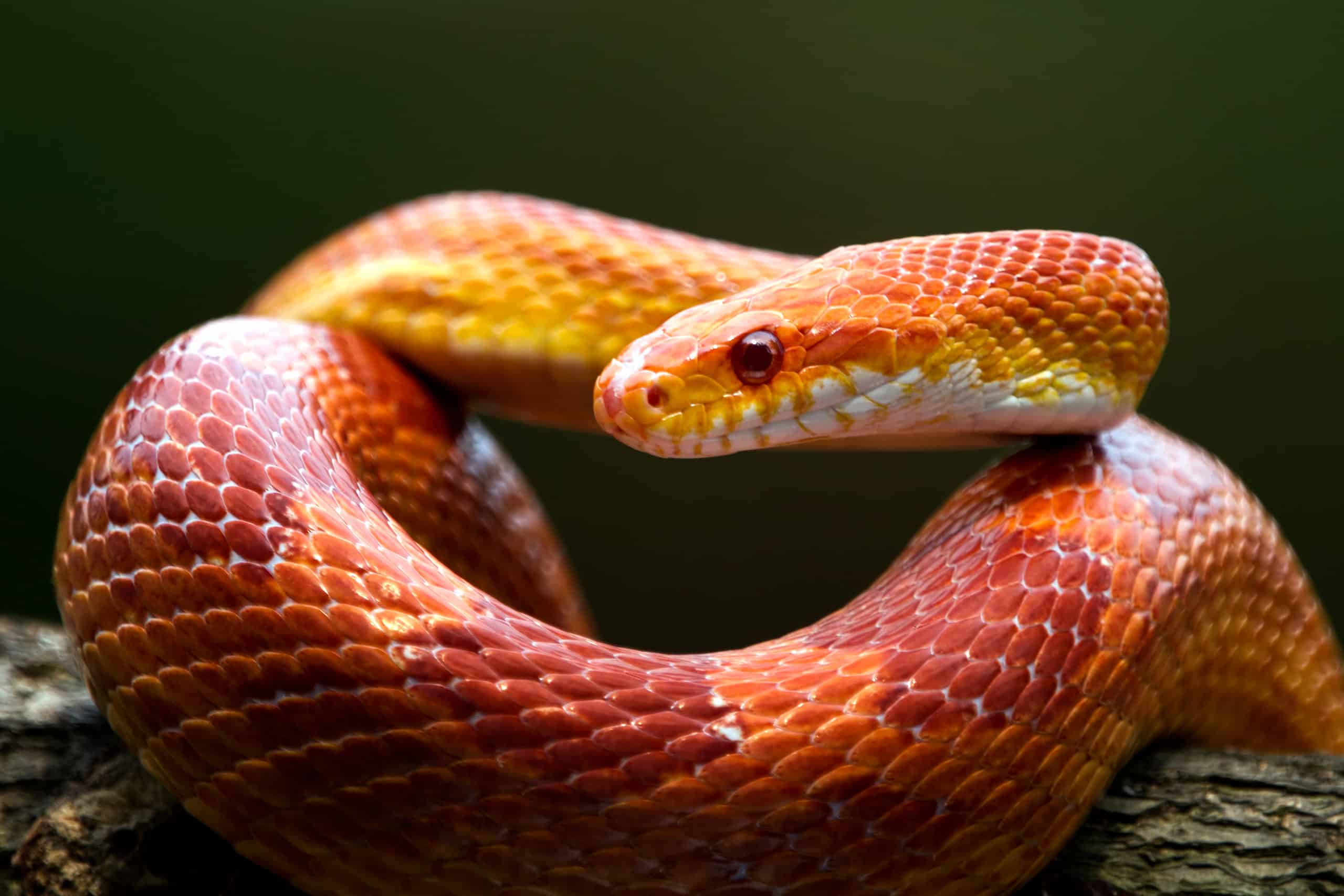
Corn snakes are one of the most affordable snakes, although some morphs can be expensive.
©iStock.com/GlobalP
How Much Does a Corn Snake Cost?
The price will vary depending on the age, sex, and morph. Common corn snakes can often be purchased from an online breeder for around $35-$45. However, the pet store cost can be around twice the price of a reputable breeder. The average price from a large chain pet store is currently around $90 for a common corn snake. Adult snakes are also more expensive than babies and juveniles. Here are the current average prices for some of the most common morphs.
Average Corn Snake Price
| Morph | Color | Average Price |
|---|---|---|
| Standard Amelanistic (Amel/Albino) | Lacks black pigment, resulting in white and reddish-orange snakes | $50 to $90 |
| Standard Anerythristic (Anery) | Lacks red/yellow pigment, resulting in shades of gray, black, and white | $75 to $100 |
| Snow | A combination of Amel and Anery, resulting in a white and pink snake | $75 to $150 |
| Butter | A combination of Amel and caramel, resulting in a snake with yellow coloration | $60 to $85 |
| Bloodred | Recessive “Diffused” gene results in a reduced pattern and deep red to orange-red upper with pale belly | $90 to $250 |
| Motley | A mutation that causes circular or striped patterns, often without the belly checkerboard | $50 to $150 |
| Okeetee | Thick black borders around its saddle markings and vivid orange to red coloring | $50 to $150 |
| Tessera | Dominant pattern mutation produces a dorsal stripe; may have side stripes or checkerboard pattern | $80 to $150 |
| Miami | Light, silver-grey background color with bright reddish-orange saddles | $60 to $150 |
| Scaleless | Lacks most or all of its scales, giving it smooth, soft skin; can be various colors | $200 to $600+ |
| Palmetto | Nearly white with black, orange, or red scattered speckles | $180 to $500 |
| Striped | Replaces saddle markings with stripes running the length of the snake; can be various colors | $70 to $150 |
Corn Snake Enclosure and Supplies
While corn snakes are relatively low-maintenance compared to other captive reptiles, they still have specific environmental requirements. Their enclosures must mimic their natural habitat as much as possible. While upfront costs can be significant, ongoing upkeep is very affordable.
The minimum recommended size of a corn snake tank is 40 gallons.
©Photohobbiest/Shutterstock.com
Enclosure
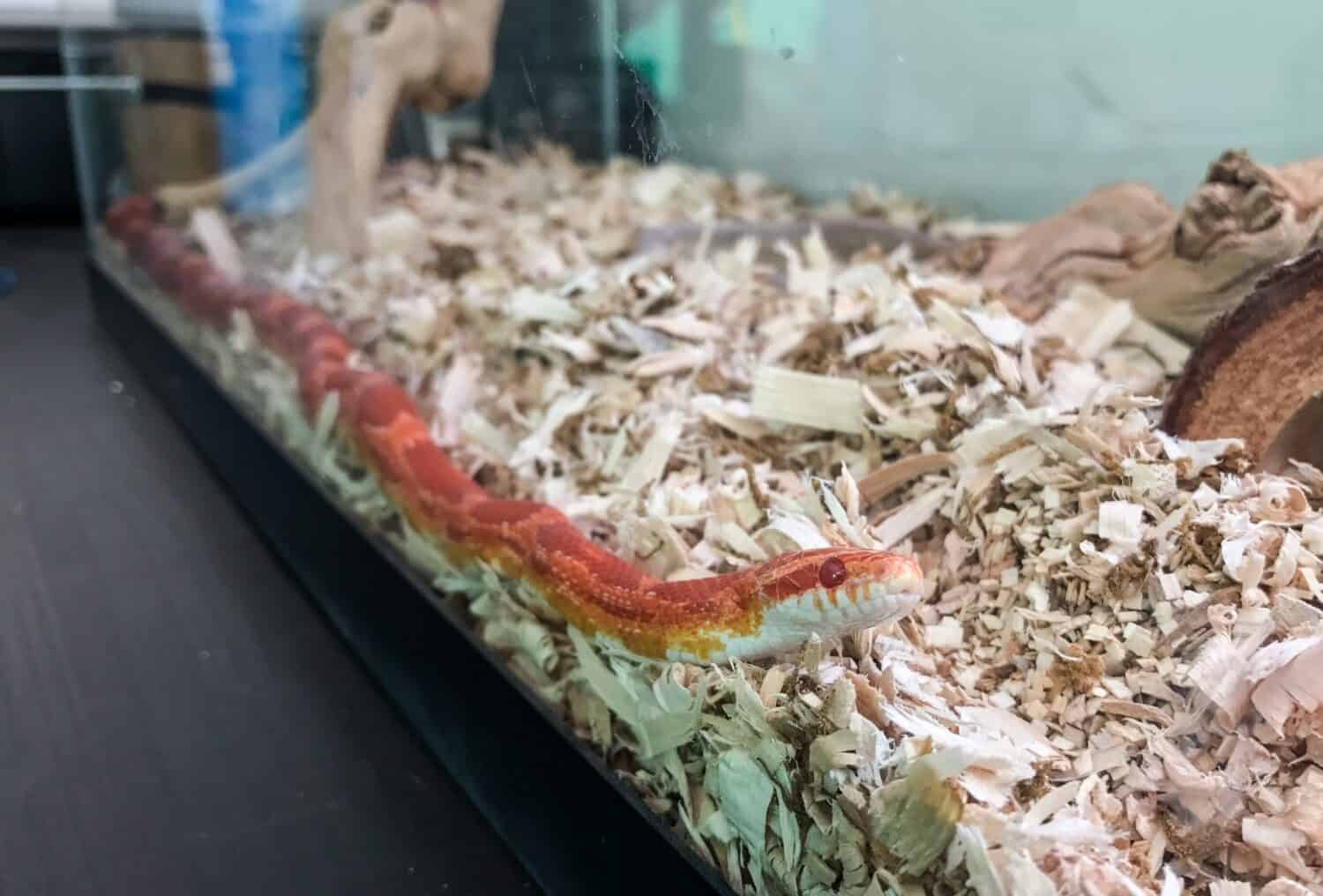
The tank is the most important item for your corn snake. If it is made from low-quality materials or is too small, it could harm your snake or even cause death. So this is not the area to cut costs. The price of the enclosure will vary depending on size. Corn snakes can reach up to 6 feet in length, so the minimum recommended size of a corn snake tank is 40 gallons, or 36 x 18 x 18 inches. However, some recommend a 4 x 2, or 120-gallon tank, which is 48 x 24 x 24 inches. A longer tank is preferable to a taller one. a 40-gallon tank costs between $100 and $250, while a 120-gallon tank can cost from $250 to $500. Open front tanks are often recommended for corn snakes, and these tanks are typically more expensive.
Substrate
Experts recommend aspen shavings, coconut fiber/husk, cypress mulch, or a mixture such as 40% organic topsoil, 40% coconut fiber, and 20% play sand. You can also purchase pre-made substrate for a naturalistic enclosure. Whatever substrate you choose, ensure it has excellent moisture-retention properties, is made of comfortable and safe fibers, and doesn’t mold quickly. Your snake’s substrate will also need to be changed periodically to ensure you maintain a hygienic environment. Annual costs for high-quality bedding can range from $50 to $80.
A great way to control the humidity levels in a corn snake tank is by using sphagnum moss. This moss retains a large amount of moisture without rotting or breaking down. You can place sphagnum moss in a humid hide or sprinkle it around the tank. However, this moss will need replacing as it starts to break down. The cost ranges from $10 to $20 each time you replace it.
Heating
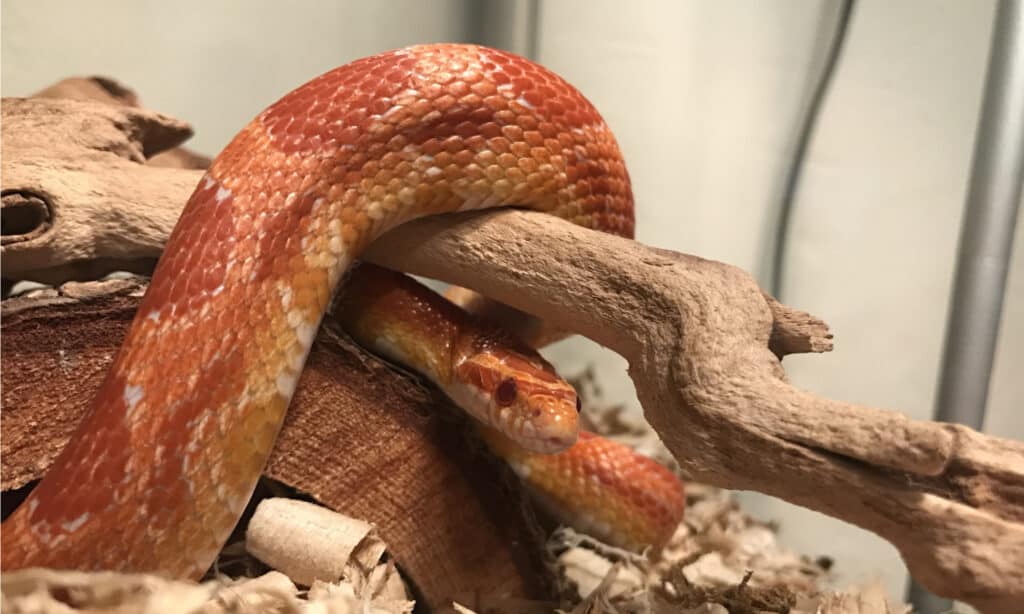
Snakes cannot produce their own body heat because they are cold-blooded. That is why the enclosure needs to be heated properly. There are different ways to keep the tank warm, such as heat mats or heat lamps. However, only one side of the enclosure must be warmed so that the corn snake can regulate its body temperature. Heating mats are a better choice as you can place them in the necessary spot. The price of heating equipment for a corn snake’s enclosure can range from $15 to $50.
There are different ways of keeping the tank warm, including heat mats or heat lamps.
©Photohobbiest/Shutterstock.com
Thermometer / Hygrometer
Ensuring your snake’s tank is always at the optimum temperature is essential. If the conditions of the enclosure are off, it can cause negative health effects that could harm your corn snake. Luckily, a mini digital hygrometer thermometer is a cost-effective way to monitor the tank’s humidity and temperature levels. This handy tool can cost between $10 and $20.
Rocks and Other Décor
Accessories and other décor help transform your snake tank into a more natural environment. This stimulates the snake by providing structures to explore and climb over. You can get creative with décor and don’t necessarily need to buy products specifically for snakes. However, most people stick to rocks, wood, and plants. Therefore, depending on what you purchase, costs for accessories can range from $50 to $100.
Water Bowl
Corn snakes need access to clean, fresh water at all times. So they need a water bowl or natural-looking pond. Many snake owners prefer purchasing a natural-looking rock dish, which holds an appropriate amount of water and won’t take up a lot of space. These water bowls can cost approximately $10.
Hides
To help your snake feel safe and comfortable in its enclosure, it needs places to hide. Ideally, the tank should have two types of hides: dry and humid. Dry hides are small, clean places for snakes to crawl into and hide. While you can purchase a dedicated snake hide, many owners take the DIY approach and build their own out of rocks. Another good idea is an upside-down plant pot with a cut-out area for access. Depending on what you choose to do, dry hides can cost around $30.
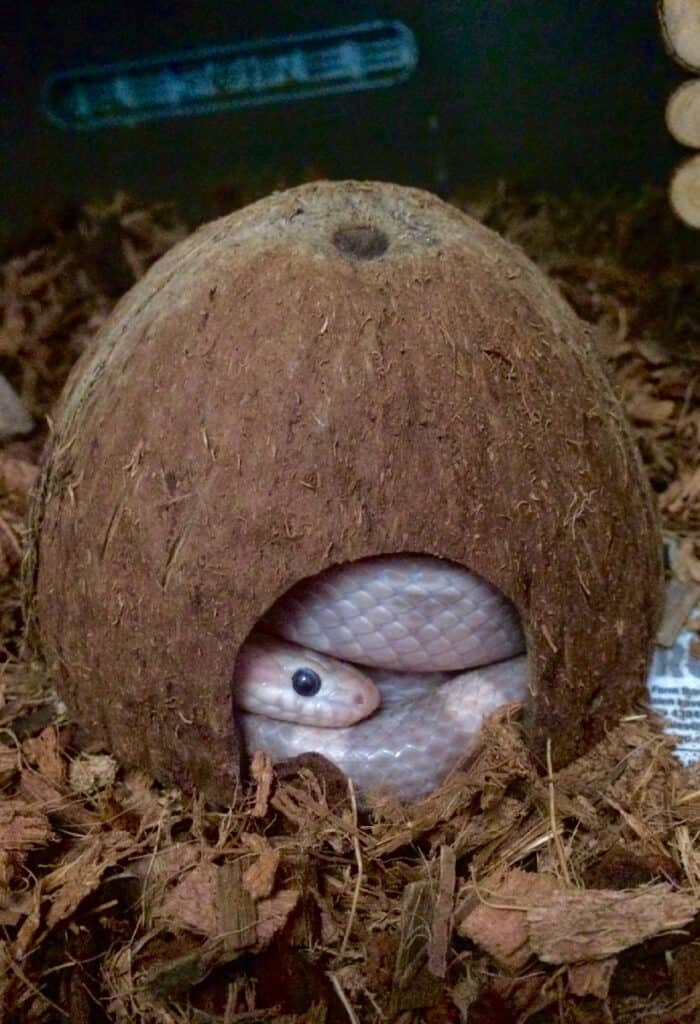
Snakes need dark, tight-fitting hides such as half coconut shells, reptile caves, or hides of natural cork bark.
©Andy Harvie/Shutterstock.com
Food and Veterinary Care
Corn snakes require mental and physical stimulation, and one of the best ways to provide this is through feeding enrichment. However, you must ensure you buy high-quality food because low-quality items may negatively affect your snake’s health.
Food
Because corn snakes are carnivores, you need to feed them frozen-thawed rodents. When they are juveniles, a small mouse will suffice. However, adults require something more substantial, like a large mouse or a small rat. Smaller mice cost around $1, while rats are about $2, depending on size and whether or not you buy in bulk. Purchasing in bulk is cheaper than buying them individually from a pet store. As corn snakes eat every 7–10 days when juvenile and every 10–21 days when adult, it will cost about $2 a week to feed juveniles and $4 weekly for adults.
Corn Snake Medical Care
It is not uncommon for corn snakes, or any pet, to encounter health issues, no matter how clean and stimulating you keep their enclosures. Mites, parasites, and other random diseases are rare in corn snakes, but they are not impossible. So veterinary care must be factored into your costs. A yearly checkup will cost between $100 and $150 for a routine exam depending on where you live; any tests will be an additional cost, and prices increase for emergency care.