
Quick Take
- Securing a top-tier Goliath beetle specimen can cost over a thousand US dollars, even as captive-reared beetles become more common.
- The Goliathus cacicus and Goliathus regius are becoming rare in the wild, largely because of the conversion of rainforest into cacao plantations.
- These beetles require a protein-rich diet to reach their record-breaking 100-gram weight.
- African collectors attract beetles to target trees through bark-stripping and nighttime capture.
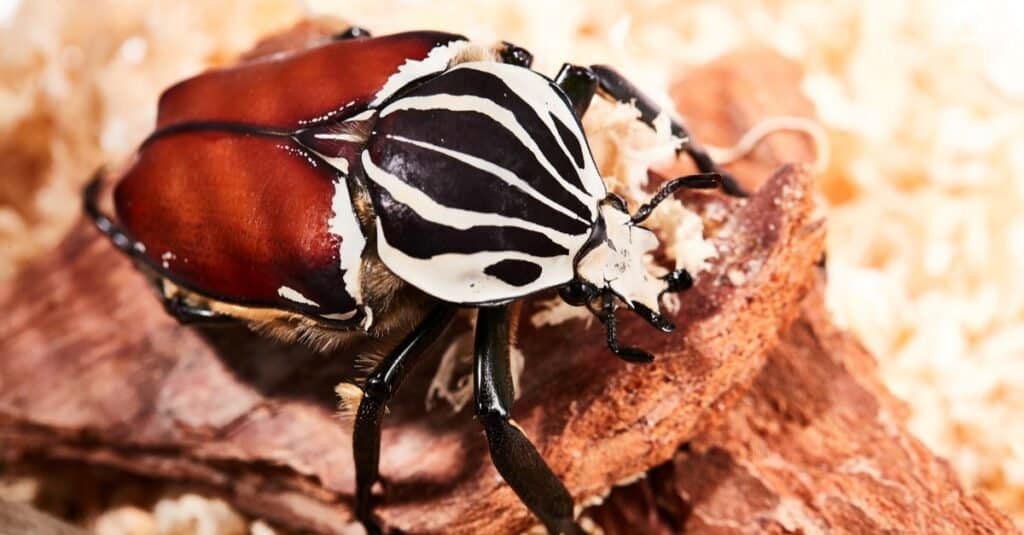
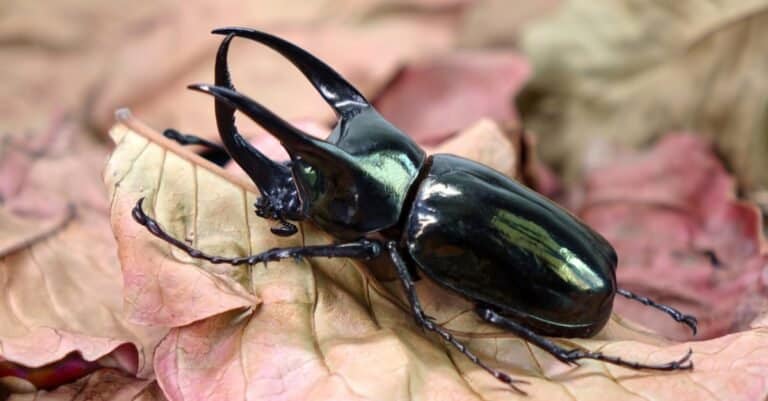
Colorful and gigantic, these African beetles are prized by collectors and insect enthusiasts.
©Yan Lv/Shutterstock.com
In the warm, humid savannahs and forests of sub-Saharan Africa dwells a tribe of flower beetles in the genus Golianthus, named after the Biblical giant due to their huge size. Along with these insects’ immense proportions, their glossy exoskeletons adorned with bright colors and remarkable patterns have made them irresistible to collectors, driving prices of dried, preserved beetles to almost $4,000 USD. Although over-collection of these beetles could result in their extinction, the lucrative trade could also pave the way for their protection, while helping to aid Africa’s tropical rainforests and the communities that live in them.
What Makes Goliath Beetles So Remarkable?
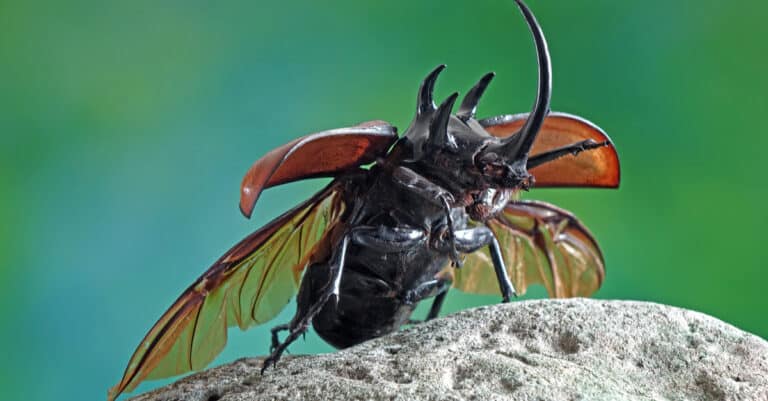
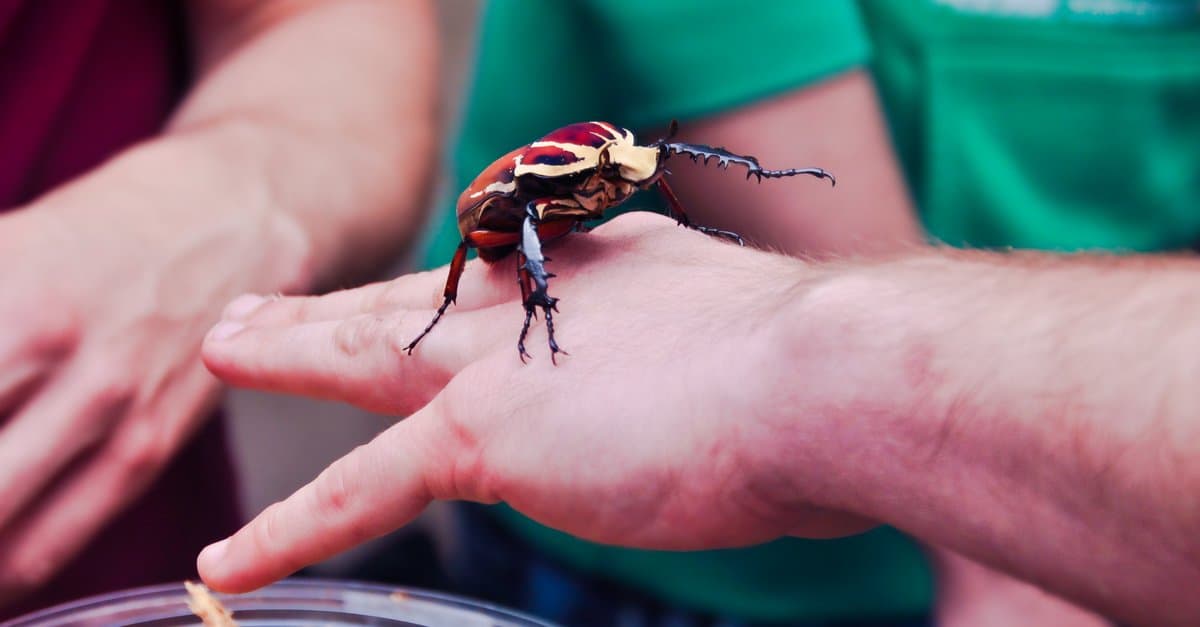
Over a dozen countries in Sub-Saharan Africa host one or more of the 5 species of Goliath beetle, including Nigeria, Cameroon, Ghana, Guinea, Sierra Leone, the Ivory Coast, and the Democratic Republic of Congo. Goliath beetles are the largest of the scarab beetle family, Scarabaeidae, and they are included in the subfamily Cetoniinae, which are known as flower beetles. Adults are primarily active at night to avoid predators and heat, and they fly from tree to tree in search of sugar-rich foods such as tree sap, nectar, and fruit. Males are larger than females — easily the size of a human fist — and sport a pair of short Y-shaped horns, which they use in mating contests with other males. Females have a shovel-shaped protrusion from their heads, used to excavate chambers in which they lay their eggs.
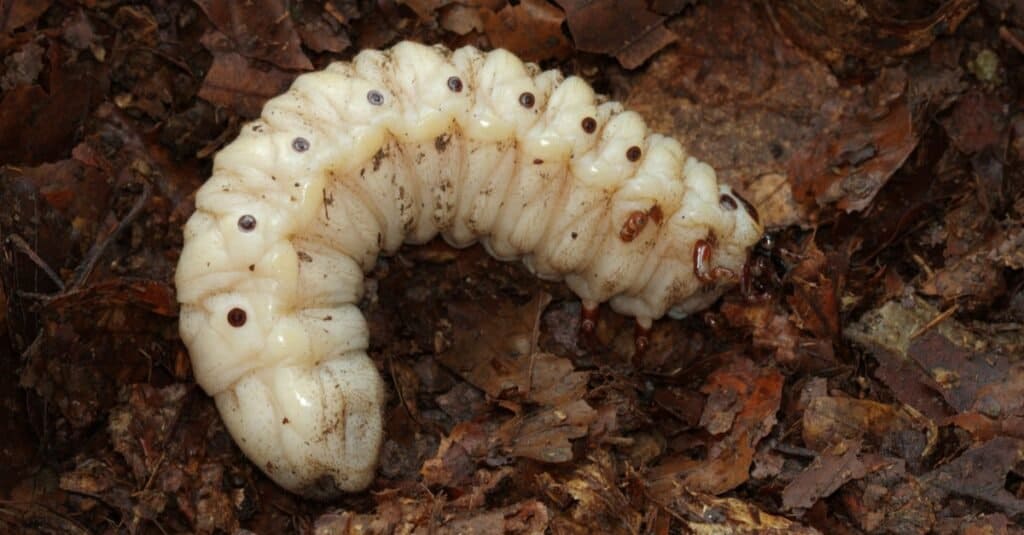
Goliathus goliatus beetle larvae in some compost. The larva is the second stage in a beetle’s life cycle.
©Petr Muckstein/Shutterstock.com
The larvae that hatch from these eggs are the heaviest insect larvae known to science, capable of weighing 100 grams and growing to over 5 inches long. Although the adult beetles are herbivorous, researchers have recently discovered that these larvae grow so large by eating decaying animals and even other larvae in the soil, adding extra energy and protein to their diet, alongside decaying plant material. By eating decaying material, Goliath beetle larvae help return nutrients to the soil.
Once a larva has reached its maximum size, a process that typically takes around 6 months, it forms a cell underground using sandy soil and builds a cocoon, beginning the process of pupation. During pupation, the insect’s tissues liquefy and reform, building its wings and hard shell. Once the rainy season arrives, the beetle hatches from its pupa as an adult. They will spend their 3-12 months of adulthood searching for a mate and sugary food. Despite their hard shells, these beetles are preyed upon by lizards, birds, and rodents.
Goliath beetles are good indicators of forest health: because their larvae require abundant decaying matter and adults rely on diverse species of trees, a forest supporting many Goliath beetles is likely a diverse and stable ecosystem. They are also a food source for some communities that live within their range, and a source of income; preserved adult beetles are collected and sold all across the world to collectors.
Why Are Buyers Attracted to Goliath Beetles?
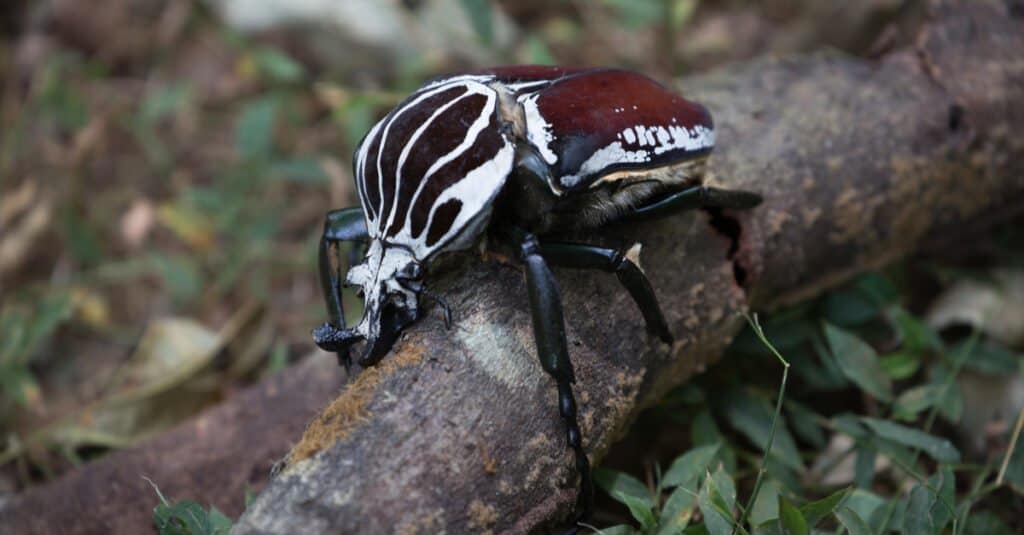
Goliath beetles congregate on a variety of trees in humid African rainforests where they drink sap, eat fruit, and find opportunities to mate.
©Nickolas warner/Shutterstock.com
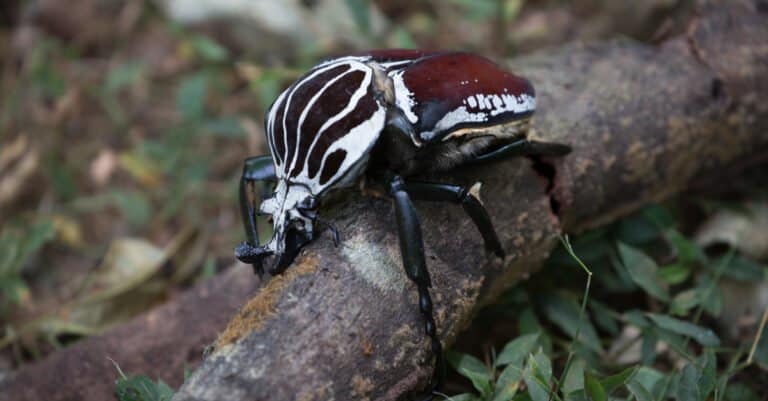
Each of the 5 species of Goliath beetle has unique patterning and coloration, from deep reds to yellows to stark black and white, and even more variation exists between individuals. Their natural beauty and their size have made them irresistible to collectors of natural specimens, and preserved beetles can be found for sale online as well as in insect expositions in North America, Europe, and Southeast Asia.
Some insect lovers have taken on the challenge of rearing living Goliath beetles, and larvae are available for purchase in the U.S. for as little as $50. Until recently, breeders were unable to raise Goliath beetles in captivity – it wasn’t until the introduction of protein-rich pet food to their diets that the larvae could grow enough to pupate. We spoke to David Lee, proprietor of David’s Beetles, who filled us in on some of the facts: “Most beetle larvae that are commonly kept in the hobby grow eating fermented sawdust, otherwise known as flake soil. Goliath beetle larvae are different. Their larvae require a protein-rich diet in order to develop properly and reach adulthood. Without regular feedings of protein, often provided in the form of koi pellets or dog food, they simply won’t survive.”
Caring for a Goliath beetle through its life stages is no easy feat, Lee tells us: “With most beetle larvae, I might check on them once a month. With Goliath beetle larvae, I’m checking on them three to four times a week to give them their protein and change their substrate to make sure there are no mite outbreaks.” Larvae need to be placed in soil that’s between 70-80°F and 50-60% humidity. Lee provided some expertise on how to rear these beetles: “Once a larva finishes growing, it enters a ‘wandering’ stage, during which it stops eating and searches for a suitable place to pupate. At this point, the larva should be moved into a 2–4-liter container filled with clay.” They need inorganic soil to build the protective cells they create for their pupation, and each larva needs a separate container, or they’ll cannibalize each other.
As adults, they can live up to a year in captivity and can be fed fruit and a honey-water mixture, intended to mimic the tree sap they consume in the wild. “Adults do best in spacious, well-ventilated enclosures with plenty of climbing opportunities. I recommend having tree bark, moderate humidity, and access to fresh fruit or beetle jelly in the enclosure,” explains Lee.
Why Have Goliath Beetles Become So Expensive?
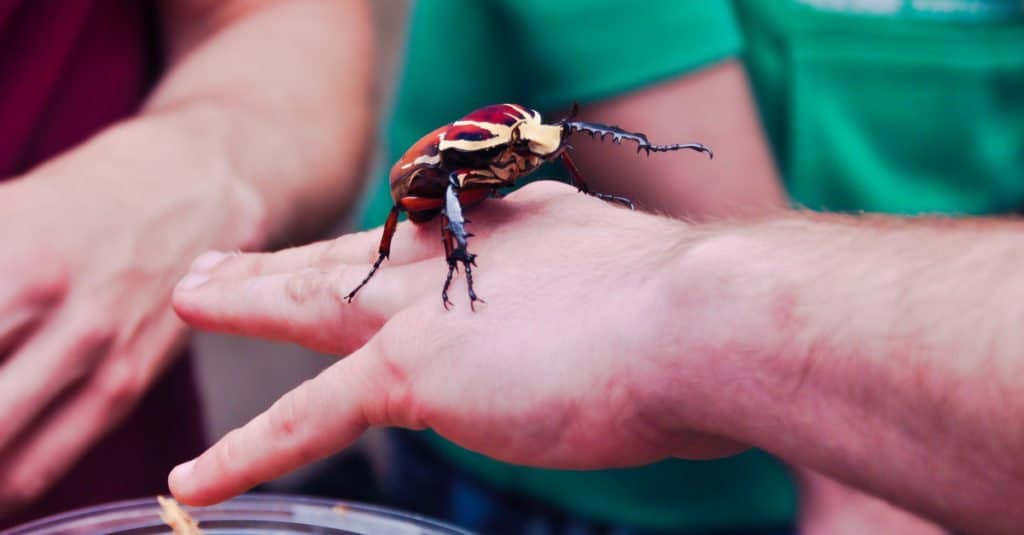
Goliath beetles can be purchased at insect expositions in nations around the world: the United States, Japan, Russia, Germany, England, and other countries host annual insect expositions.
©mangojuicy/Shutterstock.com
[Goliath beetle] larvae require a protein-rich diet in order to develop properly and reach adulthood. Without regular feedings of protein, often provided in the form of koi pellets or dog food, they simply won’t survive.
David Lee, proprietor of David’s Beetles
The most impressive, dried Goliath beetles (large, well-preserved animals without scratches and with rich coloration or intriguing patterns) can sell for upwards of four figures. Human preferences have even changed the abundance of specific morphs in the wild: a study found that commercially attractive white morphs of Goliathus goliatus were becoming less common in the forests where they were being collected for export.
The collection, preservation, and sale of Goliath beetles is an important source of income for many communities within the animal’s range. Collectors begin by stripping bark from trees preferred by Goliath beetles, so that sugary phloem is released, attracting beetles. After a few days, collectors return at night, shaking the trees to bring the beetles to the ground, then collecting them by hand or with sweep nets. Next, the beetles are injected with alcohol to kill them and to begin preserving them; they are dried in the sun for a day before being sealed in airtight plastic to prepare them for export.
Not every species of Goliath beetle is easy to breed in captivity: Goliathus cacicus, the chief Goliath beetle, is considered the most difficult, and the prices for these specimens reflect their rarity. Beetles are sold through online marketplaces and at insect expositions in cities worldwide.
What Are the Threats to Goliath Beetle Populations?
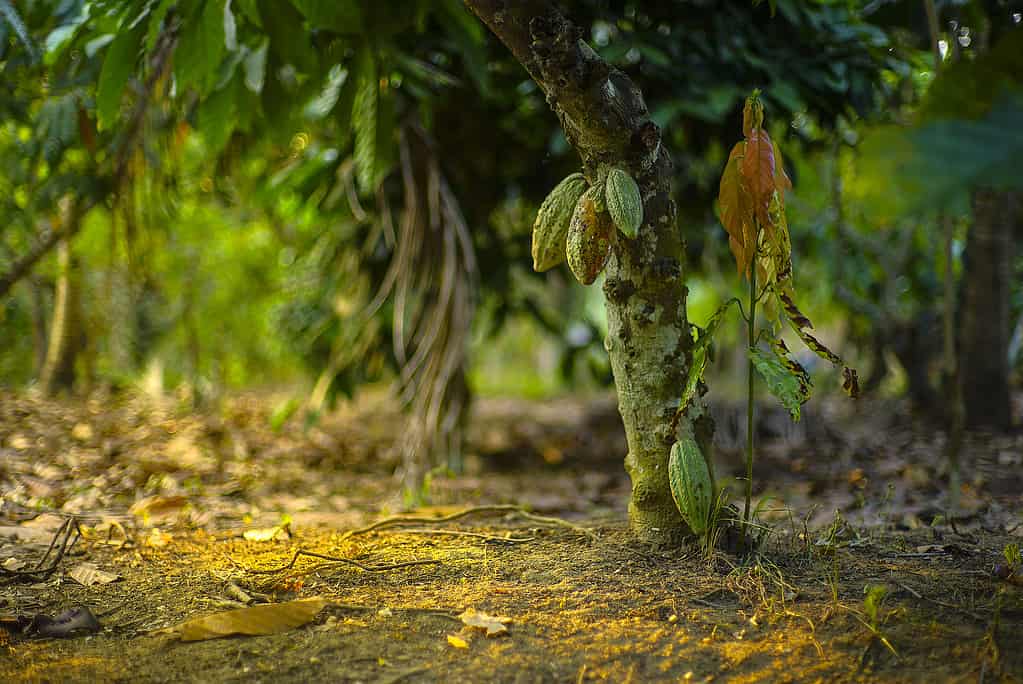
Conversion of rainforests into cacao tree (Theobroma cacao) plantations like the one pictured here is the primary threat to Goliath beetles.
©raditya/iStock via Getty Images
Two species of Goliath beetle have seen their populations decline rapidly in recent years: Goliathus cacicus and Goliathus regius. Overharvesting the beetles from the forests where they live poses multiple risks to the ecosystem. Stripping bark from trees to attract the beetles can kill the trees, reducing a forest’s diversity and eliminating habitat and food sources for beetles and other species. Furthermore, because hunts are often conducted by torchlight, beetle collecting can increase the risk of forest fire.
But beetle collection isn’t the biggest threat to the species. Chocolate demand and consumption have grown steadily for decades, and cacao cultivation has grown across Africa to meet this demand. Cacao cultivation typically means deforesting the land where these beetles live, and Goliath cacicus and Goliathus regius have gone regionally extinct in the areas most impacted by the growth of cacao cultivation.
To make matters worse, climate change is wreaking havoc on Africa’s cacao growing regions, as extreme heat waves threaten crops. As some areas become too hot to reliably cultivate cacao, growers are driven higher up in elevation, replacing more forests with plantations and eliminating beetle habitat.
How Can Goliath Beetles Be Protected for Future Generations?

This Goliathus goliatus specimen displays the unique patterns and bright colors that make these beetles so attractive to collectors.
©PetlinDmitry/Shutterstock.com
Goliath beetles have been wiped out in some areas and are in decline elsewhere: according to research by Goliath beetle expert and Rivers State University professor Luca Luiselli, Goliathus cacicus has become extinct in the Ivory Coast’s Banco Forest National Park, and Goliathus regius has lost about 40% of its natural habitat.
Goliath beetles rely on a rich, well-developed soil, decaying animal matter, and a forest with abundant tree diversity–in other words, they need ecologically healthy forests to survive and reproduce. Luiselli recommends adding the Goliathus cacicus and Goliathus regius to the International Union for Conservation of Nature (IUCN) Red List of endangered species. By protecting this beetle, communities can support the forest habitat and all of its species–but adding an animal to the ICUN Red List does not automatically give the species legal protections.
Species on the Red List are monitored by scientists to track their population changes as well as changes in their habitats. The ICUN can provide support for Red Listed species by coordinating with governments, non-profit organizations, and communities to promote the protection of the species alongside sustainable development.
Luiselli believes that regulating and limiting the trade of dried Goliath beetles, alongside promoting ecotourism, can both help bring much-needed income to the communities that live in and near Africa’s tropical rainforests and protect these beautiful beetles.
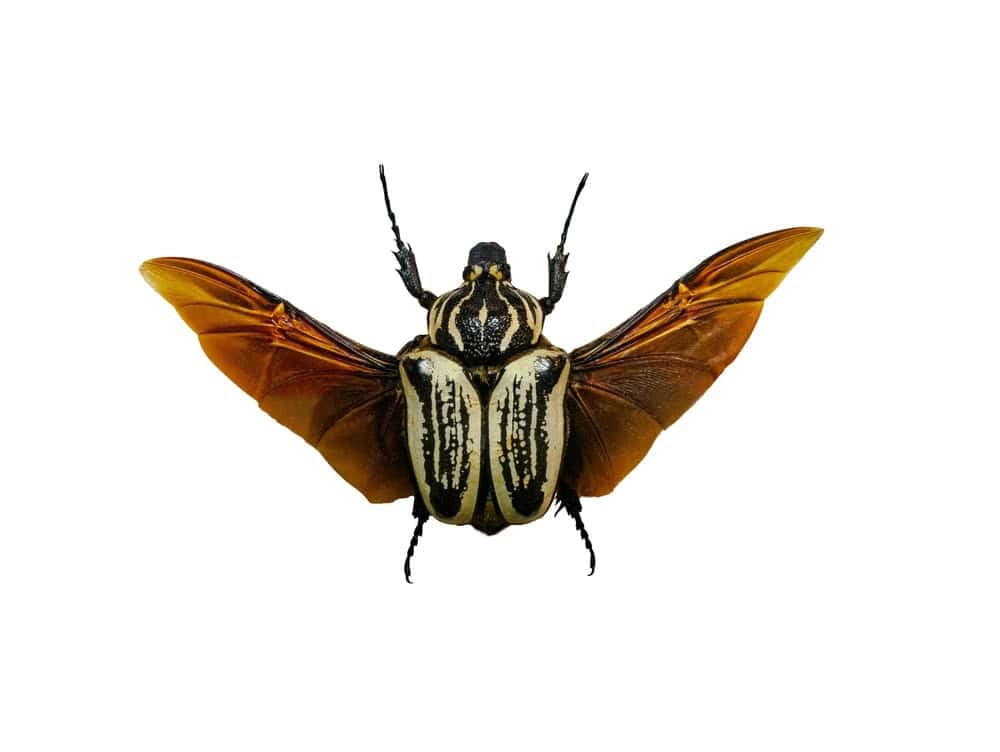
When Europeans first discovered the Goliath beetle, they were often mistaken for birds. One specimen in London’s Natural History Museum was found to have been killed with birdshot.
©photomaster/Shutterstock.com
Currently, no species of Goliath beetle is protected in any part of its range, except where they occur in reserves and national parks. Goliath beetles are bought and sold across the world, where they will be presented as curios on walls and bookcases. But with enough attention, investment, and effort, these enormous and curious animals could be guarded from extinction.
To date, Goliath beetles have not been reintroduced to any of the forests where they’ve been wiped out. Though Luiselli cautions against trying to save the beetle by breeding it, the knowledge of how to raise these fascinating insects that experts like Lee have developed may come in useful for future reintroduction projects. For now, Luiselli advocates for creating certified forests, which help nearby communities protect the striking beetles and collect a sustainable number of them, protecting the forests while bringing income to their defenders.