
Quick Take
- One color mutation separates a $3,500 snake from a nearly half-million-dollar one, a difference that comes down to a single phase the rarest specimens completely skip. See the blue phase difference →
- Two recessive genes can turn a common ball python into a five-figure collectible, though combining them turns out to be far harder than breeders expect. Explore the recessive gene challenge →
- The rarest snake morphs always command their highest prices first, and the market has a built-in mechanism that eventually works against every breeder who waits too long.
- A snake named after a weather pattern has a price range that swings by more than $40,000, a gap that remains invisible until you know exactly what to look for. See the Monsoon price range →
Snakes are some of the most diverse and widely distributed animals on Earth, with over 4,000 different species found in nearly every area of the globe except for Antarctica, Greenland, Ireland, Iceland, and New Zealand. They can also make fascinating, beautiful, low-maintenance pets. Some enthusiasts would happily spend thousands of dollars to keep a rare snake species as a pet. The most expensive snakes are generally morphs, which are color or pattern variations caused by a natural genetic mutation. Take a look at this snapshot of the most expensive snakes on the current market.
6. Zebra Ball Python Morphs – Up to $15,000
Zebra ball pythons are a cream and gold color with zebra patterned striping and both light and dark pixelated scales on the sides and into the patterning. Its head is also more of a greyish-tan than normal ball pythons, becoming darker and more pixelated with age. The recessive genes responsible for this beautiful morph contribute to its premium pricing.
Prices start at around $1,500 for snakes such as Pastel Zebras and Orange Zebras, reaching up to $15,000 for complex genetics like the Pastel Enchi Zebra Desert Ghost Het Hypo. Desert ghost Zebras are also priced high at around $10,000.
5. Kosmos Ball Python Morphs – Up to $23,000
The Kosmos pattern is the result of an incomplete dominant gene. The founding snake was an African import with this unique appearance. Breeders discovered that the trait could be passed on to offspring. The Kosmos ball python’s head is darker than normal, and the snake has a granite appearance from head to tail. This means their normal alien-head pattern is broken up, giving them a pixelated or puzzle-piece look. It also has an orange patch right behind the head and a striped neck.
The price for some Kosmos variations, such as Kosmos White Flame, begins at around $4,000. However, prices quickly increase for snakes with more complex genetics, due to the challenges in breeding. For snakes such as the Kosmos White Flame Pastel Clown or Super Kosmos Pastel Clown, costs are currently around $23,000.
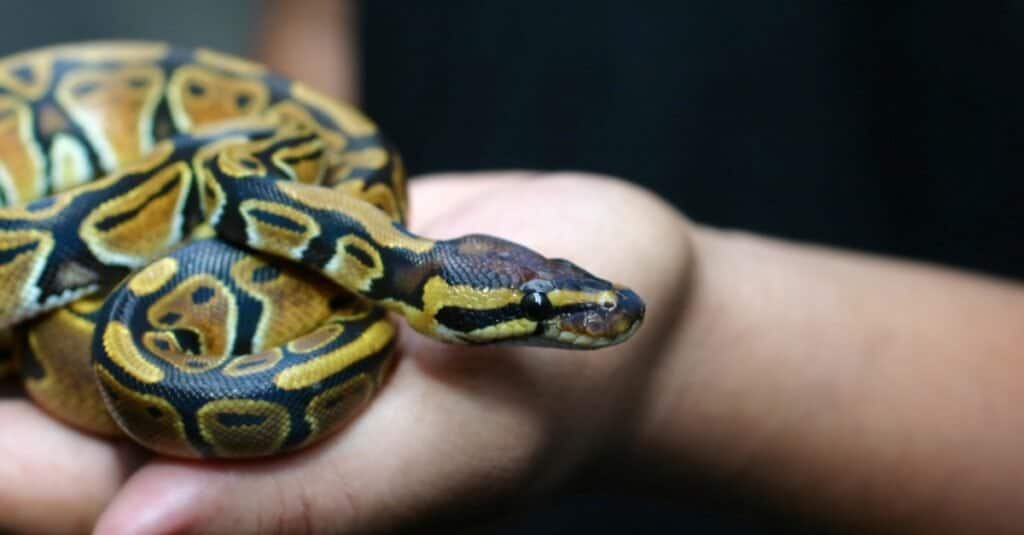
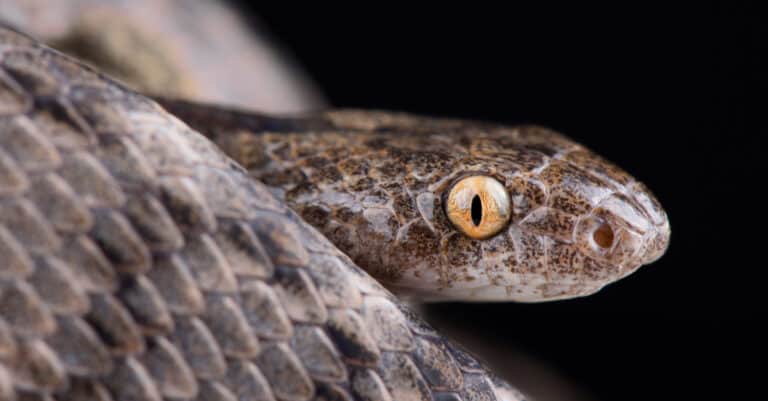
Normal ball pythons have dark brown heads, shown above, but Kosmos morphs are known for darker heads.
©Krisda Ponchaipulltawee/Shutterstock.com
4. Dark Matter Project Ball Pythons – Up to $33,000
Some of the most expensive ball pythons currently on the market are the snakes in the Dark Matter Project, including Dark Sun and Dark Nova. The single gene Dark Matter snakes have a dark burgundy base with contrasting gold alien head blotches. The Dark Sun morph is a visual allelic combination, meaning the combined effect of the Dark Matter and Albino genes is visibly expressed in the snake’s coloration. When the Dark Matter gene interacts with the Candy gene, which reduces dark pigmentation, the result is a Dark Nova.
There are also several other variations that are part of this project, all of which command premium prices. Dark Matter Project snakes begin at around £12,500, or approximately $16,550 USD. Rarer variations such as the Pastel Dark Matter ball python and the Dark Sun Pied currently reach up to £25,000, which is roughly $33,000 USD as of this writing.
3. Monsoon Ultramel Pied Ball Python – Up to $45,000
The Monsoon ball python earned its name from its resemblance to raindrops on a window. Unlike the typical ball python, which has a dark brown to black base and lighter alien head banding, the Monsoon variant features hundreds of intricate speckles across its body, creating a striking and distinctive appearance. It was first discovered when breeders paired a snake with the Pastel Special gene and the Super Mojave. The Monsoon pattern was found to be caused by a recessive gene, and now it is one of the most widely known patterns.
These snakes can sell for extraordinary prices, depending on their specific genetics. They currently range from a relatively affordable $1,200 for a basic Monsoon ball python to tens of thousands of dollars for snakes with more complex genetics. The Ultramel Monsoon is currently selling for $30,000, while the Monsoon Ultramel Pied is priced up to $45,000.
2. Sunset Ultramel Ball Python – Up to $60,000
The Sunset ball python, specifically the Sunset Ultramel morph, stands out as one of the most coveted snakes, distinguished by its vibrant yellow, orange, and red coloration. With a typical size of 3–5 feet and an impressive lifespan of 20–30 years, these pythons are truly remarkable. They are native to the grasslands, shrublands, and savannas of West and Central Africa.
The Sunset Ultramel was developed by combining the burgundy colors of the Sunset gene with the caramel brown and yellowish tones of the Ultramel gene. The banding does not resemble the traditional “alien head” pattern — the saddle-like blotches running down its sides. The Sunset ball python’s banding is stretched out, described as having a candle flame-like appearance. Because both the Sunset and Ultramel genes are recessive, breeding these snakes is challenging, which drives their high prices. Current prices for the Sunset Ultramel range from $20,000 to $60,000, with most snakes toward the lower end of the spectrum.
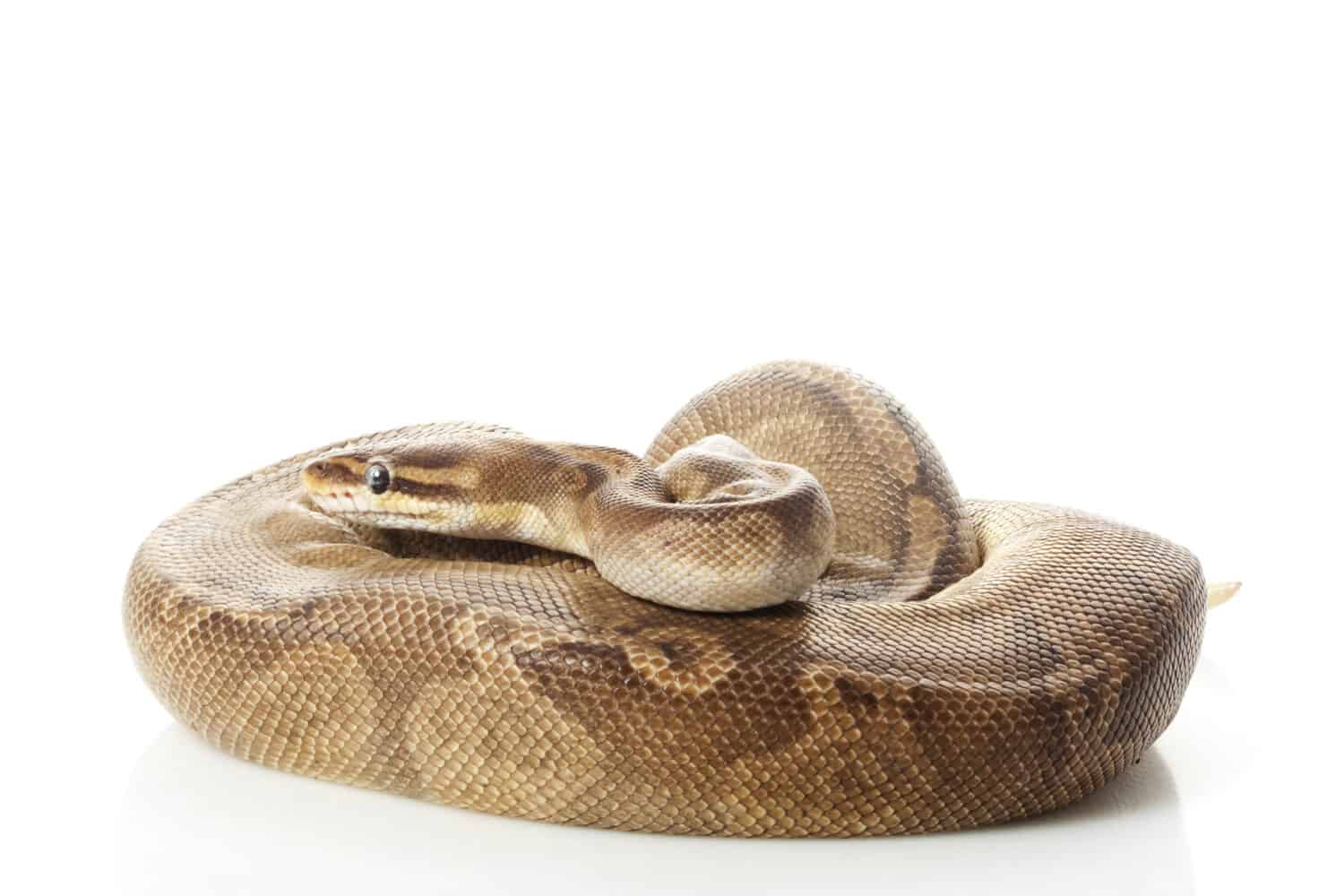
The Sunset ball python has candle flame-like banding instead of the usual “alien head” pattern.
©fivespots/Shutterstock.com
1. High-Blue Green Tree Pythons – Up to $445,800
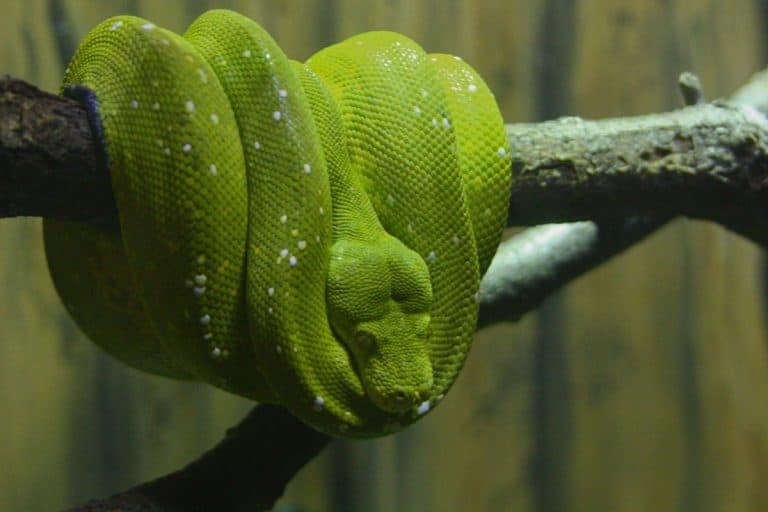
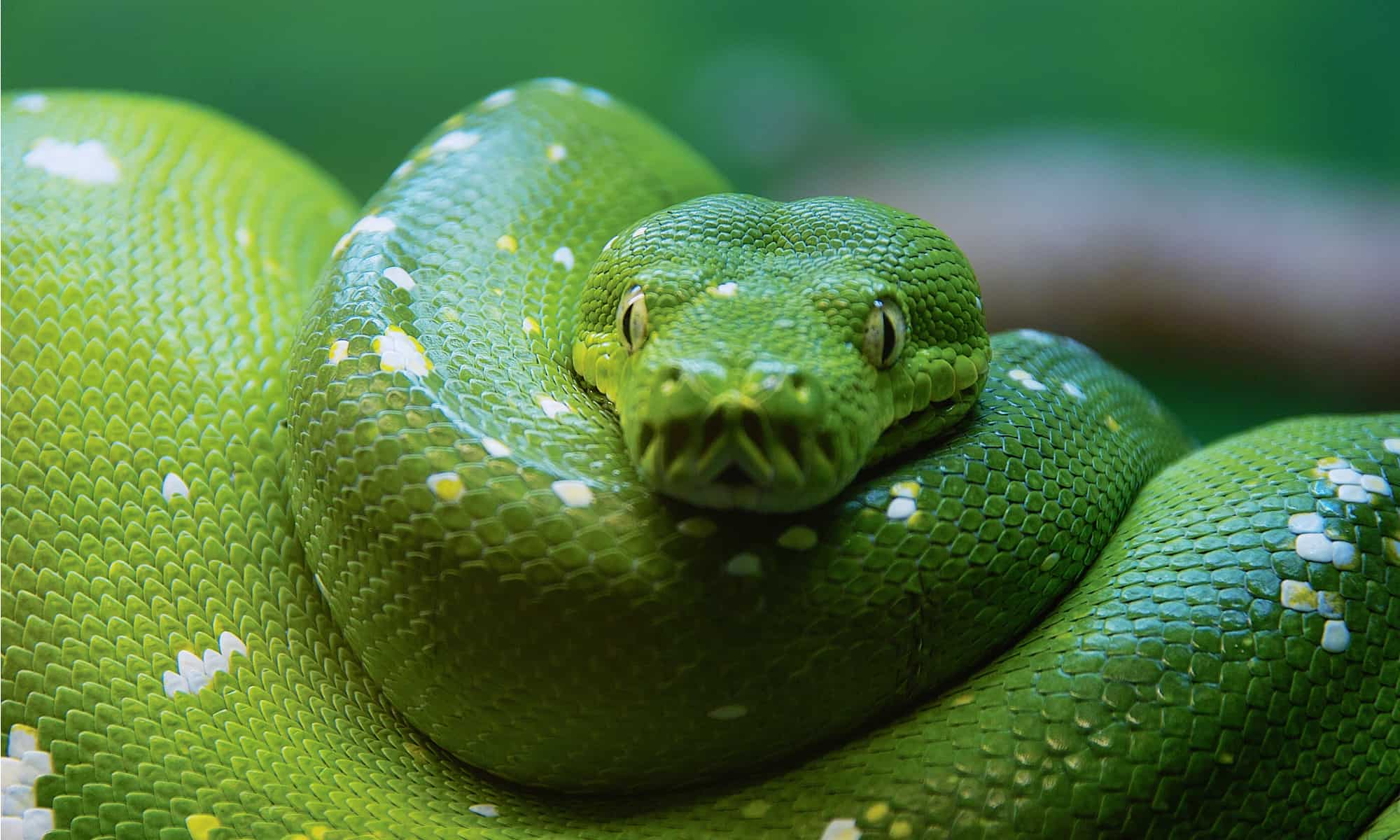
The vibrant green tree python is one of the most eye-catching snakes. These nonvenomous snakes are native to the rainforests of New Guinea, eastern Indonesia, and Cape York Peninsula in Australia. They have white or yellow scales along their backs, and many snakes also have yellow, green, or blue spots. Measuring 5–6 feet in length and with a lifespan of up to 20 years, these reptiles are popular pets. However, it is the high-blue morphs, also referred to as Blue Line or Trooper Walsh Blue Line morphs, that are some of the most expensive snakes in the world.
Some Blue Line morphs displaying sky-blue coloration in varying amounts can currently be purchased for around $3,500 to $5,000. There are also rarer True Blue snakes that turn blue as adults after an intermediate green phase. However, it is the ultra-rare Super Blues that are considered the pinnacle of the hobby. These snakes change from their dark red birth coloration directly to 70% or more blue coloration with no intermediate green phase. Their striking coloration and rarity have driven their value to extraordinary heights, with reports of a sale reaching an astounding $445,800.
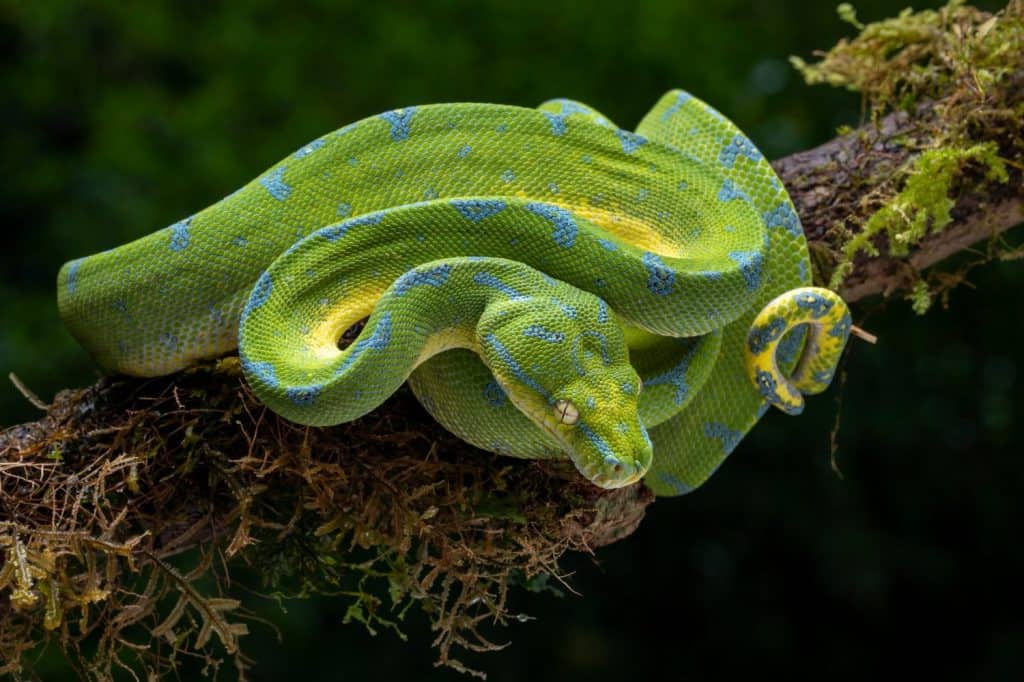
High-blue green tree pythons have varying amounts of blue coloration.
©Lauren Suryanata/Shutterstock.com
Conclusion
Prices for snake morphs vary wildly, depending on the snake’s specific traits, rarity, and breeding challenges. Ball pythons alone have 230 traits that can be combined in myriad ways. So there are thousands of rare morphs on the market that are similarly priced, making ranking snake morphs difficult. Prices can also change quickly, as these rare morphs often command very high prices initially, then prices fall as more breeders make them available on the market.