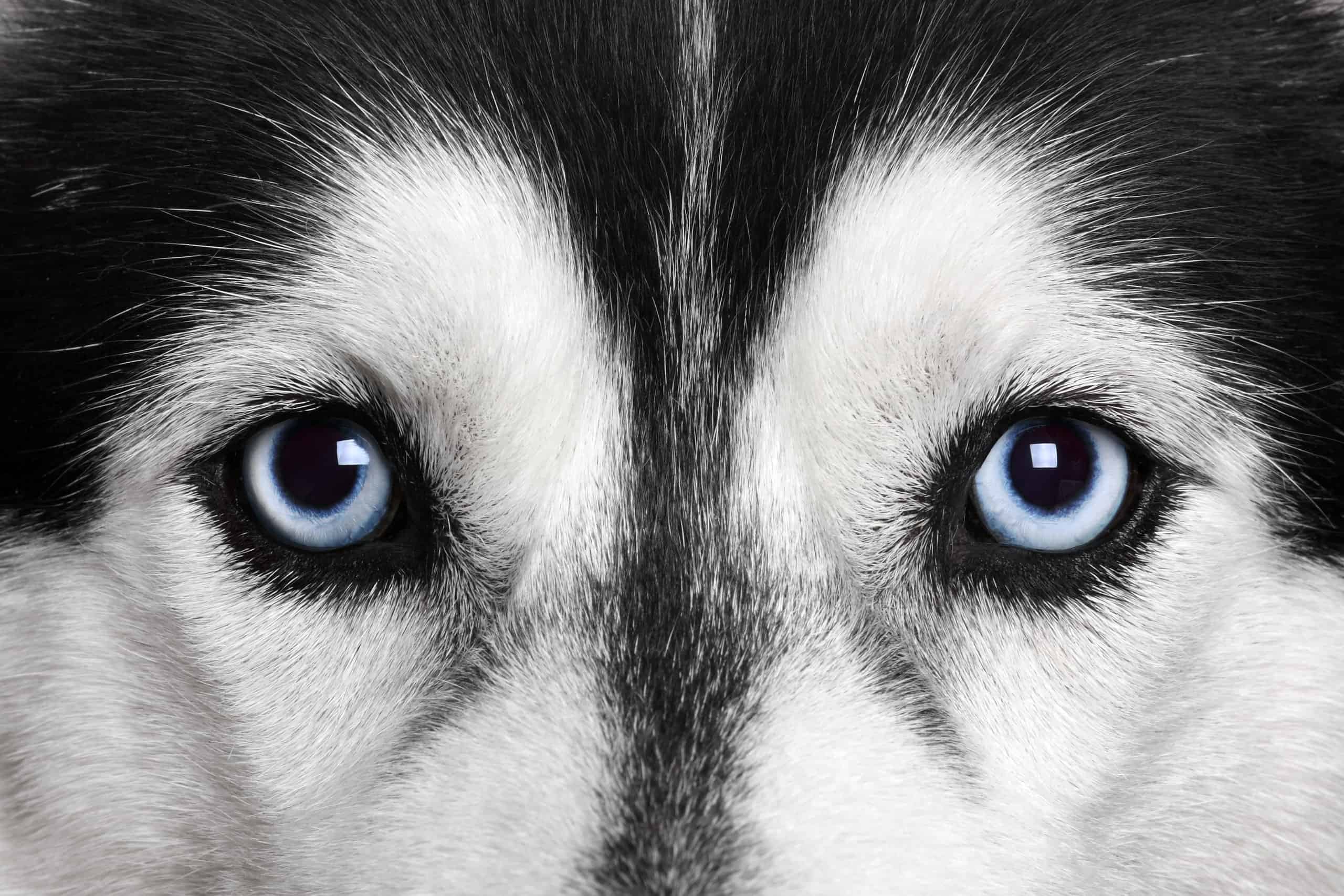

Animals with blue eyes are a rare occurrence in nature due to being linked to recessive genetics, mutations, and specific genes. Despite that, many species still have beautifully rich blue eyes. While some species boast only blue eyes, others have various eye colors due to dominant gene strains. In humans, blue eyes are a genetic mutation in the HERC2 gene, which inhibits OCA2 expression. This results in a lack of pigment and blue eyes. Animals also have specific genes that contribute to the lack of pigmentation. So, let’s take a look at animals with blue eyes.
1. Siberian Husky
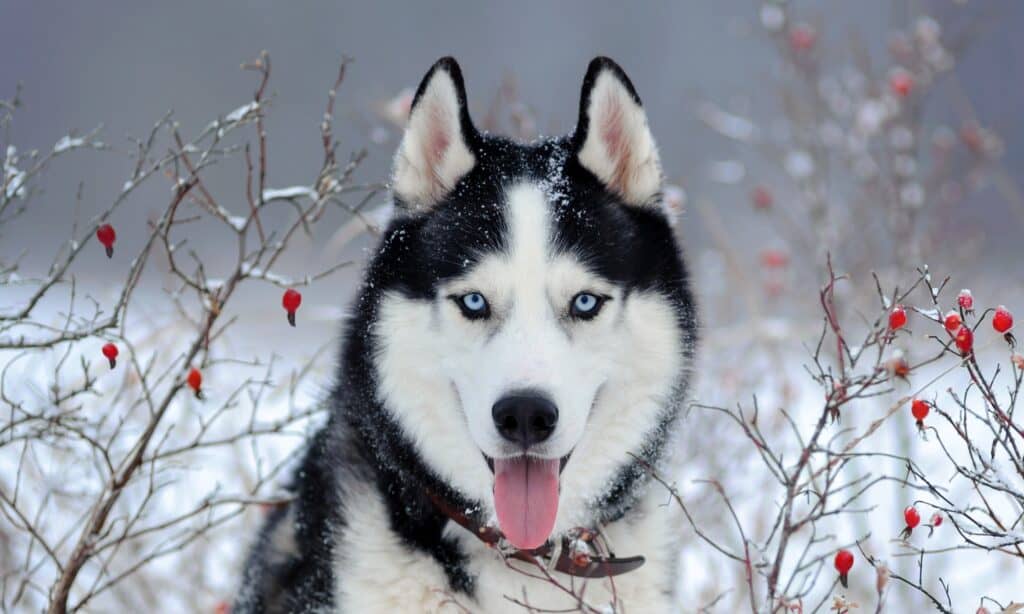
A lack of melanin causes a lighter eye, resulting in blue pigmentation.
©iStock.com/format35
Siberian huskies have some of the most stunning light blue eyes. A chromosomal abnormality born in less melanin in their irises contributes to their unique eye color. The reduction of melanin ends up causing a lighter eye. Specifically, the ALX4 gene decreases pigment production in their irises.
2. White Tiger
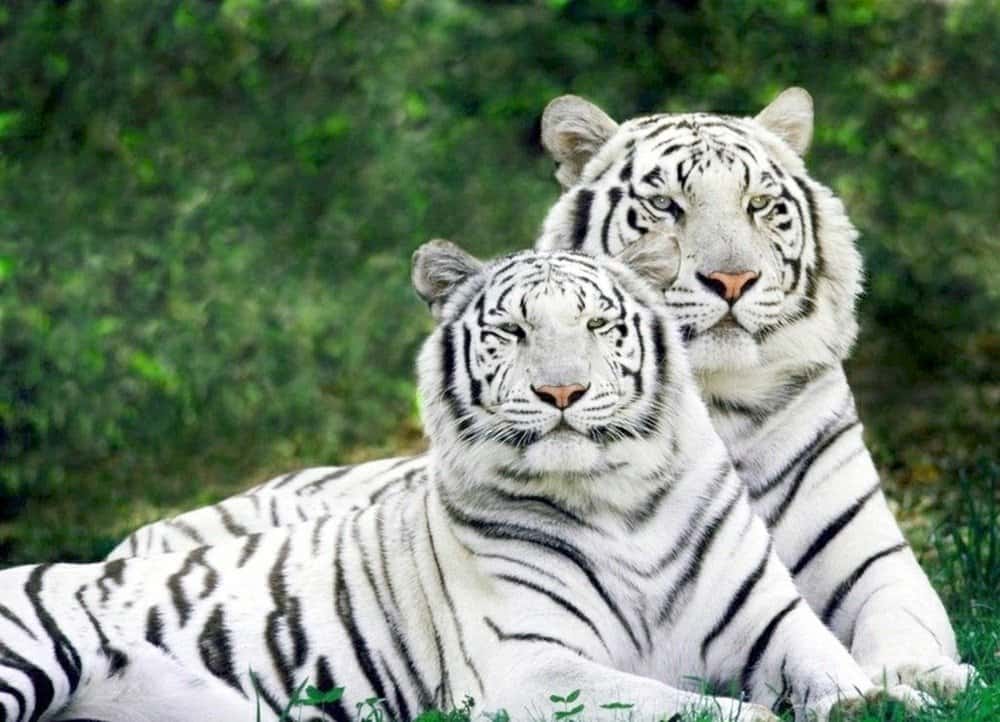
White fur is linked to a gene variation that also produces blue eyes.
©S.K Photos/Shutterstock.com
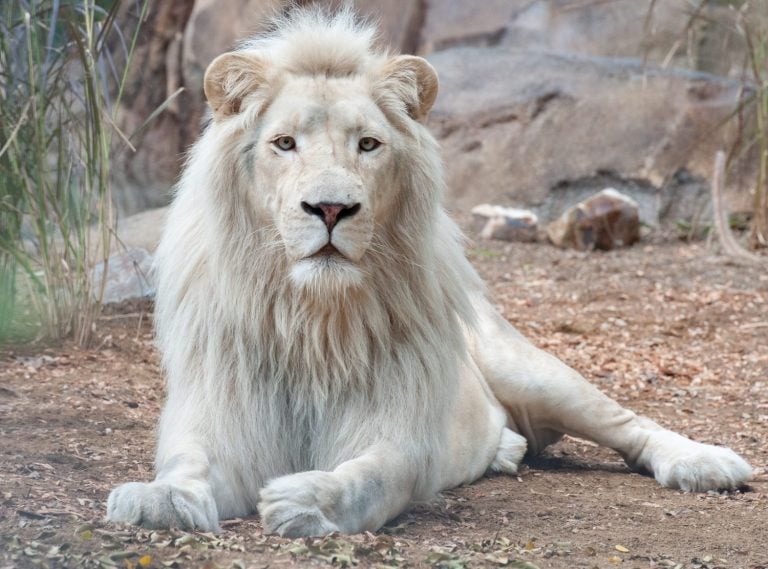
White tigers are another animal that has stunningly beautiful blue eyes. Unlike other animals, the gene responsible for blue eyes is linked to white fur. White fur is also linked to an inherited trait following a Mendelian recessive pattern, including blue eyes.
3. Blue-Eyed Black Lemur
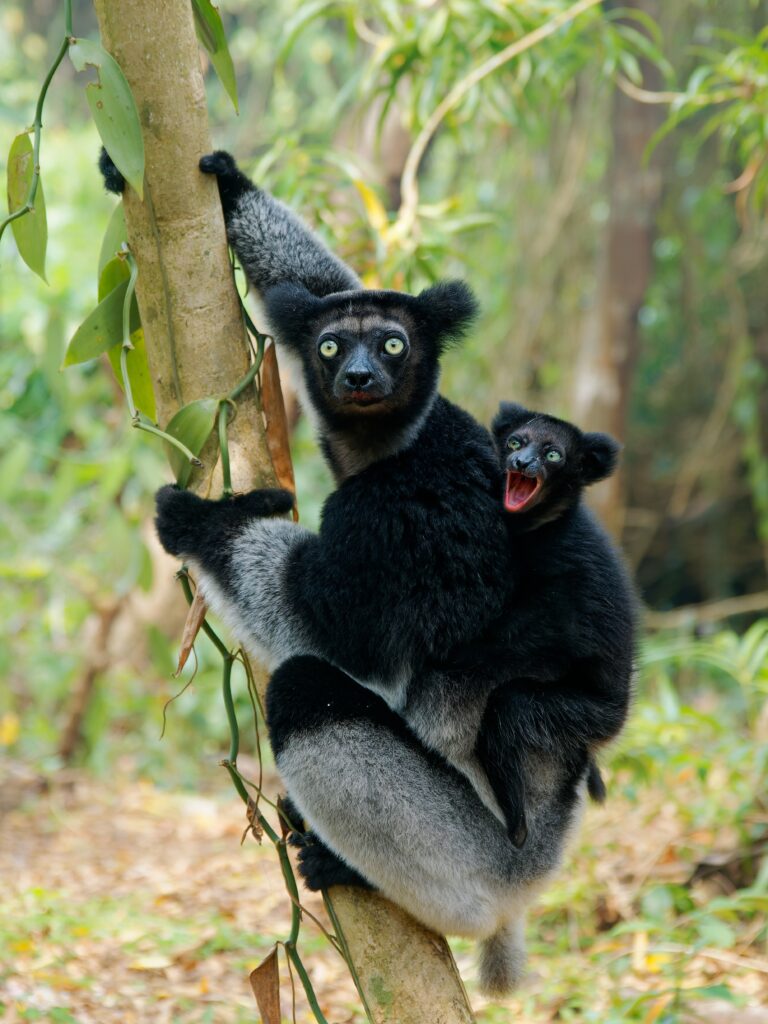
Primates have similar genetics to humans, and one phenotype can cause blue eyes.
©Martin Pelanek/Shutterstock.com
Despite most primates having dark-pigmented irises, some, like the black lemur, have predominantly blue eyes. Interestingly, humans and primates share a phenotype evolution distant from the primate tree. The species’ blue eyes are caused by a special genetic abnormality called Waardenburg syndrome.
4. Siamese Cat
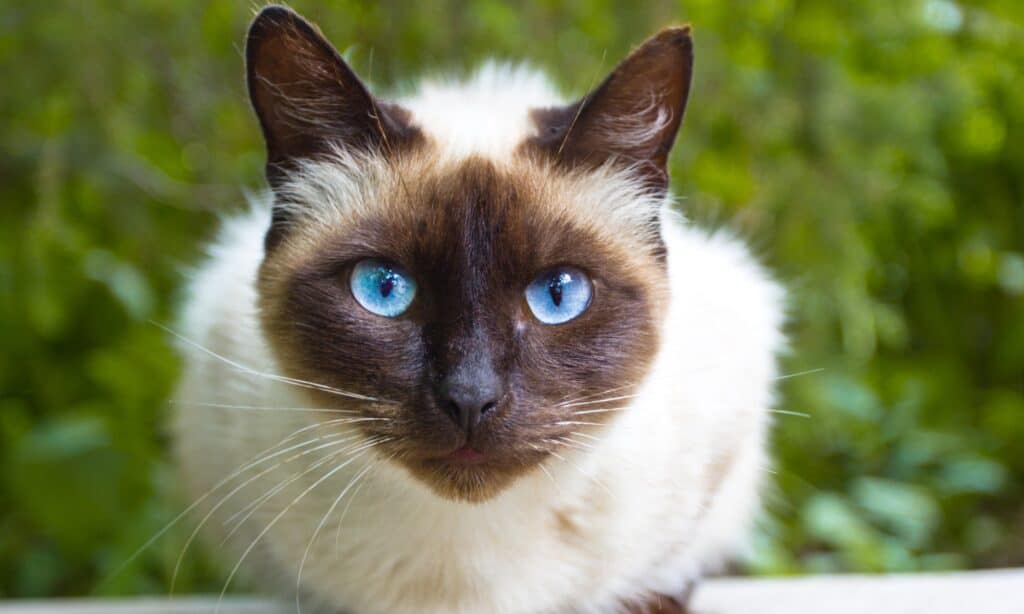
The albino gene is common in Siamese cats, which can result in a lack of melanin.
©iStock.com/chromatos
Siamese cats have some of the most beautiful eyes of any cat breed. What causes the blue pigmentation is an albino gene. The gene causes a lack of pigmentation in their eyes, which makes their irises appear azure blue. Essentially, it’s caused by a genetic mutation that causes a lack of pigmentation or melanin in the eyes.
5. Australian Shepherd
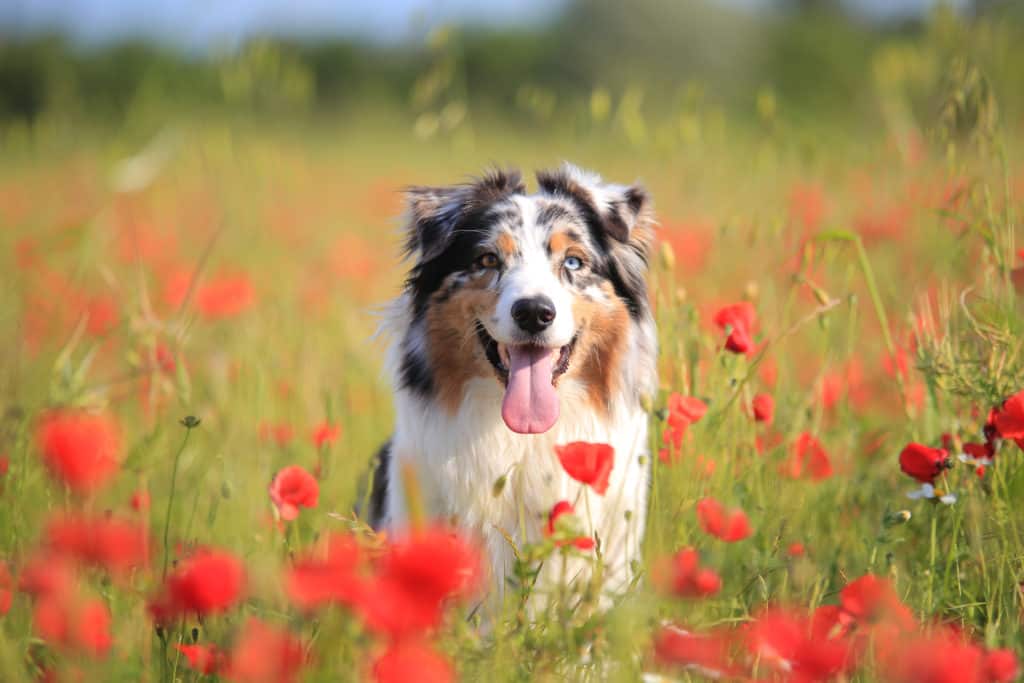
A gene in an Australian shepherd’s fur causes a lack of pigmentation in the eyes.
©Melounix/Shutterstock.com
The gene that produces the Australian shepherd‘s amazing fur pattern is also responsible for producing blue eyes. The coat gene affects dark pigments and includes a variegated pigment, affecting the eyes. Due to this, Australian shepherds can have either fully blue or partly blue eyes. While only one of the merle genes can produce blue eyes, two will always result in blue eyes.
6. Arctic Foxes
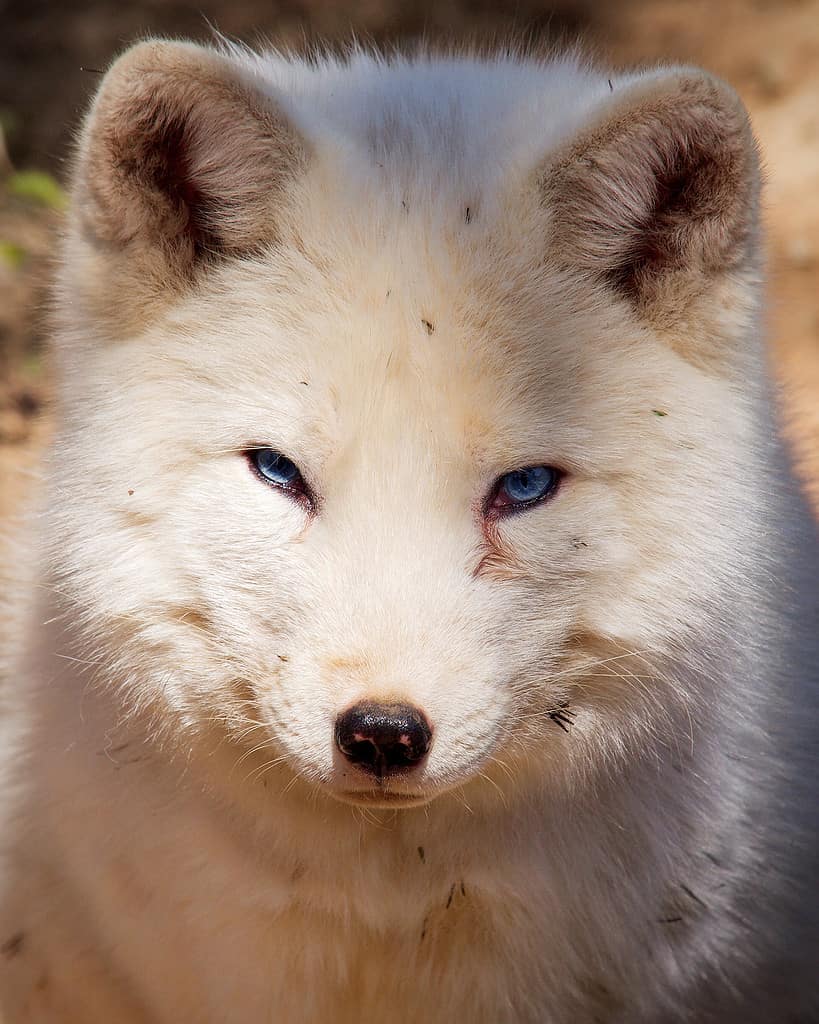
While not all arctic foxes have blue eyes, some do because of being bred in captivity for certain traits or through mutations.
©Tyler_Sprague/iStock via Getty Images
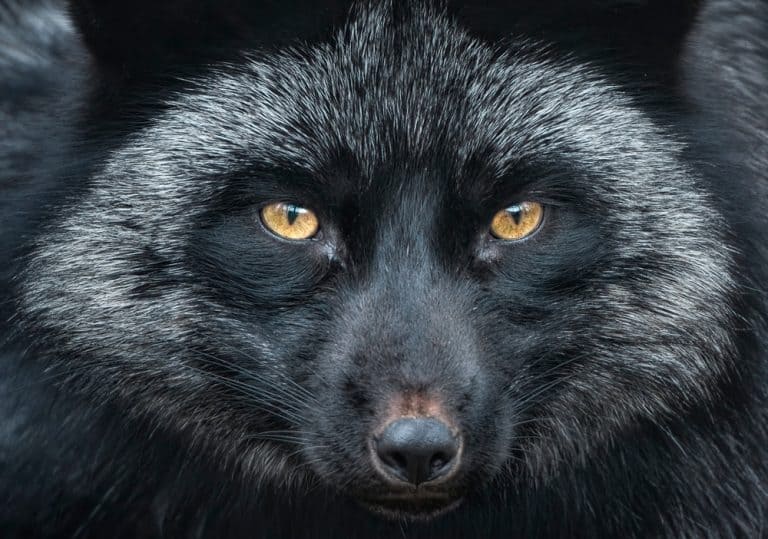
Unlike other animals, the Arctic fox has various eye color variations. Blue is just one of them and is a trait mainly due to a genetic mutation or through breeding. Arctic foxes usually have deep golden or orange-yellow eye colors, which helps with the glare from the sunlight hitting the snow.
7. Alaskan Klee Kai
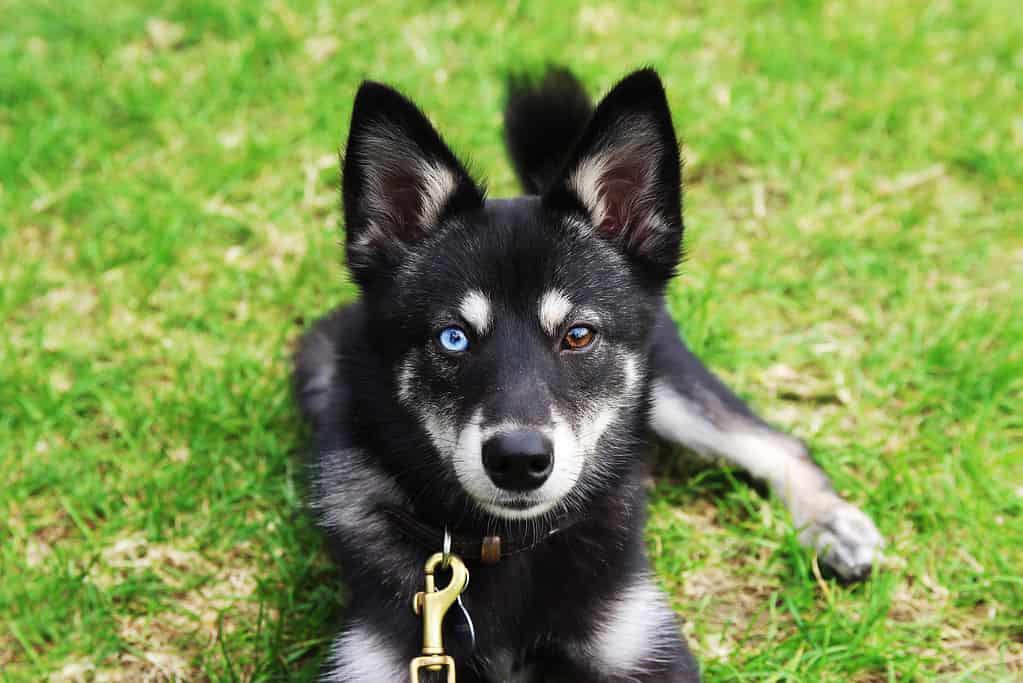
An Alaskan Klee Kai has varying eye colors and is even prone to heterochromia.
©I_AM_JASON/iStock via Getty Images
The Alaskan Klee Kai breed is a dog with blue eyes, but can have other colors depending on their genetics. This can include brown, hazel, and green. In most cases, the Klee kai breed lacks the Merle gene and has low pigmentation, resulting in the blue eye color.
8. Blue-Eyed Leucistic Ball Python
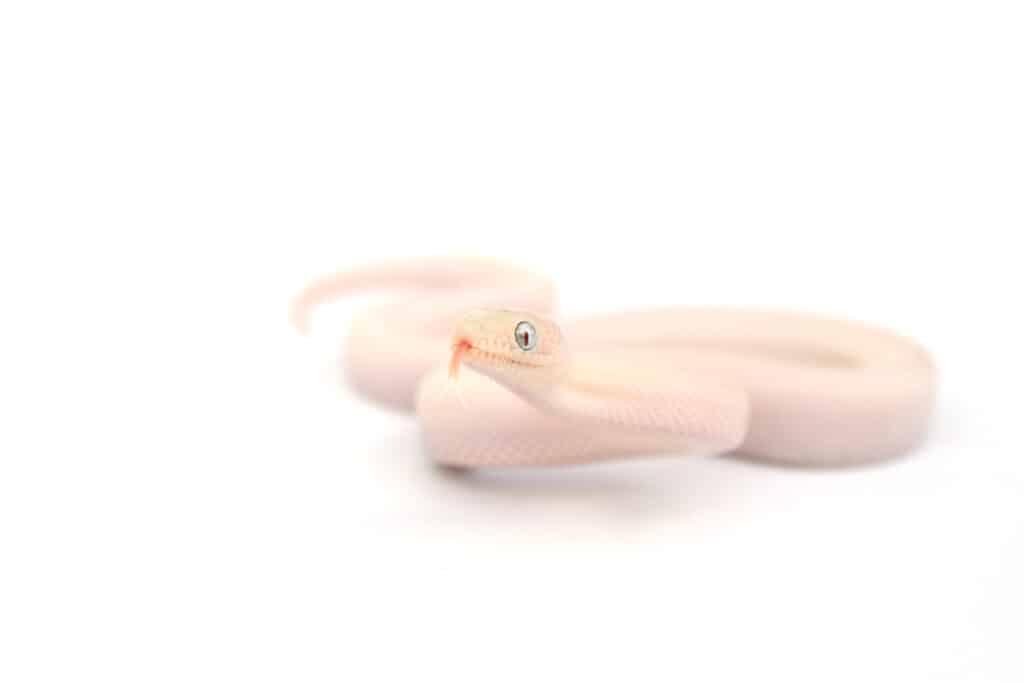
Known as “Lucy,” the ball python has low pigmentation in its eyes.
©iStock.com/mikeschultzphotos
The blue-eyed leucistic ball python is a snake known for its stunning light blue eyes. They are easily identifiable due to their completely white scaling. It’s known as the “Blue Eyed Lucy” or “BEL” and is extremely rare. For breeding to produce blue eyes and coloring, a successful low pigmentation needs to be inherited from a Butter, Lesser, Mojave, Phantom, or Russo snake.
9. Piebald Camel
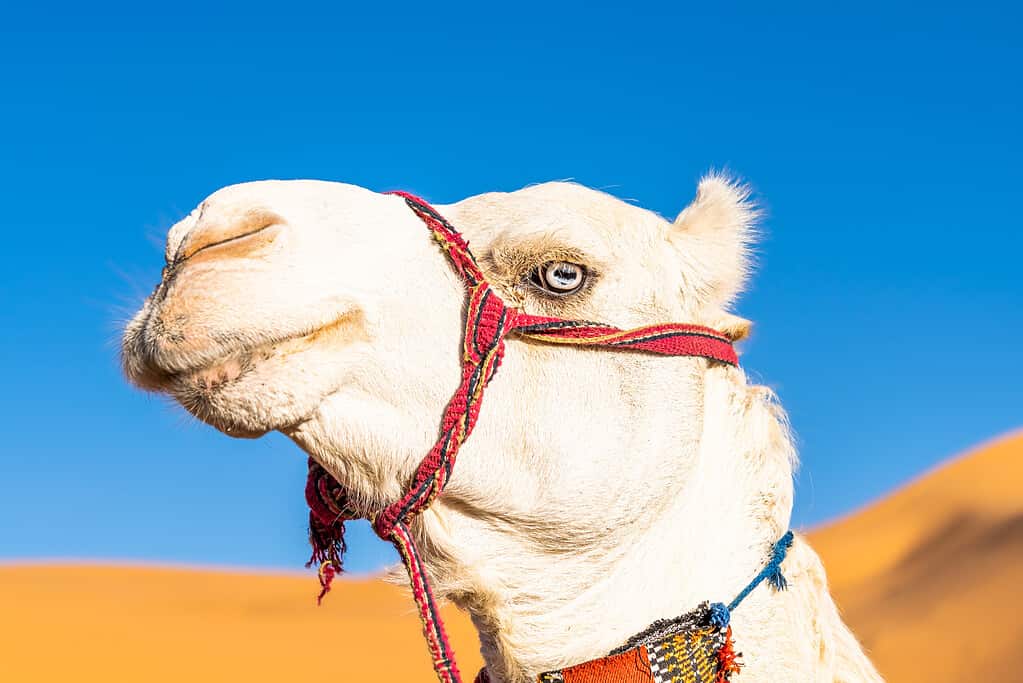
Camels that have white colored fur often have lighter eyes, specifically blue.
©Slimoche/iStock via Getty Images
Some camels, such as piebald camels with more white on their head, end up with blue eyes. They are also known for developing heterochromia of the iris, which can result in one brown and one blue eye.
10. Blue-Eyed Anglehead Lizard
The Blue-Eyed Anglehead Lizard has large, beautiful, vibrant blue eyes. However, only the males of the species have blue-colored irises. This is likely tied to the Y chromosome, as females tend to have brown eyes.
11. Wild Horses
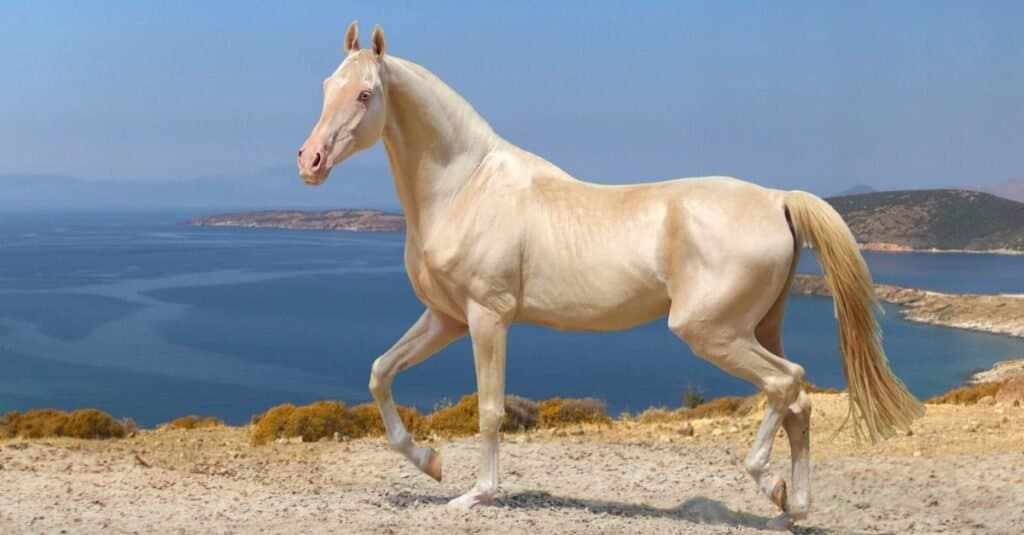
A horse can have plenty of variety in eye color, but one mutation can result in low melanin levels and blue pigmentation in the eyes.
©SunnyMoon/Shutterstock.com
Horses have beautiful blue or brown eyes, depending on their genetics. Breeds with white markings or light-colored coats, such as the Akhal Teke, are more likely to develop blue eyes. This is mainly because the lighter coats and markings affect melanin levels. So, horses will have low melanin in their irises, creating a blue color.
12. Blue-Eyed Larval Crab
One of the more unusual animals with blue eyes is the blue-eyed larval crab. It’s a small crab that has not begun its molting stage of developing a shell. During this time, the small crab has beautiful blue eyes, almost like turquoise tones.
13. Northern Gannet
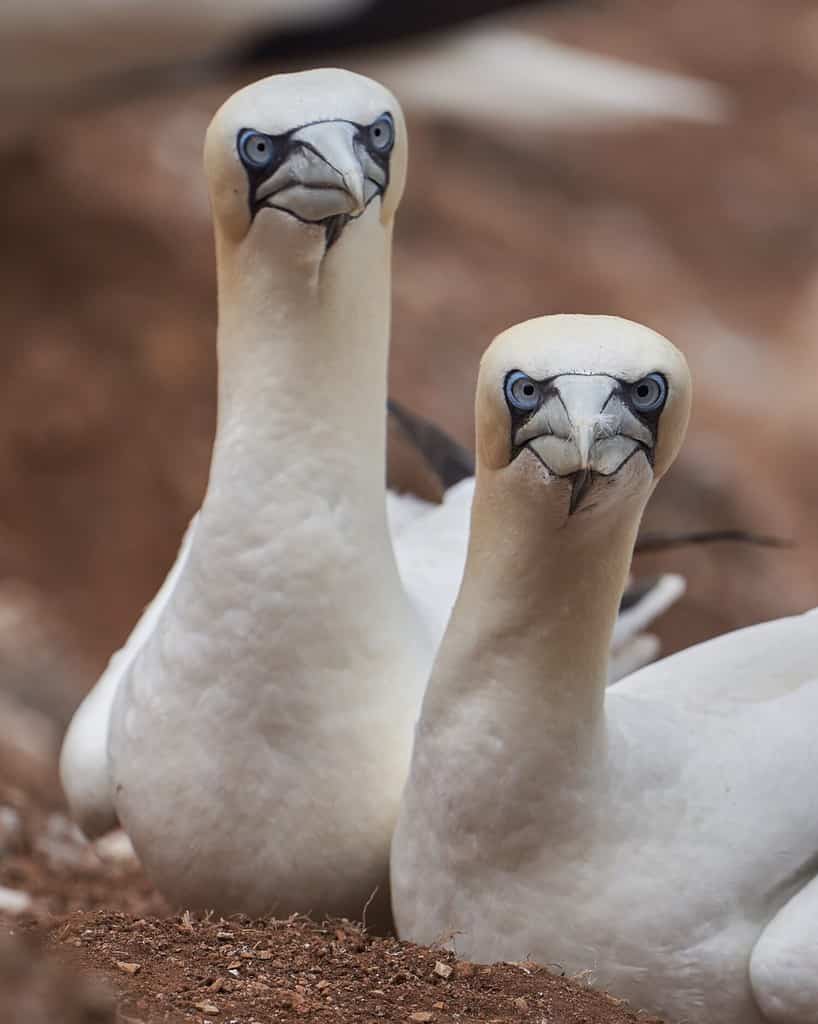
A northern gannet has naturally blue eyes, but the avian influenza has caused some of the birds to gain pigmentation in their eyes.
©Will Hall/Shutterstock.com
The northern gannet is a bird with icy blue eyes. Still, a bird flu infection, avian influenza, has caused part of the population to have black eyes instead. Younger Gannets tend to have dark blue-grey eyes to pale blue-grey.
14. Yellow-Rumped Caciques

Yellow-rumped caciques have a sky-blue ring around their dark irises.
©crbellette/iStock via Getty Images
The yellow-rumped caciques are a part of the New World blackbird family and have pale blue eyes. The eye ring is sky blue, but the pupil is black. Often, their eye ring are confused to be the whites of their eyes. However, it’s due to their eyes being so big.
15. African Bush Viper
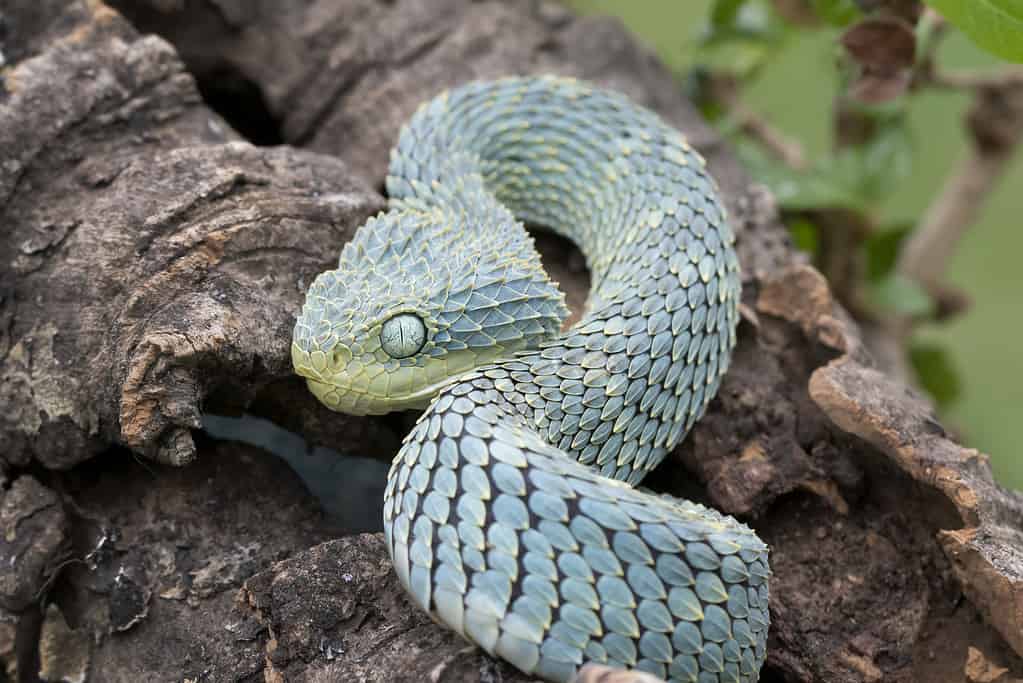
The African Bush Viper can have varying scales and eye color combinations.
©Mark Kostich/iStock via Getty Images
The African bush viper often has very strong pigmentation in its eyes. While it can come in various colors, the blue-eyed variety can be found in Africa’s DR Congo. The blue pigment can range anywhere from pale blue to bright cyan.
16. Turkish Angora
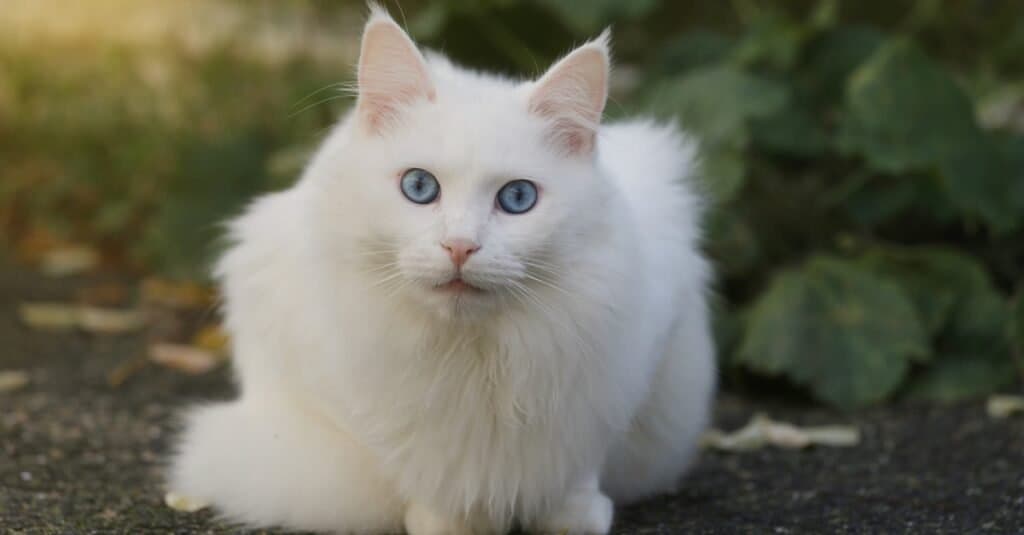
A gene linked to deafness in Turkish Angora cats causes blue eyes.
©love pattern/Shutterstock.com
Unlike other cat species, the Turkish Angora has a unique gene that affects its eye color. Their vibrant blue eyes are tied to a gene responsible for their hearing loss. This gene also affects their white fur coat.
17. Blue-Eyed Hermit
One of the main notable characteristics is its vivid blue eyes. Since the crab’s body is pink, the blue eyes stand out. There are a few different types of hermit crabs with blue eyes, including the red claw, Caribbean, and white-clawed blue-eyed hermit crabs.
18. Blue-Eyed Shag
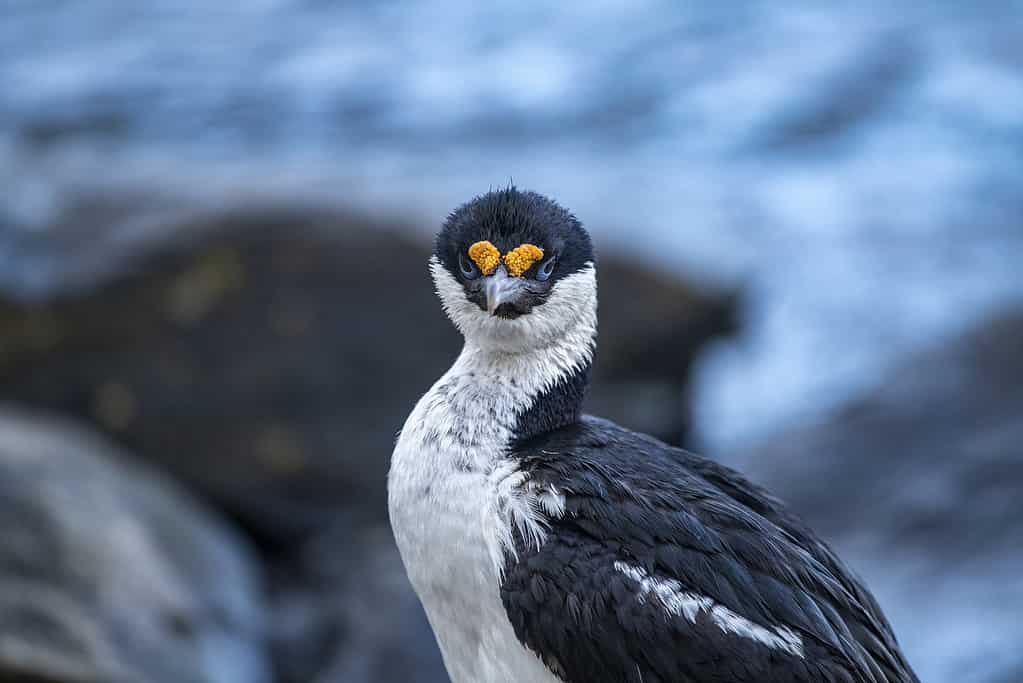
The ring around the blue-eyed shag is blue and has black irises.
©Page Chichester/iStock via Getty Images
The blue-eyed shag, also known as the Antarctic shag, has a blue, purple, or red ring around its eye, with a black iris. Many people mistake the ring as a part of their eye, but it’s blue-colored skin that encases the eye. There are 14 species of this bird, meaning there is a lot of variety in eye coloring.
19. Blue-Eyed White Tree Frog
With most animals, the lighter tone of skin or fur results in light-colored irises. The blue-eyed variety is a morph of the original for the white tree frog. Typically, the white variety tends to have golden eyes instead.
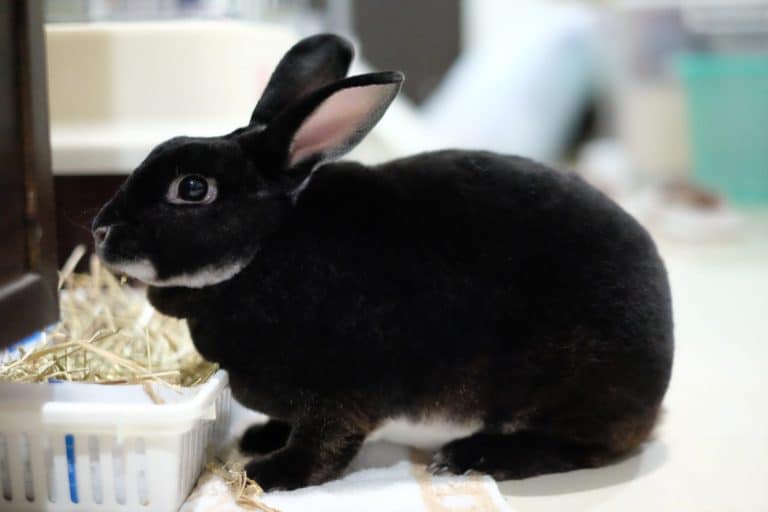
20. Rabbits
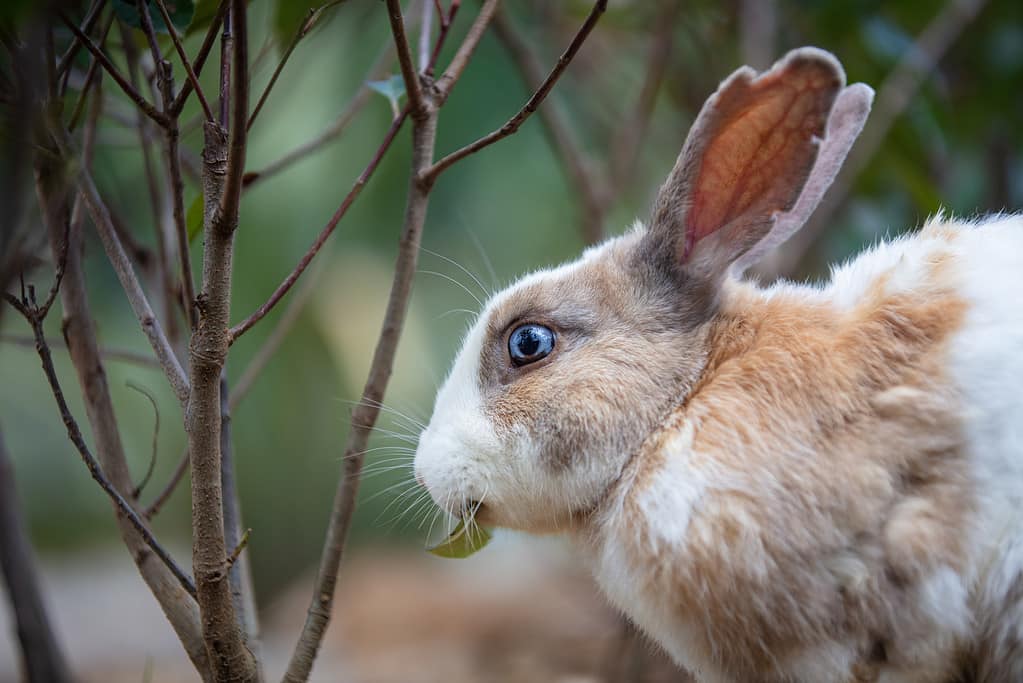
Almost all species of rabbits can inherit blue eyes, but it’s due to two-particle pigments.
©Berk Ucak/iStock via Getty Images
A rabbit‘s eye color works a bit differently from other animals. Instead of relying on melanin, a rabbit’s eye turns blue from the size of two-particle pigments. For example, rabbits with larger particles tend to develop brown eyes. On the other hand, smaller particles result in blue eyes. However, a bunny’s eye can turn brown over time as it ages due to particles expanding.
21. Mountain Lion
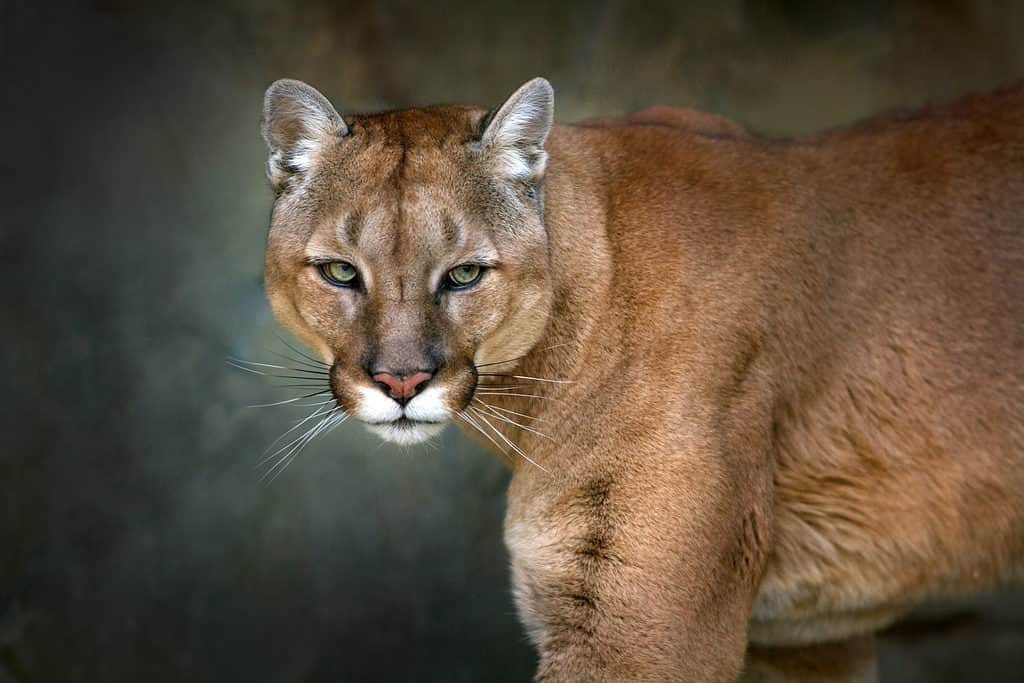
Over time, the mountain lion will lose its eye pigmentation.
©Kwadrat/Shutterstock.com
Did you know mountain lions are born with blue eyes, but the pigment changes to golden brown over time? Young mountain lions will have blue eyes that stay pigmented until they reach 16 months of age. From this time, their eyes tend to switch to a brown or amber color.
22. Leopard
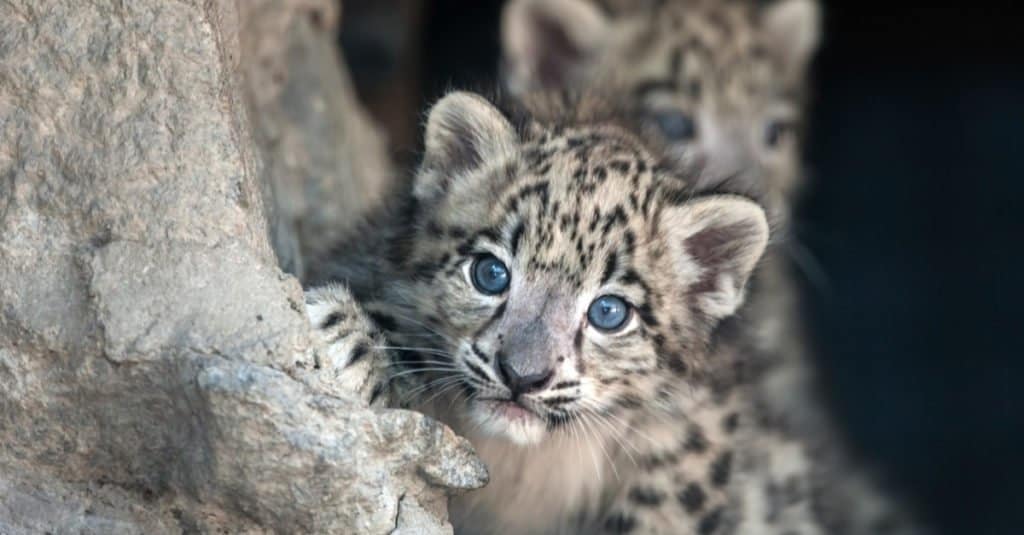
Young leopards are born with blue eyes, but as they age change to a different color.
©Kwadrat/Shutterstock.com
Leopards, specifically snow leopards, are born with either green, blue, or grey eyes. Animal experts guess this is an evolutionary advantage that allows them to blend in with their environment. However, the eye colors of other leopard species vary from blue and green to yellow and orange.
23. Dalmatian
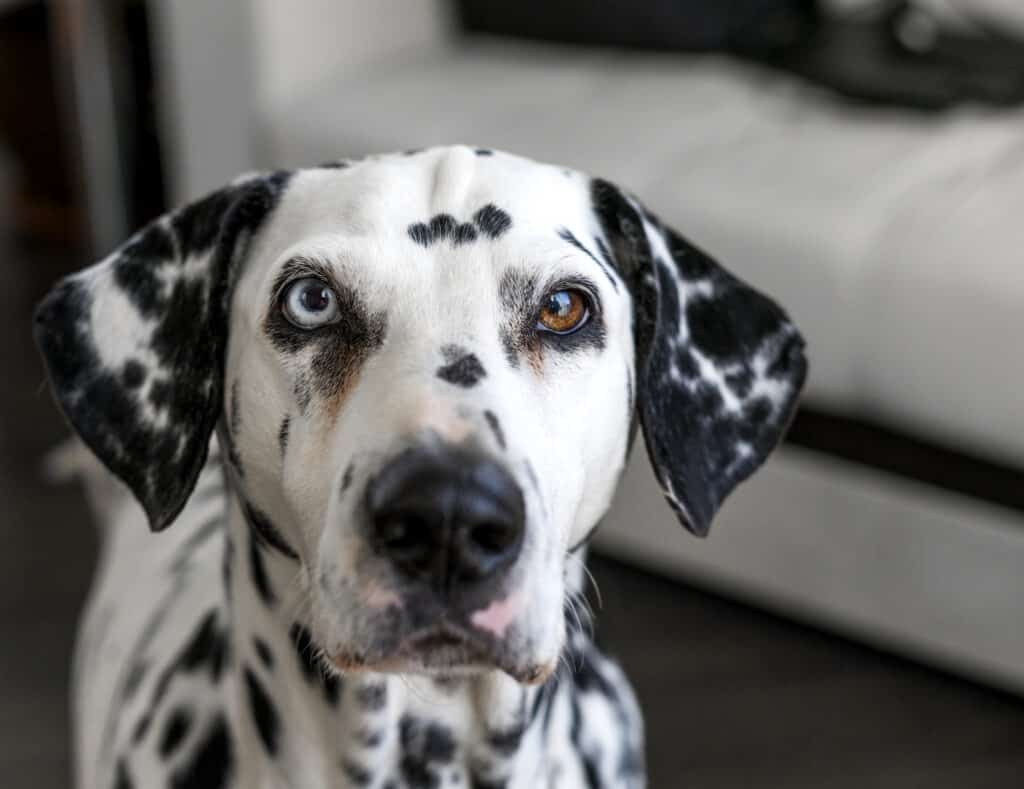
The breed didn’t always have blue eyes. Breeding standards for Dalmatians required recessive genes. This, in turn, affected eye color.
©iStock.com/Eugen Fedorov
Dalmatians are a dog breed known for their bright blue eyes, but that wasn’t always the case. In 1996, the piebald gene affected the breed and caused their coat to become more white. Another effect of the gene also affected their eye color, with a lack of melanin. So, the breed’s eyes became blue.
24. Weimaraner

The Weimaraner also has bright blue eyes when they are young. As time passes, the puppies gain more pigmentation in their eyes.
©iStock.com/alberto clemares expósito
While young Weimaraners have bright blue eyes, they often fade as the pup ages. The eyes will change to either gray or a mixture of the two. Like other dog breeds, the DNA sequence ALX4 is responsible for the lack of pigmentation, resulting in blue eyes.
25. Blue-Eyed Cuscus
Endemic to two small islands of Ternate and Tidore in Indonesia, this small marsupial has developed beautiful blue eyes. While cuscus can have orange or red eyes, the blue-eyed species is due to its unique pale marbled coat.