
Snakes are known as adept and clever hunters, distinguished by their lack of eyelids and external ears. These elongated reptiles are many in number, with over 3,900 known species. But how do these carnivores catch their prey so swiftly? In this article, we’ll be taking an in-depth look into how snakes see and why their eyesight plays such a critical role in the behavior of their species.
Understanding snake vision isn’t just interesting, it’s also crucial information to understand the ecological role snakes play. Having a fuller idea of how snakes see the world, how they hunt, and how they interact with their environment can help manage how they interact with humans and help in learning how to conserve this slithering species.
This post was updated on September 2, 2025 to clarify field of view, how snakes primarily detect threats, infrared sensing, and color-vision studies.
The Anatomy of Snake Eyes
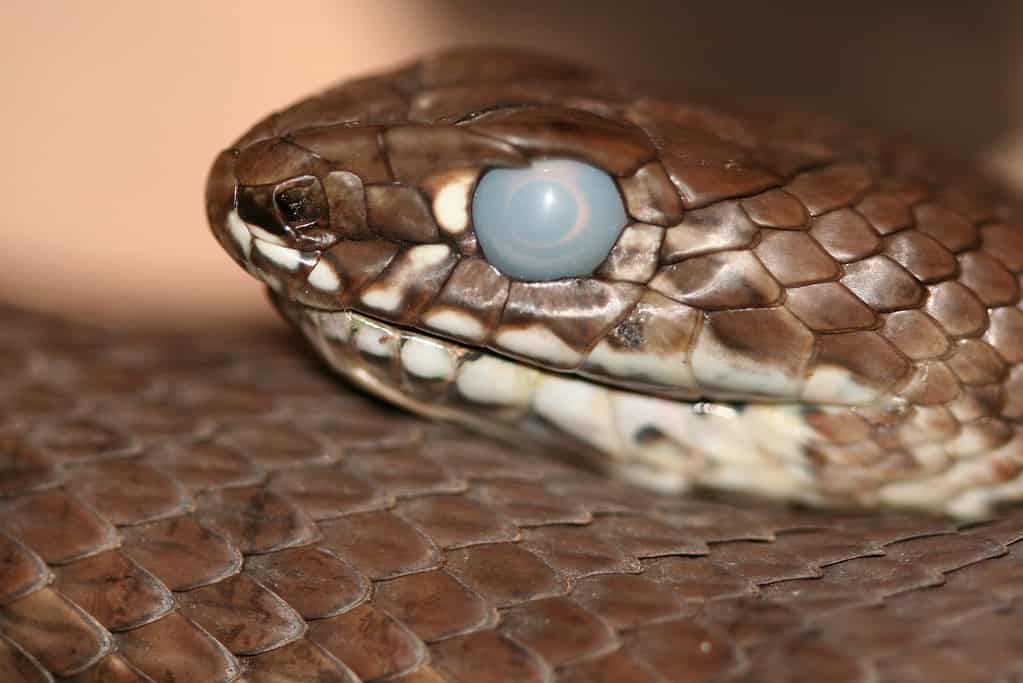
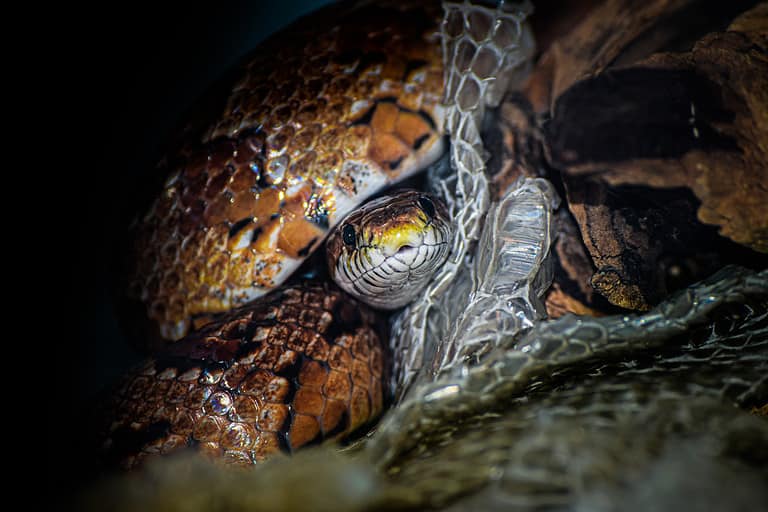
Instead of eyelids, snakes have scales that cover their eyes. These scales shed alongside the rest of them during molting.
©Frank Buchter/iStock via Getty Images
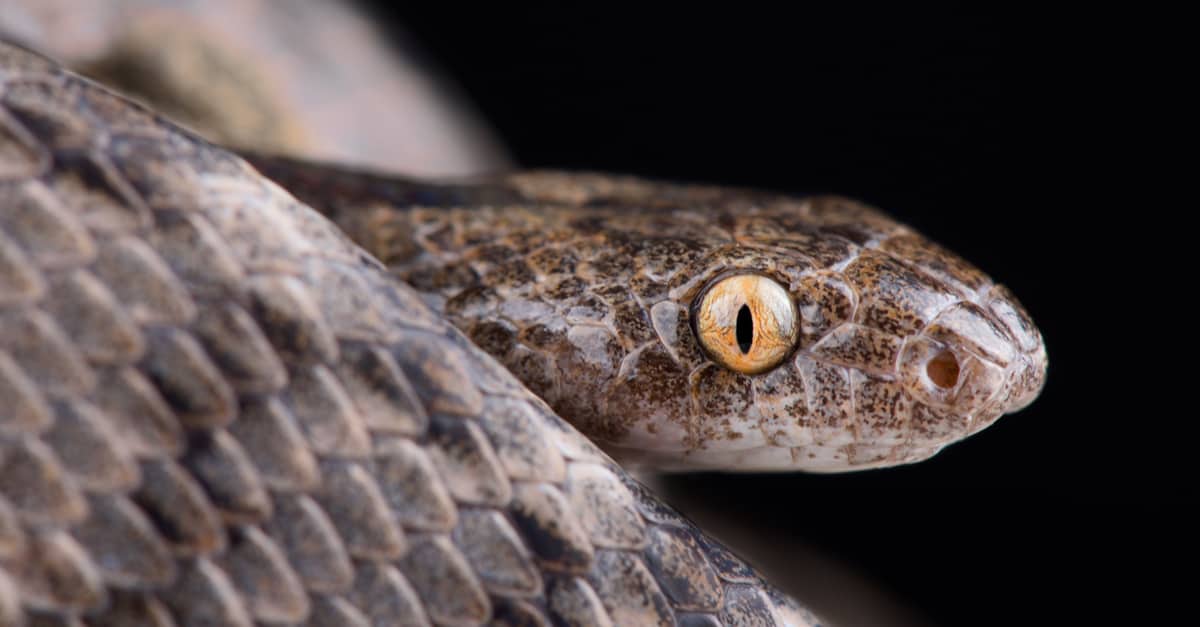
One of the keys to understanding how snakes see is looking at the literal anatomical structure of their eyes. The first interesting tidbit is that snakes don’t have any eyelids. So, how do they manage to keep out bacteria and debris? Why, scales, of course! Their eyes are covered by transparent scales known as spectacle scales or eye caps. These scales help to protect and shield the snake’s eyes from dirt and other damaging materials. Like the rest of their scales, these shed during their molting period.
The lens in a snake’s eye is more spherical than that of humans, which allows for sharper focus. Their retina consists of rod and cone cells and helps them to detect light and color. Their rod cells, which they have the majority of, are sensitive to light and movement but not color. Because of this, many believe that there are several snake species that can’t see color. But, some snakes do have cone cells, meaning colorblindness isn’t an overall trait of the species.
Special Visual Organs
Snakes don’t see the same way we do- they see much more, in fact! Some snakes have specialized organs that enable them to detect different forms of heat and light. This allows them to perceive their environment in interesting ways.
These organs, known as pit organs, are possessed by many kinds of vipers, pythons, and boas. These organs are located between the nostrils and eyes of the snake and allow them to detect infrared radiation! So, once they see a warm-blooded mouse or other small animal hiding, they can easily find them. This thermal outline can be seen even in complete darkness, and it’s a key component in the snake’s ability to hunt nocturnally.
How Well Can Snakes See?
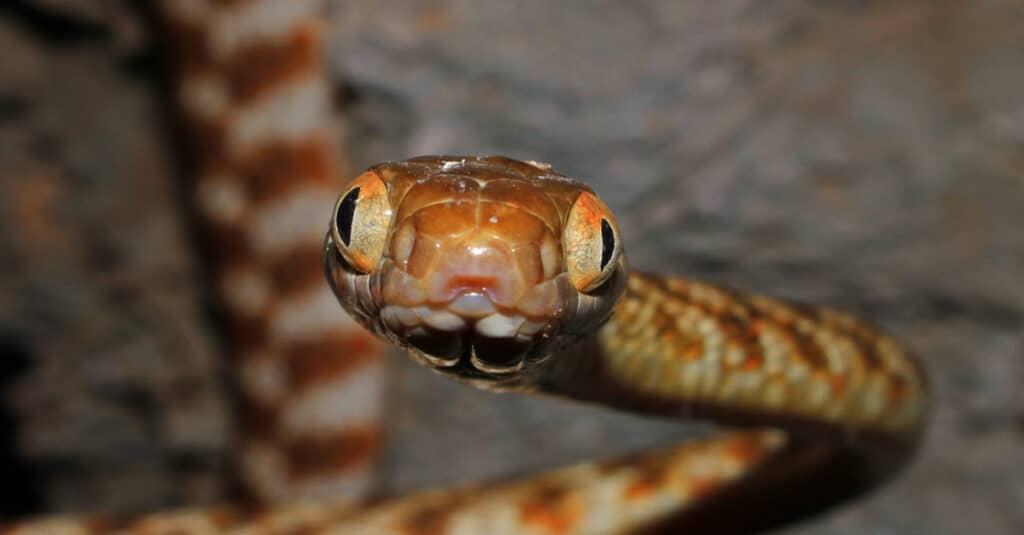
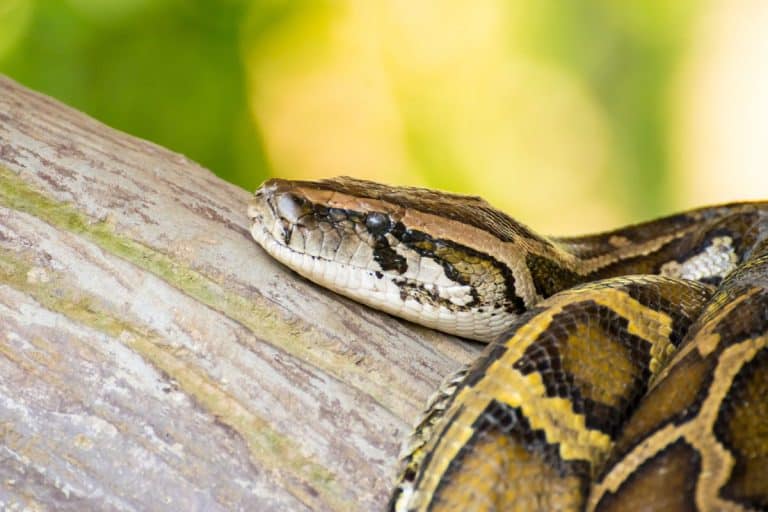
Since many snakes have eyes placed on the sides of their head, they have a much more limited field of view than other creatures.
©Matt Cornish/Shutterstock.com
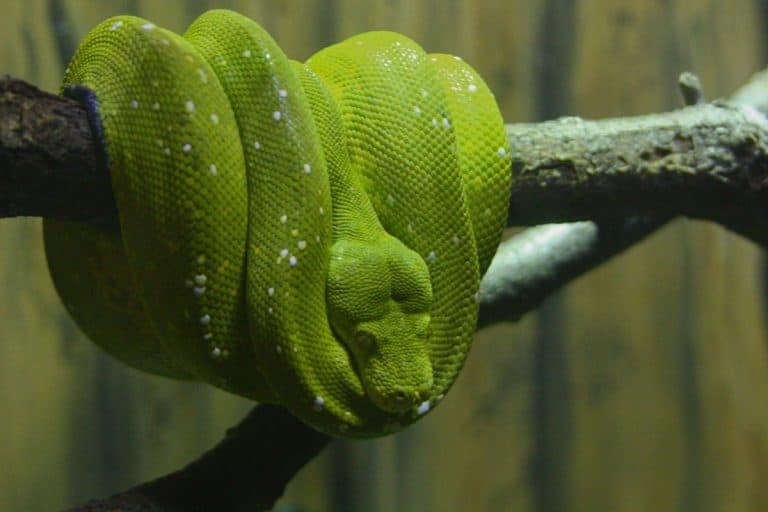
Visual acuity is a fancy way of saying “clear and sharp vision.” The visual acuity that snakes have varies a lot depending on the species and how they’ve adapted. For example, arboreal (tree) species have fantastic visual acuity because they spend most of their lives in trees! Diurnal snakes, which are active during the daytime, have very well-developed vision because they need to detect things like color and movement. On the other hand, nocturnal species don’t really need those traits. Instead, they concentrate on things like heat detection or scent.
The Limitations of Their Vision
How snakes see is very specialized to their habits and traits. So, there are areas where they’re lacking. That’s because, evolutionarily speaking, they are areas that they didn’t exactly need to prosper and adapt. Here are two such areas:
Field of View
The majority of snakes have eyes placed on the sides of their head. Lateral eye placement actually gives snakes a wider overall field of view, but poorer binocular (depth) vision. Some snakes, though, actually have eyes positioned at the tops of their heads. This is because it gives them a better look at their overhead environment, which is very useful for detecting predators and prey in tree-heavy settings.
This all being said, their elongated body permits them to lift their heads to pretty substantial heights and directions, which alters their visual field in a very beneficial way. They can look around without moving their entire body, which helps them take some peeks without exposing themselves to any nearby predators.
Colors and Details
As mentioned briefly, snakes lack (or at least have fewer) cone cells. This means that color and detail perception is far worse than other creatures. However, the presence of more rod cells means that their light sensitivity is far more enhanced. For how snakes see as nocturnal species, this is much more useful than perceiving color.
The Impact That Vision Has on Snake Behavior
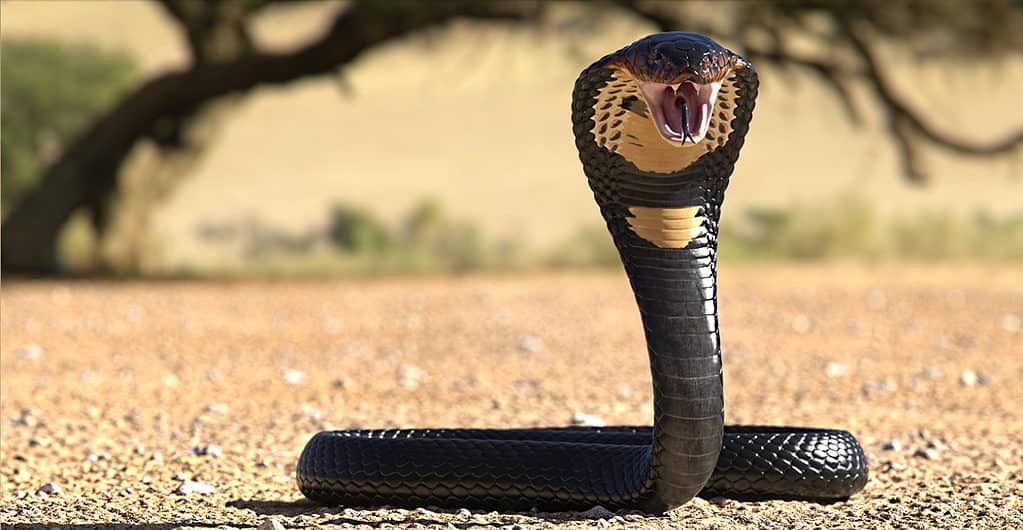
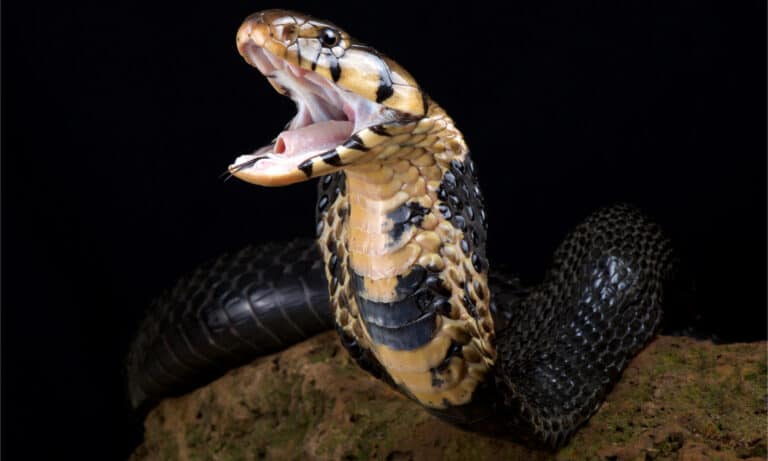
Alongside their hunting strategies, many snakes have defensive tactics that revolve around visuals. One of these tactics is the hooding in cobras, meant to make the snake look large and intimidating to predators.
©Roberto 33/Shutterstock.com
Something quite interesting about these reptiles is that how the snakes see directly impacts their hunting strategies. Many snakes, for instance, are ambush predators. They rely on camouflage and stillness to avoid getting seen by prey. These snakes often have the adaptation of pit organs, which, as mentioned, help with spotting infrared radiation.
Other snakes, like colubrids, for instance, are active hunters. This means that they are constantly moving around on the hunt for prey. These snakes, comparatively, have really well-developed sight. They can use this color vision and visual acuity to detect and track down prey even from a great distance.
While some species use vision heavily, snakes primarily rely on chemical cues (Jacobson’s organ) and vibrations to detect threats. Vision is secondary in many species, especially nocturnal or burrowing ones.
Snake Vision from An Evolutionary Perspective
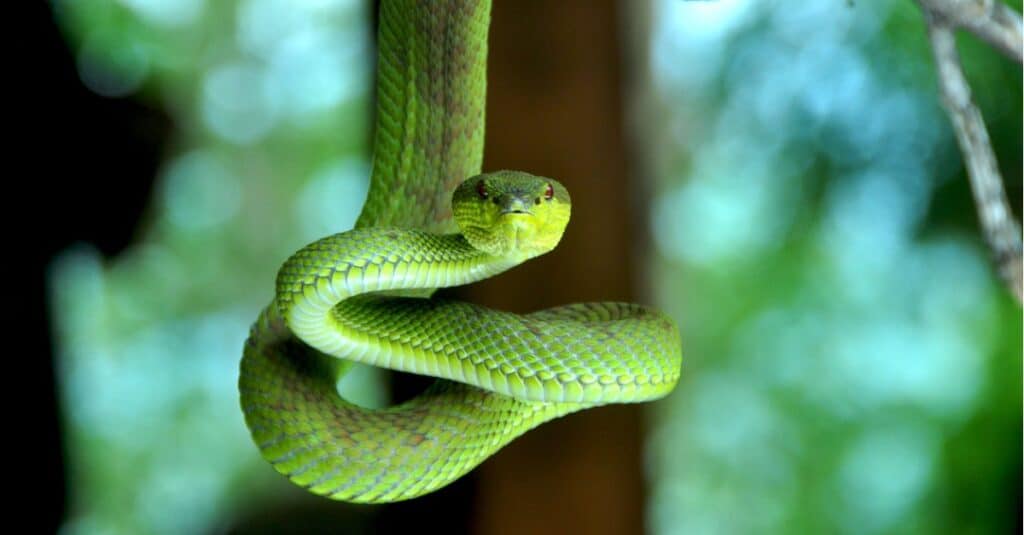
The way that snake vision and survival intertwine is very interesting from an evolutionary standpoint.
©iStock.com/Handini_Atmodiwiryo
To wrap up this information on how snakes see, we should talk about how these reptiles have adapted their vision so well over the course of the millions of years they’ve been around. Early snakes, very likely, evolved from burrowing and aquatic creatures. If this is true, it would explain their initial visual regression- snakes that are underground or in the water definitely shouldn’t rely on vision.
It’s interesting to compare the vision of a snake to that of other reptiles or other members of the animal kingdom in general. Lizards, for example, have developed exceptional color vision. Despite being in the same class, snakes have culminated opposite visual strengths over time, like movement detection and infrared sight. (Not all snakes have infrared sensing. Only certain families, like pit vipers, some pythons, and some boas, possess pit organs. Many colubrids and elapids lack this adaptation entirely.)
Unfortunately, studies involving snake vision are few and far between. While a 2016 study found that most snakes see two primary colors and have UV-blocking lenses, more recent research has shown that some sea snakes have regained or expanded color vision, with certain species able to detect three or more colors due to additional opsin genes.
What that study, this article, and all of this information are meant to prove is that how snakes see has been changing and adapting since their conception. Snake vision is an excellent example of how adaptation and evolution can play the most essential role in a species’ survival. Through understanding how snakes see, we can also better understand how genetic development really operates.