
Influencers get a lot of leeway when it comes to certain things. Their social media followings result in undeniable star power, the likes of which requires increasingly outlandish content to maintain. In an attempt to outdo their previous posts, influencers engage in increasingly callous and risky behavior. When it comes to wildlife, however, this behavior can all too easily result in animal exploitation. Take this recent story from Australia: A wildlife enthusiast and social media influencer named Ricky Mackenzie was fined $4,000 in a Cairns court after he was caught illegally taking both native lizards and a death adder from the wild.
To make matters worse, this recent fine wasn’t Ricky Mack’s first charge. He already had two prior convictions of a similar nature. Unfortunately, his behavior is not an anomaly. A brief Google search nets even more stories about influencers behaving badly when it comes to wildlife. These controversial stories shed light on a tangled web of unethical influencers and their exploitation of animals. In this article, we’ll unpack the case against Ricky Mack, as well as explore some other social media influencers and why their behavior sets a terrible precedent.
A Steep Fine

Influencer Ricky Mack received another fine (the third) for improper taking and handling of native Australian reptiles.
©Alexandre.ROSA/Shutterstock.com
According to several Australian news outlets, including the Cairns Post, social media star Ricky Mack was fined several thousand dollars. The Cairns Magistrate’s Court says the fine was for flagrant exploitation of wildlife. As reported, the influencer with over 188,000 Instagram followers pleaded guilty to six counts of unlawfully taking or keeping native Australian wildlife. Between October 21st and 25th of 2024, Ricky Mack captured and controlled several lizards and a highly venomous death adder for staged tourist photos. These photos were reportedly taken across the Daintree and Cape York regions of Australia.
The Cairns Magistrates Court fined Ricky Mack 4,000 Australian dollars. They noted that Mack ultimately released the reptiles back into the wild. They also highlighted the risk he had imposed on both people and the creatures. Furthermore, this wasn’t the first time Mack had run afoul of wildlife laws. He had already been convicted twice for similar acts of wildlife exploitation. He was also considered guilty by association due to his previous collaboration with an American influencer who also faced controversy for wild animal interactions. This collaboration highlights a growing problem with influencers using wildlife for personal gain. Let’s learn about several other unethical, if not outright illegal, influencer-animal interactions.
The Real Tarzann
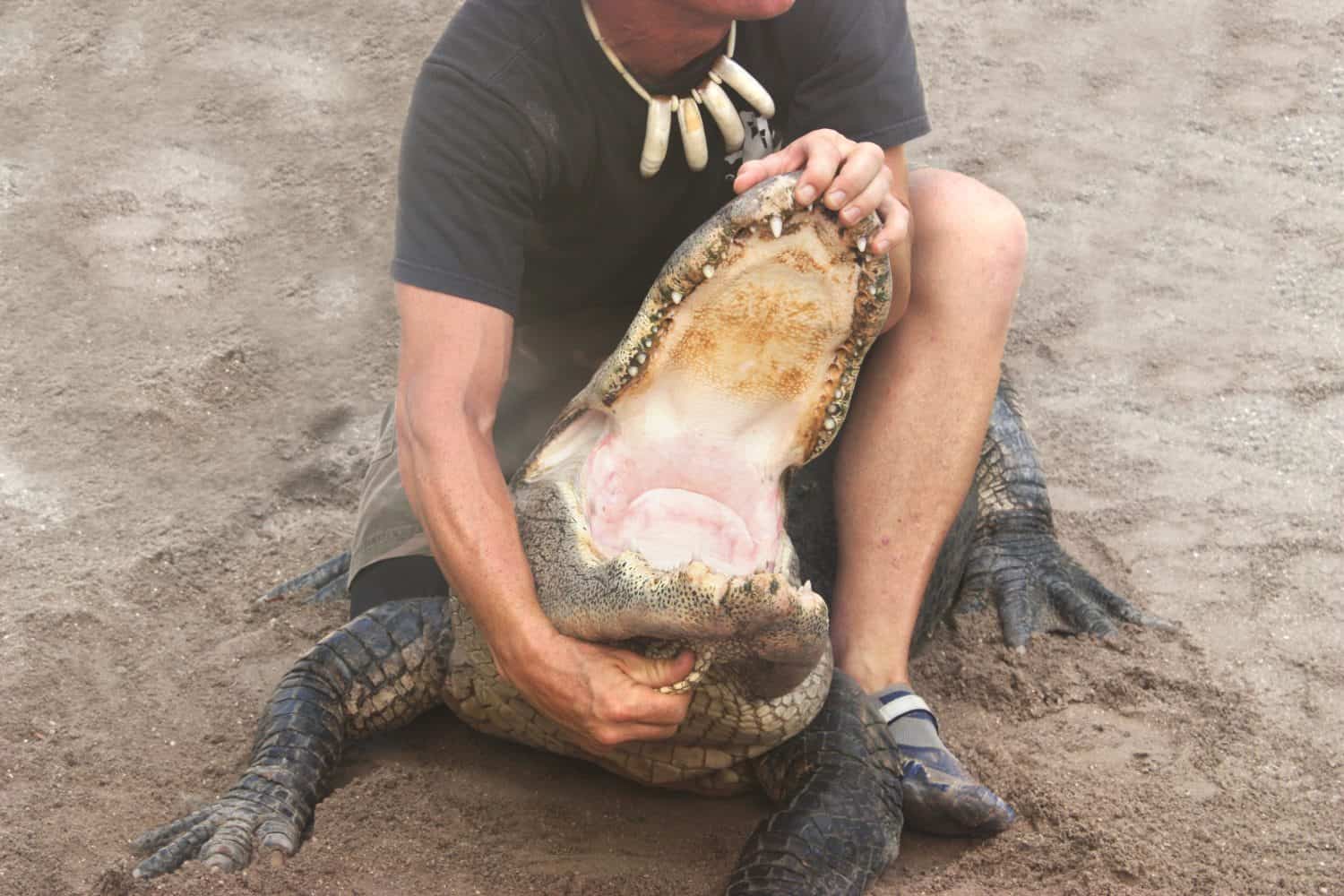
A croc-wrangling influencer has earned millions of fans for his videos of wildlife exploitation.
©Alita Xander/Shutterstock.com
One of the more famous wildlife influencers on the internet is Mike Holston. Known by his moniker, “The Real Tarzann,” Holston has made videos of hunting and trapping crocodiles into a big business. As of the most recent count, he has 16 million followers on Instagram alone. Most of these followers have come from Holston’s ongoing wrestling with wild animals, including enormous reptiles such as crocodiles. In his videos, Holston goes bare-chested when he provokes and takes down large reptiles. Freshwater and saltwater crocodiles seem to be his specialty.
His videos rack up millions of views, including one of him wrestling a young crocodile in Queensland, Australia, and holding it by the throat so tightly that blood streams down his arm. The stunts also result in numerous comments decrying his behavior and the unseemly use of Australian wildlife as a prop. This caused the Queensland government to announce an active investigation into the photos. The government’s environment department called his actions “extremely dangerous and illegal.”
Despite his legion of fans, experts have called out The Real Tarzann’s inappropriate handling of wildlife for years. In 2019, the Jane Goodall Institute said that Holston “promotes mishandling and inappropriate captive care.” More recently, People for the Ethical Treatment of Animals (PETA) called for him to be deported from Australia for his wildlife exploitation and banned from re-entering the country. In a social media statement, PETA said, “The American social media influencer visiting Australia regularly uses animals as props for content, including provoking them and engaging them in reckless, hazardous stunts.”
Wombat Controversy
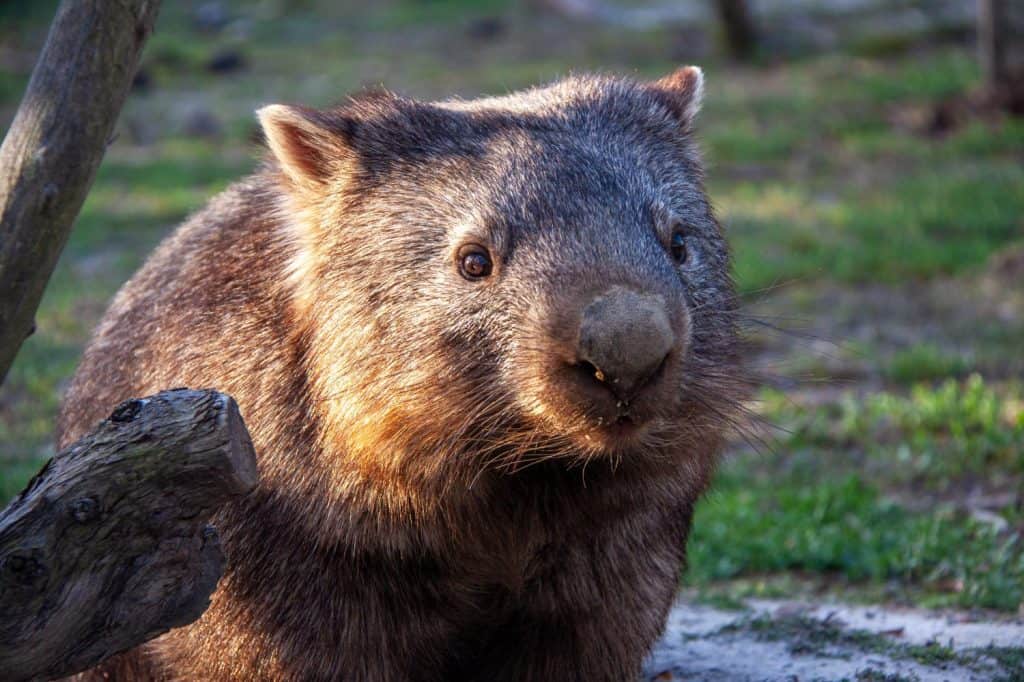
An American influencer recently incurred controversy for filming a video where she picks up a baby wombat on the side of an Australian road.
©380545381/Shutterstock.com
Wrestling wild animals isn’t the only bad behavior influencers have engaged in. Another American influencer in Australia also recently came under fire for a video showing her taking a baby wombat away from its mother. In the now-viral video, an influencer named Sam Jones can be seen picking up a wombat joey on the side of the road. She runs across the road to a car while the mother wombat runs after her. The man behind the camera can be heard laughing and saying, “Look at the mother, it’s chasing after her!” This caused the video to instantly go viral for all the wrong reasons. Though it has since been deleted, it was online long enough to spark serious controversy.
In the ensuing backlash, Jones offered a brief explanation that the wombat was quickly released back to its mother unharmed. She also made her profile private, but it was too late. The fire had been ignited. Someone created an online petition for her deportation, which quickly gained over 10,000 signatures. In turn, the Australian Home Affairs Minister Tony Burke told the BBC that immigration officials were reviewing her travel visa. He told reporter, “Given the level of scrutiny that will happen if she ever applies for a visa again, I’ll be surprised if she even bothers.”
Unsurprisingly, her actions also earned the ire of conservationists and animal activists. The Wombat Protection Society expressed outrage at her exploitation of delicate wildlife. It said it was stunned to see the “mishandling of a wombat joey in an apparent snatch for ‘social media likes’.”
Falsifying Records

The wombat exploiter also lied to get hunting permits.
©YouTube/LawAndCrime – Original
It seems that Samantha Strable (who goes by Samantha Jones online) has a history of wildlife exploitation. She doesn’t keep her unethical behavior confined to foreign countries, either, as she recently got in trouble for falsifying big game hunting records in Wyoming. According to several news outlets, Strable’s actions with the wombat in Australia led to a closer look at her pattern of behavior. Apparently, the Wyoming Game & Fish Department (WGFD) received an anonymous tip claiming that Strable was purchasing big-game tags even though she no longer lived in the state.
Officials launched an investigation into Strable’s alleged malfeasances this past summer. Wyoming requires those applying for resident licenses to have lived in the state for more than 180 days of the calendar year. WGFD Warden Jacob Miller found that Strable was potentially in violation of several statutes. An interview with Strable back in 2023 seemed to all but confirm the warden’s suspicions. In the interview, Strable stated she only stayed in Wyoming during the summers, where she worked as a seasonal wildlife technician, taking the rest of the year to travel and hunt in other countries.
The different exploitations and violations eventually caught up with Strable. According to the New York Post, she was arrested and booked into the Sublette County jail on November 21st for lying about her residency to get hunting tags. Strable was charged with eight misdemeanors, including six counts of false swearing and one count each of taking wildlife without a license. She was also charged with nonresident hunting without a guide in a designated wilderness area.
Laws on the Books
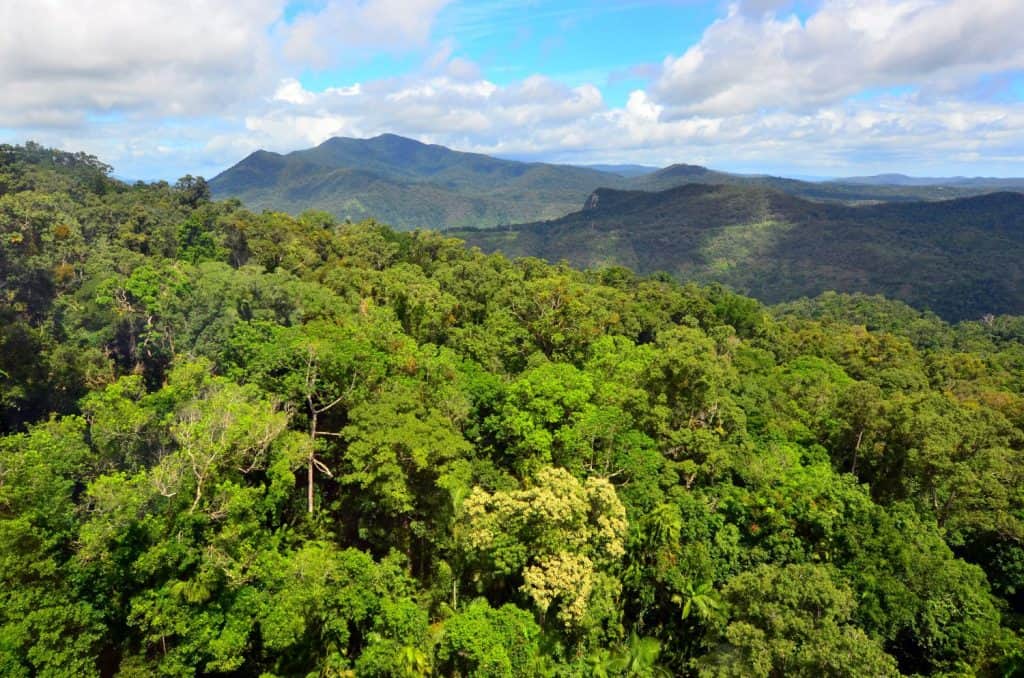
Queensland, Australia, features several laws pertaining to the improper use and handling of wildlife.
©ChameleonsEye/Shutterstock.com
As the previous section illustrates, there are definitely U.S. laws to prevent the exploitation of wildlife and their unregulated hunting, but what about in Australia? It turns out, Queensland ecosystems in the Wet Tropics, Cape York, and Daintree regions feature some of the most unique and delicate reptiles in the world. Unsurprisingly, Queensland enforces some serious laws surrounding the interference and exploitation of its wild animals.
One serious law is the Nature Conservation Act of 1992, which prohibits anyone from taking, keeping, or interfering with native wildlife without proper permits. This law is more general, but it still prohibits any type of wildlife handling. The Special Protections for Venomous Reptiles is more specifically designed for cases like Ricky Mack’s. This legislation allows for the handling of certain snakes, but not death adders like the one Mack handled.
Beyond those laws, there are strict permits and licensing requirements for anyone interacting with wildlife. It doesn’t matter if you are a researcher, an educator, or an eco-tourist; everyone must obtain specific permits if they plan on legally capturing wildlife, exhibiting wildlife to the public, or temporarily restraining animals.
Behavioral Impacts
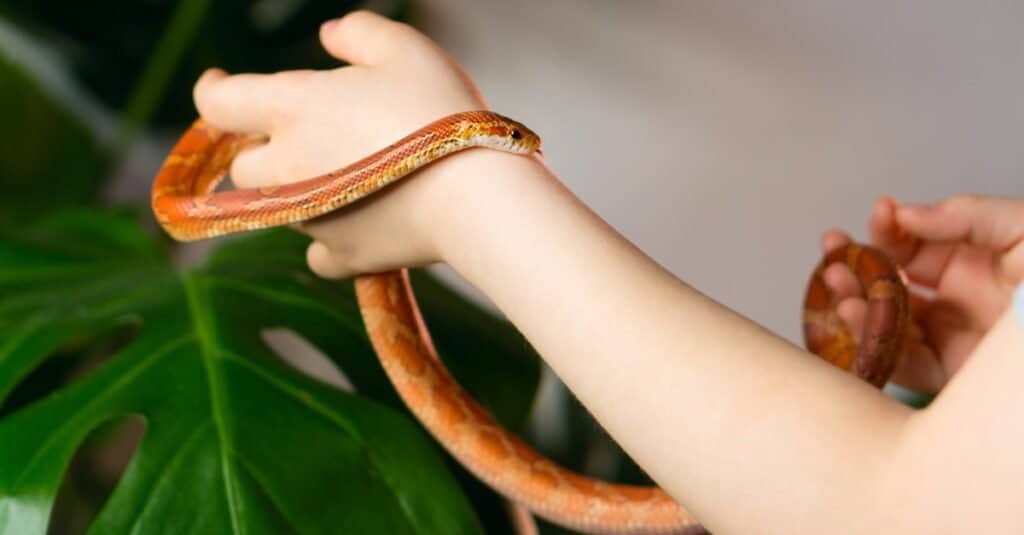
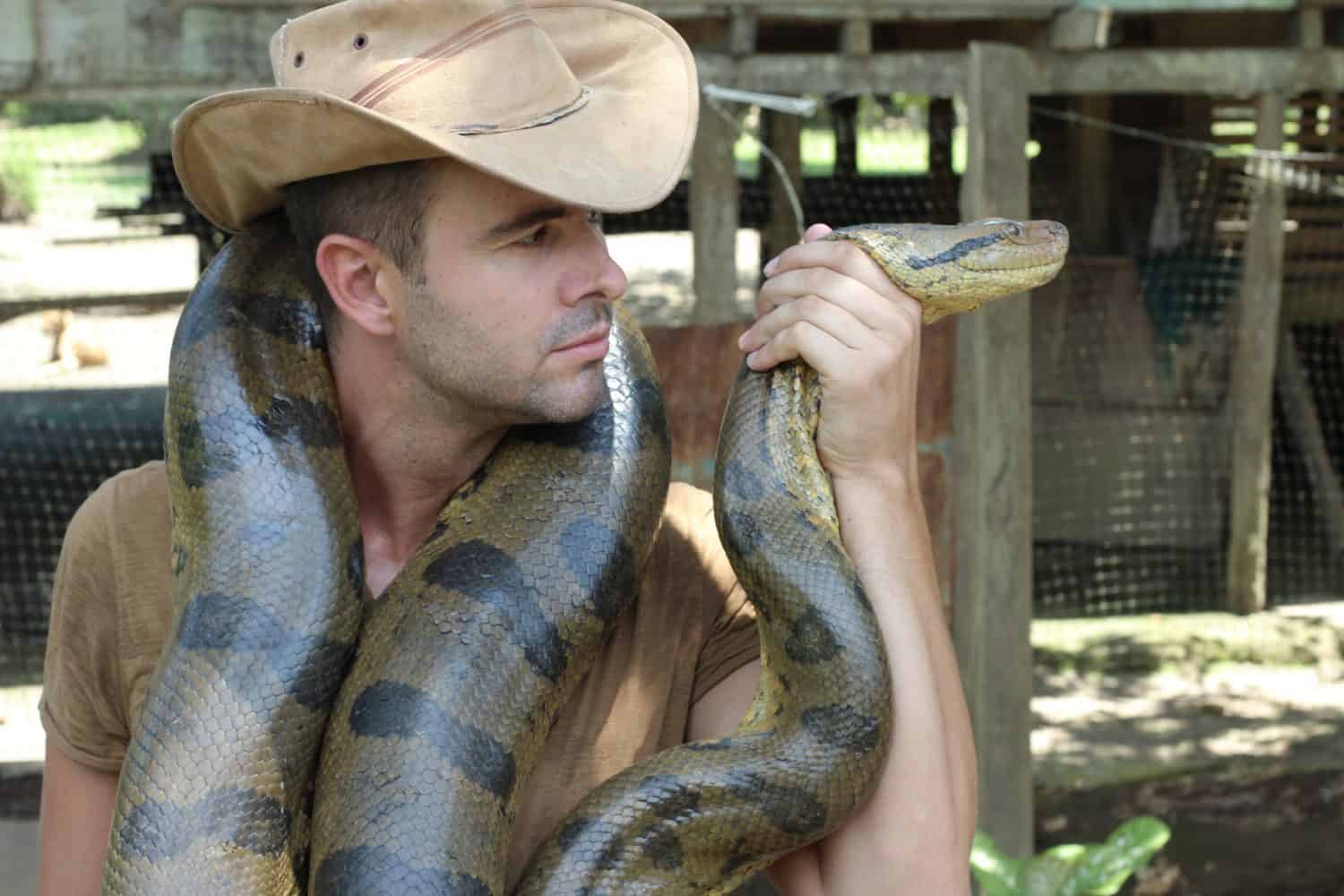
When a popular influencer handles venomous snakes on camera, it gives young fans the impression that such behavior is safe and acceptable.
©iStock.com/Vagengeym_Elena
The breaking of laws is one thing, but what about the environmental impact of wildlife exploitation? It’s hard to argue with the acute stress that wildlife exploitation places on the environment. When wild animals of any kind are handled, it can disrupt their pheromones and produce stress. Picking up wildlife and putting them down elsewhere haphazardly can separate them from other members of their species. Handling can be especially damaging to younger creatures, as too many human smells may deter mothers from reuniting with their babies. For this reason, scientists wear animal outfits when handling babies.
Handling mature wild animals can also have consequences. While picking up animals may provide social media influencers with good photo opportunities, it can be disastrous for the animals. Such behavior can expose them to predators or habituate them to human presence and ruin their chances of assimilating back into their natural environments.
On a more human and existential level, the exploitation of wildlife by influencers sends the wrong message to impressionable kids. Seeing famous people handle animals with ease normalizes such behavior. It suggests that picking up creatures like venomous snakes is not only acceptable but safe.
How to Help
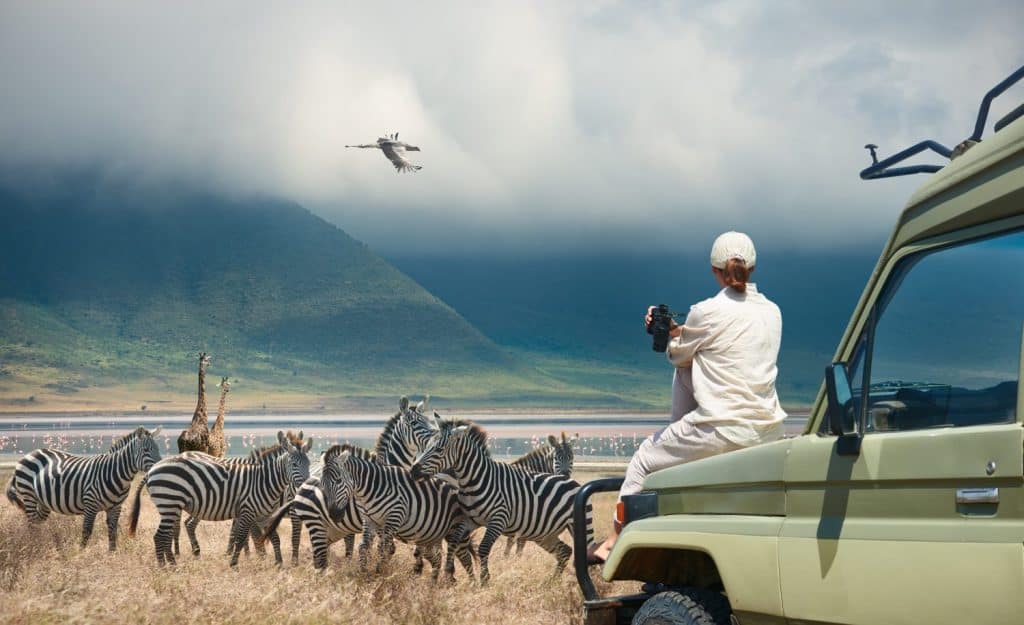
Supporting ethical eco-tourism and modeling responsible behavior can help combat wildlife exploitation.
©soft_light/Shutterstock.com
It’s important to discourage such behavior from social media influencers. You can do this by refusing to engage with wildlife exploitation content. If it can’t be outright ignored, a comment or two sharing accurate information about wildlife exploitation can steer ignorant viewers in the right direction. Wildlife exploitation is wrong.
While there will always be bad actors willing to film unethical content for views, modeling responsible behavior and supporting ethical eco-tourism can help combat the notion that it’s okay to handle wild animals. It’s not just about ethics either; handling venomous creatures like the death adder can be a matter of life and death.