
Quick Take
- A wasp first cataloged in 1983 sat quietly in a museum collection for decades before scientists took a second look and realized it belonged to a group most people thought had vanished from Earth long ago. See the rediscovery →
- The term 'body snatcher' wasn't coined by a scientist. It came from a single David Attenborough moment that permanently changed how the public understands parasitic wasps. Watch the Attenborough moment →
- Naming a new species after someone is common, but naming a new genus is a far rarer honor. The scientists behind this one say there is a clear reason Attenborough deserved the distinction. Discover the naming tribute →
An old wasp is getting a new name in honor of beloved broadcaster David Attenborough. Attenborough, known for narrating nature shows such as Planet Earth, Blue Planet, and Life on Earth, celebrated his 100th birthday on May 8th. His iconic legacy has influenced the world’s most popular wildlife programs, many of which still receive critical acclaim.
Attenborough lent his voice to countless commentaries, many of which featured insect life unfamiliar to most people. One of his most famous lines spoke of parasitic wasps, or “body snatchers,” as he called them on “Trials of Life.” And now, one of these will forever share his namesake.
Attenborough’s Famed “Body Snatcher” Wasps
“Trials of Life” premiered in 1990 and remains one of Attenborough’s most renowned TV shows. In it, the documentarian explores the life cycles of animals across all walks of life. In one episode, Attenborough speaks about the Potter wasp. This parasitic wasp lays eggs in live caterpillar hosts, and the resulting larvae then emerge and feast on the insect’s body. At one point, Attenborough holds a caterpillar in his hand as a parasitic wasp steals it away to use as a host for its offspring.
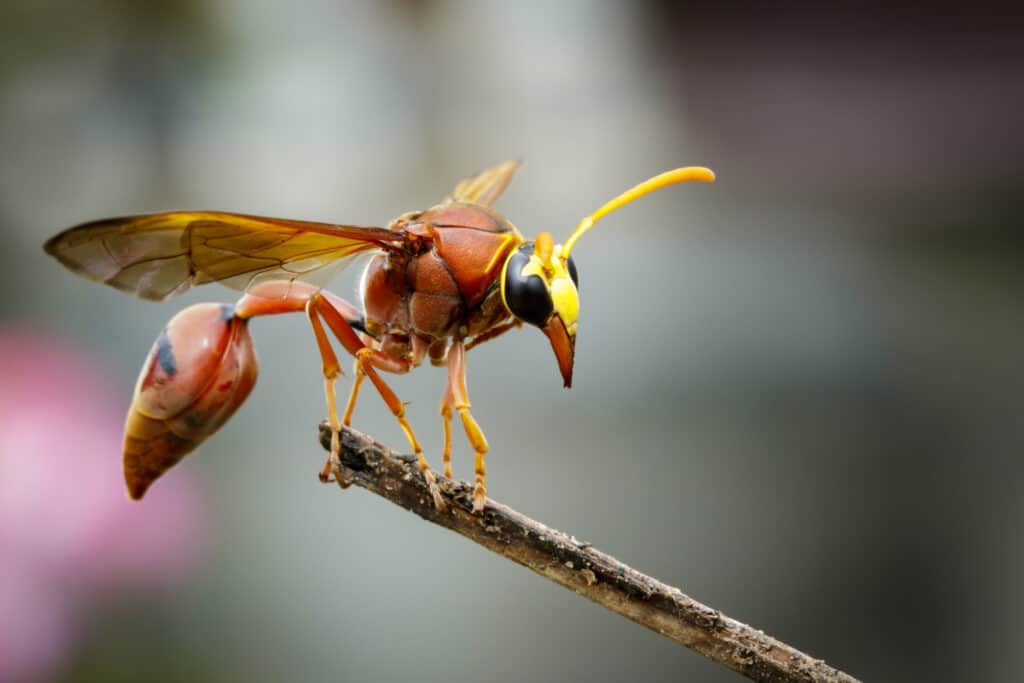
Parasitic potter wasps fill a caterpillar’s body with eggs, which hatch and devour their host.
©iStock.com/yod67
For those watching, this was their first introduction to the parasitic wasp species. It became one of Attenborough’s most referenced episodes. As a result, the term “body snatchers” forever immortalized the lifestyle of species such as the Potter wasp. It left such an impression that, for decades, fans continued to associate this species with the English broadcaster. Now, in a legendary tribute, scientists at the Natural History Museum in London have once again united Attenborough with his body snatchers.
Attenboroughnculus tau, a Wasp Rediscovered
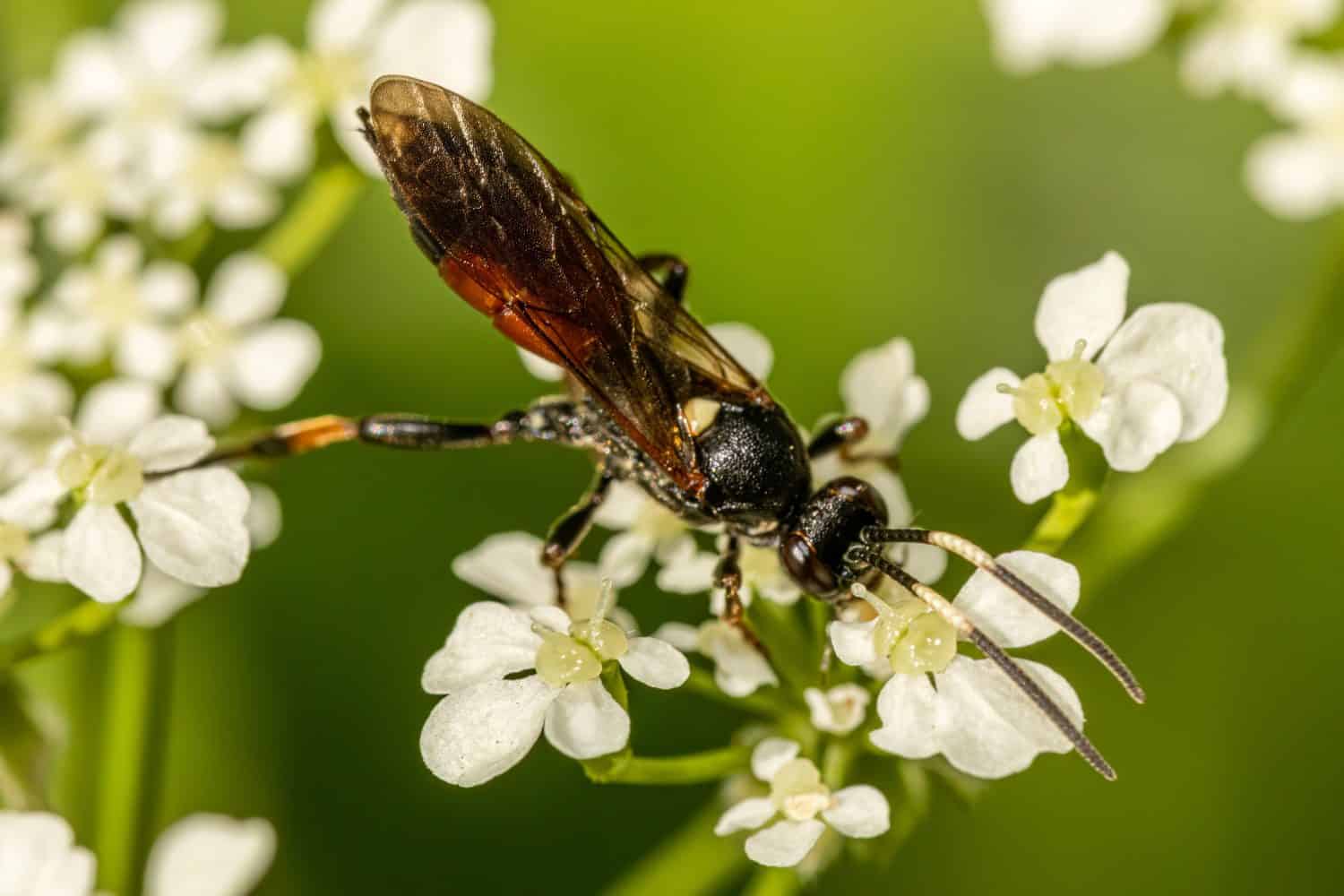
Although it was first cataloged in 1983, the newly-named Attenboroughnculus tau was recently revisited. Upon closer inspection, scientists discovered details that had been missed the first time. As it turns out, it didn’t fit within the original Ichneumon wasp family, Ichneumonidae. Within this family alone, only 25,000 have been identified. To date, scientists at London’s Natural History Museum estimate there are roughly 75,000 more in need of classification. At only about 3.5 millimeters long, the insect’s minute features were so distinctive that it could not be placed in any existing category of parasitic wasp. Instead, the small wasp required its own classification.
“We looked at it, and we had a good look at all its relatives, and we realized it’s got a combination of characters that meant it wouldn’t fit anywhere. So, we had to describe a new genus to accommodate this lovely little species,” Gavin Broad, principal curator of insects at London’s Natural History Museum, told CNN. Broad also revealed that the wasp is part of a group of species belonging to an unidentified genus. The closest identification was to a subfamily native to Chile, Argentina, Australia, and New Guinea.
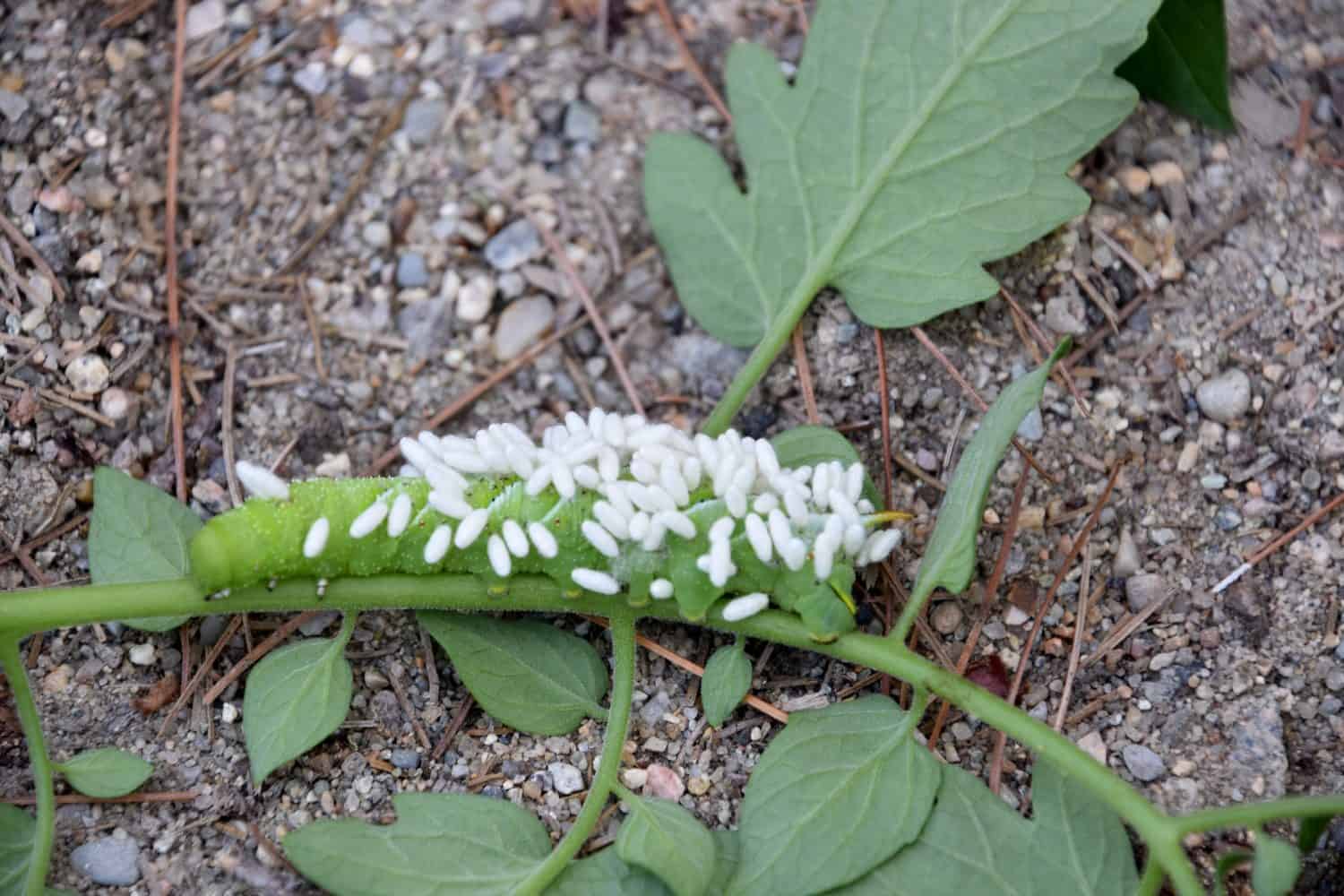
Staying true to their name, parasitic wasp larvae use the sustenance of their host to survive before starting the cycle again as adults.
©DejaVuDesigns/Shutterstock.com
When thinking of names, the Natural History Museum team could think of only one person: David Attenborough. Thus, Attenboroughnculus tau was born. The first part of its scientific name is in tribute, while the second was given for the “T” shape on the wasp’s abdomen. Attenboroughnculus tau was announced in honor of Attenborough’s 100th birthday, with the discovery revealed to the public in early May 2026. “Naming a genus after somebody is quite special, because a genus is more difficult to find — we’ve described most of them already, but we haven’t described most of the species. David Attenborough deserves a genus. I think everybody would agree with that,” Broad shared in that same CNN interview.
Even 43 Years Later, Old Discoveries Are Made Anew
The renaming of the Attenboroughnculus tau wasp brings some buzz around old discoveries, once again becoming “new.” When the wasp was first discovered 43 years ago, scientists lacked much of the research available to them now. This particular wasp is unique, as it belonged to what was once the supercontinent Gondwana. Most of these species have since died out, making this discovery both rare and historic.
The species was alive on this supercontinent roughly 180 million years ago. Finding this specimen is nearly as rare as discovering a fossil or bone from the same Jurassic era. It also highlights the importance of re-examining old findings. As scientists continue to discover new information about modern-day animals, their findings may reveal something about ancient species. In this case, Broad and his team were able to rule out a species, therefore creating a new one.