
Winning the wildlife photograph of the year is a hard enough task, but doing so with a stunning, almost mystical shot of one of the rarest animals on earth is even harder. The brown hyena is that elusive creature. Also called strandwolves, brown hyenas live exclusively in a small section of southwestern Africa. Smaller than their relatives, the spotted hyena and the striped hyena, brown hyenas are also far less social. They are so shy that humans hardly ever see them. That’s why it took Wim van den Heever nearly a decade of careful plotting, planning, and patience to capture this now award-winning photograph of a brown hyena.
The photo was taken in the abandoned mining settlement of Kolmanskop, ten kilometers inland from the southern Namibian port town of Lüderitz. Haunting yet majestic, the photograph shows a brown hyena prowling the rocky crags outside of an old, worn-down building. Evocative, soul-stirring, and almost supernatural-looking, the photo easily won the grand title at this year’s Wildlife Photographer of the Year. The competition was put on by the Natural History Museum in London, United Kingdom. As such, let’s learn more about this stunning photograph, its elusive and enigmatic subject, and the kind of lengths the photographer went to capture it.
Brown Hyena
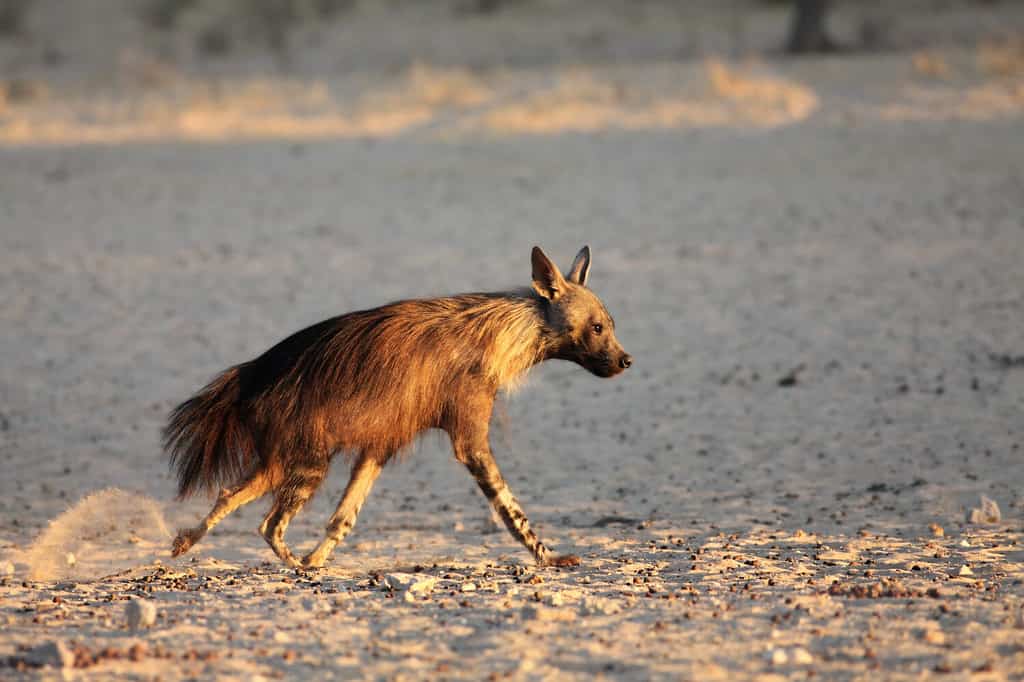
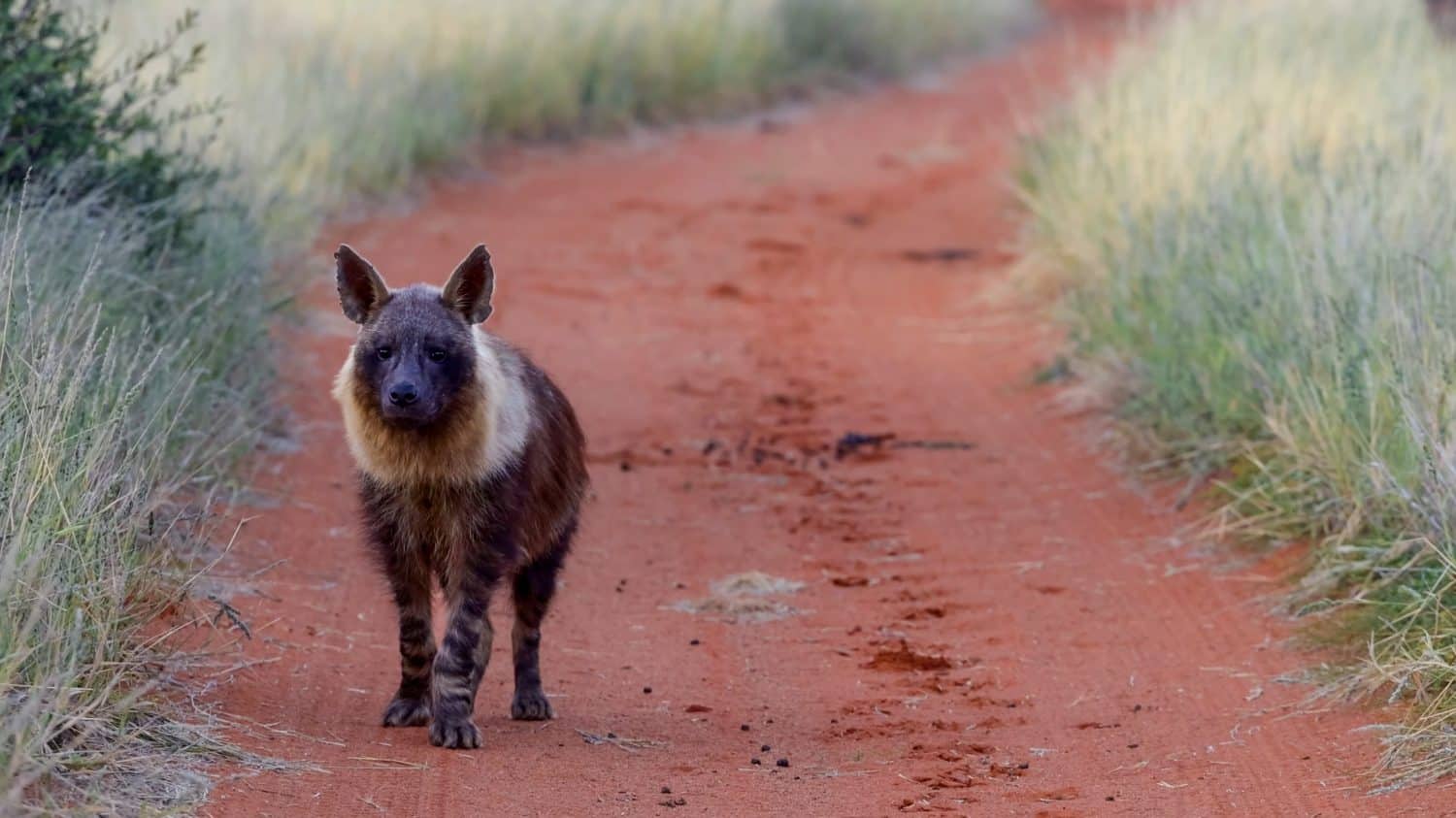
Smaller and more vibrantly patterned than other hyena species, brown hyenas are also scavengers, nocturnal, and incredibly elusive.
©Jan Hejda/Shutterstock.com
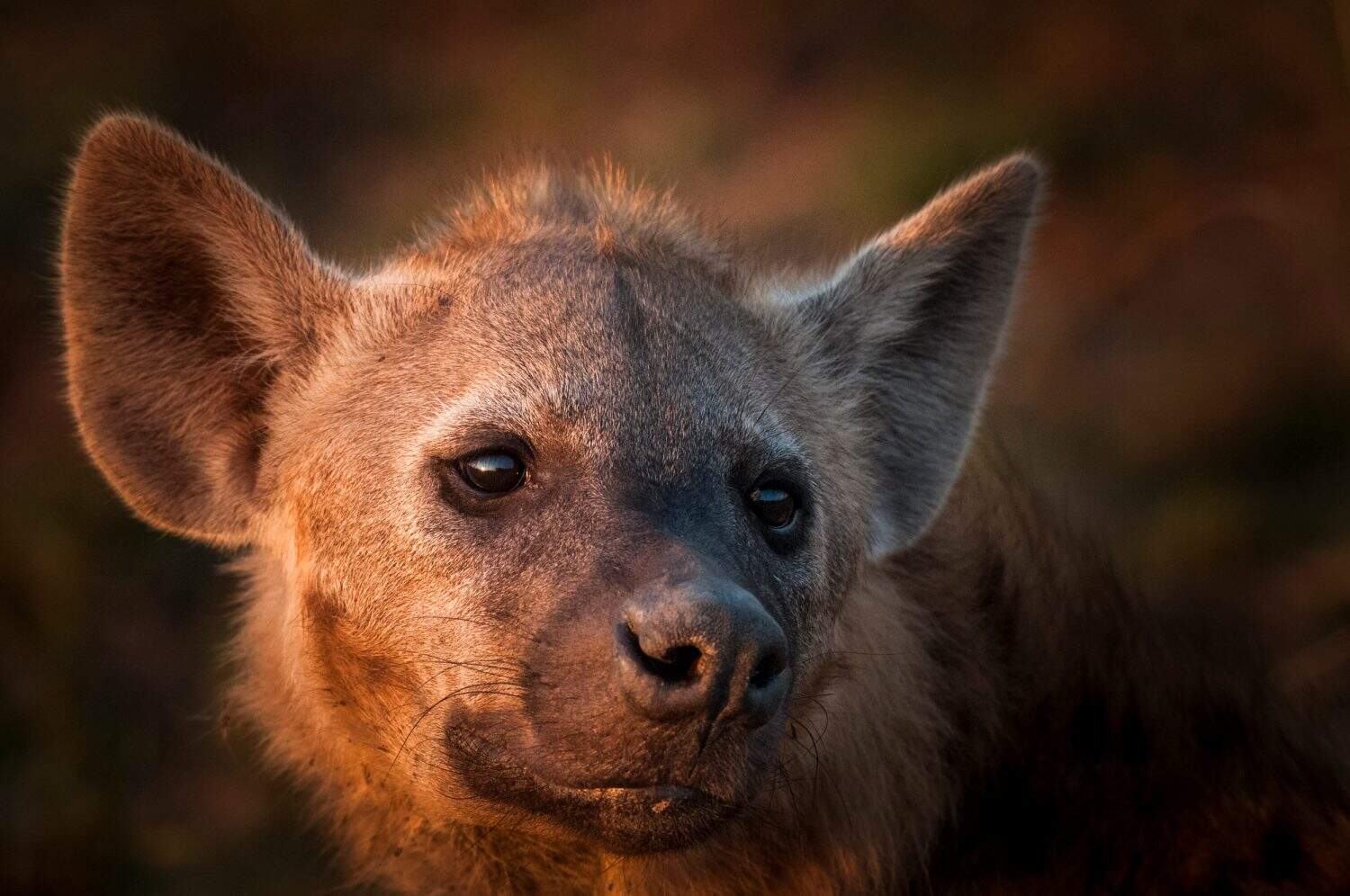
It’s hard to argue against the fact that brown hyenas (Parahyaena brunnea) are some of the most elusive mammals on Earth. They live exclusively in southwestern Africa and can technically be found in countries like Namibia, Botswana, South Africa, and Zimbabwe. ‘Technically’ is the operative word here, as brown hyenas are hardly ever seen by humans. Far less social than their hyena relatives, brown hyenas operate in small clans but forage for carrion and small game on their own. They also move by night, decreasing their chances of human interaction. To make spotting them even harder, brown hyenas live in arid semi-desert environments that constitute much of southern Africa. The Kalahari and Namib Deserts are unforgiving places, but brown hyenas manage to survive thanks to their adaptability.
These scavenging mammals have long, shaggy, brown-colored coats, cream-colored neck fur, and pointed ears. They are also slightly smaller than other hyenas, which undoubtedly helps them stay low-key as they are foraging through the desert. While larger hyena species will take down live game, brown hyenas are mostly scavengers; they scavenge carcasses and carrion, but also eat fruits, insects, and eggs if need be. The arid environment they call home is usually scarce on food. That means brown hyenas will travel over 20 miles in a single night to find food. Perhaps that’s how this now-famous brown hyena came across the path of a world-class wildlife photographer.
Wim van den Heever
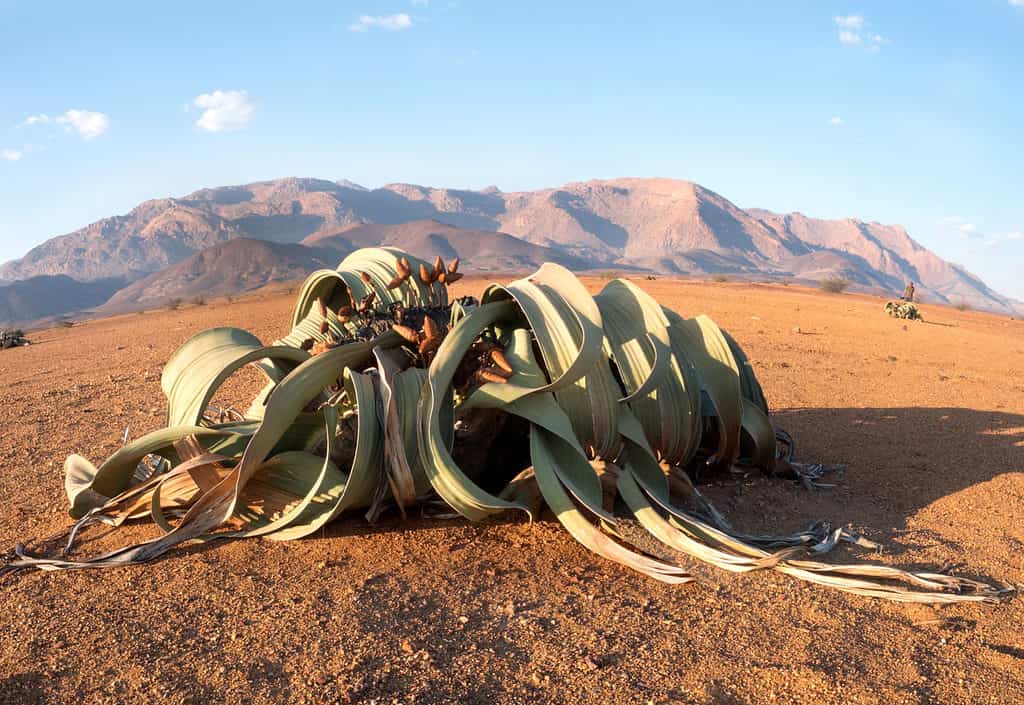
Wildlife photographer Wim van den Heever travels the globe taking photographs, but comes back to the Namib Desert once a year.
©Vladislav T. Jirousek/Shutterstock.com
The man behind the award-winning photograph of a brown hyena is a veteran wildlife photographer. Growing up in Southern Africa, van den Heever was inspired by the stunning landscapes and wildlife all around him. A love of the intricate ecosystems and the artistic touch led van den Heever to become a wildlife photographer. Still based in South Africa, Wim van den Heever runs a company called Tusk Photo. It specializes in photography tours, taking visitors all around the world on incredible photo expeditions. This has taken him everywhere, capturing photographs from the barren ice of Antarctica to the tropical jungles of Asia. He enjoys photographing both large mammals and small amphibians equally. Once a year, however, van den Heever returns to the Namib Desert.
When he started making his annual pilgrimages over a decade ago, back to the land that raised him, van den Heever sensed that he was not alone—he believed a brown hyena was also present. Indeed, van den Heever became convinced that a brown hyena was stalking the ghost town of Kolmanskop at night. As a wildlife photographer, this kind of once-in-a-lifetime opportunity proved too tantalizing to ignore. This notion, combined with the eerily beautiful environment, gave him an ambitious idea: he would photograph this elusive hyena in a nocturnal setting fitting for its reputation.
The Inspiration
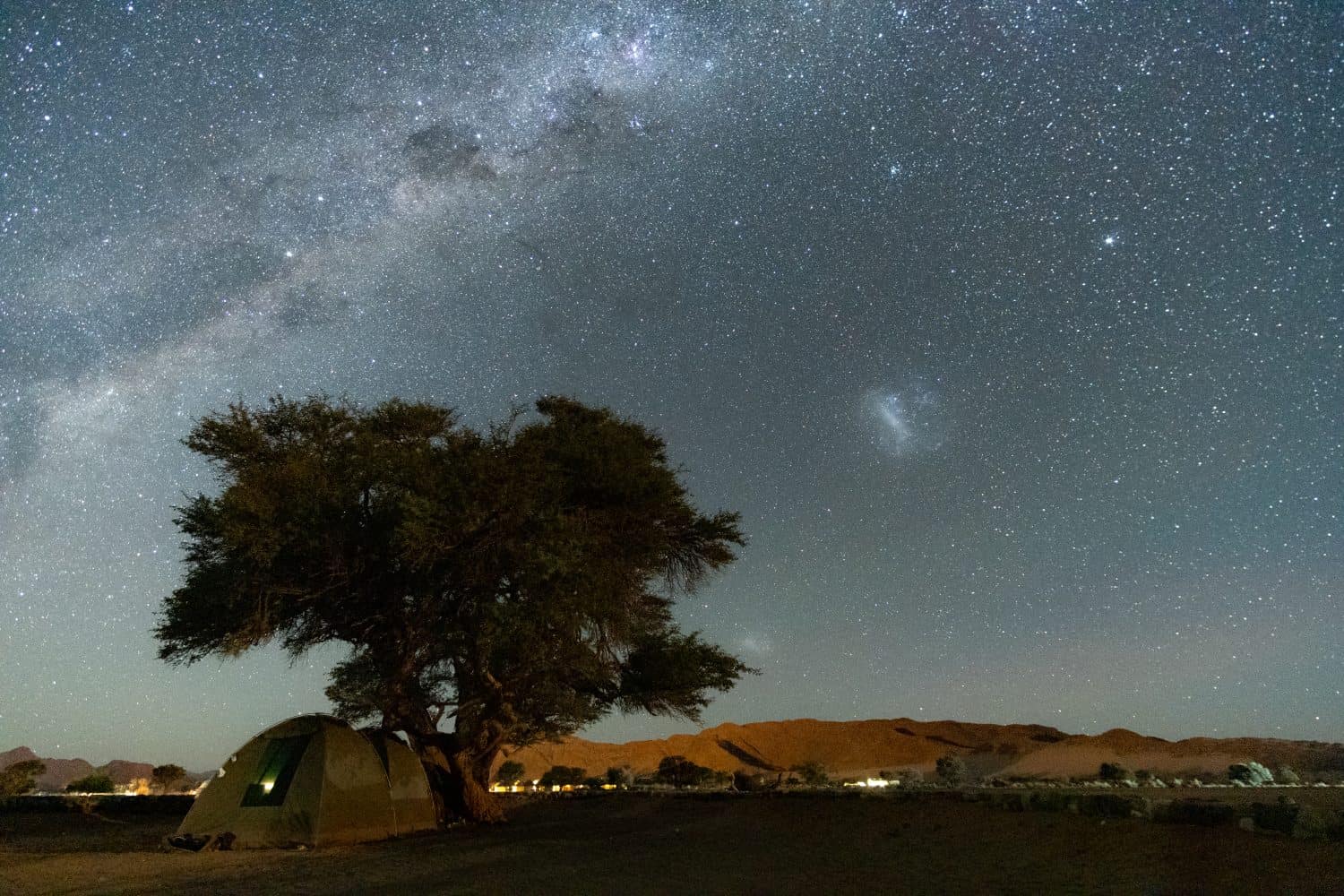
The photographer had trouble catching extended glimpses of any brown hyena
©Sugrit Jiranarak/Shutterstock.com
Photographing such a rare animal couldn’t be accomplished in one quick visit, so van den Heever tested out several approaches. At first, he woke between two and three in the morning to set up a camera trap in Kolmanskop, when the settlement was a literal ghost town. The problem, however, was that brown hyenas are quite camera-shy. His camera traps were too stationary for this endurance animal. At best, van den Heever saw one across town for a moment, often running in the opposite direction.
Challenges
Blankets of fog further obscured the photographer’s camera traps.
©Swaroop Pixs/Shutterstock.com
The inhospitable conditions of the Namib Desert made an already challenging project almost impossible. East winds flung sand constantly; it would pile up to over three feet high against his nightly camera traps. This not only ruined several cameras completely, but it also obscured any direct line of sight, which was compounded by blankets of fog blowing off the ocean before rolling inland. As van den Heever told BBC.com, “Then even if there’s a hyena in your picture, you can’t see it, because the fog’s just too thick.”
Further Complications
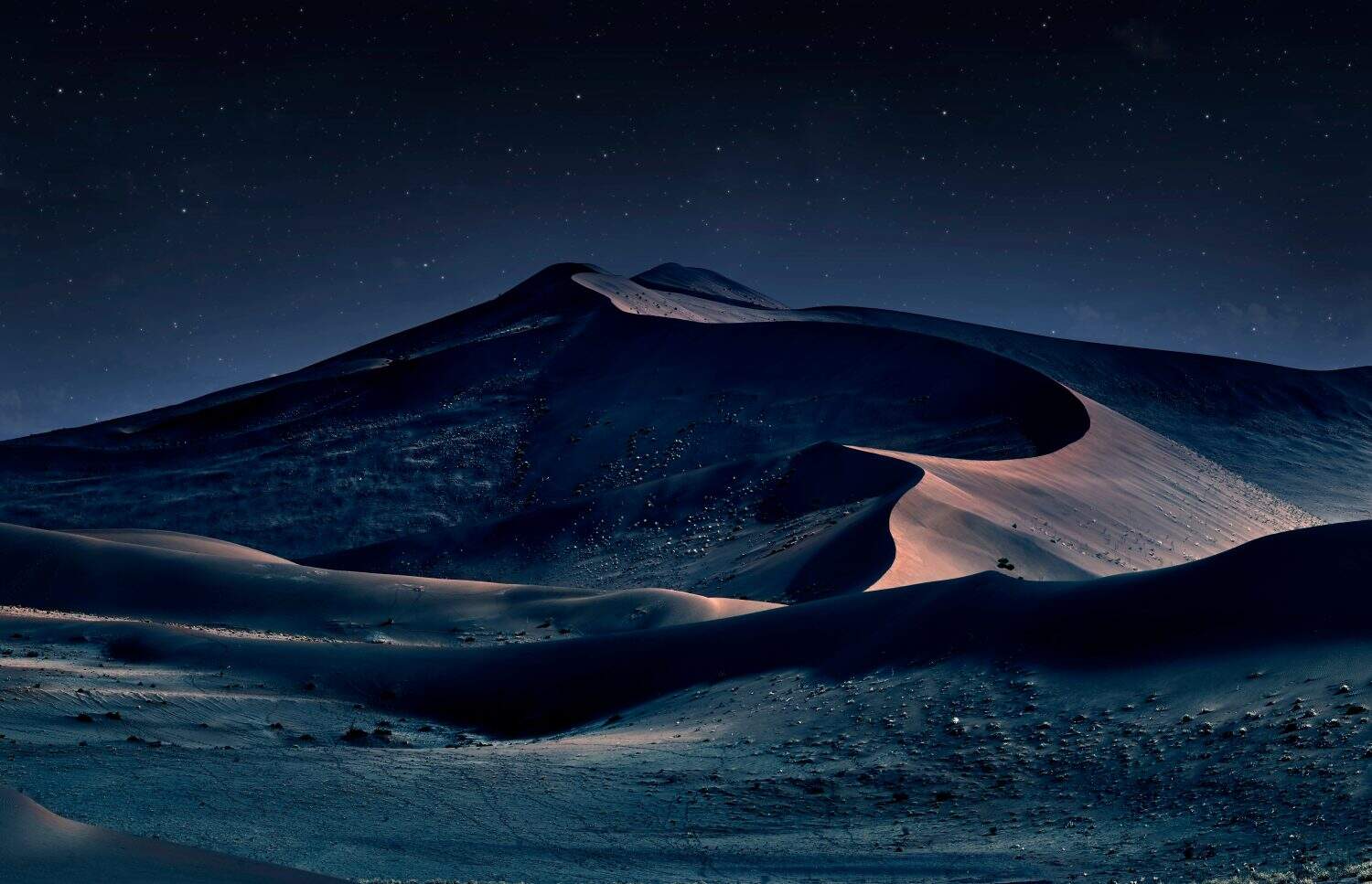
Brown hyenas are some of the most elusive creatures on Earth.
©posteriori/Shutterstock.com
Even when van den Heever managed to stay apprised of rapidly changing weather conditions and spot a brown hyena, he couldn’t be sure he’d ever see one in the same place twice. This made choosing a location for his camera traps quite the challenge. He had to figuratively get into the mind of a brown hyena: where would they be roaming through town? What route would they take? He tried to estimate where the hyena’s possible routes might intersect. As he told BBC.com, “And if I can time it correctly, I can get the hyena here, and I can get the house there. And that was basically how I went about choosing the composition and lining up the cameras.”
The Perfect Shot
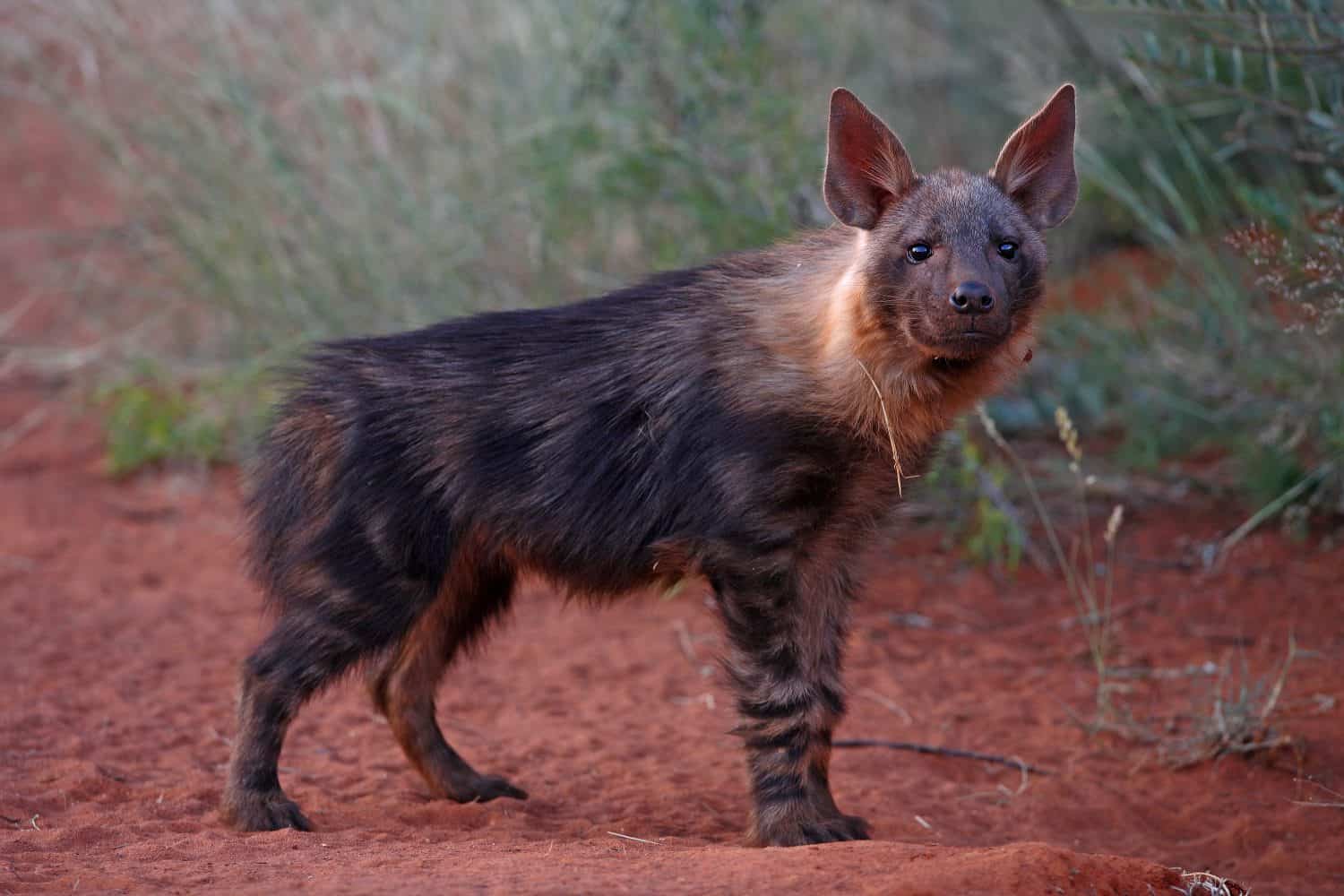
Three photos in quick succession gave the photographer his perfect shot.
©Erwin Niemand/Shutterstock.com
It took van den Heever ten years of annual visits to Kolmanskop to get his perfect shot. Over the years, his camera traps captured several jackals but never the enigmatic brown hyena. Then, one night, the conditions were just right. The weather was clear, and he anticipated a brown hyena’s traveling route. His camera trap clicked three times. As he told BBC.com, “My camera triggered three times that night. Once with me, testing the scene. The second time, nothing happened, and the third time, there was a hyena in the picture.”
For artists, the creative process often means striving for an ideal that is never fully attainable. Van den Heever, however, was close to tears when he finally saw the final image from his camera trap. It was perfect. As he said, “It’s exactly what I was looking for from day one. It’s why I went through all the effort, all those seasons to try and do it.”
Untouched Environment
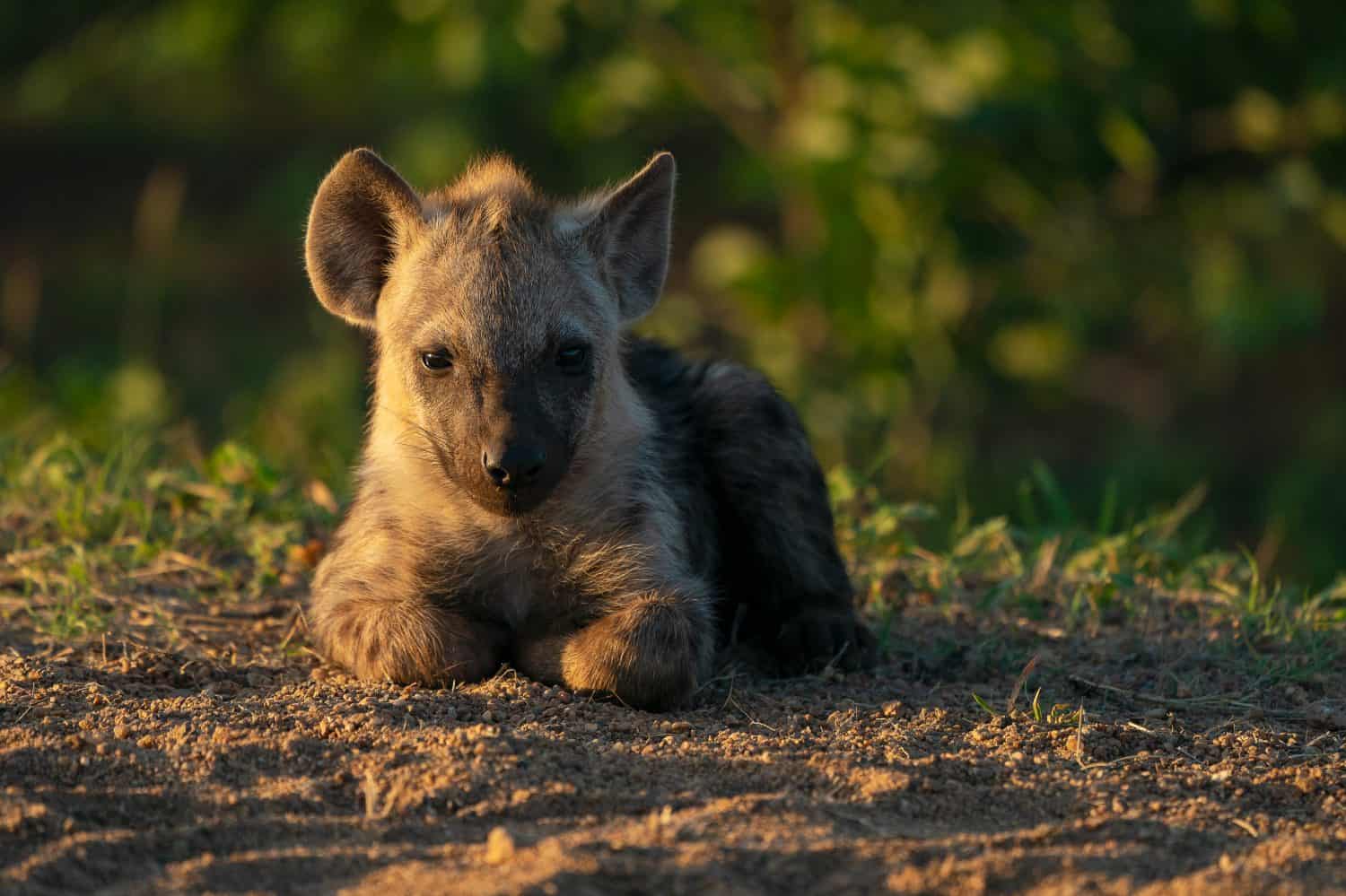
There are several thousand estimated brown hyenas left in Southern Africa.
©Pranesh Luckan/Shutterstock.com
The brown hyena is the rarest hyena in the world; scientists estimate between 4,370 and 10,110 brown hyenas are left in the world, with the majority found in Southern Africa. As such, it’s considered “near threatened.” Luckily, however, its numbers are treated as stable by researchers in the area. Not only is the subject of the photograph rare, but so is access to its former diamond mine setting. Indeed, Kolmanskop sits within a Namibian national park the size of New Jersey. Once closed off to the public, and later opened but on a limited scale, the area is rare because it is pristine—practically untouched.
A Misunderstood Creature
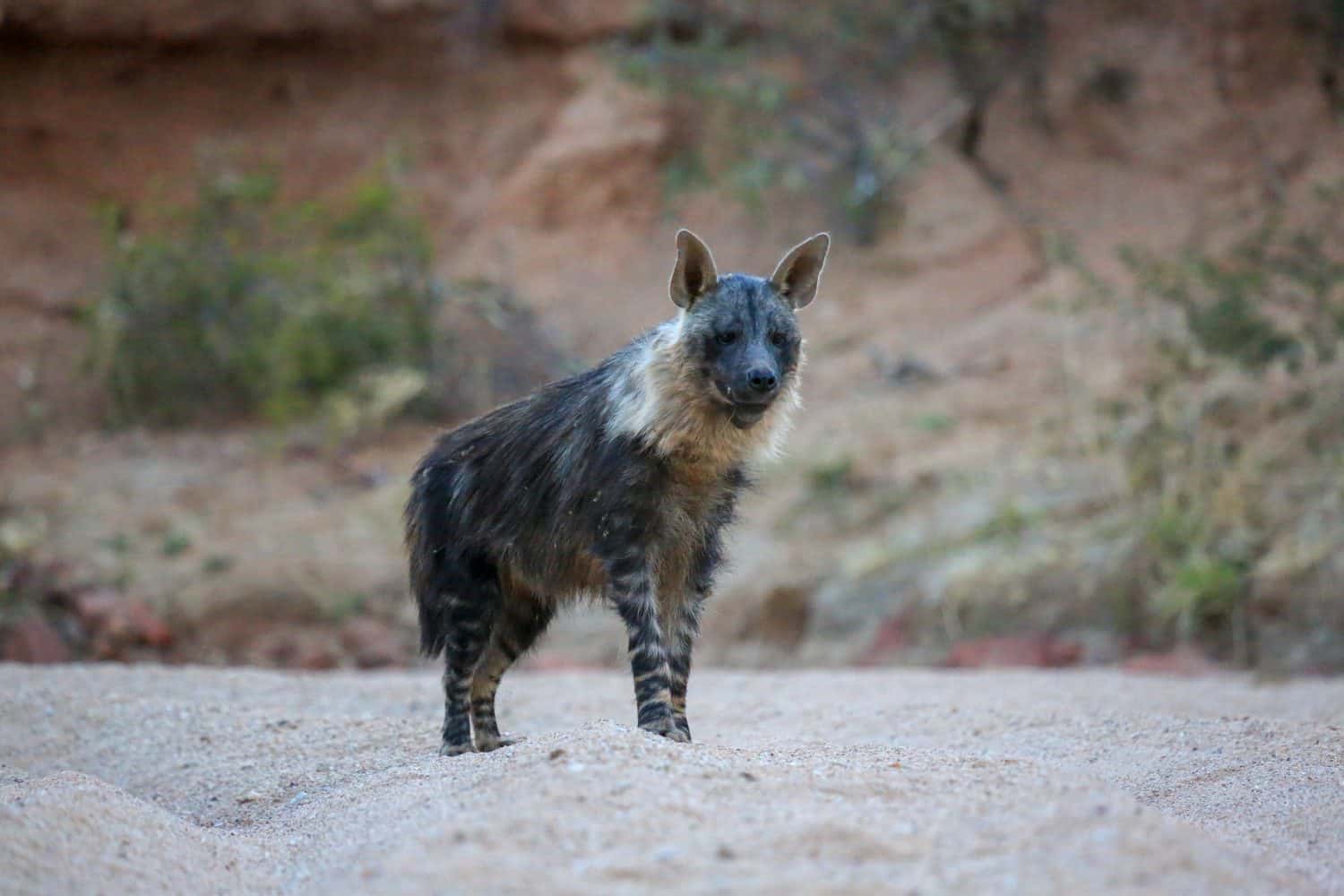
People consider brown hyenas to be pests, but they are actually important ecosystem refreshers.
©huang jenhung/Shutterstock.com
The bad reputation of larger relatives like striped and spotted hyenas has cast an unfair shadow on brown hyenas. People consider them nuisances, even threats, but they play a vital role in the ecosystem, cleaning it of rotten carcasses and disease. Van den Heever’s award-winning photograph undoubtedly helps bring attention to a misunderstood creature. As for the photographer, however, he isn’t quite finished. As he told BBC.com, “There’s always something that can be added. The hyena could have had a seal pup in its mouth, it could have been winking at you, there could have been two hyenas… the hyena could have been jumping through the picture. So we always go back, and we always try to do something different.”
As with other types of artists, van den Heever said, “Photographers are never content.”