
Quick Take
- Wisdom, the Laysan albatross banded in 1956, is at least 75 years old and continues to reproduce.
- She has laid 50 to 60 eggs and fledged at least 30 chicks.
- Midway Atoll hosts one of the world’s largest seabird colonies with over 1 million Laysan albatrosses.
As of late 2025, Wisdom the albatross continues to defy expectations for bird longevity. First banded in 1956, this 75-year-old avian marvel has spent more than seven decades returning to Midway Atoll (Kuaihelani). She has outlived her mates, survived tsunamis, and raised a record number of chicks. Even now, this remarkable ‘senior’ bird is going strong as she continues to reproduce.
The Legendary Albatross of Midway Atoll
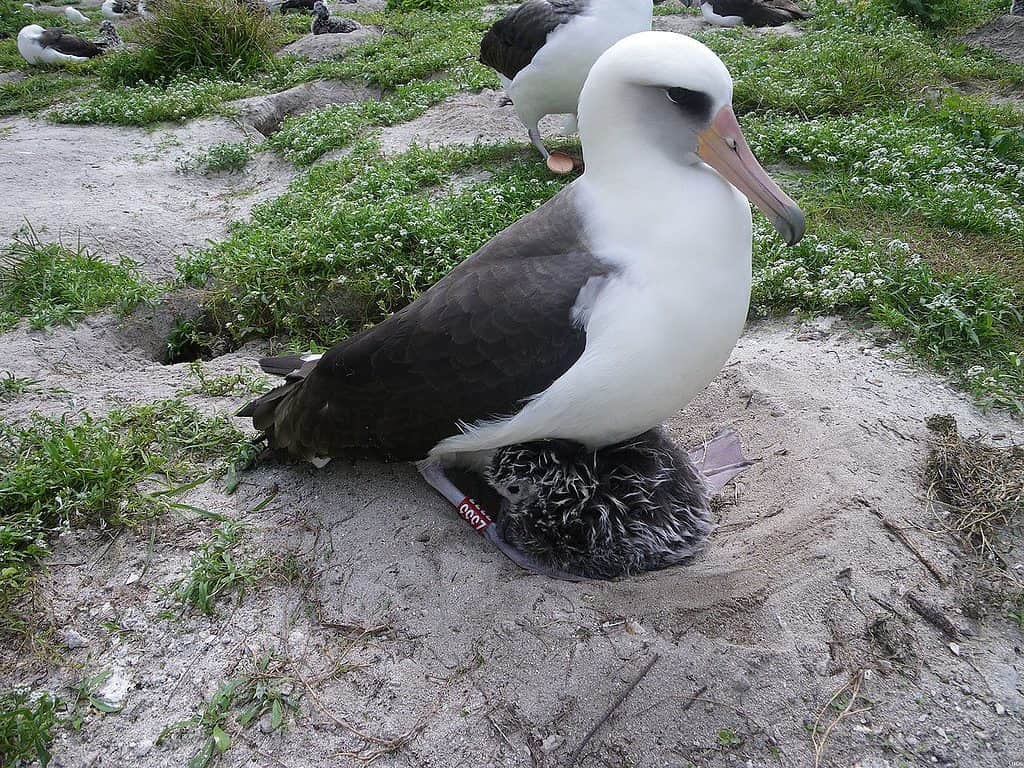
Wisdom has raised around 30 chicks in 75 years.
©John Klavitter/U. S. Fish and Wildlife Service / Public Domain / Wikimedia Commons – Original / License
Wisdom is a Laysan albatross (Phoebastria immutabilis) that was first banded while nesting in 1956 by biologist Chandler Robbins. Since Laysan albatrosses do not begin to breed until they are at least five or six years old, Wisdom was already an adult when she was banded in 1956. According to Friends of Midway Atoll, Wisdom is now at least 75 years old.
Robbins encountered Wisdom once again in 2002 — 46 years later — and their reunion inspired deeper research into seabird lifespans. She was then given a red ID band for easier identification, along with the name Wisdom, honoring the millions of miles she’d already traveled in her lifetime. Wisdom has laid an estimated 50 to 60 eggs and fledged at least 30 chicks — a staggering record, particularly for a species that reproduces slowly.
How Long Do Laysan Albatrosses Live?
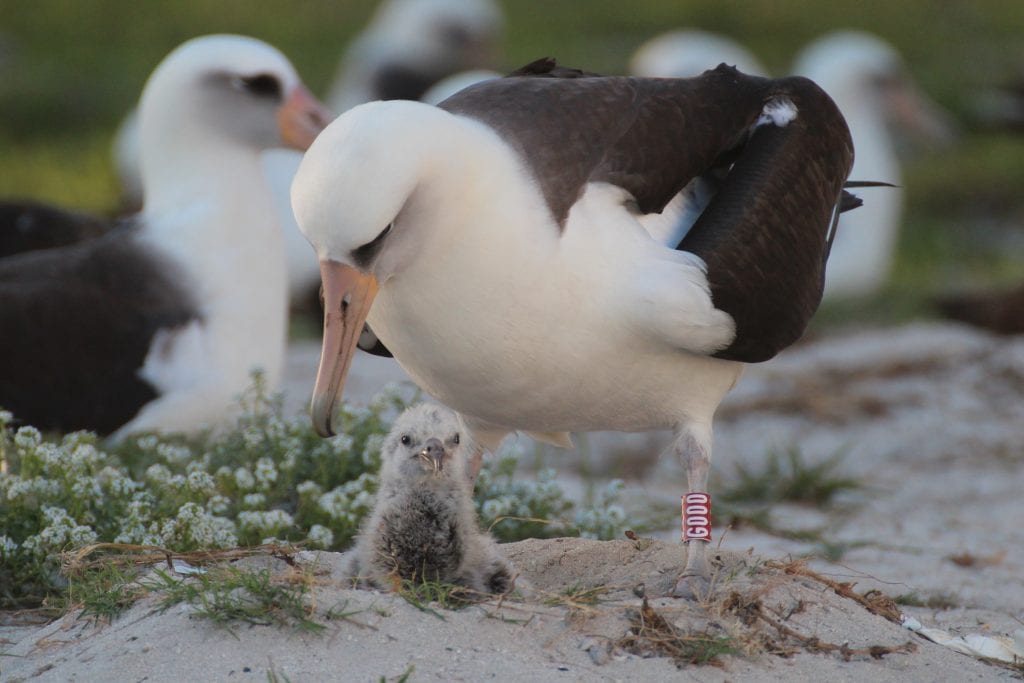
Wisdom’s chick, Kūkini (Hawaiian for ‘messenger’), was born in 2016.
©USFWS – Pacific Region / Public Domain / Wikimedia Commons – Original / License
Wisdom’s impressive 75 years far surpasses the average 40- to 60-year lifespan of a Laysan albatross. Most albatrosses die younger due to storms, marine predators, or plastic ingestion. Wisdom’s incredible longevity establishes her as a vital subject in the study of wild animal aging.
Known as Mōlī in Hawaiian, Laysan albatrosses spend most of the year out in the open ocean. However, during the breeding season, a large population travels to Midway Atoll, or Kuaihelani (“the backbone of the heavens”). This crucial breeding ground hosts one of the world’s largest seabird colonies, with over one million Laysan albatrosses crowding into just 2.4 square miles. Wisdom’s fidelity to her nesting spot here is legendary; she returns each winter, often within just a few feet of her previous nest.
When Does an Albatross Stop Laying Eggs?
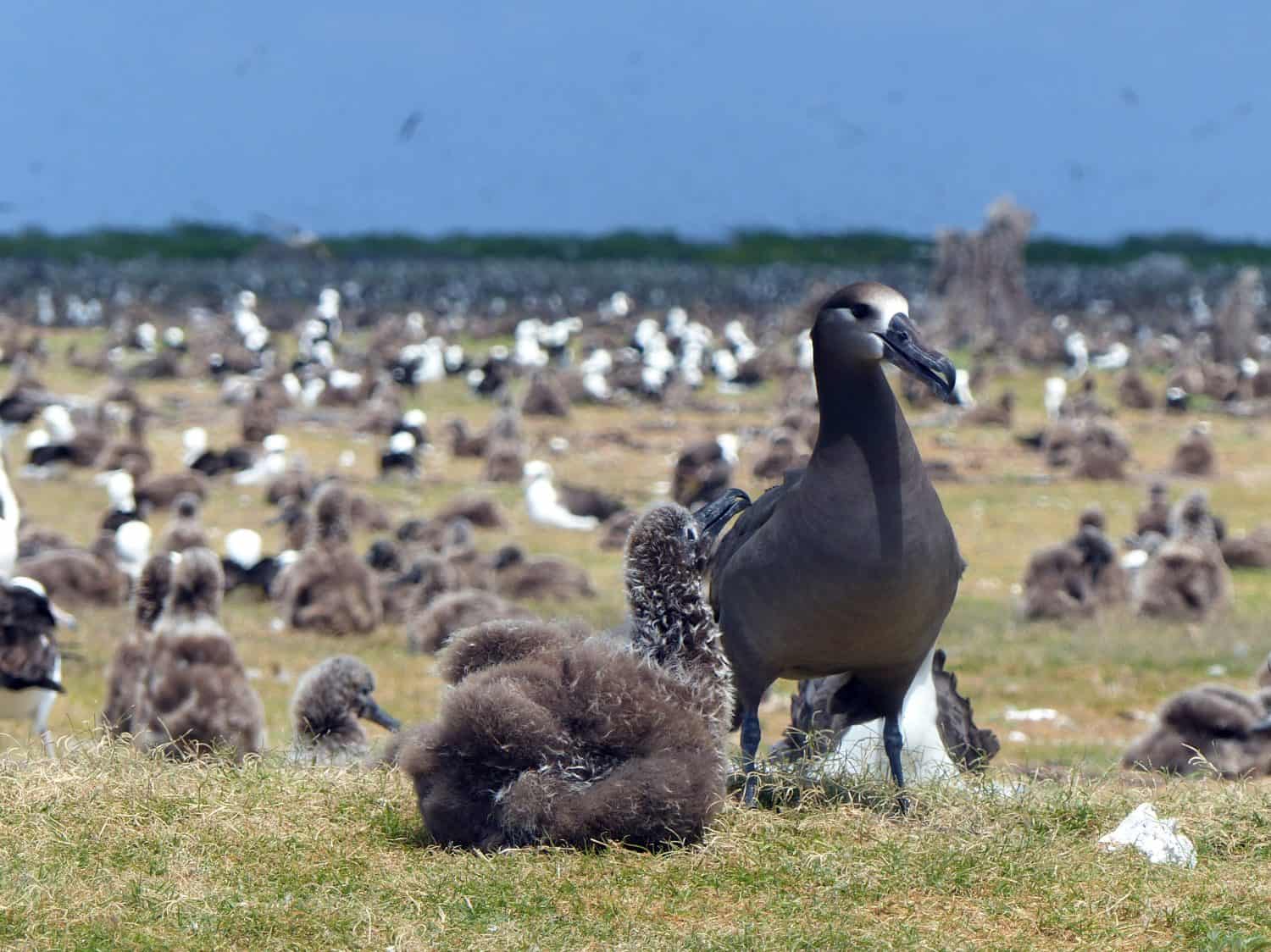
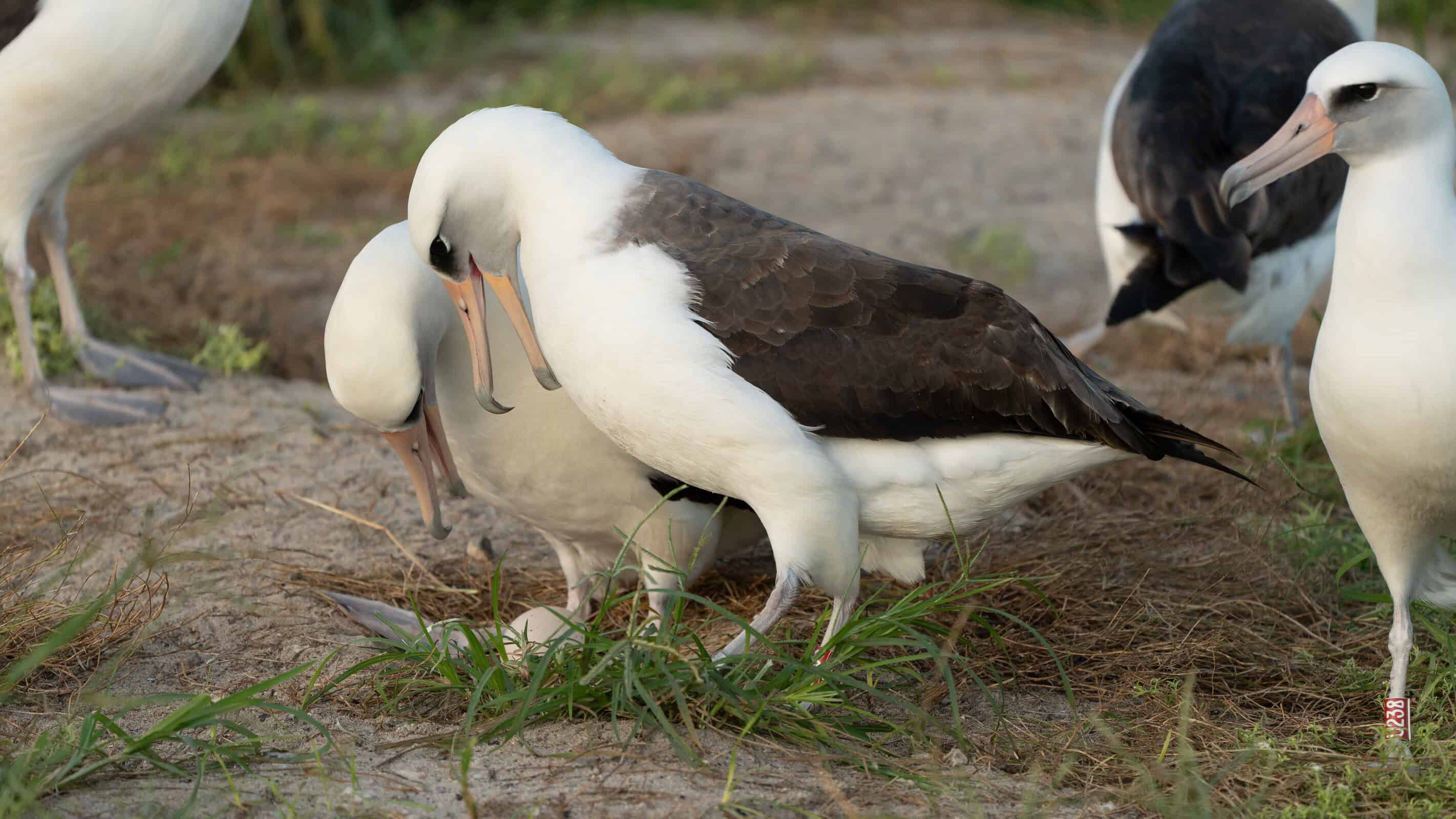
Both Laysan and black-footed albatrosses nest on Midway Atoll.
©Mark Sully/Shutterstock.com
Laysan albatrosses are devoted family members, often pairing for life after years of elaborate courtship dances. They only take new mates if widowed or separated. Wisdom’s original mate disappeared after 2021, and scientists were unsure if she would find another. Though her original partner was last seen in 2021, Wisdom once again surprised scientists; after a four-year break, she laid an egg with a new mate in December 2024, which successfully hatched in January 2025, although sadly it did not survive to the end of the year. Chicks leave the nest when they are around five and a half months old and then spend the next three years at sea without returning to land.
This species follows a “slow and steady” approach to reproduction, laying only one egg per season. Raising that single chick requires months of nonstop effort by both parents, who fly hundreds of miles to find food. This often forces the birds to take a year off from nesting. Wisdom is extraordinary because she has not only raised so many chicks, but also because she has defied the typical age-related decline in fertility, maintaining her reproductive success well into her eighth decade.
Modern Dangers to Albatrosses
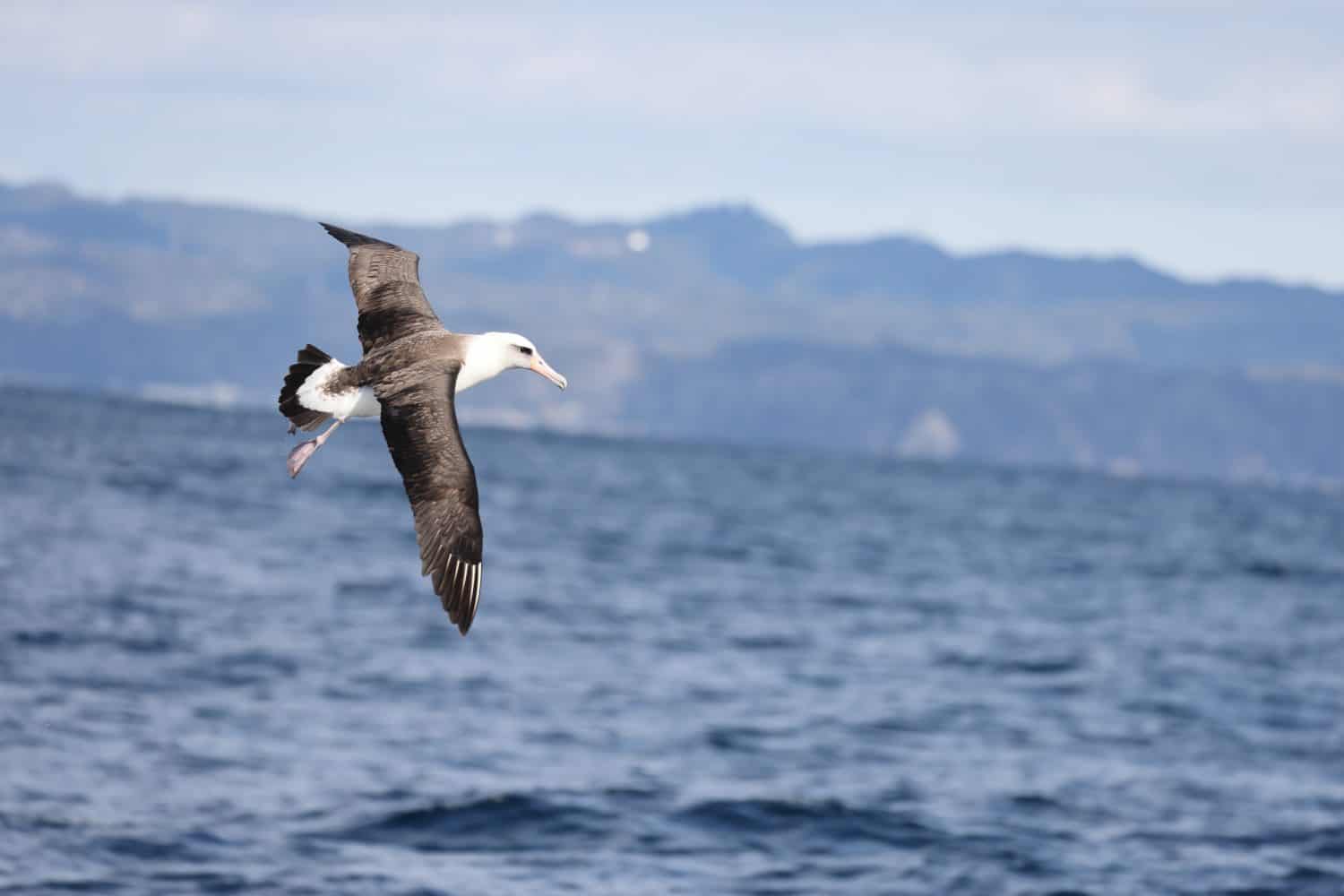
Midway Atoll is more than 1,300 miles northwest of Honolulu, Hawaii.
©feathercollector/Shutterstock.com
Despite recovering from feather hunting, Laysan albatrosses continue to face significant modern threats, including marine plastics, which are mistakenly fed to chicks, and climate change, which affects the birds’ flight patterns, food, and habitat. Catastrophic storms and tsunamis, such as the 2011 event that killed over 200,000 albatross chicks, also pose a major danger. Miraculously, however, Wisdom has survived every challenge thrown her way. In fact, her 2011 chick — a tsunami survivor — even returned to Midway Atoll to breed in 2022, making the legendary albatross a grandmother.
How to Watch Wisdom
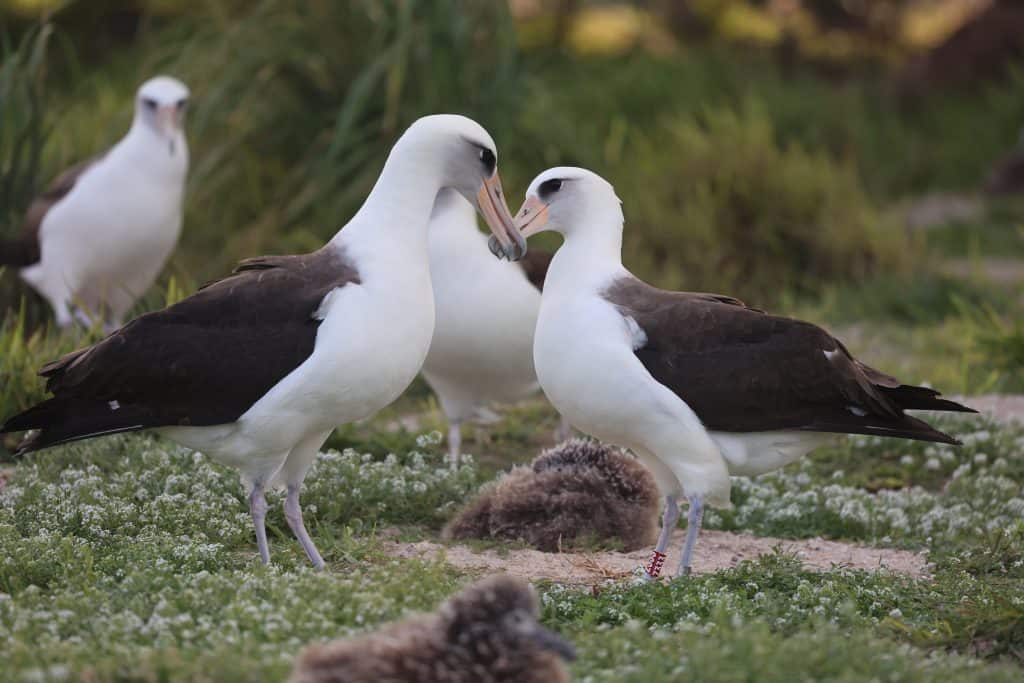
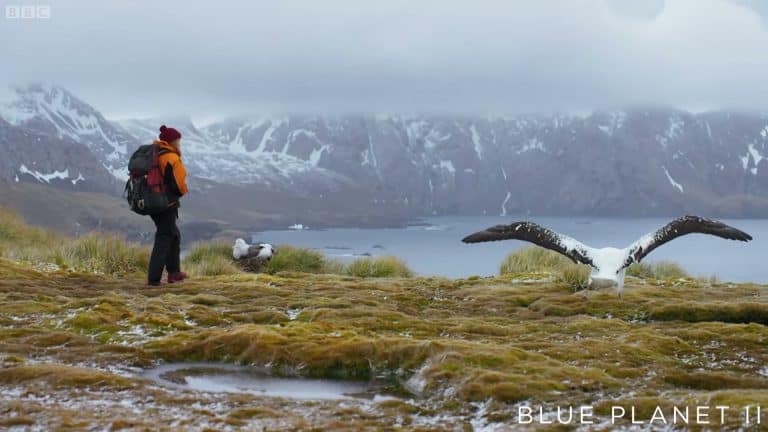
Wisdom and other Laysan albatrosses return to their nesting grounds in late October or early November.
©USFWS Pacific / Public Domain / Wikimedia Commons – Original / License
Wisdom is more than just the world’s oldest wild bird; she is a powerful, living symbol of resilience and the triumph of long-term habitat protection. Her story proves that when we safeguard vital habitats, wildlife can not only survive but also thrive for generations.
Wisdom’s faithful return to Midway Atoll underscores the profound value of preserving critical ecosystems. This small, 2.4-square-mile refuge, home to over 450,000 nesting pairs of Laysan albatrosses, is irreplaceable.
In November 2025, Wisdom once again returned to the Midway Atoll National Wildlife Refuge for the 2026 nesting season. You can watch Wisdom’s colony live on the Friends of Midway Atoll Live Cam, which offers a 24/7 stream of the nesting site. While the camera doesn’t track Wisdom specifically, she does appear occasionally, depending on her nest location.
For an alternative close-up of albatross behavior, the Royal Cam in New Zealand features a breeding pair of northern royal albatrosses.