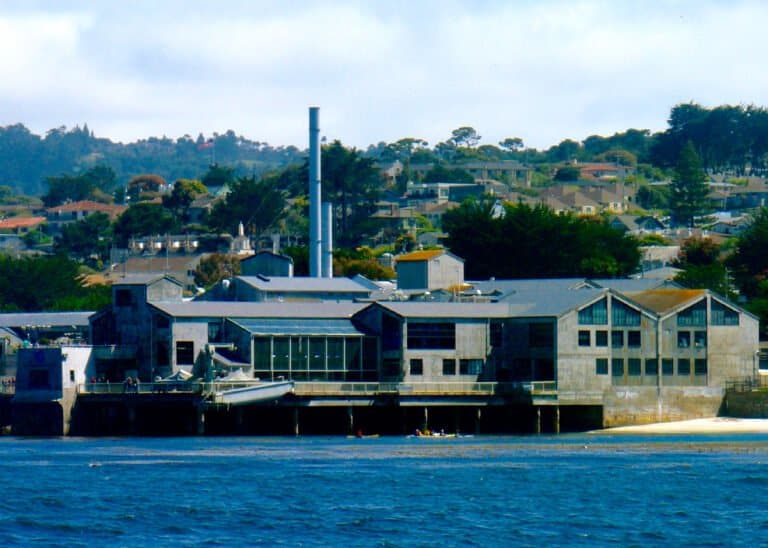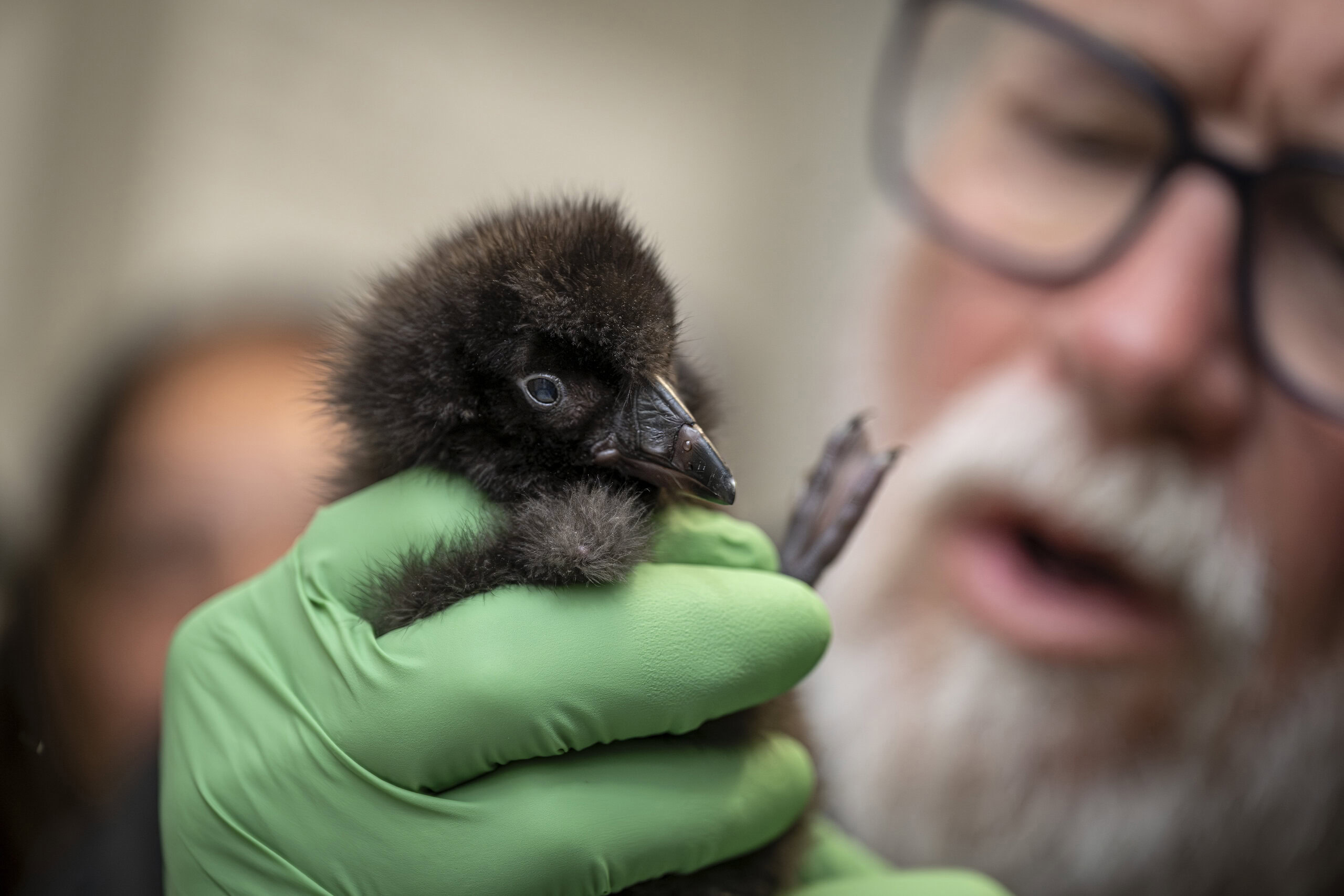

According to recent studies, watching videos and viewing pictures of animals online is a great way to boost your mood. So, if you’re looking for an instant mood boost, allow us to introduce you to Nori and Sprout, two of the newest and cutest animal babies around. These two puffin chicks — known as pufflings — hatched at the Monterey Bay Aquarium in July 2025. A-Z Animals was fortunate enough to get an exclusive interview with Aimee Greenebaum, the Monterey Bay Aquarium’s Curator of Aviculture, to learn more about this adorable pair.
Tufted Puffins
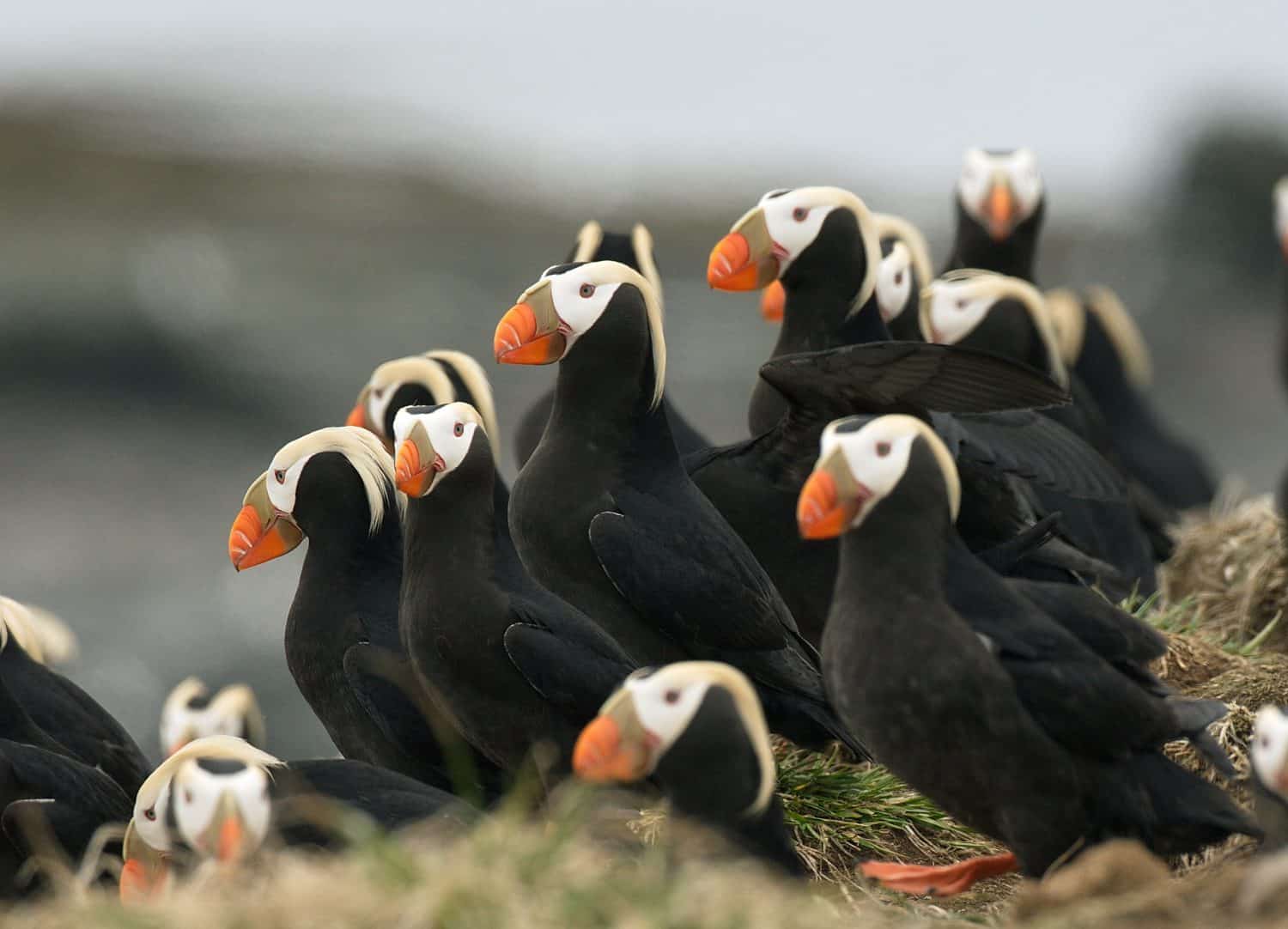
With their spectacular color patterns, tufted puffins are sometimes called “parrots of the sea,” “sea parrots,” or “clowns of the sea.”
©tryton2011/Shutterstock.com
Tufted puffins (Fratercula cirrhata) live in the North Pacific Ocean, nesting along rocky coastlines from California up to Alaska, and from Japan to Russia. While they are solitary in the winter, puffins gather together for the breeding season, flocking to secluded islands and rocky cliffsides. They make their nests in tunnels, holes, slopes, or crevices along cliffs, using their bills and feet to dig a burrow nearly 3 feet long, which they line with plants, algae, and feathers. The birds choose locations that are often inaccessible to other animals and even humans. This helps keep the puffins and their young safe.
During the breeding season, tufted puffins are very striking. They sport long, cream-colored feathers on their heads, bright red-rimmed eyes, white faces, and vibrant red bills. Once the season ends, however, their appearance changes. The bright white and red colors are replaced with more muted orange and gray tones, and they head out to live completely in the open ocean. They won’t return to land again until it is time to breed.
“Our oceans need our help more than ever.”
Aimee Greenebaum, Monterey Bay Aquarium’s Curator of Aviculture
Puffins depend on the ocean for their livelihood. Although they are strong fliers, tufted puffins are even better swimmers. These ocean-loving birds spend much of their time in the water, hunting all kinds of sea creatures. Popular meals often include animals such as squid, anchovies, krill, and other small fish and invertebrates.
Protecting the Tufted Puffin

Puffling Nori hatched on July 17, 2025, and puffling Sprout hatched on July 26.
©Monterey Bay Aquarium Press Room
While the tufted puffin is listed globally as a species of “Least Concern” by the International Union for Conservation of Nature (IUCN), their populations are declining in several regions, including the West Coast of the United States. In Washington State, for example, their numbers have dropped dramatically. Now they are listed as Endangered, a Species of Greatest Conservation Need, and a Priority Species. In Oregon, tufted puffins are a Sensitive Species, as their population dropped from 5,000 in 1998 to 553 in 2021. California also lists the birds as a Species of Special Concern. While tufted puffins once nested as far south as the Channel Islands, now they only nest on the northern coast.
These declines along the West Coast are especially concerning, as around 83 percent of the world’s tufted puffin population lives in North America.
“We hope that our birds at Monterey Bay Aquarium help inspire people to not only learn more about them but also what actions they can take to help birds in the wild.”
Aimee Greenebaum
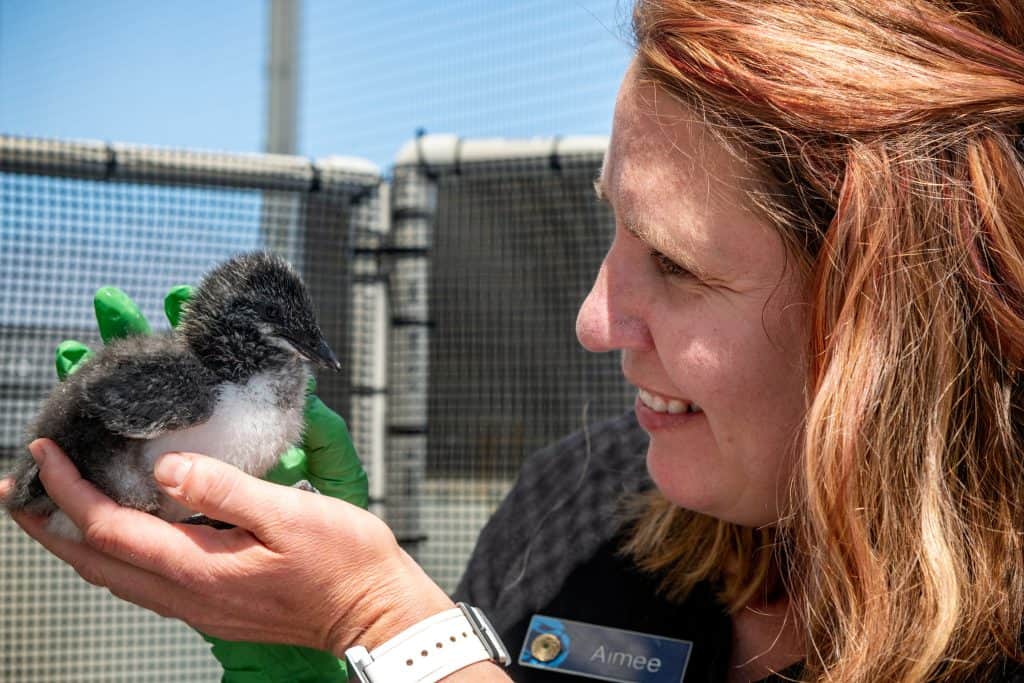
As the curator of aviculture, Greenebaum’s job includes caring for the aquarium’s birds and managing breeding programs.
©Monterey Bay Aquarium Press Room
Much of this decline is due to human activity and deteriorating ocean health. Aimee Greenebaum told A-Z Animals, “Our oceans need our help more than ever. Simple actions you can take can make a difference to these birds — eating sustainable fish and reducing your use of plastic — are just a few things people can do that can help make a large impact for all animals that use the ocean.”
The Tufted Puffin Species Survival Plan
Nori and Sprout’s births are important because they are part of the Tufted Puffin Species Survival Plan (SSP), managed by the Association of Zoos and Aquariums (AZA). The Monterey Bay Aquarium is one of a select group of AZA institutions participating in the Tufted Puffin SSP.
“These birds are important to maintaining a genetically diverse, demographically varied, and biologically sound population within zoos and aquariums,” says Greenebaum. “Our birds are ambassadors for their wild counterparts. This is more important than ever as wild tufted populations continue to decline due to several factors, such as warming temperatures of the ocean, decreased food supply, and pollution. We hope that our birds at Monterey Bay Aquarium help inspire people to not only learn more about them but also what actions they can take to help birds in the wild.”
Hatching Timeline
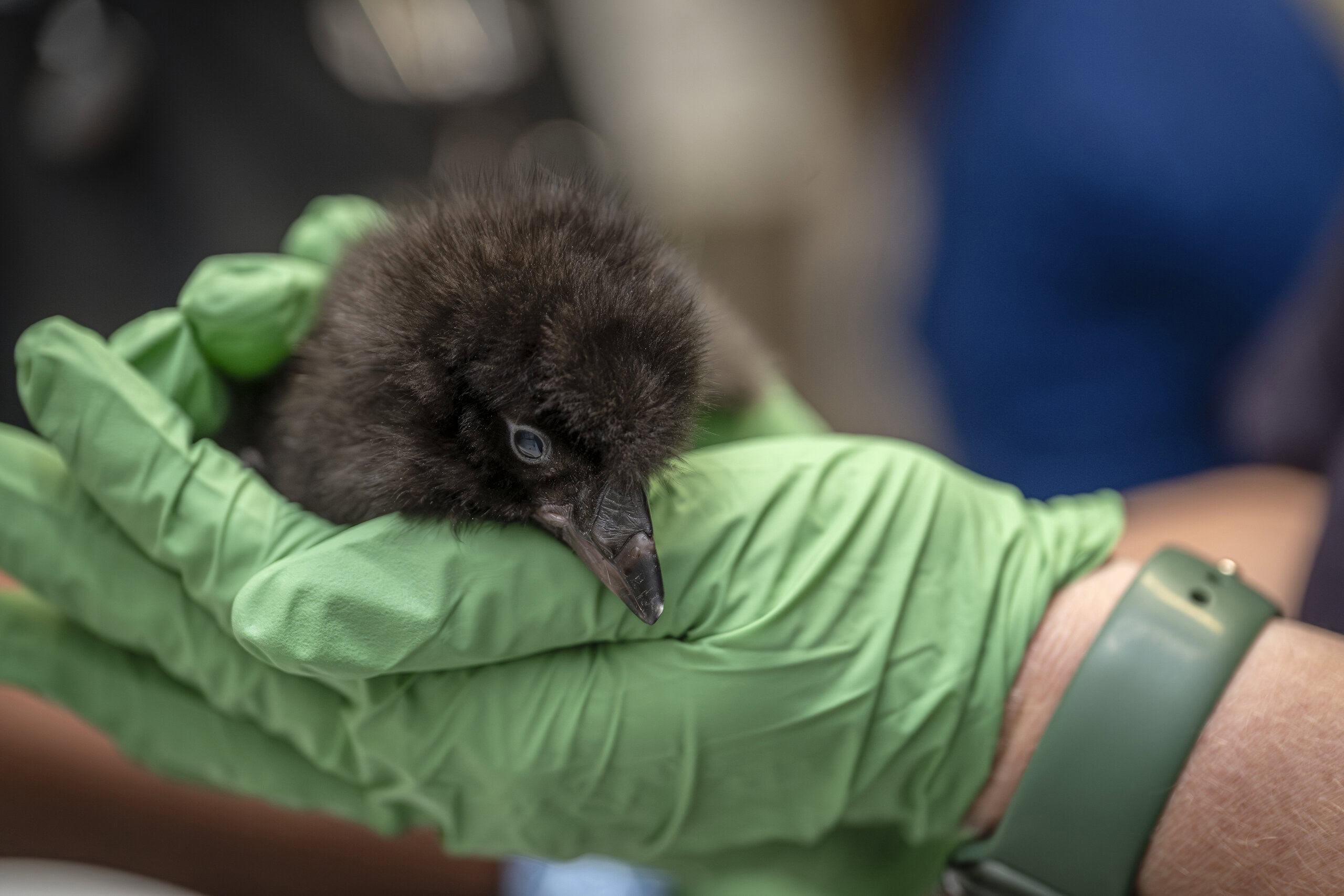
Tufted puffins are the largest puffin species, growing around 14 to 16 inches long.
©Monterey Bay Aquarium Press Room
It takes about six weeks (40 to 43 days) for a puffin egg to hatch. Monterey Bay Aquarium’s two new puffins, Nori and Sprout, hatched about 10 days apart.
Greenebaum explains that Nori is the older of the two. Her egg was laid on June 6, 2025, and she hatched on July 17. Nori is a female being raised by her parents, Kiska and Stella. Three of her siblings also live at the aquarium. Nori is beginning to explore the exhibit more, making her easier for visitors to spot than the younger Sprout.
Sprout hatched on July 26, 2025, from an egg laid on June 14. Because Sprout is quite a bit younger, it is not yet known whether the puffling is male or female. Parents Pickle and Yarrow are raising Sprout.
As of September 2025, you can see Nori, Sprout, and the rest of their colony at the Coastal Birds exhibit in the Open Sea Wing of the Monterey Bay Aquarium. Here, keepers hand-feed the puffins as part of their mental and physical enrichment activities. This also helps keepers prepare the puffins for health procedures. For example, keepers can weigh the puffins by training them to voluntarily stand on a scale. The birds then receive a tasty treat as a reward.
When Pufflings Leave the Nest
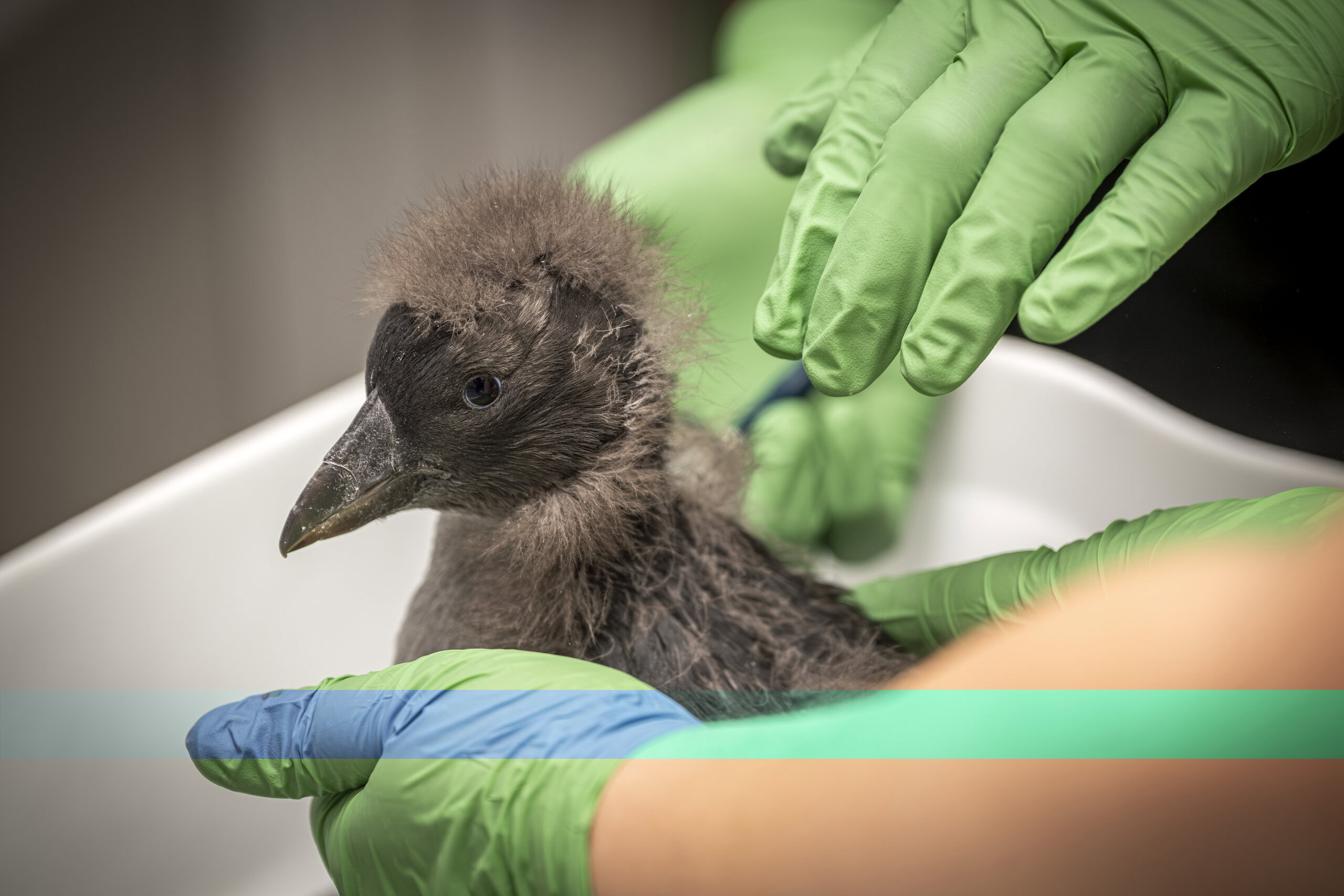
As a young puffling, Sprout still displays juvenile plumage.
©Monterey Bay Aquarium Press Room
Currently, both pufflings are being raised by their respective parents, who work together to care for their young. According to Greenebaum, “The parents take turns staying in the nest box and bringing food in (through a process called bill loading — the act of carrying multiple small fish, typically five to 20, crosswise in their bill to feed the chick). The parents also help preen the chick to keep its feathers clean and in good shape, and help keep it warm and safe.” The two pufflings will spend around six to seven weeks in the nest while their parents care for and feed them.
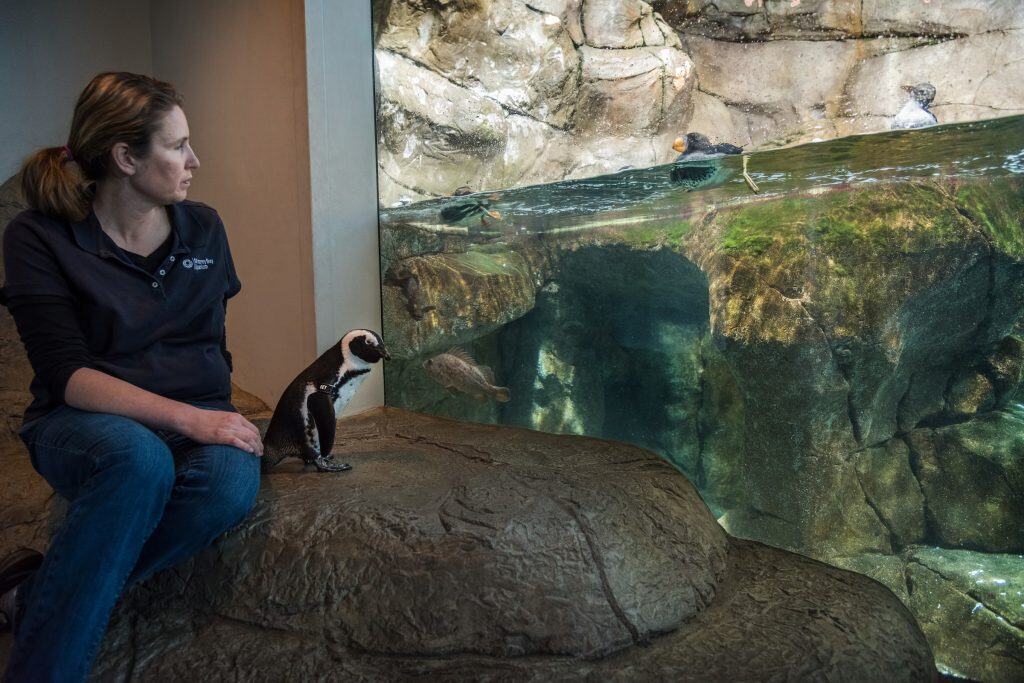
One of the Monterey Bay Aquarium’s African Penguins, Rey, watches the puffin exhibit with Greenebaum before opening hours during a regular early morning enrichment program.
©Monterey Bay Aquarium Press Room
Since Nori and Sprout hatched at different times, they are already reaching different developmental milestones. “Nori is definitely a little braver and more confident than Sprout seems to be,” says Greenebaum. “Sprout seems to be a little more skittish and shy.”
For now, Nori and Sprout will continue living at the aquarium as they grow and mature. “We typically keep them for a few years until they reach sexual maturity,” Greenebaum explains. “Then, based on the recommendations of the Species Survival Plan, we may send them to other AZA zoos or aquariums.”
Keep up with all of the amazing and inspiring work done by the Monterey Bay Aquarium at its website, montereybayaquarium.org.